Artist Uses Cremation Ashes to Create Unique Memorial Paintings With Personal Meanings

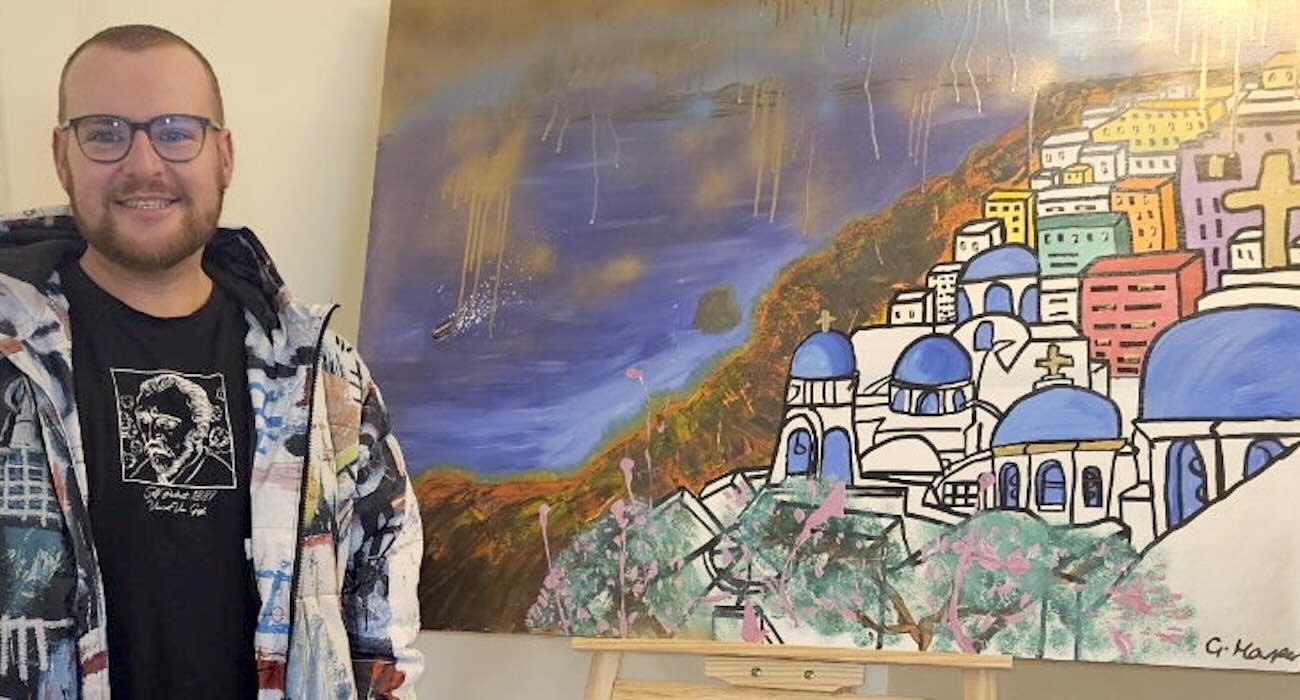
Artist Gary Harper uses cremation ashes to make personalized paintings for grieving families – SWNS

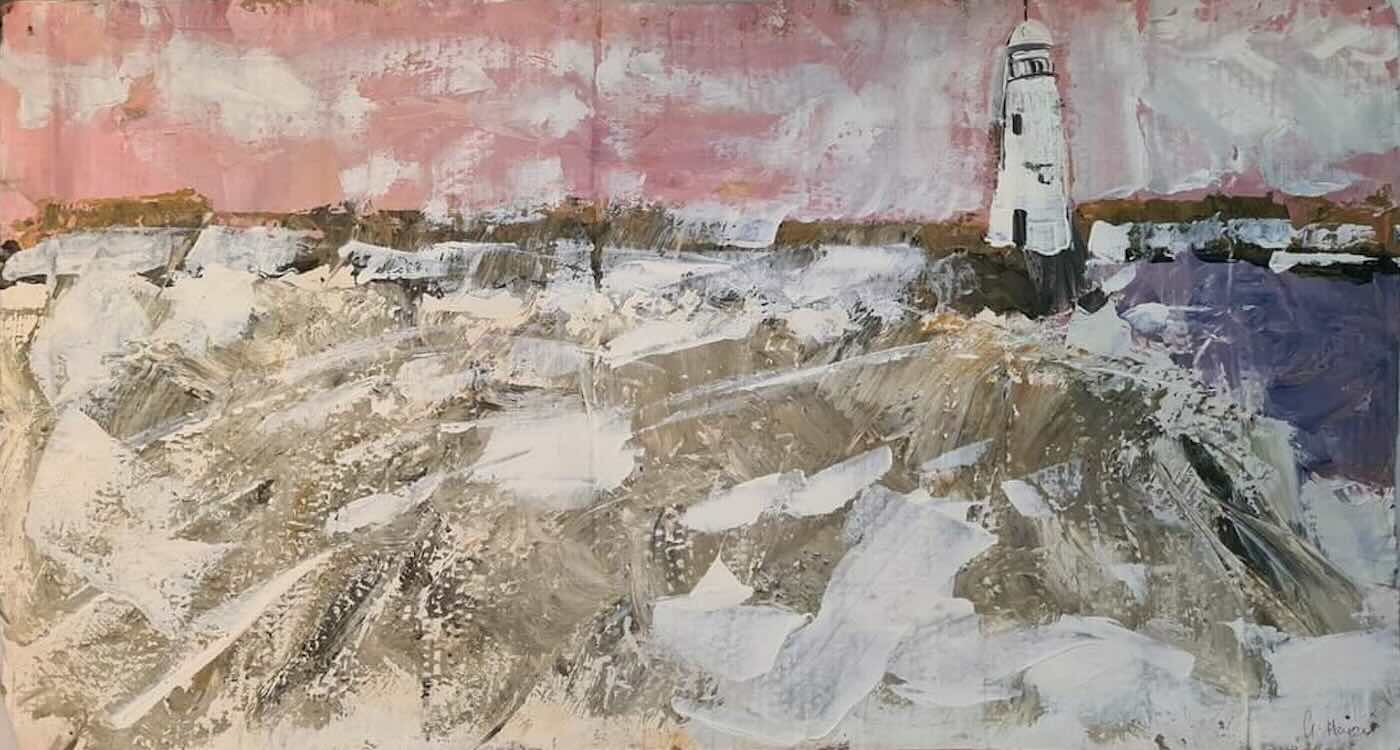
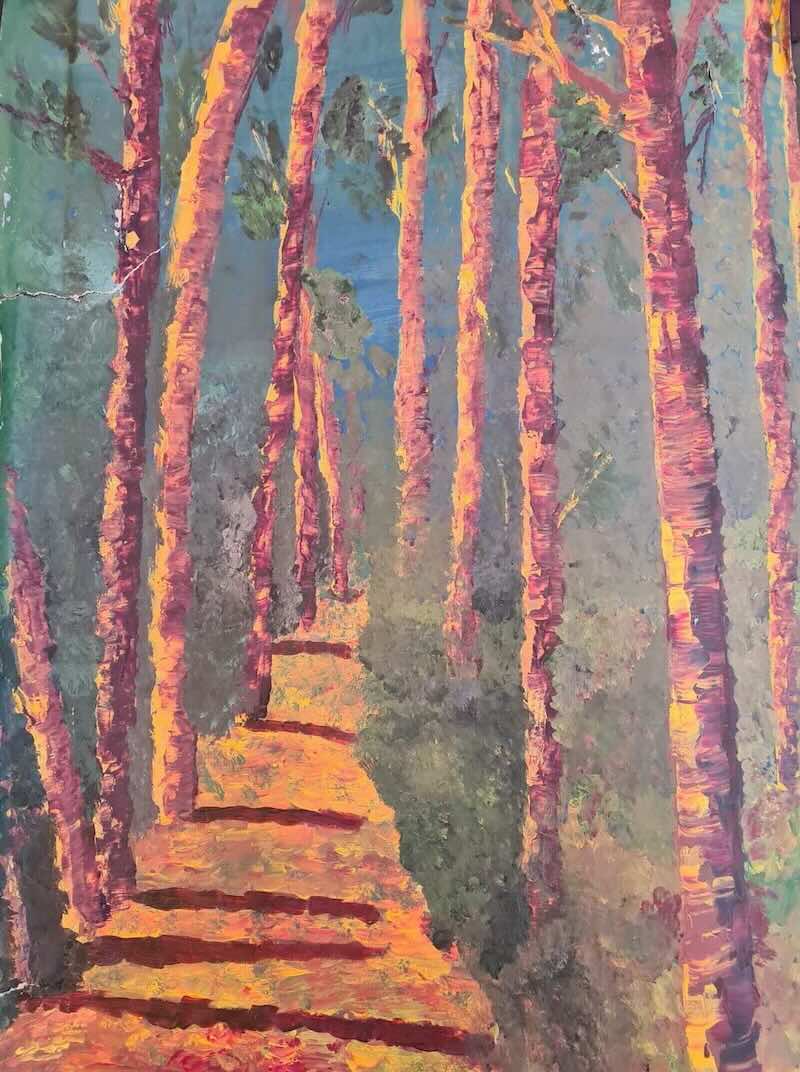
An artist is using cremation ashes in his paintings to create unique memorial landscapes that grieving families can personalize as a way to remember loved ones.

Gary Harper began painting professionally just two years ago and was inspired by the loss of his cousin to respectfully experiment with blending a small amount of ashes into his artwork.

He holds consultations with families to learn about the deceased and any their favorite memories, focusing on landscapes with a personal connection.

The 33-year-old from Liverpool began painting while at college and developed a love for still life and landscapes.

It wasn’t until he became an occupation therapy assistant in a psychiatric hospital that he saw first-hand the profound effect art could have on people.

“I held an art therapy session with a patient and we made so many paintings together,” said the 33-year-old. “I was guiding her through the process and I realized how much I enjoyed it.

“A month later, I picked up the brush and started painting for myself. The piece was abstract sunflowers and the feedback I got was overwhelming.”

Artist Gary Harper uses cremation ashes to make personalized paintings of landscapes or still life – SWNS

While painting in his free time in December 2024, his cousin Donna passed away from cancer.

“It was so close to Christmas and it was really emotional.

A year later, he was painting some seascapes when the thought crossed his mind that he could add some ashes.”

In November 2025, Gary painted his first Ashes to Art commission, aiming to provide a personalized memorial in acrylic paint for the bereaved.

“It was lovely the family trusted me,” he told SWNS news agency. “It’s a respectful process.”

“I do a consultation with the loved one, learning everything about the person and what they enjoyed.

Artist Gary Harper uses cremation ashes to make personalized painting SWNS SQUARE

“Visually the family can see where the ashes have gone, rather than scattering them.”

Gary’s canvases start at 12×12 inches (30x30cm) for $135 (£100), but he works with the family so they can afford the perfect picture.

“The reaction I get is joy, initially. Then it gets emotional.

“It’s a humbling experience to know you’ve helped someone through the grieving stage.”

“Some people scatter ashes and then there’s nothing left.

“With a painting, when it’s done, the family can feel the painting texture with the ashes, so they can still ‘feel’ the person in the painting, especially if it’s a place they used to love.”Learn more at the Gary Harper Art website. Artist Uses Cremation Ashes to Create Unique Memorial Paintings With Personal Meanings
Read More........

At 67,800-years-old, These Handprints Just Discovered in Indonesia Are Oldest Example of Rock Art

– credit, Aubert, Brumm, et al.

The discovery of stylized handprints dating back at least 67,800 years in a limestone cave in Indonesia has broken the country’s own record for the world’s oldest-known example of rock art.

It provides direct evidence that humans have been crossing the sea intentionally for nearly 70,000 years, as Man traveled from the Asian continent across Australasia to the land Down Under and beyond.

Adhi Agus Oktaviana, a researcher at the BRIN Research Center for Archaeometry, revealed that the minimum age of the rock art is 16,600 years older than the previously discovered rock art from Muna Island, which GNN reported on in 2024.

This rock art is also 1,100 years older than the handprints from Spain that were previously associated with Neanderthals and had long been considered the oldest cave art in the world, and 22,200 years older than the depiction of the Sulawesi warty pig, discovered on the same island as the other two, in 2021.

In other words, in the last five years, 3 of the 4 oldest cave artworks ever found on Earth were identified on the same small island off Sulawesi, Indonesia.

Oktaviana explained that to determine the age of this rock art, the research team applied the laser-ablation uranium-series (LA-U-series) dating technique to the microscopic calcite layer covering the cave paintings and produced a date that would be the earliest possible production time of the handprints.
– credit, Maxime Aubert

As news releases that regarded the previous two discoveries stated, the artworks elevate Indonesia to one of the most important centers in the early history of symbolic art and modern human sea exploration in the world.

This discovery confirms that Wallacea, a sunken landmass that exists above sea level today as the Indo-Pacific, was not only a route to Australia, but also a major habitat for early modern humans. It also reinforces the long chronological model, which states that humans reached the Sahul landmass (Australia–Papua) at least 65,000 years ago.

“It is very likely that the creators of these paintings were part of a population that later spread further east and eventually reached Australia,” said Oktaviana. “This research provides the oldest direct evidence of modern humans on the northern migration route to Sahul, which involved sea exploration between Kalimantan (Borneo) and Papua—an area that remains relatively unexplored archaeologically.”

Meanwhile, Professor Adam Brumm from the Australian Research Centre for Human Evolution (ARCHE), Griffith University, said that the handprints found in the rock art on Muna Island also have globally unique characteristics, with modifications that narrow the shape of the fingers to resemble claws, reflecting a mature symbolic expression. According to him, the symbolic meaning of this narrowing of the finger shape is still speculative.

“However, this art could symbolize the idea that humans and animals have a very close relationship. This is already evident in the earliest paintings in Sulawesi, including at least one scene that we interpret as a representation of a half-human, half-animal creature,” he explained.With the discovery of Pleistocene rock art sites in the karst region of Sulawesi, this brings a great responsibility in preserving irreplaceable cultural heritage. Therefore, researchers are calling for the protection of karst areas containing ancient rock art sites to be an integral part of spatial planning and natural resource management policies. At 67,800-years-old, These Handprints Just Discovered in Indonesia Are Oldest Example of Rock Art

Read More........