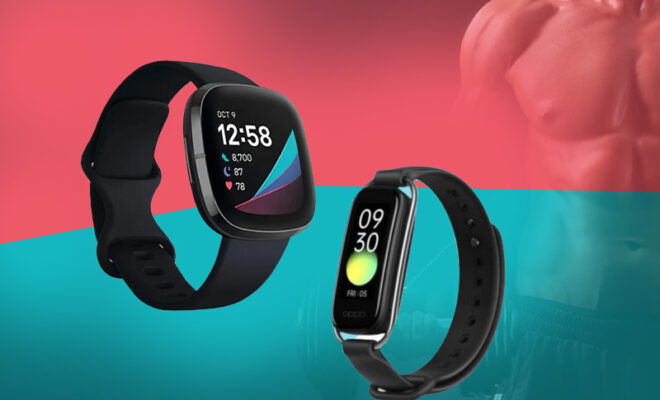
Fitness Bands: Track Your Progress & Unlock Your Potential


By The Techy Guy: Fitness Bands are wearable technology products to track your progress & unlock your potential. Discover how to maximize the results of your fitness bands.

Have you ever wanted to track your fitness progress in real-time? With the help of fitness bands, you can do just that!

Fitness bands are wearable technology devices that allow you to monitor your physical activity, heart rate, and more.

In this guide, we’ll discuss the different types of fitness bands available and how they can help you reach your fitness goals.

We’ll also talk about how to use them properly and offer tips on choosing the right band for your needs. So let’s get started unlocking your potential with wearable technology!
What are Fitness Bands and How Can They Help You Reach Your Goals?

Fitness bands are a great tool to help you reach your fitness goals. They are small, lightweight devices that can track your physical activity, heart rate, and other vital signs.

Wearable tech has become increasingly popular in recent years for its convenience and accuracy. With the help of fitness bands, you can easily monitor your progress and make necessary changes to reach your fitness goals.

Fitness bands also provide valuable insights into your overall health and well-being. Whether you are looking to lose weight or improve your cardiovascular health, these devices can help you get there faster and easier than ever before.
Understanding the Different Types of Fitness Bands & Their Benefits

Fitness bands are becoming increasingly popular among people who are looking to stay fit and healthy. They come in a variety of shapes, sizes, and features, so it can be difficult to know which one is the best for your needs.

There are different types of fitness bands available on the market today, as well as their benefits and how they can help you reach your fitness goals.

The activity trackers, heart rate monitor watches, and sleep tracking apps can help you get an even better understanding of your health and progress.
Using a Fitness Band to Monitor & Improve Your Health

With the help of a fitness band, you can easily monitor and improve your health. These bands are equipped with sensors that track your steps, heart rate, and other data-driven health insights.

This data can then be used to create personalized goals and plans for improving your overall health. By tracking your progress over time, you can assess how well you are doing in terms of achieving those goals.

Moreover, with the help of a fitness band’s companion app, you can easily view all the data collected by the device in one place.

This will give you an overview of your current activity level and make it easier to identify any areas that need improvement.
How to Maximize Results with a Fitness Band

Fitness bands are becoming increasingly popular as a way to track your fitness progress. They provide real-time feedback on your workout, sleep patterns, and more.

With the help of a fitness band, you can maximize the results of your workouts and reach your fitness goals faster.

By following these tips, you’ll be able to take full advantage of your fitness band and achieve success in no time. You can maximize the outputs by setting realistic goals, tracking progress regularly, and using the data from your band to make informed decisions about your health. Fitness Bands: Track Your Progress & Unlock Your Potential
Read More........

There are different types of fitness. An exercise expert explains

You probably have at least one “super fit” friend. Maybe they’re a marathon runner, a footy player or a keen hiker.

To keep themselves healthy, they may stick to a strict exercise regimen and only eat certain foods.

But in most cases, these people would likely struggle to play a sport or do an activity they’re unaccustomed to.

So, what does “fitness” even mean? And is there more than one kind?

Defining ‘fitness’

When you hear the word “fitness”, you probably picture someone who looks physically strong and athletic. But fitness can take many forms.

This includes cardiovascular endurance, which is how well your heart and lungs use oxygen to create energy.

There’s also muscular strength or your ability to move and lift objects in a single effort, for instance picking up a heavy box.

Body composition, or the amount of muscle you have relative to the amount of fat, is another aspect of fitness.

Aerobic or anaerobic fitness. What’s the difference?

While we can understand fitness in many ways, exercise scientists commonly break it down into two broad categories.

Aerobic

Aerobic fitness refers to your ability to use oxygen to create energy. This allows you to physically exert yourself for longer periods of time, for example, running a marathon.

Researchers assess aerobic fitness using a measurement known as “VO₂max”. This records the maximum amount of oxygen your body can take in and use to create energy. Existing evidence shows people with a higher VO₂max score may have better aerobic fitness, a lower disease risk and a longer lifespan.

Anaerobic

Anaerobic fitness has to do with how well you perform short, high-intensity movements. Examples include jumping as high as you can or running a 100-metre sprint. Research shows anaerobic fitness relies on factors such as muscle mass, strength and explosive power, or how much force you can produce in a short period of time.

Some sports mainly require one type of fitness, say aerobic fitness for long-distance running. But most use a combination of the two. For instance, a football player needs explosive anaerobic power to sprint for the ball, but must also have enough aerobic fitness to keep running for a whole game.

Importantly, your body will adapt to the specific type of training you do. So if you run regularly, your heart, lungs and legs will learn to run very efficiently.

However, running involves a movement pattern that is quite specific. That’s why a runner may initially find it hard to pick up other sports, such as swimming or cycling.

But if you are “running fit” you will have an easier time switching to another sport, compared with someone who is not fit at all. That’s because you’ve already developed your aerobic and anaerobic systems and just need to “transfer” them to your new activity, rather than start from scratch.

These factors can affect your fitness

There are several factors that shape your level of fitness.

One is genetics. There is much research to suggest your genes play a key role in how you respond to exercise. Some people may build muscle more quickly and easily, while others seem to improve their aerobic fitness without much effort. This doesn’t mean that your genes stop you from getting very fit. But it does suggest that not everyone will be able to become an elite athlete.

Another factor is training. The type of exercise you do, and how well you do it, directly impacts how fit you get. Research shows high-intensity interval training – which intersperses short bursts of activity with quick recovery periods – is especially effective for improving aerobic fitness. But if you’re keen to get more anaerobically fit, you can prioritise strength training.

Lifestyle choices also affect fitness. You can train as much as you want, but if you’re not eating and sleeping enough, you may not get the results you want. That’s because good nutrition and consistent sleep ensure your body properly recovers from exercise.

How can fitness impact my health?

The evidence is clear that if you want to live a long, healthy life, you need both aerobic and anaerobic fitness.

Higher aerobic fitness is one of the strongest predictors of overall health. Research shows it protects against illness such as heart disease, type 2 diabetes, dementia, and some cancers. It also prevents early death.

Importantly, being more anaerobically fit may lower your risk of getting type 2 diabetes and dying prematurely. Research also shows having stronger and more powerful muscles helps older people avoid falls and stay independent for longer.

In short, high aerobic fitness may help you live longer, while high anaerobic fitness will ensure you stay strong during your twilight years.

So, how can I improve my overall fitness?

Based on the World Health Organization’s physical activity guidelines, you should aim to do at least 150 minutes of moderate aerobic activity each week. This may look like running, cycling or even brisk walking, and doing weight training at least two days each week.

If you are short on time, high-intensity interval training, also known as HIIT, is an effective way to do more exercise in less time.

When it comes to fitness, there are no quick fixes. But regardless what exercise you choose, what matters most is that you do it consistently.

The Conversation

Hunter Bennett, Lecturer in Exercise Science, Adelaide University

This article is republished from The Conversation under a Creative Commons license. Read the original article.

Read More........