Western Tatami Mat Mania Keeping Alive Japan’s Traditional Woven Grass Flooring Industry

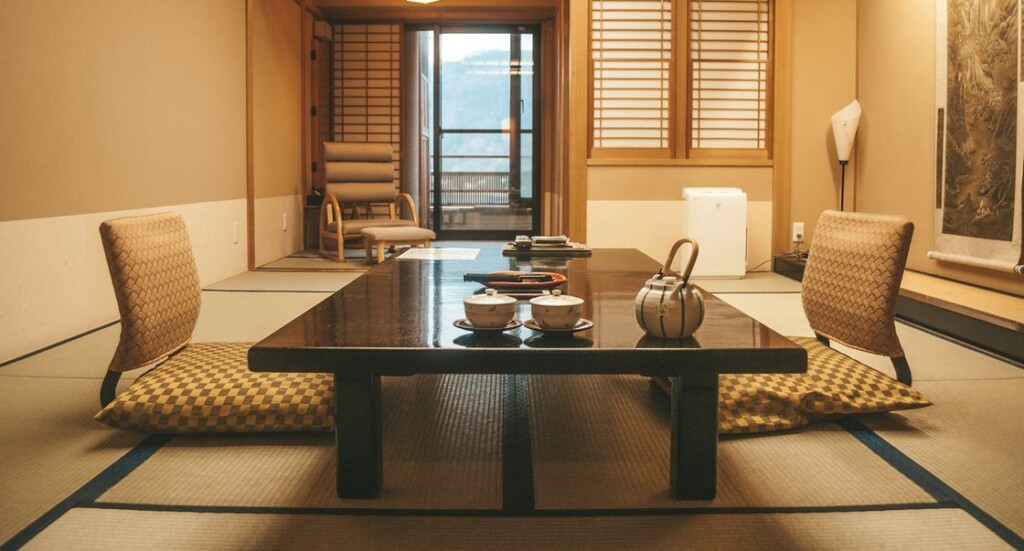
A modern tatami room – credit, Filiz Elaerts on Unsplash

Western admirers of Japanese aesthetic are keeping afloat tatami craftsmen in Japan, where modernity and maintenance requirements are driving down interest in this artisanal form of flooring.

From Europe to the US and even in the Middle East, eager importers of tatami mats now account for a sizable amount of orders from workshops like that run by Mr. Fumio Kuboki.

Kuboki is just the latest of his kin to run the family business which has been making tatami mats for 280 years. He still sells mostly to the Japanese market, but substantial help is coming from across the Pacific.

Half of the company’s international orders come from the US, Kuboki told the Japan Times.

For hundreds of years, a Japanese house wouldn’t be complete without wall-to-wall mats made of woven grass, called tatami. Made of tightly woven igusa grass, they were the standard feature in all dry rooms.

But one of Japan’s great marvels is that, even with as characteristic and attractive a traditional culture as it cultivated over the centuries, its modern aesthetic and lifestyle is almost just as iconic. As a result, the tatami mat has become somewhat neglected among Japanese crafts: reminiscent of your grandparents house and rural living.

Western-style flooring began to be the norm starting in the 1970s, and China began mass producing synthetic tatami that was easier to clean, longer-lasting, and cheaper to replace. As a result, it’s estimated that every year, 40 traditional tatami makers close up shop for good.

Yet for the increasing number of foreign residents, tatami represents the attractiveness of the Japanese aesthetic, and as well as installing it in their residences in the country, many of them bring it back to Europe or the US.

Arno Suzuki, a professor of architectural design at Kyoto Tachibana University who has studied the use of tatami in Spain, Italy and France, told the Times that seeing the appreciation for tatami among the rest of the world has somewhat reminded the younger generations of Japan of its value

Having a tatami “space” in an apartment or house is suddenly not as uncool as it once was.

“Nowadays they have a tatami space—not a tatami room, but at the corner of their living room they have three or four tatami mats, and they enjoy it. And also, many people realize that it’s better for when—especially when they have small kids, like toddlers and babies, it’s safer for them to crawl,” Suzuki told the Times.

In the city of Kobe, Taro Mano is the 4th in his family to take over the 70-year-old tatami business. He too has seen a rise from foreign buyers in countries like those Suzuki studied in.

“Tatami is a kind of symbol of Japan. It’s an easy way to express a Japanese atmosphere, even in other countries,” Mr. Mano said, adding that he first thought the interest would come from the United States, but it came to be far more diverse than that.

Mr. Kuboki makes some 10% of his revenues from overseas sales, with many of his products being stocked year-round at Japan House in Los Angeles. 100 years ago, no one ever wondered what else could be made of tatami, but now, whether it’s a coaster or a book cover, the artform is being reimagined.“Every day I talk with visitors and listen to what kind of tatami they want,” Mr. Kuboki said. “The products that are selected and loved by people are the ones that will naturally become the future of tatami. The future of tatami will be decided by customers.” Western Tatami Mat Mania Keeping Alive Japan’s Traditional Woven Grass Flooring Industry
Read More........

Japanese Woman Offers to Hold New Mother’s Baby so Exhausted Travelers Can Finish Their Meal

credit – Maggie Boynton, retrieved from TikTok

The Japanese have an unjustly-bestowed-upon reputation for being cold and distant, and one new American mother who’s gone viral on TikTok discovered just how wrong that stereotype can be.

While out at a restaurant with her husband, Maggie Boynton was approached by a matronly Japanese waitress who offered to hold their fussy newborn daughter so that a couple could eat in peace.

“I was pretty shocked,” Boynton shared with People Magazine. “I don’t think I’ve ever had a stranger offer to hold my baby before. At first, I hesitated—like, should I let her? But she seemed so genuine and sweet. You just have that intuition when someone truly wants to help.”

While nothing in general was going wrong per se, Boynton, who shared the video of the waitress cradling their daughter on TikTok to the tune of 2 million views, said that flying across so many time zones is already quite the drain—as is looking after a newborn, and the two together had worn her out.

“Even just 10 minutes for us to enjoy our meal was all I needed,” to recover, she wrote in a caption on the TikTok video.

On a practical note, chopsticks are not ideal eating utensils if there’s an infant squirming around in your arms.


“It’s crazy how much you take for granted—just being able to eat without worrying about spilling on your baby or juggling everything at once. That small gesture felt like such a weight off my shoulders,” Boynton felt.
Maggie Boynton and her husband with their daughter in front of Mount Fuji – credit Maggie Boynton, retrieved from TikTok

Japan in general was very baby-friendly, and from nursing areas in various public places to bassinets on board the flight, the whole trip was very accommodating to the couple and their little sprout.

Boynton suggests going to Japan at any possible opportunity, and said the fact that they were traveling with a newborn was no problem.“Keep calm and know that no one else is thinking about your baby being fussy as much as you are. Your baby feeds off your energy, so staying grounded can make such a difference,” she said. Japanese Woman Offers to Hold New Mother’s Baby so Exhausted Travelers Can Finish Their Meal – (WATCH)
Read More........