

Have you ever asked your child to do something simple but no matter how many times you ask, they keep ignoring you?
For example, on a school morning you may call out, “Sarah, put your shoes on. We have to go!” as you are trying to finish an email, clean up breakfast dishes and make it to work on time yourself.
You get no answer and no signs of shoe wearing. So you repeat it, this time a little louder and then again. You finally get a frustrated response from your child: “but I can’t find my shoes!”. And so you yell back, “well you should have had them organised last night like I told you!” Yet again, you are all starting the day stressed.
You may find yourself wondering why it seems your kids listen to their teachers, coaches, friends’ parents … basically anyone else but you.
Why is this? And how can you talk to your child so they listen?
Your child’s development and their ability to listen
As a starting point, it may help to understand children don’t have the same capacity to listen as adult. Or the same capacity to care about what you are asking them.
Children between two and seven are naturally ego-centric.
This means they think mostly about themselves and their immediate needs. They are not are likely to to be able to take on other people’s perspectives. So they don’t care that if they muck around and don’t put their shoes you might miss your important 9 o'clock meeting.
Around 13, the brain starts to change. Research shows teenagers start to find voices that are not from their family more interesting. This is part of growing up, preparing them for life beyond their family.
This marks a significant shift from younger children, whose brains are primarily attuned to prioritise their parents’ voices. But it also means when you ask your adolescent to unpack the dishwasher before they leave for school, they are less likely to think it is important.
This situation can be made more complex if a child is neurodivergent and has issues with attention or taking on new information. Or if they have hearing issues.
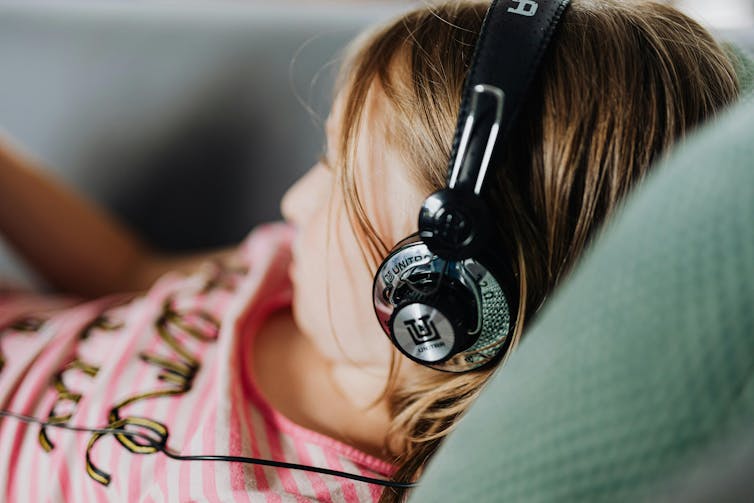
Why do they listen to their teacher but not me?
Kids also tend to be more comfortable with their parents than any other adults. So they know they can zone out from us and we will still love them.
This is not the same with a school teacher, netball coach or other adult they are less familiar with. There are extra factors working in a teacher’s favour (although teachers will tell you, students do not listen all the time).
Schools have a structured approach that naturally enforces rules and consistency. For examples, bells ring to signal the start of the day, the teacher stands at the front of the class to signal the start of a lesson. Teachers are also trained in how to teach as well as skills to manage classroom dynamics effectively.
Peer pressure – and the desire to fit in – can also work in a positive way here, too. If all the other kids in the class or soccer team are doing what they are told, other kids are likely to follow suit.
Communication is not just talking
So there are some things stacked against us as parents. But there are things we can do to approach this parent-child dynamic differently.
According to psychologist Albert Mehrabian’s model of communication, only 7% of our feelings and attitudes are conveyed through the words we use in spoken communications. He suggests 38% is via tone and voice and the remaining 55% is conveyed through body language.
So when our children are not speaking back, they are still communicating with us. They could be doing this via facial expressions, posture and hand gestures. These can all give us clues to help us connect and communicate with them.
For example, their silence may mean, “I can’t find my shoes. But I’m worried I might get in trouble” Or it could mean, “I don’t want to go to school today”. Or, “I am finding this drawing I am doing really fun and I don’t want to stop”.

What can you do differently?
So if Sarah has not responded or appeared with her shoes on, instead of yelling out again, you could try going and finding where she is. Crouch down to her level, make eye contact and with a smile, ask if she has any ideas where her shoes are? Would she like some help?
Where you can, it is important to give children choice, so they feel like they have some control over their life.
You are also being what psychologists call a “trustful parent” here. You are signalling to your child they are competent and their opinion matters. You are supporting them to find their lost shoes (rather than fighting against them).
Tips for getting your child to listen
There are also some things we can do as parents to stack the odds in our favour:
try not to communicate when we are distracted or on the go. This is more likely to result in a calm and gentle instruction or request to your child. If children feel like they are “in trouble” they can go into a defensive mode and zone out
keep your instructions simple and achievable. Break things down if needs be
thank your child for doing things.
In the meantime, keep observing the world through their eyes. This may not always result in them doing what you ask, when you ask it. But hopefully it will mean less parental angst for you and your child will also feel heard.
Cher McGillivray, Assistant Professor Psychology Department, Bond University
This article is republished from The Conversation under a Creative Commons license. Read the original article.

.png)

