Pigments and palettes from the past – science of Indigenous art

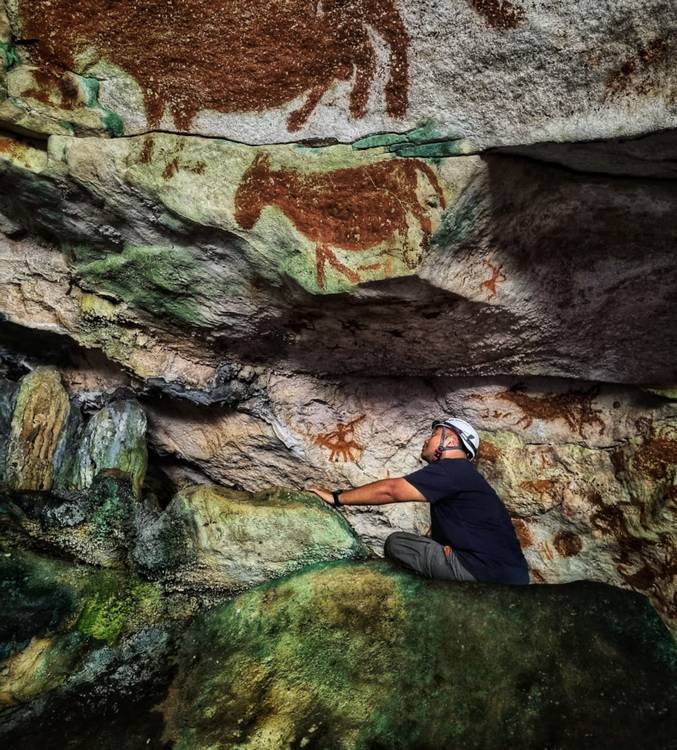
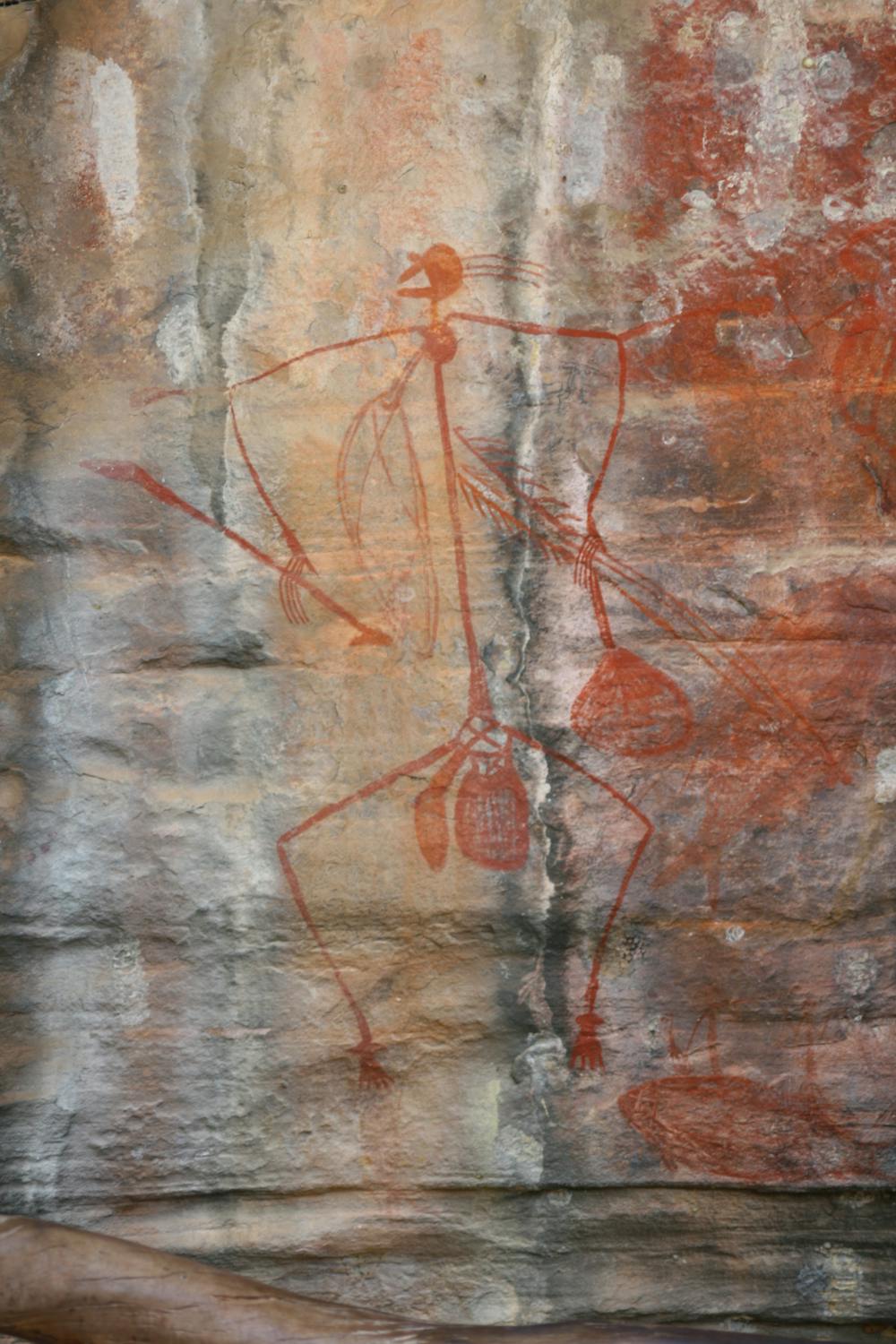
Some Indigenous paintings have lasted thousands of years … so what is it about the pigments that make them so long-lasting? Carolien Coenen/Flickr, CC BY-NC-ND Andrew Thorn, International Centre for the Study of the Preservation and Restoration of Cultural Property

Indigenous Australian practices, honed over thousands of years, weave science with storytelling. In this Indigenous science series, we look at different aspects of First Australians’ traditional life and uncover the knowledge behind them. Here we examine the chemistry and techniques behind perhaps the most iconic element of Indigenous life: rock art.


Visitors to Uluru might also find themselves at Mutitjulu Waterhole in the company of a travel guide filled with wisdom about the meaning of the paintings. Uluru has almost 100 painted sites, of which I have studied most, and tourists will encounter a dozen or less.

Anangu people will explain that the paintings have many meanings depending on the audience. An undulose band may be a snake in one story, a creek in another. A tourist may or may not be told that the paintings at Uluru are in themselves not necessarily highly charged with spiritual values but rather an auxiliary expression in response to the power of the rock itself. The main stories, the big stories, are told in the rock.

So why did people paint? What did it mean? How was it done? Why did they use certain pigments? Why has it lasted so long? The answers inevitably vary depending on where you are standing and with whom.

Painting techniques

Paint has been applied to rocks, almost all types, by a variety of application techniques. Marks were made using what appears to be a dry crayon or pastel application, where a piece of pigment-rich soft rock has been drawn across the surface.

A wide variety of implements were used as brushes to apply water-dispersed pigment, and there is ethnographic evidence of chewed bark and other suitable implements being used – as they still are today for bark paintings.

Fingers may have been used and in one rare and precious place across the flood plain from Ubirr in Kakadu, senior elder of Kakadu, Bill Neidjie, once pointed to a place in the ceiling where his footprints still remained from his youth where he was dipped in paint and pressed against the ceiling.

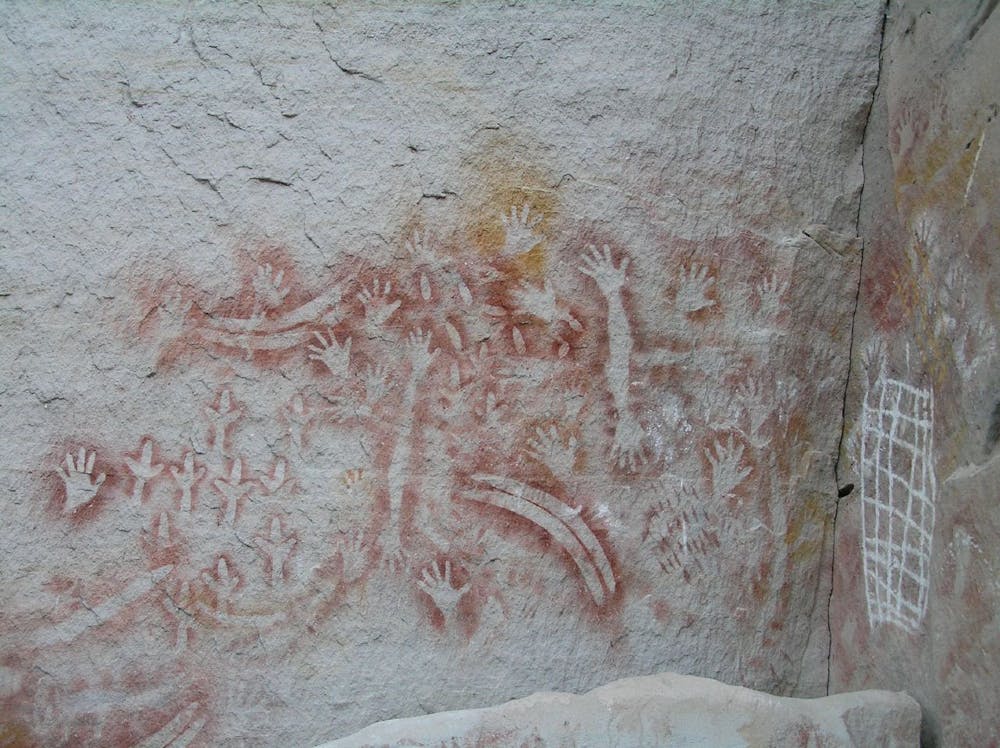
Stencils at Carnarvon Gorge. Pierre Pouliquin/Flickr, CC BY-NC

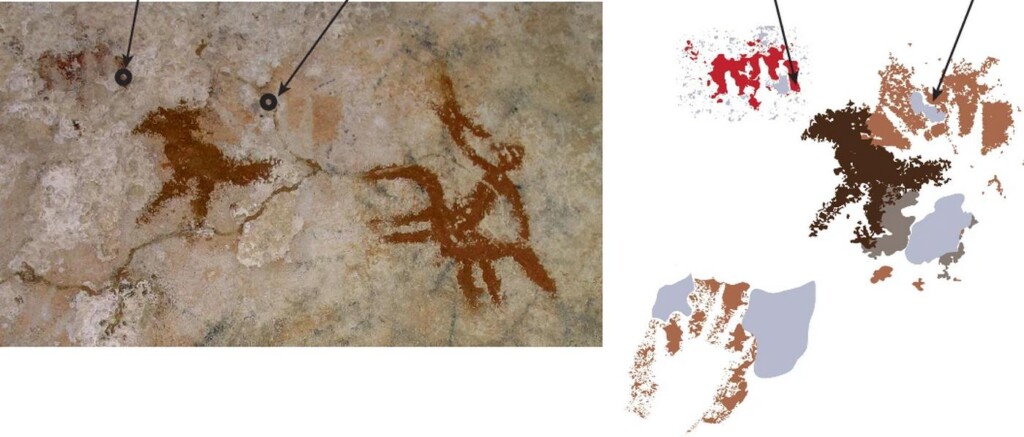
Stencil techniques have been used to portray everything from full bodies (the finest examples in Carnarvon Gorge in Queensland), to hands, weapons, and introduced objects of fascination such as clay pipes and wool shears. There are some very fine and complex hand prints east of King’s Canyon in the Northern Territory, pressing three coaxial U shapes to the rock by painting the two inner, the two outer fingers, and the palm.

Paintings can be highly detailed within an individual figure but rarely narrative panels extend across a whole site or rock panel. More typically pre-existing paintings are painted over with no regard for their meaning or author.

There are examples of important images that have been faithfully reproduced because of their fundamental meaning for a given site. It is important to underline this fact, that repainting, when considered over several hundred years is not commonly faithful reproduction but an accumulation of new expression.

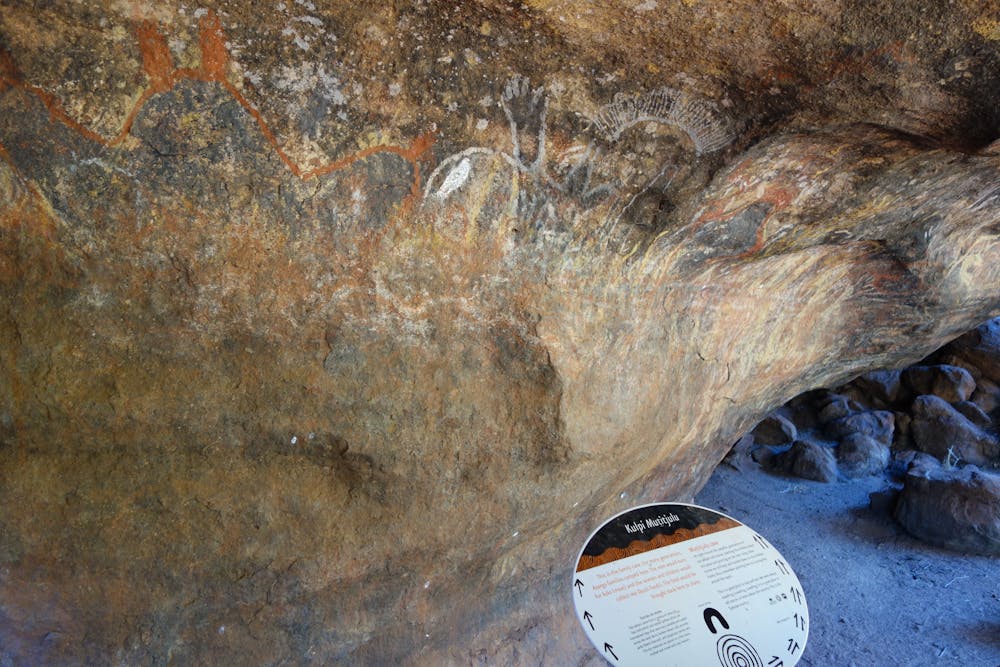
Photographs of Mutitjulu waterhole at Uluru, taken by Australian anthropologist Charles Mountford in the late 1930s, are almost unrecognisable due to the accumulated new painting since that time.

Artwork at Mutitjulu. aa140/Flickr, CC BY-NC-ND

Regular painting at Uluru ceased in the 1960s with only a few isolated cases of painting through to the 1980s.

Pigments

In Australia, pigments were chosen from naturally occurring minerals with little evidence of manufacture. Charcoal is one exception to this, but it could be argued that it was a routine by-product rather than a deliberately manufactured pigment.

There is some unsubstantiated speculation that yellow ochre was heated to turn it red and cases where European pigments were adopted. This availability of new colours did not result in the adoption of more colourful paintings, with the exception of some use of washing blue (a coarse synthetic ultramarine) in parts of Arnhem Land.

The traditional palette, that is to say the most commonly encountered colours, are red, white, yellow and black, with variations on the composition of these but with little evidence of mixing to create intermediate tones.

By studying the trace elemental composition of pigments it is possible to connect them to geological events, and hence their source. Such studies proves that pigments were traded, in some cases over long distances. It is difficult to postulate however that distance of manuportation equals significance or spiritual value, but further research may enlighten this fact.

Pigments were sourced from known locations such as Walgi Mia in central Western Australia and from large coloured earth deposits in the Flinders Ranges. But if we look at one colour – white – the distribution of the minerals used suggests local source rather than trade.

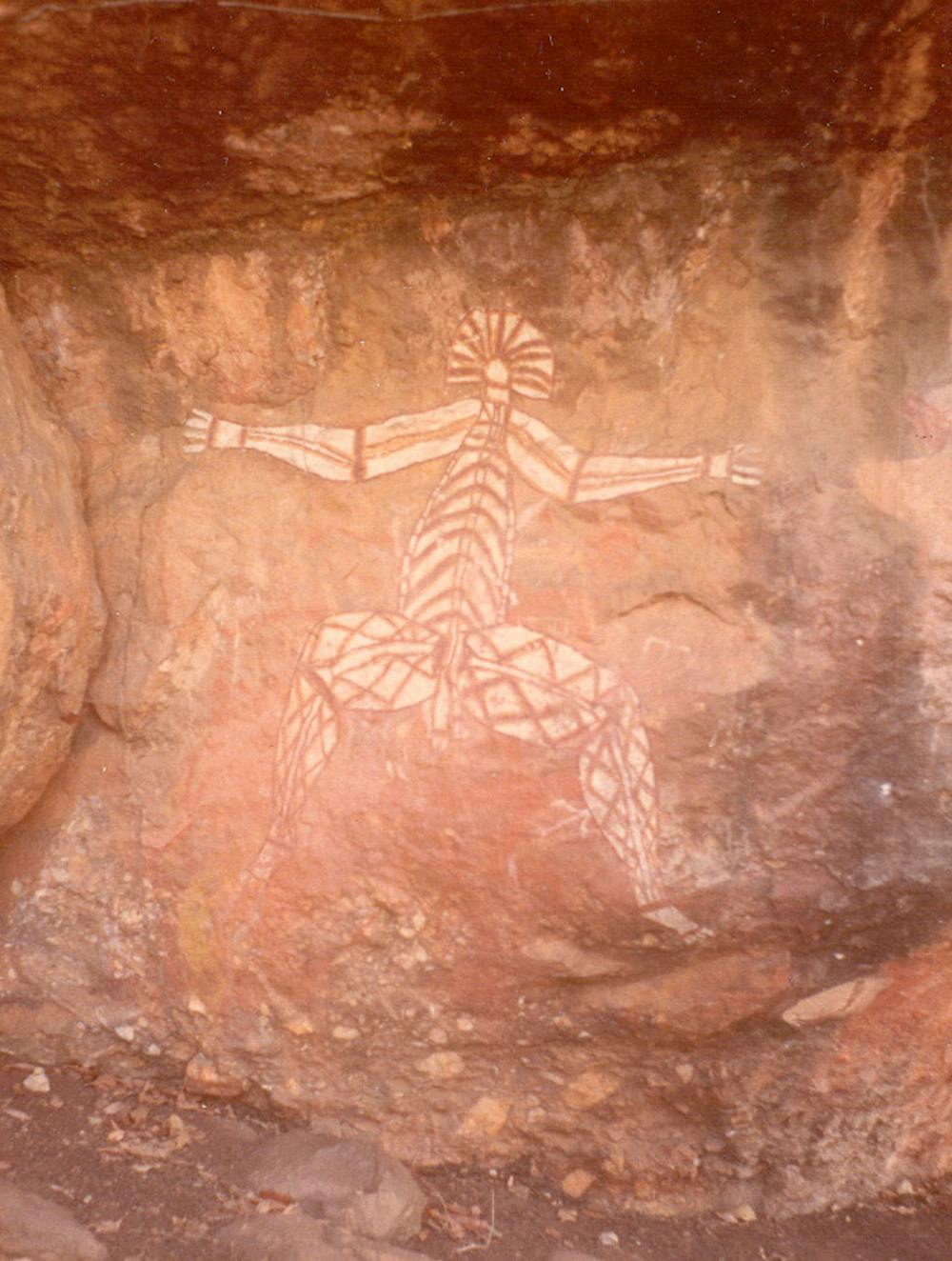
White, yellow and red painting at Burrunggui, Kakadu. Rae Allen/Flickr, CC BY-NC-SA

Kaolin – a soft white clay – is abundant in most parts of Australia but where calcite is found, as it is in the river beds of Arnhem Land, it becomes the more common white pigment. The Kimberly is more abundant in the carbonate mineral huntite and yet it is rare to find huntite used outside this region, despite it being a brighter white than kaolin.

Examples of trade exist and some of these provide interesting insights into the selection of paints.

Just south of Uluru, near the South Australian border, lie a group of sites containing a metallic red pigment characteristic of the Walgi Mia quarry 1,000km to the west. It is said these caves and their paintings were created by the emu creation beings who had a dreaming path extending out to the western coastline and which would have passed very nearby the pigment source. It is not surprising therefore to find a pigment that has come from such a distance.

What is fascinating is that near to Walgi Mia is a very large painting site, Walghanna, that features a very large emu footprint. Emus are not known to have existed in the vicinity of Walghanna, according to the archaeological record and oral history. There appears to have been a two-way trade in materials and stories.

Durability and age

The 1930s photograph by Mountford, showing paintings that no longer exist due to subsequent overpainting indicates, among other things, that all of what one sees at Mutitjulu today is “modern art” painted in the period 1936-1962.

I had great fun at a conference using Powerpoint to fade between an image of the Mutitjulu panel and Convergence, a Jackson Pollock painting with an almost identical scramble of lines, shapes and colours, aimed to make the point that not all rock art is ancient. Some other more significant statements can be added. Most very old paintings survive as very thin remnants.

Art at Ubirr, Kakadu. andrea castelli/Flickr (rotated), CC BY

There are cases in Kakadu of whole colours falling off an image, resulting in, for example, birds without legs. Some very old paintings have survived for thousands of years with every detail seemingly intact, such as those of the dynamic style and others of that period.

These paintings tend to be monochromatic red, applied with haematite that is both very fine and non-responsive to humidity or chemical alteration.

Studies have shown degradation pathways for rock art pigments and it is no surprise that charcoal will jump off the rock very quickly, followed by kaolinite, huntite, then yellow and red ochres.

Dark red haematite is usually the last surviving pigment, unless a painting is subject to floodwaters or other physical agents. There are examples of red paintings surviving under water at Jowalbinna near Laura and east of Mt Isa, both in northern Queensland.

Pigments survive depending on their stability to climatic variations and then ultimately due to their ability to intimately bond with the rock.

It has to be stated that the greatest threat to indigenous rock paintings is the tourist, who out of curiosity rather than malice, desires a sensory connection to inanimate culture.

Having on many occasions adopted the disguise of the tourist I have observed a bus load of fascinated fellow travellers comparing their own hand with that sprayed on the ceiling of Mulga’s Cave just north of Wave Rock.

This is an act of connection with someone from the past but its very execution ensures that connection will soon be lost.


See also:
Stories from the sky: astronomy in Indigenous knowledge
Indigenous medicine – a fusion of ritual and remedy
The Conversation

Andrew Thorn, Heritage Consultant and Materials Conservator; Sessional Lecturer in Stone Conservation, International Centre for the Study of the Preservation and Restoration of Cultural Property

This article is republished from The Conversation under a Creative Commons license. Read the original article.

Read More........

Pigments and palettes from the past – science of Indigenous art

Some Indigenous paintings have lasted thousands of years … so what is it about the pigments that make them so long-lasting? Carolien Coenen/Flickr, CC BY-NC-ND Andrew Thorn, International Centre for the Study of the Preservation and Restoration of Cultural Property

Indigenous Australian practices, honed over thousands of years, weave science with storytelling. In this Indigenous science series, we look at different aspects of First Australians’ traditional life and uncover the knowledge behind them. Here we examine the chemistry and techniques behind perhaps the most iconic element of Indigenous life: rock art.


Visitors to Uluru might also find themselves at Mutitjulu Waterhole in the company of a travel guide filled with wisdom about the meaning of the paintings. Uluru has almost 100 painted sites, of which I have studied most, and tourists will encounter a dozen or less.

Anangu people will explain that the paintings have many meanings depending on the audience. An undulose band may be a snake in one story, a creek in another. A tourist may or may not be told that the paintings at Uluru are in themselves not necessarily highly charged with spiritual values but rather an auxiliary expression in response to the power of the rock itself. The main stories, the big stories, are told in the rock.

So why did people paint? What did it mean? How was it done? Why did they use certain pigments? Why has it lasted so long? The answers inevitably vary depending on where you are standing and with whom.

Painting techniques

Paint has been applied to rocks, almost all types, by a variety of application techniques. Marks were made using what appears to be a dry crayon or pastel application, where a piece of pigment-rich soft rock has been drawn across the surface.

A wide variety of implements were used as brushes to apply water-dispersed pigment, and there is ethnographic evidence of chewed bark and other suitable implements being used – as they still are today for bark paintings.

Fingers may have been used and in one rare and precious place across the flood plain from Ubirr in Kakadu, senior elder of Kakadu, Bill Neidjie, once pointed to a place in the ceiling where his footprints still remained from his youth where he was dipped in paint and pressed against the ceiling.

Stencils at Carnarvon Gorge. Pierre Pouliquin/Flickr, CC BY-NC

Stencil techniques have been used to portray everything from full bodies (the finest examples in Carnarvon Gorge in Queensland), to hands, weapons, and introduced objects of fascination such as clay pipes and wool shears. There are some very fine and complex hand prints east of King’s Canyon in the Northern Territory, pressing three coaxial U shapes to the rock by painting the two inner, the two outer fingers, and the palm.

Paintings can be highly detailed within an individual figure but rarely narrative panels extend across a whole site or rock panel. More typically pre-existing paintings are painted over with no regard for their meaning or author.

There are examples of important images that have been faithfully reproduced because of their fundamental meaning for a given site. It is important to underline this fact, that repainting, when considered over several hundred years is not commonly faithful reproduction but an accumulation of new expression.

Photographs of Mutitjulu waterhole at Uluru, taken by Australian anthropologist Charles Mountford in the late 1930s, are almost unrecognisable due to the accumulated new painting since that time.

Artwork at Mutitjulu. aa140/Flickr, CC BY-NC-ND

Regular painting at Uluru ceased in the 1960s with only a few isolated cases of painting through to the 1980s.

Pigments

In Australia, pigments were chosen from naturally occurring minerals with little evidence of manufacture. Charcoal is one exception to this, but it could be argued that it was a routine by-product rather than a deliberately manufactured pigment.

There is some unsubstantiated speculation that yellow ochre was heated to turn it red and cases where European pigments were adopted. This availability of new colours did not result in the adoption of more colourful paintings, with the exception of some use of washing blue (a coarse synthetic ultramarine) in parts of Arnhem Land.

The traditional palette, that is to say the most commonly encountered colours, are red, white, yellow and black, with variations on the composition of these but with little evidence of mixing to create intermediate tones.

By studying the trace elemental composition of pigments it is possible to connect them to geological events, and hence their source. Such studies proves that pigments were traded, in some cases over long distances. It is difficult to postulate however that distance of manuportation equals significance or spiritual value, but further research may enlighten this fact.

Pigments were sourced from known locations such as Walgi Mia in central Western Australia and from large coloured earth deposits in the Flinders Ranges. But if we look at one colour – white – the distribution of the minerals used suggests local source rather than trade.

White, yellow and red painting at Burrunggui, Kakadu. Rae Allen/Flickr, CC BY-NC-SA

Kaolin – a soft white clay – is abundant in most parts of Australia but where calcite is found, as it is in the river beds of Arnhem Land, it becomes the more common white pigment. The Kimberly is more abundant in the carbonate mineral huntite and yet it is rare to find huntite used outside this region, despite it being a brighter white than kaolin.

Examples of trade exist and some of these provide interesting insights into the selection of paints.

Just south of Uluru, near the South Australian border, lie a group of sites containing a metallic red pigment characteristic of the Walgi Mia quarry 1,000km to the west. It is said these caves and their paintings were created by the emu creation beings who had a dreaming path extending out to the western coastline and which would have passed very nearby the pigment source. It is not surprising therefore to find a pigment that has come from such a distance.

What is fascinating is that near to Walgi Mia is a very large painting site, Walghanna, that features a very large emu footprint. Emus are not known to have existed in the vicinity of Walghanna, according to the archaeological record and oral history. There appears to have been a two-way trade in materials and stories.

Durability and age

The 1930s photograph by Mountford, showing paintings that no longer exist due to subsequent overpainting indicates, among other things, that all of what one sees at Mutitjulu today is “modern art” painted in the period 1936-1962.

I had great fun at a conference using Powerpoint to fade between an image of the Mutitjulu panel and Convergence, a Jackson Pollock painting with an almost identical scramble of lines, shapes and colours, aimed to make the point that not all rock art is ancient. Some other more significant statements can be added. Most very old paintings survive as very thin remnants.

Art at Ubirr, Kakadu. andrea castelli/Flickr (rotated), CC BY

There are cases in Kakadu of whole colours falling off an image, resulting in, for example, birds without legs. Some very old paintings have survived for thousands of years with every detail seemingly intact, such as those of the dynamic style and others of that period.

These paintings tend to be monochromatic red, applied with haematite that is both very fine and non-responsive to humidity or chemical alteration.

Studies have shown degradation pathways for rock art pigments and it is no surprise that charcoal will jump off the rock very quickly, followed by kaolinite, huntite, then yellow and red ochres.

Dark red haematite is usually the last surviving pigment, unless a painting is subject to floodwaters or other physical agents. There are examples of red paintings surviving under water at Jowalbinna near Laura and east of Mt Isa, both in northern Queensland.

Pigments survive depending on their stability to climatic variations and then ultimately due to their ability to intimately bond with the rock.

It has to be stated that the greatest threat to indigenous rock paintings is the tourist, who out of curiosity rather than malice, desires a sensory connection to inanimate culture.

Having on many occasions adopted the disguise of the tourist I have observed a bus load of fascinated fellow travellers comparing their own hand with that sprayed on the ceiling of Mulga’s Cave just north of Wave Rock.

This is an act of connection with someone from the past but its very execution ensures that connection will soon be lost.


See also:
Stories from the sky: astronomy in Indigenous knowledge
Indigenous medicine – a fusion of ritual and remedy
The Conversation

Andrew Thorn, Heritage Consultant and Materials Conservator; Sessional Lecturer in Stone Conservation, International Centre for the Study of the Preservation and Restoration of Cultural Property

This article is republished from The Conversation under a Creative Commons license. Read the original article.

Read More........

John Oliver Sells His Bob Ross Painting Raises Record $1.5 Million for Public Television

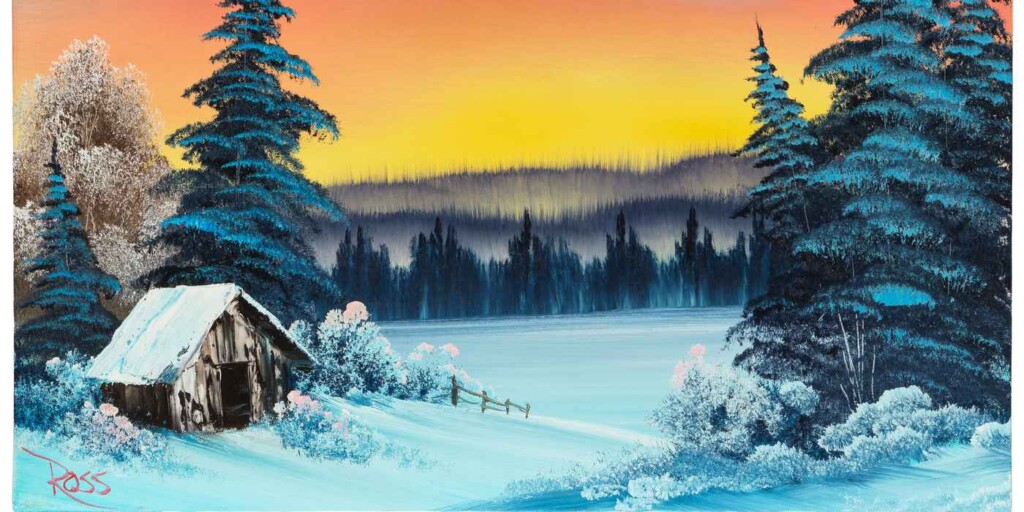
Bob Ross painting Cabin at Sunset – credit, screenshot via John Oliver’s Junk

GNN reported recently that a Los Angeles auction house recently handled the sale of three paintings by the famous TV artist Bob Ross, with the proceeds of over $600,000 going to fund public television and radio.

Inspired by the effort, HBO’s comedy news host John Oliver announced that he too had an original Ross that he would auction for the Corporation for Public Broadcasting.

On the last episode of the most recent season of Last Week Tonight with John Oliver, the British-born TV host revealed an auction catalogue called “John Oliver’s Junk” headlined by Cabin at Sunset, which Ross painted in season 10 of his show The Joy of Painting.

It managed to set a new auction record for a Bob Ross painting of $1,035,000 after 35 bids.

“We’ve actually accumulated a bunch of weird artifacts on this show over the years that we could definitely auction off to raise some much needed money,” Oliver said on last week’s show. “I am proud to announce last week tonight’s first ever auction in aid of public media.”

The proceeds from the sales of Cabin at Sunset and 34 other items totaled $1.5 million which has been transferred to the Public Media Bridge Fund which helps support stations and programs in need of funding.

Most of the items included show memorabilia, including a pair of golden sneakers Oliver promised to wear almost decade ago if former FIFA President Sep Blatter resigned, a cabbage that Oliver married in a segment on AI-generated art, and a jockstrap worn by Russel Crowe.

A pair of VIP tickets to a live show taping caught over $110,000.

While the Corporation for Public Broadcasting, a GSE that funds public radio and television in America, was receiving over $1 billion of its budget from the government, anyone who watches PBS or listens to NPR notes the frequency with which they run pledge drives. This along with other for-profit productions generates substantial revenue that helps keep the CBP operational.

It was the idea of Bob Ross Inc., the company that manages the painter’s likeness and property, to hold the auction in support of public television, something which he loved so much.

“I think this actually would have been Bob’s idea,” said Joan Kowalski, president of Bob Ross Inc. “And when I think about that, it makes me very proud.”

Home in the Valley, (1993) Cliffside, (1990) and Winter’s Peace (1993) were priced to start at Bonham’s auctioneers at between $25,000 – $30,000, but all three quickly exploded in action.The first brought $229,100, the second $114,800, and Winter’s Peace went for a staggering $318,000. John Oliver Sells His Bob Ross Painting Raises Record $1.5 Million for Public Television
Read More........

Three Bob Ross Paintings Sold for $600,000 at Auction in Fundraiser for Public Television

Winter’s Peace by Bob Ross – credit Bonham’s Auctioneers, released

Three works from Bob Ross’ classic public television show The Joy of Painting raised over half a million dollars for public television.

Having relied for decades on endowment contributions and pledge drives of every tact and description, it was brilliant idea that puts a brilliant man and his brilliant perspective on the arts back into the spotlight 30 years after his death.

“I think this actually would have been Bob’s idea,” said Joan Kowalski, president of Bob Ross Inc., the firm that manages his likeness, content, and collection of thousands of works that he painted on television, in advance of the auction. “And when I think about that, it makes me very proud.”

The auction came months after cuts to PBS and other stations were passed in the most recent budget, but also as a pair of Bob Ross paintings touched, and then surmounted, 6-figure valuations—something very rarely seen before.

Straight Arrow News, which spoke with Kowalski, also reached out to Bonham’s, which had seen a pair of Ross’ sold for $115,000 and $95,000.

In many ways, the gentle television painter was a singular figure; irreplicable, not only as a figure in time but also in style and method. Ross paintings have always been conspicuously absent from the fine art auction circuits, and rarely come anywhere close to these sorts of valuations.

But in light of the appreciation, Bob Ross Inc. will be auctioning Home in the Valley, (1993) Cliffside, (1990) and Winter’s Peace (1993). They were priced to start at between $25,000 – $30,000, but quickly went to the Moon.

The first brought $229,100, the second $114,800, and Winter’s Peace went for a staggering $318,000.

– credit, Bob Ross Inc. fair use

“I think that there’s a certain amount of snobbery in the art business, but Bob is a cultural touchstone,” Aaron Bastian, senior director of California and Western paintings at Bonhams, told Straight Arrow News.

“He crosses a lot of different generations. Kids these days have seen him on YouTube. I watched him with my parents, right? And so, it’s something that is readily accessible to everyone.”

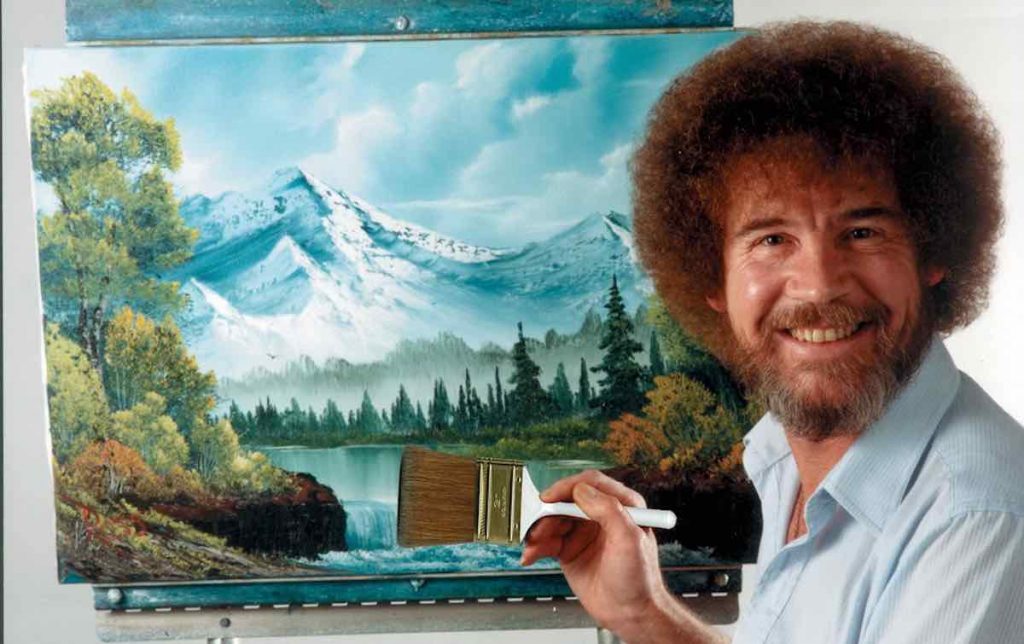
Modern artistic stars and works commonly seek to portray the world’s challenges, contradictions, and crises, while Bob Ross, a former Air Force drill sergeant who vowed never the raise his voice again after leaving the military, sought every broadcast to create a world he wanted to see: full of ‘happy little trees,’ and all the rest.

Kowalski points out that Ross loved the idea of public television, and that he would probably have been the first to pull out some out works to put towards the cause. After all, they aren’t unique.

While viewers saw only the canvas that Ross painted on screen over the course of the 30-minute program, that was actually the second of three renditions. One, he would do before shooting as a preparatory work that sat off camera as a reference. The second he’d do for the recorded broadcast, and a third, well-finished work with much more attention to detail than he could manage on-screen was painted for his instructional booklets.

Often, Ross would ensure the three remained together, either in his holdings at Bob Ross Inc., or in the cases when he would donate them, either to PBS or to the Smithsonian.

All the money raised from the auction will go to Create Channel, which Straight Arrow described as a “premium lifestyle channel for public television stations.”Another 3 works will be auctioned in January—part of a collection of 27 that could be ultimately sold to support the various channels and outlets under American Public Television. Three Bob Ross Paintings Sold for $600,000 at Auction in Fundraiser for Public Television
Read More........

Creative & Decorative Nail Art Designs

Nail art is the latest obsession and talk of the town these days. Within couple of hours, by making use of innovative nail art techniques one can make his or hand gorgeous which were once ugly and horrible.
Everyone all around the world know that how important nails are in a woman’s overall beauty and this has given emergence to a new class of people known as nail stylists. They are trained people with new
improved and innovative nail styling techniques. Nail art is no more restricted to models and celebrities only. Nowadays even teenagers have become very fussy about how their hands look. They go for nail
extensions, quick manicures and different nice styles on the nails. Nail art designs are becoming more and more innovative these days being high in demand. Many people go in for their individualized
designs. You will be surprised to read that this funky nail fashion is not only influencing female clients but men also. Nail art is all about giving good hygiene and men too are visiting parlors, getting their nails
manicured. Funky nails designs in gold, silver, red, blue, black and green are very much in these days. Everyone is making use of bold shades this season. One can go for acrylic nails, airbrushing, natural
 hand painting, nail accessorizing, nail piercing and many other innovative things with your nails.Source: icePice
Read More........

San Francisco’s Trash Company Marks 35 Years of Stunning Art Made of Recycled Garbage With Free Gallery Opening

Recology Recycling Center, where ‘junk’ is being dropped off, and Artists-in-Residence may scavenge

Inside San Francisco’s 47-acre recycling and recovery center at the dump, where small businesses and residents can bring truckloads of cast-offs, artists have special access to a churning, ever-changing landscape where detritus from all over the city is sorted and processed.

In fact, more than 100 tons of material enter the building every day.

Besides just being the waste management company, Recology’s mission is to conserve resources and reduce waste, inspiring a more mindful relationship with the things we throw away. To that end, we need artists.

Since 1990, Recology has run an Artist-in-Residence program that supports Bay Area artists, giving them freedom to scavenge materials for use in creating artworks.

The four-month residency also provides artists with access to studio space and a stipend. Armed with safety gear and a shopping cart, artists have scavenging privileges in the Public Reuse and Recycling Area to reimagine the discarded waste as art objects.

“The artists love the access,” Recology spokesperson Robert Reed told GNN. “The materials dropped off are varied and interesting.”

Recology Artist In Residence Neil Mendoza scavenging through trash with shopping cart
The artists, like Neil Mendoza (pictured above), then wheel their carts of reclaimed materials to an art studio/workshop, equipped with tools that Recology maintains at the transfer station.

At the end of each residency, a free-to-the-public exhibition of the artworks created is held in the studio.

On Saturday, the resulting creativity from dozens of Artists In Residence was on full display as 2,000 people attended the opening of a free exhibition featuring 35 years of artwork—a retrospective embodying the phrase ‘trash to treasure’.

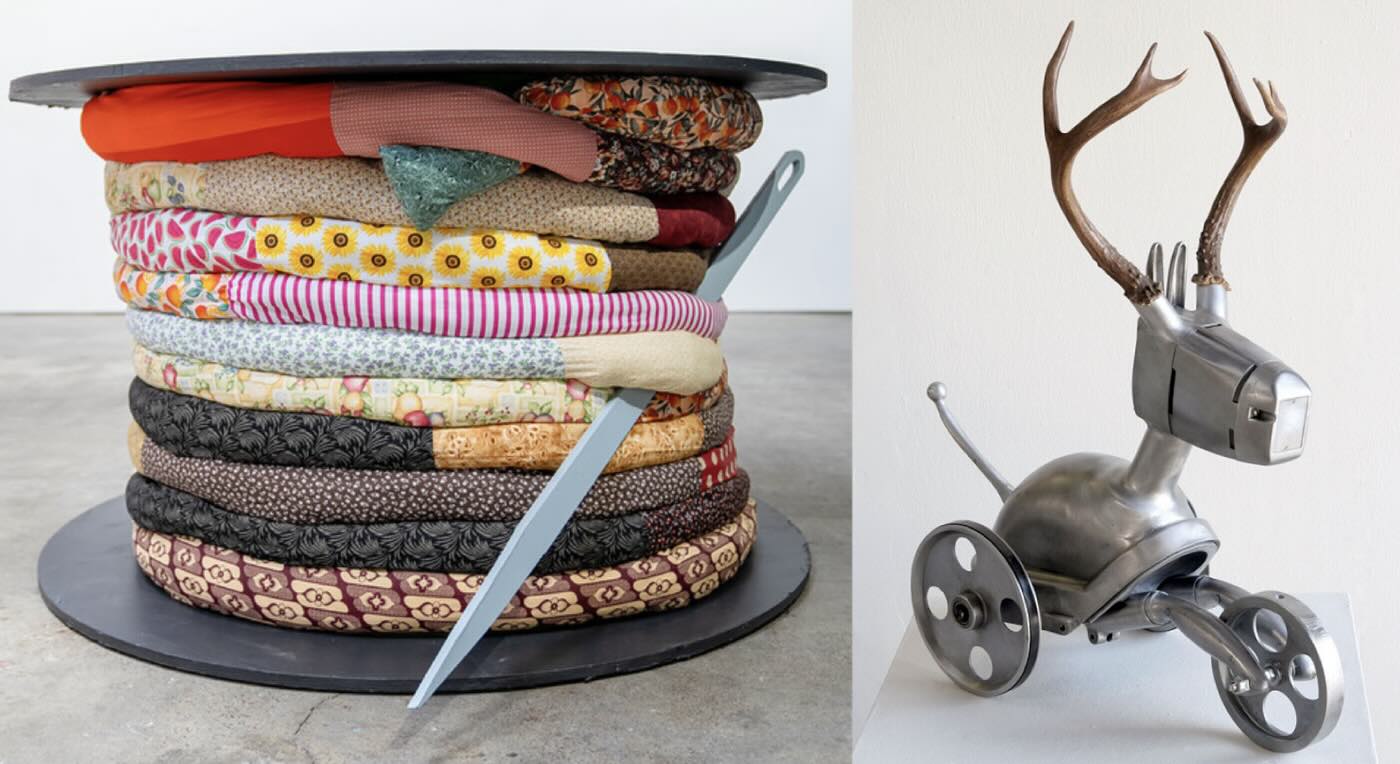
‘Mother Spool’ by Nimah Gobir (Photo by Minoosh Zomorodinia for Recology) and ‘Impala’ by Nemo Gould
While the approaches and themes vary widely among the 63 artists featured, a shared thread runs through it all: the possibilities of transformation through reuse.

For instance, in 2007 Nemo Gould created the Impala sculpture (pictured above, right) by scavenging antlers, a power sander, bandsaw blade wheels, projector flywheel, vacuum cleaner handles, a meat grinder, motorcycle clutch, and cheese slicers.


Over the past 35 years, the Residency program has hosted more than 190 professional artists and 60 student artists from local colleges and universities. These artists, emerging, mid-career, and established, have worked across a wide range of disciplines, including painting, sculpture, video, photography, installation, performance, and new media.

The gallery exhibit—a collaboration between Recology and The Minnesota Street Project, at 1275 Minnesota Street in San Francisco—runs through Aug. 30, 2025 and is free to the public, according to the news release here.

“It’s a great, no cost opportunity for families to see art this summer,” says Reed. “We also have a traveling exhibition touring the country.”

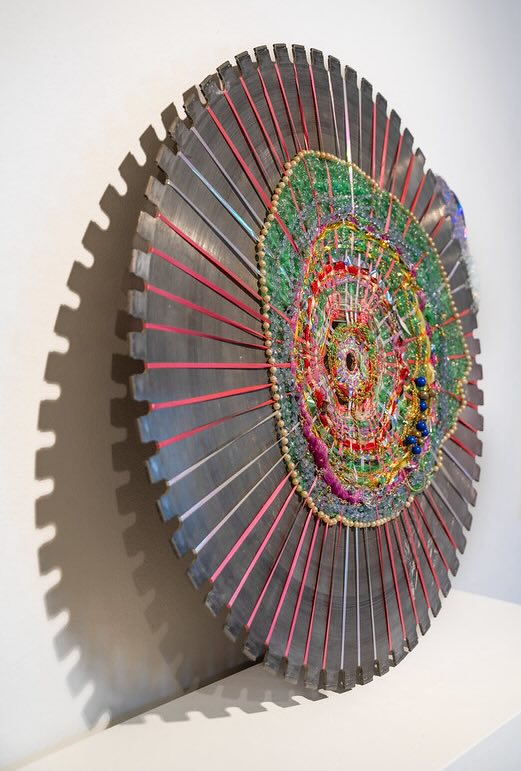
Adorned Saw by Eleanor Scholz uses embroidery thread, ribbon, jewelry, keys, bubble wrap, mylar, plastic, and DVDs – Photo by Minoosh Zomorodinia for Recology
The traveling exhibit, which includes Impala, is called Reclaimed: The Art of Recology. It presents a selection of works from 33 fascinating artists who were selected to participate in the company’s unique Residency.

This eclectic exhibition of work includes around 50 objects: from paintings produced with recycled house paint to tapestries made from used ties, shirts, and other fabrics.

From sculptural vases crafted from Ethernet and coaxial cables to ever more hybrid concoctions that are often mind-blowing in execution and form.

The traveling show can be found currently in Traverse City, Michigan at the Dennos Museum Center at Northwestern Michigan College until Aug. 31, 2025.

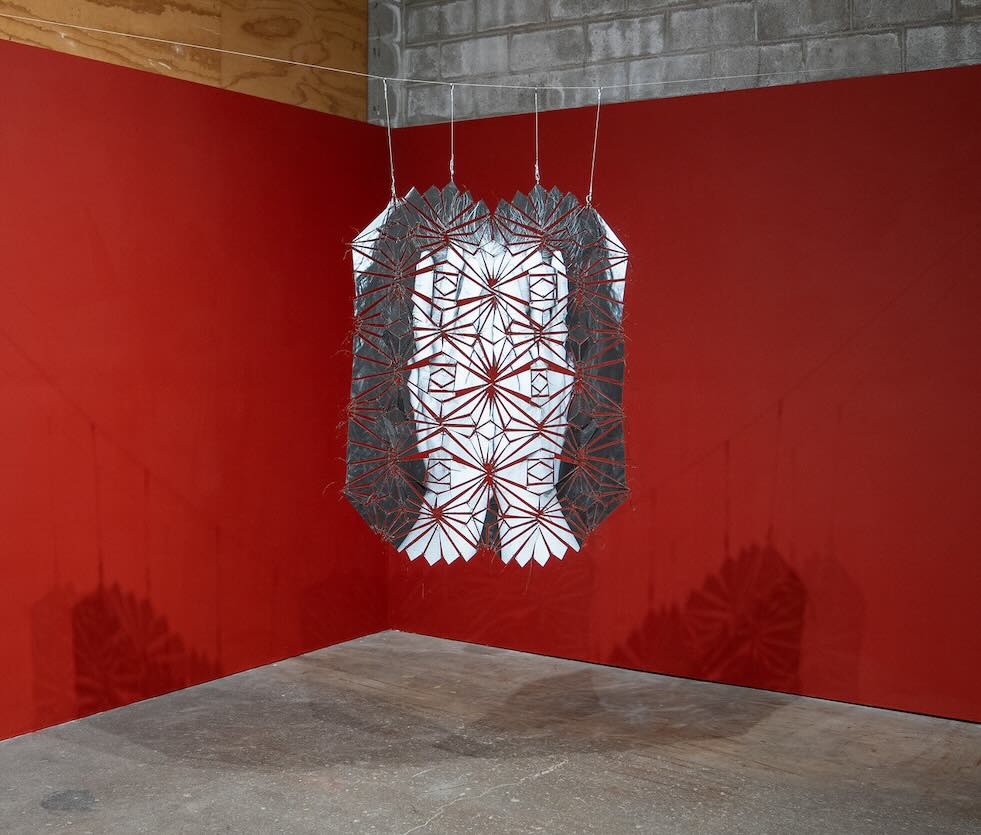
Knots of Reflection by Nasim Moghadam (mirror, archival pigment print, and Iranian female hair) Photo by Minoosh Zomorodinia

On October 4, it opens in Pueblo, Colorado, showing at the On Sangre de Cristo Arts & Conference Center until Dec. 14, 2025.There are three shows booked for 2026 in the cities Carlsbad, New Mexico in January; Canton, Ohio in April; and Syracuse University Art Museum in September. San Francisco’s Trash Company Marks 35 Years of Stunning Art Made of Recycled Garbage With Free Gallery Opening
Read More........

World Wide Web exhibit opens at Gallery 101

Out of Africa from the Infinite Jouvay series. -

The World Wide Web exhibit by multi-media artist Rubadiri Victor opens at the 101 Art Gallery, Newtown, Port of Spain on July 17 from 5-9 pm. The exhibit, consisting of 77 paintings and objects spanning a number of Victor's series, will raise funds to go towards the artist's Season of Anansi Folklore Festival bills.

The exhibit will run until July 21 from 8 am-5 pm with special night events on Friday and Saturday.

West Indies Bowler Kaleidoscope -

The World Wide Web exhibition also officially launches the Anansi Goes to England initiative. After a successful third year, Victor’s Season of Anansi has been invited to bring its entire programme to Liverpool, England for Black History Month in October. The offer has been extended by the Merseyside International Centre of Carnival Arts + Black Innovation (MICCABI) through former son-of-the-soil- the award-winning artist Addae Gaskin, who is creating a series of cultural interventions in Liverpool.

“This represents an extraordinary opportunity for brand Trinidad and Tobago and our creative industries as the Anansi festival is expected to take place in Liverpool, Luton, Leeds, and London intersecting with multiple institutions like schools, universities, libraries, Museums, theatres, community centres, performing arts troupes, etc. Although MICCABI is paying some of the bills there are still significant expenses to be met as all aspects of the Anansi Folklore Festival are crossing the Atlantic: from the schools storytelling tour to the re-staging of the play Anansi and the 10 Dragons; from the bookstore reading tour to the multi-media exhibition The Black Infinite: the Global Rise of Afro-Futurism. The World Wide Web exhibition will also feature a retrospective on the just concluded Season of Anansi Festival 2025."

Guardian Angel of the Refugees -

World Wide Web is Rubadiri’s 11th one-man exhibition and his second in the historic Boscoe Holder Studio at Gallery 101. The exhibition includes work from five major series in Victor’s ongoing work. One is the Crucial Arch Angels series which features massive paintings of blue-skinned contemporary Caribbean arch angels with reparative portfolios. These include paintings like Our Guardian Angel of the Refugees and The Angel of Abundance Collects the Wealth to Redistribute it Equitably. There also are some paintings from the Adventures of the King of the Wizards series which visualises the legendary calypsonian the Mighty Shadow as a super-hero, Master Wizard in various adventures.

The Beginning of the Maroon Republic -

Another popular series is Victor’s portraits of West Indies cricketers called West Indies Cricket Warriors. One major series being shown for the first time completed is the Infinite Jouvay series, which features a series of canvases depicting the journey of "Jouvay" from Africa to Trinidad and then the world. The series envisages ancestral masquerades baptising a tribesman in West Africa in blue paint, then entering him to travel across the Middle Passage during the evil of the Trans-Atlantic slave trade so that his descendants would have a superpower within them to survive the horrors of the West.

“My work has always been for all audiences. I’m inviting the public to come out and see the work- especially young people at home on vacation from school. Art is for everyone,” Victor said.For more information contact Rubadiri Victor at (868)797-0949 or follow rubadirivictor on IG World Wide Web exhibit opens at Gallery 101 - Trinidad and Tobago Newsday
Read More........

Amazing vibes of the Music & Dance of Rajasthan

Posted by jinson, The people of Rajasthan live life to the hilt. After hard work under the scorching sun rays and on the rocky terrain whenever they take time off, they let themselves go in gay abandon. There is dancing, singing, drama, devotional music and puppet shows and other community festivities which transform the hardworking Rajasthanis into a fun-loving and carefree individual. Each region has its own folk entertainment, the dance styles differ as do the songs, interestingly enough, and even the musical instruments are different.  

Rajasthani music is very famous not only in India but also in the world. Music & dance are deeply integrated in Rajasthani Life. The stillness of the desert evening and the upsurge of life in the short-lived rainy season or spring are filled with soulful, full-throated music and rhythmic dance. Instruments such as Sarangi, Kamaycha, Satara, Nad, and Morchang create a wide range of lightning and melodious sound in accompaniment to the music of the Bhopas, Kalbeliyas, Langas and the Mananiyars. Professional performers like the Bhatts, Bholis, Mirasis, Nat, Bhands are omnipresent across the state.
They are patronised by the villagers who participate actively in the shows put up by these travelling entertainers. Their amazingly rich music has an extraordinary full individually, tradition and exotic flavour, which gives a distinctive feature and quality to their musical sounds. They have songs for every occasion with rich emotional content, almost an endless variety of tunes, quite a few delightful dance forms, and a large number of musical instruments, all a collective creation of the folks which is retained by them in its traditional form and character and passed from one generation to the other.

Rajasthani dances are a spectacular celebration of life and colour. The Thar Desert of Rajasthan gets life with its musicians and dancers, which are simple expressions of celebrations and festivity. The dancers, the dances and costumes have made Thar the most colourful desert in the world. Each region adding its own form of dance styles and performers, there are dances that follows a lineage of age old traditions, adhere to religious significance, display their daring attitude as well as complimenting various fairs and festivals.

Fire Dance: The Jasanthis of Bikaner and Chum are renowned for their tantric powers and this dance is in keeping with their lifestyle. A large ground is prepared with their live wood and charcoal where the Jasnathi men and boys jump on to the fire to the drum beats. The music gradually rises in tempo and reaches a crescendo; the dancers seem to be in a trance like state.

Ghoomer Dance: This is basically a community dance for women and performed on auspicious occasions. Derived from the word the “Ghooma”, this is a very simple dance where the ladies move gently, gracefully, in circles.


Giat Ghoomer: This one is one of the many dance-forms of the Bhil-tribal. Performed during Holi festival this is among a few performances where both men and women dance together.
Chari Dance: This is popular in the Kisherigarh region and involves dancing with a Chari, or pot, on one’s head. A lighted lamp is then placed on the pot.

Kachchi Ghodi: This is a dance performed on dummy horses. Men in elaborate costumes ride the equally well decorated dummy horses. Holding naked swords, these dancers move rhythmically to the beating of drums. A singer narrates the exploits of the Bavaria bandits of Shekhawati.


Drum Dance: This is a professional dance-form from Jalore. Five men with huge drums round their necks, some with huge cymbals accompany a dancer who holds a naked sword in his mouth and performs in his mouth and performs vigorously by twirling three painted sticks.

TerahTali: Performed by the female dancers while sitting, Terahtali is one of the fabulous dance forms. In this the women ties little brass discs called ‘manjeerans’ with long strings to their hands, arms, wrists, waists, and elbows. While their male partners sing and play ‘tandoora’, the women with manjeerans create a strong rytham with perfect balanced dance moves.


Music


Ragas : Folk music is the basic style of Rajasthani music, Also, different Raga and various instruments are other essential factors which form a fantastic @ unique music culture of Rajasthan. Bilawal, Kafi, Desh, Khamaj and Peelu are some ragas, most widely used in Rajasthani folk songs. Some in their pure forms and others in combinations. Many folk songs are tuned in Bilawal and Kafi. The folk songs of Rajasthan have maintained the elements of Indian classical music despite the fact that they are freely composed and sung, without any specific rules. Classicism in music have been framing and improving its form with the help of folk-songs.

Maand: Rajasthan's most sophisticated style of folk music and has come a long way from the time it was only sung in royal courts, in praise of the Rajput rulers. Professional singers still sing the haunting ballads of Moomal Mahendra, Dhola-Maru and other legendary lovers and heroes.

Instrument: The Thrilling melody of Rajasthan sounds in variety of delightful primitive instruments. The stringed variety is the mixture of Sarangi, Morchang, Ektara Rawanhatta and Kamahacha. Then Percussion instruments are in all shapes & sizes like huge Nagara( giant Drums) and Dhols to the little drums. Daf and Chang are the instruments which are mostly played in Holi.

Folk music of Rajasthan depicts multiple moods & shades including lonliness of lovers, their reunion, inter-personal relationship, laughter, joy, happiness & faith. This folk music also serves as educational purpose.Holiday India : Amazing vibes of the Music & Dance of Rajasthan
Read More........