List of Tallest Statues in India that have become tourist destinations


By Bharat Gatha, Throughout history, various cultures have crafted statues with their inception beginning at ancient times to the contemporary era. The oldest statues date back to 30,000 years. Sculptures manifest in diverse forms, portraying a range of beings whether real or fantastical and often adorn public spaces serving as expressions of public art.
Tallest Statue in the in India and World;

As of 2024, the highest statue in the world is that of the Statue of Unity located in Gujarat, India. This colossal monument is of Sardar Vallabhai Patel, who played a prominent role in India’s independence and stands at a towering height of 182 metres (597 feet).

The statue is located along the banks of the Narmada river.

Next Top 5 statues in India;

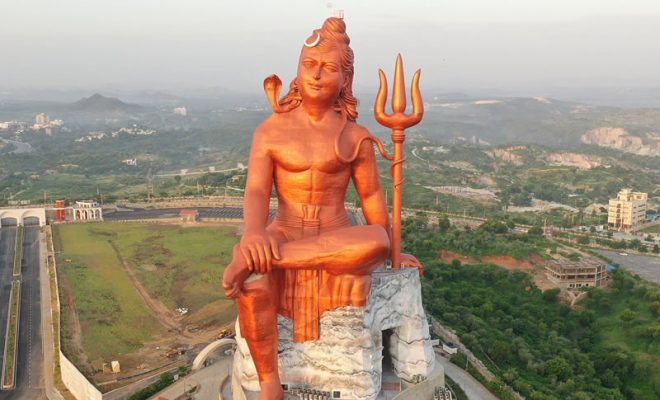
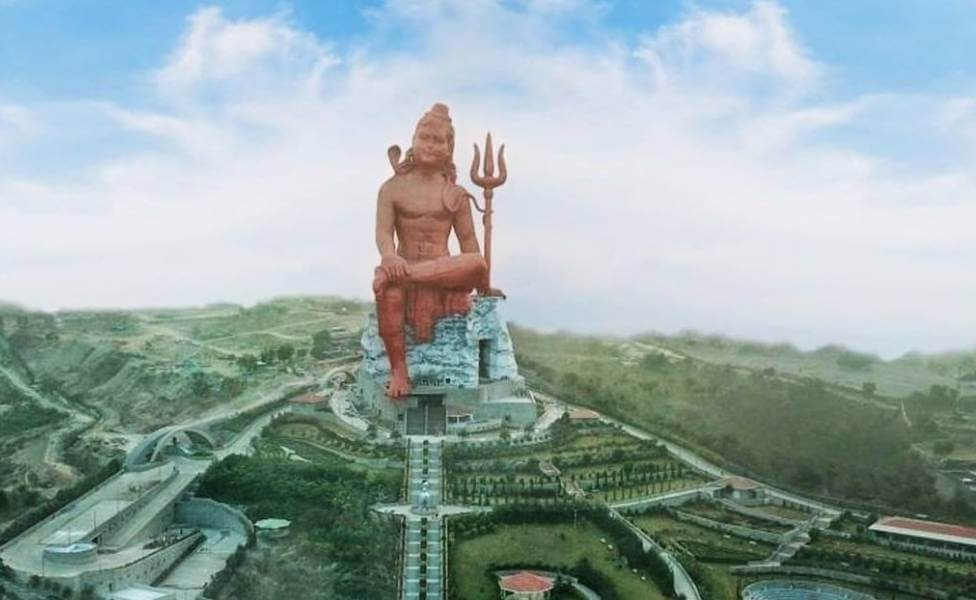
Statue of Belief (Viswas Swaroopam)


In April 2013, Indian businessman Madan Paliwal gave the instructions to build a Shiva Statue in Nathdwara, Rajasthan, at a height of 369 feet (112.4 metres). The statue was completed in August 2019. It was designed by sculptor Nagesh Kumawat.

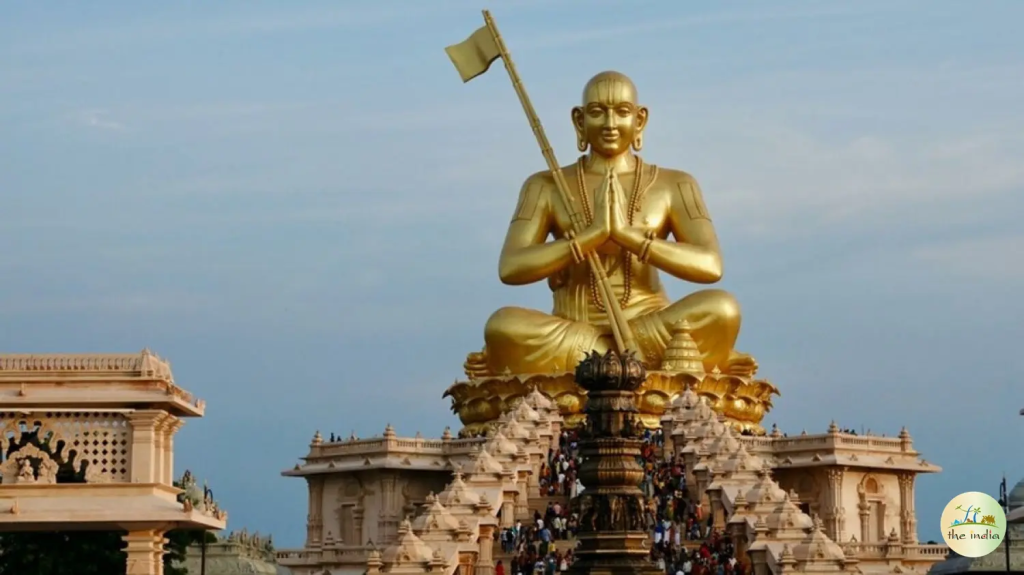
Statue of equality (Ramanuja)


The idea of this statue was conceived by ascetic Chinna Jeeyar who after getting the idea went up to architect DNV Prasad Sthapati. Construction began in May 2014 and is located at Muchintal, Telangana. The statue is a seated image of 11th century philosopher Ramanuja and reaches up to a height of 216 feet (66 metres).

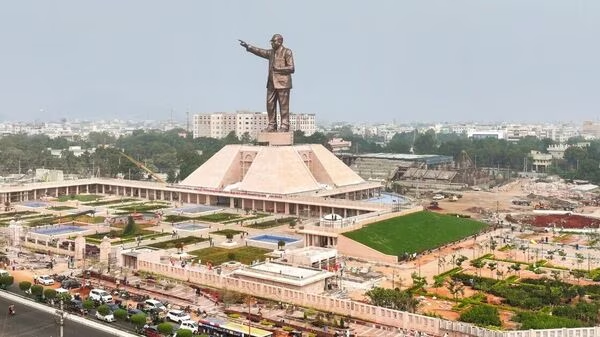
Dr Ambedkar Statue


Located at Hussain Sagar, Hyderabad, in Telangana, it is the biggest Ambedkar Statue in the country. It reaches a recorded height of 175 feet (55.34 metres). The statue is designed by Ram V Sutar alongwith his son Anil Ram Sutar.

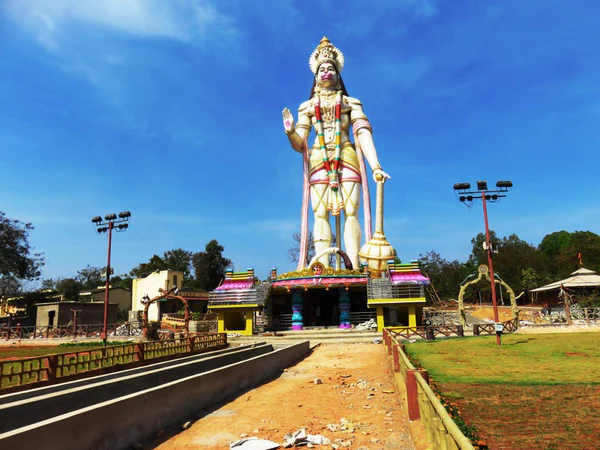
Hanuman Statue


It is located along the banks of river Krishna, Andhra Pradesh. Started as a dream by Jayi, Ramanamurthy, a devotee soon received donations from his community and made it the highest Hanuman statue in India. Started in 2005 and finished in 2020, the height of the idol is 171 feet (52 metres).

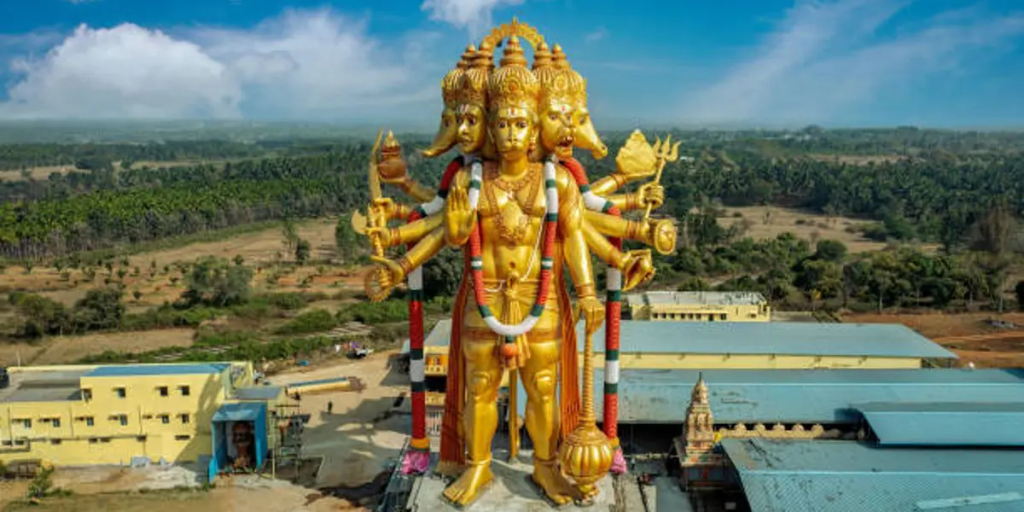
Panchmukhi Hanuman Statue

The Panchmukhi Hanuman statue is located at Bidanagere, Karnataka and is the second highest Hanuman statue in India. It is of a height of 161 feet (49 feet) and was unveiled by chief minister Basavaraj Bommai. List of Tallest Statues in India that have become tourist destinations
Read More........

Amazing vibes of the Music & Dance of Rajasthan

Posted by jinson, The people of Rajasthan live life to the hilt. After hard work under the scorching sun rays and on the rocky terrain whenever they take time off, they let themselves go in gay abandon. There is dancing, singing, drama, devotional music and puppet shows and other community festivities which transform the hardworking Rajasthanis into a fun-loving and carefree individual. Each region has its own folk entertainment, the dance styles differ as do the songs, interestingly enough, and even the musical instruments are different.  

Rajasthani music is very famous not only in India but also in the world. Music & dance are deeply integrated in Rajasthani Life. The stillness of the desert evening and the upsurge of life in the short-lived rainy season or spring are filled with soulful, full-throated music and rhythmic dance. Instruments such as Sarangi, Kamaycha, Satara, Nad, and Morchang create a wide range of lightning and melodious sound in accompaniment to the music of the Bhopas, Kalbeliyas, Langas and the Mananiyars. Professional performers like the Bhatts, Bholis, Mirasis, Nat, Bhands are omnipresent across the state.
They are patronised by the villagers who participate actively in the shows put up by these travelling entertainers. Their amazingly rich music has an extraordinary full individually, tradition and exotic flavour, which gives a distinctive feature and quality to their musical sounds. They have songs for every occasion with rich emotional content, almost an endless variety of tunes, quite a few delightful dance forms, and a large number of musical instruments, all a collective creation of the folks which is retained by them in its traditional form and character and passed from one generation to the other.

Rajasthani dances are a spectacular celebration of life and colour. The Thar Desert of Rajasthan gets life with its musicians and dancers, which are simple expressions of celebrations and festivity. The dancers, the dances and costumes have made Thar the most colourful desert in the world. Each region adding its own form of dance styles and performers, there are dances that follows a lineage of age old traditions, adhere to religious significance, display their daring attitude as well as complimenting various fairs and festivals.

Fire Dance: The Jasanthis of Bikaner and Chum are renowned for their tantric powers and this dance is in keeping with their lifestyle. A large ground is prepared with their live wood and charcoal where the Jasnathi men and boys jump on to the fire to the drum beats. The music gradually rises in tempo and reaches a crescendo; the dancers seem to be in a trance like state.

Ghoomer Dance: This is basically a community dance for women and performed on auspicious occasions. Derived from the word the “Ghooma”, this is a very simple dance where the ladies move gently, gracefully, in circles.


Giat Ghoomer: This one is one of the many dance-forms of the Bhil-tribal. Performed during Holi festival this is among a few performances where both men and women dance together.
Chari Dance: This is popular in the Kisherigarh region and involves dancing with a Chari, or pot, on one’s head. A lighted lamp is then placed on the pot.

Kachchi Ghodi: This is a dance performed on dummy horses. Men in elaborate costumes ride the equally well decorated dummy horses. Holding naked swords, these dancers move rhythmically to the beating of drums. A singer narrates the exploits of the Bavaria bandits of Shekhawati.


Drum Dance: This is a professional dance-form from Jalore. Five men with huge drums round their necks, some with huge cymbals accompany a dancer who holds a naked sword in his mouth and performs in his mouth and performs vigorously by twirling three painted sticks.

TerahTali: Performed by the female dancers while sitting, Terahtali is one of the fabulous dance forms. In this the women ties little brass discs called ‘manjeerans’ with long strings to their hands, arms, wrists, waists, and elbows. While their male partners sing and play ‘tandoora’, the women with manjeerans create a strong rytham with perfect balanced dance moves.


Music


Ragas : Folk music is the basic style of Rajasthani music, Also, different Raga and various instruments are other essential factors which form a fantastic @ unique music culture of Rajasthan. Bilawal, Kafi, Desh, Khamaj and Peelu are some ragas, most widely used in Rajasthani folk songs. Some in their pure forms and others in combinations. Many folk songs are tuned in Bilawal and Kafi. The folk songs of Rajasthan have maintained the elements of Indian classical music despite the fact that they are freely composed and sung, without any specific rules. Classicism in music have been framing and improving its form with the help of folk-songs.

Maand: Rajasthan's most sophisticated style of folk music and has come a long way from the time it was only sung in royal courts, in praise of the Rajput rulers. Professional singers still sing the haunting ballads of Moomal Mahendra, Dhola-Maru and other legendary lovers and heroes.

Instrument: The Thrilling melody of Rajasthan sounds in variety of delightful primitive instruments. The stringed variety is the mixture of Sarangi, Morchang, Ektara Rawanhatta and Kamahacha. Then Percussion instruments are in all shapes & sizes like huge Nagara( giant Drums) and Dhols to the little drums. Daf and Chang are the instruments which are mostly played in Holi.

Folk music of Rajasthan depicts multiple moods & shades including lonliness of lovers, their reunion, inter-personal relationship, laughter, joy, happiness & faith. This folk music also serves as educational purpose.Holiday India : Amazing vibes of the Music & Dance of Rajasthan
Read More........