Tiny Baby Born With Hands Smaller Than a Fingertip is Now Home After a Year–And Developing Normally

Preemie baby Gabriel Golden at Vanderbilt NICU-SWNS

A premature baby, born so tiny his hand was smaller than his dad’s fingertip, is finally home and healthy after a year in the hospital.

Gabriel Golden was born weighing one pound in September 2024 after just 22 weeks gestation.

He endured nearly a year in the Vanderbilt NICU in Nashville, Tennessee, battling chronic lung disease and multiple infections before his parents Caroline and Garreth were finally able to bring their son home three months ago.

Little Gabriel still faces respiratory challenges, but is thriving developmentally.

“It was amazing that somehow, even though his finger was so small, I could feel his grip,” said his father Garreth.

“The strength those tiny fingers held left me speechless.”

Caroline started hemorrhaging 14 weeks into the pregnancy, and for a harrowing eight weeks, doctors warned daily that she could miscarry at any moment.

She recalls bleeding constantly while on bed rest and stuck at home. When at 18 weeks, Caroline’s water broke. The preemie wasn’t considered viable, so the couple waited in limbo until 22 weeks, when Caroline was hospitalized with hopes of buying more time for their son’s development.

The medical team presented stark statistics—and the numbers were devastating: a less than five percent survival rate, with greater than 90 percent odds of neurological problems, heart defects, and vision or hearing loss.

“The biggest thing is that their lungs are barely developed,” Caroline said.

At 22 weeks and four days, Caroline went into labor during an emergency situation that put both their lives at risk. Garreth watched helplessly as medical staff rushed his wife to surgery.

“They’re having her sign paperwork that she could die from the surgery,” recalled Garreth, who spent a lot of time “not knowing what to think or what to do.”

Against all odds, Gabriel was able to use the breathing tube and survived.

Gabriel Golden is finally home -SWNS

But he still had to battle severe broncho-pulmonary dysplasia—a chronic lung disease that left his lungs scarred and rigid. The couple said goodbye to their son on three separate occasions during his first six weeks of life.

Multiple pneumonia infections also set him back, and doctors eventually determined he would need a tracheostomy to survive.

Throughout the ordeal, Garreth traveled three hours each way to his job, continuing to work so they could pay their bills and Caroline tried to maintain a bedside vigil.

Their church community provided financial support, and four primary nurses at Vanderbilt became like family during Gabriel’s extended stay. “We couldn’t have done it without them,” Caroline said.

“One nurse specifically was with us for nine and a half months. I personally couldn’t have done it without her.”

Gabriel Golden family at Vanderbilt NICU-SWNS

Caroline, who had always dreamed of being a mother, says the experience transformed the couple’s faith and perspective on life.

“I was thrust into a situation where my faith was the only thing I had to cling to. Now it’s stronger than I ever thought it could be.”

While Gabriel is home, he still requires a tracheostomy and faces respiratory challenges, but there’s good news, too.

“By the grace of God, Gabriel is completely developmentally appropriate, and has no brain issues,” Caroline told SWNS news agency.

“Other than his lungs, his body is in wonderful working condition.”

The experience gave Garreth a new perspective when he walked through the children’s hospital and saw other families facing their own battles.“As complex as Gabriel is—and as precious as his life is—you walk into Vanderbilt’s Children’s Hospital, and it hits you like a wave of gratitude when you see some of the things going on with these children.” Tiny Baby Born With Hands Smaller Than a Fingertip is Now Home After a Year–And Developing Normally
Read More........

Fussy Girl Overcomes Vegetable Phobia and Now Loves Brussels Sprouts Thanks to Eating Disorder Specialist

Emie Williams at home -SWNS

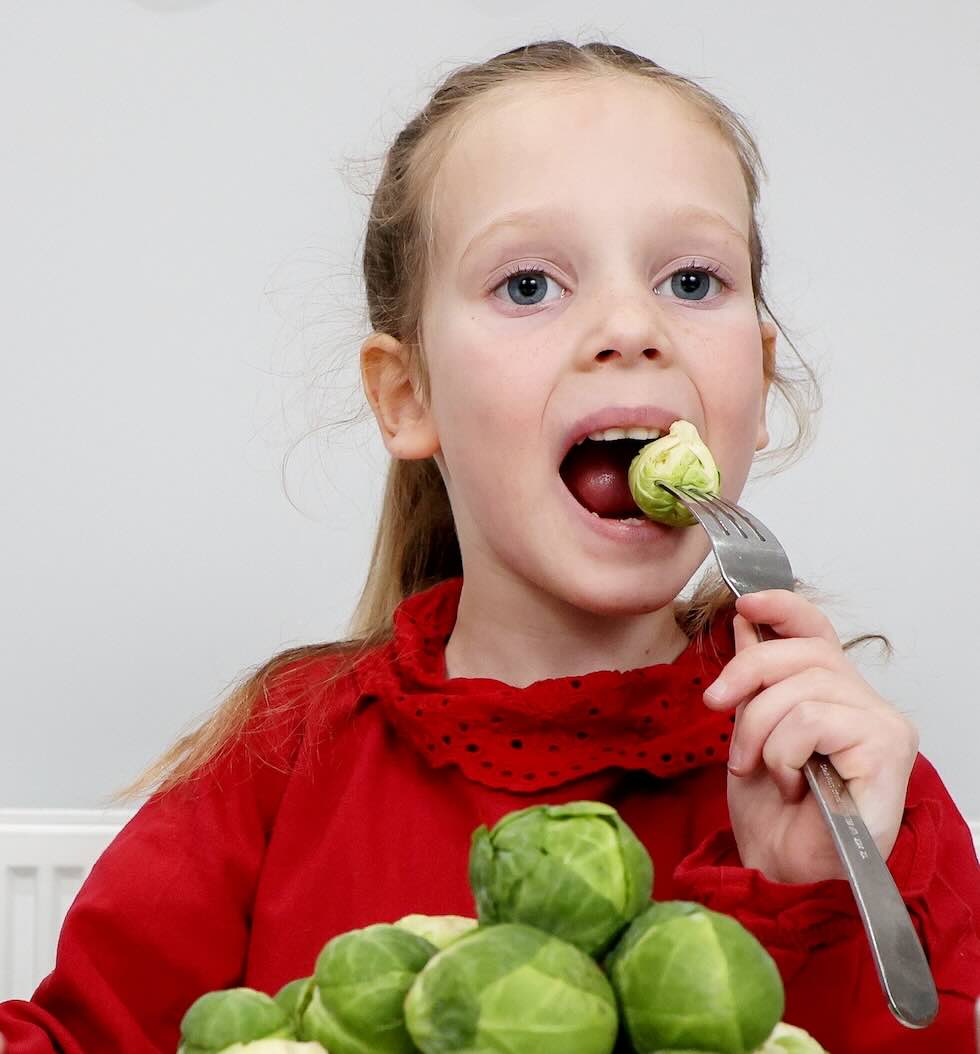
A fussy five-year-old girl has overcome her phobia of vegetables and now loves Brussels sprouts–just in time for her mother’s Christmas dinner.

Emie Williams would scream and cry if her mom, Hayley, tried to give her anything except crackers, french fries, or other beige-colored foods.

It meant family meals were fraught with conflict—Emie wanting different food and refusing to even taste hot dinners.

“She’d just refuse to eat any vegetable or any meat. We took her for check ups and health visits for advice but they just said give her what she wants because it’s probably a phase.”

But Hayley suspected that she may have ARFID (Avoidant/Restrictive Food Intake Disorder), believing she had “all the signs”.

Emie’s energy levels dipped, and she would get really tired at the end of the day.

“I explained (to doctors) that if I don’t give her what she wanted then she wouldn’t eat.”

Last month, Emie had a routine health check-up and a blood test revealed she had erratic sugar levels, so Hayley and her husband took their daughter to the hospital where doctors warned them Emie was in danger of developing diabetes unless she changed her diet.

In desperation, Hayley decided to take drastic action and contacted David Kilmurry, who specializes in obsessive eating conditions.

“We were pretty desperate when we contacted David but the results have been amazing,” the mother-of-3 from Coventry, England, told the SWNS news agency.

After a series of two-hour sessions, Emie now counts 30 foods that she willingly eats. Her favorite is Brussel sprouts, which she even enjoys raw.

Emie Williams eating her new favorite food, Brussel sprouts – SWNS

Due to her age, Emie was not hypnotized, but David, a cognitive behavioral hypnotherapist, sat with the youngster and gradually encouraged her to try different foods.

Hayley attended all the sessions and just watched Kilmurry at work.

“He’d do magic tricks and talk to Emie to gain her trust, and then brought out different foods.

“Slowly, she tried more and more until she was really enjoying apples and oranges.

“She’s really taken with Brussel sprouts, especially eating them raw. I can’t wait to see her enjoying her first ever Christmas dinner with all the trimmings.”

David, who runs practices in Coventry and London, said: “ARFID isn’t taken seriously enough.“It doesn’t just go away.” Fussy Girl Overcomes Vegetable Phobia and Now Loves Brussels Sprouts Thanks to Eating Disorder Specialist
Read More........

RSV infections in babies may raise asthma risk later, vaccine offers hope: Study


(Photo: AI generated image/IANS)

New Delhi, (IANS) An international team of scientists has found compelling evidence that early-infancy infection with respiratory syncytial virus (RSV) significantly increases the risk of developing childhood asthma.

The risk is especially higher in children with a family history of allergy or asthma.

The study, published in the Science Immunology journal, suggests that protecting newborns against RSV could substantially reduce asthma cases later in life.

"Childhood asthma is a complex disease with many contributing factors," said Prof. Bart Lambrecht from VIB (the Flanders Institute for Biotechnology) and Ghent University in Belgium.

"We found that early-life RSV infection and genetic allergy risk interact in a very specific way that pushes the immune system toward asthma. The encouraging news is that this process can be prevented," Lambrecht added.

The team, including researchers from Denmark, combined population-wide health registry data from all Danish children and their parents with controlled laboratory experiments. They found that early viral infection and inherited allergy risk amplify one another.

Infants who experience severe RSV infections in the first months of life show an increased likelihood of immune cells overreacting to common allergens, such as house dust mites.

This effect is dramatically intensified when asthma or allergy runs in the family, as allergen-specific antibodies passed from parents to the newborn further heighten sensitivity.

Importantly, the team found that when newborns were protected from RSV in experimental models, these harmful immune shifts did not occur -- and asthma development was prevented.

"With RSV prevention now becoming widely accessible, we have an opportunity to improve long-term respiratory health, not just prevent RSV hospitalisations," said Prof. Hamida Hammad (VIB-UGent).

"This is not just a laboratory insight. It's a message that should help parents choose RSV prevention with confidence," Hammad added.

Maternal vaccination during the third trimester of pregnancy and passive immunisation of newborns with long-acting antibodies are being introduced in many countries. Yet despite their strong ability to prevent RSV hospitalisations, uptake remains inconsistent."This is a moment where policy, science, and paediatricians can come together," Lambrecht said. “If preventing RSV infection also reduces asthma risk, the benefits for families and health systems could be enormous.” RSV infections in babies may raise asthma risk later, vaccine offers hope: Study | MorungExpress | morungexpress.com
Read More........

Parents Reveal the Pros (and Cons) of Having Adult Kids Still Living at Home


You may be surprised that fully 85% of parents whose kids previously moved out are delighted their birds have came back to the nest, according to a new poll.

A survey of 2,000 parents whose kids in their 20s live at home aimed to figure out what this experience of housing their 20-somethings has been like—and it uncovered some interesting trends.

42% had kids who initially moved out, while 58% said their chicks had never flown the coop.


For those who spread their wings and left their parent’s house, the top reasons included: to experience living on their own (41%), go to college (29%) or to live with a partner (26%).

Of these respondents, seven in ten said they recall the moment their child asked to move back in (69%). 42% agreed the reason for moving back was not begin able to afford living on their own, and 33% simply wanted to save money (perhaps for a down payment on their own mortgage).


Conducted by Talker Research for BOK Financial, the survey found that convenience also played a factor in why these adult kids returned home (32%).

Most interestingly, one-quarter of the homebound youth wanted to be closer to their family (25%)—and nearly half of parents (45%) said it actually improved their relationship when the child moved back.

A quarter of those surveyed admitted they weren’t financially prepared to have their child live with them later in life (27%), but just 19% said the situation had a negative impact on their own financial planning or retirement plans.

“If you have adult kids living at home—which isn’t uncommon nowadays!—it’s an opportunity to model good financial practices while encouraging them to save diligently,” said Leasa Melton, manager of product strategy for BOK Financial.

29% reported their child rarely (or never) contributes to the household financially, but Melton encourages patience.

“They’re often living at home to save up for their next step of independence and having them in your house gives you a chance to cheer them on in a safe environment.”

“Like everything else in parenting, it’s a balance between letting them learn and helping guide them.

On average, parents estimate that their kids will remain under their roof for another 16 months, while a third of respondents aren’t sure about their children’s tenure (32%). Indeed, 56% have doubts about their kids being financially prepared now to leave home at this time.

For their children to gain financial independence, 28% of parents wish there were more resources for financial education or planning. However, a whopping 90% agreed that it was important for them to teach their children financial lessons before they exit high school.

Teaching Good Financial Habits

Just 20% would grade their child’s understanding of financial matters with an A—although 27% gave the same grade to themselves.

There’s always time to learn, though. Parents have taught their children all sorts of lessons in adulthood, primarily finance-related (66%), domestic-related (59%) and lifestyle-related (52%).

A third of parents also recall being late bloomers, sharing that all of the financial advice they taught their child was learned in adulthood (32%).

While their adult children have been living with them, parents reported having emphasized lessons on how to save money (77%) and budget (71%), above all. Parents also stress the importance of paying down debt (53%) and investing (46%).“Children might not always pick up on financial lessons when they are young,” said Melton. “But as they gain independence, living at home provides another opportunity to help them establish good financial habits—a win for both parents and their adult children.” Parents Reveal the Pros (and Cons) of Having Adult Kids Still Living at Home
Read More........

Childbirth and Breastfeeding Can Reduce Breast Cancer Risk Shows New Study

– credit Leighann Blackwood

Scientists in Australia, which endures the highest rates of breast cancer in the world, have presented multiple lines of evidence to suggest that breastfeeding and childbearing reduces a woman’s risk for developing breast cancer.

The scientists started by first pointing out that as far back as 300 years ago, people noted that women who didn’t have children—nuns, in this case—suffered from the highest rates of breast cancer in society.

More modern research confirmed these early observations, but the mechanism behind why that might be remained hidden. While previously hypothesized to be the work of hormonal shifts, the answer now seems clear: breastfeeding works on the human immune system.

“Pregnancy and breastfeeding leave behind long-lived protective immune cells in the breast and the body, and these cells help to reduce risk and improve defense against breast cancer, particularly triple-negative breast cancer,” Professor Sherene Loi, a medical oncologist and lead author on the research, told ABC News Au.

Triple-negative breast cancer, one of several forms of the disease, is characterized by an absence of the three receptors commonly found on breast cancer cells. It’s common in younger women but is one of the less-common forms of the cancer, as well as the most lethal.


Cancer risk is determined by many factors, but Loi felt confidant is ascribing the decision by many modern women around the world to delay pregnancy and shorten, or even abandon breastfeeding, as contributing to cancer risk.

A study published last week in Nature found that women who had children and breastfed had more T cells in their breast tissue, which “act like local guards, ready to attack abnormal cells that might turn into cancer,” Loi said.

T cells are those which are activated to fight cancer in the Nobel Prize-winning treatment known as CAR-T cell therapy, and these were found to be more plentiful in the breast tissue of women who breastfed or had children, and that these elevated T cell counts were conserved for years and years after the mother had stopped breastfeeding.

To provide additional controls, Professor Loi and her co-authors performed a test with mice, implanting cancerous cells in the mammary fat of animals that had never reared offspring, that were rearing them, or who had had and finished rearing them.


Group 2 showed smaller tumor growth with a higher T cell count, while group 3—those who had reared and weened pups—showed the smallest tumors. To continue their tests, the scientists removed the T cells from the mammary tissue, and the cancer began to grow and spread unabated.

Lastly, the study presented an analysis on 2 papers totaling 1,000 women with triple-negative breast cancer to see if the effect in mice was replicated in humans.


“What we found is that women who had breastfed did better than those who had not breastfed, and their tumors actually had more immune cells … suggesting there was ongoing immune activation and regulation from the body against their breast cancer,” Professor Loi told ABC.

Though quantifying this protective effect is very nuanced, it seems that every child a woman has reduces her risk for breast cancer by 7%, and each 5 months of breastfeeding reduces it by an additional 2%.These are substantial differences when the average rate of breast cancer incidence is about 1 in 8 women Childbirth and Breastfeeding Can Reduce Breast Cancer Risk Shows New Study
Read More........

7 ways to teach little kids about body safety before they can talk

Danielle Arlanda Harris, Griffith University

Families with young children are yet again reeling after this week’s Four Corners investigation into abuse in the early childhood sector.

The program identified almost 150 childcare workers who had been convicted, charged, or accused of sexual abuse and inappropriate conduct.

System-wide changes are needed to improve standards and safety in the early childhood sector. But parents may also be wondering what they can do in the home to teach their kids about body safety.

There is increasing awareness of how to talk to children about body safety. This includes teaching kids that adults should not ask them to keep secrets and to tell a trusted adult if something feels wrong.

But what about babies and younger children who have not yet learned to talk?

According to Swiss psychologist Jean Piaget, children under two can understand language and even communicate before they develop speech. It is never too early to teach them about body autonomy, normalise safety, and model trustworthiness in relationships.

How can parents and caregivers do this?

1. Use the correct words

When you’re talking to a child about their body, you may want to use “baby talk”.

But it is important to use the correct anatomical words for their genitals, the same way that we teach them about other parts of the body.

This reduces shame and normalises body boundaries. It also ensures children grow up being able to describe any experiences clearly if there is a problem.

2. Narrate what you are doing

We teach older children that people should not touch their penis, vagina, or bottom.

But obviously for younger children, parents and carers need to touch their genital areas at nappy changes.

When changing a nappy, you can talk to little children in straightforward language and narrate what you’re doing in simple and easy steps. This is so they understand what a “normal” nappy change looks like.

For example,

I’m going to pick you up now. We need to change your nappy. We change your nappy when it’s dirty. First, I’m going to get a new nappy out of the drawer. Now I’m going to take off your pants. Remember, we only touch your bottom when we need to clean it.

3. Would you like to go to Tickletown?

You can normalise consent around touching from the beginning.

For example, teach consent around tickling. Practice using language that invites them to respond: “Would you like to go to Tickletown? Would you like me to tickle you?”

Then teach and demonstrate “yes/no” or “happy/sad” with a smile/frown, or thumbs up/thumbs down.

As they get older this can develop into having a safe word or modelling safe touch and unsafe touch.

4. Respect ‘push-away’ body language

Even very young children can send clear messages when they don’t want to be touched or held.

Where possible, respect their “push-away” body language such as pushing back, turning away, wriggling to get down, or arching their back. This teaches them they have autonomy of their bodies.

You can say things like: “Do you want to be put down? Your body belongs to you”.

5. Don’t force affection

Family and friends may be eager to hug or kiss your child, especially if they don’t see them often.

Resist the temptation to force your child to hug or kiss adults (“go on, give Grandad a kiss”) – even if it is a special occasion or visit. This teaches children about body boundaries and lets them know they can make decisions about their own bodies

6. What if a child doesn’t want a nappy change?

The “my body, my rules” message can be complicated when a child does not want a bath or when they don’t feel like having their nappy changed.

If you meet resistance during these times, calmly explain and narrate what you are doing and why. It will help form a foundation for them to understand healthy and necessary touching and recognise if someone is touching them inappropriately.

For example,

we need to have a bath to wash off all the dirt from the park. Let’s put some soap on your feet where they went in the sandpit.

7. Recognise nonverbal signs of distress

Preverbal children communicate through gestures and behaviour. Parents can learn to recognise nonverbal cues that might indicate signs of general distress.

In preverbal children such signs might include increased meltdowns or tantrums, withdrawal, unexplained genital pain or redness, changes in appetite, regression in toileting or sleeping, sudden fear or dislike of people or places, and even sudden mood changes or changes in personality.

Learning these signs can improve parent-child interactions and make it easier to recognise early signs of abuse.


If this article has raised issues for you, or if you’re concerned about someone you know, you can call 1800 Respect on 1800 737 732, Lifeline on 131 114, Kids Helpline on 1800 55 1800, or Bravehearts (counselling and support for survivors of child sexual abuse) on 1800 272.The Conversation

Danielle Arlanda Harris, Associate Professor in Criminology and Criminal Justice, Griffith University

This article is republished from The Conversation under a Creative Commons license. Read the original article.

Read More........

Feeding Blueberries to Babies May Reduce Allergy Symptoms and Improve Gut Health

Blueberries on the shrub – SWNS

Feeding blueberries to babies may reduce allergy symptoms and improve their gut health, according to new research.

The ground-breaking clinical trial shows consuming the fruit early in life can improve immunity and support long-term health.

Feeding blueberries to babies as one of their first solid foods may help strengthen their immune systems, reduce allergy symptoms and support healthy gut development, says scientists at the University of Colorado.

To safely introduce the “superfood” to younger infants, the research team recommend pureeing them.

For older babies and toddlers, they say blueberries should be mashed or cut into small pieces to eliminate choking hazards.

The study, published in the journal Frontiers in Nutrition, is the first of its kind to rigorously test the effects of a specific food on infant health using a randomized, placebo-controlled clinical trial.

“For parents beginning to wean their infants, it’s incredibly difficult to find solid, research-backed advice on what foods to introduce,” said the study’s senior author Professor Minghua Tang, from the University of Colorado in Anschutz.

“This study is a critical first step in filling that gap by offering real data on how a specific food like blueberries can improve your infant’s health.”

The researchers followed 61 babies in the Denver area from five to 12 months of age.

Each day, participants consumed either freeze-dried blueberry powder, or a placebo powder with no blueberries.

Parents were free to feed their children as they normally would, simply adding the powder to their daily routine.

The research team collected stool and blood samples every two months to monitor changes in the infants’ gut bacteria, immune system biomarkers and allergy-related outcomes. They also tracked growth and dietary habits.

Key findings included improved allergy symptoms in babies who consumed blueberry powder, reduced inflammation and signs of a stronger immune response, and “positive” shifts in gut microbiota—with changes considered beneficial for immune health.

“This research supports the idea that blueberries are not only safe for infants but also offer meaningful health benefits,” added Professor Tang.

“Just a few blueberries a day could make a difference in supporting long-term health.”

“We view infancy as a critical window of opportunity and what we introduce during this time can have lasting effects as children grow.”The research team is continuing to explore what other early foods might help support healthy gut bacteria and a strong immune system as babies grow to ensure there’s better guidance in place for parents. Feeding Blueberries to Babies May Reduce Allergy Symptoms and Improve Gut Health
Read More........

14-year-old Kuzo Kezo becomes author of 3 books

14-year-old Kuzo Kezo (L) with Rev. Dr. Kevekhalo Lasuh, Senior Pastor of Chakhesang Baptist Church Kohima (R) during the launch of 'The Drug Factory' and 'The Trio, Tuition Disaster' at The Heritage Kohima on August 9. (Photo by Jabu Krocha)

14-year-old, Kuzo Kezo currently a student of Class-9 at St. Mary's Cathedral Higher Secondary School Kohima today became the author of 3 books following the formal release of "The Drug Factory" and "The Trio- Tuition Disaster" at The Heritage Kohima on August 9.

The two books mark the 108th and 109th publications of PenThrill Publication House, and were formally released by Rev. Dr. Kevekhalo Lasuh, Senior Pastor of Chakhesang Baptist Church Kohima with a dedicatory prayer.

Speaking at the launch, the author Kuzo Kezo thanked God for the gift of writing and highlighted that 'The Drug Factory' is the sequel to his first book, 'The School of Bullies'. "I wrote the sequel because I wanted to finish the plot from the first book. It is about friendship, betrayal and adventure", he said during the launch.

Expressing that the other book, "The Trio, Tuition Disaster" is also about friendship and adventure, along with bravery and courage, he said that, "these books were written because I enjoy reading, writing, exploring new ways of writing books and characters and entertaining myself and others as well." He further expressed desire to help raise funds for missionaries through the books.

Citing the growing literary landscape in the state that is clearly seen through frequent book launches, Publisher of PenThrill, Vishü Rita Krocha said that, "this is a positive indication of the growth of writing that is evolving in the state."

She said that it was encouraging to see young children like Kuzo are continuing to write despite having to juggle with their studies. "The kind of commitment that he is showing in writing is an encouragement to the entire writing community of Nagaland", he said.

Further highlighting the need for narratives that are rooted in the Naga way of life, she also encouraged Kuzo to keep exploring such stories in his journey of writing.

Dr. Rukulu Puro, Assistant Professor of Capital College Kohima & Chief Instructor, CUE Academy, Center of Writing Skills, gave comments on "The Drug Factory, a sequel to The School of Bullies". She said the book is an energetic, suspenseful, and thoughtful sequel that proves the young author is not just telling stories but also reflecting on the world around hím.

Fast-paced, and layered with meaning, she also remarked that "The Drug Factory is more than just a schoolyard adventure, and is a story about friendship, betrayal, and reconciliation, but also about the hidden dangers lurking in everyday environments." "Through the lens of a young boy's courage and perspective, Kuzo Kezo raises questions we can't afford to ignore-about trust, appearances, and the silent battles happening in schools today", she added.

Commenting on "The Trio, Tuition Disaster", Pfokreni Dominic, Teacher at St. Mary's Cathedral Higher Secondary School Kohima said the book is an exciting and imaginative adventure story that showcases the power of courage, friendship, and teamwork — all through the eyes of a young and talented writer.

Stating that what makes this story special is not just the suspense and action, but the strong bond between the trio and their courage despite being so young, he remarked that, "the themes of not giving up, standing up for what’s right, and working together are portrayed in a way that’s inspiring for children and young teens."

He further stated that the book is a fantastic effort by a young writer, full of spirit, adventure, and heart while noting that, "it reads like a fun mix of detective and mystery stories and reminds us how even kids can become heroes when they choose to do the right thing."

"This story has the potential to become a favorite among young readers. A very promising start for a future author", he added. 14-year-old Kuzo Kezo becomes author of 3 books | MorungExpress | morungexpress.com
Read More........

Nothing beats a child's smile when it comes to true happiness: Telegraph reports

The most beautiful smile in the world!
A leading English Newspaper of Australia 'Daily Telegraph' has reported that according to the latest survey, Australians derive true happiness by simply looking at their children's smile. According to Daily Telegraph, an exclusive survey has found that Australians are a happy bunch overall, thanks largely to their children, loving partners and good friends. The survey, in which around 2,000 persons participated, reveals that 56.8 percent respondents insisted that their children gave them the most joy while 50.3 percent said favoured to their partners. The survey, which was based on a scale from from "extremely happy" to "extremely unhappy" also revealed that three in five or 59.3 per cent, ranked spending time with friends highly. About 14 per cent said their jobs made them "extremely happy" while 7.7 per cent said that getting rid of their boss would improve their mood. '63.1 per cent respondents said more money might make them even happier while some said extra holidays and rest of them asserted to better health', the Daily Telegraph reported. Almost 70 per cent considered themselves happy people but opinions were evenly divided when it came to whether married or unmarried people were happier or which gender was more cheerful. 44 per cent asserted that money could buy happiness, 45 percent said it couldn't and 11.1 per cent were undecided. For 54.4 per cent of people those little bundles of joy are just that, while 45.6 per cent said childless people were happier. Baby boomers were believed to be the happiest age group. Source: Newstrack India
Read More........

Woman Finds Message on Toilet Paper Roll Written 35 Years Ago by Little Girl

Message on 35-year-old toilet paper roll –Charlotte England-Black / SWNS

A couple renovating their new home discovered hidden inside their loft a heartwarming message written by a little girl 35 years ago—on the side of an empty toilet paper roll.

Charlotte England-Black found the touching note, which was concealed in the attic of their property in Nottingham, England, in 1989 when the little girl was moving out.

The 30-year-old moved into the house with her husband five months ago, but only found the hidden time capsule last Friday.


The note was penned by Emma—who was seven years old at the time—as a secret message for the home’s future owners.

Written in red marker, it reads: “I hope you enjoy staying here. Lots of love, from a friend.’

It began, “My name is Emma Waddingham. My birthday is February the 4th. I was born in 1982. I’m seven years old and nearly eight.

Charlotte immediately wondered where Emma was now—so she reached out on a Facebook community page in a bid to track her down. Amazingly, she was found within the hour.

“It’d been up there years,” Charlotte told SWNS news agency. “It was discovered along with an old sink, a vintage cap and some used overalls.

“It was really cute. She’d obviously written it hoping someone would find it one day. It really is quite touching.

Message on toilet paper roll left by girl 35 years ago –Charlotte England-Black / SWNS

“We posted it on a community page on Facebook. Within ten minutes someone had tagged her in it and others had commented saying they’d remembered her from the street, which was great.

“I thought, I bet she could easily be found and it’d be nice for her. It’s just a connection with the past.”

Today, Emma’s last name is Smith, and she still lives in Nottingham. Now 43-years-old, Emma doesn’t remember penning the note, but says she had fond memories of living there.

“I don’t remember doing it and why I chose the toilet roll,” she said. “We’ll forever be wondering.

“It was a lovely place to spend those years. I had amazing wallpaper in my bedroom of Tom and Jerry.”

In the future, when Charlotte moves out, she plans to leave the cardboard tube in the attic for the next homeowners, so they can also discover the time capsule.

In another 35 years someone else might find it… It’ll be nice to see if it gets found.” Woman Finds Message on Toilet Paper Roll Written 35 Years Ago by Little Girl
Read More........

Parents Should Sing More to Their Babies For the Positive Impact on Infant’s Mood–And Their Own

Getty Images for Unsplash+

Many parents know that babies love to be sung to, but there’s been limited research into the longer-term effects of mothers and fathers singing to infants.

The new research shows that parents should sing to their babies more often because it really does have a positive impact on a child’s mood—and it also can benefit the health and well-being of moms and dads too.

Published in the journal Child Development, the study from an international team of scientists from New Zealand, Canada, the US and Netherlands, looked at the results of using a music enrichment intervention program that encouraged caregivers to sing more frequently to their babies.

The study was conducted with 110 parents and their babies, who averaged around four months old—with most of the caregivers participating from the US and New Zealand being white, educated, and above the poverty line. Study participants were randomly assigned to the intervention or a control group for the main portion of the study which lasted six weeks.

Parents in the intervention group completed a brief, smartphone-based music enrichment program designed to help them sing more often to their babies. They were given access to six instructional videos of simple songs presented in karaoke style, with lyrics synchronized to a bouncing ball and sourced from vintage songbooks, specially made for caregivers with limited music training.

Additionally, participants received a child-friendly songbook that featured infant-pressable buttons which activated song playback, accompanied by illustrations and lyrics for parents to sing along.

Weekly email newsletters also introduced ideas of how to incorporate singing into daily caregiving routines and presented research findings relevant to the benefits of musical parenting.

Throughout the study, the participants completed smartphone surveys up to three times daily, reporting on both baby and parent mood, stress, sleep quality, and music use.

The findings reveal positive causal effects from simple, low-cost interventions—such as increasing baby-directed singing. The interventions improved health outcomes for both babies and their parents during the four-week intervention.

“Our main finding was that the intervention successfully increased the frequency of infant-directed singing, especially in soothing contexts, and led to measurable improvements in infants’ general mood as reported by caregivers,” said Dr. Samuel Mehr, of Auckland University, New Zealand.

“One interesting finding was how intuitively caregivers incorporated singing into soothing routines for their infants, even though the intervention did not explicitly instruct them to use singing for this purpose.”

“Encouraging parents and caregivers to sing more frequently to their infants can have a positive, causal impact on infant mood. Because infant mood is closely linked to parenting stress, caregiver-infant bonding, and later social-emotional development, such a simple intervention could have meaningful downstream benefits.”

“For pediatricians and professionals working with families, recommending increased infant-directed singing is a practical, accessible strategy to support infant well-being. It’s easy to do, requires no special equipment or training, and is accessible to everyone.”

“Singing is a universal practice—parents from almost every culture and throughout history have intuitively used singing to soothe and connect with their infants.

Dr. Mehr says that, despite the intervention lasting only four weeks, the team observed “clear benefits” for infant mood.

“Such positive effects may be even more pronounced with longer-term, higher-intensity interventions—and may also extend to additional aspects of infant health beyond mood.”The research team is now working on longer follow-up studies comparing the effects of singing, listening to music, and reading on the mood of babies. Parents Should Sing More to Their Babies For the Positive Impact on Infant’s Mood–And Their Own
Read More........

Spanking children can impact academic outcomes, impair social-emotional development: Study


New Delhi, (IANS) Physically punishing children can lead to negative outcomes such as poor health, lower academic performance, and impaired social-emotional development, according to a study on Monday.

The analysis, published in the journal Nature Human Behaviour, showed that physical punishment was significantly associated with worse parent-child relationships, being a victim of violence, perpetrating violence (including intimate partner violence in adulthood), approving violence, physical health problems, mental health problems, substance use, poor academic outcomes, impaired language skills.

It also led to impaired executive function, social-emotional skills, overall behavioural problems, internalising behaviour problems (e.g., depression and withdrawal), externalising behaviours (e.g., aggression and destruction), impaired early child development, and quality of sleep.

Researchers at the New York University-Steinhardt, US, no positive outcomes associated with corporal punishment.

“The consistency and strength of these findings suggest that physical punishment is universally harmful to children and adolescents,” lead author Jorge Cuartas, Assistant Professor of Applied Psychology at NYU.

“Moving forward, more research is needed to identify effective strategies for preventing physical punishment on a global scale and ensuring that children are protected from all forms of violence to support their healthy development,” Cuartas added.

In 2006, the UN Secretary-General called for a ban on corporal punishment -- acts of physical force to inflict pain that includes smacking, shaking, and spanking -- for children.

To date, 65 countries worldwide have instituted full or partial bans on the practice. Most of the bans were established in high-income countries (having a gross national income of at least $14,000 per capita) bolstered by the UN’s call, and research finding detrimental outcomes in wealthier nations.

The researchers analysed 195 studies related to corporal punishment published between 2002 and 2024.The studies covered 92 low- and middle-income and 19 outcomes related to parent-child relationships, mental and physical health, violent behaviour, attitudes toward violence, substance use, cognitive function, social-emotional skills, sleep, motor skills, and the likelihood of being a child labourer. Spanking children can impact academic outcomes, impair social-emotional development: Study | MorungExpress | morungexpress.com
Read More........

6 Expert Parenting Tips for Getting Closer to Your Kids–Try Changing Up These Routines

Photo by Some Tale on Unsplash

A therapist has revealed six parenting tips for building a stronger connection with your child.

Melinda O’Neil, 37, an associate licensed Professional Clinical Counselor in Pleasanton, California, has been a therapist for one year and child counselor for seven.

O’Neil—also the mom of a six-year-old son—focuses on connection, empathy, and personal growth as key components of effective parenting.


From fostering independence to encouraging emotional intelligence, here are her top tips for parenting.

Become a fan

It’s easy for parents to tune out when their child is talking about video games, dinosaurs, or the latest pop star, but O’Neil says engaging with their interests is crucial for bonding.


“[Renowned physician and educator] Maria Montessori always said, ‘Follow the child,’” O’Neil summarizes.

“That means embracing whatever they’re into—whether it’s excavators, the alphabet, animals, or trains.”

She acknowledges that parents may not always love their kids’ taste in music, but she encourages them to listen anyway.

“[L]istening with them means you know what they’re listening to. Plus, it’s a great way to bond. If they want to go to a concert, chaperone!”


“Even if you don’t love the artist, bring some earplugs—it’s about showing interest in their world.”


Rephrase your questions

Parents often ask, “How was school today?” only to be met with a one-word response. O’Neil suggests taking a more intentional approach to foster open communication.

“Ask specific questions about their day,” she said. “Instead of ‘How was school?’ try ‘Did you see your friend today?’ or ‘What was the funniest thing that happened?’ Make communication a two-way street.”

By engaging in detailed conversations, parents create an environment where children feel safe opening up.

“It’s not just about you talking at them or them talking at you—it’s about having real conversations where they feel heard.”

Own your own mistakes

Kids are always watching, and O’Neil says parents should be mindful of the behaviors they model.

“If you make a mistake, own it,” she explained. “Say, ‘I got really frustrated and shouldn’t have reacted that way. Next time, I’ll take a deep breath.’”

By doing this, parents show kids that mistakes are a normal part of life and that they can be handled with accountability and grace.

“It’s a lot of pressure because kids are always copying us,” she admitted. “But modeling healthy responses teaches them how to navigate emotions and interactions in a positive way.”

– credit: Quinn Dombrowski, CC 2.0. via Flickr.

Try new things

While it’s important to follow a child’s interests, O’Neil also stresses the value of trying new things.

“Structured activities beyond the park—like cooking classes, new hobbies, or different restaurants—help kids expand their world,” she explained.

“And if they’re hesitant? Encourage them anyway. Remind them, ‘You might like it!’”

She acknowledges that not every new experience will be a hit.

“If they try something and truly don’t like it, that’s okay,” she said. “Congratulate them for trying. But the key is to keep encouraging curiosity and new adventures.”

Let them be emotional

Emotions can be messy, but O’Neil says learning to sit with them is crucial for emotional intelligence.

“Feelings can make us uncomfortable, but if your child is experiencing one, let them,” she advised. “Be present. Sit with them in their sadness, frustration, or joy.”

She notes that emotions naturally cycle every seven minutes.

“Give them that space,” she said.

“If they’re crying, tell them, ‘It’s okay to cry.’ Even if it makes you uncomfortable, practice sitting with it instead of shutting it down.”

Getty Images / Unsplash+

Parent yourself

The best parenting starts with self-growth, O’Neil says.

“One thing I see every day is that many parents weren’t taught how to manage their own emotions,” she explained. “So as adults, we’re almost re-parenting ourselves.”

She stresses the importance of self-reflection.

“The best thing you can do for your child is to become a healthier version of yourself.

“Acknowledge your mistakes, work on your emotional responses, and show yourself the same compassion you’d show them.”

At the end of the day, O’Neil says parenting is about connection, empathy, and being willing to grow alongside your child.“Promote empathy and compassion,” she said. “And that includes being compassionate with yourself.” 6 Expert Parenting Tips for Getting Closer to Your Kids–Try Changing Up These Routines
Read More........

Children’s perception of normal body shape is affected by who they see around them – new research

What we think of as “normal” body shape is affected by what we’re accustomed to – the range of body shapes we see. My new research with colleagues shows that this is true for young children as well as adults.

Research with adults and with children as young as five has already found that our understanding of what a face looks like is always being updated based on the faces we see around us, from childhood through adulthood.

This process of the brain flexibly changing in response to new repeated inputs is known as “adaptation”. When the brain adapts to the same input repeatedly, we can see long term changes in perceptions. For instance, viewing a series of images with larger (as opposed to contracted) facial features leads to an increased preference for large features afterwards.

But so far, research like this on how we view bodies has almost entirely been run with adults.

Among adults, we can see the same effects with body weight that we see with face shape in adults and children. If we are shown a lot of heavy bodies, the bodies we rate as attractive get heavier, the bodies we rate as “normal” get heavier, and the point at which we perceive a body being heavy or not shifts lower. And the opposite happens when we view a lot of thin bodies.

Altered perceptions

Our study tested whether this also holds true for children. Children aged seven to 15 years of age and adult undergraduate students completed the same experimental study. They rated a series of bodies for how heavy they were, then viewed either 20 very thin figures or 20 very heavy figures, and then rated the same bodies for heaviness as they did at the start.

We found that children, adolescents and adults all rated the same bodies as significantly lighter after viewing the heavy bodies than they did beforehand. This suggests our participants’ mental picture of a “normal” body got heavier, and so every body was perceived as “lighter” than it had been in comparison.

In contrast, those who viewed lighter bodies did not show this shift. They continued to rate the bodies as just as heavy or light as they had beforehand.

It’s difficult to say for sure why this is, although it is likely in part due to the stimuli used. In my own wider research with adults using the same images, I’ve found that larger images tend to produce stronger effects than thin images, but experiments in other labs with adults using different stimuli have shown shifts in perception as a result of viewing both heavier and thinner bodies.

When we compared just the youngest children with the adult participants, we found that the effect of viewing heavy versus light bodies was equally strong in the seven-year-olds as it was in adult students.

These results tell us that the brain’s “model” of a body becomes flexible in the same was as in adults by seven years of age.

Previous research shows that playing with ultra-thin dolls changes young girls’ perceptions of the body they want to have, making them want it to be thinner.

Our new study shows that the effect of dolls on girls’ body ideals isn’t just driven by dolls being aspirational or pretty. Just visual exposure to bodies can change body perceptions. And that means that changing that visual experience, for instance by giving girls a broad range of body sizes and toys, is an important part of maintaining healthy body perceptions.

These results also mean that the large body of research on the effects of visual media on adults’ body perceptions is also likely apply to children as young as seven. For instance, gaining access to television is associated with preferences for thinner bodies in rural communities, and viewing images of muscular male models increases preferences for muscle in male laboratory participants.

Therefore, all of the warnings and recommendations that exist in relation to reducing the biases in the bodies we see in adult’s visual media also apply to children.

Young children in western countries have been shown to associate being heavier with being less pretty or less desirable as a friend. We therefore need to think about how body sizes are represented in all aspects of children’s media and ensure that children do not have a bias towards one size or another if we don’t want them to develop the strong thin ideals that we often see in adulthood.The Conversation

Lynda Boothroyd, Professor in Psychology, Durham University

This article is republished from The Conversation under a Creative Commons license. Read the original article.

Read More........

Playing Classical Music to Babies in the Womb Can Stimulate Development, Affect Heart Rate and Nervous system

Credit: AIP via SWNS

Scientists have found evidence that classical music can calm the heart rate of unborn babies, potentially providing developmental benefits.

The American Institute of Physics published research from a multi-disciplinary team in Mexico studying the effect of classical music on a fetal heartbeat. They used mathematical analysis tools to identify patterns in heart rate variability.

Typical measures of heart rate are an average of several beats across multiple seconds, whereas ‘heart rate variability’ measures the time between the beats.

The research team explained that the measure can provide insight into the maturation of the fetal autonomic nervous system, with greater variability often indicating healthier development.

To test the effects music can have on fetal heart rate, the team recruited 36 pregnant women in Mexico and played a pair of classical pieces for their unborn babies — The Swan by French composer Camille Saint-Saëns and Arpa de Oro by Mexican composer Abundio Martínez.

By attaching external heart rate monitors, the research team could measure the fetal heart rate response to both songs. And, by employing nonlinear recurrence quantification analysis, they could identify changes in heart rate variability during and after the music was played.

“Overall, we discovered that exposure to music resulted in more stable and predictable fetal heart rate patterns,” said Dr. Claudia Lerma, of the National Institute of Cardiology in Mexico, who co-authored the published study.

“This momentary effect could stimulate the development of the fetal autonomic nervous system.”

For expectant parents at home, the researchers suggest that classical music could help promote fetal development.

“Our results suggest that these changes in fetal heart rate dynamics occur instantly in short-term fluctuations, so parents might want to consider exposing their fetuses to quiet music,” explained study author Professor Eric Abarca-Castro.

“Parents who play soothing music may stimulate and benefit the fetal autonomic system.”

The authors plan to continue to explore this effect, looking at different genres and types of music to further their understanding.“To ascertain whether rhythmic or cultural variations elicit distinct fetal cardiac responses, we intend to increase the size of our sample and expand our investigation to include a variety of musical styles beyond classical pieces,” says co-author Dr. José Reyes-Lagos. Playing Classical Music to Babies in the Womb Can Stimulate Development, Affect Heart Rate and Nervous system
Read More........

Your fuzzy flannel pyjamas could be incredibly flammable – here’s what to know

Last year, the Australian Competition and Consumer Commission (ACCC) issued at least nine recall notices on products that didn’t comply with the mandatory standard for nightwear for children. All of these items posed a fire hazard, but didn’t have the required labelling.

The latest of these recalls, a glow-in-the-dark jumper sold on the website Temu, caused severe burn injuries to an 8-year-old Queensland girl. The incident has exposed significant gaps in Australian product safety standards.

Brands will use warning labels to meet legal requirements (such as the mandatory standard mentioned above), but they continue producing and selling these dangerously flammable textiles. This shifts the responsibility to shoppers who purchase items with fire warning labels, but may not fully understand the implications of the warning.

Highly flammable fabrics are far more common than you might realise – and it’s not just synthetic ones that can easily catch flame.

What makes a fabric flammable?

Textiles are lightweight materials, often with a high surface area meaning they ignite and burn easily. The next time you light a candle, just look at the wick – it’s usually a cotton yarn.

The only naturally flame-resistant fibre is wool, along with all other animal protein fibres such as silk, alpaca, mohair, cashmere and others. These fibres are slow to ignite and form ash when burned.

Synthetic materials melt when burning. If they stick to the skin, they can cause severe injuries that are difficult to treat. Polyester made up over 57% of global fibre production in 2023.

Acrylic is the most flammable of all synthetics. Acrylic fibres are commonly used to make jumpers that look and feel like wool, but are much less expensive to produce. Without checking the label, shoppers can easily mistake acrylic sweaters for wool ones.

Not all synthetic fibres are equally flammable. Somewhat confusingly, there is a flame-resistant fibre called modacrylic. Modacrylic was developed to address the flammability problems with acrylic. Other flame-resistant human-made fibres are kevlar and glass.

However, there is more to fabric flammability than just the fibres alone. Textile fabrics are complex materials – a fabric’s flammability is affected by the fibres, yarns, structure (knit or weave), and any finishes used.

For example, smooth, tightly woven or knitted fabrics will be slower to burn than lightweight or fuzzy fabrics. Fabrics can also be treated with flame retardant finishes.

Fabrics with the highest fire risk are those with a pile or brushed surface (think cosy, fuzzy or furry fleeces, flannelettes and faux furs) and are composed of cotton, acrylic, polyester and other synthetic fibres. These soft and fuzzy (and highly flammable) textile products are everywhere, and often at affordable prices.

‘Not intended for children’s sleepwear’

Despite well-known fire risks of different materials, Australian rules for fibre content labelling lapsed in 2019. Now, products only legally need care instructions.

Most brands still list the fibre content (for example, “100% cotton”) to meet American and European requirements, but it’s no longer legally required here.

Current safety rules focus mainly on protecting children, particularly in sleepwear and some daily clothes. However, risk from flammable clothing extends beyond children. Women, older people and any person who tends to wear loose-fitting garments that can catch fire more easily are at risk.

Many costume pieces like capes, hoods, wings and tutus are also excluded from children’s product safety rules in Australia. The exclusion of these types of items from regulation is especially baffling, as they often pose a high flammability risk due to their combination of materials and loose-fitting designs.

All this means shoppers may not know the item they are purchasing is highly flammable.

Consider a shopper who encounters flannel fabrics printed with bunnies and dogs at a major Australian retailer. These fabrics come with mandatory warnings like “not intended for children’s sleepwear” or “fire warning: flannelette is a flammable material and care should be taken if using flannelette for children’s sleepwear and loose-fitting garments”.

What are these cutesy flannel fabrics to be used for, if not children’s products?

We need stronger consumer protection

While Australia has consumer protection laws, the ACCC has acknowledged there is no direct ban on selling unsafe products.

Without stronger legislation prohibiting the production and sale of highly flammable textiles, Australia risks becoming a market for hazardous clothing and textile products that don’t meet stricter international standards.

At the very minimum, Australia needs to reintroduce mandatory fibre content labelling for textiles and clothing products to be in line with US and EU requirements.

In the meantime, consumers need to take action in other ways. Take any product with a “fire warning” label seriously – don’t let children wear fuzzy, fleecy, furry or loose clothing items such as costumes around open flames or as sleepwear. Older adults can also be at risk. Wearing a favourite fuzzy bathrobe when cooking over open flames, such as a gas stove top, is extremely dangerous.

Better yet, don’t purchase any items with a “fire warning” label – brands will stop producing items that don’t sell.

Consumers are encouraged to report any products they suspect are unsafe to the ACCC.The Conversation

Rebecca Van Amber, Senior Lecturer in Fashion & Textiles, RMIT University

This article is republished from The Conversation under a Creative Commons license. Read the original article.

Read More........

Dust mite exposure can trigger severe allergic reactions, asthma in children


New Delhi, (IANS) Exposure to dust mites in children can trigger severe allergic reactions, leading to conditions such as asthma and allergic rhinitis, warned an expert on Saturday.

Dust mites -- microscopic creatures found in household dust -- are a leading cause of allergies worldwide. These are so tiny, slightly bigger than human hair diameter, to be visible to the unassisted eye.

In India, high humidity levels increase their growth and also a rapid surge in clinical manifestations, Dr Neeraj Gupta, Senior Allergy Specialist from Sir Ganga Ram Hospital, Delhi, told IANS.

Asthma affects around 35 million people in India, with an estimated 2.4 per cent of adults and 4-20 per cent of children affected. Nearly 22 per cent of adolescents currently suffer from allergic rhinitis in India.

Gupta explained that the hallmark signs of dust mite allergies include sneezing, which is frequent and severe, often accompanied by a runny or stuffy nose; persistent blockage of the nasal passages, leading to difficulty in breathing, particularly at night; a chronic dry cough that is more pronounced in the early mornings and at night; intermittent episodes of breathlessness, especially during physical activity, coupled with a wheezing sound while breathing.

The allergens from dust mites, particularly their droppings and decomposed body parts, can trigger inflammation in the nasal passages and airways, leading to these symptoms, the expert said.

While immunotherapy is effective, reducing exposure to dust mites is crucial in managing symptoms.

Some recommended measures include the use of allergen-proof covers for mattresses, pillows, and duvets; regular washing of bed linens in hot water; minimising the use of carpets and upholstered furniture at home as these can harbour dust mites; using high-efficiency particulate air (HEPA) filters; keeping indoor humidity levels below 50 per cent; adequate sunlight and cross ventilation.

“By understanding the symptoms and signs, utilising appropriate diagnostic tools, and implementing targeted treatments like immunotherapy, along with preventive measures, it is possible to manage and even alleviate the burden of these allergies,” Gupta said.

He also advised timely medical help for substantial improvement in quality of life, Dust mite exposure can trigger severe allergic reactions, asthma in children | MorungExpress | morungexpress.com
Read More........

How eating more junk food can impact your child's mental health


New Delhi, (IANS) While the association between junk food -- rich in sugar, salt, and unhealthy fats -- doctors on Tuesday warned how these may also contribute to poor mental health in young children

Junk food or fast food has become a common part of children's eating habits nowadays and lacks important nutrients for better growth. It is also known to cause weight gain and obesity -- a major risk factor for diabetes, high blood pressure, heart disease, and cancer.

In addition, junk food can also affect children’s behaviour and mood.

Studies have provided evidence that a diet high in fast food and sugary drinks can lead to behavioural problems, including hyperactivity, attention deficit disorder (ADD), and even depression

“Junk food can significantly impact a child's mental health. Excessive consumption of junk food, which is often high in sugar, unhealthy fats, and additives, can lead to nutritional deficiencies and imbalances,” Dr. Amitabh Saha – Associate Director, Mental Health & Behavioural Sciences, Max Hospital, Vaishali, told IANS.

“This can affect concentration, cognitive function, and mood regulation, ultimately influencing a child's overall mental well-being,” he added.

A recent study, published in The BMJ, linked consuming higher amounts of ready-meals, sugary cereals, and fizzy drinks with a higher risk of anxiety and depression.

“Fast food and carbonated soft drinks containing caffeine have a high content of sugars. This increases the surge of sugar in the body momentarily and then rapidly crushes the sugar levels, leading to irritability and mood swings in children,” Dr. Rishikesh Dessai, Consultant Internal Medicine, Sir Ganga Ram Hospital.

The expert called for minimising the exposure of children to these fast food options and providing a completely balanced meal for the children, which should include fruits, vegetables, whole grains, and lean proteins.He also advised children to do physical activity, like playing games outside, by engaging in outdoor activities. How eating more junk food can impact your child's mental health | MorungExpress | morungexpress.com
Read More........

Too much screen time can affect kids’ language skills


New Delhi, (IANS): Children whose families use screens a lot tend to have weaker vocabulary skills, and video games have the biggest negative effect on kids’ brain development, according to a study on Thursday.

Scientists from Estonia surveyed the parents of more than 400 children about their screen use, their children’s screen use, and their children’s language skills.

The findings, published in the Frontiers in Developmental Psychology, found that parents who use screens a lot also have children who use screens a lot and that children’s higher screen time is associated with poorer language skills.

“The research shows that during the first years of life, the most influential factor is everyday dyadic face-to-face parent-child verbal interaction,” said lead author Dr Tiia Tulviste of the University of Tartu, Estonia.

In the survey of 421 children aged between two and a half and four years old, the team asked parents to estimate how long each family member would spend using different screen devices daily. The parents were also asked to fill out a questionnaire evaluating their children’s language ability.

The researchers sorted both children and adults into three screen use groups -- high, low, and moderate.

They found that parents who used screens a lot had children who also used screens a lot.

Analysing the language development of these children, the team found that children who used screens less scored higher for both grammar and vocabulary. No form of screen use had a positive effect on children’s language skills.

Tulviste noted that reading ebooks and playing educational games may offer language learning opportunities, especially for older children.But, using screens for video games had a notable negative effect on children’s language skills, regardless of whether parents or children were gaming, the researcher said Too much screen time can affect kids’ language skills | MorungExpress | morungexpress.com
Read More........