Juice cleanses, charcoal supplements and foot patches – is detoxing worth the hype?

Katie Edwards, The Conversation and Dan Baumgardt, University of Bristol

January arrives with a familiar hangover. Too much food. Too much drink. Too much screen time. And suddenly social media is full of green juices, charcoal supplements, foot patches and seven-day “liver resets”, all promising to purge the body of mysterious toxins and return it to a purer state.

In the first episode of Strange Health, a new visualised podcast from The Conversation, hosts Katie Edwards and Dan Baumgardt put detox culture under the microscope and ask a simple question: do we actually need to detox at all?

Strange Health explores the weird, surprising and sometimes alarming things our bodies do. Each episode takes a popular health or wellness trend, viral claim or bodily mystery and examines what the evidence really says, with help from researchers who study this stuff for a living.

Katie Edwards, a health and medicine editor at The Conversation and Dan Baumgardt, a GP and lecturer in health and life sciences at the University of Bristol share a longstanding fascination with the body’s improbabilities and limits, plus a healthy scepticism for claims that sound too good to be true.

This opening episode dives straight into detoxing. From juice cleanses and detox teas to charcoal pills, foot pads and coffee enemas, Katie and Dan watch, wince and occasionally laugh their way through some of the internet’s most popular detox trends. Along the way, they ask what these products claim to remove, how they supposedly work, and why feeling worse is often reframed online as a sign that a detox is “working”.

The episode also features an interview with Trish Lalor, a liver expert from the University of Birmingham, whose message is refreshingly blunt. “Your body is really set up to do it by itself,” she explains. The liver, working alongside the kidneys and gut, already detoxifies the body around the clock. For most healthy people, Lalor says, there is no need for extreme interventions or pricey supplements.

That does not mean everything labelled “detox” is harmless. Lalor explains where certain ingredients can help, where they make little difference and where they can cause real damage if misused.

Real detoxing looks less like a sachet or a foot patch and more like hydration, fibre, rest, moderation and giving your liver time to do the job it already does remarkably well. If you’re buying detox patches and supplements then it’s probably your wallet that is about to be cleansed, not your liver.


Strange Health is hosted by Katie Edwards and Dan Baumgardt. The executive producer is Gemma Ware, with video and sound editing by Sikander Khan. Artwork by Alice Mason.

Dan and Katie talk about two social media clips in this episode, one from 30.forever on TikTok and one from velvelle_store on Instagram.

Listen to Strange Health via any of the apps listed above, download it directly via our RSS feed or find out how else to listen here. A transcript is available via the Apple Podcasts or Spotify apps.The Conversation

Katie Edwards, Commissioning Editor, Health + Medicine and Host of Strange Health podcast, The Conversation and Dan Baumgardt, Senior Lecturer, School of Psychology and Neuroscience, University of Bristol

This article is republished from The Conversation under a Creative Commons license. Read the original article.

Read More........

At 67,800-years-old, These Handprints Just Discovered in Indonesia Are Oldest Example of Rock Art

– credit, Aubert, Brumm, et al.

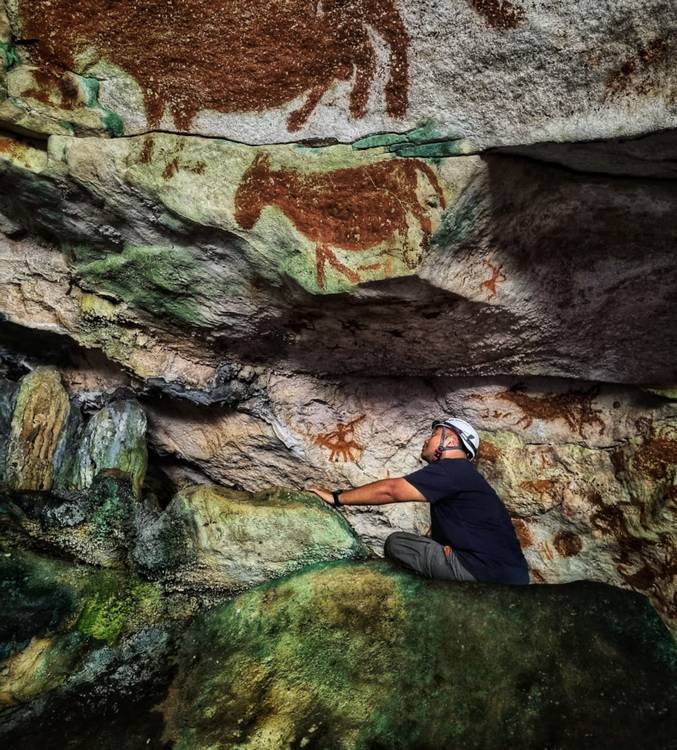
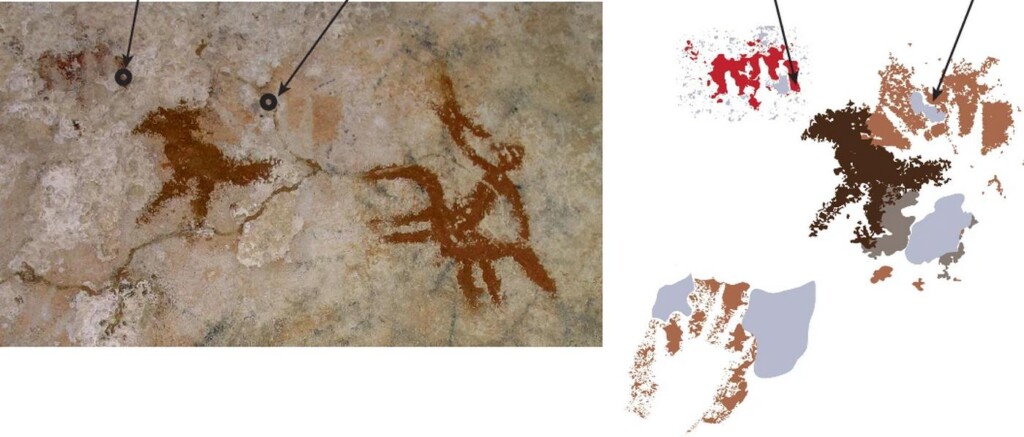
The discovery of stylized handprints dating back at least 67,800 years in a limestone cave in Indonesia has broken the country’s own record for the world’s oldest-known example of rock art.

It provides direct evidence that humans have been crossing the sea intentionally for nearly 70,000 years, as Man traveled from the Asian continent across Australasia to the land Down Under and beyond.

Adhi Agus Oktaviana, a researcher at the BRIN Research Center for Archaeometry, revealed that the minimum age of the rock art is 16,600 years older than the previously discovered rock art from Muna Island, which GNN reported on in 2024.

This rock art is also 1,100 years older than the handprints from Spain that were previously associated with Neanderthals and had long been considered the oldest cave art in the world, and 22,200 years older than the depiction of the Sulawesi warty pig, discovered on the same island as the other two, in 2021.

In other words, in the last five years, 3 of the 4 oldest cave artworks ever found on Earth were identified on the same small island off Sulawesi, Indonesia.

Oktaviana explained that to determine the age of this rock art, the research team applied the laser-ablation uranium-series (LA-U-series) dating technique to the microscopic calcite layer covering the cave paintings and produced a date that would be the earliest possible production time of the handprints.
– credit, Maxime Aubert

As news releases that regarded the previous two discoveries stated, the artworks elevate Indonesia to one of the most important centers in the early history of symbolic art and modern human sea exploration in the world.

This discovery confirms that Wallacea, a sunken landmass that exists above sea level today as the Indo-Pacific, was not only a route to Australia, but also a major habitat for early modern humans. It also reinforces the long chronological model, which states that humans reached the Sahul landmass (Australia–Papua) at least 65,000 years ago.

“It is very likely that the creators of these paintings were part of a population that later spread further east and eventually reached Australia,” said Oktaviana. “This research provides the oldest direct evidence of modern humans on the northern migration route to Sahul, which involved sea exploration between Kalimantan (Borneo) and Papua—an area that remains relatively unexplored archaeologically.”

Meanwhile, Professor Adam Brumm from the Australian Research Centre for Human Evolution (ARCHE), Griffith University, said that the handprints found in the rock art on Muna Island also have globally unique characteristics, with modifications that narrow the shape of the fingers to resemble claws, reflecting a mature symbolic expression. According to him, the symbolic meaning of this narrowing of the finger shape is still speculative.

“However, this art could symbolize the idea that humans and animals have a very close relationship. This is already evident in the earliest paintings in Sulawesi, including at least one scene that we interpret as a representation of a half-human, half-animal creature,” he explained.With the discovery of Pleistocene rock art sites in the karst region of Sulawesi, this brings a great responsibility in preserving irreplaceable cultural heritage. Therefore, researchers are calling for the protection of karst areas containing ancient rock art sites to be an integral part of spatial planning and natural resource management policies. At 67,800-years-old, These Handprints Just Discovered in Indonesia Are Oldest Example of Rock Art

Read More........