14-year-old Kuzo Kezo becomes author of 3 books

14-year-old Kuzo Kezo (L) with Rev. Dr. Kevekhalo Lasuh, Senior Pastor of Chakhesang Baptist Church Kohima (R) during the launch of 'The Drug Factory' and 'The Trio, Tuition Disaster' at The Heritage Kohima on August 9. (Photo by Jabu Krocha)

14-year-old, Kuzo Kezo currently a student of Class-9 at St. Mary's Cathedral Higher Secondary School Kohima today became the author of 3 books following the formal release of "The Drug Factory" and "The Trio- Tuition Disaster" at The Heritage Kohima on August 9.

The two books mark the 108th and 109th publications of PenThrill Publication House, and were formally released by Rev. Dr. Kevekhalo Lasuh, Senior Pastor of Chakhesang Baptist Church Kohima with a dedicatory prayer.

Speaking at the launch, the author Kuzo Kezo thanked God for the gift of writing and highlighted that 'The Drug Factory' is the sequel to his first book, 'The School of Bullies'. "I wrote the sequel because I wanted to finish the plot from the first book. It is about friendship, betrayal and adventure", he said during the launch.

Expressing that the other book, "The Trio, Tuition Disaster" is also about friendship and adventure, along with bravery and courage, he said that, "these books were written because I enjoy reading, writing, exploring new ways of writing books and characters and entertaining myself and others as well." He further expressed desire to help raise funds for missionaries through the books.

Citing the growing literary landscape in the state that is clearly seen through frequent book launches, Publisher of PenThrill, Vishü Rita Krocha said that, "this is a positive indication of the growth of writing that is evolving in the state."

She said that it was encouraging to see young children like Kuzo are continuing to write despite having to juggle with their studies. "The kind of commitment that he is showing in writing is an encouragement to the entire writing community of Nagaland", he said.

Further highlighting the need for narratives that are rooted in the Naga way of life, she also encouraged Kuzo to keep exploring such stories in his journey of writing.

Dr. Rukulu Puro, Assistant Professor of Capital College Kohima & Chief Instructor, CUE Academy, Center of Writing Skills, gave comments on "The Drug Factory, a sequel to The School of Bullies". She said the book is an energetic, suspenseful, and thoughtful sequel that proves the young author is not just telling stories but also reflecting on the world around hím.

Fast-paced, and layered with meaning, she also remarked that "The Drug Factory is more than just a schoolyard adventure, and is a story about friendship, betrayal, and reconciliation, but also about the hidden dangers lurking in everyday environments." "Through the lens of a young boy's courage and perspective, Kuzo Kezo raises questions we can't afford to ignore-about trust, appearances, and the silent battles happening in schools today", she added.

Commenting on "The Trio, Tuition Disaster", Pfokreni Dominic, Teacher at St. Mary's Cathedral Higher Secondary School Kohima said the book is an exciting and imaginative adventure story that showcases the power of courage, friendship, and teamwork — all through the eyes of a young and talented writer.

Stating that what makes this story special is not just the suspense and action, but the strong bond between the trio and their courage despite being so young, he remarked that, "the themes of not giving up, standing up for what’s right, and working together are portrayed in a way that’s inspiring for children and young teens."

He further stated that the book is a fantastic effort by a young writer, full of spirit, adventure, and heart while noting that, "it reads like a fun mix of detective and mystery stories and reminds us how even kids can become heroes when they choose to do the right thing."

"This story has the potential to become a favorite among young readers. A very promising start for a future author", he added. 14-year-old Kuzo Kezo becomes author of 3 books | MorungExpress | morungexpress.com

Read More........

The 10 Motivational Books Used By the World’s Top Achievers


As Buddha once said, “we are what we think”—and positive thinking is an important step in any achievement. Whether in your career or personal life, why not follow the advice that inspires some of the most successful people on the planet?

Maybe you are looking to make changes in the way you approach your relationships, or you are striving to alter the way you handle work-related stress, or looking to make your first million. Self-help books can be a valuable guide, and what better gauge of their quality than to select the ones that have helped successful people to live their dreams.

Sage UK has conducted the in-depth survey to determine the best books for shifting your mindset and creating personal happiness or professional success.

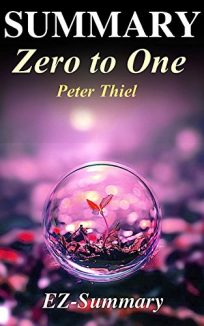
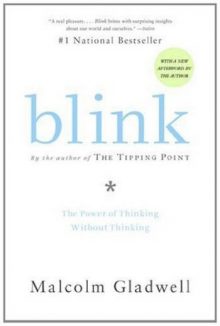
From Malcolm Gladwell’s “Blink: The Power of Thinking Without Thinking” which builds your confidence by teaching you to trust your intuition, to “Zero To One” by billionaire philanthropist Peter Thiel, which is aimed at generating a positive approach to starting your own business, this list covers all bases when it comes to inspiring you in all aspects of life:


Tony Hsieh offers an insight into the numerous life lessons he learnt while pursuing a variety of business ventures over the years. Delivering Happiness highlights the importance of creating a corporate culture which focuses on the happiness of those around you, and how their joy can grow you as an individual.

Recommended by:
Padmasree Warrior (CEO of NextEv, dubbed Queen of the Electric Car by Fortune)
Simos Kitris (Founder of People per Hour)


Peter Thiel finds the unexplored corners of your creativity: that’s the central premise of this luminary’s bestseller. Peter Thiel argues that you need to escape competition and think for yourself if you truly want to forge your own path in business.

Recommended by:
Elon Musk (Founder of SpaceX and Tesla Motors)
Gareth Williams (Founder of Skyscanner)
John Sculley (Former CEO of Apple, Inc; and former President of Pepsi-Cola)


In Blink, Malcolm Gladwell explores how we ‘know’ something without exactly knowing why. Gladwell teaches readers how trusting your instinct can be more effective than approaching a decision with caution, inspiring you to think in new ways.

Recommended by:
Marillyn Hewson (CEO, Lockheed Martin; “The World’s 20th most powerful woman” –Forbes)
Paul Jozefak (Managing Director of tech company Liqud Labs)


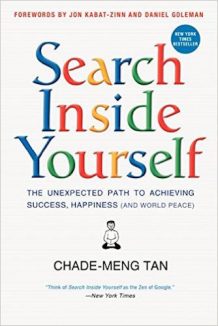
Chade-Meng Tan, Google’s personal growth pioneer, talks us through the mindfulness techniques he teaches to employees as he attempts to unlock their full creative potential. Credited with augmenting the productivity of one of the world’s pre-eminent tech companies, Meng imparts a wealth of useful mind training.

Recommended by:
Arianna Huffington (Founder, Huffington Post)
Tony Hsieh (CEO of Zappos, an online shoe and clothing retailer)


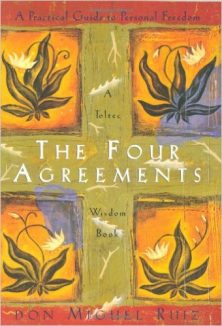
Don Miguel Ruiz believes there are four rules that can transform our existence: be impeccable with your word, don’t make assumptions, always do your best and don’t take anything personally. By removing self-limiting beliefs, the author suggests that we will be better-placed to harness our innate potential.

Recommended by:
Ellen Degeneres
Jack Dorsey (Co-founder and CEO of Twitter)


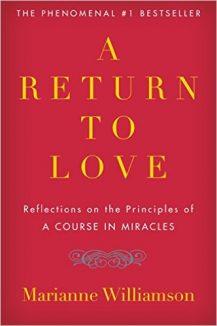
Based on the author’s own experiences as a teacher and lecturer, A Return to Love looks at how the principles of love can transform and heal people during any trials or difficulties life has to offer. Sharing her own insights, Marianne Williamson offers practical applications of love and how it can change all aspects of our lives.

Recommended by: Oprah Winfrey


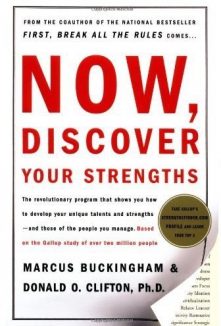
Using the data mined from a study of over two million high-achievers, this book by Marcus Buckingham sets out 34 themes geared towards maximizing your business success. Through the completion of an online test, readers will discover which of these themes relate to their strengths, allowing them to cultivate the best working environment for them.

Recommended by:
Sheryl Sandberg (Author and COO of Facebook; founder of Leanin.org)


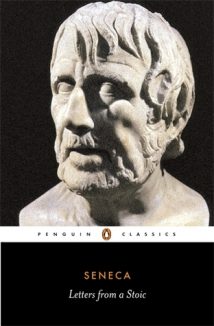
In this book, Robin Campbell translates the philosophical musings of Lucius Annaeus Seneca, the advisor to emperor Nero. Seneca was credited with humanizing Stoicism and transforming it from an otherwise foreboding belief system into a useful philosophy for life.

Recommended by:
Tim Ferriss (Author of self-help books on the ‘4-hour’ theme, entrepreneur, public speaker)


Author Tom Wolfe monitors and interviews the first Project Mercury Astronauts in an attempt to identify the mental and physical characteristics that primed them to become pioneers in their field.

Recommended by:
Peter Thiel (Co-founder of PayPal and founder of Clarium Capital)


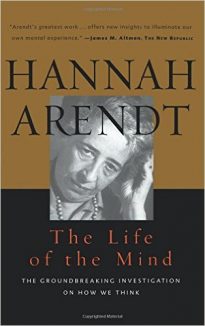
Arranging the mind into three key processes (thinking, willing and judging), Hannah Arendt delivers an in-depth exploration of the way we process information. From scholars to business specialists, Hannah believes that an inability to think is preventing us from maximizing our potential.

Recommended by:

Phuthuma Nhleko (African businessman, executive chairman of MTN Group) The 10 Motivational Books Used By the World’s Top Achievers
Read More........

Shelf-sharing seeks to save bookstores in Japan

TOKYO - "I'm holding an illustrated book of cheeses," says a delighted Tomoyo Ozumi, a customer at a growing kind of bookshop in Japan where anyone wanting to sell their tomes can rent a shelf.

The concept brings back the joy of browsing real books to communities where many bookstores have shut, and gives readers more eclectic choices than those suggested by algorithms on online sellers, its proponents say.

"Here, you find books which make you wonder who on earth would buy them," laughs Shogo Imamura, 40, who opened one such store in Tokyo's bookstore district of Kanda Jimbocho in April.

"Regular bookstores sell books that are popular based on sales statistics while excluding books that don't sell well," Imamura, who also writes novels about warring samurai in Japan's feudal era, told AFP.

"We ignore such principles. Or capitalism in other words," he said. "I want to reconstruct bookstores."

His shop, measuring just 53 square metres (570 square feet), houses 364 shelves, selling books -- some new, some used -- on everything from business strategy and manga comics to martial arts.

AFP | Yuichi YAMAZAKI

The hundreds of different shelf renters, who pay 4,850-9,350 yen ($32-$61) per month, vary from individuals to an IT company to a construction firm to small publishers.

"Each one of these shelves is like a real version of a social media account, where you express yourself like in Instagram or Facebook," said Kashiwa Sato, 59, the store's creative director.

- Cafes and gyms -

For now his store Honmaru -- meaning the core of a Japanese castle -- is only in Tokyo, but Imamura hopes to expand to other regions hit hard by bookstore closures.

AFP | Yuichi YAMAZAKI

A quarter of Japan's municipalities have no physical bookstores, with more than 600 shutting in the 18 months to March, according to the Japan Publishing Industry Foundation for Culture.

Imamura in 2022 visited dozens of bookstores that have managed to survive the tough competition with e-commerce giants like Amazon, some by adding cafes or even gyms.

"But that is like putting the cart before the horse. Because if a gym is more profitable, 90 percent of the shop may become a gym, with 10 percent for bookselling," Imamura said.

- Crowd-pullers -

Rokurou Yui, 42, said his three shelf-sharing bookstores in the same Tokyo area are filled with "enormous love" for shelf owners' favourite books,

AFP | Kazuhiro NOGI

"It is as if you're hearing voices of recommendations," Yui told AFP.

Owners of regular bookstores put books on their shelves that they have to sell to stay in business, regardless of their personal tastes, he said.

"But here, there is no single book that we have to sell, but just books that someone recommends with strong passion and love for," he said.

Yui and his father Shigeru Kashima, 74, a professor of French literature, opened their first shelf-sharing bookstore, called Passage, in 2022.

They expanded with two others and the fourth opened inside a French language school in Tokyo in October.

Passage has 362 shelves and the sellers help attract customers with their own marketing efforts, often online.

That is in contrast to conventional bookstores that often rely on owners' sole sales efforts, he said.

On weekends, Yui's store sometimes "looks as if it were a crowded nightclub with young customers in their 10s, 20s, 30s" with edgy background music playing, he said.

Customers and shelf-owners visit the bookstore not only to sell and buy books, but to enjoy "chatting about books", he said.

Japan' industry ministry in March launched a project team to study how to support bookstores.

"Bookstores are a hub of culture transmission, and are extremely important assets for the society in maintaining diverse ideas and influencing national power," it said.

kh/stu/tym

Read More........

Reading When Writing With: Gunjan Jain


.Subscribe
By Dhvani Solani: The relationship between reading and writing is an old, torrid one, both leaving an indelible imprint on the other. In this column, we seek to answer a question we’ve often asked ourselves – what did the author have on their bookshelves while penning their latest work. This month, we throw the question to Gunjan Jain whose book – She Walks, She Leads (Penguin Random House) – is an anthology of 24 women achievers at the pinnacle of their profession, from Indra Nooyi and Chanda Kochhar to Mary Kom and Priyanka Chopra. 

What: “I read fewer books during the writing of this book as my efforts were to read books penned on similar concepts for inspiration. I also did not want existing books to taint my creativity. But largely, I read tons of material related to the people in the book.”
Why: “When I’m writing, what I read is primarily for information, or to see if there are other facets that I need to look at. However, I can’t deny that subconsciously I may have been influenced somewhat by what I read. Usually I concentrate on authors and books that have to do with what I’m writing, but sometimes when I get stuck I read light fiction to take a break and recharge my batteries. It usually works, and I can get back to what I’m doing with a fresh mind.”Source: Grazia India
Read More........

Fables of the forest

Nandana Dev Sen
By: Aditi Pancholi Shroff, Writing books for kids is no child’s play! But for actress, child activist and now author Nandana Dev Sen, what’s especially fun about writing for children is that you can use fantasy to make reality more lucid and evocative for kids, a reality from which privileged children are at times quite disconnected. She has recently come out with a new book for children titled Mambi and the Forest Fire — an adventure about discovering personal strengths and celebrating the unique gifts that make every child special. “Most of my stories that I would like to share are a by-product of the work that I have done for child rights and their protection.” In fact, Mambi — the protagonist of her book — too is an outcome of her close association with children’s issues. “Mambi as a character came into my life at a home for kids, who have been rescued from child trafficking and from the streets, in Narendrapur, not far from Kolkata,” she shares and adds, “The plan was to spend a day playing with them, encouraging them to express their feelings through singing, dancing, play-acting and other creative expressions. Since these kids had a history of trauma (even though they were extremely brave, resilient and talented), they were very shy, and initially lacked confidence to open up. Looking at them, I spontaneously made up the story of a shy monkey named Mambi who wants to be like others, because she feels everyone else can do things better than her. However, in the end she emerges to be the most heroic one out of all of them. After I created Mambi, I asked the kids to join in, who started inventing characters for the story that filled up the forest. Their transformation was astounding, as by the end of the day they were the most playful, irrepressible rocker group of kids, who just didn’t want to stop,” she recalls. Writing has always been very close to Nandana, especially because of the tradition that she comes from. She grew up in a family of strong women with voices that made a difference, and was always a great admirer of the works of writers like Simone de Beauvoir, Gloria Marie Steinem, Ashapoorna Devi, Mahashveta Devi, etc. “My grandmother Radharani Debi, and my mom Nabaneeta Dev Sen redefined what it meant to be a feminine voice in poetry. My grandmom was way ahead of her times. She was an argumentative woman, who wrote under two personas; in ’30s and ’40s, she touched upon explicit topics ranging from bold sexual fantasies to boyfriend problems. My mother apart from being a successful writer for adults, also touched upon the topics related to children,” she says. Nandana, also a Harvard graduate, trained in acting is keen on doing only those films that deal with subjects that she is passionate about. “From playing Sugandha (Raja Ravi Varma’s muse) in Rang Rasiya that mainly focused on the freedom of expression to playing Rani’s sister in Black (a film that dealt rights of children with disabilities) and The Silence based on child sexual rights, etc., you will mostly see me doing unconventional and intense films,” she says. Believing in the transformative power of children’s books as deeply as she does in the wide influence of cinema on masses, Nandana feels translation in literature is another area that needs to be paid due credit. “Translating works in different languages is not an easy route. We don’t give enough importance and credit to the creativity and the sensitivity that goes into translations. Anywhere else in the world, translators are seen as writers in their own right, as they are re-inventing and recreating the works that could get lost with time.” As a birthday present, Nandana recently did a bilingual translation of her mother’s book of poems from Bengali to English. After having released second children’s book, Nandana is busy with her future projects including a book on progressive Bengali women. She concludes, “Among the adult books, there is one about three generations of rule defying Bengali women. It is actually the world of my mother and grandmother seen through my eyes. Another one is a screenplay that I wrote, soon going to be adopted into a novel. It is a story set in the interdependent world of entertainment journalism, cinema and politics.”Source: The Asian Age
Read More........

Incredible Book Carving Art by Guy Laramee

Incredible Book Carving Art by Guy Laramee -Guy Laramee of Canada creates incredible sculptures out of books. Often set spine to spine, Laramee has carved mountainous glacial landscapes, stepped plateaus, and deep valleys rife with greenery. His work does not only encompass topography, but ancient architecture as well. A Buddhist temple appears to be carved into a cliff side in his piece “Longmen.” A stack of volumes reveals a cave dwelling that is carved into from the book corners. Laramee even carved a detailed rendering of the Temple at Petra from yellowed pages, which looks like the real thing when photographed. In addition, the author deals with many other creative ways. Scripting and music directing in the theater, the design of musical instruments, singing, video, painting. For 30 year career he has received more than 30 major awards at various festivals.
Read More........

Book Review: Fangirl by Rainbow Rowell

Book: Fangirl by Rainbow Rowell, Genre: NA Contemporary Romance, Rating: ★ ★ ★ ★ ☆, For: Fun From: Amazon
By Suey: Wow, but I've heard a lot about this book! Everyone seemed to love it. I had no idea what it was really about. Fangirl? Fangirl of what I wondered. And why did everyone love it so so much? Well, so she (our heroine) is a fangirl of some Harry Potter type series and she is a very popular online fan fiction writer. Things get interesting when she goes off to college and suddenly doesn't have as much time to keep up on her writings, and besides, now she has writing classes where she has to do "real" writing. And even more besides, she is a bit fascinated with her roommate's ex boyfriend. So he, this guy named Levi, was the best thing about this book. I agree with everyone that I've seen saying he's their new book boyfriend. He was simply delightful and fun and just the coolest. No wonder Cath was fascinated. But Cath herself, I was just so so about. She was a bit irritating, but still interesting I suppose. I didn't enjoy her Simon Snow fan fiction stories. They were thrown in here and there throughout this book, and they were long and weird and had nothing to do with the story. Except as a device to get Levi and Cath together, sort of. Maybe there's some sort of symbolism deep down, but I didn't dig to find it. I just felt it slowed down the main story and once there in the end, I skipped it entirely to get back to the story. Have you read this book? Did you enjoy the Simon Snow stuff? Or did it bug you too? I'm really wondering if people generally liked it or not. Anyway, so the relationship development was fun for me. And the relationship (or lack thereof) that Cath was struggling with regarding her family was interesting and frustrating. I didn't like her twin sister at all and I wondered why Cath even bothered with her. But she is her twin I suppose. Bottom line: Fun engaging story. I enjoyed it despite the fan fiction stuff. And despite the many many F bombs. Other Reviews: As you can tell, though, for me the blend of romance, family issues and friendship challenges worked like a charm! From Anna Reads: The bottom line is that I was bored much of the time and when the swoon-worthy conclusion arrived, it did not compensate for the lack of depth in the secondary characters and their individual conflicts. From Book Harbinger: There's just so much good in Fangirl . Cath has an interesting family dynamic, and a very interesting fanfiction hobby/habbit/lifestyle, and some school drama, and one of the most adorable romances I've read in a while.  From Read This Instead, This was a cute, fun book, but the gazillion issues were annoying at times. As were all the Simon Snow bits. Truthfully, I just find it hard to care about a fake novel that sounds too much like HP. From Estella's Revenge, Cath’s struggles to leave her old life behind and adapt to life at college felt very real. From Bermuda Onion's Weblog: Source: Article
Read More........

'Pride and Prejudice' by Jane Austen

'Pride and Prejudice' by Jane Austen
.Subscribe
Everything great has a way of perpetually fascinating us, and though it may seem hard to be fascinated by the same thing over and over again, it’s actually not. “Pride and Prejudice” by Jane Austen, published in 1813, is fascinating in more senses than one. It’s not only because this novel remains relevant regardless of the huge gap between our world and Austen’s: after all, every great book is relevant despite having more or less nothing to do with our present condition. 


What’s really amazing is that the first draft of this novel was completed when Austen was 21. Things like that are capable of making us both depressed and glad; “Pride and Prejudice” may well be one of the books that shape our perceptions of love and dignity and social rules and culture. All that, and probably more, is embedded in a universally familiar story of Elizabeth Bennet and Mr. Darsy, who are destined for each other but have to come to realize and to accept it. 

From the very beginning— from the first moment, I may almost say— of my acquaintance with you, your manners, impressing me with the fullest belief of your arrogance, your conceit, and your selfish disdain of the feelings of others, were such as to form the groundwork of disapprobation on which succeeding events have built so immovable a dislike; and I had not known you a month before I felt that you were the last man in the world whom I could ever be prevailed on to marry. 

“Pride and Prejudice” was Austen’s second novel, published after the first one, “Sense and Sensibility,” had proved to be successful. The book was advertised, it was well received and it sold well; a second edition followed the same year. It was immediately translated into French, German, Danish, and Swedish. Yet almost nothing predicted that this novel would become one of the most influential works of fiction known to us. A modern critic argued that “Pride and Prejudice” was about that thing that all great novels considered, the search for self and it was the first great novel that taught us this search was as surely undertaken in the drawing room making small talk as in the pursuit of a great white whale or the public punishment of adultery. Scholars turned their attention to Austen around the 1940s, by which time she had enough distinguished admirers; the poet W.H. Auden wrote in 1937:

You could not shock her more than she shocks me,
Beside her Joyce seems innocent as grass.
It makes me most uncomfortable to see
An English spinster of the middle class
Describe the amorous effects of 'brass',
Reveal so frankly and with such sobriety
The economic basis of society.

“Pride and Prejudice” must reveal something else, not only the economic basis of society, otherwise it wouldn’t have become such a huge part of our life. 10 movies based on it are evidence enough, but even more impressive is the list of books influenced by it: there are hundreds of them. As one can imagine, not all of them seem to have much in common with “Pride and Prejudice”, nor do they have to: influence works in mysterious ways and sometimes produces curious results. Thanks to a crowd of imaginative Austen lovers, we can revisit her story altered by murder, sex, and zombies, to take a look at it from Mr. Darcy’s point of view, and to see what happens to his five daughters. Source: Article
Read More........

Baby Whispering

Broken down into easy-to-follow time frames from preparing for arrival and birth right through to 12 months, there are answers to everything you need to know: • baby’s basic needs and development • common problems and solutions • techniques for breast feeding and bottle feeding (expressed milk and formula) • crying and settling, plus dealing with colic • Sharlene’s technique to bring up wind • sleeping patterns and suggested routines • developmental play, For years, Sharlene has been travelling the world helping new parents. Now Baby Whispering offers you the same skills, confidence and information which can be personalised to suit you and your baby. About the author: From an early age Sharlene Poole knew she was going to work with babies or children and is now a postnatal advisor and considered the authority on the subject in New Zealand. She has over 20 years experience working in postnatal care, as a Supervisor of an early childhood centre and then a British maternity nurse. In 2000 she based herself in the UK where she quickly forged a unique market for herself as a maternity nurse. Her reputation grew quickly through word-of-mouth and soon Sharlene was being flown around the world to ex-pat clients in countries such as Japan, India, South Africa, Australia and Dubai. Baby Whispering | RRP$40.00 - Penguin Books, Source: Beattie's Book Blog
Read More........

Expect writers, more events at book fair

World BOok Fair New Delhi
After the Jaipur Lit Fest, it will be Delhi’s turn to host a literary festival next week. The National Book Trust (NBT), which organises the New Delhi World Book Fair every year at Pragati Maidan, has decided to introduce writers’ corners and interactive sessions this year. The decision was taken after taking into consideration the people’s enthusiasm at the Jaipur Lit Fest. NBT’s director MA Sikandar said, “This year’s book fair will be held from February 4 to 10. This time, we have planned four-five events such as talks, readings, debates, workshops and Q&A sessions every day. Earlier, the focus was on the sale of books. But we wanted to innovate. Allowing book lovers to interact with authors was one such way.” There will be four writer corners at the book fair. NBT expects 50-55 English and 25-30 Hindi and language writers to show up for the event. There will be literary encounters and book-signings by noted French authors such as Tahar Ben Jelloun, Kenizé Mourad and Dominique Sigaud. There will also be training on publishing, film screening, interaction with photographers and their exhibitions and writing workshops. The book trust is still in the process of finalising the list but some of the other participating authors include Amit Shankar, Nilanjana Roy, Nirupama Subramanian, Nandita Bose and Girija Kumar, among others. However, the furore that sociologist Ashis Nandy’s comments created at the Jaipur Lit Fest has made the NBT wary. “We’re not going to invite controversial authors. People will be free to air their views, but they should be careful. Everyone is responsible for their actions. We are hoping and praying that everything goes well,” said Sikandar. Literature and cinema was the theme last year and the fair had attracted nearly 1,300 Indian and 30 foreign exhibitors. This year’s theme is ‘Indigenous Voices: Mapping India’s Folk and Tribal Literature’. Multifarious expressions of native cultures will be showcased through book exhibits, art forms, crafts, panel discussions and performances. Riding on the Lit Fest wave, NBT expects an even better response this time. This year France is a ‘guest of honour country.’ “Many authors and scholars from France will engage in conversations with their Indian counterparts at the literary events and professional round tables,” Sikandar said. “Unlike the Jaipur event, ours is a government initiative. We have involved various government literary bodies. For instance, Sahitya Akademi has been entrusted with the task to bring regional language writers,” he said. Image Link Flickr, Source: Hindustan Times
Read More........

Beijing to open 24-hour bookstore

Eslite Bookstore, a successful 24-hour bookstore in Taiwan.[File photo]
Beijing  will  open  its  first  24-hour  bookstore  at  the  China  Beijing  Publishing  Creative  Industry  Park
18022_ELLE Contemporary Collection - Only at Kohl's!(CBPCIP), the first of its kind in the city. Mr. Feng Junke, who heads the Beijing Municipal Bureau of Press and Publication, the book store's supervisory agency, confirmed the news on Monday while attending the city's political consultative conference. Feng denied the recent rumor that Eslite Bookstore, a renowned Taiwanese bookstore chain which is also open 24 hours a day, will land in Beijing soon. "There is no such application yet," he said. The bookstore to open in CBPCIP is under Beijing Genuine & Profound Culture Development Co., Ltd., whose current bookstores only have daytime business hours. But the parent company has applied for a 24-hour license. Feng said his bureau will give financial and preferential policy support to 24-hour bookstores to see "whether the business model will stand the time trial," especially when online bookstores are chipping away their market shares. Both Hong Kong and Taiwan have successful 24-hour bookstores; Singapore's Page One bookstore has a presence in several countries and regions in Asia already. Also according to Feng, all bookstores in Beijing, not necessarily 24-hour ones, will receive support from the municipal government. Source: Beattie's Book Blog

Read More........

Prosperity Without Growth

DO economies have to grow? Or, to put the point another way, what do they have to grow for? As rich countries suffer their worst failure of economic growth since the Second World War, those questions have resurfaced with a new urgency. The sense that our prevailing economic model is bankrupt, allied to fears that the world is heading for catastrophic climate change, has stoked demands for a radical rethink of the guiding principles of modern capitalist democracies. Answering that call, an assortment of pundits have been issuing challenges to political and economic orthodoxy, offering alternative visions of what a good society would look like. At the user-friendly end of the field, Zac Goldsmith, an environmental adviser to the British Conservative party, has taken an amiable stroll round the issues in The Constant Economy. At the more rigorous end, a commission convened by France’s former president Nicolas Sarkozy and led by the Nobel prize-winning economist Joseph Stiglitz has examined the limitations of standard gross domestic product data as a lodestone for policy. Between those extremes lies Tim Jackson’s Prosperity Without Growth: Economics for a Finite Planet, a challenge to mainstream economic thinking that is both accessible and robustly argued. Jackson, a professor of sustainable development at the UK’s Surrey university, has thought hard about the subject. His prose is lucid and lively, and many of his policy prescriptions are sensible. Jackson is a member of the British government’s Sustainable Development Commission (SDC), and the book draws on a report for that commission published earlier in the year. (Full disclosure: I also served on the SDC until 2004.) For a work by a government adviser, based on an officially supported research project, his stance is also refreshingly radical. Yet for all these strengths, his argument is flawed. Jackson’s starting point is that, as he puts it, "a return to business as usual is not an option." If economic growth carries on as it has done since the industrial revolution, he writes, "by the end of the century our children and grandchildren will face a hostile climate, depleted resources, the destruction of habitats, the decimation of species, food scarcities, mass migrations and, almost inevitably, war." In his strongest chapter, he takes on what he calls "the myth of decoupling": the idea that the link between economic growth and environmental damage can be broken. Typically, the environmental impact of an economy, relative to its income, falls as it gets richer. But while that "relative decoupling" is well-established, "absolute decoupling" — a decline in greenhouse gas emissions, for example — has been elusive. Jackson’s conclusion is that if economic growth cannot be separated from environmental damage, then — in rich countries at least — it is growth that will have to be abandoned. Instead, he argues, societies can attain a truer prosperity that "consists in our ability to participate in the life of society, in our sense of shared meaning and purpose and in our capacity to dream." Lives of frugality and simplicity, with stronger communities and healthier relationships, will make us more genuinely prosperous than our present obsession with "material pleasures", he argues. This is, in many ways, a beguiling vision, particularly at a time when the pursuit of prosperity in the material sense has proved so harrowing. The problem comes with reality. Jackson’s policy prescriptions — including greater financial prudence and tighter regulation of TV advertising — are all sound, to varying degrees. Yet they take only the smallest of steps towards the post-growth society that he suggests we need. His only idea that could put the brake on growth would be cutting working hours. Here he takes the economist’s famous "lump of labour" fallacy — the idea that there is only a fixed amount of work to do that has to be shared round — and suggests it should be a goal of policy. Yet in anything other than a perfect utopia, the idea that there is no more work that needs doing is ludicrous. There are other problems, too. Jackson has no answer for the question of how a post-growth economy would handle technological innovation, or a refutation of Benjamin Friedman’s argument, in his excellent The Moral Consequences of Economic Growth, that rising standards of material prosperity foster opportunity, tolerance, fairness and democracy. A society that has given up on growth seems unlikely to be the open, friendly community of Jackson’s imagining. His pessimism about decoupling is probably also overdone. There is plenty of analysis, from Lord Stern’s report on the economics of climate change, to show how carbon dioxide emissions can be cut to keep global warming within reasonable limits while the world economy continues to grow. While the goal may be achievable, reaching it will require an enormous effort. By daring to challenge one of the fundamental precepts of orthodox policy-making, Jackson performs a valuable service in reminding us of that. His questions are worth asking, even if his answers are wrong. TITLE: Prosperity Without Growth: Economics for a Finite Planer. Author: Tim Jackson, Publisher: Earthscan, © The Financial Times Limited. Source: BusinessDayImage: https://upload.wikimedia.org
Read More........

Mantel bags second Booker

Hilary Mantel did not figure on a list of the 20 best young British novelists published by a literary magazine in 1983. On Tuesday, she became the first British novelist to bag the prestigious Man Booker prize twice. The 60-year-old writer, whose Booker award was her second in only three years, stood up and folded her hands in a courteous 'namaste' to fellow diners at the gala banquet at Guildhall in central London. "Well, I don't know," she said. "You wait 20 years for a Booker Prize and two come along at once." "In (Mantel's novel) Bring Up the Bodies, our greatest modern writer retells the origins of modern England," said chairman of the judges and editor of the Times Literary Supplement, Peter Stothard. The nominees included the Indian poet and writer Jeet Thayill, who had an outside chance of winning the award that goes out every year to the best novel in English by a writer from the Commonwealth and Ireland. She becomes only the third author, after Australian Peter Cary and South African JM Coetzee to win the prize twice and is the first to win with a sequel - Bring Up the Bodies is the second in a trilogy that began with the Booker-winning Wolf Hall in 2009. "There is the last volume of her trilogy still to come so her Man Booker tale may yet have a further chapter," spokesperson for the Man Booker said. "I assure you that I have no expectations I will be standing here again," Mantel joked as she accepted the award. Central to the Tudor trilogy is the anti-hero Sir Thomas Cromwell - King Henry VIII's chief minister, spymaster, torturer and of the most ruthless and powerful men ever to dominate British politics. Source: Hindustan TimesImage: upload.wikimedia.org
Read More........

Delhi book fair begins

The 18th annual Delhi Book Fair began at Pragati Maidan in New Delhi on Saturday. The nine day book fair will have e-books as its theme. There will also be seminars and book reading sessions. The book fair from Sep 1-9 will play host to 300 publishers -- both regional and international, including those from China, Pakistan, US, Britain, France and Germany. Inaugurating the fair, Delhi Lt Governor Tejendra Khanna said, "Hope the publishers would have inspirational books to spread the message of peace and brotherhood among people." According to the organisers, the theme of book fair is "e-books" which will remain the centre-stage during the event. "The central theme of the fair is e-books. It will bring together technology and literature. Other than the theme of e-books, the fair will screen adaptations of popular novels in diverse languages," said an organiser. "The Delhi book fair also gives 50 percent discount on stall rentals to encourage small publishers," said an official. The entry tickets are priced at Rs.20. Students with identity cards can avail 50 percent off on the tickets. Source: Hindustan Times
Read More........

CATCH ME by Lisa Gardner


Review: “In four days, someone is going to kill me...” Detective DD Warren has seen and done a lot during her career on the Boston police force, but she’s never had to solve a murder that hasn’t even happened yet. While on the trail of someone killing internet predators, Warren is confronted outside the latest crime scene by a young woman who adamantly believes she only has four days left to live. Why? Because her two childhood best friends have been killed on that very day, at the very same time, the past two years. With no signs of struggle, no forced entry. A killer managed to get up and close and personal, end their lives, and get away scot-free. Leaving no trace, and with no apparent motive. The inseparable trio from the New England small town is now down to one, and Charlene Rosalind Carter Grant has no doubt her own time is running out. On January 21, at 8pm, she will die, and ‘Charlie’ wants Boston’s best detective to investigate her imminent death, to find out what’s really been going on, and to catch her killer. But are Charlie’s worries real? And what was she doing hanging around the scene of another crime? Has the small town police dispatcher decided to get a little vigilantism in during what she thinks will be her final days? She’s certainly been preparing herself for battle – learning to outshoot, outfight, and outrun almost anyone. And she knows about police work. Is she using those skills to gun down the paedophiles, is she the one handing out some street justice, taking the law into her own hands? DD Warren doesn’t quite know what to think about Charlie, but finds herself swept up in the other woman’s struggles, while still juggling her own, at work and home. The former workaholic is now a mother to a 10-week-old baby, living with her partner Alex (who is also in law enforcement), and actually enjoying getting away from work now and then. But her investigative drive still burns bright. After a creepy prologue describing two young girls being woken then terrified by their clearly mentally unstable mother, Catch Me is told from the alternating perspectives of the two female leads – both strong, complex women, with distinct outlooks. But this terrific thriller is also packed with plenty of other interesting and layered characters, and flashes of insight into wider human desires, fears, and more. Like the very best crime thrillers, Catch Me doesn’t just entertain with a gripping plotline or intriguing mystery, it emotionally engages the reader. We don’t just want to know what happens; we care about the fully rounded characters. We feel as we read. Gardner also raises interesting questions about a number of wider issues, including the frightening ease with which internet predators can contact and groom children, and how parents can protect – or fail to protect – their children. Catch Me is arguably Gardner’s very best novel yet; an engaging and emotionally tense page-turner that hooks you early and doesn’t let go. Right to the thrilling end. Source: KiwiCrime
Read More........

The Greatest Books of All Time

What are the greatest books of all time? And who should be the judge? Recently, Brain Pickings pointed out an awesome book of lists wherein 125 famous authors — everyone from Norman Mailer to Claire Messud to Annie Proulx to Stephen King — choose their ten favorite books. The book, The Top Ten: Writers Pick Their Favorite Books, then handily synthesizes all that info (544 works total mentioned in 125 lists) into a few important master lists: namely, the greatest books and authors of all time. Each book is assigned a value based on its position in any given list — that is, ”a first-place pick is worth ten points, and a tenth-place pick is worth one point” and so on — and those numbers are then added up to give each book a ranking. We’ve collected a few of the top rankings here in an easy to digest infographic. How many have you read? Source: Beattie's Book Blog
Read More........

Pride & Prejudice to get erotic makeover

Inspired by the phenomenon success of EL James’s “mummy porn” title Fifty Shades Of Grey, a publisher of adult fiction is giving literary classics such as Jane Eyre and Pride And Prejudice an erotic makeover. The company said that it was “100 percent convinced” that there was a market for the racy versions of the 19th century novels by authors Charlotte Bronte and Jane Austen and that the spicing up of the much-loved books will introduce the classics to “a new generation of readers”. Other titles to be published under the Clandestine Classics collection include Austen’s Northanger Abbey and Arthur Conan Doyle’s stories featuring Sherlock Holmes. However, some original fans of Jane Eyre might be unhappy to discover that the female protagonist has “explosive sex with Mr Rochester” in the publisher’s erotic edition. In Wuthering Heights, heroine Catherine Earnshaw “enjoys bondage sessions” with Heathcliff while sleuth Sherlock Holmes has a sexual relationship with his sidekick Dr Watson in the new e-book. Claire Siemaszkiewicz, founder of Total-E-Bound Publishing, which is releasing the titles from July 30 in digital format, said that they were not changing the original prose but were merely adding the “missing” scenes for reader’s enjoyment. “We’re not rewriting the classics. We’re keeping the original prose and the author’s voice. We’re not changing any of that,” the Independent quoted her as saying. “But we want to enhance the novels by adding the ‘missing’ scenes for readers to enjoy. People are going to either love it or hate it. But we’re 100 percent convinced that there’s a market there. “We’ll be bringing the classics to a new generation of readers as well as to people who love the classics but would like to see what we have done with them,” she said. Siemaszkiewicz further said that she had herself wondered whether Bronte sisters would have taken the erotic romance route, if they were alive. “I’ve often wondered whether the Bronte sisters, if they were alive today, would have gone down the erotic romance route. There’s a lot of underlying sexual tension in their stories,” she said. “Charlotte Bronte was a bold, forward-thinking lady for her time. There’s so much sexual tension and eroticism there,” she added. The adult scenes will be penned by some of the 250 authors on the publisher’s books who are expert at writing erotic romance. Source: Hindustan Times
Read More........

Marilyn Monroe: proto-feminist?


As the 50th anniversary of Marilyn Monroe's death approaches, Lois Banner argues in this extract from her new book that the star – complex and powerful – had many qualities associated with the women's movement Lois Bannerguardian.co.uk, Saturday 21 July 2012 In one of the most famous photos of the 20th century, Marilyn Monroe stands on a subway grate, trying to hold her skirt down as a gust of wind blows it up, exposing her underpants. The photo was taken in New York on 15 September, 1954, in a photoshoot during the filming of The Seven Year Itch Marilyn is a vision in white, suggesting innocence and purity. Yet she exudes sexuality and transcends it; poses for the male gaze and confronts it. The photoshoot was a publicity stunt, one of the greatest in the history of film. Its time and location were published in New York newspapers; it attracted a crowd of 100 male photographers and 1,500 male spectators, even though it was held in the middle of the night to avoid  daytime  crowds. Sam  Shaw,  the stills photographer for the movie, took the  famous photo, but the other photographers there shot hundreds of variations.Billy Wilder, the film's director, did 14 takes – pausing between them to let the photographers shoot. Every time Marilyn's skirt blew up, the crowd roared, especially those up front, who could see a dark blotch of pubic hair through her underpants, even though she had put on two pairs to conceal it. The draconian 1934 Motion Picture Production Code forbade such a display. Any sign of pubic hair in photos had to be airbrushed out. The scene in the shoot is naughty, with the phallic subway train, its blast of air, and Marilyn's erotic stance. Yet she is in control. She is the "woman on top," drawing from the metaphor for women's power that runs through Euro-American history. She poses for the male gaze, but she is an unruly woman – the white witch with supernatural powers; the burlesque star in "an upside-down world of enormous, powerful women and powerless, victimised men". In the photo Marilyn is so gorgeous, so glamorous, so incandescent – as her third husband, the writer Arthur Miller, described her – that she seems every inch a star, glorying in her success. She can now defy the people who had mistreated her: her father and mother, who abandoned her; foster parents who abused her; Hollywood patriarchs who regarded her as their toy; even Joe DiMaggio, then her husband, who physically abused her. Present at the shoot, he stalked off in a fury when her skirt billowed up and revealed her underwear. In her only discussion of the shoot – a 1962 interview – she stated that she wasn't thinking about sex when she posed, only about having a good time. "At first it was all innocent and fun," Marilyn said, "but when Billy kept shooting the scene over and over the crowd of men kept on applauding and shouting, 'More, more Marilyn – let's see more." Then Billy brought the camera in close, focusing on her crotch. "What was supposed to be a fun scene turned into a sex scene." With her wry humour, Marilyn added: "I hope all those extra takes are not for your Hollywood friends to enjoy at a private party."Source: Beattie's Book Blog,Image: flickr.com
Read More........

The Millionaire Authors' Club

Rowling has signed a deal with Little, Brown to release her first novel for adults:
Beattie's Book BlogYou think writers live in garrets? Think again. Carl Wilkinson introduces the Millionaire’s Club, an exclusive band of authors whose books have sold more than a million copies. By Carl Wilkinson - The Telegraph - 18 May 2012 In Martin Amis’s short story “Career Move”, Alistair, a screenwriter, has just finished his latest script and is sending it off to the Little Magazine with the slim hope that he’ll get it published. Meanwhile, Luke, a poet, has just dashed off a sonnet – called “Sonnet” – that he’s faxed to his agent before hitting the gym. By the time he returns, major producers have already started calling with offers. Finally, Luke is flown to LA for talks about the development of his poem and naturally, in this skewed world, he’s flying first class: “In poetry,” we’re told, “first class was something you didn’t need to think about. It wasn’t discussed. It was statutory. First class was just business as usual.” The joke is in the absurdity of it all: everyone knows poets don’t make money. And aside from one or two publishing stars who sell stacks of copies, authors generally earn little from their work. Business as usual in the literary world is about as far from the first-class lounge at Heathrow as one can get. But there are those rare writers who manage to either sell a lot of books or make rather a lot of money and for whom first class has become statutory. Earlier this month, it was revealed that Joanne Harris’s bestselling novel Chocolat (1999) had officially passed the one million copies mark, placing her in what The Bookseller called the “Millionaire’s Club”. Jodi Picoult’s My Sister’s Keeper (2003) followed suit, as did John Boyne’s The Boy in the Striped Pyjamas (2006). Astonishingly, according to Nielsen BookScan figures, the Harris, Picoult and Boyne novels joined the ranks of just 68 books (some of them non-fiction) that have sold more than one million copies since records began in 1998. Harris became only the fourth British female novelist to top one million copies, after J K Rowling (Harry Potter), Helen Fielding (Bridget Jones) and Kate Mosse (Labyrinth). Read the rest at The Telegraph Footnote: How many NZ authors have sold a million copies of one title? Keri Hulme and Lloyd Jones certainly. Anyone else? Alan Duff? Source: Beattie's Book BlogImage: flickr.com/
Read More........

Books that changed me: Riikka Pulkkinen

Finnish novelist Riikka Pulkkinen (left) talks about her favourite books.Atonement - Ian McEwan: When I read this novel, I was blown away. I instantly knew this was the way I wanted to write - the structural nuances, the way McEwan played with different genres. For my novel True, I invented a similar character to young Briony inAtonement: a catalyst character. You can read Atonement without realising it is really told by Briony. But if you figure this out, the novel gets to a whole other level. Diary of a Bad Year - J.M. Coetzee: Coetzee crosses the line here between fact and fiction by combining essays and a fictional story that rises from the margins. An old writer, Senor C, hires a secretary, Anya, to help him type the essays he's been working on. We read Senor C's essays, but in the footnotes we can also read the story, in which Anya presents a counterforce to C's world view. A witty, painfully self-critical and wise novel. Austerlitz - W.G. Sebald: Austerlitz opens our eyes to the impossibility of comprehending the European trauma of World War II and to the fallibility of memory. The technique of the narration is very delicate: the coincidence of time and place, the combination of pictures and prose, the way time starts to unfold as if it was a place in the universe when the narrator is willing to look into his past directly, unflinchingly. The Remains of the Day - Kazuo Ishiguro It took me a while to understand the enchantment in the unreliability of Ishiguro's narrators. We the readers know as historical fact what Stevens tries to escape in his narration: the brutality of the Nazi regime. Stevens's loyalty is a metaphor for something more horrible and once I understood the metaphorical level of this novel, I wanted to learn how to write in that subtle manner. Madicken - Astrid Lindgren: This children's novel is one of the first books I read. Set during World War II, Madicken tells the story of a seven-year-old girl from a typical Swedish middle-class family. Through the eyes of Madicken and her little sister, Elisabeth, we get insight into the social circumstances of that era. Lindgren's novels taught me about the real world and only as an adult did I realise how political and humorous her books were. Riikka Pulkkinen is a Finnish novelist. Her first novel, Raja (The Border), came out in 2006, but her second novel, True (Scribe, A$29.95), marks her English-language debut. Source: Beattie's Book BlogImage: https://upload.wikimedia.org
Read More........