Tiny Baby Born With Hands Smaller Than a Fingertip is Now Home After a Year–And Developing Normally

Preemie baby Gabriel Golden at Vanderbilt NICU-SWNS

A premature baby, born so tiny his hand was smaller than his dad’s fingertip, is finally home and healthy after a year in the hospital.

Gabriel Golden was born weighing one pound in September 2024 after just 22 weeks gestation.

He endured nearly a year in the Vanderbilt NICU in Nashville, Tennessee, battling chronic lung disease and multiple infections before his parents Caroline and Garreth were finally able to bring their son home three months ago.

Little Gabriel still faces respiratory challenges, but is thriving developmentally.

“It was amazing that somehow, even though his finger was so small, I could feel his grip,” said his father Garreth.

“The strength those tiny fingers held left me speechless.”

Caroline started hemorrhaging 14 weeks into the pregnancy, and for a harrowing eight weeks, doctors warned daily that she could miscarry at any moment.

She recalls bleeding constantly while on bed rest and stuck at home. When at 18 weeks, Caroline’s water broke. The preemie wasn’t considered viable, so the couple waited in limbo until 22 weeks, when Caroline was hospitalized with hopes of buying more time for their son’s development.

The medical team presented stark statistics—and the numbers were devastating: a less than five percent survival rate, with greater than 90 percent odds of neurological problems, heart defects, and vision or hearing loss.

“The biggest thing is that their lungs are barely developed,” Caroline said.

At 22 weeks and four days, Caroline went into labor during an emergency situation that put both their lives at risk. Garreth watched helplessly as medical staff rushed his wife to surgery.

“They’re having her sign paperwork that she could die from the surgery,” recalled Garreth, who spent a lot of time “not knowing what to think or what to do.”

Against all odds, Gabriel was able to use the breathing tube and survived.

Gabriel Golden is finally home -SWNS

But he still had to battle severe broncho-pulmonary dysplasia—a chronic lung disease that left his lungs scarred and rigid. The couple said goodbye to their son on three separate occasions during his first six weeks of life.

Multiple pneumonia infections also set him back, and doctors eventually determined he would need a tracheostomy to survive.

Throughout the ordeal, Garreth traveled three hours each way to his job, continuing to work so they could pay their bills and Caroline tried to maintain a bedside vigil.

Their church community provided financial support, and four primary nurses at Vanderbilt became like family during Gabriel’s extended stay. “We couldn’t have done it without them,” Caroline said.

“One nurse specifically was with us for nine and a half months. I personally couldn’t have done it without her.”

Gabriel Golden family at Vanderbilt NICU-SWNS

Caroline, who had always dreamed of being a mother, says the experience transformed the couple’s faith and perspective on life.

“I was thrust into a situation where my faith was the only thing I had to cling to. Now it’s stronger than I ever thought it could be.”

While Gabriel is home, he still requires a tracheostomy and faces respiratory challenges, but there’s good news, too.

“By the grace of God, Gabriel is completely developmentally appropriate, and has no brain issues,” Caroline told SWNS news agency.

“Other than his lungs, his body is in wonderful working condition.”

The experience gave Garreth a new perspective when he walked through the children’s hospital and saw other families facing their own battles.“As complex as Gabriel is—and as precious as his life is—you walk into Vanderbilt’s Children’s Hospital, and it hits you like a wave of gratitude when you see some of the things going on with these children.” Tiny Baby Born With Hands Smaller Than a Fingertip is Now Home After a Year–And Developing Normally
Read More........

John Oliver Sells His Bob Ross Painting Raises Record $1.5 Million for Public Television

Bob Ross painting Cabin at Sunset – credit, screenshot via John Oliver’s Junk

GNN reported recently that a Los Angeles auction house recently handled the sale of three paintings by the famous TV artist Bob Ross, with the proceeds of over $600,000 going to fund public television and radio.

Inspired by the effort, HBO’s comedy news host John Oliver announced that he too had an original Ross that he would auction for the Corporation for Public Broadcasting.

On the last episode of the most recent season of Last Week Tonight with John Oliver, the British-born TV host revealed an auction catalogue called “John Oliver’s Junk” headlined by Cabin at Sunset, which Ross painted in season 10 of his show The Joy of Painting.

It managed to set a new auction record for a Bob Ross painting of $1,035,000 after 35 bids.

“We’ve actually accumulated a bunch of weird artifacts on this show over the years that we could definitely auction off to raise some much needed money,” Oliver said on last week’s show. “I am proud to announce last week tonight’s first ever auction in aid of public media.”

The proceeds from the sales of Cabin at Sunset and 34 other items totaled $1.5 million which has been transferred to the Public Media Bridge Fund which helps support stations and programs in need of funding.

Most of the items included show memorabilia, including a pair of golden sneakers Oliver promised to wear almost decade ago if former FIFA President Sep Blatter resigned, a cabbage that Oliver married in a segment on AI-generated art, and a jockstrap worn by Russel Crowe.

A pair of VIP tickets to a live show taping caught over $110,000.

While the Corporation for Public Broadcasting, a GSE that funds public radio and television in America, was receiving over $1 billion of its budget from the government, anyone who watches PBS or listens to NPR notes the frequency with which they run pledge drives. This along with other for-profit productions generates substantial revenue that helps keep the CBP operational.

It was the idea of Bob Ross Inc., the company that manages the painter’s likeness and property, to hold the auction in support of public television, something which he loved so much.

“I think this actually would have been Bob’s idea,” said Joan Kowalski, president of Bob Ross Inc. “And when I think about that, it makes me very proud.”

Home in the Valley, (1993) Cliffside, (1990) and Winter’s Peace (1993) were priced to start at Bonham’s auctioneers at between $25,000 – $30,000, but all three quickly exploded in action.The first brought $229,100, the second $114,800, and Winter’s Peace went for a staggering $318,000. John Oliver Sells His Bob Ross Painting Raises Record $1.5 Million for Public Television
Read More........

Three Bob Ross Paintings Sold for $600,000 at Auction in Fundraiser for Public Television

Winter’s Peace by Bob Ross – credit Bonham’s Auctioneers, released

Three works from Bob Ross’ classic public television show The Joy of Painting raised over half a million dollars for public television.

Having relied for decades on endowment contributions and pledge drives of every tact and description, it was brilliant idea that puts a brilliant man and his brilliant perspective on the arts back into the spotlight 30 years after his death.

“I think this actually would have been Bob’s idea,” said Joan Kowalski, president of Bob Ross Inc., the firm that manages his likeness, content, and collection of thousands of works that he painted on television, in advance of the auction. “And when I think about that, it makes me very proud.”

The auction came months after cuts to PBS and other stations were passed in the most recent budget, but also as a pair of Bob Ross paintings touched, and then surmounted, 6-figure valuations—something very rarely seen before.

Straight Arrow News, which spoke with Kowalski, also reached out to Bonham’s, which had seen a pair of Ross’ sold for $115,000 and $95,000.

In many ways, the gentle television painter was a singular figure; irreplicable, not only as a figure in time but also in style and method. Ross paintings have always been conspicuously absent from the fine art auction circuits, and rarely come anywhere close to these sorts of valuations.

But in light of the appreciation, Bob Ross Inc. will be auctioning Home in the Valley, (1993) Cliffside, (1990) and Winter’s Peace (1993). They were priced to start at between $25,000 – $30,000, but quickly went to the Moon.

The first brought $229,100, the second $114,800, and Winter’s Peace went for a staggering $318,000.

– credit, Bob Ross Inc. fair use

“I think that there’s a certain amount of snobbery in the art business, but Bob is a cultural touchstone,” Aaron Bastian, senior director of California and Western paintings at Bonhams, told Straight Arrow News.

“He crosses a lot of different generations. Kids these days have seen him on YouTube. I watched him with my parents, right? And so, it’s something that is readily accessible to everyone.”

Modern artistic stars and works commonly seek to portray the world’s challenges, contradictions, and crises, while Bob Ross, a former Air Force drill sergeant who vowed never the raise his voice again after leaving the military, sought every broadcast to create a world he wanted to see: full of ‘happy little trees,’ and all the rest.

Kowalski points out that Ross loved the idea of public television, and that he would probably have been the first to pull out some out works to put towards the cause. After all, they aren’t unique.

While viewers saw only the canvas that Ross painted on screen over the course of the 30-minute program, that was actually the second of three renditions. One, he would do before shooting as a preparatory work that sat off camera as a reference. The second he’d do for the recorded broadcast, and a third, well-finished work with much more attention to detail than he could manage on-screen was painted for his instructional booklets.

Often, Ross would ensure the three remained together, either in his holdings at Bob Ross Inc., or in the cases when he would donate them, either to PBS or to the Smithsonian.

All the money raised from the auction will go to Create Channel, which Straight Arrow described as a “premium lifestyle channel for public television stations.”Another 3 works will be auctioned in January—part of a collection of 27 that could be ultimately sold to support the various channels and outlets under American Public Television. Three Bob Ross Paintings Sold for $600,000 at Auction in Fundraiser for Public Television
Read More........

80-Year-Old Grandma Who Learned to Swim at 59 Just Became Oldest Ever Female Ironman Finisher

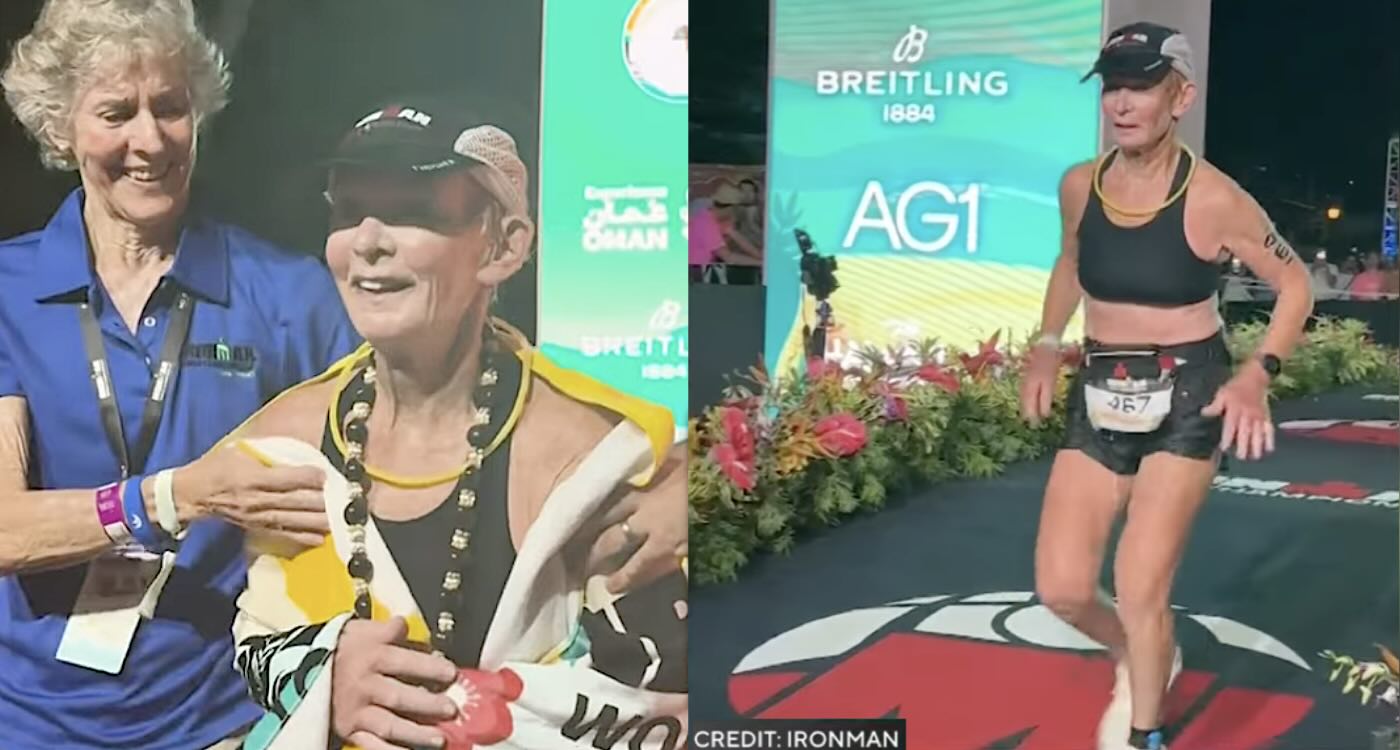
80-year-old Natalie Grabow becomes oldest female finisher in triathlon competition – Credit: Ironman

With every step toward the finish line, Natalie Grabow was proving it’s never too late to get started.

Earlier this month, the 80-year-old grandmother from Mountain Lakes, New Jersey, became the oldest woman to ever finish the punishing Ironman World Championship triathlon in Kailua-Kona, Hawaii.

She swam 2.4 miles—even though she never learned to swim until she was almost 60—then she pedaled 112 miles on a bicycle and immediately ran a full 26.2-mile marathon to make history. (Watch the video below…)

About 60 other competitors quit before they finished, all of them younger. Grabow did not.

“She’s truly gritty,” Grabow’s coach, Michelle Lake, told NPR. “Natalie is the definition of grit and gratitude: Grateful to make it to the start line, grateful to get to do something she loves everyday, and grateful to inspire so many others.”

Natalie’s story is even more impressive considering when she started.

She grew up in New Jersey long before Title IX vastly expanded the competitive opportunities for female athletes. A part of her that always existed lay dormant, just waiting for a chance.

“When you grow up and you don’t have those options, you know, you just watch the boys doing stuff and you’re just the cheerleader,” she told The Athletic. “It was just thrilling once I could do my first 5K and race and ride a bike with other people.”

As an adult, she worked as a software developer, played some doubles tennis, and eventually found running. The last hobby would prove to be a long-lasting love.

Running helped her form friendships and filled up her free time several days a week. Her friends eventually tried triathlons, but even in her 50s, Natalie didn’t know how to swim. Fortunately, she never once believed it was too late to start.


So, she became a mainstay at her local YMCA pool, using friends and books and videos, along with pure determination to learn some swimming strokes.

She improved enough to try a sprint triathlon and soon had her eyes on longer distances. Grabow worked on stretching and strength training. She cycled on an indoor exercise bike, ran at a nearby high school track, and kept swimming at the same place where she learned the skill late in life.

Twenty years ago, she finished her first half Ironman. A few years later, she graduated to the full-length version. And this past month, Grabow was tackling the famous Ironman triathlon course in Hawaii.

She swam 2.4 miles in Kailua Bay, using the freestyle strokes that escaped her for so long. She biked 112 miles in temperatures that peaked above 80 degrees. Then, came the marathon, 26.2 miles on a road course that gradually climbed more than 1,000 feet.

Just as she had many other times before, she kept moving forward, drawing closer and closer to her latest goal. It was just the latest obstacle in a life that has been searching them out, intent on surpassing them all.

Natalie crossed the finish line in 16 hours, 45 minutes and 26 seconds, becoming the oldest female to ever finish the Ironman World Championship in Hawaii. (See the moment below…)

“Absolutely incredible,” the PA announcer said to the spectators in attendance.

The senior is already searching for her next challenge. She signed up for a pair of Ironman races in 2026—and she may even take aim at the record set by Hiromu Inada, who at 85, became the oldest person to finish the Ironman World Championship in 2018.

“The important thing is that people see from my story that they can maybe push themselves a little bit, they can do a little more than they thought they could do,” she told The Athletic. “They can keep going longer than they thought they could go.”
It’s all proof that it doesn’t matter where you start. Or when. It’s about enjoying the journey — and finding your way to the finish line.80-Year-Old Grandma Who Learned to Swim at 59 Just Became Oldest Ever Female Ironman Finisher
Read More........

Some US protein powders contain high levels of lead. Can I tell if mine is safe?

Evangeline Mantzioris, University of South Australia

This week, the United States non-profit Consumer Reports released its investigation testing 23 protein powders and ready-to-drink shakes from popular brands to see if they contained heavy metals.

More than two-thirds of the products contained more lead in a recommended serving size serving than the Californian guidlines recommend in a day: 0.5 micrograms (mcg or µg).

Protein powders and shakes are most commonly used to build muscle. But some people may use it in a weight-loss program as a meal replacement, or to gain back weight lost after an illness or injury.

Some products Consumer Reports tested were plant-based, some were labelled as organic and some used animal and dairy-based protein. Only one product didn’t contain detectable levels of lead.

So what does this mean for people who use protein powder? And what’s the situation in Australia?

Lead has been found in protein powder before

Consumer Reports found lead levels increased since its last report in 2010. One product contained twice as much lead per serving than the worst performer in 2010.

A separate investigation in 2018 which analysed 130 protein powders available on Amazon found 70% had heavy metals in them.

Another analysis of 36 protein powders in 2021 found lead levels ranged from 0.8-88.4 mcg per kilogram of product. Consuming a single 20 gram serve a day, would mean a range of intake of 0.016 mcg to 1.77 mcg.

How does lead get into these products?

Lead comes from both natural sources (such as volcanic activity and chemical weathering of rocks) and human-made sources (such as leaded petrol, industrial processes and paint). This results in crops absorbing lead and the metal entering the food and water supply.

In US government testing from 2014 to 2016, 27% of all food samples (2,923) had lead detected in them.

In Australia, testing in 2019 found that of the 508 food samples, 15% had detectable levels of lead. Food Standards Australia New Zealand (FSANZ) modelling suggests this would result in an average lead intake of 0.018–0.16 mcg per kg a day across different age groups. For a 70kg person, this would range from 1.26 to 11.2 mcg per day from food and drinks.

Lead can also be inhaled as dust from industrial processes such as mining smelters or by inhaling (or licking) fragments of lead-rich paint when handling old lead toys or other lead equipment, or from consuming or coming into contact with contaminated water or soil.

How can lead affect your health?

Lead provides no health benefits. It’s harmful to the body and can damage nearly every organ system.

Its greatest impact is on the brain and nervous system. For children, this can lead to impaired cognitive and physical development, learning disabilities and behavioural problems.

With high levels of lead exposure, adults are at increased risk of anaemia, joint pain, kidney damage and nerve damage leading to tingling, numbness and muscle weakness.

During pregnancy, lead can be transmitted to the fetus, leading to complications such as premature birth, low birth weight and developmental issues in the baby. It’s also a concern for breastfeeding mothers, as some lead can be transmitted through the breast milk.

Lead has also been listed as a possible carcinogen, or cause of cancer, by International Agency for Research on Cancer.

As levels increase in the blood, health concerns grow. Very high levels in the blood (above 120 mcg per decilitre) can cause death.

What do other guidelines say is a safe level of lead?

Australia’s National Health and Medical Research Council (NHMRC) concludes there is no set safe level of lead in your diet. You should aim to consume as little as possible to avoid health impacts.

The NHRMC recommends blood levels, which take into account all exposures, should be below 5 mcg per decilitre of blood. (But Australia doesn’t have a daily limit.)

In 2022, the US Food and Drug Administration updated its maximum safe dietary lead levels to 2.2 mcg a day for children and 8.8 mcg a day for women of childbearing age. This is much higher than the Californian levels Consumer Reports used.

Using the FDA levels, all the products Consumer Reports tested could be consumed daily for adults – but this doesn’t account for exposure from other foods or the environment.

Should we be concerned in Australia?

Most of the products Consumer Reports tested are available for purchase online, and may possibly be available in stores.

There is no data on lead levels in protein powder sourced and manufactured in Australia.

So there is no way of knowing whether your protein supplement has lead in it, unless you get a chemical analysis done through an accredited laboratory as Consumer Reports did.

So should I limit my intake?

Probably, but not just because of concerns about lead.

We simply don’t know how much lead is in each scoop of protein powder, so it’s difficult to make recommendations about whether these products are safe to use daily. Levels will vary between products and even between containers. Occasional use is likely to be safe, but using it daily or more often could lead to unsafe intakes of lead.

It’s also important to remember that your blood levels will also be affected by environmental exposures and other foods.

But most of us don’t need extra protein, even if we’re training. Around 99% of Australians already meet their protein requirements.

It’s better to consume protein from whole foods, and you’ll get the benefits of other nutrients as well:

  • dairy products also contain calcium and vitamin B12
  • fermented dairy such as yoghurt and cheese also contains probiotics
  • fish has omega-3 fats
  • red meat contains iron and zinc
  • lentils, beans and nuts give you antioxidants and fibre.

All these nutrients are equally important for our good health and are less likely to be concentrated sources of heavy metals such as lead.The Conversation

Evangeline Mantzioris, Program Director of Nutrition and Food Sciences, Accredited Practising Dietitian, University of South Australia

This article is republished from The Conversation under a Creative Commons license. Read the original article.

Read More........

New Study of 10,000+ People Revealed Regular Physical Activity Is Linked to Larger Healthier Brains

– credit, Getty Images for Unsplash +

In a new study, scientists seeking to better understand how physical activity protects against neurodegenerative diseases like Alzheimer’s found it’s because exercise makes the brain larger.

2 to 3 days of moderate to vigorous physical activity was correlated to a significant increase in total brain matter and in specific regions like the temporal lobe and hippocampus.

To ensure the record is understood absolutely clearly—there’s no doubt that physical activity protects the brain from neurodegenerative diseases, including mild and severe cognitive impairment, Alzheimer’s, Parkinsons, and other forms of dementia.

The Canadian/American research team sought to better understand the mechanisms behind this effect.

Light physical activity, number of steps taken per day, and number of city blocks traversed per day, are all modalities that have been used to measure connections between physical activity and preventing these diseases, showing that even pedestrian, non-athletic, non-sportive activity can be neuroprotective in some cases.

One of the main culprits, in a positive sense, for this effect is brain-derived neurotrophic factor (BDNF). BDNF is released into the brain during periods of exercise where it lowers neuro-inflammation, improves synaptic connection, and performs other functions too numerous to list here.

The study benefitted from the use of a deep-learning neural network that allowed for multiple MRI scans of the same brain to be analyzed rapidly.

10,000 participants (and their brains) with an average age of 54, but ranging from 18 to 97, who were about half men and half women made up the study cohorts.

Exercise was self-reported—an inevitable flaw when conducting large population studies like this one. Participants were asked how many days of the week they engaged in 10 minutes or more of moderate or vigorous intensity exercise.

While previous studies quantified moderate and vigorous intensity through heartbeats per minute, this and other more modern studies simply define moderate as being engaged in physical activity and still being able to talk, but not being able to sing. Vigorous was defined as being in a state where only a few words could be spoken before pausing to breathe.

10,125 brain MRI scans were examined, and it was determined that a higher number of days of moderate to vigorous physical activity “predicted larger normalized brain volumes in multiple regions, including total gray matter volume, total white matter volume, hippocampus, frontal cortex, parietal lobes, and occipital lobe,” the authors wrote.

This was particularly true for the occipital lobe, parietal lobe, hippocampus, posterior cingulate, and temporal lobe, which all had correlative significance (also known as the p-value) of 6 or higher. A result of 6 or higher is typically when scientists begin to take notice of correlations—trained as they are to take them always with a grain of salt.

Brain matter and size are all predictors of better cognitive and neurological health as we age, while neurodegenerative diseases are often found in less-dense brains.

“The study included adults aged 18-97, showing it’s never too early or late to start,” wrote Chris Kresser, founder of the California Center for Functional Medicine, who was not involved in the study.

“While 75% of participants reported doing some regular physical activity, many didn’t meet standard exercise guidelines—yet still showed brain benefits. This adds to growing evidence that even modest physical activity can protect brain health.”

“Notably, moderate exercise appeared more beneficial than vigorous activity, suggesting you don’t need to be a super-athlete to reap the brain benefits,” he added. New Study of 10,000+ People Revealed Regular Physical Activity Is Linked to Larger Healthier Brains
Read More........

Eating Baby Carrots 3 Times a Week May Provide Significant Health Benefits

By engin akyurt

A new study found that eating a snack of baby carrots just three times a week significantly increased skin carotenoids in young adults. Levels of these phytonutrients were boosted even more when combined with a multivitamin containing beta carotene.

Carotenoids are responsible for the red, orange, and yellow pigments in many fruits and vegetables—and when it’s measured in the skin it shows how many fruits and vegetables you’ve been eating.

Higher levels of skin carotenoids are linked to increased antioxidant protection, and a lower risk of chronic diseases like heart disease and some cancers. This marker also reflects improved skin health and immune function.

“Previous studies have demonstrated that skin carotenoid levels can be increased by consuming three times the recommended serving of fruits and vegetables every day for three weeks,” said Mary Harper Simmons, a Master of Science in Nutrition student at Samford University.

“Our findings suggest that a small, simple dietary modification — incorporating baby carrots as a snack — can significantly increase skin carotenoid accumulation.”

Simmons presented the findings at the annual meeting of the American Society for Nutrition held June 29–July 2 in Chicago.

For the study, the researchers randomly assigned 60 young adults to groups that received a four-week intervention of either Granny Smith apple slices (the control group), 100 grams of baby carrots (around 1/2 cup), a multivitamin supplement containing beta carotene, or a combination of baby carrots and the supplement.

Before and after the intervention, they used a noninvasive research-grade spectroscopy instrument called a VeggieMeter to detect and quantify carotenoids in the skin of the study participants.

The team found that compared to their baseline levels, skin carotenoid scores were significantly increased by 10.8% in the group receiving the baby carrots and by 21.6% in the group receiving the carrots and the supplement. Skin carotenoid levels remained unchanged in the apple group, and in those receiving just the multi-vitamin supplement.

“We found that the combination of baby carrots and a multivitamin supplement that contains beta carotene can have an interactive effect on skin carotenoid accumulation,” said Simmons. “To get a beneficial effect, people should choose a multivitamin that contains beta carotene, and remember to eat baby carrots at least three times a week.”

Since carotenoid accumulation was not increased by multivitamin supplementation alone there could be differences in how carotenoids are absorbed, depending on whether they are from food or supplements.

The researchers would like to explore the mechanism behind these findings and study the effects of other carotenoid-rich foods, such as sweet potato or green leafy vegetables.The team noted that their current findings should be considered preliminary until a peer-reviewed publication is available. Eating Baby Carrots 3 Times a Week May Provide Significant Health Benefits
Read More........

San Francisco’s Trash Company Marks 35 Years of Stunning Art Made of Recycled Garbage With Free Gallery Opening

Recology Recycling Center, where ‘junk’ is being dropped off, and Artists-in-Residence may scavenge

Inside San Francisco’s 47-acre recycling and recovery center at the dump, where small businesses and residents can bring truckloads of cast-offs, artists have special access to a churning, ever-changing landscape where detritus from all over the city is sorted and processed.

In fact, more than 100 tons of material enter the building every day.

Besides just being the waste management company, Recology’s mission is to conserve resources and reduce waste, inspiring a more mindful relationship with the things we throw away. To that end, we need artists.

Since 1990, Recology has run an Artist-in-Residence program that supports Bay Area artists, giving them freedom to scavenge materials for use in creating artworks.

The four-month residency also provides artists with access to studio space and a stipend. Armed with safety gear and a shopping cart, artists have scavenging privileges in the Public Reuse and Recycling Area to reimagine the discarded waste as art objects.

“The artists love the access,” Recology spokesperson Robert Reed told GNN. “The materials dropped off are varied and interesting.”

Recology Artist In Residence Neil Mendoza scavenging through trash with shopping cart
The artists, like Neil Mendoza (pictured above), then wheel their carts of reclaimed materials to an art studio/workshop, equipped with tools that Recology maintains at the transfer station.

At the end of each residency, a free-to-the-public exhibition of the artworks created is held in the studio.

On Saturday, the resulting creativity from dozens of Artists In Residence was on full display as 2,000 people attended the opening of a free exhibition featuring 35 years of artwork—a retrospective embodying the phrase ‘trash to treasure’.

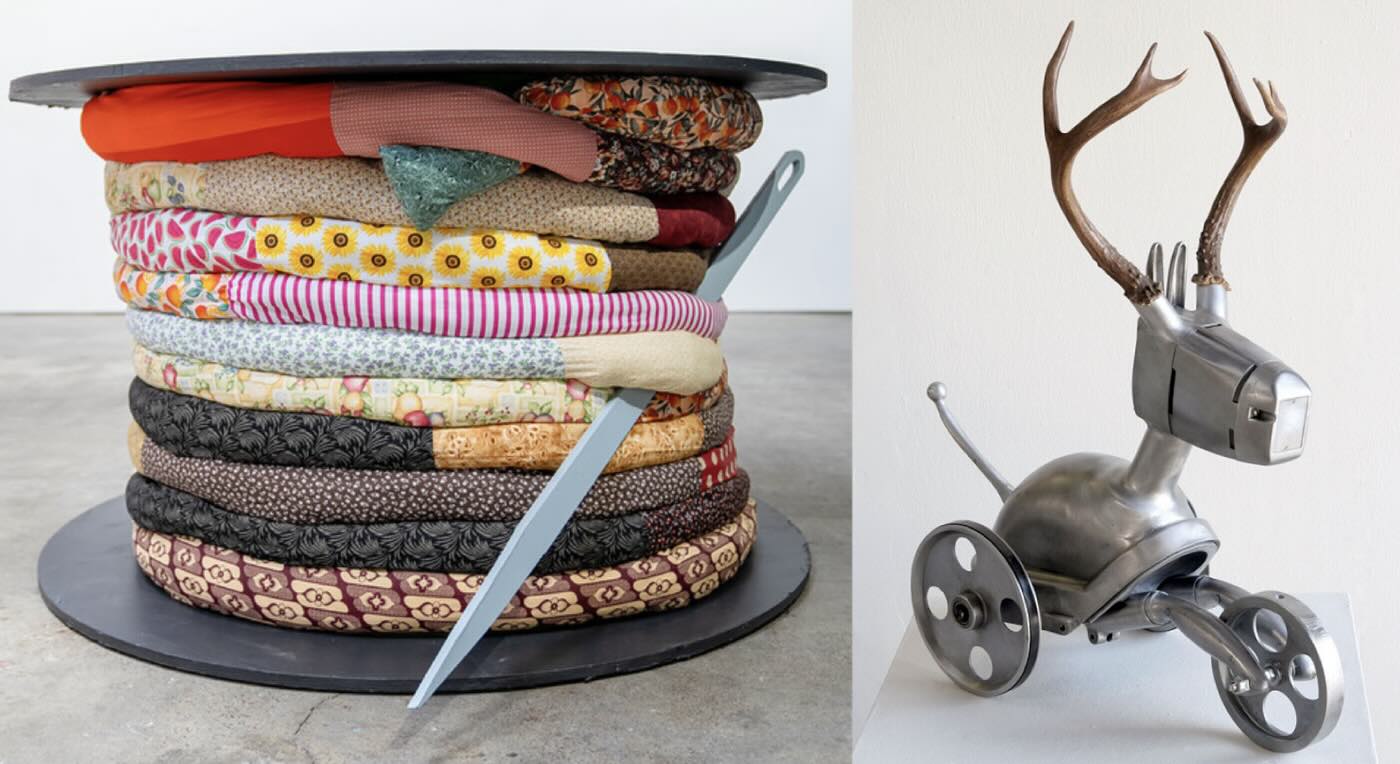
‘Mother Spool’ by Nimah Gobir (Photo by Minoosh Zomorodinia for Recology) and ‘Impala’ by Nemo Gould
While the approaches and themes vary widely among the 63 artists featured, a shared thread runs through it all: the possibilities of transformation through reuse.

For instance, in 2007 Nemo Gould created the Impala sculpture (pictured above, right) by scavenging antlers, a power sander, bandsaw blade wheels, projector flywheel, vacuum cleaner handles, a meat grinder, motorcycle clutch, and cheese slicers.


Over the past 35 years, the Residency program has hosted more than 190 professional artists and 60 student artists from local colleges and universities. These artists, emerging, mid-career, and established, have worked across a wide range of disciplines, including painting, sculpture, video, photography, installation, performance, and new media.

The gallery exhibit—a collaboration between Recology and The Minnesota Street Project, at 1275 Minnesota Street in San Francisco—runs through Aug. 30, 2025 and is free to the public, according to the news release here.

“It’s a great, no cost opportunity for families to see art this summer,” says Reed. “We also have a traveling exhibition touring the country.”

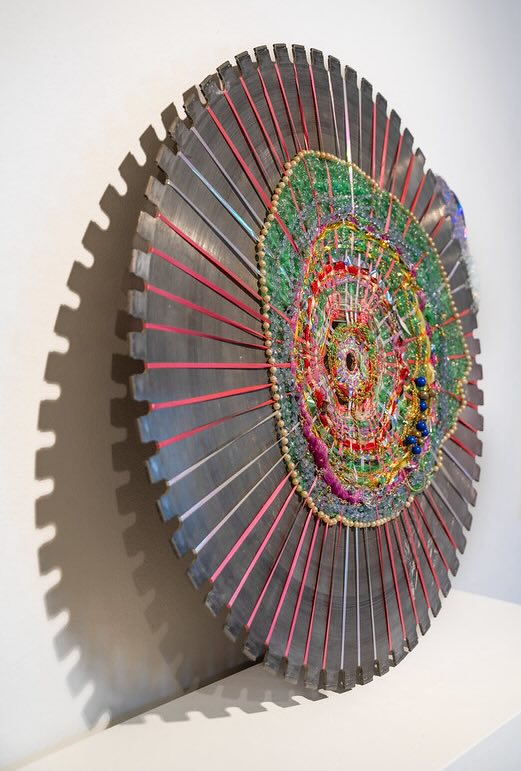
Adorned Saw by Eleanor Scholz uses embroidery thread, ribbon, jewelry, keys, bubble wrap, mylar, plastic, and DVDs – Photo by Minoosh Zomorodinia for Recology
The traveling exhibit, which includes Impala, is called Reclaimed: The Art of Recology. It presents a selection of works from 33 fascinating artists who were selected to participate in the company’s unique Residency.

This eclectic exhibition of work includes around 50 objects: from paintings produced with recycled house paint to tapestries made from used ties, shirts, and other fabrics.

From sculptural vases crafted from Ethernet and coaxial cables to ever more hybrid concoctions that are often mind-blowing in execution and form.

The traveling show can be found currently in Traverse City, Michigan at the Dennos Museum Center at Northwestern Michigan College until Aug. 31, 2025.

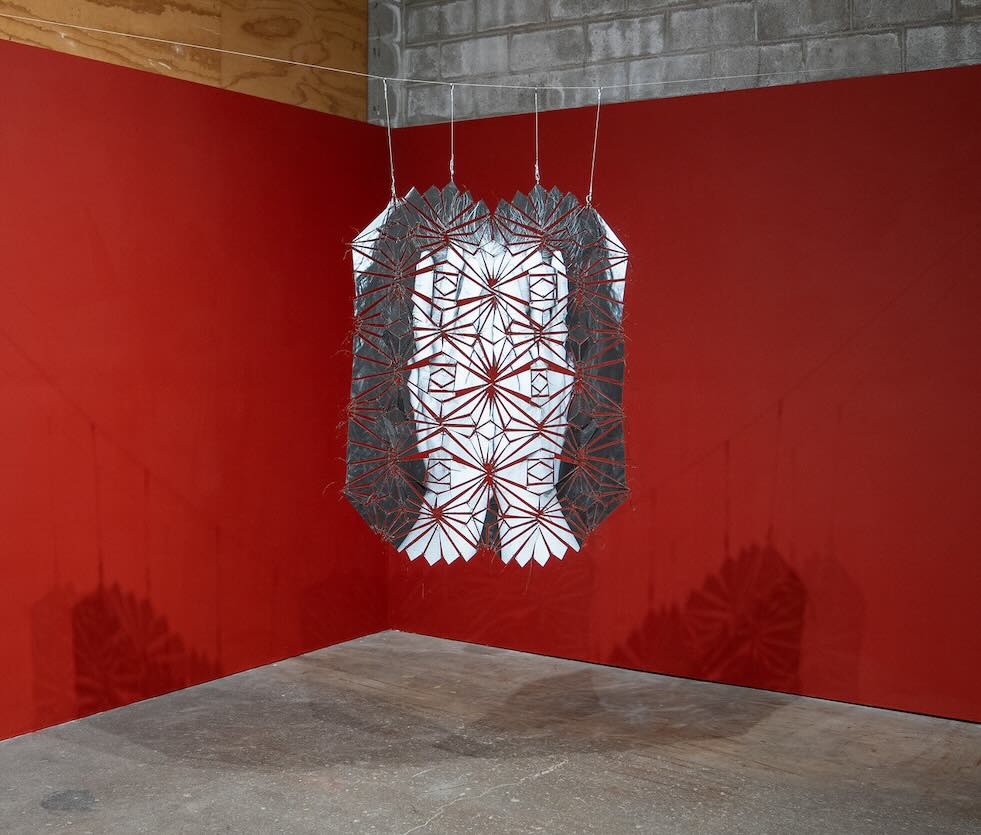
Knots of Reflection by Nasim Moghadam (mirror, archival pigment print, and Iranian female hair) Photo by Minoosh Zomorodinia

On October 4, it opens in Pueblo, Colorado, showing at the On Sangre de Cristo Arts & Conference Center until Dec. 14, 2025.There are three shows booked for 2026 in the cities Carlsbad, New Mexico in January; Canton, Ohio in April; and Syracuse University Art Museum in September. San Francisco’s Trash Company Marks 35 Years of Stunning Art Made of Recycled Garbage With Free Gallery Opening
Read More........

Dozens of Disabled Californians Sail for the First Time to Experience the Weightlessness of the Water

Credit photographer Larry Rosa – at Challenged Athletes Foundation event
Physical limitations were off-limits for a blessed and windy day in Sacramento, California.

Dozens of people with various disabilities came down to the Lake Washington Sailing Club to experience the weightlessness of the water.

They used boats that were specifically designed not to tip over, and special rigging for the sails was on hand for those with hands to take control of their surroundings in a unique and new way.

The event was put on by the Challenged Athletes Foundation (CAF), which ensured every participant was accompanied by a sailing pro.

“We have people that sail with no upper arm or leg movement sail with a control, motor control like a wheelchair, that they hook onto their chin,” Jim Tweet, a member of the sailing club who partook in the day’s events.

A polio survivor named Diane Ngo was one of over a dozen who experienced sailing for the first time.

Her attitude was straightforward: bring it on.

“Anything that challenges me to go beyond my comfort zone is why I’m here,” Ngo told CBS News Sacramento. She found that just being on the water and feeling the ability to move around was “exciting.”

“CAF is awesome, it changed my life,” said Minh Nguyen, a participant at the sailing clinic.The event was open to all ages and the youngest participant was just 11. Dozens of Disabled Californians Sail for the First Time to Experience the Weightlessness of the Water
Read More........

Teen Who Was Told He'd Never Walk with Cerebral Palsy Just Took 1st Place in Bodybuilding Competition

Instagram – @hunter_moore_123

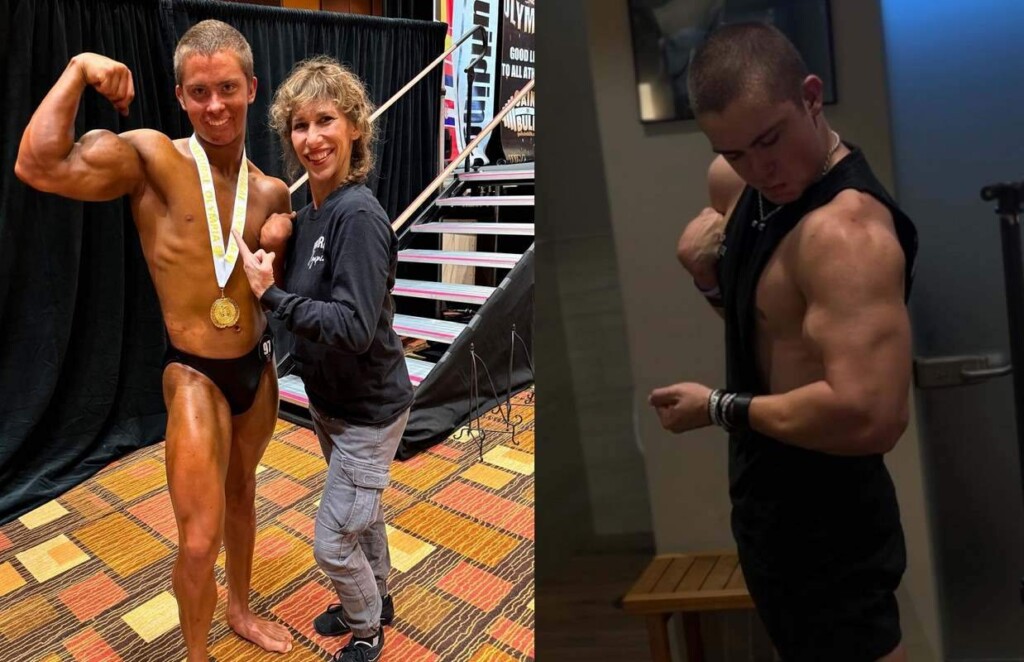
Hunter Moore is just like any other teen athlete. He loves to play sports, made the varsity team, and doesn’t mind throwing up a few gym selfies on his Instagram.

“It’s all genetics, bro,” he says laughingly while pumping his nearly 20-inch bicep. The genetics, in Moore’s case, is Dystonic Cerebral Palsy from a stroke he suffered as an infant that left him partially paralyzed on his left side.

In this case, the genetics are the obstacle to overcome, not the immutable advantage some athletes enjoy. Yet Moore was born into a military family, and so received an upbringing full of dictates to never give up, to prove them all wrong, and it drove Hunter to spend most of his childhood building a body that was capable of the rigors of athletics.

For 7 years he always made his schools’ soccer teams, and now plays as the long snapper for his junior varsity football team, while regularly posting pretty impressive weightlifting numbers that even a non-paralyzed person could feel safe bragging about.

Even though he can’t use his left arm for isolated lifts, he still tries to incorporate it as often as possible for the sake of symmetry—one of bodybuilding’s most important judging criteria. He’ll lock his left arm around a bar, and pry it away from where it usually sits tucked up into his armpit. Like this, he can do a squat or a deadlift.

By the time he competed last summer in the Professional Natural Bodybuilding Association, he was pressing 120 lbs. with one arm, and deadlifting 405. He took first place in his category in Dallas, Texas, and competed again in November in Las Vegas to win first place in the professional class for Men’s Disabled Standing.

In an interview, Moore described posing on stage as “one of the scariest things that I have ever attempted,” but the whistles and cheers he received were a tangible reward for an amount of hard work that the majority of people, disabled or not, cannot manage.

“I will define myself and not let cerebral palsy or anyone else define me,” he told Joker Magazine, adding that he plans to go to university to study marine biology and hopes to also pursue motivational speaking. Teen Who Was Told He'd Never Walk with Cerebral Palsy Just Took 1st Place in Bodybuilding Competition
Read More........

Archaeologists Unearth Treasure-Filled Tomb of the First Ruler in This Mayan Metropolis

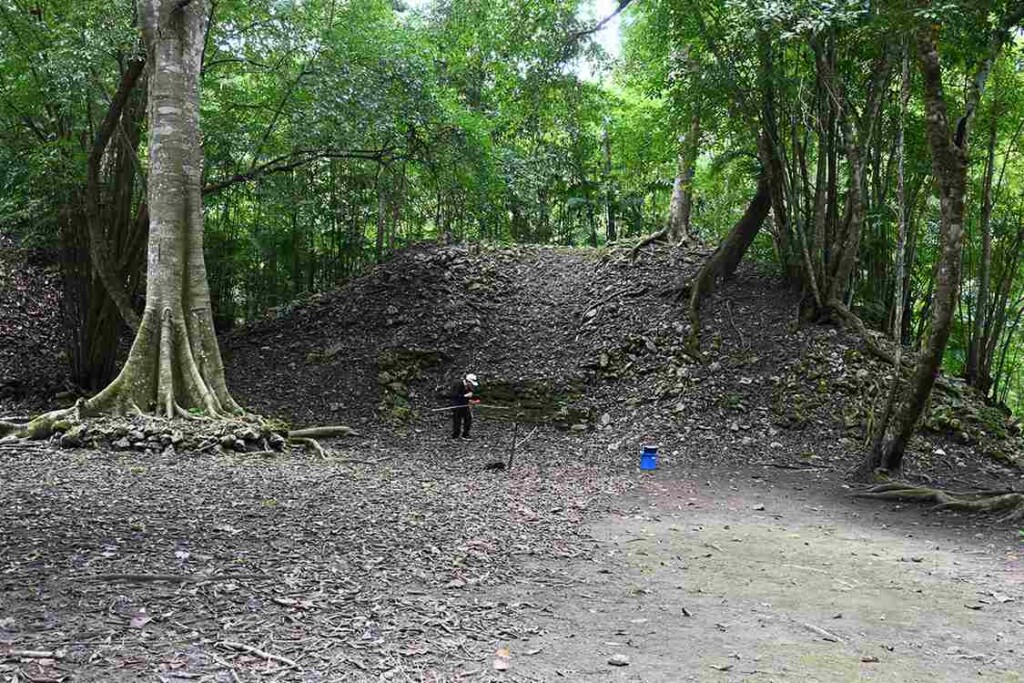
Caana, the Maya’s central architectural complex in Belize discovered by Diane and Arlen Chase in the 1980s. The tomb was found in an acropolis to the right – credit, Caracol Archaeology Project / University of Houston

A major breakthrough in Maya archaeology had been made down in Belize, as the royal tomb of a major city’s first-known ruler is discovered by a husband-wife archaeology team.

Buried with elaborate jade, ceramics, and symbolic artifacts, the tomb offers unprecedented insight into early Maya royalty and connections with the non-Mayan Mexican city-state of Teotihuacan.

Caracol was a metropolis of its time in the lower Yucatan Peninsula, and one of the first great Mayan cities of the Classical period.

Its connection with Teotihuacan is key to the story of this discovery and the story of the life of Te K’ab Chaak, a warrior-king whose remains were found by excavations led by Arlen and Diane Chase, archeologists from the University of Houston who have been working at Caracol, among other sites, for 40 years.

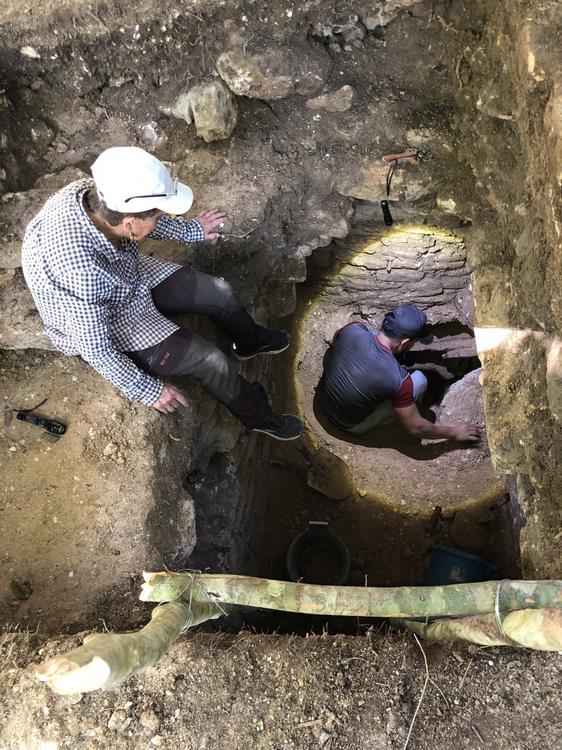
They began excavation season by returning to a site that was first dug in 1993—the northeast acropolis, where burial chambers had been found previously. Striking through the floor of the first burial chamber revealed that it was also the ceiling of deeper, older set of tombs, one of which was filled with grave goods.

11 richly-decorated ceramic vessels along with jade earflares, a mosaic jadeite funerary mask, carved bone items, and loads of red pigment left no shadow of a doubt that Diane and Arlen had turned up a “one-percenter.”

The North Acropolis at Caracol sits enveloped by dense jungle vegetation, preserving centuries of history beneath the surface – Caracol Archaeology Project / University of Houston

“This guy is a one-percenter and that’s why he has so many vessels and three sets of jade earflares in that chamber,” Arlen, a professor of comparative cultural studies, said in a statement on the discovery released by his university.

“The Early Classic period is the time when the rulers assert the fact that they oversee everything, completely distant from the rest of the population. That changes at the end of the Early Classic period, especially in Caracol, when, after the successful warfare against Tikal, they start to share the wealth with the general population. But not this person.”

The northeast acropolis was still covered in trees and earth and completely invisible in aerial surveys, but standing next to it, the manmade nature of the structure becomes clear.

Diane said in a video interview that across their careers, one set of jade earflares is rare, much less three. When you add in a jadeite death mask, something she and her husband have found only on one other occasion, you suddenly get the sense of the power and influence of this person. Additionally, much of the tomb floor and walls were covered in cinnabar.

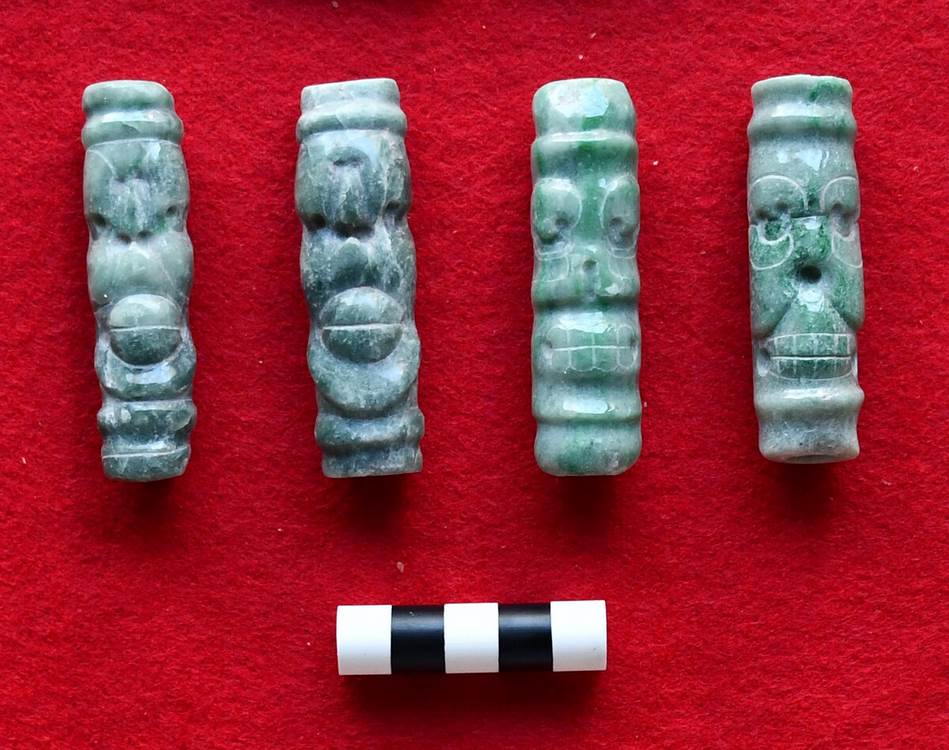
Four jadeite tubular beads showing live and dead spider monkeys – Caracol Archaeology Project University of Houston

“You’re dealing with some of the highest royalty when the things get covered in cinnabar, which is red,” said Arlen. “So everything is colored red like the rising sun in the east.”

Ascending to the throne in 331 CE, Te K’eb Chaak ruled over a city larger than the metropolitan footprint of the modern-day Belize capital, if such a thing can be believed. He lived a long time, as his skull was void of all teeth. Caracol was a center of trade, and Arlen’s assertion that he commanded and controlled that trade is backed up by iconography found on one of the ceramic vessels.

Atop the lid of one is a depiction of Ek Chuah, the Maya god of traders, surrounded by offerings. Ek Chuah is not seen almost at all in Early Classic Mayan iconography. Yet there he was, Arlen said in the same video, at 350 CE.

The covered vessels – credit, Caracol Archaeology Project / University of Houston

A different kind of Mexico

“Maya carved stone monuments, hieroglyphic dates, iconography, and archaeological data all suggest that widespread pan-Mesoamerican connections occurred after an event in 378 CE referred to as ‘entrada,’” said Diane Chase in the statement.

This is the crux of the discovery from the point of view of the archaeologist, who wants to uncover as much information as possible about life in the past. While the public breaks for the jade death mask and colored ceramic vessels, Te K’ab Chaak offers a rare opportunity to explore life in the Mayan political world before this ‘entrada.’

30 years before Te K’ab Chaak took the throne in Caracol, Teotihuacan, some 640 miles northward, was already a massive trading hub that dealt in many products across Mesoamerica.

In Caracol, two other tombs were found with Te K’ab Chaak in the northeast acropolis, including one which contained cremated remains of several people radiocarbon dated to 350 CE.

Fifteen pristine blades of green obsidian from Pachuca, Mexico, (north of Teotihuacan) several pottery vessels also likely came from central Mexico, and a carved atlatl projectile tip—atypical for the Maya but typical for a Teotihuacan warrior—were included in the cremation.

The royal tomb was ultimately accessed in 2025 by carefully excavating through the floor of an earlier tomb built above it, first discovered in 1993 – Caracol Archaeology Project University of Houston

The cremation itself and its placement in the center of a residential plaza are also more typical practices for a high-status Teotihuacano and do not accord with standard Maya burial practices.

Based on other ceramics in this cremation, the main individual was likely a Caracol royal family member that had adopted central Mexican ritual practices. This individual may even have served as a royal Maya envoy who had lived at Teotihuacan and returned to Caracol.

In other words, relations between these two great population centers, separated by roughly 153 days of travel on foot through the jungle, were already firmly ensconced by the reign of Te K’ab Chaak—a whole generation before such relations and connections are generally thought to have been established.

The royal dynasty founded by Te K’ab Chaak continued at Caracol for over 460 years, and the connections between the two regions were undertaken by the highest levels of society during that time.

It presents the picture of a bustling and interconnected Mexico long before the modern world arrived with its roads, airports, and skyscrapers.“We need to sort of rethink how we view the past when we get finds like this,” Arlen concludes. Archaeologists Unearth Treasure-Filled Tomb of the First Ruler in This Mayan Metropolis
Read More........

California Developer Builds First Neighborhood Where All the Homes Are Resistant to Wildfires

Dixon Trail wildfire-resistant neighborhood in CA – KB Homes

One of the nation’s largest homebuilders have created a community of entirely wildfire-resilient homes to help reduce homebuyers’ risks of loss if another Palisades or Dixie fire comes roaring by.

With nothing flammable on the exterior or the roofs and curated desert foliage around the gardens and lawns, the homes aren’t necessarily fireproof, but the design of the entire community was informed by identifying and eliminating the most common causes of homes catching fire.

Available now, and with some already off the market, KB Homes estimates their price at around $1 million, a price consistent with disaster-proof housing around the country.

The Eaton and Palisades fires struck with little warning and launched embers across highways and valleys setting multiple communities ablaze. The rising risk of wildfires in the rural areas of Southern California comes with rising insurance premiums, which result in rising rents, higher mortgages, etc.

In many cases, private insurers are declining to issue new policies for homes in areas at a high-risk for wildfires.

KB Home’s Dixon Trail community in Escondido, California is designed to the Insurance Institute for Business & Home Safety’s (IBHS) highest level of protection against direct flame contact, radiant heat, and embers, which helps to meaningfully reduce the likelihood of wildfire spread.

The Dixon Trail community will have 64 beautifully designed homes upon completion. It will receive a provisional neighborhood-level designation based on its design, confirming that the community has implemented preventative measures to reduce the likelihood of initial ignitions from an approaching wildfire, protect against embers that could spark spot fires, and slow fire spread if ignitions occur.

Research shows that these measures at the community level are key in preventing wildfires from becoming catastrophic. As a model of wildfire resiliency, Dixon Trail has incorporated research-backed mitigation actions into the design of its homesites, including the installation of Class A fire-rated roofs, noncombustible gutters, upgraded windows and doors, and ember and flame-resistant vents as well as the creation of a five-foot noncombustible buffer around structures.

At the neighborhood level, wildfire risk is reduced by separating almost all structures by more than 10 feet and decreasing potential fuels through the use of fire-resistant materials, like all-metal fence systems.

“With fire becoming an increasingly common threat in the West, it’s crucial to reconsider how we construct communities in fire-prone regions,” said IBHS CEO Roy Wright. “KB Home is at the forefront, implementing our research-driven wildfire mitigation strategies for both the parcel and neighborhood levels at Dixon Trail.”

Already set within a wind corridor, Dixon Trail is actually in a high-risk area for wildfires, particularly for wind-blown embers coming off the wooded slopes all around the community.Previously, GNN has reported on storm and hurricane-proof housing on and along the Gulf Coast, including durable, three-story homes with a community-level flood control system, and Deltec’s cylindrical houses mounted on stilts, which allow winds to pass around and under the structure without smashing into it. California Developer Builds First Neighborhood Where All the Homes Are Resistant to Wildfires
Read More........

Are you looking for a Summer dog buddy?


Animal Rescue Alliance, Inc. has some great dogs for you to come meet! All of the dogs are spayed or neutered, and fully vaccinated. ARA is a no kill facility, so many of the dogs have been at the rescue for an extended period of time.

While they get regular play time outside their kennels, this is not a permanent home situation — they all want to find their forever home and people.

If you’ve been thinking about adopting a dog, come by the rescue located at 2645 GA 91 S., Donalsonville. They’re open to the public Wednesday through Saturday from 10 a.m. until 4:00 p.m.. The friendly and knowledgeable staff know each dog well, and can match the right one to your lifestyle. Are you looking for a jogging buddy? Someone to help you with farm chores? Or just a couch buddy to watch a good movie? They have all kinds of dogs, and the ones pictured here are just a few of them.

Are you not fully committed to the idea of adopting? You can foster a dog, to make sure he or she is the right fit. If it isn’t, you can bring them back and try another one. Not ready to adopt but love dogs? Come by and participate in their Doggie Day Out program, where you take a dog for a few hours or a full day, just to spend some quality dog snuggling time (hint- they all want a pup cup from Dairy Queen!).If you would like more information on any of the pictured dogs, or to see all the other ones that are available, go to: aralliancega.com or call (229) 992-2039. Are you looking for a Summer dog buddy?
Read More........

Lack of proper sleep may raise hypertension risk in teenagers


New Delhi, (IANS) Teenagers who do not get the right amount of sleep may be at an increased risk for high blood pressure or hypertension -- a common risk factor for cardiovascular diseases --, warned research on Friday.

Researchers from Pennsylvania State University in the US defined insomnia as reporting difficulty falling and/or staying asleep and defined objective short sleep duration as less than 7.7 hours, based on the median total time asleep in a lab-based sleep study.

The study on more than 400 teenagers in the US showed that teenagers who reported insomnia and slept less than 7.7 hours were five times more likely to have clinical hypertension than "good sleepers" (those who did not report insomnia and obtained sufficient sleep defined as 7.7 hours or more).

Teenagers who slept less than 7.7 hours but did not report insomnia had nearly three times the risk of elevated blood pressure compared to good sleepers. Those who self-reported insomnia but obtained sufficient sleep did not appear to be at higher risk for elevated blood pressure or stage 2 hypertension.

Teenagers need 8 to 10 hours of sleep each night, according to the American Academy of Sleep Medicine, yet the average high school student is estimated to sleep only 6.5 hours per weeknight.

The findings suggest the combination of insomnia and inadequate hours of sleep likely contributes to more severe conditions than lack of sleep alone, the researchers noted.

Julio Fernandez-Mendoza, Professor of Psychiatry at the varsity noted that while poor sleep was a risk factor for high blood pressure in adults, its associations in adolescents were unknown.

"While we need to explore this association in larger studies on teenagers, it is safe to say that sleep health matters for heart health, and we should not wait until adulthood to address it," Fernandez-Mendoza said.

"Not all teenagers who complain of insomnia symptoms are at risk for cardiovascular issues. However, monitoring their sleep duration objectively can help us identify those who have a more severe form of insomnia and are at risk for heart problems."The study was presented at the American Heart Association's Epidemiology, Prevention, Lifestyle and Cardiometabolic Health Scientific Sessions 2025, being held in New Orleans. Lack of proper sleep may raise hypertension risk in teenagers | MorungExpress | morungexpress.com
Read More........

Study claims online plant-based diet programme can help manage diabetes


New Delhi, (IANS): A structured online nutrition programme may address India's diabetes epidemic by removing key barriers to dietary adherence, according to a study, led by an Indian-origin researcher.

The study, led by the US-based Physicians Committee for Responsible Medicine (PCRM), showed that participants who followed a physician-led, plant-based nutrition programme experienced measurable improvements in health. This included reduced medication use, body weight, blood sugar, and cholesterol levels.

The findings offer potential insights for India, where diabetes currently affects more than 101 million adults, with an additional 136 million in the prediabetes stage, said the team in the paper, published in the American Journal of Lifestyle Medicine.

"India's diabetes crisis requires solutions that work within our healthcare realities," said lead author Dr. Vanita Rahman, internal medicine physician with PCRM.

"While we've long known that dietary changes can effectively manage diabetes, implementation has been challenging due to limited consultation time, inconsistent follow-up, and accessibility barriers -- particularly in tier-2 and tier-3 cities," Rahman added.

The study addressed common challenges Indian patients face when attempting lifestyle modifications such as accessibility; structured support; practical implementation; and consistent follow-up.

The 12-week programme enrolled 76 adults with type 2 diabetes. Among the 58 participants who completed the programme 22 per cent of participants reduced diabetes medication dosages; average weight decreased by 3.7 kilograms (approximately 8 pounds); HbA1C (a measure of blood sugar control) decreased by 0.6 per cent.

Further, the total and LDL cholesterol levels decreased by 15 and 12 mg/dL, respectively, among participants not taking lipid-lowering medications“These results are especially relevant in the Indian context, where vegetarian and plant-forward dietary habits are already part of cultural norms. With simple adaptations to lower fat content and focus on whole foods, these interventions can be easily incorporated within Indian households,” Rahman said. Study claims online plant-based diet programme can help manage diabetes | MorungExpress | morungexpress.com
Read More........

This Woman Easily Lives a Zero-Waste Lifestyle –and She Believes You Can Too


The Lesson: With such an excess of unnecessary plastic packaging and non-recyclable materials, it can be easy to feel guilty about the amount of trash we contribute to landfills – but this college grad insists that anyone can be zero-waste. Not only that, but she believes that the attitude can greatly simplify your entire life.

Notable Excerpt: “When I learned about zero waste, [this woman in California] was the only person writing about it at the time and the only person talking about it, and so I later started my blog, Trash is for Tossers, to document my journey of reducing waste and opening the conversation in a way that felt safe and non-confrontational, because … so much of the conversation in environmentalism is, ‘You’re not doing this,’ or, ‘You’re screwing this up,’ and it’s [just a big] blame game.

“To me, I realized that by just taking everything on myself and being, like, ‘Okay, I’m a part of the problem. What can I do to change this and share my experience through taking control of my waste and talking about my experience from my perspective, that it made people feel comfortable to have a discussion around waste.’”

The Guest: Lauren Singer is an environmental activist who is the mastermind behind Trash is for Tossers – a blog dedicated to educating readers on how they can live a cost-effective, zero-waste lifestyle, no matter their social or economic status. In addition to graduating from NYU with an environmental sciences degree, she went on to work as a sustainability analyst for the NYC Department of Environmental Protection.

The Host: After spending years of his young life and athletic career struggling with his own emotional wellbeing, a crippling injury left Lewis Howes without an identity and without any work. Instead of wallowing in self-pity, however, Howes recreated himself as a multi-million dollar media producer, motivational speaker, bestselling author, and podcast host. The ex-football player now spends his days chatting with the most inspirational icons of this generation on his School of Greatness podcast.

Podcast: The School of Greatness podcast is available for download on Soundcloud and iTunes. You can also watch footage of the interviews on Howes’s YouTube channel.Books: Howes is the author of the New York Times bestselling book “The School of Greatness”: an in-depth collection of lessons and wisdom that he has gathered from interviewing hundreds of the world’s greatest role models and thinkers. Howes’s latest book, “The Mask of Masculinity”, is based on his experience with the dangerous stereotypes and expectations that are placed on men in modern society. This Woman Easily Lives a Zero-Waste Lifestyle –and She Believes You Can Too
Read More........

Spanking children can impact academic outcomes, impair social-emotional development: Study


New Delhi, (IANS) Physically punishing children can lead to negative outcomes such as poor health, lower academic performance, and impaired social-emotional development, according to a study on Monday.

The analysis, published in the journal Nature Human Behaviour, showed that physical punishment was significantly associated with worse parent-child relationships, being a victim of violence, perpetrating violence (including intimate partner violence in adulthood), approving violence, physical health problems, mental health problems, substance use, poor academic outcomes, impaired language skills.

It also led to impaired executive function, social-emotional skills, overall behavioural problems, internalising behaviour problems (e.g., depression and withdrawal), externalising behaviours (e.g., aggression and destruction), impaired early child development, and quality of sleep.

Researchers at the New York University-Steinhardt, US, no positive outcomes associated with corporal punishment.

“The consistency and strength of these findings suggest that physical punishment is universally harmful to children and adolescents,” lead author Jorge Cuartas, Assistant Professor of Applied Psychology at NYU.

“Moving forward, more research is needed to identify effective strategies for preventing physical punishment on a global scale and ensuring that children are protected from all forms of violence to support their healthy development,” Cuartas added.

In 2006, the UN Secretary-General called for a ban on corporal punishment -- acts of physical force to inflict pain that includes smacking, shaking, and spanking -- for children.

To date, 65 countries worldwide have instituted full or partial bans on the practice. Most of the bans were established in high-income countries (having a gross national income of at least $14,000 per capita) bolstered by the UN’s call, and research finding detrimental outcomes in wealthier nations.

The researchers analysed 195 studies related to corporal punishment published between 2002 and 2024.The studies covered 92 low- and middle-income and 19 outcomes related to parent-child relationships, mental and physical health, violent behaviour, attitudes toward violence, substance use, cognitive function, social-emotional skills, sleep, motor skills, and the likelihood of being a child labourer. Spanking children can impact academic outcomes, impair social-emotional development: Study | MorungExpress | morungexpress.com
Read More........

World's Most 15 Greatest Living Rocks


1. Great Sphinx of Giza (Egypt): A reclining lion with a human head that stands on the Giza Plateau on the west bank of the Nile, near modern-day Cairo, is the largest monolith statue in the world. Standing 73.5 m (241 ft) long, 6 m (20 ft) wide, and 20 m (65 ft) high, the Great Sphinx of Giza is also the oldest known monumental sculpture, and is commonly believed to have been built by ancient Egyptians in the third millennium BCE. The Great Sphinx faces due east and houses a small temple between its paws.
 2. Petra (Jordan): Famously described as "a rose-red city half as old as time" by John William Burgon, UNESCO has described Petra as one of the most precious cultural properties of man's cultural heritage. In 1985, Petrawas designated a World Heritage Site, and recently designated as one of the “new wonders” of the world. Located in Arabah, Ma'an Governorate, Jordan, lying on the slope of Mount Hor in a basin among the mountains, the large valley running from the Dead Sea to the Gulf of Aqaba is renowned for its rock-cut architecture. The Nabateans constructed it as their capital city around 100 BCE, after their decline, the site remained unknown to the Western world until 1812, when it was introduced to the West by Swiss explorer Johann Ludwig Burckhardt. The picturesque site was featured in various films such as Indiana Jones and the Last Crusade, Mortal Kombat: Annihilation and Sinbad and the Eye of the Tiger.

 3. Mount Rushmore (USA): A famous monumental granite sculpture created by Gutzon Borglum, Mount Rushmore is located within the United States Presidential Memorial that represents the first 150 years of the history of the United States of America with 60-foot (18 m) sculptures of the heads of former United States presidents (left to right): George Washington, Thomas Jefferson, Theodore Roosevelt, and Abraham Lincoln. The entire memorial covers 1,278.45 acres (5.17 km2) and is 5,725 feet (1,745 m) above sea level. The memorial attracts approximately two million people annually.

 4. Leshan Giant Buddha (China):  Built during the Tang Dynasty, the Leshan Giant Buddha is carved out of a cliff face that lies at the confluence of the Minjiang, Dadu and Qingyi rivers in the southern part of Sichuan province in China, near the city of Leshan. The sculpture, which is seventy one meters (about 230 hundred feet) tall dwarfs the tourists that flock to see it. It is positioned so that it faces Mount Emei and stands at the meeting place of three rivers. Although the Government of China has promised a restoration program, the statue has suffered from the effects of pollution, particularly over the last twenty years. Fortunately, the statue was not damaged in the Sichuan earthquake of 2008. 5. Mahabalipuram Shore Temple (India): Built on the shores of the Bay of Bengal in Mahabalipuram (India) in the early 8th century by the Pallava King Rajasimha. The shore temple
actually consists of 2 back to back shrines, one facing the east (the Bay), and the smaller one facing west. It stands on the edge of the Bay of Bengal. At high tide, the waves sweep into its compounds. The walls and their sculptures have been battered and eroded by the winds and waves for thirteen hundred years. Yet they stand intact. Mahabalipuram was a flourishing sea port in the times of Periplus and Ptolemy (140 AD). There is an old legend here that originally there were seven temples; of these, six have been swallowed by the sea and only one temple -the Shore Temple- remained. There are evidences of submerged structures under the waves and sporadic excavations are going on, but it is too early to say whether there really was a glorious city and six more temples which now lie submerged under the waves off the coast off Mahabalipuram.

6. Abu Simbel (Egypt): A set of two temples near the border of Egypt with Sudan, Abu Simbel was constructed for the pharaoh Ramesses II who reigned for 67 years during the 13th century BC (19th Dynasty). The temples were cut from the rock and shifted to higher ground in the 1960s as the waters of Lake Nasser began to rise following completion of the Aswan High Dam.The Great Temple is dedicated to Ramesses II and a statue of him is seated with three other gods within the innermost part of the rock-cut temple (the sanctuary). The temple's facade is dominated by four enormous seated statues of the Pharaoh (each over 20 metres or 67 feet high), although one has been damaged since ancient times. The Small Temple was probably completed ahead of the Great Temple and is dedicated to Ramesses' favorite wife, Nefertari. At the entrance stand six 10-metre-high (33 feet) rock-cut statues - two of Ramesses and one of Nefertari on either side of the doorway. 

7. Dazu Rock Carvings (China): The Dazu rock carvings in Chongqing, China are hewn from the cliffside, featuring more than 5,000 statues and over 100,000 Chinese characters of inscriptions or epigraphs. It is reputed as 'the county of rock carving' and it’s located at the southeast of Sichuan province. The Dazu Rock Carvings was built from 650 in the Tang Dynasty and continued to the Ming Dynasty (1368-1644) and the Qing Dynasty (1616-1911). Among the rock carvings, there are more than 5,000 statues and over 100,000 Chinese characters of inscriptions and epigraphs. 8. Church of St. George (Ethiopia): The Church of St. George is a monolithic church in Lalibela, Amhara Region, Ethiopia. It is the most well known and last built (early thirteenth century) of the eleven churches in the Lalibela area, and has been referred to as the "Eighth

Wonder of the World". The dimensions of the complex are 25 meters by 25 meters by 30 meters, and there is a small baptismal pool outside the church, which stands in an artificial trench. According to Ethiopian cultural history, Bete Giyorgis was built after King Gebre Mesqel Lalibela of the Zagwe dynasty had a vision in which he was instructed to construct the church; Saint George and God have both been referred to as the one who gave him the instructions.As of 2006, Lalibela is still a pilgrimage site for members of the Ethiopian Orthodox Tewahedo Church; the church itself is part of the UNESCO World Heritage Site "Rock-Hewn Churches, Lalibela".

9. Borobudor (Indonesia): Officially, Borobudur is a ninth-century Mahayana Buddhist monument in Magelang, Central Java, Indonesia. Actually,  it is much older than that. The monument complex comprises six square platforms topped by three circular platforms, and is decorated with 2,672 relief panels and 504 statues of Rama citizens. Each wall has a story that relates to the stories of the birth of Buddha and other Buddha figures. A main dome, located at the center of the top platform, is surrounded by 72 Rama citizens seated inside perforated stupa.

10. Cappadocia (Turkey): Cappadocia lies in the mid-western part of Turkey. Anextraordinary landscape formed millions of years ago by the combined work of lava spitting volcanoes, wind and water, there is culture too: the inhabitants of the area hew rooms, chapels, even whole villages out of the rocks. Religious Byzantine paintings can be found on the walls of the churches and monasteries.
11. Bingling Temple (China): The Bingling Temple is a series of grottoes filled with Buddhist sculpture carved into natural caves and caverns in a canyon along the Yellow River. It lies just north of where the Yellow River empties into the Liujiaxia Reservoir created by the Liujiaxia Dam at Yongjing, about 80km from Lanzhou. The caves were a work in progress for more than a millennium. The first grotto was begun around 420 CE at the end of the Western Jin Dynasty. Work continued and more grottoes were added during several dynasties. The style of each grottoe can easily be connected to the typical artwork from its corresponding dynasty. The Bingling Temple is both stylistically and geographically a midpoint between the monumental Buddhas of Bamiyan in Afghanistan and the Buddhist Grottoes of central China, Yungang Grottoes near Datong and Longmen Grottoes near Luoyang. Over the centuries, earthquakes, erosion, and looters have damaged or destroyed many of the caves and the artistic treasures within. Altogether there are
12. Hypogeum of Hal-Saflieni (Malta) 183 caves, 694 stone statues, and 82 clay sculptures that remain. Each cave is like a miniature temple filled with Buddhist imagery. The sculptures, carvings, and frescoes that remain are outstanding examples of Buddhist artwork and draw visitors from around the world. The Hypogeum in Hal-Saflieni, Paola, Malta, is a subterranean structure dating to the Saflieni phase in Maltese prehistory. Thought to be originally a sanctuary, it became a necropolis in prehistoric times. It is the only prehistoric underground temple in the world. The Hypogeum was depicted on a 2 cents 5 mils stamp issued in the Maltese Islands in 1980 to commemorate the acceptance by UNESCO of this unique structure in the World Heritage Site list. It was closed to visitors between 1992 and 1996 for restoration works; since it reopened only 80 people per day are allowed entry and there can be a 2-3 weeks wait to get a ticket. It was discovered by accident in 1902 when workers cutting cisterns for a new housing development broke through its roof. The workers tried to hide the temple at first, but eventually it was found. The study of the structure was first entrusted to Father Manuel Magri of the Society of Jesus, who directed the excavations on behalf of the Museums Committee.
13. Buddhas of Bamiyan (Afghanistan) The Buddhas of Bamiyan were two monumental statues of standing Buddhas carved into the side of a cliff in the Bamiyan valley in the Hazarajat region of central Afghanistan, situated 230 km (143 miles) northwest of Kabul at an altitude of 2500 meters (8,202 ft). Built during the sixth century, the statues represented the classic blended style of Indo-Greek art. The main bodies were hewn directly from the sandstone cliffs, but details were modeled in mud mixed with straw, coated with stucco. They were intentionally dynamited and destroyed in 2001 by the Taliban, on orders from leader Mullah Mohammed Omar, after the Taliban government declared that they were "idols" (which are forbidden under Sharia law). International opinion strongly condemned the destruction of the Buddhas, which was viewed as an example of the intolerance of the Taliban and of fundamentalist Islam. Japan and Switzerland, among others, have pledged support for the rebuilding of the statues.

14. Mada'in Saleh (Saudi Arabia): Located in northern Hejaz (modern day Saudi Arabia), Mada'in Saleh --also called Al-Hijr ("rocky place")-- is an ancient city that was inhabited by Thamudis and Nabateans and was then known as Hegra. Some of the inscriptions found in the area date back to the 2nd millennium BC. However, all the remaining architectural elements are dated to the period of the Thamudi, Lihyan and Nabatean civilizations, between the 1st millennium BC and the second century AD. Mada'in Saleh is not only Saudi Arabia's most spectacular touristic site; it is also one of the greatest historic sites in the world. The rock tombs in this early morning light are of such an extraordinary beauty, consisting of different shapes and sizes, that gives Mada'in Salih a truly charming feeling. This historic sister city, Petra the former capital of Nabataean Kingdom, is located only 150 miles away to the north across the border with Jordan.

15. Naqsh-e Rustam (Iran): Naqsh-e Rostam is a site believed by archaeologists to have been a cemetery for Persepolis, where Achaemenid, Parthian and Sassanid royalty were laid to rest. Located about 3-4 kilometers northwest of Persepolis in Iran's Fars province, the site contains funerary related works belonging to the Elamite (second millennium BCE), Achaemenid (550-330 BCE) and Sassanid (226-651 CE) eras. The only surviving monument from the pre-Achaemenid period is a relief which was almost completely obliterated when the court scene of Bahram II (276-293 CE) was carved over it. The Naqsh-e Rostam structures have been built from white and grey Limestone without the use of mortar. It is believed that Persians were the first to use colors to decorate stone carvings. A particularly striking feature of Naqsh-e Rostam stone carvings is the use of color; many of the site's inscriptions and carvings are covered with Lapis lazuli. Evidence shows that the carving of Darius had a lazuline beard and mustache, black hair and eyeliner, red eyes, lips and shoes as well as colorful robes, although the passage of time has left the colors at Naqsh-e Rostam unstable. World Amazing Information | Funny Pictures | Interesting Facts: World's Most 15 Greatest Living Rocks
Read More........