Unique WWII documents on display at Yerevan exhibition


As part of the exhibition “Unique Documents from the Collections of the National Archives of Armenia,” currently underway at the National Archives of Armenia, visitors can explore rare and historically significant materials related to World War II and the Great Patriotic War.

The exhibition features a wide range of documents preserved in the National Archives, including both official records and personal materials. On display are wartime news reports, propaganda publications, photographs, posters, and other archival items that shed light on the period.A special section dedicated to the 80th anniversary of Victory in the Great Patriotic War highlights particularly valuable exhibits. Among them are photographs of heroes of the Tamanyan Division, a personal letter from renowned Armenian painter Martiros Saryan to Marshal Hovhannes Baghramyan, wartime-themed informational posters produced by the Armtag news agency (now Armenpress), as well as documents detailing the activities of the Armenian SSR’s rear services and military industry. Source: https://www.panorama.am/
Read More........

China Design Museum launches first exhibitions in Hangzhou

Visitors view a furniture exhibition at the China Design Museum in Hangzhou, east China's Zhejiang Province, April 8, 2018. Designed by Portuguese architect Alvaro Siza, the China Design Museum launched its first exhibitions when it was opened in Hangzhou on Sunday. With a floor area of 16,800 square meters, the museum is dedicated to the presentation and research of modern and contemporary designs while stimulating home-grown innovations. (Xinhua/Weng Xinyang) Source: China.org.cn
Read More........

2nd Ordos Int'l Nadam Fair opens

1 2 3 4 5 Next
Performers dressed in traditional costumes of Mongolian ethnic group prepare to take part in the opening ceremony of the 2nd Ordos International Nadam Fair in Ordos City, north China's Inner Mongolia Autonomous Region, Aug. 27, 2012. Nadam, meaning entertainment and playing in Mongolian language, is a folk festival of the Mongolian ethnic group. The eight-day fair in Ordos consists of art, cultural and trade activities as well as sports competitions, including horse-racing and Mongolian-style wrestling. [Xinhua], Source: China.org.cn
Read More........

Fifth Hangzhou Art Fair kicks off


China: A work of art is on display during the Fifth Hangzhou Art Fair in Hangzhou, capital of east China's Zhejiang Province, May 24, 2012. Thousands of artistic works created by domestic and foreign artists were exhibited during the five-day fair, which kicked off on Thursday. (Xinhua/Ju Huanzong) Source: China.org.cn
Read More........

7th Beijing Int'l Cultural & Creative Industry Expo


Actors perform at the opening ceremony of the 7th China Beijing International Cultural & Creative Industry Expo in Beijing, capital of China,Dec.19,2012.The 5-day expo opened Wednesday night in Beijing
7th Singers perform at the opening ceremony of the 7th China Beijing International Cultural & Creative Industry Expo in Beijing, capital of China, Dec. 19, 2012. The five-day expo opened Wednesday night in Beijing. [Photos: Xinhua: Luo Xiaoguang], Source: China.org.cn
Read More........

The Dreams And Fairy Tales Of Meir Axelrod

M.Axelrod's Jewish Kolkhoz (collective farm) in Crimea, paper, ink, 1930s. © Vellum gallery
An exhibition entitled “It is all in those lines: what we dreamt of...” will open at the Artefact Gallery on Prechistenka at the end of January. Over 30 works of the famous artist of the XX century Meir Axelrod will be presented at the show. 
By:Armen Apresyan, The works of Meir Axelrod (1902-1970) have a strange and complicated destiny: his
works did not fit in with the context of Soviet art; they were too distinctive, too incomprehensible and too romantic. Well-known Russian masters were his teachers – Vladimir Favorsky and Sergey Gerasimov. Axelrod mastered the intricacies of the classic school, but he did not stop at that: he favored the masters of the Italian Renaissance, admired the French impressionists and post-impressionists. An experienced viewer will easily see the influence of Modigliani and van Gogh in his works. On the one hand, nobody banned or persecuted him, he was not left without work – he illustrated books, was a famous theater artist and authored the frescos for Sergey Eisenstein's “Ivan the Terrible” movie, which is considered a classic in the world cinema. At the same time, he had difficulty exhibiting his works. During his lifetime only two  personal exhibitions took place,   and those
M. Axelrod's Riga, paperboard, tempera, 1960s. / © Vellum gallery
were in the provincial city of Rostov-on-Don. The first retrospective exhibition in the capital opened only two years after the artist's death, in 1972. During his life he was compared to Marc Chagall. Mikhail Alpatov, a famous art critic, wrote about him, “Axelrod's art with time will be appreciated as works of one of the greatest artists of our times”. As the artist's daughter, Elena Axelrod, recalled, after his death “museums, as if they were awakened, rushed to buy his works and collectors began chasing them, both  domestic and foreign”.  It was then that the Tretyakov Gallery acquired some of his works, as well as the Russian Museum, the Pushkin Museum of Fine Arts and many provincial museums. Meir Axelrod's popularity is increasing
M.Axelrod illustration to Anton Chekhov’s Vanka, paper, ink, whitewash, 1930 / © Vellum gallery
by the year – his works are more and more frequently presented at Russian and West European art
564533_125x125 - Work Outauctions.Several large exhibitions have been organized over the past few years. The graphic works of the 1920-1930s form the basis of the exhibition to open on January 28. Those are illustrations to the works of such famous authors as Sholom-Aleykhem, Isaac Babel, Anton Chekhov and many others. There are also some sketches of Jewish places where the artist spent his childhood and younger years, and left a great impression on his destiny and art. Of great interest are his tempera “stories”  about those places that he visited during the second half of the XX century. First of all, it includes the Baltics, which the artist saw as the “Land of the Grimm Brothers’ fairy tales”, with pointed columns and gothic towers stretched into the azure sky. “Here it is, a landscape embodiment of a 
M. Axelrod from The Bewitched Tailor series, paper, ink, 1930s / © Vellum gallery
Moscow intellectual's dreams of Heaven on Earth”, says the curator of the exhibition and art critic Lyubov
525035_125 x 125 10% Off BannerAgafonova. “In the 1960s when the Baltics were the sole gulp of freedom for Soviet artistic intellectuals, the best representatives of that social stratum sought to get there and portray its images in literature, poems, on paper or on canvas, and present all that to us. For the totalitarian East it was almost a Western dream of freedom, of the sea and sails, all that is so lacking from the eternal Moscow autumn”. The title of the exhibition is a line from a poem written by Pavel Kogan, Meir Axelrod's younger contemporary, a wonderful Moscow poet who died in World War II. Both came to Moscow from the Western regions of the former Empire, both were typical representatives of Moscow's artistic youth of the middle of the century. They even lived close to each other – on Leningrad Avenue, one metro stop from each other. Source: Voice of Russia

Read More........

Charlie Chaplin on both sides of film camera

Charlie Chaplin in films and photographs from family archives is the subject of the first exhibition of its kind in the world. It is displayed at the Moscow Multimedia Art Museum between the 30 of November and 17 of February.
.Subscribe
The great 20th century actor shows both familiar and unfamiliar facets of his personality to the visitors. Gray-haired Chaplin is surrounded by children and performs his famous comical stunts. Chaplin in the shape of an abstract caricature – this is how he was seen by famous French avant-garde artist Fernand Leger. A character from an uncompleted animated cartoon Charlie the Cubist in the shape of a wooden figure made of hinged panels. A film made by Chaplin himself about his studio’s backstage life which was never shown after it was made. There are also a lot of other exhibits that show a very versatile picture of this genius of 20th century film-making, which has never been achieved yet within one project. This was the aim of the curator of the exhibition Sam Stourdze from Switzerland. Charlie Chaplin’s familiar screen character has not always been a sad, lonely little tramp whom most people imagine when thinking about Chaplin. In 1914 Chaplin appeared on the screen as a barefaced swindler and lady-killer showing a clear interest in his neighbour’s wife and his friends’ money. This character loved dirty tricks and missed no chance of furtively giving people a kick. Chaplin’s character started changing only in the film The Kid made in 1921. Whatever part Chaplin performed – of a fireman, priest, soldier or factory worker – the audience recognized him by his famous walk and indispensable accessories, such as huge boots, a bowler-hat and a walking-stick. At the Moscow exhibition this classic image of Chaplin can be traced in photographs and fragments of films, such as City Lights, The Gold Rush and The Great Dictator. What is especially interesting is looking at Chaplin’s photos on the shooting area in the process of making those films.When Chaplin made his films he always had a clear-cut plan of making the audience weep at some moment, laugh at another, be terrified but then cheer up. Mind that the audience goes through all this range of emotions watching a silent film. Charlie Chaplin used to say that silence was a blessing available to everyone. He said that few people knew how to enjoy it because it was not for sale. Wealthy people buy noise, he said. This idea is very much applicable today. At least, the new film The Artist made in the style of a silent film was recently awarded several Oscars. Source: Voice of Russia
Read More........

Treasures from China's rich tapestry of cultures

Survivors of time: Gilt silver Ashoka pagoda (Northern Song Dynasty, 1011); Sandstone pillar plinth (Northern Wei Dynasty, 484); a bronze jue tripod wine vessel (Yin dynasty, 16th-15th century B.C.) NANJING MUSEUM; SHANXI MUSEUM; ZHENGZHOU MUSEUM
By C.B. LIDDELL: "China" has always been something of a simplification. This is because it is an idea that has been used to encapsulate a vast heterogeneous portion of the World's population. With current relations with Japan tense, the idea of China as a monolithic giant with a single purpose, bringing its weight to bear on a tiny territorial dispute, is indeed a frightening one. But, as demonstrated by the recent anti-Japanese riots, which afflicted some areas while bypassing others, China is and always has been a diverse patchwork. This is also the message of the latest exhibition at the Tokyo National Museum. 
Bronze mirror (Tang Dynasty, 736) SHAANXI ARCHAEOLOGICAL RESEARCH INSTITUTE
"China: Grandeur of the Dynasties" is unlucky in its timing. With reports of Chinese mobs vandalizing anything Japanese fresh in the public's mind, there could well be a backlash here. But, given how crowded exhibitions of Chinese historical relics and artifacts normally are, this might turn out to be a blessing for those visitors who choose to visit. With 168 items, including pottery, sculpture, metalwork, jade and the obligatory member of Emperor Shi Huang's terra cotta army, there is plenty to see. Also, it is never more important to understand our neighbors than when relations are at low ebb. The thesis is also interesting. According to the curator, Nobuyuki Matsumoto, Director of Curatorial Planning at the TNM, the exhibition's keyword is "pluralism." The show intends to highlight the variety in Chinese culture and history by focusing on interesting counterpoints within the conventional historical framework of consecutive dynasties. "The dynastic periods are merely intended for political history," Matsumoto tells the Japan Times. "When we consider cultural history, in some cases the culture has changed dramatically between the start and end of the same dynasty. It is necessary to use the most obvious division in the history of politics to explain the events of history, but this is not necessarily consistent with the perspective of cultural history." Cultural history in these cases tends to be represented by those items that have best survived the ravages of time and been lucky enough to encounter an archaeologist's trowel. This usually means grave items, such as the bronze mirror with bird-and-flower design in mother-of-pearl from the tomb of the Tang Dynasty Princess Li Chui, or else things casually thrown away or lost in the normal course of life. This process itself, naturally enough, puts its own spin on history. One of the quaintest pieces at the exhibition gives you a sense of how this principle of random survival works. It is a small headless bronze figure from the Shu Kingdom (c. 1046 B.C.-c. 316 B.C.), in the Upper Yangtze Valley. What is so odd about this piece is that it has an aesthetic completeness. Rather than a gap, the hole in the upper part, where the head should be, seems like a kind of sentient eye, unwittingly giving the piece a unique, almost extra-terrestrial character. The more mundane explanation, however, is that the hole was probably used to
Gold mask (Yin-Western Zhou Dynasty, 12th-10th century B.C.). JINSHA SITE MUSEUM, CHENGDU
attach a head of some sort, possibly of a different material, which has simply disappeared. Thanks to recent excavations, there has been an enormous increase in the amount of relics from the Shu Kingdom, including ritual jade objects and gold masks. These have been given a prominent place in the exhibition, allowing Matsumoto to use the Shu Kingdom as an effective counterpoint to the Xia and Yin Dynasties, states from the central plains of the Yellow River area that usually dominate exhibitions focusing on the beginnings of Chinese civilization. This allows the exhibition to emphasize the plurality of Chinese culture at the very start. Other sections of the exhibition explore more interesting oppositions, such as that between Confucianism and animist mysticism, or between North and South, centre and periphery, and civilized and "barbarian." The message of plurality is even reflected in the chronological cut-off point of the exhibition, which is the rather confused period from the 10th to 12th centuries, when the rival Liao and Song dynasties faced each other in an uneasy stalemate. "Stopping at the Song and Liao dynasties may give an incomplete impression to some people," says Matsumoto. "However, the primary purpose of this exhibition is to look at the diversity of Chinese culture. We actually thought that we could achieve the goal of the exhibition more clearly by stopping at the Song and Liao period." Any exhibition on this scale that is entirely sourced from Chinese museums can only proceed with the express cooperation of the Chinese government, so it is a natural assumption that the Chinese government must have had some interest in the show's message, especially in view of comments made last year by President Hu Jintao, which suggested China was becoming much more aware of issues of soft power. But Matsumoto is keen to downplay this aspect. "When the exhibition was planned, I assembled the content in terms of a purely cultural history, without taking into account any of the particular problems regarding current political relations," he recalls. "A number of exhibitions of Chinese cultural relics have been held in Japan, so the image of Chinese culture has tended to become somewhat fixed. We wanted to break this down somehow. Also, by configuring the exhibition along the lines of a two-by-two arrangement, we thought we
Kneeling archer figure (Qin Dynasty, 3rd century B.C.) MUSEUM OF THE TERRA-COTTA WARRIORS AND HORSES OF QIN SHIHUANG 
could present a more multi-faceted view of Chinese culture." One of the fascinating points about the show is that, although it presents Chinese history as a process of political and cultural plurality, the Chinese government happily supported it. This is surprising because it seems out of kilter with the centralizing ethos of the Communist regime, which has earned a reputation for "Sinicizing" non-Chinese areas, such as Tibet and Sinkiang, through modernization, erosion of traditions, and encouraging an influx of Han Chinese. "From the earliest stages we sought the consultation and cooperation of the Chinese in the planning," Matsumoto points out. "Full consideration was taken of China's position as a multi-ethnic nation. From the moment we introduced the concept of 'pluralism,' no one asked us to change the contents. On the contrary, the contents of the original plan were consistent with the policy of the current Chinese government." This seems an odd fit with a state that occasionally takes a heavy-handed approach in potential breakaway regions and projects an appearance of monolithic unity abroad. The key to this paradox is that the Chinese government is aware that over-centralization at home is counterproductive, and instead it conceptualizes Chinese unity as a "symphony of peoples and histories" that recognizes the contribution of the peripheral peoples as well as the majority Han Chinese. This strategy was evident in two other big Chinese exhibitions held in Tokyo this year: "200 Selected Masterpieces from the Palace Museum Beijing," also at the TNM, and "The Splendor of the Khitan Dynasty," which recently closed at the University Art Museum, Tokyo. The first focused mainly on the Manchu Qing Dynasty that conquered China in the 17th century, and the second on the Khitan, a Mongolian people who ruled in the North during the Liao Dynasty from the 10th to 12th centuries. Both
Lacquered drum (Warring States, 4th century B.C.). JINGZHOU MUSEUM
groups were non-Han Chinese peoples who played an integral part in Chinese history. One of the main lessons to be derived from Chinese history is the destructiveness of extreme militarism and over-centralization. This was the mistake that China's first great dynasty, the Qin made. Under the megalomaniac leadership of Shi Huang they succeeded in uniting most of China, but their harsh, inflexible rule meant that their power ended in a rebellion that ushered in the softer, more devolved rule of the Han Dynasty. The saber-rattling nature of the Qin is represented here by the terra cotta warrior, a deadly-looking crossbow, and a servile, kneeling figure. These contrast with the elegant dignity of the Han Dynasty items, including a gilt bronze censor on a high stand that exudes an atmosphere of urbane sophistication as it once did when it sweetened the air with its perfume. The present Chinese government's endorsement of historical pluralism suggests they are taking more inspiration from the Han than the Qin in their internal relations. Let us hope that they can extend a similar pragmatism to their external relations, most notably with important neighbors like Japan. In such a case exhibitions like this could expect a flood of visitors. "China: Grandeur of the Dynasties"at the Tokyo National Museum runs till Dec. 24; open 9:30 a.m.-5 p.m. (Fri. till 8 p.m.), closed Mon.; admission is ¥1,500. For more information, visit www.tnm.jp.Source: The Japan Times Online
Read More........

Iranian art fest in Moscow

A weeklong festival of Iranian art and culture has opened at Moscow’s Maly Theater, less than a day after a showcase of Iranian films got underway at the Khudozhestvenny movie theater in the heart of the Russian capital. The program features five films made by contemporary Iranian filmmakers, which have already won kudos at a variety of international film festivals. In a separate development, Muscovites had a rare chance to enjoy a display of works by Iranian masters of turquoise, enamel and stone art. TASS,Source: Voice of Russia
Read More........

Are pubs the new culture hubs?

Red Leaf The Band playing at The Blueberry pub, Norwich 2
Intellectual discourse, avant garde art, evening music performances — pubs are slowly maturing into cultural exchange zones with youngsters looking for more than just an alcohol high. Stand-up acts, photo exhibitions, live music (that is experimental and not just Billy Joel-Piano Man type), art installations, plays, all mix well with alcohol it seems, contrary to what the right brigade will have us believe. Sabrina Price, a karaoke singer from Bengaluru, says, “Pubs are definitely becoming a place for cultural activities — they’ve got music, board games and performing artistes coming in.” Barriers are broken in more than one way, she says as, “In a pub, unlike a coffee shop, I could enjoy the show and also have a drink without having to be prim and proper as is required in typical culture spaces.” Bharatanatyam danseuse Anita Ratnam says, “This is similar to the legendary White Dog café in Philadelphia, where authors, stand-up comedians and campaigning politicians shared time and a platform to speak their mind. Gen-Y today is congregating at social centres where they meet and greet, have some food and drink, and can indulge in an eye-catching performance or art.” Does it place the artiste, who caters to a typical culturally vested crowd, in a tight spot? “Art like mine is not compatible with these new venues, but it is time for inventive, adaptable and creative artistes to recognise this valuable audience base and build appropriate culture capsules to catch their attention. The lines between high art and popular art are also blurring. It is all about eyeballs and how we can catch them,” says Anita. Ajay Krishnan, a theatre artiste who staged a series of plays in restaurants and pubs across Bengaluru recently, says, “Coffee shops haven’t lost their charm but are now a setting for people of a different generation.” In Chennai, too, the historical “sabha” culture is slowly changing. Book reading sessions and art walks are gaining popularity. At the Park’s New Fest curated by Prakriti Foundation, Ranvir Shah, the curator, showcased poetry entwined with music and dance. These capsules are all about culture meeting casual comfort. The ambience lends itself to being informal and inclusive, says Narendran Subramani-am, a drummer. “Unlike at sabhas or big auditoriums, people needn’t dress in pure silk saris or drip jasmine flowers in their hair to prove their appreciation of culture. True lovers of music and art can revel in it in a casual setting. This takes away the elitism in appreciation.” Deepali Narula, CEO, F Bar and Lounge, New Delhi, says, “There is a change in the mindsets of people now and more people are opening up to the idea of trying out various places in the city. When we started this place, our main focus was nightlife but we also encouraged the creative crowd to come in and showcase their talent. From photo-exhibitions to book launches and art exhibitions, a lot of cultural events happen here. In fact, we started the concept of a ‘celebrity’ in focus, where we have people showcasing their artworks, sculptures, fashion-related installations etc. These events witness an eclectic crowd.” In Kolkata, the scene is fast changing with chai addas turning into slick tea lounges and hookah bars, frequented by an intellectual gathering of poets, writers, musicians and painters. Dotting Kolkata’s Park Street stretch are pubs like Bar-b-q, Roxy, Someplace Else, Aqua, Shisha, et al. From live-band gigs to music album launches, movie promos, stand-up comedies and talk shows, the pubs have them all on their events list. “The Roxy bar at the Park hotel hosts comic acts and skits where reputed artistes like Neville Shah come in to enthrall audiences. And yes, book releases also happen quite a lot in pubs,” says ace stand-up comedian and screenwriter Anuvab Pal. Today’s exuberant lounge bars are designed elegantly, eye-catching through their infusion of warm, contemporary design and engineered interiors with easy flowing space. While singers like Bappi Lahiri and Babul Supriyo have entertained at Tantra on Park Street, new-age comedians like Vir Das and Cyrus Broacha frequent places like Incognito. Author Amit Chaudhuri, apart from unveiling his literary titles, has also unwrapped his electro-classical CDs and performed from playlists live at the scintillating Someplace Else in Kolkata. In recent times, the HHI pub has featured names like the Sufi rockband Wagah Road, Japanese guitarist-crooner Mc Chon, stand-up comedian Sorabh Pant, ambient acoustic band Ashmaan, singer-duo Mistie & Flavian, acoustic duo Crystal Glass, et al. Gathering together all the elements essential for a pleasant evening out, pubs today welcome the young crowd that can hold their drink and conversation well. It remains to be seen if pubs can take over from traditional cultural spaces that firmly hold a certain sensibility and sanctity, but they reaffirm the belief that art can be for everybody. Source: Deccan ChronicleImage: flickr.com
Read More........

Discovering the mystery of Le Corbusier

The exhibition headlined “Le Corbusier. The Secret Laboratory: between art and architecture” opened at the Pushkin Museum of Fine Arts in Moscow to run through November 18th.
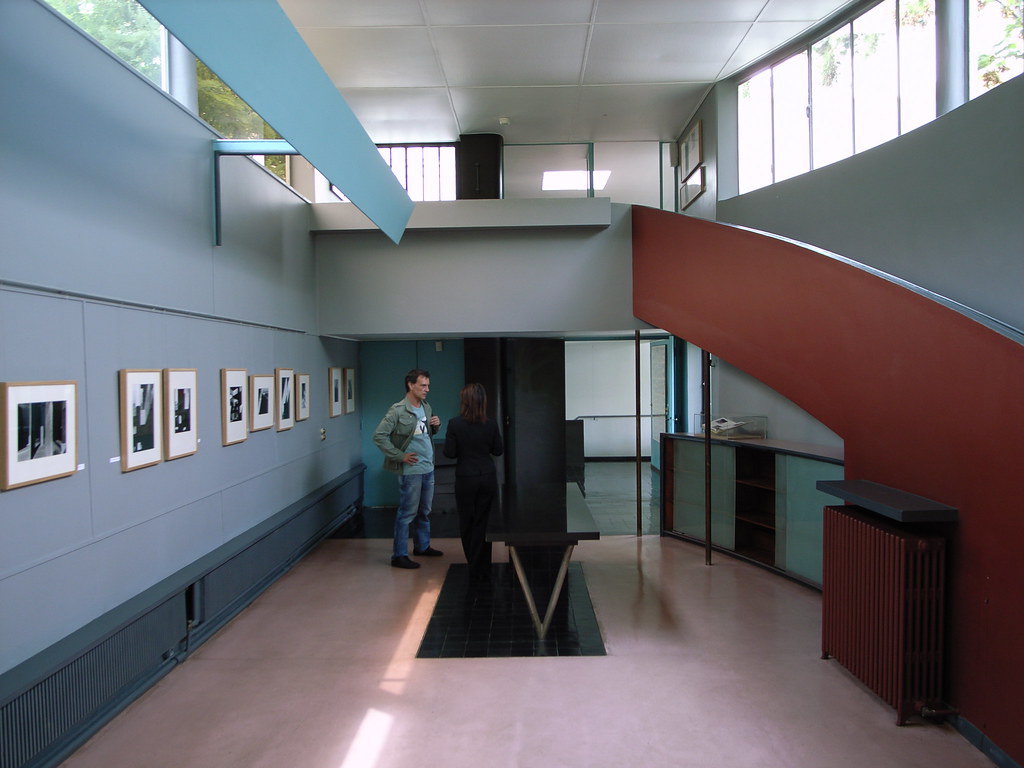
By Tatiana Zavyalova, This is the first time that Le Corbusier`s legacy is so widely represented in Russia. The collection features over 400 pieces created by outstanding French architect of the 20th century: paintings, drawings, wooden sculptures and tapestries, tables, armchairs, photographs and architectural models. This all helps to have a deeper insight into the life of Corbusier as a pioneer of modernism. The architect’s legacy includes buildings in twelve countries, including Russia. In Moscow he designed the Tsentrosoyuz Building on Myasnitskaya Street which currently is the home to the Russian State Committee for Statistics. Constructed in 1933, the building still looks impressive. Le Corbusier was very interested in working in the Soviet Union, he was inspired by the Soviet ideology of a new world order. Encouraged by the success of his first project in Moscow, Le Corbusier expected his project of the Palace of the Soviets to be implemented, too. But the jury was not impressed with the interior designs which they found ‘too liberal’. Professor at Sorbonne in Paris and at the New York Institute of Fine Arts, Jean-Louis Cohen: “Le Corbusier invented the so-called architectural promenade,a kind of a pathway which allowed people walk freely inside the building.” In the 1930s Le Corbusier suggested a new look on the Moscow urban policy but his ideas were not accepted. Today when the Russian capital is expanding the ideas again sound up-to-date. The deputy director of the Moscow Pushkin Museum of Fine Arts, Andrei Tolstoy: “In the 1930s the central Moscow looked differently. Now we can hardly breathe due to the jam packed traffic even in broad streets. Then practically all streets in Moscow were much narrower. Le Corbusier predicted the city expansion and offered his solution.” It took two years to prepare the exhibition at the Pushkin Museum. The company’s unchallenged director Irina Antonova insisted that the collection transported from France comprised as many pieces as possible, including Le Corbusier`s collection of sea shells. The Barcelona School of Architecture made over 10 architectural models byLe Corbusier especially for the exhibition in Moscow. By the way, the Tsentrosoyuz Building in Moscow designed by Le Corbusier is open to everyone willing to have a stroll inside this modernist building. Soon, a memorial dedicated to the great constructivist architect is going to be unveiled outside the Tsentrosoyuz. Source: Voice of RussiaImage: flickr.com
Read More........

War of 1812 museum opens in Moscow

Александр I Александр первый Отечественная война 1812
A museum devoted to the 200th anniversary of the War of 1812 opens today in Moscow.
Uniforms and weapons of Russia and France, rare maps and documents, decorative arts and objects of military life will allow visitors to experience the atmosphere of the war of 1812. One of the features of the new museum is a multimedia information system, which includes interactive battlefields, and animated maps of major military campaigns. Source: Voice of Russia
Read More........

Behind the curtains of shadow theatera

By: There are over 50 works of decorative theater art from the state and private collections of Russia and Indonesia. Some exhibits come from the State Museum of Oriental Art. “We really liked the idea of exhibiting Indonesian puppets and masks from our collection on the premises of the Museum of Decorative and Applied Art,” said deputy director of the State Museum of Oriental Art Tatiana Metaksa in her interview to the Voice of Russia. “It is wonderful when a museum dedicated to Russian art exhibits works from one of the beautiful Oriental countries.” The theatrical culture of Indonesia, which is one of the largest island countries in South East Asia, is practically unknown to the majority of Russian viewers. However, historically, theater performances became one of the main ingredients of the spiritual culture of the residents of the Malay Archipelago and the Islands of Java and Bali. The word “wayang”is used to denote both a theater performance and theater puppets. One of the main exhibits on show is a painting several meters wide that depicts episodes from a Javanese fairy tale about the adventures of the young knight Panji and his beloved princess Sekartadji. Such paintings are used for the performances of wayang
master  beber, during which –  the show accompanied by some music – tells Panji’s story by showing paintings that were wrapped around two vertical poles. It could be said that such performances in the past were the equivalent of today's cartoons. But they mostly remind one of a show of diapositive photography that was so popular in the 20th century. Today the art of wayang beber is almost extinct. Only two sets of ancient paintings dated around the 17th –18th centuries have survived to this day, and are considered to be sacred relics that possess magic powers. Performances that use these ancient paintings are held only during especially important ceremonies. The state of the paintings is quite poor, that is why about ten years ago their owners allowed them to be copied in order to preserve the unique heritage and let as many people as possible see them. One such work based on the scroll from the Javanese district of Pachitan is on show at the exhibition. Nonetheless, the exhibited work is still just a copy of the original scroll. Some details, the decoration of the background and the coloring of the canvas exhibited at the Museum of Decorative and Applied Art, are a product of the imagination of the artist who made the modern version. However, the composition as well as the basic artistic methods mirrors the original. According to Tatiana Metaksa, the good characters have “refined facial features: thin lips, thin noses, almond shaped eyes, while bad characters to the contrary are traditionally portrayed with thick red lips that are too big in size.” The story of Panji was also popular with the dancing drama show called wayang topeng, the masks from which are also exhibited at the museum. The actors themselves do not talk since they are holding the part of the puppet with their teeth that is attached to the inside of its mask. The show master tells the story for them. The only exclusion is the fool who wears the mask and makes the audience laugh. In 2003, UNESCO granted wayang world heritage status, thus acknowledging the importance of this type of theater. Photos provided by The All-Russian Museum of Decorative, Applied and Folk Art, Source: Voice Of Russia
Read More........

Delhi book fair begins

The 18th annual Delhi Book Fair began at Pragati Maidan in New Delhi on Saturday. The nine day book fair will have e-books as its theme. There will also be seminars and book reading sessions. The book fair from Sep 1-9 will play host to 300 publishers -- both regional and international, including those from China, Pakistan, US, Britain, France and Germany. Inaugurating the fair, Delhi Lt Governor Tejendra Khanna said, "Hope the publishers would have inspirational books to spread the message of peace and brotherhood among people." According to the organisers, the theme of book fair is "e-books" which will remain the centre-stage during the event. "The central theme of the fair is e-books. It will bring together technology and literature. Other than the theme of e-books, the fair will screen adaptations of popular novels in diverse languages," said an organiser. "The Delhi book fair also gives 50 percent discount on stall rentals to encourage small publishers," said an official. The entry tickets are priced at Rs.20. Students with identity cards can avail 50 percent off on the tickets. Source: Hindustan Times
Read More........

Merkel visits Palace Museum


1 2 3 4 5 Next
Chinese Premier Wen Jiabao accompanies German Chancellor Angela Merkel to visit the Palace
Museum, more popularly known as the Forbidden City, in Beijing, capital of China, Aug. 31, 2012. [Xinhua], Source: China.org.cn
Read More........

Creative statues displayed at Beijing Art Expo


Photo taken on Aug. 15, 2012 shows a creative statue at a preview of Beijing Art Expo held in China World Trade Center in Beijing, capital of China. The five-day expo, which kicked off on Thursday, displays more than 5,000 art works provided by 90 arts institutions from 16 countries and regions. [Photo: Xinhua]  Source: China.org.cn
Read More........

Yoshitomo Nara puts the heart back in art

"Wicked Looking" 2012 © YOSHITOMO NARA; PHOTO BY MIE MORIMOTO
By EDAN CORKILL, The induction of manga-style painting into Japan's contemporary art canon over the last 15 years can be put down to the work of not one but two artists. Sure, it was Takashi Murakami who laid the theoretical foundations, spelling out links with classical painting and ukiyo-e prints. But it was another artist who provided the movement with its emotional appeal: Yoshitomo Nara. To Murakami's brains, Nara provided the heart. And whereas Murakami's continued mining of that same intellectual territory he demarcated with his Superflat theory — cartoon characters, floating atop flat-plane backgrounds — has resulted in repetition, Nara's heart appears to know no bounds. His latest show, "a bit like you and me...," which is at the Yokohama Museum of Art till Sept. 23, is perhaps his best. But it didn't come easy for the 52-year-old whose casual appearance — jeans, T-shirt and top-heavy Brit-rock bouffant — belies a keen work ethic and a somewhat surprising degree of concern for how his work is viewed. Indeed, it turns out that the new exhibition is the latest of several attempted correctives to the way people perceive his art. Fortunately, each of those correctives has pushed his work in the right direction, and that is to increase — or at least make more prominent — his own emotional investment in his art. The heart that has always been the key to his work has thus continued to grow. To explain, let's wind the clock back to 2001, when the Yokohama Museum of Art hosted Nara's first major museum show. Titled "I don't mind if you forget me..." (after a Morrissey song; the current show takes its name from the lyrics of the Beatles' "Nowhere Man"), it happened to coincide with Murakami's first big solo show, at Museum of Contemporary Art, Tokyo. Up until then the two artists had trodden very different paths. Aomori Prefecture-native Nara had studied at Aichi Prefectural University of Fine Arts and Music and then Kunstakademie Dusseldorf, in Germany, while Tokyo-native Murakami, who is Nara's junior by three years, had spent over a decade at Tokyo University of the Arts. But with those concurrent shows their careers fell into step. Nara's paintings of children were constructed with clean lines and monotone planes of color that seemed to substantiate Murakami's Superflat theory. Yet, whereas Murakami's own works were populated by characters practically devoid of emotion, Nara's evinced a delicious complexity. Looks of defiance, aloofness or confusion played on their otherwise too-cute faces; loneliness and melancholy lingered in their larger-than-life eyes; and sometimes the characters lashed out in open rebellion. Where Murakami's work had to be "read," Nara's had to be felt. But the relationship was mutually beneficial. Nara provided Murakami's theory with its most likable exemplar, and Murakami lent Nara's emotive works a useful intellectual crutch. And yet, as Nara explains to The Japan Times during a recent interview, there were problems. "Overseas, everyone started to read the work within the context of Murakami's Superflat theory. In a way, they can be explained with that, so that's fine, but for me they were much more personal. All the children and animals depicted came from inside me, not from a theory," he says. At the same time, he started worrying — unnecessarily, I believe — that his fans in Japan weren't looking closely enough at his art. "Some people started to read my work as though it was just made up of code. This is a dog. This is a child. This is cute. This girl is angry," he explains. Nara's solution was unusual. In order to demonstrate to his audience that his works did not magically spring from some formula or factory, he decided to show them his studio. Collaborating with Osaka-based design collective Graf, he began constructing miniature models of his workspace that he would include in his exhibitions. The models allowed viewers to see where his inspiration came — in the form of photos and posters on his walls and also the music he played as he worked. Nevertheless, Nara eventually decided that the models engendered their own problems. "The collaborative element meant that ultimately they didn't all go in the direction I wanted," he says. (The current exhibition also includes a re-creation of his studio, though it is at life-size, and not a collaboration with Graf.) These studio re-creations were Nara's first attempted corrective to the way his art was received. The second came after the Great East Japan Earthquake, when Nara was reeling, like the rest of us, from that tragedy. "To be honest, for the six months after the quake, I couldn't make anything — not sculpture or painting," Nara says. Asked to elaborate, he explains that the disaster made him question art's role. "If I had been a singer or comedian, then I could have just stood up in front of people and given them joy. But with art, it's different. Art is something you can enjoy once you've got your life back in order, once you've got enough food to eat," he says. Nara eased back into his creative work only after realizing that making sculpture, which is more physical than painting, might prove therapeutic. "I couldn't make pictures on a blank canvas, but I found I could confront a mass of clay," he says. "I wouldn't think about it with my mind. I would just attack it, like in sumo, with my body." Thus Nara's response to March 11 gradually fell into line with his original desire to remind viewers that his works were personal, and not the product of a machine or theory. He would sculpt in clay with his body, and then use the resulting shapes to make molds from which he could cast sculptures in bronze. In the current exhibition, those sculptures fill one gallery, and they are as expressive of their subject matter — heads of young girls with the usual enigmatic expressions — as they are of the sumo-like tussle by which they were made. They are covered in hand and finger marks. Often you can see where the artist has scraped his hands across their surface in what appears to be an angst-filled swipe. Nevertheless, I found there is a slight disconnect between the apparent wildness of the technique and the subtlety of the facial expression he has tried to depict — kind of like Jackson Pollock had attempted a Mona Lisa. But of course, that very disconnect also conveys the passion by which Nara obviously worked through his initial disillusionment with art. When Nara eventually returned to painting, in around February this year, he could have adopted the same "sumo" approach. After all, many painters apply paint with their hands — and even their bodies. But instead he reined in that emotion just enough to channel it into very particular areas of his works. The newest paintings, which are in the exhibition's final room, present the same images of young children, with faces expressing the gamut of emotion known to everyone who lived through the events of March 11 and its aftermath: despair, hope, confusion, anger and of course wonderfully enigmatic combinations of all of the above. But those faces are bolstered by something new. Nara's application of color has become more complex, more nuanced. Look into the eyes of the subject in a work like "Miss Spring": Where there used to be deep browns there are now matrixes of color. And the chests of his subjects; where there used to be the monotones of T-shirts there are now patchworks of color. And neutral backgrounds now present vistas of gradation. Knowing that this change occurred in response to the events of March 11 adds to their poignancy. Nuance and complexity have invaded a universe that used to be so simple. And if Nara was right about there being people who read his work as being justSuperflat, then at last he may have found an incontrovertible response. "Nara Yoshitomo: a bit like you and me..." continues at Yokohama Museum of Art through Sept. 23. It will also tour to Aomori Museum of Art from Oct. 6 till Jan. 14, 2013, and to the Contemporary Art Museum, Kumamoto from Jan. 26 till April 14. For further information see www.nara2012-13.org. See www.japantimes.co.jp for a Web-exclusive story on the use of Nara's paintings in recent rallies against nuclear power. Source: Japan Times
Read More........

London’s Tate Modern Gallery unveils live art space

London’s Tate Modern Gallery unveils live art space
On Wednesday, London’s Tate Modern Gallery unveils a unique space dedicated to live art. The space which is called “The Tanks” belongs to the converted power station that have been transformed into an exhibition space. It will be used as a site for video installation, film screenings, dance performances. The space comprises two vast round halls and a labyrinth of small rooms.The opening of "The Tanks" will be marked by a 15 week live art event in which about 40 artists take part. The exhibition will last till October 28 and is part of the 2012 London festival, which was timed to coincide with the 2012 Olympics in London. Tags: Culture, art exhibition, World, News, Читать далее, Source: Voice of Russia
Read More........

Mike Stilkey's book art


1 2 3 4 Next
Artist Mike Stilkey has always been attracted to painting and drawing not only on vintage paper, record covers and book pages, but also on the books. His exhibition "Full of Smiles and Soft Attention" arrived in Hong Kong on July 9, 2012. [Photo/Xinhua] Source: China
Read More........

10,000 diamonds go on display at Buckingham Palace to mark the Jubilee


Queen Mary wears the Delhi Durbar Tiara set with Cullinan III and IV, 1912, Thomson. Photo: The Royal Collection © 2012, Her Majesty Queen Elizabeth II. LONDON.
More than 10,000 diamonds set in works acquired by six monarchs over three centuries go on display at Buckingham Palace to mark Her Majesty The Queen’s 60-year reign. The special exhibition Diamonds: A Jubilee Celebration (30 June – 8 July & 31 July – 7 October) includes a number of The Queen’s personal jewels and works from the Royal Collection chosen for their artistic significance and their historic importance, and for the supreme skill in diamond cutting and mounting they embody. Several pieces of jewellery, such as the Delhi Durbar Tiara, Queen Victoria’s Fringe Brooch and the Kokoshnik Tiara, are on display for the first time. The exhibition also includes jewellery made from the world’s largest diamond, the Cullinan Diamond, which weighed 3,106 carats as an uncut stone. Pieces containing seven of the nine principal stones cut from the Cullinan Diamond are reunited for t  Source: Beattie's Book Blog
Read More........