The Pyramid at Chichén Itzá (before 800 A.D.) Yucatan Peninsula, Mexico
MEXICO: Chichén Itzá, the most famous Mayan temple city, served as the political and economic center of the Mayan civilization. Its various structures - the pyramid of Kukulkan, the Temple of Chac Mool, the Hall of the Thousand Pillars, and the Playing Field of the Prisoners – can still be seen today and are demonstrative of an extraordinary commitment to architectural space and composition. The pyramid itself was the last, and arguably the greatest, of all Mayan temples.
Christ Redeemer (1931) Rio de Janeiro, Brazil
BRAZIL: This statue of Jesus stands some 38 meters tall, atop the Corcovado mountain overlooking Rio de Janeiro. Designed by Brazilian Heitor da Silva Costa and created by French sculptor Paul Landowski, it is one of the world’s best-known monuments. The statue took five years to construct and was inaugurated on October 12, 1931. It has become a symbol of the city and of the warmth of the Brazilian people, who receive visitors with open arms.
The Roman Colosseum (70 - 82 A.D.) Rome, Italy
ITALY: This great amphitheater in the centre of Rome was built to give favors to successful legionnaires and to celebrate the glory of the Roman Empire. Its design concept still stands to this very day, and virtually every modern sports stadium some 2,000 years later still bears the irresistible imprint of the Colosseum's original design. Today, through films and history books, we are even more aware of the cruel fights and games that took place in this arena, all for the joy of the spectators.
The Taj Mahal (1630 A.D.) Agra, India
INDIA: This immense mausoleum was built on the orders of Shah Jahan, the fifth Muslim Mogul emperor, to honor the memory of his beloved late wife. Built out of white marble and standing in formally laid-out walled gardens, the Taj Mahal is regarded as the most perfect jewel of Muslim art in India. The emperor was consequently jailed and, it is said, could then only see the Taj Mahal out of his small cell window.
The Great Wall of China (220 B.C and 1368 - 1644 A.D.) China
CHINA: The Great Wall of China was built to link existing fortifications into a united defense system and better keep invading Mongol tribes out of China. It is the largest man-made monument ever to have been built and it is disputed that it is the only one visible from space. Many thousands of people must have given their lives to build this colossal construction.
Petra (9 B.C. - 40 A.D.), Jordan
JORDAN: On the edge of the Arabian Desert, Petra was the glittering capital of the Nabataean empire of King Aretas IV (9 B.C. to 40 A.D.). Masters of water technology, the Nabataeans provided their city with great tunnel constructions and water chambers. A theater, modelled on Greek-Roman prototypes, had space for an audience of 4,000. Today, the Palace Tombs of Petra, with the 42-meter-high Hellenistic temple facade on the El-Deir Monastery, are impressive examples of Middle Eastern culture.
Machu Picchu (1460-1470), Peru
PERU: In the 15th century, the Incan Emperor Pachacútec built a city in the clouds on the mountain known as Machu Picchu ("old mountain"). This extraordinary settlement lies halfway up the Andes Plateau, deep in the Amazon jungle and above the Urubamba River. It was probably abandoned by the Incas because of a smallpox outbreak and, after the Spanish defeated the Incan Empire, the city remained 'lost' for over three centuries. It was rediscovered by Hiram Bingham in 1911. Source: Article
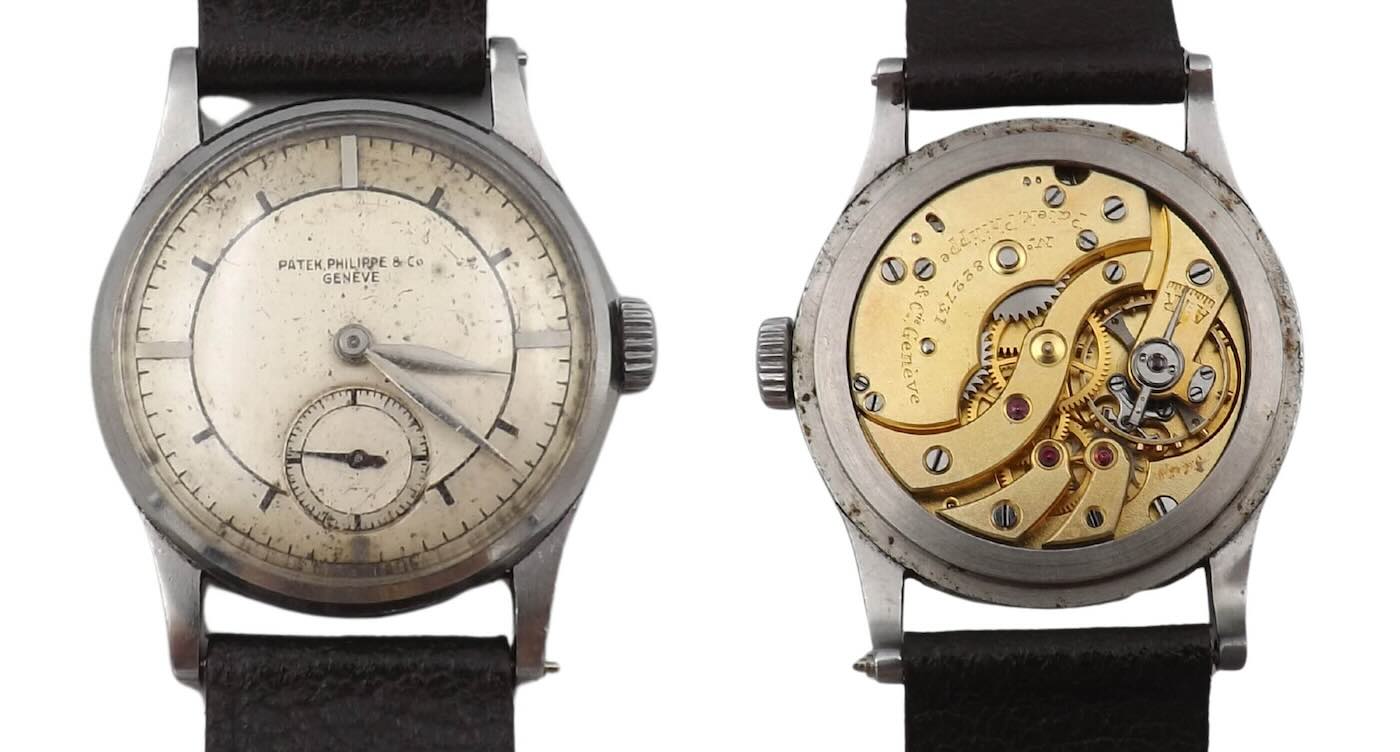
1930s Patek Philippe – Courtesy of Hansons Auctioneers / SWNS
A rare vintage Swiss watch discovered hidden away in a late mother’s jewelry box while the family was cleaning out her home has sold for £59,000 at a British auction—$80,000 in US dollars.
The 1930s Patek Philippe wristwatch smashed expectations after experts originally valued it at just £5,000.
The owner’s daughter remembers her mom once telling her she possessed an expensive watch, but no one expected the stainless steel timepiece to be worth almost 12 times its estimate.
“When I finally had the watch in my hands and was able to examine it properly, I knew we had something extremely rare,” said Darren Ashley, senior valuer at Hansons Cornwall, who held the public auction in Penzance on Tuesday.
He explained that Patek Philippe produced very few stainless steel watches during the period, and that rarity makes surviving examples incredibly desirable to collectors—along with its “mechanical perfection”.
“This was a watch dating back around 90 years, which had spent decades within the same Cornish family and—when it was placed in my hands—it was still finely ticking away.”
1930s Patek Philippe – Courtesy of Hansons Auctioneers / SWNS
The rare Patek Philippe & Co Calatrava Reference 448 belonged to the seller’s grandfather who passed it to his daughter. It’s believed that their grandmother had a love for designer clothes and luxury items, and bought it as a gift for her husband decades ago.
“The pre-sale interest was phenomenal, from serious collectors across the world, but nothing quite prepares you for watching that level of bidding unfold in the room.”
“Having three members of the family there made it even more special. They were absolutely thrilled, while other members of their family were following the auction live from work on their laptops and phones and couldn’t believe what they were seeing.
“The final battle between (bidders in) Japan and China was incredibly exciting. To see the hammer finally fall at £59,000 was a fantastic moment for the family.
“It is one of those results that reminds you why this business is so exciting.
“Something extraordinary can still be sitting quietly in a jewelry box just a few miles away.”
“What a wonderful result,” added Charles Hanson, owner of Hansons Auctioneers. “Never overlook what is tucked away at home.”
“This little watch had passed quietly through generations of a Cornish family, its late owner knowing she had something valuable, but perhaps never imagining quite how sought-after it would become.
“To see bidders in America, Japan and China competing for something discovered in a Cornish family home is the magic of auction.
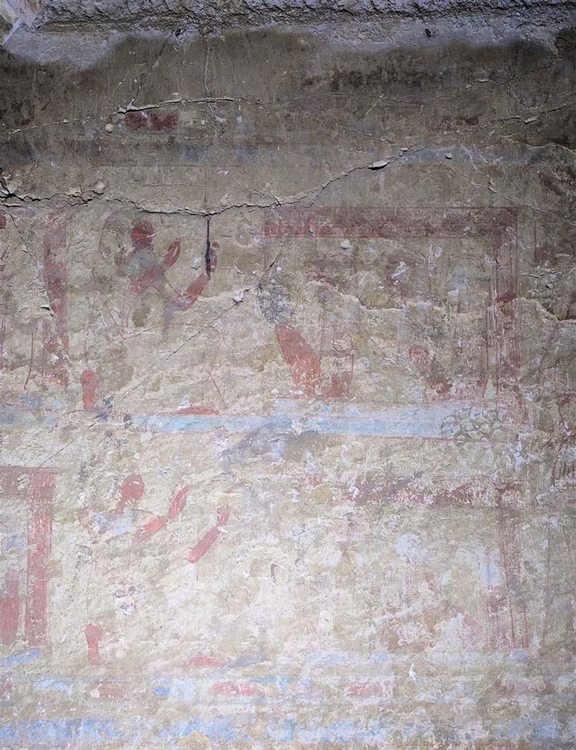
Another month, another big discovery in Luxor—this time of a tomb with preserved interior frescoes dating back around 3,200 years.
The T-shaped tomb was discovered by a team of Dutch-Egypt archaeologists in the middle of a long-term project to combine proactive conservation strategies with archaeological excavations at the Theban Necropolis.
Hisham El-Leithy, Secretary-General of Egypt’s Supreme Council of Antiquities, said that inscriptions inside the tomb identify its owner as a man named Paser. Decorative frescoes lining the walls of the tomb indicate it may have been made and occupied during the 19th Dynasty of the New Kingdom—the Ramesside period, that included who is arguably Ancient Egypt’s greatest-ever ruler, Ramesses II.
Research into the site is ongoing. Its open forecourt leading to an inverted T-shape layout is typical of New Kingdom tombs in the necropolis, and may contain a number of people beyond this mysterious Paser, located in a series of presumed underground burial chambers.
Interior elements include a well-preserved mudbrick bench meant to support stone funerary stelae, though these are missing, if ever they sat atop it.
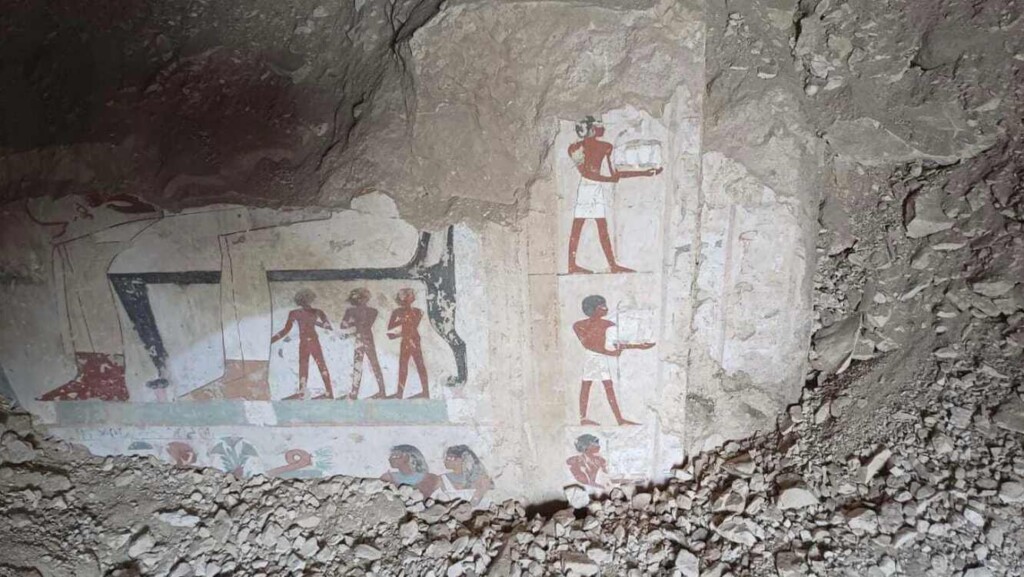
Frescoes depict the tomb’s owner performing various religious rites in the New Kingdom style, as well as another panel with him seated beside his wife at an offerings table.
The discovery of the tomb was made by Carina van den Hoven, who has directed excavations in the sector since 2018, and was documented while establishing the first comprehensive archaeological survey of Lower Sheikh Abd El-Qurna area, one of the most important burial areas of the Theban Necropolis.
Denim is present in practically every country in the world and is widely adopted as one of the most common forms of everyday attire. Its appeal spans generations and social groups: jeans are worn worldwide by those who follow fashion and those who do not, by people seeking to stand out and by those who prefer to blend in. However, many of us have never found the perfect pair.
Although denim has been produced since the 16th century, its association with American culture and durable workwear emerged during the Californian gold rush of the 1850s. It was during this time that Levi’s – now arguably the most recognisable denim brand – was established.
Levi Strauss, an immigrant entrepreneur who arrived in California from Bavaria in the 1850s, opened a dry goods business catering to miners. One of his customers, the tailor Jacob Davis, developed the innovative use of metal rivets to reinforce stress points in work trousers, making them more durable. Strauss and Davis jointly patented this technique, and the Levi’s brand was born.
Blue jeans were originally a seen as symbol of labourers (like the miners) and they also gained a strong association with cowboys. In the decades that followed, denim jeans evolved from practical workwear into one of the most iconic and enduring symbols of global fashion and culture. Film stars such as Marlon Brando and James Dean popularised the jeans and t-shirt look to a young generation in the 1950s. These films personified motorcycle-loving nonconformists, and 1950s Hollywood embraced denim as the garment of rebellion.
Today, the cultural significance of denim jeans has moved beyond early associations with workwear, the cowboy and the teenage rebel, to become a staple worn by people of all ages and backgrounds.
Finding the perfect pair
Denim jeans are often seen as a problematic fashion product in terms of sustainability, because their production leaves a considerable environmental footprint.
Cheap prices on the high street can encourage consumers to treat denim products as short-term items, reducing their lifespan. Cotton, which is commonly the main fabric for denim, is incredibly water intensive; the production of one pair of jeans uses approximately 7,500 litres of water.
Different components involved in the making of a single pair of jeans, such as denim, thread, cotton and buttons, can originate from different countries all over the world. This raises questions regarding the environmental costs involved in the production process. Further issues include that jeans are often not made from single fibre materials and therefore cannot be recycled.
Adding to sustainability concerns, at the consumer level, the perfect pair of jeans remains an elusive concept. But in a recently published book chapter, I explain that the perfect pair of jeans is elusive for a reason. Jeans have to be correct for the individual wearer in terms of comfort, social and personal identity, and also the complexity of fit.
Previous reports have focused on women’s struggle to find jeans that fit and are flattering. The inability to find the perfect pair of jeans may encourage overconsumption, due to repeated purchasing based on poor fit.
My research shows that this is an issue which applies to all genders. The men I spoke to noted how they resented paying a higher price for brands like Levi’s, so spent less by purchasing cheap, high street alternatives. This attitude can lead to overconsumption, as low price points achieved through low-quality production often compromise product longevity.
This demonstrates the perpetuating cycle of fast fashion, driven by cheap, low-quality production, and contradicts the original purpose of jeans of being highly durable and having longevity. The combination of highly environmentally damaging production processes with overconsumption results in even greater environmental harm.
Retailers can make efforts to reduce the trend of overconsumption with better fitting garments. However, fit is a complex issue for retailers as well as consumers. For the retailer, producing jeans in a wide range of sizes and styles is often not cost effective, and complex sizing systems can also confuse the consumer.
Technology could provide future solutions to improving the accuracy of fit. Personalised virtual fitting, made possible through improvements in 3D human shape recognition, could ensure improved fit for the consumer. This would benefit online shoppers, although the technology does remain in its infancy, and is yet to be adopted by major online fashion retailers. Virtual fitting rooms also cannot replicate the feeling of denim next to the skin, so although the fit may be perfect, comfort could be compromised.
Ultimately, the enduring challenge of finding the “perfect pair” of jeans highlights not only the garment’s cultural significance but also the opportunity for the fashion industry – and consumers – to move toward more sustainable, better-fitting and more thoughtfully designed denim for the future.
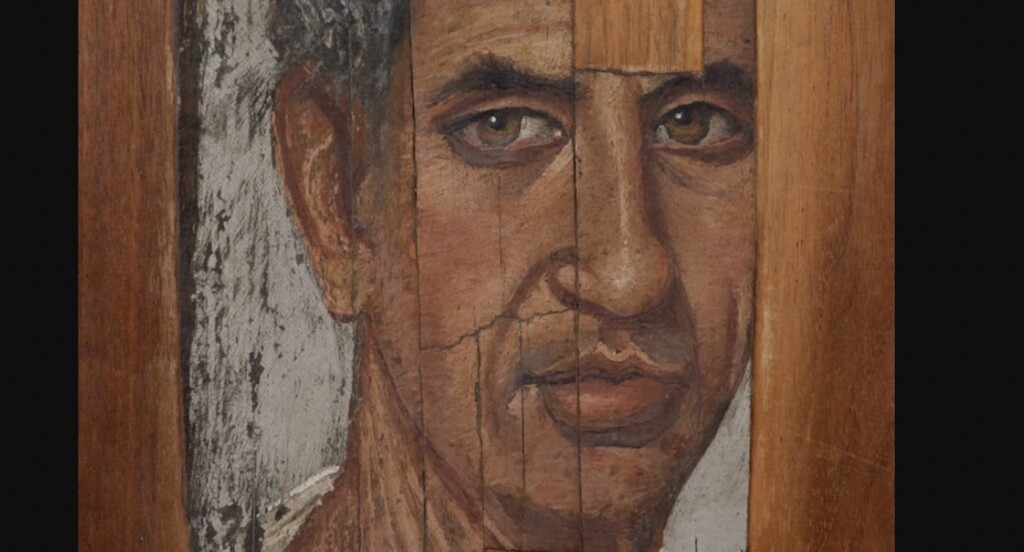
Mummy Portrait of a Man from Roman Egypt Flavian Period, circa late 1st century A.D. – Courtesy Sotheby’s
Sotheby’s recently sold a painting of a man from Roman-controlled Egypt in the first century CE that experts suggest represents the dawn of realistic portraiture 1,200 years before it appeared in Italy.
The image is part of a family of works known collectively as the Fayum Mummy Portraits, all of which were found during 19th century excavations at a site called Hawara in Egypt’s Fayum region.
The portraits were placed atop mummified remains like masks, and were painted with pigment mixed with melted beeswax on wooden panels. Over 900 have been found, and some have been auctioned.
This portrait of a dark-skinned senior with graying hair, piercing hazel eyes, and a large lower lip recently brought in $889,000 with fees. Though they were painted and entombed in Egypt, the subjects could be Romans, whose nobility could afford both mummification and portrait commissions.
The nose might give the man up as a Roman; the substantial bridge being a feature of the Italian race still today. Others are perhaps less obvious.
What unquestionably stands out is the true air of realism in the work—one gets the feeling all at once that the man truly appeared as he is portrayed.
“It invites you to want to know more about him and to feel his presence,” said Alexandra Olsman, a Sotheby’s specialist in ancient sculpture and works of art.
Roman domination of Egypt came only after Macedonian domination of Egypt under the Ptolemaic dynasty. Whatever skin/eye color and features the ancient Egyptian race had, the population in the major cities would have long been altered by intermarrying with northern Mediterraneans.
It’s not known whether the sitters were painted in death or life, or some state in between of infirmity. Olsman told CNN that with the sincere connection through the eyes, it would seem unlikely to be the artist’s interpretation of a dead man.Sotheby’s has sold over a dozen Fayum mummy paintings over the years, and this one along with another featuring a curly-headed, younger man, commanded the highest bids. This Ancient Man's Piercing Hazel Eyes Drew Almost $1 Million in 'Mummy Portrait' Auction
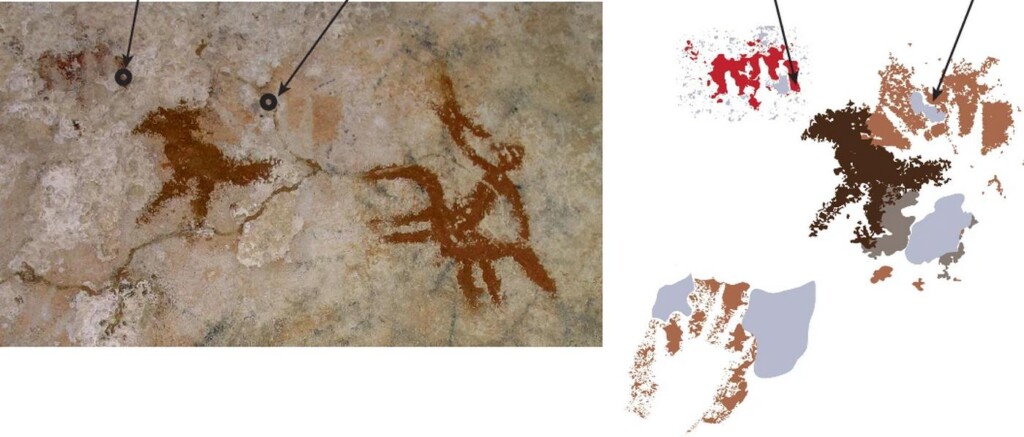
The discovery of stylized handprints dating back at least 67,800 years in a limestone cave in Indonesia has broken the country’s own record for the world’s oldest-known example of rock art.
It provides direct evidence that humans have been crossing the sea intentionally for nearly 70,000 years, as Man traveled from the Asian continent across Australasia to the land Down Under and beyond.
Adhi Agus Oktaviana, a researcher at the BRIN Research Center for Archaeometry, revealed that the minimum age of the rock art is 16,600 years older than the previously discovered rock art from Muna Island, which GNN reported on in 2024.
This rock art is also 1,100 years older than the handprints from Spain that were previously associated with Neanderthals and had long been considered the oldest cave art in the world, and 22,200 years older than the depiction of the Sulawesi warty pig, discovered on the same island as the other two, in 2021.
In other words, in the last five years, 3 of the 4 oldest cave artworks ever found on Earth were identified on the same small island off Sulawesi, Indonesia.
Oktaviana explained that to determine the age of this rock art, the research team applied the laser-ablation uranium-series (LA-U-series) dating technique to the microscopic calcite layer covering the cave paintings and produced a date that would be the earliest possible production time of the handprints.
– credit, Maxime Aubert
As news releases that regarded the previous two discoveries stated, the artworks elevate Indonesia to one of the most important centers in the early history of symbolic art and modern human sea exploration in the world.
This discovery confirms that Wallacea, a sunken landmass that exists above sea level today as the Indo-Pacific, was not only a route to Australia, but also a major habitat for early modern humans. It also reinforces the long chronological model, which states that humans reached the Sahul landmass (Australia–Papua) at least 65,000 years ago.
“It is very likely that the creators of these paintings were part of a population that later spread further east and eventually reached Australia,” said Oktaviana. “This research provides the oldest direct evidence of modern humans on the northern migration route to Sahul, which involved sea exploration between Kalimantan (Borneo) and Papua—an area that remains relatively unexplored archaeologically.”
Meanwhile, Professor Adam Brumm from the Australian Research Centre for Human Evolution (ARCHE), Griffith University, said that the handprints found in the rock art on Muna Island also have globally unique characteristics, with modifications that narrow the shape of the fingers to resemble claws, reflecting a mature symbolic expression. According to him, the symbolic meaning of this narrowing of the finger shape is still speculative.
“However, this art could symbolize the idea that humans and animals have a very close relationship. This is already evident in the earliest paintings in Sulawesi, including at least one scene that we interpret as a representation of a half-human, half-animal creature,” he explained.With the discovery of Pleistocene rock art sites in the karst region of Sulawesi, this brings a great responsibility in preserving irreplaceable cultural heritage. Therefore, researchers are calling for the protection of karst areas containing ancient rock art sites to be an integral part of spatial planning and natural resource management policies. At 67,800-years-old, These Handprints Just Discovered in Indonesia Are Oldest Example of Rock Art
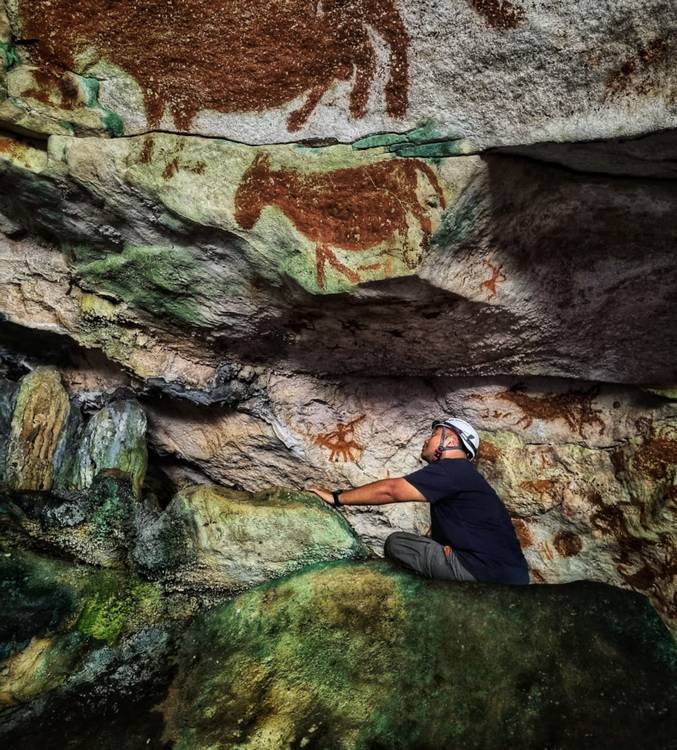
Indigenous Australian practices, honed over thousands of years, weave science with storytelling. In this Indigenous science series, we look at different aspects of First Australians’ traditional life and uncover the knowledge behind them. Here we examine the chemistry and techniques behind perhaps the most iconic element of Indigenous life: rock art.
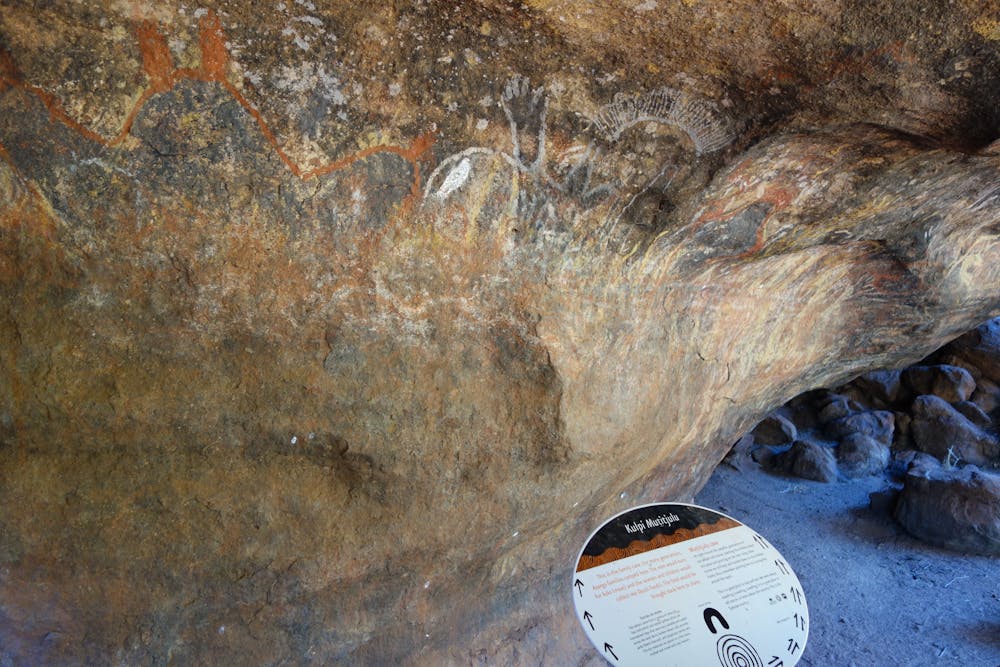
Visitors to Uluru might also find themselves at Mutitjulu Waterhole in the company of a travel guide filled with wisdom about the meaning of the paintings. Uluru has almost 100 painted sites, of which I have studied most, and tourists will encounter a dozen or less.
Anangu people will explain that the paintings have many meanings depending on the audience. An undulose band may be a snake in one story, a creek in another. A tourist may or may not be told that the paintings at Uluru are in themselves not necessarily highly charged with spiritual values but rather an auxiliary expression in response to the power of the rock itself. The main stories, the big stories, are told in the rock.
So why did people paint? What did it mean? How was it done? Why did they use certain pigments? Why has it lasted so long? The answers inevitably vary depending on where you are standing and with whom.
Painting techniques
Paint has been applied to rocks, almost all types, by a variety of application techniques. Marks were made using what appears to be a dry crayon or pastel application, where a piece of pigment-rich soft rock has been drawn across the surface.
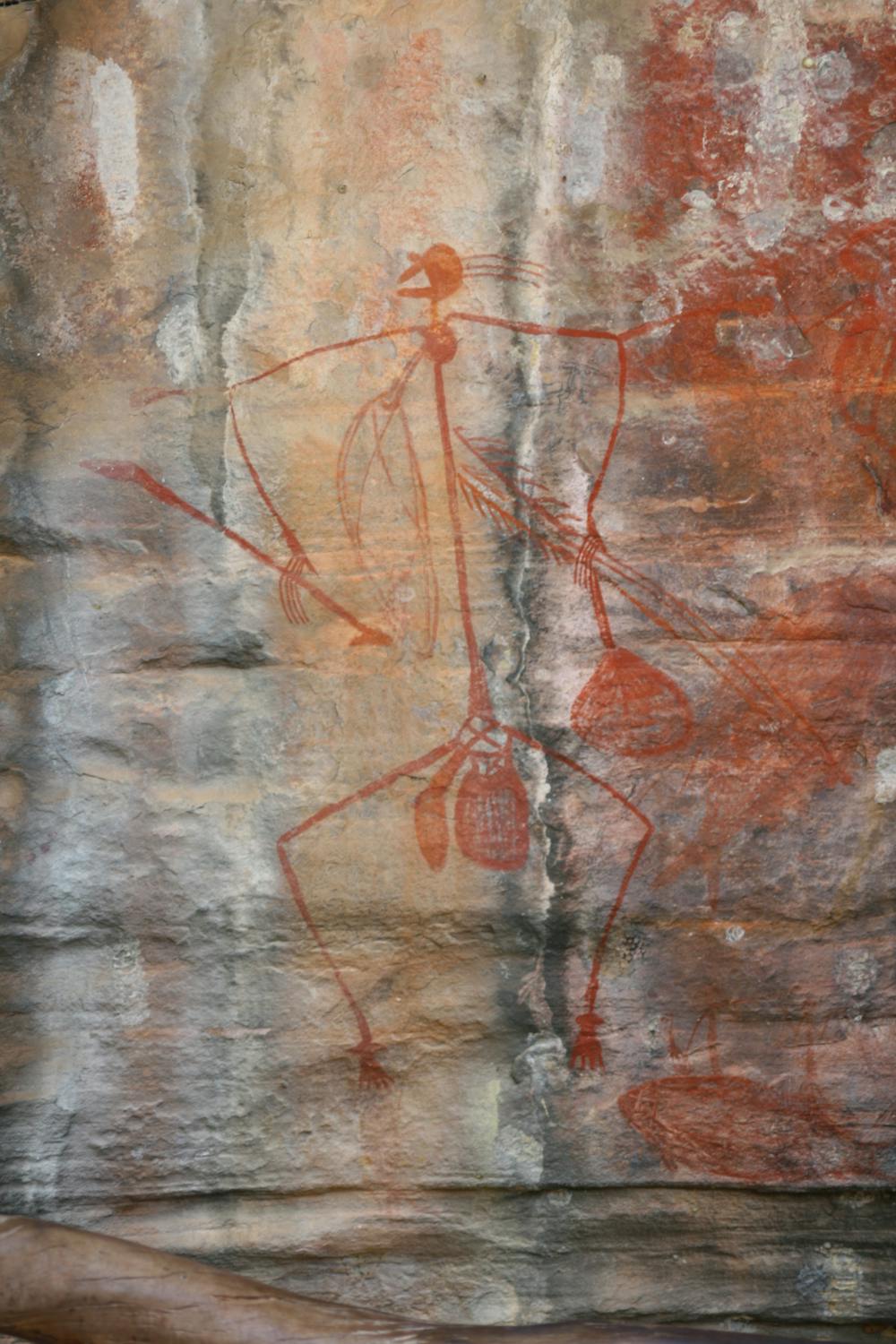
A wide variety of implements were used as brushes to apply water-dispersed pigment, and there is ethnographic evidence of chewed bark and other suitable implements being used – as they still are today for bark paintings.
Fingers may have been used and in one rare and precious place across the flood plain from Ubirr in Kakadu, senior elder of Kakadu, Bill Neidjie, once pointed to a place in the ceiling where his footprints still remained from his youth where he was dipped in paint and pressed against the ceiling.
Stencil techniques have been used to portray everything from full bodies (the finest examples in Carnarvon Gorge in Queensland), to hands, weapons, and introduced objects of fascination such as clay pipes and wool shears. There are some very fine and complex hand prints east of King’s Canyon in the Northern Territory, pressing three coaxial U shapes to the rock by painting the two inner, the two outer fingers, and the palm.
Paintings can be highly detailed within an individual figure but rarely narrative panels extend across a whole site or rock panel. More typically pre-existing paintings are painted over with no regard for their meaning or author.
There are examples of important images that have been faithfully reproduced because of their fundamental meaning for a given site. It is important to underline this fact, that repainting, when considered over several hundred years is not commonly faithful reproduction but an accumulation of new expression.
Photographs of Mutitjulu waterhole at Uluru, taken by Australian anthropologist Charles Mountford in the late 1930s, are almost unrecognisable due to the accumulated new painting since that time.
Regular painting at Uluru ceased in the 1960s with only a few isolated cases of painting through to the 1980s.
Pigments
In Australia, pigments were chosen from naturally occurring minerals with little evidence of manufacture. Charcoal is one exception to this, but it could be argued that it was a routine by-product rather than a deliberately manufactured pigment.
There is some unsubstantiated speculation that yellow ochre was heated to turn it red and cases where European pigments were adopted. This availability of new colours did not result in the adoption of more colourful paintings, with the exception of some use of washing blue (a coarse synthetic ultramarine) in parts of Arnhem Land.
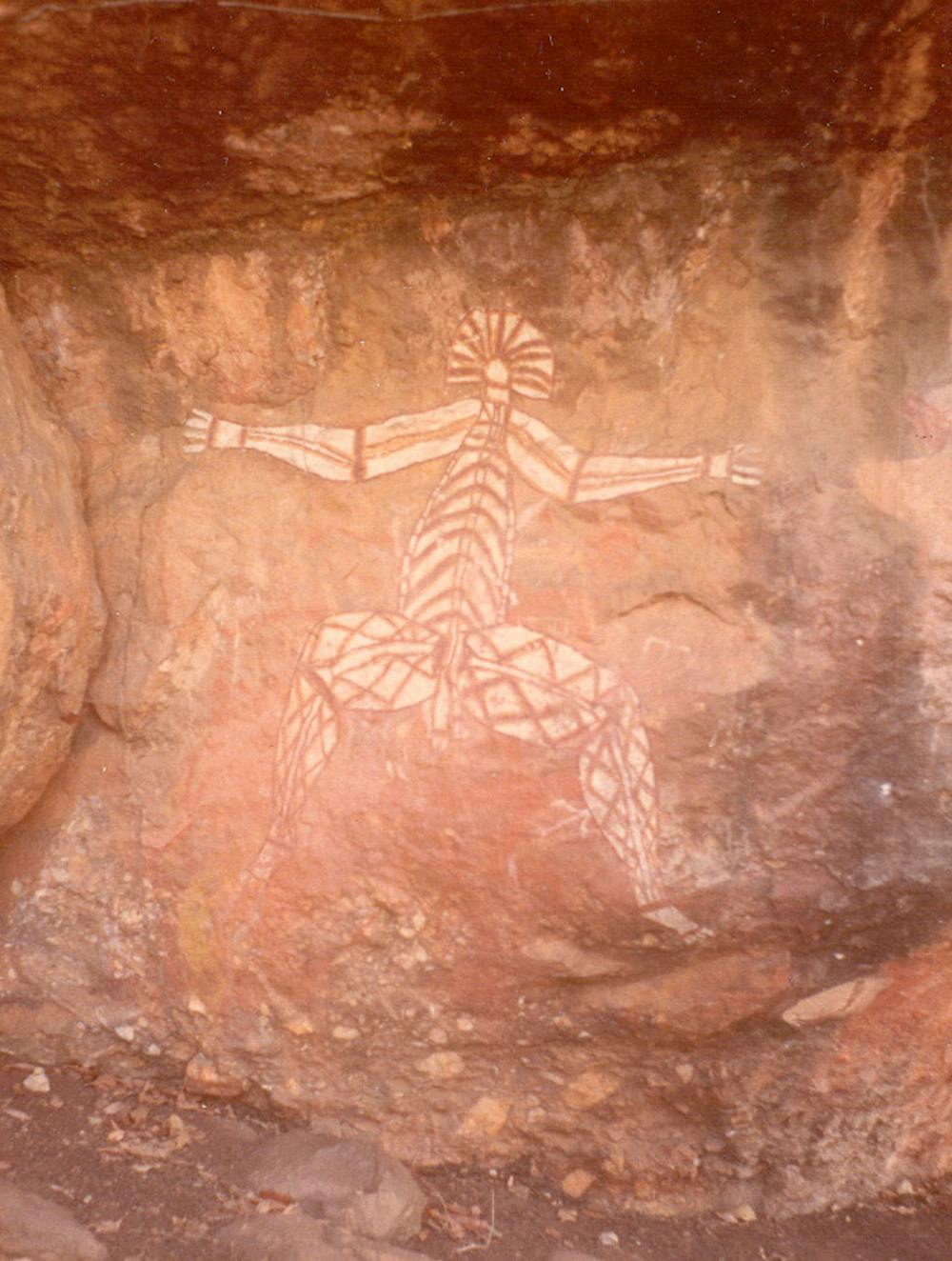
The traditional palette, that is to say the most commonly encountered colours, are red, white, yellow and black, with variations on the composition of these but with little evidence of mixing to create intermediate tones.
By studying the trace elemental composition of pigments it is possible to connect them to geological events, and hence their source. Such studies proves that pigments were traded, in some cases over long distances. It is difficult to postulate however that distance of manuportation equals significance or spiritual value, but further research may enlighten this fact.
Pigments were sourced from known locations such as Walgi Mia in central Western Australia and from large coloured earth deposits in the Flinders Ranges. But if we look at one colour – white – the distribution of the minerals used suggests local source rather than trade.
Kaolin – a soft white clay – is abundant in most parts of Australia but where calcite is found, as it is in the river beds of Arnhem Land, it becomes the more common white pigment. The Kimberly is more abundant in the carbonate mineral huntite and yet it is rare to find huntite used outside this region, despite it being a brighter white than kaolin.
Examples of trade exist and some of these provide interesting insights into the selection of paints.
Just south of Uluru, near the South Australian border, lie a group of sites containing a metallic red pigment characteristic of the Walgi Mia quarry 1,000km to the west. It is said these caves and their paintings were created by the emu creation beings who had a dreaming path extending out to the western coastline and which would have passed very nearby the pigment source. It is not surprising therefore to find a pigment that has come from such a distance.
What is fascinating is that near to Walgi Mia is a very large painting site, Walghanna, that features a very large emu footprint. Emus are not known to have existed in the vicinity of Walghanna, according to the archaeological record and oral history. There appears to have been a two-way trade in materials and stories.
Durability and age
The 1930s photograph by Mountford, showing paintings that no longer exist due to subsequent overpainting indicates, among other things, that all of what one sees at Mutitjulu today is “modern art” painted in the period 1936-1962.
I had great fun at a conference using Powerpoint to fade between an image of the Mutitjulu panel and Convergence, a Jackson Pollock painting with an almost identical scramble of lines, shapes and colours, aimed to make the point that not all rock art is ancient. Some other more significant statements can be added. Most very old paintings survive as very thin remnants.
There are cases in Kakadu of whole colours falling off an image, resulting in, for example, birds without legs. Some very old paintings have survived for thousands of years with every detail seemingly intact, such as those of the dynamic style and others of that period.
These paintings tend to be monochromatic red, applied with haematite that is both very fine and non-responsive to humidity or chemical alteration.
Studies have shown degradation pathways for rock art pigments and it is no surprise that charcoal will jump off the rock very quickly, followed by kaolinite, huntite, then yellow and red ochres.
Dark red haematite is usually the last surviving pigment, unless a painting is subject to floodwaters or other physical agents. There are examples of red paintings surviving under water at Jowalbinna near Laura and east of Mt Isa, both in northern Queensland.
Pigments survive depending on their stability to climatic variations and then ultimately due to their ability to intimately bond with the rock.
It has to be stated that the greatest threat to indigenous rock paintings is the tourist, who out of curiosity rather than malice, desires a sensory connection to inanimate culture.
Having on many occasions adopted the disguise of the tourist I have observed a bus load of fascinated fellow travellers comparing their own hand with that sprayed on the ceiling of Mulga’s Cave just north of Wave Rock.
This is an act of connection with someone from the past but its very execution ensures that connection will soon be lost.
As part of the exhibition “Unique Documents from the Collections of the National Archives of Armenia,” currently underway at the National Archives of Armenia, visitors can explore rare and historically significant materials related to World War II and the Great Patriotic War.
The exhibition features a wide range of documents preserved in the National Archives, including both official records and personal materials. On display are wartime news reports, propaganda publications, photographs, posters, and other archival items that shed light on the period.A special section dedicated to the 80th anniversary of Victory in the Great Patriotic War highlights particularly valuable exhibits. Among them are photographs of heroes of the Tamanyan Division, a personal letter from renowned Armenian painter Martiros Saryan to Marshal Hovhannes Baghramyan, wartime-themed informational posters produced by the Armtag news agency (now Armenpress), as well as documents detailing the activities of the Armenian SSR’s rear services and military industry. Source: https://www.panorama.am/
Azerbaijan has vandalized Artsakh's symbol, the We Are Our Mountains (Papik and Tatik) monument, the Geghard Foundation reports, citing social media footage.
In particular, an ethnic Talysh Azerbaijani journalist, Rahim Shaliyev, wrote about this on his microblog on X, posting a video of the monument. “The historical monument "We Are Our Mountains", considered a symbol of Artsakh, was vandalized by Azerbaijanis.” Shaliyev noted.
In the video he posted, various Azerbaijani inscriptions can be seen carved on the front of the monument.
In the comments of the journalist’s post, another user shared a video showing more Azerbaijani inscriptions carved onto other parts of the monument.
Since September 19, 2023, after Azerbaijan’s military aggression against Artsakh, followed by ethnic cleansing and the depopulation of Armenians, the We Are Our Mountains monument has been particularly targeted by Azerbaijanis. During this period, various photos and videos have repeatedly appeared online showing acts of vandalism against the monument, people taking photos next to it with the Azerbaijani flag, making insulting statements about Armenians, and leaving offensive inscriptions.
From time to time, statements are even made in Azerbaijan calling for the destruction of this Armenian monument.
In particular, this August, Gudrat Hasanguliyev, a member of Azerbaijan’s Milli Majlis and chairman of the “Justice, Law, Democracy” party, proposed demolishing the monument.
“The monument called We and Our Mountains, built in 1967 in Khankendi (referring to Stepanakert) and turned into a symbol of Armenian nationalism and separatism, must be demolished, and in its place a grand monument should be erected in honor of the Azerbaijani soldier,” Hasanguliyev said.
“In medicine, when metastases spread throughout the human body, urgent surgical intervention is sometimes necessary. Likewise, in order for the contagious metastases of Armenian ‘miatsum’ to never again appear on Azerbaijani soil, they must be surgically removed from the root. This applies to all Soviet-era monuments, including the ugly pedestal of ‘Grandpa and Grandma,’ installed in 1967 in Khankendi (Stepanakert), which was depicted on the emblem of the so-called ‘NKR’.”
Another member of the Milli Majlis, Fazail Ibrahimli, has also supported statements about removing Armenian traces in Artsakh, especially in Stepanakert. Supporting Hasanguliyev’s proposal to dismantle the “We are our Mountains” monument, he stated that he considers important to completely remove the Armenian traces in Khankendi (Stepanakert).
“There are ugly scenes in Khankendi, and naturally, they must be removed from there…” Ibrahimli said, adding that those “who present this issue as cultural destruction are hiding their real intentions, and this should be understood as the elimination of separatist symbols.”
The “We are our Mountains” monument was erected in 1967. Its sculptor is Sargis Baghdasaryan, and its architect is Yuri Hakobyan. Located at the entrance to Stepanakert on a hilltop, the statue is made of red tuff. It symbolizes the connection between the land of Artsakh and its people. The monument depicts an elderly Artsakh Armenian couple in traditional attire—standing shoulder to shoulder, proud, steadfast, and with a firm gaze.
It is noteworthy that Azerbaijan is not restrained even by the decision of the International Court of Justice from December 7, 2021, which obliged Azerbaijan to “take all necessary measures to prevent and punish acts of vandalism and desecration affecting Armenian cultural heritage…”
Despite its policy of cultural vandalism in Artsakh, yesterday Azerbaijan was once again elected a member of the UNESCO World Heritage Committee, thereby formally committing itself to preserving cultural monuments."It is evident that Armenian religious, historical, and cultural heritage in Artsakh remains under threat. Baku has not abandoned, and will not abandon its efforts to erase Armenian traces from the settlements of Artsakh, change their Armenian character and “Azerbaijanize” them," the foundation said. Source: https://www.panorama.am/
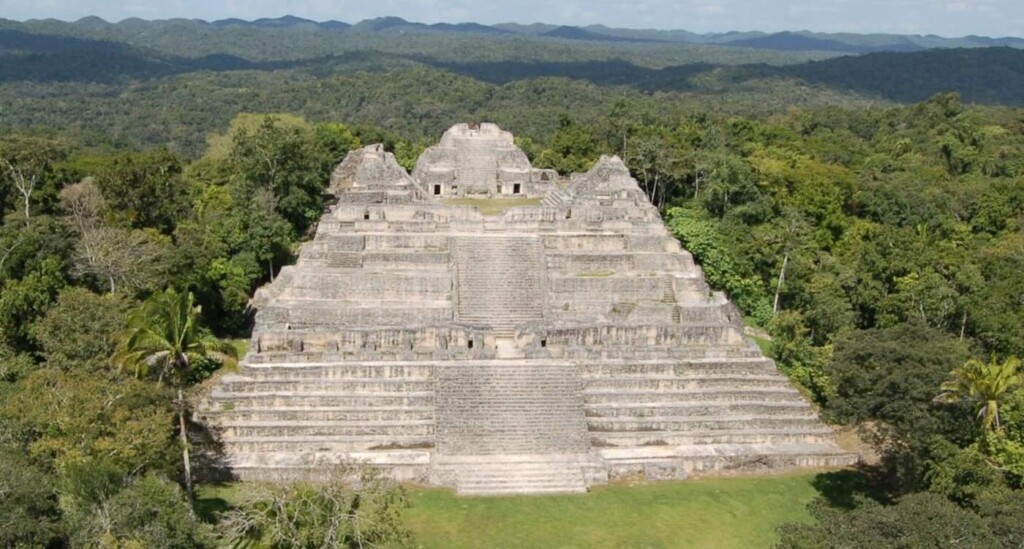
Caana, the Maya’s central architectural complex in Belize discovered by Diane and Arlen Chase in the 1980s. The tomb was found in an acropolis to the right – credit, Caracol Archaeology Project / University of Houston
A major breakthrough in Maya archaeology had been made down in Belize, as the royal tomb of a major city’s first-known ruler is discovered by a husband-wife archaeology team.
Buried with elaborate jade, ceramics, and symbolic artifacts, the tomb offers unprecedented insight into early Maya royalty and connections with the non-Mayan Mexican city-state of Teotihuacan.
Caracol was a metropolis of its time in the lower Yucatan Peninsula, and one of the first great Mayan cities of the Classical period.
Its connection with Teotihuacan is key to the story of this discovery and the story of the life of Te K’ab Chaak, a warrior-king whose remains were found by excavations led by Arlen and Diane Chase, archeologists from the University of Houston who have been working at Caracol, among other sites, for 40 years.
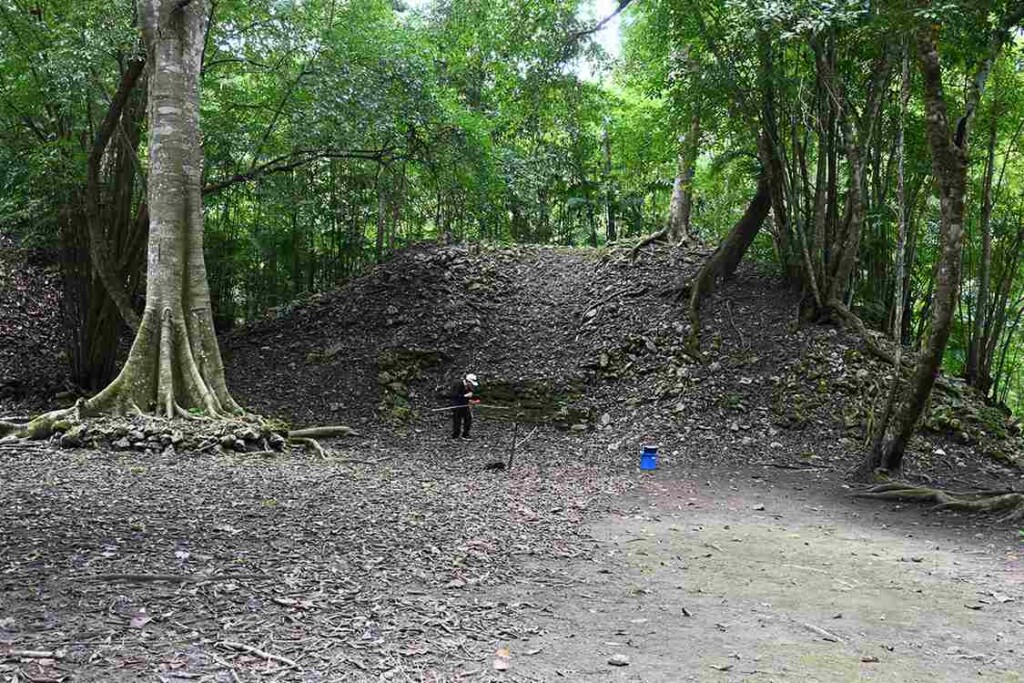
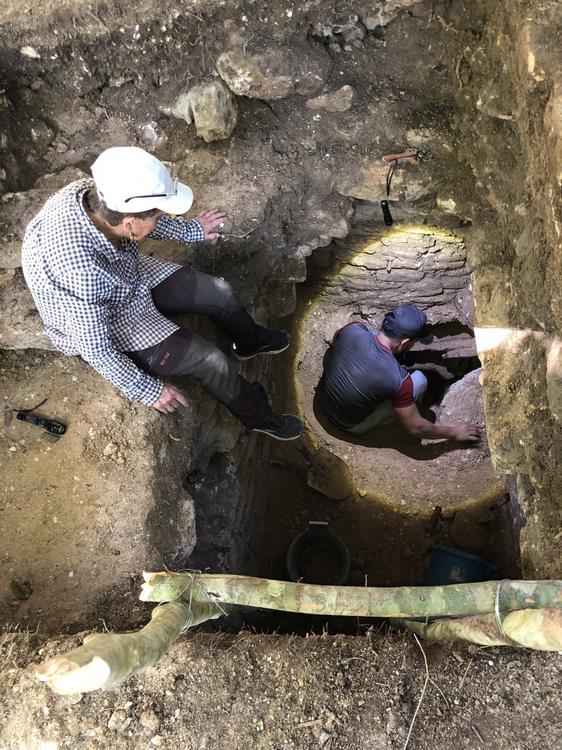
They began excavation season by returning to a site that was first dug in 1993—the northeast acropolis, where burial chambers had been found previously. Striking through the floor of the first burial chamber revealed that it was also the ceiling of deeper, older set of tombs, one of which was filled with grave goods.
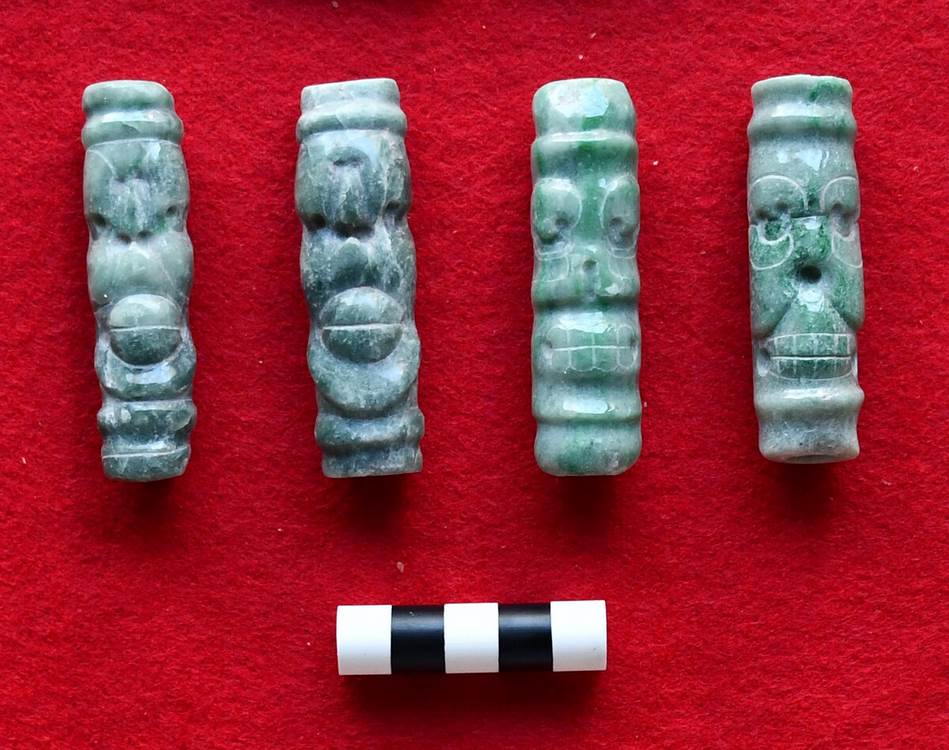
11 richly-decorated ceramic vessels along with jade earflares, a mosaic jadeite funerary mask, carved bone items, and loads of red pigment left no shadow of a doubt that Diane and Arlen had turned up a “one-percenter.”
The North Acropolis at Caracol sits enveloped by dense jungle vegetation, preserving centuries of history beneath the surface – Caracol Archaeology Project / University of Houston
“This guy is a one-percenter and that’s why he has so many vessels and three sets of jade earflares in that chamber,” Arlen, a professor of comparative cultural studies, said in a statement on the discovery released by his university.
“The Early Classic period is the time when the rulers assert the fact that they oversee everything, completely distant from the rest of the population. That changes at the end of the Early Classic period, especially in Caracol, when, after the successful warfare against Tikal, they start to share the wealth with the general population. But not this person.”
The northeast acropolis was still covered in trees and earth and completely invisible in aerial surveys, but standing next to it, the manmade nature of the structure becomes clear.
Diane said in a video interview that across their careers, one set of jade earflares is rare, much less three. When you add in a jadeite death mask, something she and her husband have found only on one other occasion, you suddenly get the sense of the power and influence of this person. Additionally, much of the tomb floor and walls were covered in cinnabar.
Four jadeite tubular beads showing live and dead spider monkeys – Caracol Archaeology Project University of Houston
“You’re dealing with some of the highest royalty when the things get covered in cinnabar, which is red,” said Arlen. “So everything is colored red like the rising sun in the east.”
Ascending to the throne in 331 CE, Te K’eb Chaak ruled over a city larger than the metropolitan footprint of the modern-day Belize capital, if such a thing can be believed. He lived a long time, as his skull was void of all teeth. Caracol was a center of trade, and Arlen’s assertion that he commanded and controlled that trade is backed up by iconography found on one of the ceramic vessels.
Atop the lid of one is a depiction of Ek Chuah, the Maya god of traders, surrounded by offerings. Ek Chuah is not seen almost at all in Early Classic Mayan iconography. Yet there he was, Arlen said in the same video, at 350 CE.
The covered vessels – credit, Caracol Archaeology Project / University of Houston
A different kind of Mexico
“Maya carved stone monuments, hieroglyphic dates, iconography, and archaeological data all suggest that widespread pan-Mesoamerican connections occurred after an event in 378 CE referred to as ‘entrada,’” said Diane Chase in the statement.
This is the crux of the discovery from the point of view of the archaeologist, who wants to uncover as much information as possible about life in the past. While the public breaks for the jade death mask and colored ceramic vessels, Te K’ab Chaak offers a rare opportunity to explore life in the Mayan political world before this ‘entrada.’
30 years before Te K’ab Chaak took the throne in Caracol, Teotihuacan, some 640 miles northward, was already a massive trading hub that dealt in many products across Mesoamerica.
In Caracol, two other tombs were found with Te K’ab Chaak in the northeast acropolis, including one which contained cremated remains of several people radiocarbon dated to 350 CE.
Fifteen pristine blades of green obsidian from Pachuca, Mexico, (north of Teotihuacan) several pottery vessels also likely came from central Mexico, and a carved atlatl projectile tip—atypical for the Maya but typical for a Teotihuacan warrior—were included in the cremation.
The royal tomb was ultimately accessed in 2025 by carefully excavating through the floor of an earlier tomb built above it, first discovered in 1993 – Caracol Archaeology Project University of Houston
The cremation itself and its placement in the center of a residential plaza are also more typical practices for a high-status Teotihuacano and do not accord with standard Maya burial practices.
Based on other ceramics in this cremation, the main individual was likely a Caracol royal family member that had adopted central Mexican ritual practices. This individual may even have served as a royal Maya envoy who had lived at Teotihuacan and returned to Caracol.
In other words, relations between these two great population centers, separated by roughly 153 days of travel on foot through the jungle, were already firmly ensconced by the reign of Te K’ab Chaak—a whole generation before such relations and connections are generally thought to have been established.
The royal dynasty founded by Te K’ab Chaak continued at Caracol for over 460 years, and the connections between the two regions were undertaken by the highest levels of society during that time.
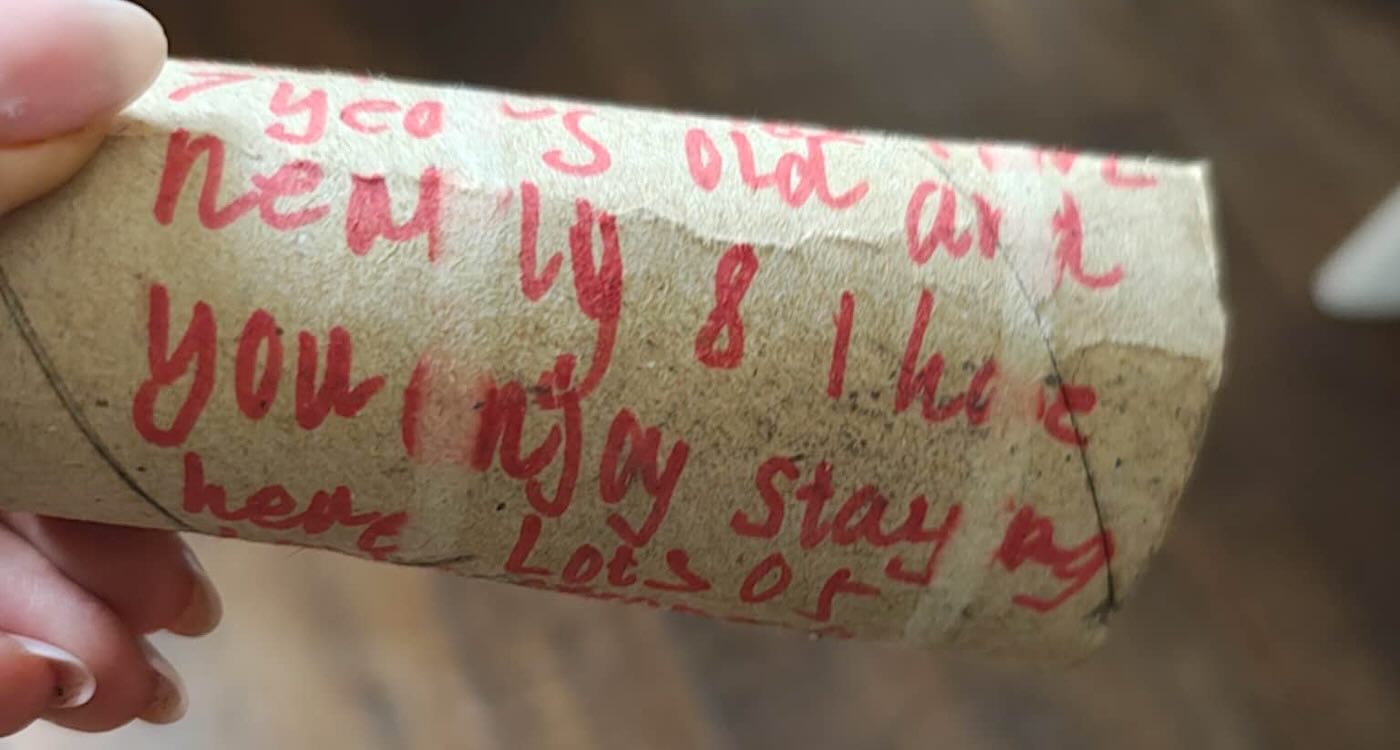
Message on 35-year-old toilet paper roll –Charlotte England-Black / SWNS
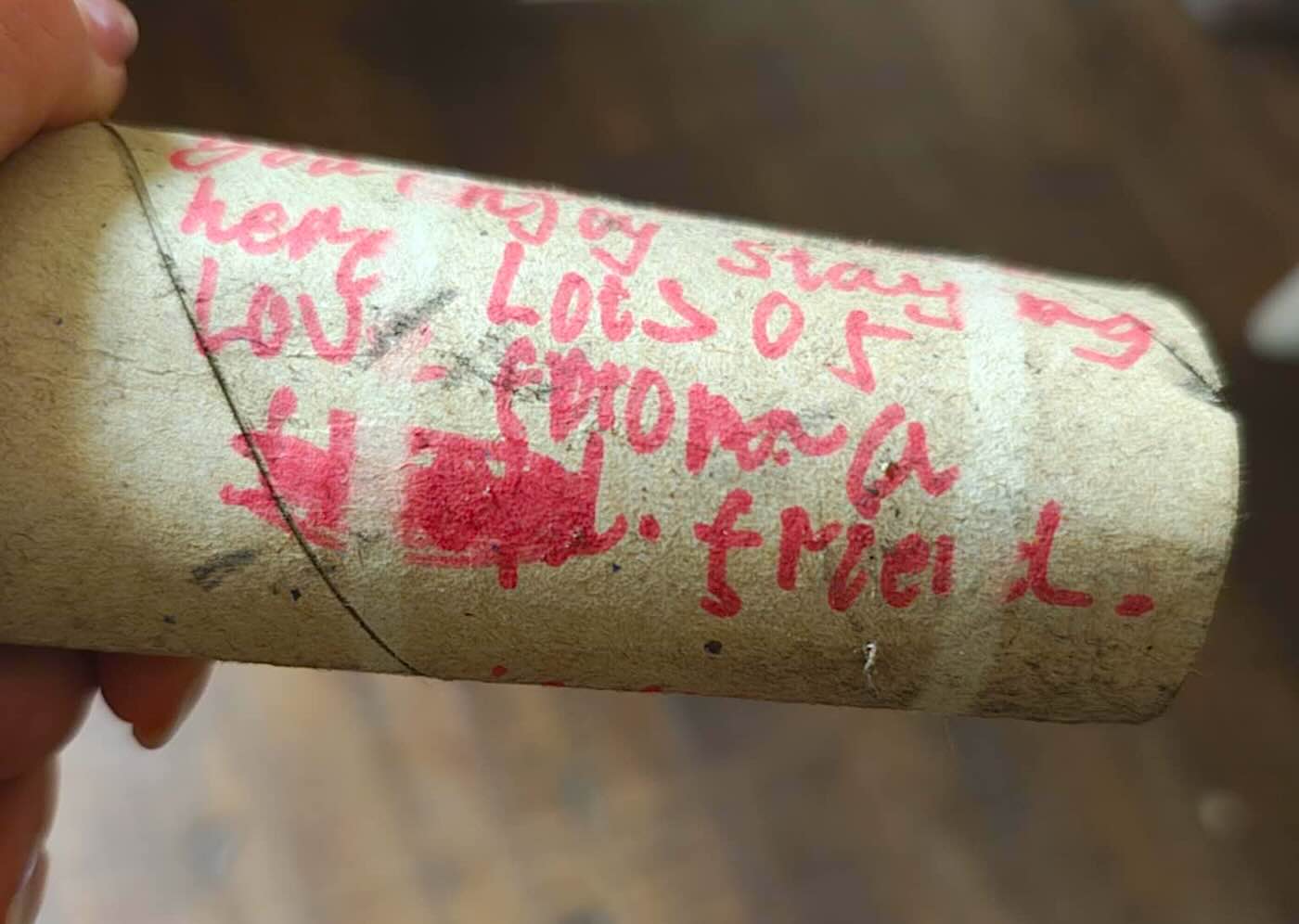
A couple renovating their new home discovered hidden inside their loft a heartwarming message written by a little girl 35 years ago—on the side of an empty toilet paper roll.
Charlotte England-Black found the touching note, which was concealed in the attic of their property in Nottingham, England, in 1989 when the little girl was moving out.
The 30-year-old moved into the house with her husband five months ago, but only found the hidden time capsule last Friday.
The note was penned by Emma—who was seven years old at the time—as a secret message for the home’s future owners.
Written in red marker, it reads: “I hope you enjoy staying here. Lots of love, from a friend.’
It began, “My name is Emma Waddingham. My birthday is February the 4th. I was born in 1982. I’m seven years old and nearly eight.
Charlotte immediately wondered where Emma was now—so she reached out on a Facebook community page in a bid to track her down. Amazingly, she was found within the hour.
“It’d been up there years,” Charlotte told SWNS news agency. “It was discovered along with an old sink, a vintage cap and some used overalls.
“It was really cute. She’d obviously written it hoping someone would find it one day. It really is quite touching.
Message on toilet paper roll left by girl 35 years ago –Charlotte England-Black / SWNS
“We posted it on a community page on Facebook. Within ten minutes someone had tagged her in it and others had commented saying they’d remembered her from the street, which was great.
“I thought, I bet she could easily be found and it’d be nice for her. It’s just a connection with the past.”
Today, Emma’s last name is Smith, and she still lives in Nottingham. Now 43-years-old, Emma doesn’t remember penning the note, but says she had fond memories of living there.
“I don’t remember doing it and why I chose the toilet roll,” she said. “We’ll forever be wondering.
“It was a lovely place to spend those years. I had amazing wallpaper in my bedroom of Tom and Jerry.”
In the future, when Charlotte moves out, she plans to leave the cardboard tube in the attic for the next homeowners, so they can also discover the time capsule.
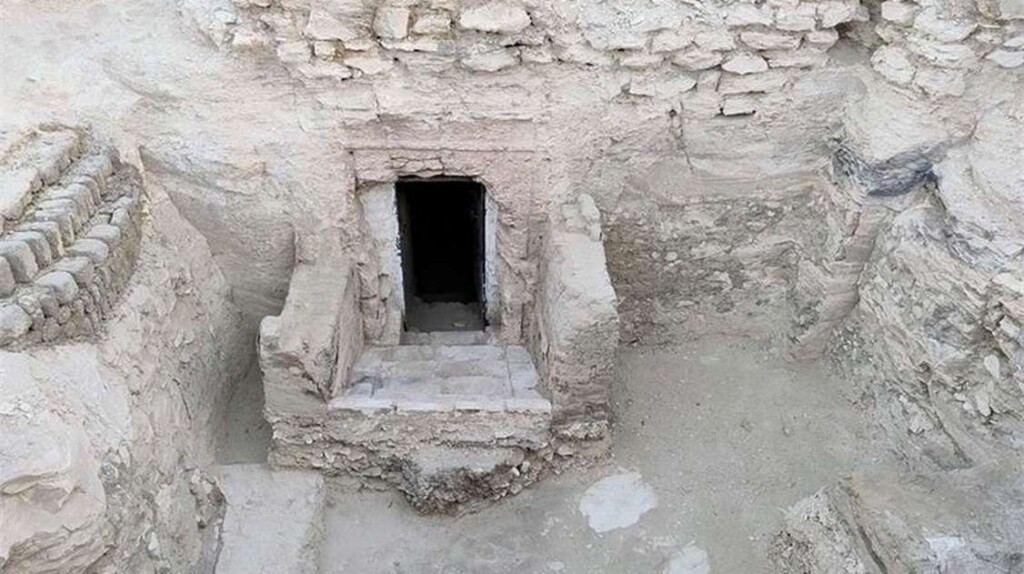
The walls of a New Kingdom tomb found in Luxor – credit, Ministry of Tourism and Antiquities, released
The tombs of three ancient Egyptian officials have been discovered in Luxor, the Egyptian government has stated, marking yet another discovery from the famous city on the Nile.
In February, the tomb of pharaoh Thutmose II was found not far from the Dra’Abu El Naga, an important non-royal necropolis where this new trio of discoveries was made.
Dating back to the era called the New Kingdom, starting from 1539 BCE and ending in 1077 BCE, the tombs belonged to several officials at the Temple of Amun, a deity worshiped as king of the gods at the time.
Inscriptions inside the tombs allowed the excavation team to identify the names and titles of their owners, said Mohamed Ismail Khaled, secretary-general of Egypt’s Supreme Council of Antiquities, in the statement.
The first was called Amun-em-Ipet, the second Baki, and the third Es. The three men held various positions, and their tombs were constructed in similar ways.
Es, the most important, was recorded as being a mayor of the northern oases, a scribe, and the supervisor of the Temple of Amun. Baki was a granary official charged with overseeing the collection and storing of the vast amount of grains and cereals produced from farming along the Nile.
Amun-em-Ipet by contrast is less known. He worked either in the temple or the estate of Amun.
According to Egypt’s Ministry of Tourism and Antiquities, the excavations that uncovered the tombs were conducted by an entirely-Egyptian team, and marked a “significant” discovery for the country’s archaeological record.
Amun-em-Ipet’s tomb consists of a courtyard, entrance portal, and long hall ending in a niche, but is in poor condition.
Baki’s tomb was larger, and consists of a long, corridor-like courtyard followed by another courtyard leading to its main entrance. Entering the interior, a rectangular hall leads to another of the same, wherein lies the official’s burial niche.
The tomb belonging to Es also has a small courtyard containing a well, followed by a main entrance, and a transverse hall leading to an incomplete hall longer than the first, CNN reports.One wonders if we will ever run out of these discoveries, which if found in many other countries of the world would be labeled as monumental, but, since being from the time of ancient Egypt, are relegated to acknowledgment via a simple statement on the Antiquities Ministry Instagram page. Ancient Tombs More Than 3,000 Years Old Unearthed in Egypt's Luxor
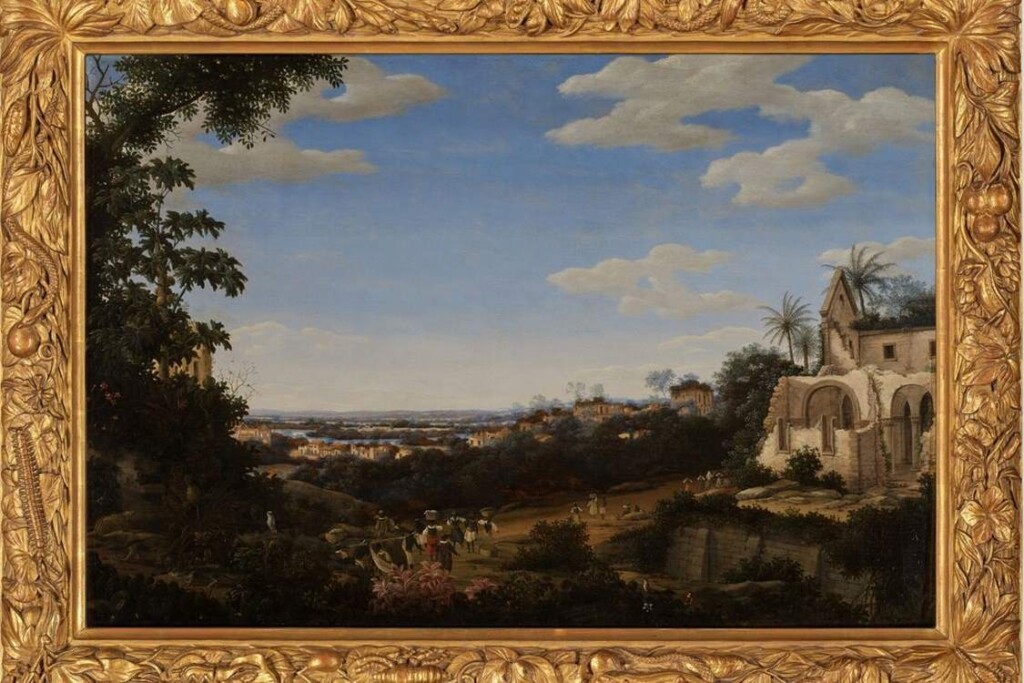
View of Olinda, Brazil, with Ruins of the Jesuit Church, Frans Post, 1666 – credit, Sotheby’s
A painting by a lesser-known Dutch master has sold for $7 million at Sotheby’s more than 25 years after being found in the dusty attic of an old barn in Connecticut.
Proving themselves to be worthy of their status as the world’s top auctioneers, Sotheby’s managed to convince collectors to buy it for $2.2 million even though it was so covered in black grime it was hardly visible.
Owned by a series of Parisians, including Napoleon’s paternal uncle, it eventually ended up in the hands of a private collection in the US. Caked with grime, the collectors brought it to a leading New York art conservator, who managed to peel back the layers of time and filth to reveal a blue skies, black figures carrying baskets, and a variety of New World animals.
“Of all the paintings we put up at Sotheby’s… probably 40% are dirty,” said George Wachter, the chairman of Sotheby’s North and South America in a video released by the auctioneer. “Is it worth pursuing? That’s the question I need to ask, and with the Post there was no question we were looking at something beyond.”
It was Watcher who convinced Tom and Jordan Saunders III to buy View of Olinda back in 1998, despite barely being able to see it, and it was they who eventually benefitted when it set the record for a Post sale price just 2 minutes into the auction—$7 million.
The value in the work derives from something rather simple: exclusivity. Spending a sojourn of around 8 years in the former Dutch colony in northeast Brazil, Post would have been one of a tiny handful of European artists who could accurately depict the flora, fauna, and faces of South America in their art.
The surviving canvases from his long stay are fewer than its years, despite Post becoming an in-demand artist upon returning to Europe. Merchants and slave-traders wanted accurate images of the landscapes they knew, while well-to-do members of society wanted more evocative imagery crowded with fantastic animals, and less focus on realism.As a result, View of Olinda is something of the two together, with an armadillo, anteater, and alligator all clustered in the bottom left of the painting—an almost garish ornament to a normal country scene. 17th-Century Dutch Painting Rescued from a Dusty Attic in Connecticut Sells for $7 Million
1. Great Sphinx of Giza (Egypt): A reclining lion with a human head that stands on the Giza Plateau on the west bank of the Nile, near modern-day Cairo, is the largest monolith statue in the world. Standing 73.5 m (241 ft) long, 6 m (20 ft) wide, and 20 m (65 ft) high, the Great Sphinx of Giza is also the oldest known monumental sculpture, and is commonly believed to have been built by ancient Egyptians in the third millennium BCE. The Great Sphinx faces due east and houses a small temple between its paws.
2. Petra (Jordan): Famously described as "a rose-red city half as old as time" by John William Burgon, UNESCO has described Petra as one of the most precious cultural properties of man's cultural heritage. In 1985, Petrawas designated a World Heritage Site, and recently designated as one of the “new wonders” of the world. Located in Arabah, Ma'an Governorate, Jordan, lying on the slope of Mount Hor in a basin among the mountains, the large valley running from the Dead Sea to the Gulf of Aqaba is renowned for its rock-cut architecture. The Nabateans constructed it as their capital city around 100 BCE, after their decline, the site remained unknown to the Western world until 1812, when it was introduced to the West by Swiss explorer Johann Ludwig Burckhardt. The picturesque site was featured in various films such as Indiana Jones and the Last Crusade, Mortal Kombat: Annihilation and Sinbad and the Eye of the Tiger. 3. Mount Rushmore (USA): A famous monumental granite sculpture created by Gutzon Borglum, Mount Rushmore is located within the United States Presidential Memorial that represents the first 150 years of the history of the United States of America with 60-foot (18 m) sculptures of the heads of former United States presidents (left to right): George Washington, Thomas Jefferson, Theodore Roosevelt, and Abraham Lincoln. The entire memorial covers 1,278.45 acres (5.17 km2) and is 5,725 feet (1,745 m) above sea level. The memorial attracts approximately two million people annually. 4. Leshan Giant Buddha (China): Built during the Tang Dynasty, the Leshan Giant Buddha is carved out of a cliff face that lies at the confluence of the Minjiang, Dadu and Qingyi rivers in the southern part of Sichuan province in China, near the city of Leshan. The sculpture, which is seventy one meters (about 230 hundred feet) tall dwarfs the tourists that flock to see it. It is positioned so that it faces Mount Emei and stands at the meeting place of three rivers. Although the Government of China has promised a restoration program, the statue has suffered from the effects of pollution, particularly over the last twenty years. Fortunately, the statue was not damaged in the Sichuan earthquake of 2008. 5. Mahabalipuram Shore Temple (India): Built on the shores of the Bay of Bengal in Mahabalipuram (India) in the early 8th century by the Pallava King Rajasimha. The shore temple
actually consists of 2 back to back shrines, one facing the east (the Bay), and the smaller one facing west. It stands on the edge of the Bay of Bengal. At high tide, the waves sweep into its compounds. The walls and their sculptures have been battered and eroded by the winds and waves for thirteen hundred years. Yet they stand intact. Mahabalipuram was a flourishing sea port in the times of Periplus and Ptolemy (140 AD). There is an old legend here that originally there were seven temples; of these, six have been swallowed by the sea and only one temple -the Shore Temple- remained. There are evidences of submerged structures under the waves and sporadic excavations are going on, but it is too early to say whether there really was a glorious city and six more temples which now lie submerged under the waves off the coast off Mahabalipuram.
6. Abu Simbel (Egypt): A set of two temples near the border of Egypt with Sudan, Abu Simbel was constructed for the pharaoh Ramesses II who reigned for 67 years during the 13th century BC (19th Dynasty). The temples were cut from the rock and shifted to higher ground in the 1960s as the waters of Lake Nasser began to rise following completion of the Aswan High Dam.The Great Temple is dedicated to Ramesses II and a statue of him is seated with three other gods within the innermost part of the rock-cut temple (the sanctuary). The temple's facade is dominated by four enormous seated statues of the Pharaoh (each over 20 metres or 67 feet high), although one has been damaged since ancient times. The Small Temple was probably completed ahead of the Great Temple and is dedicated to Ramesses' favorite wife, Nefertari. At the entrance stand six 10-metre-high (33 feet) rock-cut statues - two of Ramesses and one of Nefertari on either side of the doorway.
7. Dazu Rock Carvings (China): The Dazu rock carvings in Chongqing, China are hewn from the cliffside, featuring more than 5,000 statues and over 100,000 Chinese characters of inscriptions or epigraphs. It is reputed as 'the county of rock carving' and it’s located at the southeast of Sichuan province. The Dazu Rock Carvings was built from 650 in the Tang Dynasty and continued to the Ming Dynasty (1368-1644) and the Qing Dynasty (1616-1911). Among the rock carvings, there are more than 5,000 statues and over 100,000 Chinese characters of inscriptions and epigraphs. 8. Church of St. George (Ethiopia): The Church of St. George is a monolithic church in Lalibela, Amhara Region, Ethiopia. It is the most well known and last built (early thirteenth century) of the eleven churches in the Lalibela area, and has been referred to as the "Eighth
Wonder of the World". The dimensions of the complex are 25 meters by 25 meters by 30 meters, and there is a small baptismal pool outside the church, which stands in an artificial trench. According to Ethiopian cultural history, Bete Giyorgis was built after King Gebre Mesqel Lalibela of the Zagwe dynasty had a vision in which he was instructed to construct the church; Saint George and God have both been referred to as the one who gave him the instructions.As of 2006, Lalibela is still a pilgrimage site for members of the Ethiopian Orthodox Tewahedo Church; the church itself is part of the UNESCO World Heritage Site "Rock-Hewn Churches, Lalibela".
9. Borobudor (Indonesia): Officially, Borobudur is a ninth-century Mahayana Buddhist monument in Magelang, Central Java, Indonesia. Actually, it is much older than that. The monument complex comprises six square platforms topped by three circular platforms, and is decorated with 2,672 relief panels and 504 statues of Rama citizens. Each wall has a story that relates to the stories of the birth of Buddha and other Buddha figures. A main dome, located at the center of the top platform, is surrounded by 72 Rama citizens seated inside perforated stupa.
10. Cappadocia (Turkey): Cappadocia lies in the mid-western part of Turkey. Anextraordinary landscape formed millions of years ago by the combined work of lava spitting volcanoes, wind and water, there is culture too: the inhabitants of the area hew rooms, chapels, even whole villages out of the rocks. Religious Byzantine paintings can be found on the walls of the churches and monasteries.
11. Bingling Temple (China): The Bingling Temple is a series of grottoes filled with Buddhist sculpture carved into natural caves and caverns in a canyon along the Yellow River. It lies just north of where the Yellow River empties into the Liujiaxia Reservoir created by the Liujiaxia Dam at Yongjing, about 80km from Lanzhou. The caves were a work in progress for more than a millennium. The first grotto was begun around 420 CE at the end of the Western Jin Dynasty. Work continued and more grottoes were added during several dynasties. The style of each grottoe can easily be connected to the typical artwork from its corresponding dynasty. The Bingling Temple is both stylistically and geographically a midpoint between the monumental Buddhas of Bamiyan in Afghanistan and the Buddhist Grottoes of central China, Yungang Grottoes near Datong and Longmen Grottoes near Luoyang. Over the centuries, earthquakes, erosion, and looters have damaged or destroyed many of the caves and the artistic treasures within. Altogether there are
12. Hypogeum of Hal-Saflieni (Malta) 183 caves, 694 stone statues, and 82 clay sculptures that remain. Each cave is like a miniature temple filled with Buddhist imagery. The sculptures, carvings, and frescoes that remain are outstanding examples of Buddhist artwork and draw visitors from around the world. The Hypogeum in Hal-Saflieni, Paola, Malta, is a subterranean structure dating to the Saflieni phase in Maltese prehistory. Thought to be originally a sanctuary, it became a necropolis in prehistoric times. It is the only prehistoric underground temple in the world. The Hypogeum was depicted on a 2 cents 5 mils stamp issued in the Maltese Islands in 1980 to commemorate the acceptance by UNESCO of this unique structure in the World Heritage Site list. It was closed to visitors between 1992 and 1996 for restoration works; since it reopened only 80 people per day are allowed entry and there can be a 2-3 weeks wait to get a ticket. It was discovered by accident in 1902 when workers cutting cisterns for a new housing development broke through its roof. The workers tried to hide the temple at first, but eventually it was found. The study of the structure was first entrusted to Father Manuel Magri of the Society of Jesus, who directed the excavations on behalf of the Museums Committee.
13. Buddhas of Bamiyan (Afghanistan) The Buddhas of Bamiyan were two monumental statues of standing Buddhas carved into the side of a cliff in the Bamiyan valley in the Hazarajat region of central Afghanistan, situated 230 km (143 miles) northwest of Kabul at an altitude of 2500 meters (8,202 ft). Built during the sixth century, the statues represented the classic blended style of Indo-Greek art. The main bodies were hewn directly from the sandstone cliffs, but details were modeled in mud mixed with straw, coated with stucco. They were intentionally dynamited and destroyed in 2001 by the Taliban, on orders from leader Mullah Mohammed Omar, after the Taliban government declared that they were "idols" (which are forbidden under Sharia law). International opinion strongly condemned the destruction of the Buddhas, which was viewed as an example of the intolerance of the Taliban and of fundamentalist Islam. Japan and Switzerland, among others, have pledged support for the rebuilding of the statues.
14. Mada'in Saleh (Saudi Arabia): Located in northern Hejaz (modern day Saudi Arabia), Mada'in Saleh --also called Al-Hijr ("rocky place")-- is an ancient city that was inhabited by Thamudis and Nabateans and was then known as Hegra. Some of the inscriptions found in the area date back to the 2nd millennium BC. However, all the remaining architectural elements are dated to the period of the Thamudi, Lihyan and Nabatean civilizations, between the 1st millennium BC and the second century AD. Mada'in Saleh is not only Saudi Arabia's most spectacular touristic site; it is also one of the greatest historic sites in the world. The rock tombs in this early morning light are of such an extraordinary beauty, consisting of different shapes and sizes, that gives Mada'in Salih a truly charming feeling. This historic sister city, Petra the former capital of Nabataean Kingdom, is located only 150 miles away to the north across the border with Jordan.
15. Naqsh-e Rustam (Iran): Naqsh-e Rostam is a site believed by archaeologists to have been a cemetery for Persepolis, where Achaemenid, Parthian and Sassanid royalty were laid to rest. Located about 3-4 kilometers northwest of Persepolis in Iran's Fars province, the site contains funerary related works belonging to the Elamite (second millennium BCE), Achaemenid (550-330 BCE) and Sassanid (226-651 CE) eras. The only surviving monument from the pre-Achaemenid period is a relief which was almost completely obliterated when the court scene of Bahram II (276-293 CE) was carved over it. The Naqsh-e Rostam structures have been built from white and grey Limestone without the use of mortar. It is believed that Persians were the first to use colors to decorate stone carvings. A particularly striking feature of Naqsh-e Rostam stone carvings is the use of color; many of the site's inscriptions and carvings are covered with Lapis lazuli. Evidence shows that the carving of Darius had a lazuline beard and mustache, black hair and eyeliner, red eyes, lips and shoes as well as colorful robes, although the passage of time has left the colors at Naqsh-e Rostam unstable. World Amazing Information | Funny Pictures | Interesting Facts: World's Most 15 Greatest Living Rocks


 1930s Patek Philippe – Courtesy of Hansons Auctioneers / SWNS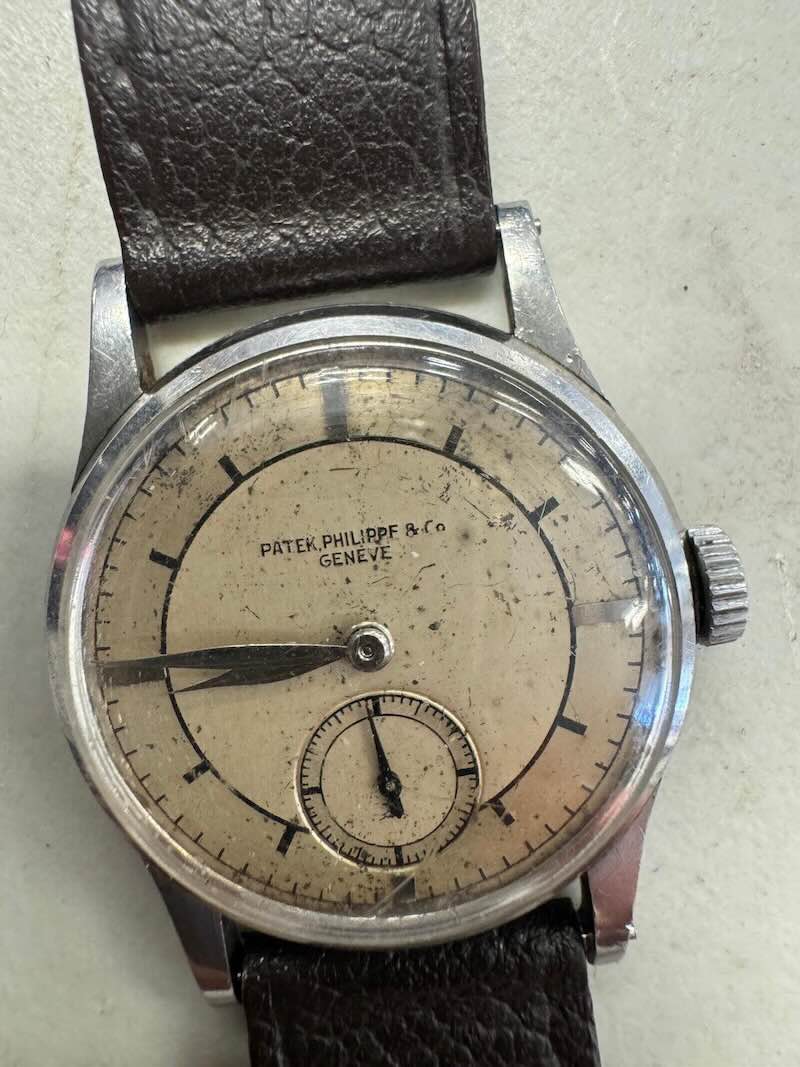
 \
\
 Some Indigenous paintings have lasted thousands of years … so what is it about the pigments that make them so long-lasting?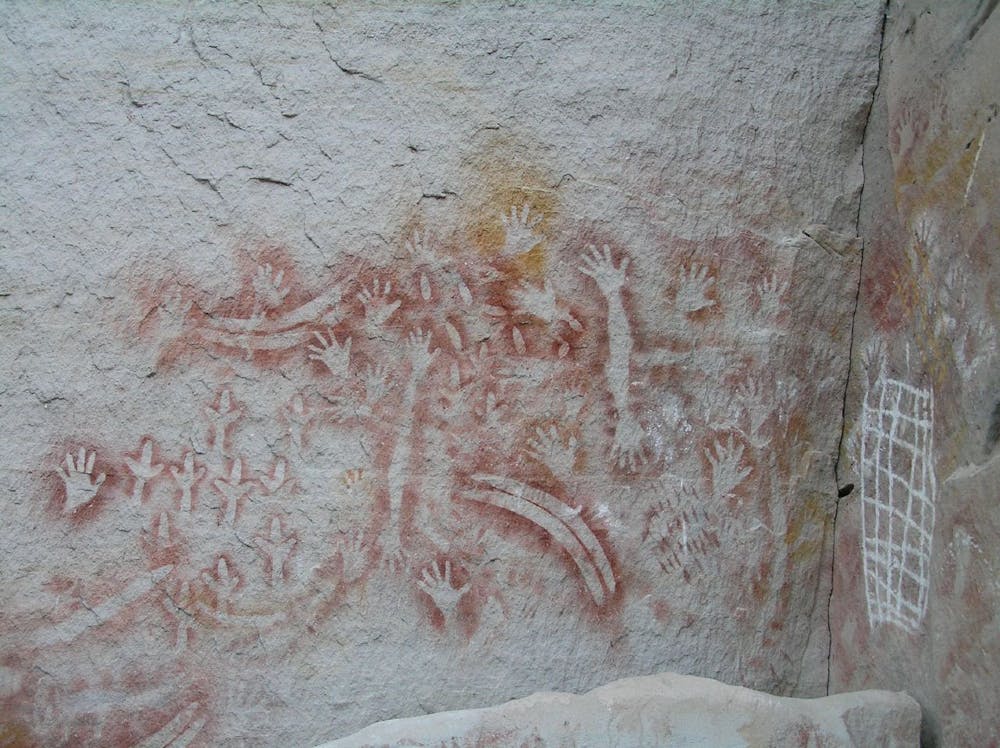


.jpg)

 The walls of a New Kingdom tomb found in Luxor – credit, Ministry of Tourism and Antiquities, released