New Delhi, (IANS): Obesity is rising at an alarming rate and is today a major public health challenge in India, said Economic Survey for 2025-26 on Thursday.
According to the Economic Survey, tabled in the Parliament by Union Finance Minister Nirmala Sitharaman, the concerning trend was driven by unhealthy diets, lifestyle changes, including sedentary lifestyles, increased consumption of ultra-processed foods (UPFs), and environmental factors.
“It is affecting people across all age groups and increasing the risk of NCDs such as diabetes, heart disease, and hypertension, impacting both urban and rural populations,” the Survey said.
Citing data from the 2019-21 National Family Health Survey (NFHS), the Survey said that 24 per cent of Indian women and 23 per cent of Indian men are overweight or obese. Among women aged 15-49 years, 6.4 per cent are obese, and among men, 4.0 per cent are obese. The prevalence of excess weight among children under five has risen from 2.1 per cent in 2015-16 to 3.4 per cent in 2019-21.
As per estimates, more than 3.3 crore children in India were obese in 2020, and it is projected to reach 8.3 crore children by 2035.
The Economic Survey also flagged concern over the rising UPF market in the country, which is displacing long-established dietary patterns, worsening diet quality, and is associated with increased risk of multiple chronic diseases.
“India is one of the fastest-growing markets for UPF sales. It grew by more than 150 per cent from 2009 to 2023. Retail sales of UPFs in India surged from $0.9 billion in 2006 to nearly $38 billion in 2019, a 40-fold rise. It is during the same period that obesity has nearly doubled in both men and women. This mirrors the global rise of obesity, parallel to dietary shifts,” it said.
“The rising use of UPFs imposes a substantial economic cost through higher healthcare spending, lost productivity, and long-term fiscal strain,” it added.
The Survey also cited comprehensive, multi-pronged initiatives launched by the government to prevent, manage, and reduce obesity in the country.
The interventions include POSHAN Abhiyaan & Poshan 2.0, Fit India Movement, Khelo India, Eat Right India, Nationwide Awareness Campaign - ‘Aaj Se Thoda Kam’ and AAMs, the School Health Programme, and Yoga promotion.These aim to promote a holistic approach that integrates health, nutrition, physical activity, food safety, and lifestyle modifications and continue to advance the goal of a healthier, stronger, and obesity-free India. Lifestyle changes, intake of ultra-processed foods driving obesity at alarming rate: Eco Survey | MorungExpress | morungexpress.com
New Delhi, (IANS): "Raj & Norah" is not only a thrilling account of love found, lost and reclaimed in the midst of World War II, it is also a story of two extraordinary individuals battling against their circumstances and what fate has in store for them.
When World War II broke out in 1939, twenty-year-old Rajendra Kohli was studying chemistry at college in England. Soon, however, he decided to volunteer for the war effort against Germany and joined the army. After his heroic actions on the front left him severely injured, he found himself in Naples for treatment. There, he met Norah Elizabeth Eggleton, a nurse with Queen Alexandra's Imperial Military Nursing Service.
It was love at first sight, and in each other's company, the young couple forgot the devastation that surrounded them. But as quickly as their story began, it was over - Raj was sent to London, Norah was posted to a hospital in Rome, and they wondered if they would ever see each other again.
"My dad and I always knew this was a story for the books for many reasons," said Shaina Kohli Russo, co-author of the book, published by HarperCollins.
"My grandparents led extraordinary lives and their love story is truly inspiring, but on top of that, not many know that India fought as an ally in WWII and more so that many Indian soldiers were Muslim. It's a part of history that has not been talked about and it's so important that we finally recognize all the countries (and individuals) who helped us in the greatest war in history to defeat the greatest evil. Nowadays a lot of fear of 'others' is fuelled by differences, but if we could note that we have common ground, it truly could change the world," Russo added.
"I began writing the story of my parents about 20 years ago," said co-author Peter R. Kohli. "I found it difficult and challenging to write the story of two people who I knew so intimately, but I knew it was a story that needed to be told. It wasn't until my daughter, Shaina, took an interest in the project that it was finally completed. She was the one who brought the project to life."
Peter R. Kohli worked in corporate America since emigrating to the US in 1977 from England, where he went to university and worked for many years. Since leaving the business world in 2016, he has spent his time writing.Shaina Kohli Russo graduated from Pepperdine University in 2013 and worked in the entertainment industry for eight years. She currently lives with her husband in Nashville, Tennessee, and is working on a novel. A true story of love lost & found in WWII | MorungExpress | morungexpress.com
Mumbai, (IANS) Just like her fitness enthusiast son, Milind Soman's mother also loves to stay on top of her fitness game even at the age of 86.
Milind took to his official Instagram handle and dropped a video of himself and her mother skipping on the balcony amidst a cloud-filled, beautiful backdrop.
In the next clip, Milind is replaced by his better half, Ankita Konwar, while Milind's mother keeps going strong.
Sharing the inspiring clip on social media, the 'Emergency' actor wrote, "Family skipping time... Aai is now 86, and skipping is something she does every day, apart from yoga and other movements. Long life, health and happiness to all !!!!!!!!!!!!!!"
Back in July, Milind and Ankita successfully completed the triathlon challenge in Kolhapur, which included a 3.8km swim in the Rajaram lake, along with 180km cycling, and a 10 km run.
The 59-year-old actor dropped a few videos and photos of the couple riding the bicycle.
The post further showed Milind and Ankita posing by the lake and running on the road in the dark.
"Superfabulous weekend in Kolhapur, the triathlon capital of India, with @ankita_earthy cycling her first 180km with me, that too after a 3.8km swim in Rajaram lake...also did a 10km run post that to cool down super support from @vaibhavbelgaonkar and his fantastic team we will be back !!!!," Milind wrote, spilling his experience of the triathlon.
Before this, Milind performed a 30-second pull-up while enjoying the Mumbai rains.
The '16 December' actor took to his IG and shared a video of himself performing a slow 30-second push-up on what seemed to be a bar in the park."30seconds up, 30seconds down...sometimes, just one is enough! Getting over a bit of jet lag, great to feel the Mumbai rain again .. thank you for your patience @ankita_earthy," he captioned the motivational clip. Milind Soman's mother does skipping every day even at 86 | MorungExpress | morungexpress.com
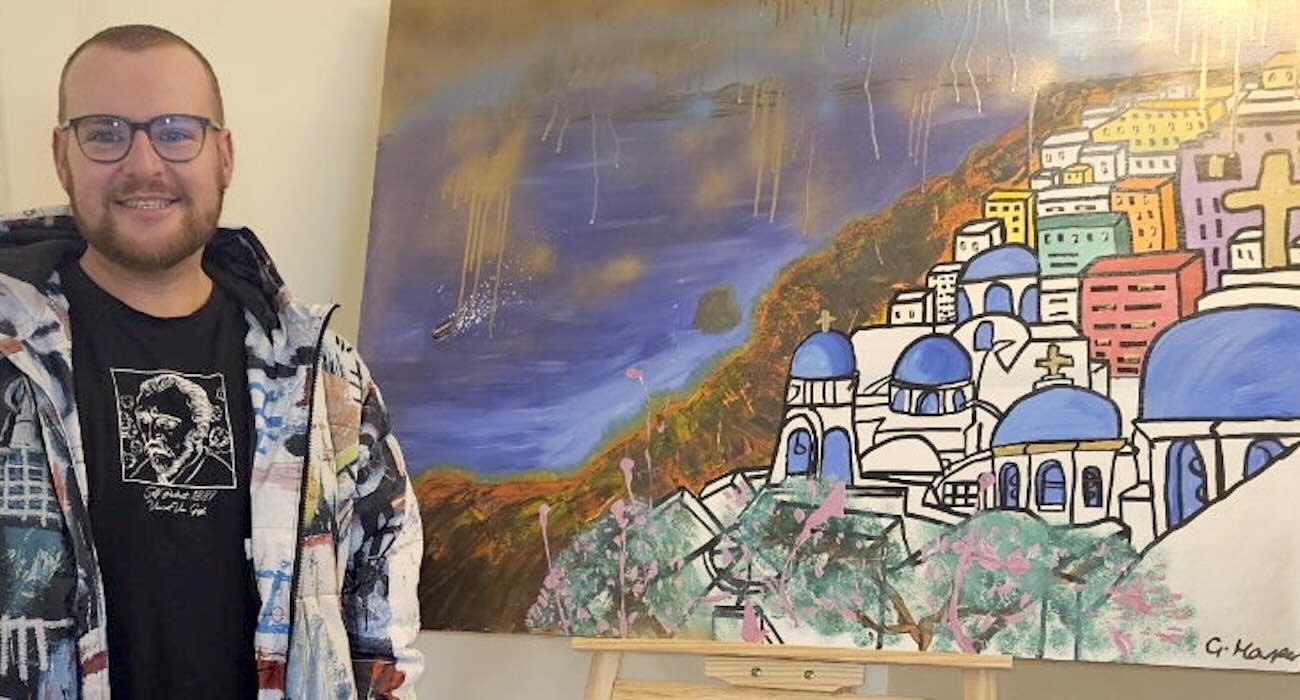
Artist Gary Harper uses cremation ashes to make personalized paintings for grieving families – SWNS
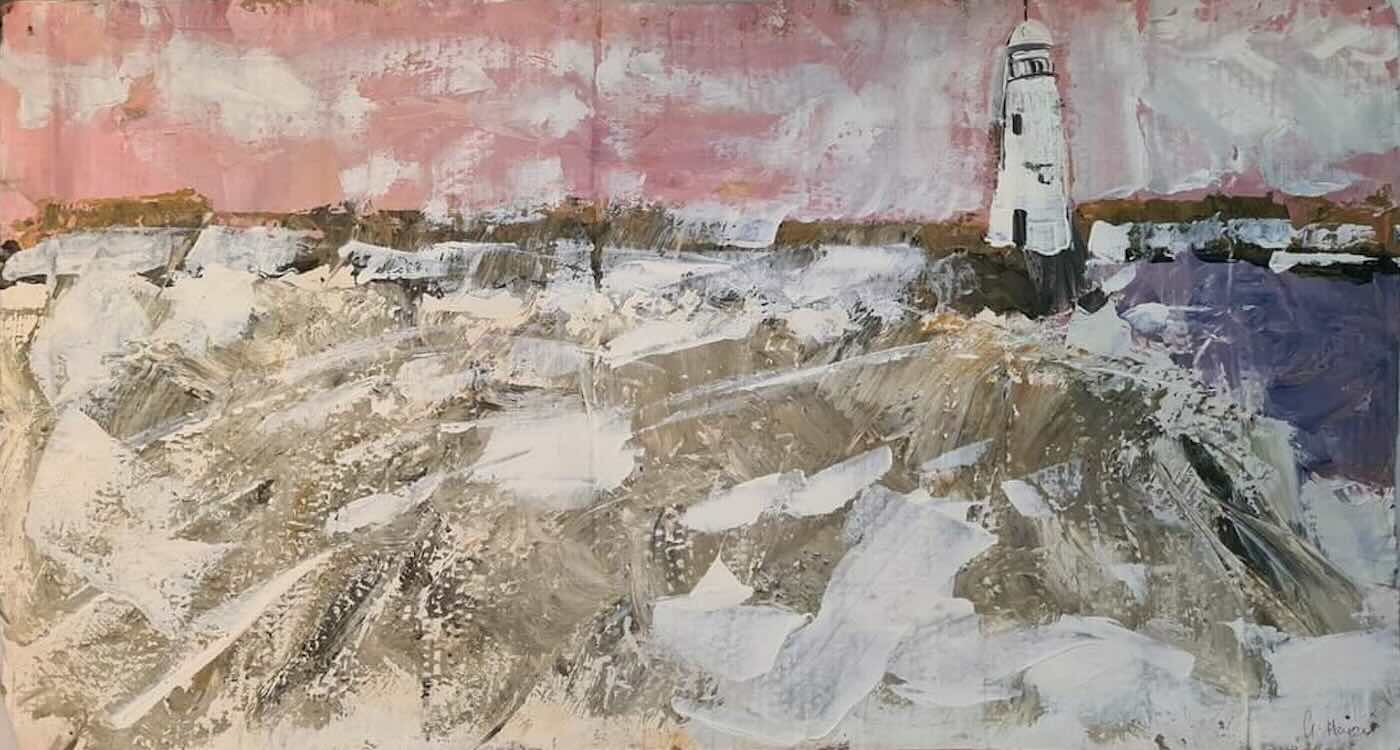
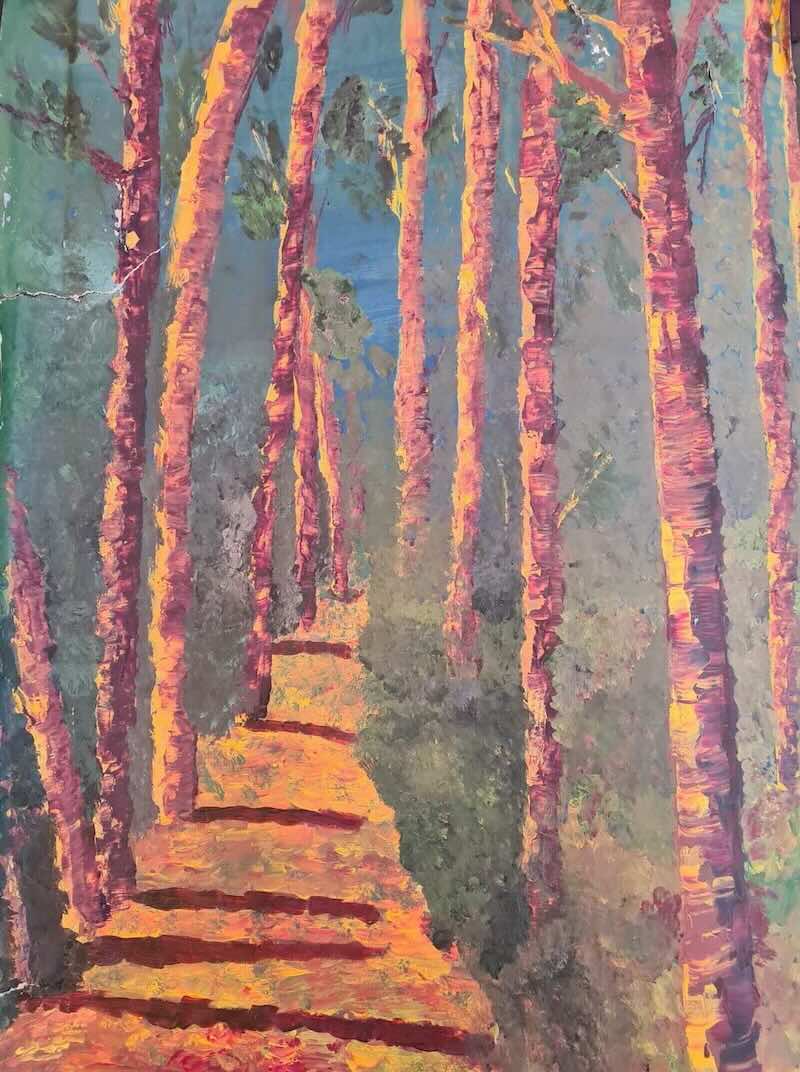
An artist is using cremation ashes in his paintings to create unique memorial landscapes that grieving families can personalize as a way to remember loved ones.
Gary Harper began painting professionally just two years ago and was inspired by the loss of his cousin to respectfully experiment with blending a small amount of ashes into his artwork.
He holds consultations with families to learn about the deceased and any their favorite memories, focusing on landscapes with a personal connection.
The 33-year-old from Liverpool began painting while at college and developed a love for still life and landscapes.
It wasn’t until he became an occupation therapy assistant in a psychiatric hospital that he saw first-hand the profound effect art could have on people.
“I held an art therapy session with a patient and we made so many paintings together,” said the 33-year-old. “I was guiding her through the process and I realized how much I enjoyed it.
“A month later, I picked up the brush and started painting for myself. The piece was abstract sunflowers and the feedback I got was overwhelming.”
Artist Gary Harper uses cremation ashes to make personalized paintings of landscapes or still life – SWNS
While painting in his free time in December 2024, his cousin Donna passed away from cancer.
“It was so close to Christmas and it was really emotional.
A year later, he was painting some seascapes when the thought crossed his mind that he could add some ashes.”
In November 2025, Gary painted his first Ashes to Art commission, aiming to provide a personalized memorial in acrylic paint for the bereaved.
“It was lovely the family trusted me,” he told SWNS news agency. “It’s a respectful process.”
“I do a consultation with the loved one, learning everything about the person and what they enjoyed.
Artist Gary Harper uses cremation ashes to make personalized painting SWNS SQUARE
“Visually the family can see where the ashes have gone, rather than scattering them.”
Gary’s canvases start at 12×12 inches (30x30cm) for $135 (£100), but he works with the family so they can afford the perfect picture.
“The reaction I get is joy, initially. Then it gets emotional.
“It’s a humbling experience to know you’ve helped someone through the grieving stage.”
“Some people scatter ashes and then there’s nothing left.
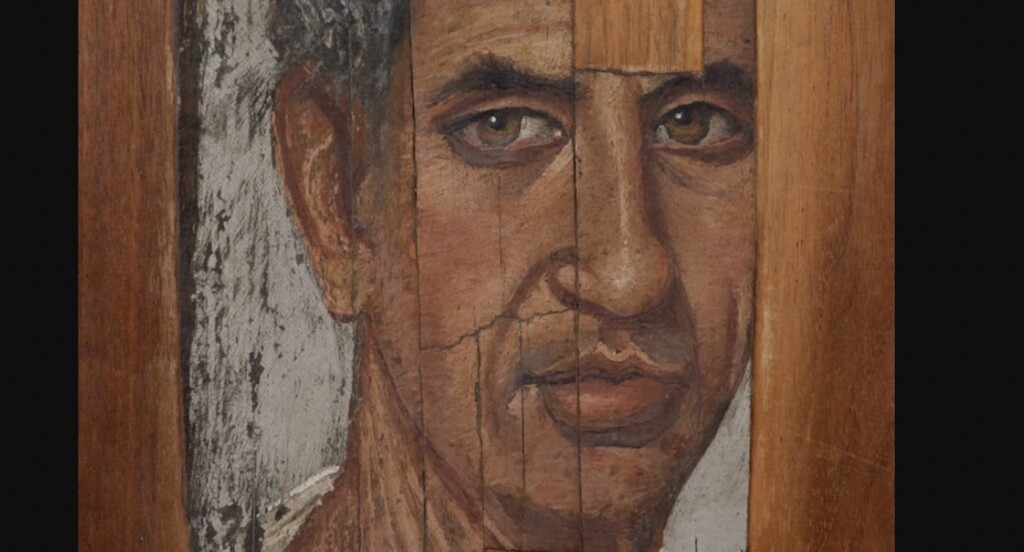
Mummy Portrait of a Man from Roman Egypt Flavian Period, circa late 1st century A.D. – Courtesy Sotheby’s
Sotheby’s recently sold a painting of a man from Roman-controlled Egypt in the first century CE that experts suggest represents the dawn of realistic portraiture 1,200 years before it appeared in Italy.
The image is part of a family of works known collectively as the Fayum Mummy Portraits, all of which were found during 19th century excavations at a site called Hawara in Egypt’s Fayum region.
The portraits were placed atop mummified remains like masks, and were painted with pigment mixed with melted beeswax on wooden panels. Over 900 have been found, and some have been auctioned.
This portrait of a dark-skinned senior with graying hair, piercing hazel eyes, and a large lower lip recently brought in $889,000 with fees. Though they were painted and entombed in Egypt, the subjects could be Romans, whose nobility could afford both mummification and portrait commissions.
The nose might give the man up as a Roman; the substantial bridge being a feature of the Italian race still today. Others are perhaps less obvious.
What unquestionably stands out is the true air of realism in the work—one gets the feeling all at once that the man truly appeared as he is portrayed.
“It invites you to want to know more about him and to feel his presence,” said Alexandra Olsman, a Sotheby’s specialist in ancient sculpture and works of art.
Roman domination of Egypt came only after Macedonian domination of Egypt under the Ptolemaic dynasty. Whatever skin/eye color and features the ancient Egyptian race had, the population in the major cities would have long been altered by intermarrying with northern Mediterraneans.
It’s not known whether the sitters were painted in death or life, or some state in between of infirmity. Olsman told CNN that with the sincere connection through the eyes, it would seem unlikely to be the artist’s interpretation of a dead man.Sotheby’s has sold over a dozen Fayum mummy paintings over the years, and this one along with another featuring a curly-headed, younger man, commanded the highest bids. This Ancient Man's Piercing Hazel Eyes Drew Almost $1 Million in 'Mummy Portrait' Auction
People who have cosmetic filler injections in their face should be warned of the risk of a dangerous complication involving blocked arteries that can lead to skin loss and even blindness due to damaged blood flow, say experts.
Researchers used ultrasound to study 100 cases of filler injections that had gone wrong, BBC News reported.
Clinics are now being advised to carry out ultrasounds before giving dermal fillers in the face, to avoid harming any nearby arteries.
Lead researcher Dr Rosa Sigrist says that, although uncommon, such "vascular occlusion" events - where the filler is injected into or too close to blood vessels - can be devastating because they can cause tissue death and facial deformity if not treated.
Dermal fillers are injectable substances, commonly used to target wrinkles and smooth or "rejuvenate" the skin.
Sometimes they are used to contour or shape the nose or lips.
Areas around the nose are particularly risky injection sites, says Dr Sigrist, because nasal blood vessels communicate with some very important parts of the head.
Damage to these vessels can cause severe complications including skin damage, blindness and stroke, she explains.
Dr Sigrist's team, from the University of São Paulo in Brazil, studied filler-related vascular complications in 100 patients across four radiology centers (two in Brazil, one in Colombia and one in Chile), one dermatology centre in the Netherlands and one plastic surgery centre in the US between May 2022 and April 2025.
Her work will be presented at a medical conference - the annual meeting of the Radiological Society of North America - this week.
In just under half the cases, ultrasound scans showed absent blood flow to small blood vessels that connect superficial arteries to deep ones in the face.
And in a third of cases, blood flow was absent in major blood vessels.
To avoid complications in the first place, she advises clinics to use ultrasound to plan where to inject.
If complications do arise, ultrasound can guide where to treat.
"If injectors are not guided by ultrasound, they treat based on where the clinical findings are and inject blindly," Dr. Sigrist says.
"But if we can see the ultrasound finding, we can target the exact place where the occlusion occurs."
Rather than flooding the area with a drug called hyaluronidase to dissolve the filler, clinicians can do guided injections that use less hyaluronidase and provide better treatment results, she says. Source: https://www.panorama.am/
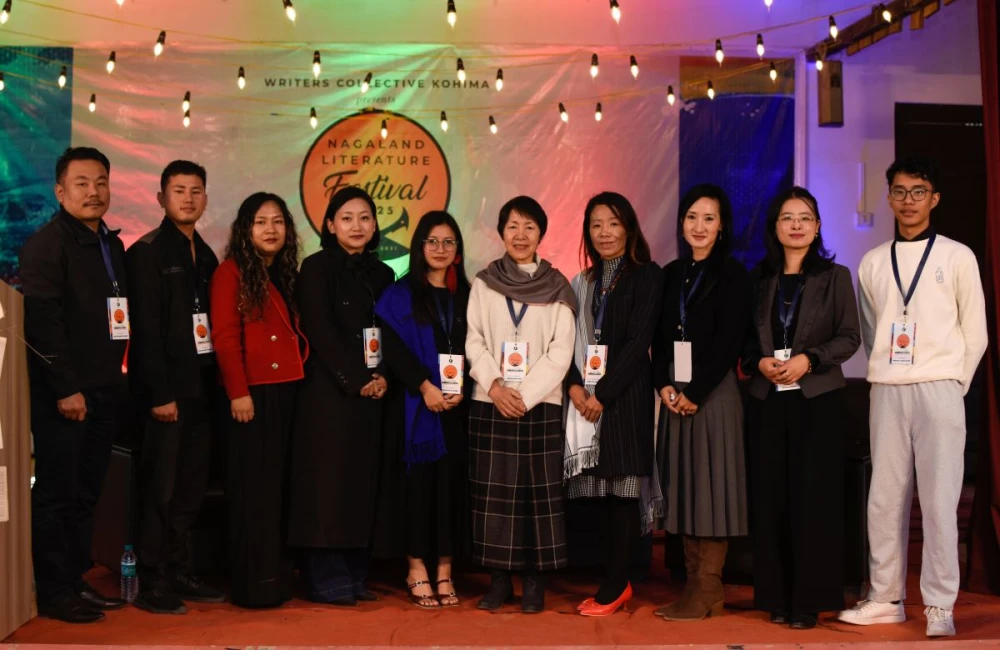
Members of Writers Collective seen with the winners of the Short Story Writing Competition organised as part of the NLF 2025 and others on December 13. (Photo by Jabu Krocha)
‘Distinctive feature of NLF is embracing all forms of creative self-expression’
Asserting that literature is essentially a reflection of life and the most quintessential way in which human beings express their emotions, Dr Vizovono Elizabeth, General Secretary of Writers Collective Kohima remarked that the distinctive feature of Nagaland Literature Festival (NLF) is embracing all forms of creative self-expression and storytelling.
Delivering the way forward at the closing ceremony of the 5th Edition of Nagaland Literature Festival at Don Bosco Higher Secondary School Kohima on December 13, she observed that the mushrooming of literature festivals across India on big scales has become like a ‘fashion’. NLF, she added is still a very small community, and has a long way to go, but stated belief that “it is very special because it is relevant to our own context.”
She echoed the vision of the Writers’ Collective, and expressed that, “the focus is not about trying to do what other people are doing, it is not about trying to compete or be at par with others, but it is more importantly about nurturing our own talents and providing a platform especially for the young, aspiring and upcoming creative artists.”
Even while keeping it very local, she stated that they were encouraged by the support and the positive response from so many unexpected supporters drawing entries even from the international level for its short story & poetry writing competition.
Participants of the Reading Session ‘Unraveling the magic of words’ seen with Easterine Kire. (Photo by Jabu Krocha)
In this regard, she exuded hope that “the seeds that we are sowing are slowly growing and that we will continue to grow together.” She reiterated that the distinctive feature of NLF “is not just a celebration of established and now popular authors, but more importantly, it is a platform and a safe space for new and upcoming writers and creative artists.”
Not all participants are writers either, she further highlighted while revealing that, “we also have very avid readers and supporters of literature taking active part and working along with us.” Terming this as “truly wholesome”, she said that literature would be meaningless without the readers.
Looking ahead, she envisioned that they can go ahead together and continue to support, learn and grow together. Expressing that it is the dream of Writers Collective Kohima to nurture our own storytellers and provide platforms for their voices and stories to be heard, she urged the gathering to walk with them on this beautiful journey. “Let’s learn to do this by utilizing our God-given beautiful brains, not being controlled by AI, but using it only as a tool so that we do not lose our souls or our humanity”, she further articulated.
Highlights of the closing ceremony included prayer and poetry reading by Rev Azahto Kiba, Senior Pastor, New Life Church Kohima & Poet, special number by Richard Ezung and Reading of short story excerpts by Winners of NLF 2025 Short Story Writing Competition, Visemenuo Sekhose and Imnajungshi Jamir. Shyamolima Saikia was adjudged third in the competition. In the poetry writing competition, Temjenwapang Jamir won first prize while Christabel Damien and Songaror Horam won second and third prize respectively. Earlier in the day, a reading session called “Unraveling the Magic of Words” was moderated by the President of Writers Collective, Vishü Rita Krocha. The readers included K. Roselyn Miachieo, Vibeituonuo Kuotsu Solo, Imlikokla Jamir, Kelhukiesie Savino, Machipeibo Zeliang, Elongshila Jamir, Avinuo Kire, Menang Longkumer and Inaholi Asumi. 5th Edition of Nagaland Literature Festival concludes | MorungExpress | morungexpress.com
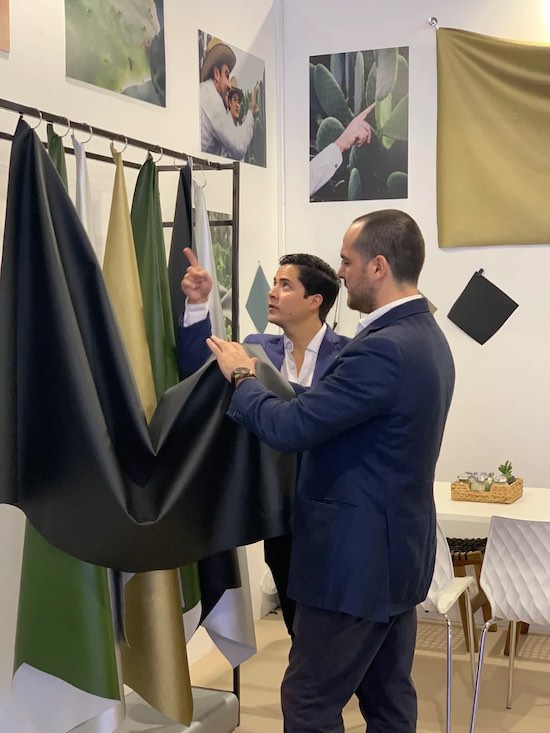
Two men have succeeded in developing an alternative to animal leather made out of Mexican cactus—and it could save millions of animals worldwide.
Adrián López Velarde and Marte Cázarez created their vegan fabric out of the nopal cactus and spent two years researching and developing their design. They then perfected the manufacturing process in July and unveiled the fabric to the fashion world in Milan, Italy in October.
The entrepreneurs realized the environmental impact of animal leather spending years working in the furniture, automotive, and fashion industries. Upon quitting their jobs, they co-founded Adriano Di Marti to find an innovative leather replacement.
Their patented “Desserto” fabric is made out of cactus leaves that are sustainably harvested every 6 to 8 months. The material is designed to breathe easily while still being durable and partially biodegradable. In addition to the cactus-based material requiring a minimal amount of water to develop, it is grown organically in the Mexican state of Zacatecas.
World Chronic Obstructive Pulmonary Disease Day is observed on November 19.
Chronic obstructive pulmonary disease (COPD) is the third leading cause of death globally, yet the condition is relatively unknown and often underprioritized and underfunded. This is despite the fact that over 3.5 million people die from COPD each year - equivalent to the cumulative death toll from a plane crashing with 400 passengers every hour, WHO reports.
The theme for this year’s World COPD Day is “Short of breath, think COPD”, aligned with the common symptoms of cough, difficulty breathing, wheezing and tiredness which have a major impact on those who live with the condition. The day aims to raise awareness about COPD and promote early diagnosis and effective management. Earlier diagnosis and treatment results in better clinical outcomes, including improvement in symptoms, lung function, and quality of life.
Armenia recorded a COPD mortality rate of 21 per 100,000 people in 2021, with men disproportionately affected. Male mortality reached 32.6 per 100,000, the sixth-leading cause of death, while the rate for women was 14.2, ranking tenth. Overall disease prevalence stands at 6.2%.
Smoking remains the country’s dominant risk factor. A 2022 survey found that 22.2% of Armenians smoked, including nearly half of all men but just 1.7% of women. An estimated 60.9% of COPD-related deaths were attributed to smoking alone.
As in many countries, early-stage COPD in Armenia often presents with few or atypical symptoms, leading to delayed diagnosis and treatment. custom title
New Delhi, (IANSlife) Friendship is a bond that knows no limits, and as Friendship Day approaches, it's time to commemorate the particular bond we share with our closest buddies. Social media has become a vital part of our lives in this digital age, and it provides a perfect platform for us to express our love and appreciation for our best friends. Whether you're physically separated or only a few feet apart, social media can help you make your closest buddy feel particularly special on this happy occasion.
Moj creator Sushil Brahmbhatt shares a sincere guide with five social media actions that will certainly make your BFF smile. Let's get started and spread the love with these heartfelt and imaginative ideas!
The Nostalgic Flashback: Craft a touching post/video celebrating your cherished moments together, inviting your BFF to embark on a nostalgic journey down memory lane, honoring the beautiful path of your friendship. Share it on social media, accompanied by a heartfelt caption that weaves the tale of your bond. Let these precious images and memories serve as a gentle reminder of the incredible adventures, laughter, and unwavering support you've shared throughout the years. This heartfelt gesture is certain to touch their soul, evoking a lovely sense of reminiscence and appreciation.
Personalised Video Message: Create a video message for your best buddy expressing your thoughts and emotions with a touch of humor. Tell them how much they mean to you and how thankful you are to have them in your life. Share some embarrassing stories, or inside jokes, or even organize a virtual toast to your relationship. Posting this video on your social media profile will not only make your BFF feel treasured, but it will also demonstrate the depth of your friendship to others.
A Friendship Playlist: Create a playlist of songs that represent your friendship or have a common meaning. These might be music that reminds you of each other, tunes you've danced to together, or melodies that have helped you through difficult times. Share the playlist on social media, and don't forget to explain why each song is meaningful to you. Your BFF will appreciate the thought and effort that went into this musical gesture.
Virtual Celebration: If physical distance stops you from meeting your best friend on Friendship Day, organise a virtual get-together. Plan a group video conference with mutual friends and participate in fun activities together. You can play online games, watch a movie, or simply chat and catch up with your friends. Take screenshots of the virtual meeting and post them on social media with a caption on how distance will never dim the brightness of true friendship.
Appreciation Post: Spend some time publicly appreciating your best friend by making a sincere post on your social media site. Express your emotions and explain why your best friend is the most amazing person in your life. Mention what sets them apart, how they've made a difference, and how they offer joy to your life. This public display of affection and adoration will not only make your BFF feel special, but it will also motivate others to cherish their friendships.Friendship Day is all about acknowledging the incredible bond you share with your best friend and showing them just how much they mean to you. With these five awesome social media gestures, you can brighten your BFF's day and make this Friendship Day an unforgettable celebration of your beautiful friendship. Let the world witness the power of true friendship and join in on the joyous festivities. 5 heartwarming gestures for your best friend | MorungExpress | morungexpress.com
Nagaland's fashion designer, Bambi Kevichusa was recently honoured at the prestigious 3rd edition of the Aalekh Foundation Women Achievers' Awards held in New Delhi on July 19.
Nagaland’s Bambi Kevichusa was recently honoured at the prestigious 3rd edition of the Aalekh Foundation Women Achievers' Awards held in New Delhi on July 19 last. She was among 20 distinguished women from across India recognised for their pioneering contributions and transformative impact. The renowned Naga fashion designer was specifically recognised for ‘sustainability and style from Northeast India,’ with the foundation highlighting her couture bridal creations and her commitment to sustainable, Naga-rooted design. Through her label ‘Bambi K’ and her concept store Windfall in Dimapur, she champions eco-friendly fashion grounded in cultural identity.
Her work has garnered international recognition, having represented Northeast India at events in Istanbul, Paris, Hanoi, and New Delhi, and has been featured in the Horniman Museum, London. Beyond her contributions to fashion, Bambi is also actively involved in environmental initiatives as a volunteer with Team Better Dimapur and is known for her creative pursuits in music.
The Aalekh Foundation, a cultural and social impact organisation dedicated to heritage, sustainability, and women’s empowerment, institutes these annual awards to honour outstanding women from various fields such as the arts, public service, media, law, literature, entrepreneurship, education, and social impact. These awards celebrate women who are not only trailblazers in their respective fields but also catalysts for positive change, demonstrating exceptional courage, leadership, and commitment to shaping a more inclusive and empowered society.
The Aalekh Foundation lauded Bambi on their Instagram, stating, “Meet our Woman Achiever—Tirelessly bold, boundlessly creative, and rooted in purpose Bambi is one among the 20 remarkable women being honoured at the Aalekh Foundation Woman Achiever's Award-3rd Edition.”
They emphasised her role as a fierce advocate for sustainable fashion, noting that she has redefined style as a medium of conscious living and cultural pride. Her work challenges fast fashion norms and promotes mindful choices by elevating indigenous textiles, ethical processes, and zero-waste design into a bold, contemporary aesthetic. The Foundation remarked that her journey is one of fearless reinvention, where art meets activism, and self-expression meets sustainability, honouring her for the movement she leads with style, soul, and substance.
In an interview with The Morung Express, Bambi expressed that receiving the award has been a validation for the work that she does, not so much as a designer but a designer who has embarked on an almost solo journey to show the world how the Naga fabric, weaves, artistic and cultural inheritance can be made into clothes that can be marketed and worn by the modern world.
She shared that it has also personally and professionally validated her belief in her role as a designer to contribute to keeping the planet safe for ‘our children.’
Reflecting on the challenges, Bambi admitted it has been a lonely journey as an artist in many ways, especially in exploring Naga textiles for clothing, even as she added, “And a very expensive journey too.”
“This award for me has meant that someone out there has noticed the work that I am doing and is applauding me for it. So while I am humbled by the recognition, I am also inspired by it; inspired to keep going and not giving up on what I believe in,” she stated.Dr Rennie Joyy, Founder, Aalekh Foundation had commented on the awards during the event, stating, “We have continued to spotlight the role of women as carriers of tradition, creators of beauty, and changemakers in both visible and invisible ways. Whether through a loom or a lens, a courtroom or a classroom, women continue to shape the narrative of a more inclusive and resilient India.” Aalekh Foundation honours Nagaland’s Bambi Kevichusa for sustainable fashion | MorungExpress | morungexpress.com
About ten years ago, while working at Badrutt’s Palace Hotel in the Swiss town of St Moritz, I was shocked to learn a guest once requested an elephant be brought in to deliver a birthday gift to his wife. And the hotel made it happen, squeezing the elephant into the lobby.
This over-the-top gesture symbolised what luxury travel once meant: wealth and power, expressed through grand displays. Think millionaires and billionaires in lavish suites and on private yachts, enjoying exclusive services most of us would never dream of, let alone actually ask for.
Consulting group McKinsey defines the luxury traveller as someone prepared to spend US$500 or more per night on accommodation. But luxury tourism is evolving. Thanks to demographic shifts, sustainability concerns, and a post-pandemic desire for connection, luxury travel has become more personal and meaningful. And luxury travellers these days aren’t always the super rich elites.
Despite the cost-of-living crisis, luxury travel is booming. So, what’s driving this growth and how is luxury travel changing?
A trillion dollar industry
The luxury travel sector has shown remarkable resilience, even during economic downturns and the COVID pandemic. Globally, it is projected to grow from US$1.4 trillion in 2024 to $2.2 trillion by 2030.
The Asia-Pacific region is leading the surge at a compound annual growth rate of 8.6% (a way of measuring growth that assumes profits are reinvested) from 2024 to 2030.
In Australia, the trend is similar: the luxury travel market generated US$37.4 billion in 2023 and is forecast to reach US$70 billion by 2032.
This growth is driven not just by affluence among the wealthy but by younger travellers. As Forbes magazine points out, these travellers are often non-millionaires who may not earn enormous salaries or even own their own homes – but are willing to pay top dollar for meaningful experiences.
And some are splurging on trips to make up for time and opportunities lost due to the pandemic – a trend industry experts sometimes refer to as “revenge” and “revelry” travel. As one luxury travel industry observer put it:
We’re seeing travel at all costs, where people are determined to have the experience they want, regardless of what that price is.
Many consumers are prioritising luxury travel experiences over other discretionary items, including luxury goods.
Luxury can have many meanings
Today’s luxury travel isn’t just about extravagance; it can also include forking out for meaningful experiences. Luxury travellers are willing to pay up for holidays that promise authenticity, wellness and connection with people and places.
It can mean access to something rare, like an uncrowded natural environment or an authentic cultural experience that feels deeply personal.
It can also come from expertise – like appreciating the nuances of a rare bottle of wine, or touring a place with an expert or celebrity guide who has been there many times before.
Where it was once defined by price and status symbols, luxury travel today is about stories worth sharing (on social media and in real life) and experiences that align with personal values.
Wellness, adventure and the digital detox
In my 17 years of working in and researching luxury travel, I have seen a lot of different luxury holidaymakers. Everything from humble retirees relishing the rewards of their hard work to VIP celebrities who send 32 pages of requests before even stepping foot in the hotel.
While older high-net-worth individuals from North America and Europe remain a significant demographic, a growing proportion of luxury travellers are millennials, Gen Z, and tourists from emerging markets like Asia and the Middle East.
Traditional hallmarks of luxury travel – like presidential suites and private islands – are still popular among high-net-worth individuals.
But a growing number of travellers seek cultural experiences, adventure, and small, intimate group trips.
These travellers are opting for off-peak seasons and less-visited destinations to avoid crowds, and may be more vocal about sustainable tourism.
The future of luxury travel lies in its ability to adapt to evolving consumer values. Wellness retreats, slow travel (including by train), and sustainability-focused experiences are becoming central to the luxury travel narrative.
In a hyper-connected world, luxury travel marketing is now often linked with the idea of a digital detox. The chance to disconnect and fully immerse in the moment has become a modern indulgence.
19-year-old Ritsala Thonger, Contestant No.16 was crowned Miss Kohima 2025 at the Regional Centre of Excellence for Music & Performing Arts (RCEMPA) Jotsoma on October 14. 19-year-old Neilanuo Sachü, Contestant No.2 and 19-year-old Kechangunuo Kelio, Contestant No.9 were adjudged first runner-up and second runner-up respectively.
19-year-old Ritsala Thonger, Contestant No.16, who aspires to be a social worker was crowned Miss Kohima 2025 at a glittering event held under the theme “Beauty. Health. Beyond” at the Regional Centre of Excellence for Music & Performing Arts (RCEMPA) Jotsoma on October 14.
19-year-old Neilanuo Sachü, Contestant No.2 and 19-year-old Kechangunuo Kelio, Contestant No.9 were adjudged first runner-up and second runner-up respectively.
During the question and answer round, Ritsala Thonger said failure does not define one’s journey but rather strengthens it. When asked her thoughts on whether men or women sacrifice more, she maintained that women are the strongest in the world and sacrifice more by giving up their dreams and careers for their loved ones.
Neilanuo Sachü felt that the biggest challenges faced by young women today is “women safety” while pointing out that this should not only be a privilege but a right. “Safety is not just physical safety but mental, emotional and digital safety”, she noted. She further maintained that what makes a woman powerful in today’s world is “her voice, and the courage to use her voice.”
Kechangunuo Kelio, who described herself as compassionate , resilient and curious in three words cited “character” as an important aspect of a true beauty pageant title holder.
Earlier, in her welcome note, Pelevinuo Rüpreo Co-founder of 4Front Event Management, noted that Miss Kohima is not just a beauty pageant but also about learning and advocacy. Dwelling on the theme, “Beauty. Health. Beyond”, she also highlighted that “beauty shines brightest when rooted in good health.”
Speaking on behalf of Kohima Science College, Jotsoma, the institutional partner for Miss Kohima 2025, Wenitso Kapfo, remarked that the Miss Kohima Beauty Pageant is a prestigious event and platform that has produced proud ambassadors of the Naga culture. He expressed hope to strengthen the partnership in the future while stating that their values alignnand further emphasized on but building character through the platform so that young people can become catalyst of change in the society.
The panel of judges included Lipokzulu Lemtur, General Secretary of BASN (Beauty & Aesthetics Society of Nagaland) as Chief Judge, Neisavinuo Mor, School Administrator & Headmistress of Footprints Academy, Dimapur, Dr Keduovinuo Keditsu, Consultant Surgical Oncologist & Medical Director of Putuonuo Hospital, and Ketou-ü Pfüsenuo, Miss Kohima 2022, 2nd Runner up.
Theja Sekhose was the show director while Peweu Tunyi Khamo was the official groomer and choreographer. Official designers for evening wear included faculties of TS Academy of Design while the official makeup artist team comprised of graduates of Evara Studio by Elilo and official designers for designer round were TS Academy of Design Class of 2024. Special performances were also presented by Azeno Nakhro, Khunyu T, Himshanchuba, and Thanggoumang Lotjem.
It may be noted here that Miss Kohima is presented by 4Front Event Management with the support of BASN and powered by Putuonuo Hospital Kohima.
Subtitle Winners
Miss Multimedia: Kechangunuo Kelio, Contestant No. 9
Miss Talent: Kechangunuo Kelio, Contestant No.9
Miss Beautiful Smile: Methasunu Luho, Contestant No.7
Miss Perfect 10: Ritsala Thonger, Contestant No.16
Queen of Hearts: Neikecüno Vimero, Contestant No. 10
The I Love Tobago sign at the Scarborough Esplanade. -Photo by Ayanna Kinsale
TOBAGO has been adjudged the third most desirable island in the world by Wanderlust travel magazine at the World Travel Market (WTM), the THA Division of Tourism, Culture, Antiquities and Transportation said in a statement on Thursday.
This is the second time the island has claimed a spot in the top three, cementing its desirability as a world-class destination.
Cuba and Taiwan placed first and second, respectively.
Tobago beat other islands, including Palawan, Tasmania, Mauritius, Langkawi, Sri Lanka, Saint Helena and Barbados.
Tourism secretary Tashia Burris expressed her delight and pride in Tobago's second consecutive top three placement in the annual Wanderlust Reader's Choice Awards.
The award ceremony, which was held on November 7 at the British Museum, was one of the highlights of the WTM.
The international trade show was held from November 6-8 at the ExCel London exhibition and convention centre, London, United kingdom.
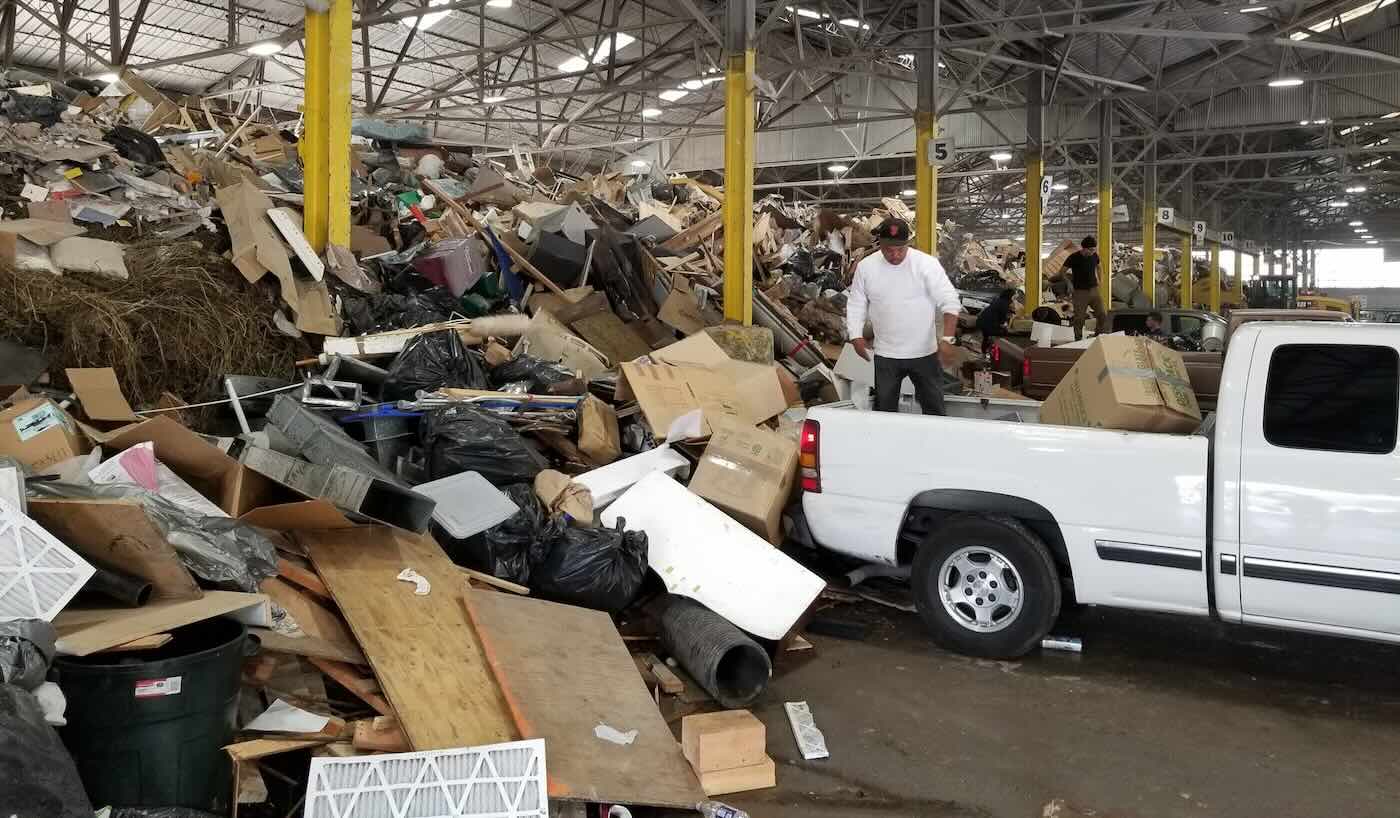
Recology Recycling Center, where ‘junk’ is being dropped off, and Artists-in-Residence may scavenge
Inside San Francisco’s 47-acre recycling and recovery center at the dump, where small businesses and residents can bring truckloads of cast-offs, artists have special access to a churning, ever-changing landscape where detritus from all over the city is sorted and processed.
In fact, more than 100 tons of material enter the building every day.
Besides just being the waste management company, Recology’s mission is to conserve resources and reduce waste, inspiring a more mindful relationship with the things we throw away. To that end, we need artists.
Since 1990, Recology has run an Artist-in-Residence program that supports Bay Area artists, giving them freedom to scavenge materials for use in creating artworks.
The four-month residency also provides artists with access to studio space and a stipend. Armed with safety gear and a shopping cart, artists have scavenging privileges in the Public Reuse and Recycling Area to reimagine the discarded waste as art objects.
“The artists love the access,” Recology spokesperson Robert Reed told GNN. “The materials dropped off are varied and interesting.”
Recology Artist In Residence Neil Mendoza scavenging through trash with shopping cart
The artists, like Neil Mendoza (pictured above), then wheel their carts of reclaimed materials to an art studio/workshop, equipped with tools that Recology maintains at the transfer station.
At the end of each residency, a free-to-the-public exhibition of the artworks created is held in the studio.
On Saturday, the resulting creativity from dozens of Artists In Residence was on full display as 2,000 people attended the opening of a free exhibition featuring 35 years of artwork—a retrospective embodying the phrase ‘trash to treasure’.
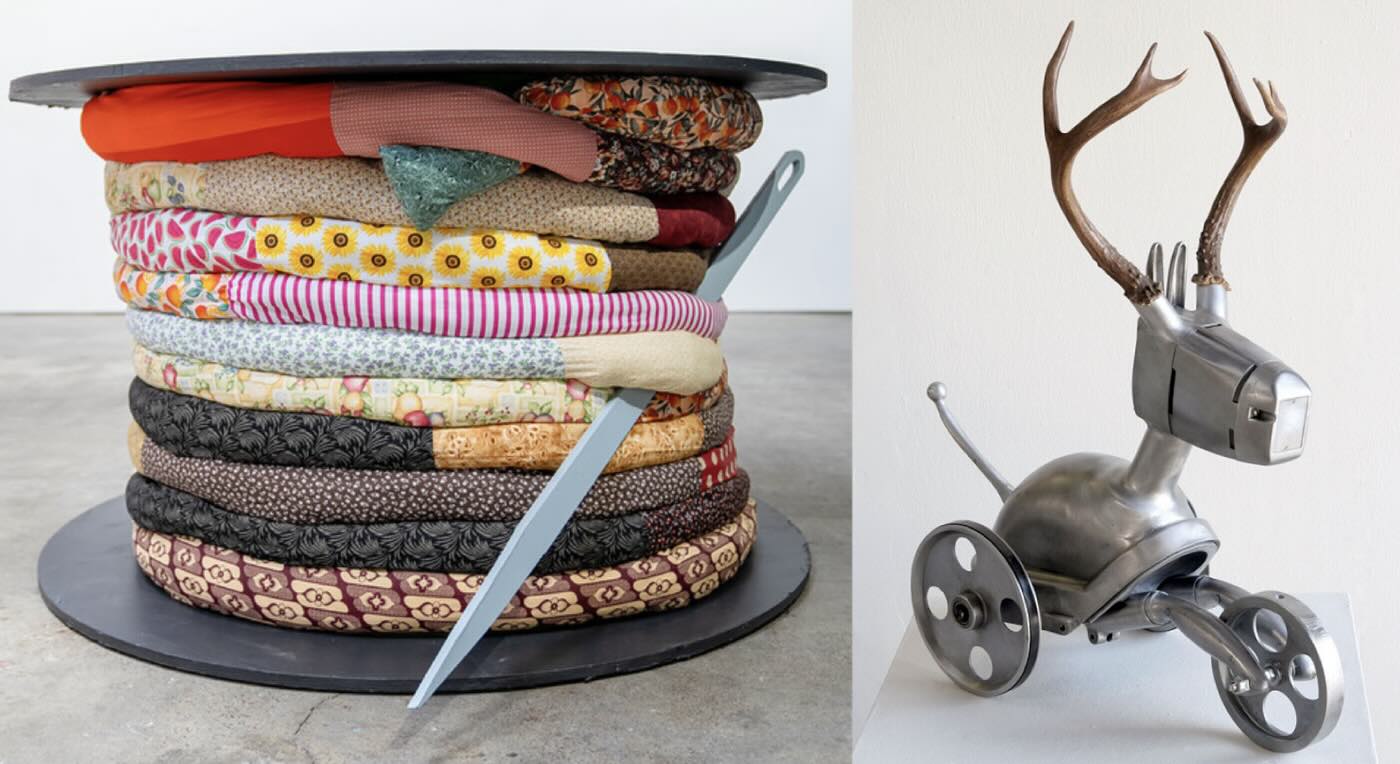
‘Mother Spool’ by Nimah Gobir (Photo by Minoosh Zomorodinia for Recology) and ‘Impala’ by Nemo Gould
While the approaches and themes vary widely among the 63 artists featured, a shared thread runs through it all: the possibilities of transformation through reuse.
For instance, in 2007 Nemo Gould created the Impala sculpture (pictured above, right) by scavenging antlers, a power sander, bandsaw blade wheels, projector flywheel, vacuum cleaner handles, a meat grinder, motorcycle clutch, and cheese slicers.
Over the past 35 years, the Residency program has hosted more than 190 professional artists and 60 student artists from local colleges and universities. These artists, emerging, mid-career, and established, have worked across a wide range of disciplines, including painting, sculpture, video, photography, installation, performance, and new media.
The gallery exhibit—a collaboration between Recology and The Minnesota Street Project, at 1275 Minnesota Street in San Francisco—runs through Aug. 30, 2025 and is free to the public, according to the news release here.
“It’s a great, no cost opportunity for families to see art this summer,” says Reed. “We also have a traveling exhibition touring the country.”
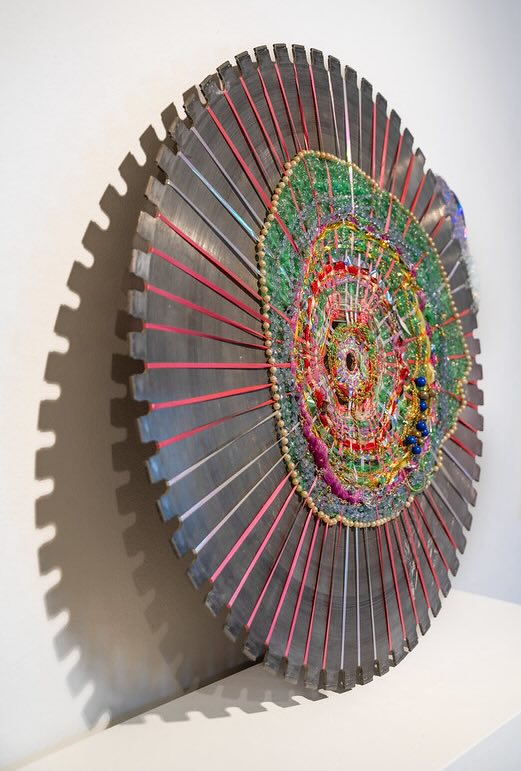
Adorned Saw by Eleanor Scholz uses embroidery thread, ribbon, jewelry, keys, bubble wrap, mylar, plastic, and DVDs – Photo by Minoosh Zomorodinia for Recology
The traveling exhibit, which includes Impala, is called Reclaimed: The Art of Recology. It presents a selection of works from 33 fascinating artists who were selected to participate in the company’s unique Residency.
This eclectic exhibition of work includes around 50 objects: from paintings produced with recycled house paint to tapestries made from used ties, shirts, and other fabrics.
From sculptural vases crafted from Ethernet and coaxial cables to ever more hybrid concoctions that are often mind-blowing in execution and form.
The traveling show can be found currently in Traverse City, Michigan at the Dennos Museum Center at Northwestern Michigan College until Aug. 31, 2025.
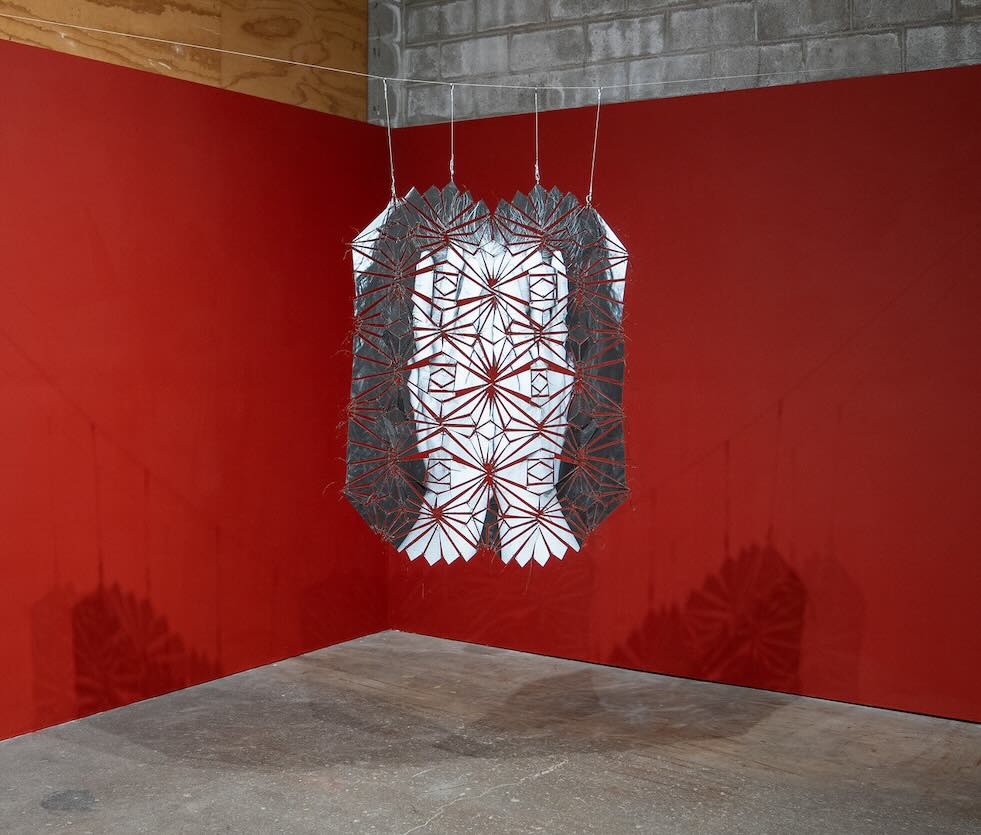
Knots of Reflection by Nasim Moghadam (mirror, archival pigment print, and Iranian female hair) Photo by Minoosh Zomorodinia
The World Wide Web exhibit by multi-media artist Rubadiri Victor opens at the 101 Art Gallery, Newtown, Port of Spain on July 17 from 5-9 pm. The exhibit, consisting of 77 paintings and objects spanning a number of Victor's series, will raise funds to go towards the artist's Season of Anansi Folklore Festival bills.
The exhibit will run until July 21 from 8 am-5 pm with special night events on Friday and Saturday.
West Indies Bowler Kaleidoscope -
The World Wide Web exhibition also officially launches the Anansi Goes to England initiative. After a successful third year, Victor’s Season of Anansi has been invited to bring its entire programme to Liverpool, England for Black History Month in October. The offer has been extended by the Merseyside International Centre of Carnival Arts + Black Innovation (MICCABI) through former son-of-the-soil- the award-winning artist Addae Gaskin, who is creating a series of cultural interventions in Liverpool.
“This represents an extraordinary opportunity for brand Trinidad and Tobago and our creative industries as the Anansi festival is expected to take place in Liverpool, Luton, Leeds, and London intersecting with multiple institutions like schools, universities, libraries, Museums, theatres, community centres, performing arts troupes, etc. Although MICCABI is paying some of the bills there are still significant expenses to be met as all aspects of the Anansi Folklore Festival are crossing the Atlantic: from the schools storytelling tour to the re-staging of the play Anansi and the 10 Dragons; from the bookstore reading tour to the multi-media exhibition The Black Infinite: the Global Rise of Afro-Futurism. The World Wide Web exhibition will also feature a retrospective on the just concluded Season of Anansi Festival 2025."
Guardian Angel of the Refugees -
World Wide Web is Rubadiri’s 11th one-man exhibition and his second in the historic Boscoe Holder Studio at Gallery 101. The exhibition includes work from five major series in Victor’s ongoing work. One is the Crucial Arch Angels series which features massive paintings of blue-skinned contemporary Caribbean arch angels with reparative portfolios. These include paintings like Our Guardian Angel of the Refugees and The Angel of Abundance Collects the Wealth to Redistribute it Equitably. There also are some paintings from the Adventures of the King of the Wizards series which visualises the legendary calypsonian the Mighty Shadow as a super-hero, Master Wizard in various adventures.
The Beginning of the Maroon Republic -
Another popular series is Victor’s portraits of West Indies cricketers called West Indies Cricket Warriors. One major series being shown for the first time completed is the Infinite Jouvay series, which features a series of canvases depicting the journey of "Jouvay" from Africa to Trinidad and then the world. The series envisages ancestral masquerades baptising a tribesman in West Africa in blue paint, then entering him to travel across the Middle Passage during the evil of the Trans-Atlantic slave trade so that his descendants would have a superpower within them to survive the horrors of the West.
“My work has always been for all audiences. I’m inviting the public to come out and see the work- especially young people at home on vacation from school. Art is for everyone,” Victor said.For more information contact Rubadiri Victor at (868)797-0949 or follow rubadirivictor on IG World Wide Web exhibit opens at Gallery 101 - Trinidad and Tobago Newsday
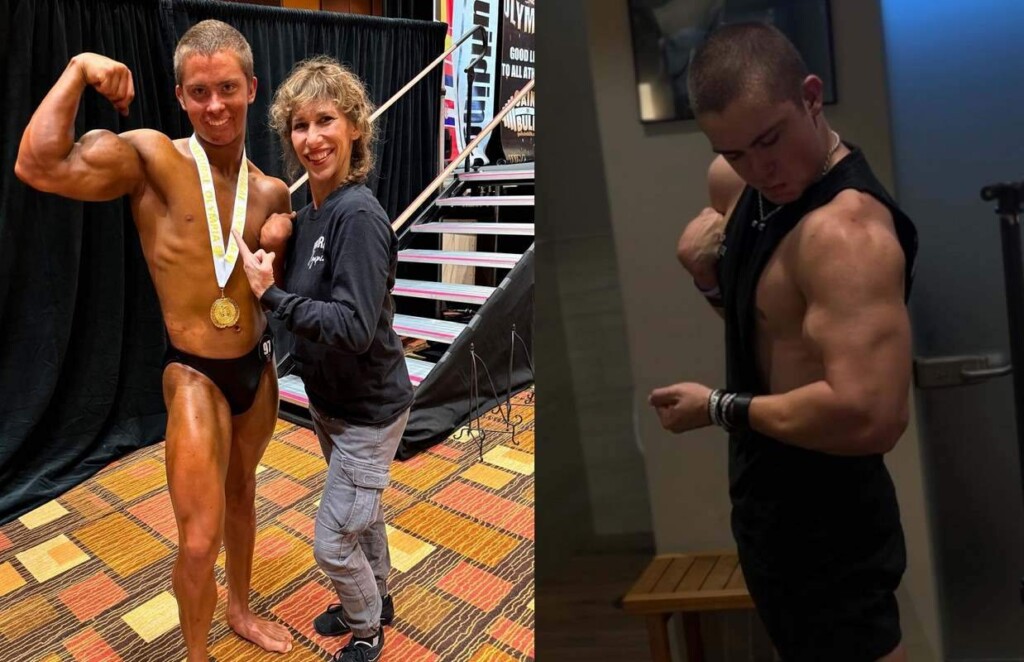
Hunter Moore is just like any other teen athlete. He loves to play sports, made the varsity team, and doesn’t mind throwing up a few gym selfies on his Instagram.
“It’s all genetics, bro,” he says laughingly while pumping his nearly 20-inch bicep. The genetics, in Moore’s case, is Dystonic Cerebral Palsy from a stroke he suffered as an infant that left him partially paralyzed on his left side.
In this case, the genetics are the obstacle to overcome, not the immutable advantage some athletes enjoy. Yet Moore was born into a military family, and so received an upbringing full of dictates to never give up, to prove them all wrong, and it drove Hunter to spend most of his childhood building a body that was capable of the rigors of athletics.
For 7 years he always made his schools’ soccer teams, and now plays as the long snapper for his junior varsity football team, while regularly posting pretty impressive weightlifting numbers that even a non-paralyzed person could feel safe bragging about.
Even though he can’t use his left arm for isolated lifts, he still tries to incorporate it as often as possible for the sake of symmetry—one of bodybuilding’s most important judging criteria. He’ll lock his left arm around a bar, and pry it away from where it usually sits tucked up into his armpit. Like this, he can do a squat or a deadlift.
By the time he competed last summer in the Professional Natural Bodybuilding Association, he was pressing 120 lbs. with one arm, and deadlifting 405. He took first place in his category in Dallas, Texas, and competed again in November in Las Vegas to win first place in the professional class for Men’s Disabled Standing.
In an interview, Moore described posing on stage as “one of the scariest things that I have ever attempted,” but the whistles and cheers he received were a tangible reward for an amount of hard work that the majority of people, disabled or not, cannot manage.
As Buddha once said, “we are what we think”—and positive thinking is an important step in any achievement. Whether in your career or personal life, why not follow the advice that inspires some of the most successful people on the planet?
Maybe you are looking to make changes in the way you approach your relationships, or you are striving to alter the way you handle work-related stress, or looking to make your first million. Self-help books can be a valuable guide, and what better gauge of their quality than to select the ones that have helped successful people to live their dreams.
Sage UK has conducted the in-depth survey to determine the best books for shifting your mindset and creating personal happiness or professional success.
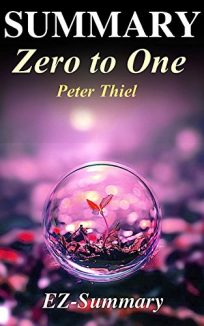
From Malcolm Gladwell’s “Blink: The Power of Thinking Without Thinking” which builds your confidence by teaching you to trust your intuition, to “Zero To One” by billionaire philanthropist Peter Thiel, which is aimed at generating a positive approach to starting your own business, this list covers all bases when it comes to inspiring you in all aspects of life:
Tony Hsieh offers an insight into the numerous life lessons he learnt while pursuing a variety of business ventures over the years. Delivering Happiness highlights the importance of creating a corporate culture which focuses on the happiness of those around you, and how their joy can grow you as an individual.
Recommended by:
Padmasree Warrior (CEO of NextEv, dubbed Queen of the Electric Car by Fortune)
Peter Thiel finds the unexplored corners of your creativity: that’s the central premise of this luminary’s bestseller. Peter Thiel argues that you need to escape competition and think for yourself if you truly want to forge your own path in business.
Recommended by:
Elon Musk (Founder of SpaceX and Tesla Motors)
Gareth Williams (Founder of Skyscanner)
John Sculley (Former CEO of Apple, Inc; and former President of Pepsi-Cola)
In Blink, Malcolm Gladwell explores how we ‘know’ something without exactly knowing why. Gladwell teaches readers how trusting your instinct can be more effective than approaching a decision with caution, inspiring you to think in new ways.
Recommended by:
Marillyn Hewson (CEO, Lockheed Martin; “The World’s 20th most powerful woman” –Forbes)
Paul Jozefak (Managing Director of tech company Liqud Labs)
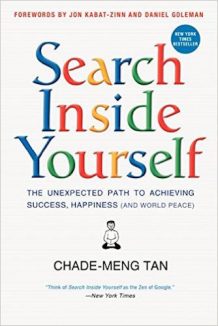
Chade-Meng Tan, Google’s personal growth pioneer, talks us through the mindfulness techniques he teaches to employees as he attempts to unlock their full creative potential. Credited with augmenting the productivity of one of the world’s pre-eminent tech companies, Meng imparts a wealth of useful mind training.
Recommended by:
Arianna Huffington (Founder, Huffington Post)
Tony Hsieh (CEO of Zappos, an online shoe and clothing retailer)
Don Miguel Ruiz believes there are four rules that can transform our existence: be impeccable with your word, don’t make assumptions, always do your best and don’t take anything personally. By removing self-limiting beliefs, the author suggests that we will be better-placed to harness our innate potential.
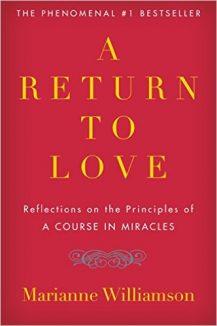
Based on the author’s own experiences as a teacher and lecturer, A Return to Love looks at how the principles of love can transform and heal people during any trials or difficulties life has to offer. Sharing her own insights, Marianne Williamson offers practical applications of love and how it can change all aspects of our lives.
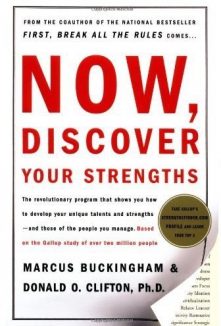
Using the data mined from a study of over two million high-achievers, this book by Marcus Buckingham sets out 34 themes geared towards maximizing your business success. Through the completion of an online test, readers will discover which of these themes relate to their strengths, allowing them to cultivate the best working environment for them.
Recommended by:
Sheryl Sandberg (Author and COO of Facebook; founder of Leanin.org)
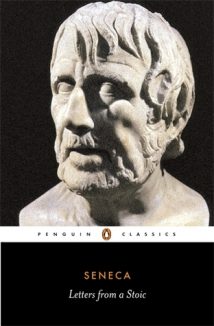
In this book, Robin Campbell translates the philosophical musings of Lucius Annaeus Seneca, the advisor to emperor Nero. Seneca was credited with humanizing Stoicism and transforming it from an otherwise foreboding belief system into a useful philosophy for life.
Recommended by:
Tim Ferriss (Author of self-help books on the ‘4-hour’ theme, entrepreneur, public speaker)
Author Tom Wolfe monitors and interviews the first Project Mercury Astronauts in an attempt to identify the mental and physical characteristics that primed them to become pioneers in their field.
Recommended by:
Peter Thiel (Co-founder of PayPal and founder of Clarium Capital)
Arranging the mind into three key processes (thinking, willing and judging), Hannah Arendt delivers an in-depth exploration of the way we process information. From scholars to business specialists, Hannah believes that an inability to think is preventing us from maximizing our potential.
Caana, the Maya’s central architectural complex in Belize discovered by Diane and Arlen Chase in the 1980s. The tomb was found in an acropolis to the right – credit, Caracol Archaeology Project / University of Houston
A major breakthrough in Maya archaeology had been made down in Belize, as the royal tomb of a major city’s first-known ruler is discovered by a husband-wife archaeology team.
Buried with elaborate jade, ceramics, and symbolic artifacts, the tomb offers unprecedented insight into early Maya royalty and connections with the non-Mayan Mexican city-state of Teotihuacan.
Caracol was a metropolis of its time in the lower Yucatan Peninsula, and one of the first great Mayan cities of the Classical period.
Its connection with Teotihuacan is key to the story of this discovery and the story of the life of Te K’ab Chaak, a warrior-king whose remains were found by excavations led by Arlen and Diane Chase, archeologists from the University of Houston who have been working at Caracol, among other sites, for 40 years.
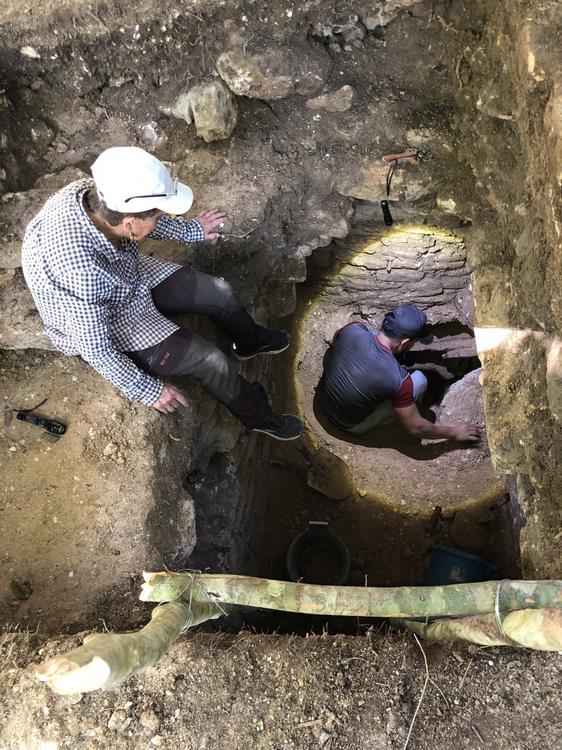
They began excavation season by returning to a site that was first dug in 1993—the northeast acropolis, where burial chambers had been found previously. Striking through the floor of the first burial chamber revealed that it was also the ceiling of deeper, older set of tombs, one of which was filled with grave goods.
11 richly-decorated ceramic vessels along with jade earflares, a mosaic jadeite funerary mask, carved bone items, and loads of red pigment left no shadow of a doubt that Diane and Arlen had turned up a “one-percenter.”
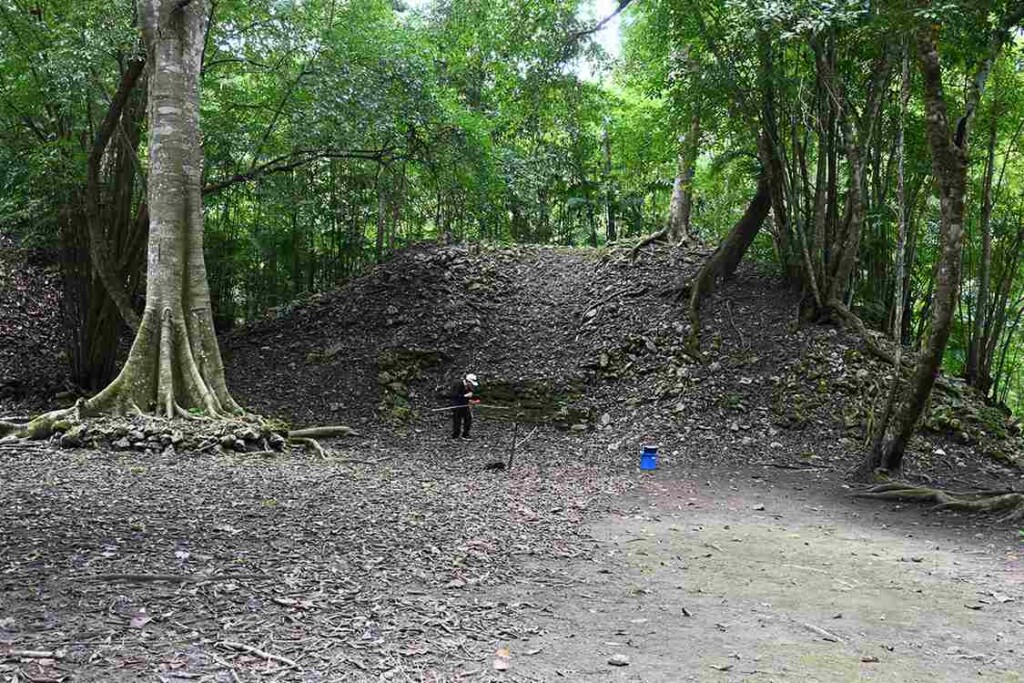
The North Acropolis at Caracol sits enveloped by dense jungle vegetation, preserving centuries of history beneath the surface – Caracol Archaeology Project / University of Houston
“This guy is a one-percenter and that’s why he has so many vessels and three sets of jade earflares in that chamber,” Arlen, a professor of comparative cultural studies, said in a statement on the discovery released by his university.
“The Early Classic period is the time when the rulers assert the fact that they oversee everything, completely distant from the rest of the population. That changes at the end of the Early Classic period, especially in Caracol, when, after the successful warfare against Tikal, they start to share the wealth with the general population. But not this person.”
The northeast acropolis was still covered in trees and earth and completely invisible in aerial surveys, but standing next to it, the manmade nature of the structure becomes clear.
Diane said in a video interview that across their careers, one set of jade earflares is rare, much less three. When you add in a jadeite death mask, something she and her husband have found only on one other occasion, you suddenly get the sense of the power and influence of this person. Additionally, much of the tomb floor and walls were covered in cinnabar.
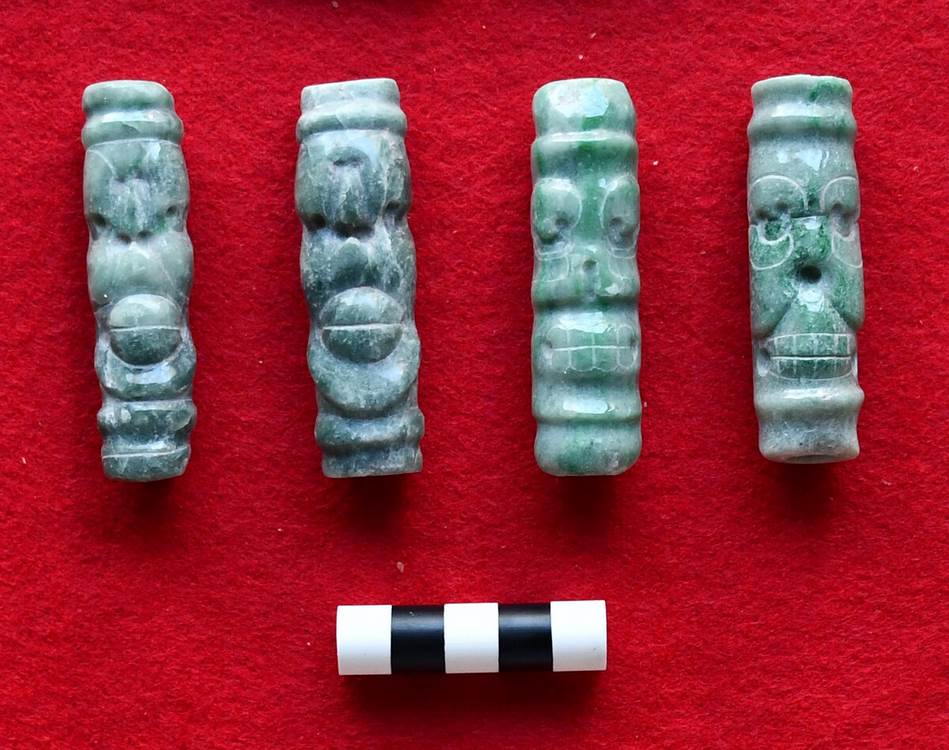
Four jadeite tubular beads showing live and dead spider monkeys – Caracol Archaeology Project University of Houston
“You’re dealing with some of the highest royalty when the things get covered in cinnabar, which is red,” said Arlen. “So everything is colored red like the rising sun in the east.”
Ascending to the throne in 331 CE, Te K’eb Chaak ruled over a city larger than the metropolitan footprint of the modern-day Belize capital, if such a thing can be believed. He lived a long time, as his skull was void of all teeth. Caracol was a center of trade, and Arlen’s assertion that he commanded and controlled that trade is backed up by iconography found on one of the ceramic vessels.
Atop the lid of one is a depiction of Ek Chuah, the Maya god of traders, surrounded by offerings. Ek Chuah is not seen almost at all in Early Classic Mayan iconography. Yet there he was, Arlen said in the same video, at 350 CE.
The covered vessels – credit, Caracol Archaeology Project / University of Houston
A different kind of Mexico
“Maya carved stone monuments, hieroglyphic dates, iconography, and archaeological data all suggest that widespread pan-Mesoamerican connections occurred after an event in 378 CE referred to as ‘entrada,’” said Diane Chase in the statement.
This is the crux of the discovery from the point of view of the archaeologist, who wants to uncover as much information as possible about life in the past. While the public breaks for the jade death mask and colored ceramic vessels, Te K’ab Chaak offers a rare opportunity to explore life in the Mayan political world before this ‘entrada.’
30 years before Te K’ab Chaak took the throne in Caracol, Teotihuacan, some 640 miles northward, was already a massive trading hub that dealt in many products across Mesoamerica.
In Caracol, two other tombs were found with Te K’ab Chaak in the northeast acropolis, including one which contained cremated remains of several people radiocarbon dated to 350 CE.
Fifteen pristine blades of green obsidian from Pachuca, Mexico, (north of Teotihuacan) several pottery vessels also likely came from central Mexico, and a carved atlatl projectile tip—atypical for the Maya but typical for a Teotihuacan warrior—were included in the cremation.
The royal tomb was ultimately accessed in 2025 by carefully excavating through the floor of an earlier tomb built above it, first discovered in 1993 – Caracol Archaeology Project University of Houston
The cremation itself and its placement in the center of a residential plaza are also more typical practices for a high-status Teotihuacano and do not accord with standard Maya burial practices.
Based on other ceramics in this cremation, the main individual was likely a Caracol royal family member that had adopted central Mexican ritual practices. This individual may even have served as a royal Maya envoy who had lived at Teotihuacan and returned to Caracol.
In other words, relations between these two great population centers, separated by roughly 153 days of travel on foot through the jungle, were already firmly ensconced by the reign of Te K’ab Chaak—a whole generation before such relations and connections are generally thought to have been established.
The royal dynasty founded by Te K’ab Chaak continued at Caracol for over 460 years, and the connections between the two regions were undertaken by the highest levels of society during that time.




.jpg)


.webp)



 Recology Recycling Center, where ‘junk’ is being dropped off, and Artists-in-Residence may scavenge
 Recology Artist In Residence Neil Mendoza scavenging through trash with shopping cart
 ‘Mother Spool’ by Nimah Gobir (Photo by Minoosh Zomorodinia for Recology) and ‘Impala’ by Nemo Gould
 Adorned Saw by Eleanor Scholz uses embroidery thread, ribbon, jewelry, keys, bubble wrap, mylar, plastic, and DVDs – Photo by Minoosh Zomorodinia for Recology
 Knots of Reflection by Nasim Moghadam (mirror, archival pigment print, and Iranian female hair) Photo by Minoosh Zomorodinia
 Out of Africa from the Infinite Jouvay series. -
 Guardian Angel of the Refugees -
 The Beginning of the Maroon Republic -
 Instagram – @hunter_moore_123