It’s hard to describe what it feels like to become a mum, but it has a name: matrescence

“Completely life-changing”. “Nothing could have fully prepared me”. These are the sorts of phrases you often hear from women when they become a mother.

These descriptions can point to the complexity and depth of the experience. It can be joyous and stressful, exhausting and euphoric, profound and mundane. It’s unlike any other life transition, and – try as we might – hard to capture in words or short phrases.

It turns out, though, there is a word for this process of becoming a mother: matrescence.

It’s a simple but powerful concept that’s changing the way we think about mothering. Here’s what matrescence means and how the concept can help mothers and those supporting them to navigate and understand this time of life.

Where did the term come from?

The term matrescence was coined in a 1973 essay by medical anthropologist Dana Raphael to describe the transition to motherhood. Raphael found most cultures had rites of passage that recognised “the time of mother-becoming”. However, Western countries such as the United States and Australia tended not to.

These practices, which vary depending on the cultural setting, have something in common. They acknowledge that, like adolescence, becoming a mother is a complex experience that brings a period of learning and transformation.

Raphael also coined the term “patrescence”, which, while not the focus of her study, recognised that fathers and other parents also go through a period of transition.

It would take decades, but matrescence made it into the public consciousness in 2017 in an article and widely-viewed TED Talk by reproductive psychiatrist Alexandra Sacks. Books, podcasts and media coverage have abounded since.

What changes during matrescence?

Most public discussion of matrescence still tends to centre the challenges of mothering, for example postpartum depression and anxiety.

But there is increasing interest in the many kinds of changes experienced in matrescence, such as dramatic brain changes or the phenomenon of microchimerism, where foetal cells from pregnancy can remain in the mother’s body, and vice versa.

Research on these phenomena matter not just scientifically, but philosophically.

Other body changes include powerful hormonal changes in pregnancy, birth, and postpartum. There’s also research looking at how having children and breastfeeding can reduce the risk of breast cancer.

Much of this research is emerging, which is unsurprising given historical and ongoing medical misogyny.

More than physical changes

Mothers can also experience significant shifts in identity, including changes in personal values, new priorities, or a sense of loss for other parts of themselves.

Mothers encounter new social dynamics and peer groups, too. The new social identities of “mother” or “mum” (or the markers “working mum” or “stay-at-home mum”) introduce new expectations, norms and ideals.

Relationship dynamics with partners, friends and family can shift significantly.

Mothers can also experience an expansive new relationship with their baby, though this might be sentimentalised or downplayed by others.

Other new emotional experiences, ranging from intense love and gratitude to “mum guilt” and “mum rage”, can arise, too, sometimes leading to maternal ambivalence.

New sensory experiences such as breastfeeding and physical contact can lead mothers to feeling overstimulated or “touched out”, but can also bring joy.

Women also take on a new political and economic identity when becoming mothers. In 2025, mothers are often expected to remain ideal workers in the paid workforce, sometimes navigating a return to paid work while caring for an infant and performing the bulk of crucial unpaid reproductive household labour and care.

This juggle can lead to maternal burnout and negative impacts on mothers’ wellbeing.

This all contributes to the “motherhood penalty” – the well-documented, entrenched and persistent economic injustice experienced by mothers.

Matrescence is a term that helps to capture the breadth of these experiences in all their enormity and complexity.

The oppression of ‘motherhood’

Matrescence doesn’t happen in a vacuum. As Raphael’s original essay showed, it’s shaped by many cultural, economic, and political factors. It’s not the same for every mother.

In her 1976 landmark feminist study on mothering, North American writer and poet Adrienne Rich made the useful distinction between the experience of mothering and what she described as the patriarchal institution of motherhood.

It was the institution of motherhood, Rich argued, that oppressed mothers, not mothering itself. The flipside of this argument was that a liberating motherhood was possible under different conditions.

Feminist scholar Adrienne Rich distinguished between mothering and the institution of motherhood. Colleen McKay/Wikimedia Commons, CC BY-SA

When it comes to matrescence, the institution of motherhood in Western societies like Australia tends to sideline the experience of mothers, and the transition to motherhood is still largely experienced in isolation and silence.

Often, a focus on the baby overshadows the maternal-infant relationship or the needs of the mother, with many new mothers feeling unsupported or invisible.

New mothers are also often expected to live up to the “good mother” ideal by being totally self-sacrificing or naturally competent at mothering.

Societal norms can overlook the transitional and transformative period of matrescence, with mothers urged to “bounce back” – either by returning to a “pre-baby” body shape or by promptly getting back to paid work in the same capacity as before giving birth.

These experiences are exacerbated by a range of factors, including class, race, partnered status, sexual orientation and life stage, among others.

How does matrescence help?

While the concept of matrescence has become popular among some mothers and those working in maternal wellbeing, wider awareness of the term and the many changes new mothers experience is important.

For mothers, just knowing the concept can help by normalising what they might be experiencing. It can also help those who are pregnant or considering having a baby to prepare for motherhood.

But it can also help us to recognise that becoming a mother is not just a matter of flicking a switch, but a long and profound process of change that requires supportive conditions.

For individual mothers and families, this might mean friends and family offering to provide food or household help (rather than visiting just to hold the new baby).

Collectively, it means broader social changes, including changing cultural attitudes and better social, economic, and health policies to support mothers and families. These should recognise that when a baby is born, so is a mother.The Conversation

Belinda Eslick, Honorary Research Fellow, The University of Queensland; Fabiane Ramos, Lecturer, University of Southern Queensland, and Laura Roberts, Senior Lecturer in Women's and Gender Studies, Flinders University

This article is republished from The Conversation under a Creative Commons license. Read the original article.

Read More........

What makes a song sound ‘Christmassy’? Musicologist explains

Samuel J Bennett, Nottingham Trent University

Within the first notes of many classic Christmas songs, we’re transported directly to the festive season. Why is it that it’s these particular pieces of music that get us thinking of the holidays?

In his book Music’s Meanings, the popular music researcher Philip Tagg explores the ways in which we as listeners construe the music that we hear. Tagg applies semiotics, the study of how we interpret signs in the world around us, to music. These signs may be viewed differently by different people and may change their meaning over time.

To illustrate this concept, Tagg cites the example of the pedal guitar, originally drawn from Hawaiian musical tradition and carrying connotations of the islands. Eventually this instrument found its way into country music, so successfully that Tagg argues at this point, we are likely to immediately think of country music when hearing the instrument, without the concept of Hawaii ever crossing our minds.

As the pedal guitar may place us immediately within the realm of country music, there is one instrument that will likely do the same for Christmas – sleigh bells.

Sleigh bells

From light orchestral pieces such as Prokofiev’s Troika (1933), right through to Ariana Grande’s Santa Tell Me (2014), sleigh bells have long acted as convenient shorthand for composers to tell their listeners that this piece belongs to the Christmas canon.

The reasons for this link stem from the non-musical world. We associate Christmas with the winter season and snowy weather. Sleighs, through their use as transport in such weather, developed a direct associative link with Christmas, and as a result, so did the bells used to warn pedestrians of their approach. As with Tagg’s pedal guitar example, we’ve reached the point where we generally link sleigh bells directly with the concept of Christmas, rather than thinking of the intermediary idea of the sleigh at all.

Santa Tell Me uses sleigh bells to evoke a Christmassy sound.

There’s a link to the wider instrument family of bells too. Through the practice of churches ringing out their bells, particularly in celebration of the birth of Christ, larger bells have also developed a presence, not only in Christmas music, but in Christmas decorations and art.

Last year, the UK Official Charts Company published a list of the “top 40 most-streamed Christmas songs”. If you were to listen to the list, you’d find bell-like sounds in the majority of them, from the glockenspiel-like introduction of Mariah Carey’s All I Want for Christmas Is You (1994) to the synthesised tubular bells of Band Aid’s Do They Know It’s Christmas (1984).

There are other musical elements which help spread the Christmas cheer, from lyrical melodies to strident brass parts. Most of these elements though, have one thing in common. They aren’t modern sounds, or particularly common in modern pop music, and instead, they remind us of the past.

The nostalgia of Christmas

Christmas is a nostalgic holiday, in more ways than one. The word “nostalgia” initially referred to a type of homesickness, rather than the fond remembrance of a hazy past time that we more commonly use it to refer to now. But both senses of the word can be used to describe the feelings we associate with Christmas.

It’s a time where many of us travel home to family, taking not only a geographical trip, but a temporal one, immersing ourselves in a world of well-worn tradition and familiarity, where the pace of our day-to-day life doesn’t apply.

Artists know this, feeding our nostalgia through music, lyrics and visuals which evoke the past. This is possibly why most Christmas albums consist of interpretations of past holiday classics, rather than original material. It’s a straightforward appeal to the nostalgic and the familiar; if we already know a song, it’s easier to immediately latch on to this new recording. Some artists though, take the nostalgia trip one step further, emulating what is arguably the ultimate Christmas style of music – the easy listening crooner song.

Billie Eilish performs Have Yourself A Merry Little Christmas in 2023.

Whether it’s Bing Crosby or Nat King Cole, the warmth of a crooning voice nestled among light orchestral instrumentation has become inextricably linked with Christmas. It’s a sound that, unless you have a personal affinity with the style, you’re unlikely to hear much outside of the festive season.

It’s telling that when Billie Eilish performed a version of Have Yourself a Merry Little Christmas on Saturday Night Live in 2023, she eschewed her usual synthesised sounds in favour of a traditional trio of piano, drums and upright bass, and delivered the vocal in a gentle, warming tone. It all conspires to make us think of some imagined, simpler past, with chestnuts by the fire and picturesque snow settling outside.

Finally, we return to that list of the most-streamed Christmas songs. There’s one artist, and indeed one album, that makes the top 20 with two entries – Michael Bublé, with his 2011 album Christmas. Checking this album against our list of Christmas musical elements reveals a clean sweep. It’s crooned from top to bottom, features lightly orchestrated versions of classic Christmas songs, and yes, includes sleigh bells. It doesn’t get much more Christmassy than that.


Looking for something good? Cut through the noise with a carefully curated selection of the latest releases, live events and exhibitions, straight to your inbox every fortnight, on Fridays. Sign up here.The Conversation


Samuel J Bennett, Senior Lecturer in Music Production, Nottingham Trent University

This article is republished from The Conversation under a Creative Commons license. Read the original article.

Read More........

Amputee Thrilled With Hand Transplant is Now Left-handed: ‘Feels so incredible, as if I’ve had it my whole life’

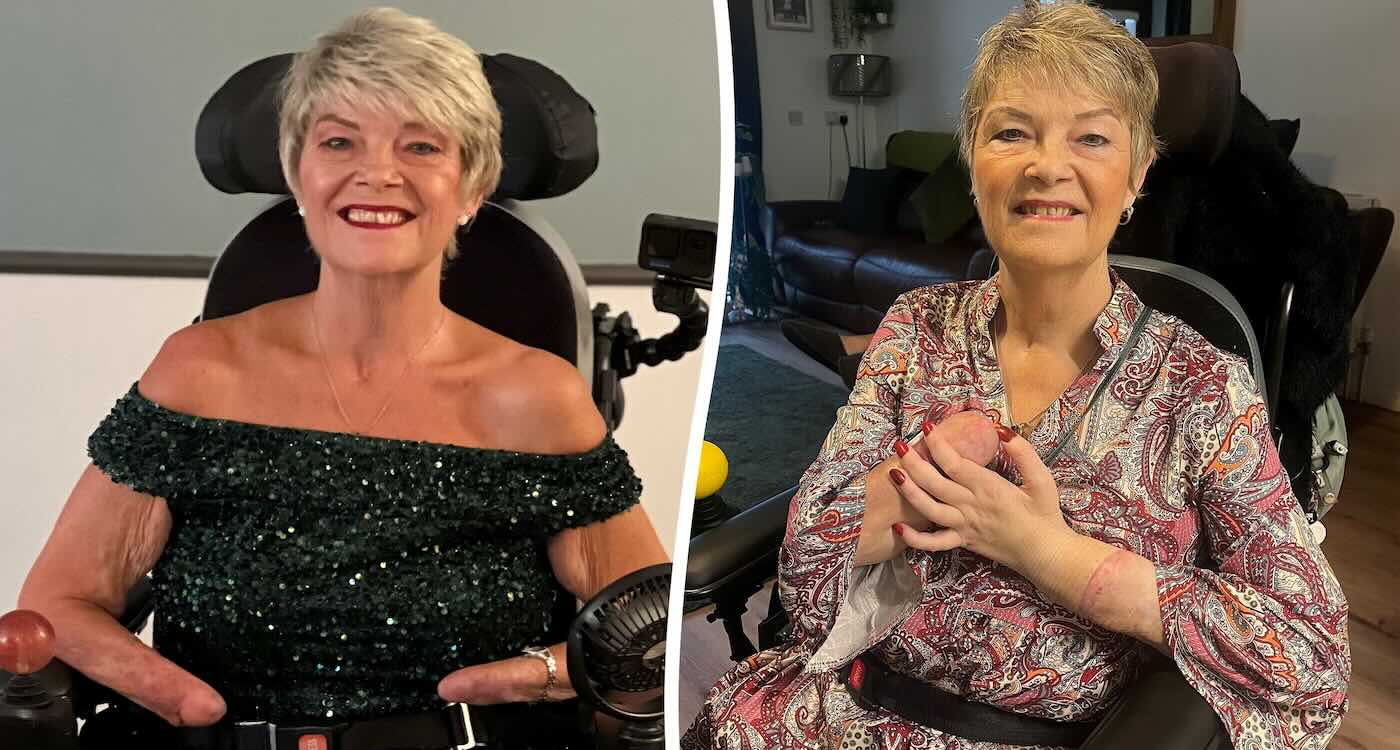
Amputee Kim Smith pre- and post-transplant – SWNS

A woman who lost all her limbs after contracting an infection and getting sepsis while on vacation in Spain eight years ago is now thrilled after receiving a new hand.

Kim Smith and her doctors were trying for a double hand transplant during the 14-hour surgery, but the right hand had to be abandoned. Despite that, she’s ‘over the moon’ and has declared herself now to be left-handed.

“I was right-handed, but now I just do everything left-handed and it came naturally,” said the 64-year-old. “I have even written with my left hand.”

“I am absolutely over the moon about my new arm, because it feels so incredible, almost as if I’ve had it my whole life.”

The woman from Buckinghamshire, England, even joked how her husband Steve was going to buy her new wedding and engagement rings because the fingers of her new hand were slightly bigger.

“I’ve gone full-on glass-half-full now—just grateful that at least one transplant worked,” Kim told SWNS news agency.

“The hand itself is perfect—and beautiful—and looks like it’s meant to be mine.”

Kim Smith after hand transplant – SWNS

Kim described how she was overjoyed when she first saw her new hand, and has been amazed how quickly she’s been able to use it.

“I honestly didn’t expect to be able to do so much so soon, even though motor skills can take a year or so to come back—four years until I get full feeling.

“I’m already picking things up and managing to clean my teeth, do my hair, and put on my makeup.

“The day after the operation, when they finally unbandaged the arm and let me very gently move my fingertips, it felt absolutely incredible because I could feel myself moving it, and from that moment it has just gone from strength to strength.”

“I was most excited to brush my teeth and feed myself again because holding a toothbrush or a fork—and actually being able to use it—felt like the loveliest little miracle after being told for so long that ‘it might never work’.
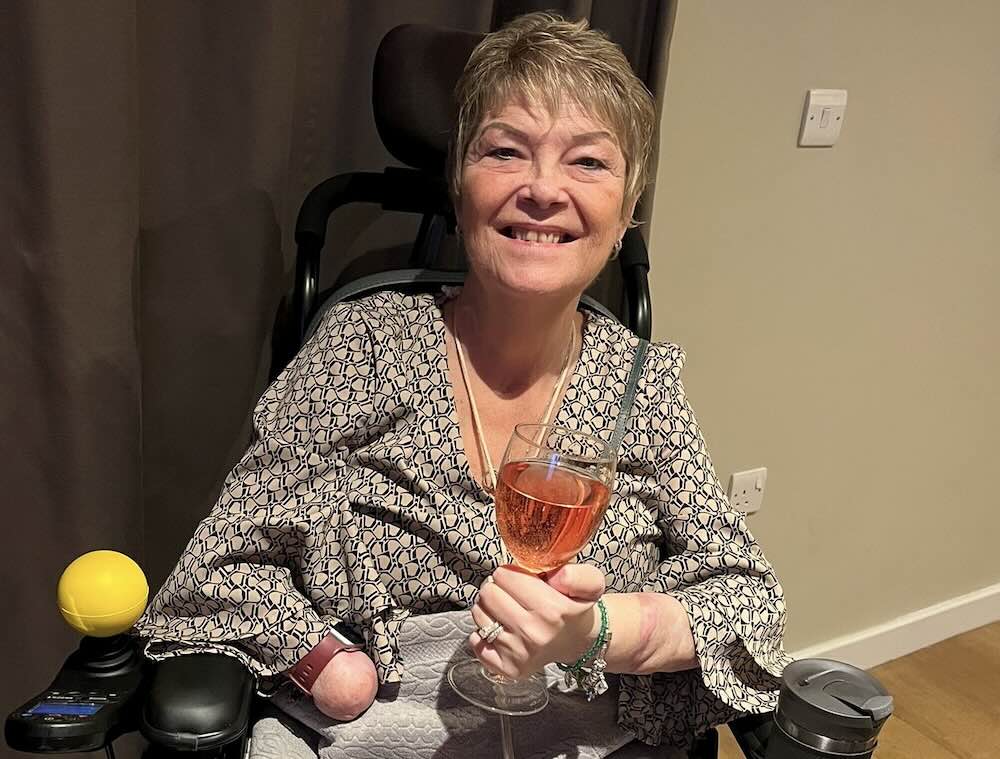
Kim Smith – SWNS

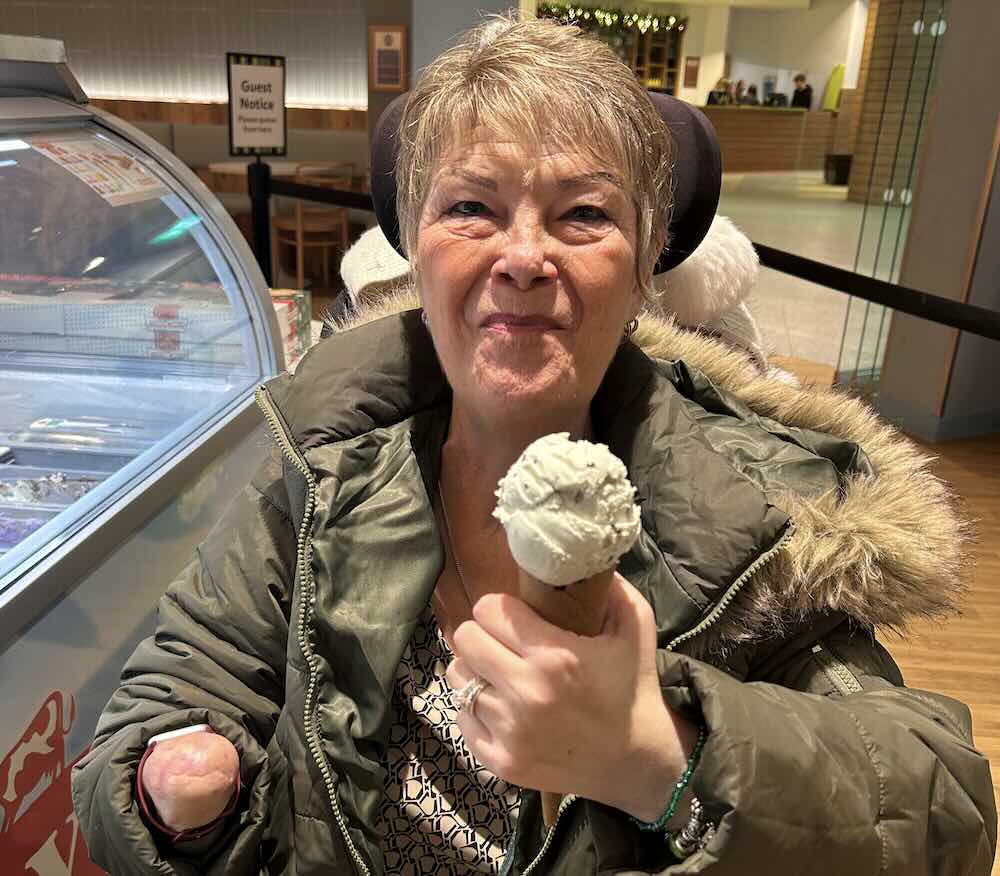
“The first time I picked up a glass of wine with no problem and then held an ice cream without dropping it, I was in disbelief at how far I’d already come.”

Kim has pretty much given up on her dream of having two hands, but is happy with her lovely new left hand.

“While I never say never about a right-hand transplant, I’m 64, now and it would mean waiting another year even to be considered.”

“I’m honestly just happy to have this one for the rest of my life because it’s already giving me so much independence.

“I don’t know who the donor was, but I’ve written to their family to say how grateful I am, knowing they’re grieving and (they) might not reply.

“Meanwhile I’m regaining strength little by little, able to hold my phone, type on it, and wear my Pandora bracelet again.”

Kim’s transplant was carried out by Professor Simon Peter Jabir Kay OBE at Leeds Teaching Hospitals NHS Trust, who commented on the surgery.

“Hands are so much more than mechanical parts, they play an irreplaceable role in human communication and connection, and so it is always an honor to be able to carry out such a life-changing surgery.

“Kim faced unexpected and severe complications during surgery which meant we could only successfully complete one hand transplant, not the double replacement we had hoped to carry out.”

“Nonetheless her recovery has been remarkable.”

“It is heart-warming to see how much her life has changed with her new hand, thanks to the generosity of her donor and their family.”Kim’s journey of overcoming tragedy is the subject of The Gift, a powerful new Sky News documentary released a week ago. You can watch it here on YouTube, or watch the trailer below… Amputee Thrilled With Hand Transplant is Now Left-handed: ‘Feels so incredible, as if I’ve had it my whole life
Read More........

How to handle teen ‘big feelings’ as the social media ban kicks in

Christiane Kehoe, The University of Melbourne and Elizabeth Westrupp, Deakin University

Watching your teenager grieve the loss of their social media account can be confronting. Many are genuinely distressed or struggling with the change, and many parents are unsure how to respond.

Australia’s social media ban, which started this week, means teens under the age of 16, have lost accounts to platforms such as TikTok, Snapchat and Instagram.

These are the platforms they relied on to talk to friends, find support, follow interests, or decompress after school.

While some teens feel relieved or not fussed, many are feeling sad, worried, powerless, helpless, disappointed or angry.

These aren’t signs of entitlement. They’re signs your teen may need support.

A mixed bag: here’s what more than 17,000 teenagers think of the ban.

Why losing social media hits some teens hard

There’s a neurological reason why the loss of social media can hit teens so hard.

Adolescence is a period of enormous social, neurological and emotional change. Teen brains are wired for peer connection, and their brains become more sensitive to feedback from their peers. Meanwhile the brain regions responsible for impulse control, managing strong emotions and long-term planning are still developing.

When teens say losing social media feels like being “cut off”, they aren’t being dramatic. Their neurological systems are reacting to a loss of social reinforcement.

Connect and validate their feelings

If your teen is upset, the instinct might be to justify the government’s decision or to explain why life offline is healthier. However, advice lands badly when a young person feels unheard. Teens often perceive even well-meaning advice as criticism.

Accepting their feelings about the changes helps validate their experience. You can say:

Feeling angry or sad makes total sense. I know you used those sites to stay connected with your friends.

Losing your account feels huge. It’s a big change to deal with.

Then pause and listen.

Or you can sit with them without saying much. Some teens prefer parents to just listen sympathetically.

Supporting your teen doesn’t mean you agree with their perspective. It means you’re acknowledging their emotional reality. When teens feel understood, they become more open to talking – and eventually, to problem-solving.

The first two weeks may be the toughest. Some teens may experience grief and withdrawal-like symptoms: boredom, anxiety, irritability, restlessness and a powerful urge to “just check once”.

Help teens understand these reactions are normal. Social media platforms are designed to keep users hooked.

Understand the ‘why’ together

It might help to explore the governement’s concerns about social media with your teen – but not as a lecture. The ban isn’t about social media being inherently bad, but about how platforms are designed.

You can talk about algorithms maximising engagement using the same mechanisms as gambling to encourage dependence and addiction. Or you can talk about how feeds are personalised to keep users scrolling for longer.

Ask your teen what they think about these concerns. This isn’t about convincing them the ban is right, but developing their awareness of how digital platforms work. This prepares them for use when they’re older.

Help teens rebuild what social media gave them

To support your teen, it helps to understand the function social media played in their life. Was it to:

  • connect with friends?
  • find community around a niche interest or identity?
  • share creative work, or find outlets for self-expression?
  • de-stress after a busy day?
  • know what others are talking about?

Once you understand this, you can help them find alternatives that genuinely meet their needs. They might be able to maintain:

  • connection by organising a get-together, make FaceTime calls, join clubs, or have group chats on allowed platforms
  • creativity by finding other outlets such as photography, video-making, music, writing, art, or gaming communities with safe age settings
  • relaxation by reading, exercise, podcasts, nature time, shows you can watch together.

Many teens won’t immediately know what they want to try. They may need time and space to have their feelings first. Once they are ready, inviting them to brainstorm a few options (without pressuring them) can help.

Problem-solve together, notice efforts

Once emotions settle, gently shift to collaborative problem-solving. You can ask:

What’s been the hardest part this week?

How could we help you stay connected in ways that are allowed?

What would make this change even a tiny bit easier?

Let your teen lead. Young people are much more likely to follow through on strategies they helped design.

Even small signs of coping deserve acknowledgement. You can say:

I can see you’ve been finding other ways to talk to friends. That takes maturity.

I’m proud of how open you’ve been about how you’re feeling.

But if something doesn’t work, treat it like an experiment. You can say:

OK, that didn’t help as much as we hoped. What else could we try?

Check in later

For teens, losing social media isn’t simply losing an app. It can feel like losing a community, a creative outlet, or a place where they felt understood.

Keep an eye out and offer opportunities to check in with how they are going. This ensures teens don’t navigate this transition alone or become secretive – and that your relationship remains a source of support.


The eSafety Commissioner website explains why the rules were brought in and how they will work; youth mental health service headspace has seven tips for navigating the social media ban; the Raising Children’s website explains how teens use technology for entertainment; tips for digital wellness and how to draw up a “contract” for use of a child’s first phone are also available.The Conversation

Christiane Kehoe, Senior Lecturer in Psychiatry, The University of Melbourne and Elizabeth Westrupp, Associate Professor in Psychology, Deakin University

This article is republished from The Conversation under a Creative Commons license. Read the original article.

Read More........

Two People from Minnesota Who Met in the Hospital After Waking up from Comas Are Getting Married

Zach Zarembinski and Isabelle Richards – credit, family photo
Everyone knows love works in mysterious ways; but rarely more mysterious than in the story of Zach and Isabelle.

Partners in life and partners in podcasting, it was 7 years ago that the two Minnesotans were partners of a distinctly less pleasant kind.

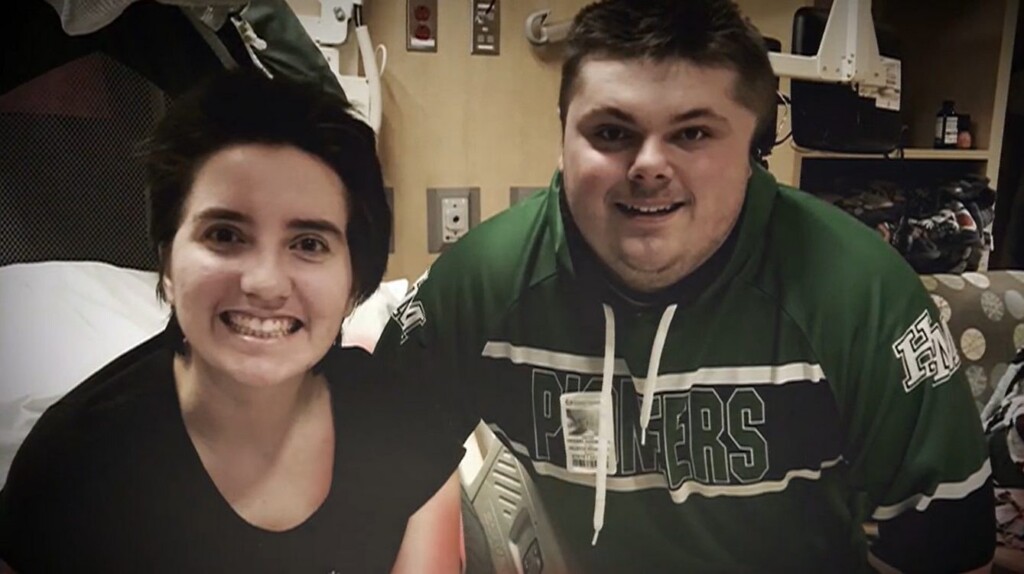
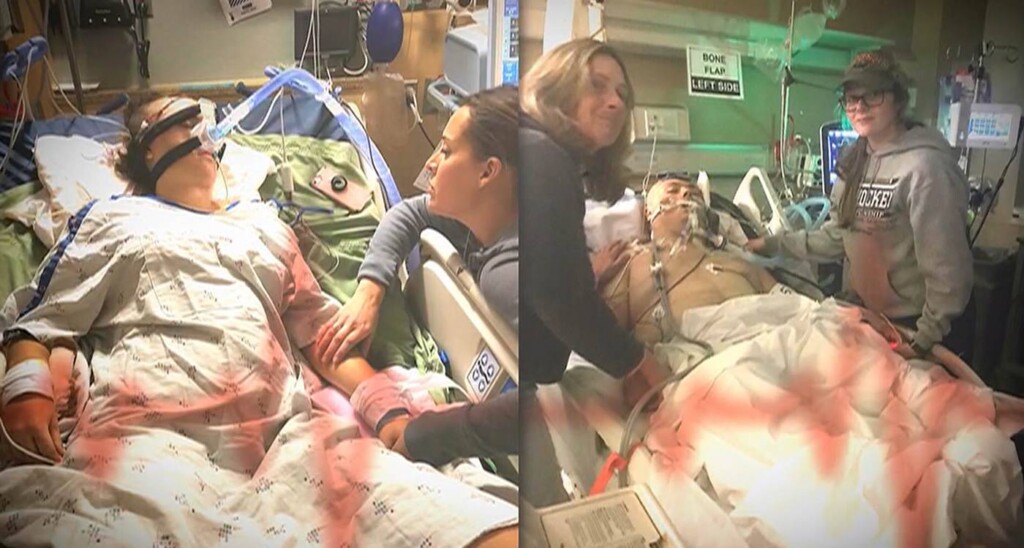
At 18, Zach Zarembinski was rushed to Regions Hospital in St. Paul in a coma after suffering a traumatic brain injury on the high school football field. At 16, Isabelle Richards arrived 9 days later in a coma after a car crash on her way to a grocery store job.

There they lay, shattered, unconscious, and together. Alongside them, their mothers feared the worst, having been told by the medical staff to prepare for the same. But they supported each other.

“I remember she was laying there. She had shards of glass still in her hair and she was unconscious,” Esther Wilzbacher, Richard’s mother, recalled.

“Isabel had to have her right skull piece removed. Zach had to have his left skull piece removed.”credit – family photo

Despite the doctor’s warnings, it wasn’t to be the end of Zach’s journey, and the footballer woke up. Days later when he was ready, he came downstairs for a hospital news conference which was broadcast in Richard’s room, where her father and aunt saw it and suggested they go down to speak with the teen.

Wilzbacher said that Zarembinski told her that her daughter would be fine, and sure enough, she was. After Richards woke up and recovered, the mothers organized a dinner together.

“Said a couple kind words to Isabelle and that was it for six years,” Zarembinski told Boyd Huppert at KARE 11 News’ “Land of 10,000 Stories.”

Zach and Isabelle after they’d both woken up – credit family photo

But 6 years later, the mothers organized a reunion of sorts.

A Facebook friend request, a first date, a year of dates, and then… another hospital news conference.

In Regions Hospital, at the same spot where Zarembinski gave a conference as a teen, the pair of TBI survivors recorded a special episode of their podcast Hope in Healing.

After reading out Joel 2:25 and John 10:10, Zarembinski asked Richards to marry her, and the hospital staff that had ensured they both survived erupted into applause as she said yes.Partners in comatose, partners podcasting, and now, partners for life. Mysterious ways. Two People from Minnesota Who Met in the Hospital After Waking up from Comas Are Getting Married
Read More........

John Oliver Sells His Bob Ross Painting Raises Record $1.5 Million for Public Television

Bob Ross painting Cabin at Sunset – credit, screenshot via John Oliver’s Junk

GNN reported recently that a Los Angeles auction house recently handled the sale of three paintings by the famous TV artist Bob Ross, with the proceeds of over $600,000 going to fund public television and radio.

Inspired by the effort, HBO’s comedy news host John Oliver announced that he too had an original Ross that he would auction for the Corporation for Public Broadcasting.

On the last episode of the most recent season of Last Week Tonight with John Oliver, the British-born TV host revealed an auction catalogue called “John Oliver’s Junk” headlined by Cabin at Sunset, which Ross painted in season 10 of his show The Joy of Painting.

It managed to set a new auction record for a Bob Ross painting of $1,035,000 after 35 bids.

“We’ve actually accumulated a bunch of weird artifacts on this show over the years that we could definitely auction off to raise some much needed money,” Oliver said on last week’s show. “I am proud to announce last week tonight’s first ever auction in aid of public media.”

The proceeds from the sales of Cabin at Sunset and 34 other items totaled $1.5 million which has been transferred to the Public Media Bridge Fund which helps support stations and programs in need of funding.

Most of the items included show memorabilia, including a pair of golden sneakers Oliver promised to wear almost decade ago if former FIFA President Sep Blatter resigned, a cabbage that Oliver married in a segment on AI-generated art, and a jockstrap worn by Russel Crowe.

A pair of VIP tickets to a live show taping caught over $110,000.

While the Corporation for Public Broadcasting, a GSE that funds public radio and television in America, was receiving over $1 billion of its budget from the government, anyone who watches PBS or listens to NPR notes the frequency with which they run pledge drives. This along with other for-profit productions generates substantial revenue that helps keep the CBP operational.

It was the idea of Bob Ross Inc., the company that manages the painter’s likeness and property, to hold the auction in support of public television, something which he loved so much.

“I think this actually would have been Bob’s idea,” said Joan Kowalski, president of Bob Ross Inc. “And when I think about that, it makes me very proud.”

Home in the Valley, (1993) Cliffside, (1990) and Winter’s Peace (1993) were priced to start at Bonham’s auctioneers at between $25,000 – $30,000, but all three quickly exploded in action.The first brought $229,100, the second $114,800, and Winter’s Peace went for a staggering $318,000. John Oliver Sells His Bob Ross Painting Raises Record $1.5 Million for Public Television
Read More........

Fashion Industry Eyes Alternative Leather Made Out of Cactus–And it’s Sustainable and Eco-Friendly

Photo by Adriano Di Marti

Two men have succeeded in developing an alternative to animal leather made out of Mexican cactus—and it could save millions of animals worldwide.

Adrián López Velarde and Marte Cázarez created their vegan fabric out of the nopal cactus and spent two years researching and developing their design. They then perfected the manufacturing process in July and unveiled the fabric to the fashion world in Milan, Italy in October.

The entrepreneurs realized the environmental impact of animal leather spending years working in the furniture, automotive, and fashion industries. Upon quitting their jobs, they co-founded Adriano Di Marti to find an innovative leather replacement.

Their patented “Desserto” fabric is made out of cactus leaves that are sustainably harvested every 6 to 8 months. The material is designed to breathe easily while still being durable and partially biodegradable. In addition to the cactus-based material requiring a minimal amount of water to develop, it is grown organically in the Mexican state of Zacatecas.
The material, which is available in a variety of colors produced using natural dyes, has now been used to make everything from bags and automotive seating to shoes and jackets. Fashion Industry Eyes Alternative Leather Made Out of Cactus–And it’s Sustainable and Eco-Friendly

Read More........

He Beached an Old Cruise Ship and Turned it into $18 Million Beachfront Hotel with Love

released by Doulos Phos Ship Hotel

By Andy Corbley, Sep 02, 2025, It was the oldest passenger ship still floating: he turned it into an unforgettable terrestrial hotel experience.

Long since declared unseaworthy, the MV Doulos Phos is now the 5-star Doulos Phos Ship Hotel at the Bintan resort reclamation project in Indonesia.

But if you’re imagining the ship to be merely a prop, thank again. Her new owner, as nautically enthused as an interview with CNN demonstrated him to be, endeavored to keep intact every ounce of heritage that was possible to preserve, from the defunct engine room to the porthole windows.

“If I didn’t have this project, maybe I’d have a Ferrari and a Lamborghini at home, and I’d be sailing around the world every year with my family,” 74-year-old Eric Saw, a devout Christian Singaporean multi-millionaire, and the owner (captain, maybe?) of the boat and the hotel told CNN.

That project took 15 years and $18 million to complete, along with countless headaches and many inches of nails bitten down in anxiety. It was journey that barely holds a candle to the vessel’s long history.

It was 1914, just two years after Titanic sunk when SS Medina rolled off the shipyard in Newport News, Virginia. Over a career spanning 100 years, she transported agricultural goods, then military personnel during the First World War, then passengers again under the name SS Roma. In the mid-20th century, she swapped her steam engine for a diesel one, and her name (again) to MS Franca C. and set sail as a cruise liner.

Her final conversion came when she was purchased as a missionary vessel and floating library in 1977, and renamed the MV Doulos. She docked at over 100 countries, sailed hundreds of thousands of nautical miles, and was at one point the oldest operating passenger vessel on the seas.

But time ends all romances, and with a mountain of maintenance needs that no one would pay for, she was drydocked in Singapore to await bids for new ownership, 4 years shy of her 100th birthday.

Eric Saw already ran a three-story restaurant inside a Mississippi-style paddle steamer, and felt “a calling from god” to buy and repurpose the ship into a new line of work.

After three years of paying dock fees for the vessel, Saw zeroed in on a place of rest on Bintan island in Indonesia. He was offered 3 acres of reclaimed land; he requested that it form the shape of an anchor.

In October 2015, at 101 years-of-age, the newly-renamed MV Doulos Phos, or “servant of light” in Greek, embarked upon her final voyage from the island of Batam to Bintan. There she would rest upon a bed of concrete undergirded with piles extending 130 feet into the bedrock below the seabed.

Inside, the small crew and passenger cabins which were crammed and poorly lit were expanded, but some were left as-is for adventurous visitors. Elevators and fire escapes and other modern building requirements were installed to meet building codes and regs, along with modern electrical and plumbing.

released by Doulos Phos Ship Hotel

Yet every vestige of heritage possible to save was retained, including the four life boats, which still hang from chains along her midship, and tons of material including the original rivets which held her hull together as welding hadn’t been pioneered in shipbuilding in 1914.

Perhaps because he saw it as a mission from god, Saw takes a salary of $1.00 a year, while all operating profit is donated to charitable causes—a servant of the light, in name and nature. He Beached an Old Cruise Ship and Turned it into $18 Million Beachfront Hotel with Love

Read More........

Man’s Best Friend Recognized as Dog of the Year For Saving Him from a Bear Attack

Craig Campbell and his Doberman named Night – Supplied, Craig Campbell

A Canadian dog-lover has gotten to learn all over again why they call the animal Man’s best friend after his own brave pooch deterred a bear attack.

On a familiar trail in Cochrane, near Calgary, Craig Campbell was on a walk with his dog, a 10-year-old Doberman named Night. It was a trail he had taken with Night several times, but the routine physical activity suddenly turned into a life or death situation.

There in the bushes, a grizzly sow with her 2 cubs had wandered into the woods sandwiched between farms. Even still, Campbell had his bear spray, but having it is only half the challenge; the other half is using it.

“I managed two thoughts,” Campbell recalled in an interview with CTV News. “First of all, I said to myself, ‘This can’t be happening.’ And then I realized I wasn’t going to get the bear spray out (in time) and I said to myself, ‘I’m about to die.’”

Just then, Night came from beside in a flash and put himself between man and bear. Towering 7 feet on its hind legs above the crouching, barking dog, it gave enough time for Campbell to arm himself, but by then the bear huffed and went back to her cubs.

An avid trainer, Campbell has for years been training Night in the German sport of Schutzhund, often used to train the breed and others like it as police dogs. He believes this is why Night ran at the bear when others might have ran away, tail between their legs as it were.

“He is a very brave dog,” Campbell said. “To have an animal that literally stood between me and death, there’s no better friend than that.”

The story won Night an award in Purina’s Animal Hall of Fame for 2025, Canada’s longest-running pet recognition award. Inductees receive a medallion, recognition at a ceremony in Toronto, and one year’s worth of free pet food.Despite the sports and the bravery, Campbell said Night is a playful dog too, loving few things more than jumping into a stream and watching minnows swim through his paws.
s-best-friend-recognized-as-dog-of-the-year-for-saving-him-from-a-bear-attack. Man's Best Friend Recognized as Dog of the Year For Saving Him from a Bear Attack

Read More........

80-Year-Old Grandma Who Learned to Swim at 59 Just Became Oldest Ever Female Ironman Finisher

80-year-old Natalie Grabow becomes oldest female finisher in triathlon competition – Credit: Ironman

With every step toward the finish line, Natalie Grabow was proving it’s never too late to get started.

Earlier this month, the 80-year-old grandmother from Mountain Lakes, New Jersey, became the oldest woman to ever finish the punishing Ironman World Championship triathlon in Kailua-Kona, Hawaii.

She swam 2.4 miles—even though she never learned to swim until she was almost 60—then she pedaled 112 miles on a bicycle and immediately ran a full 26.2-mile marathon to make history. (Watch the video below…)

About 60 other competitors quit before they finished, all of them younger. Grabow did not.

“She’s truly gritty,” Grabow’s coach, Michelle Lake, told NPR. “Natalie is the definition of grit and gratitude: Grateful to make it to the start line, grateful to get to do something she loves everyday, and grateful to inspire so many others.”

Natalie’s story is even more impressive considering when she started.

She grew up in New Jersey long before Title IX vastly expanded the competitive opportunities for female athletes. A part of her that always existed lay dormant, just waiting for a chance.

“When you grow up and you don’t have those options, you know, you just watch the boys doing stuff and you’re just the cheerleader,” she told The Athletic. “It was just thrilling once I could do my first 5K and race and ride a bike with other people.”

As an adult, she worked as a software developer, played some doubles tennis, and eventually found running. The last hobby would prove to be a long-lasting love.

Running helped her form friendships and filled up her free time several days a week. Her friends eventually tried triathlons, but even in her 50s, Natalie didn’t know how to swim. Fortunately, she never once believed it was too late to start.


So, she became a mainstay at her local YMCA pool, using friends and books and videos, along with pure determination to learn some swimming strokes.

She improved enough to try a sprint triathlon and soon had her eyes on longer distances. Grabow worked on stretching and strength training. She cycled on an indoor exercise bike, ran at a nearby high school track, and kept swimming at the same place where she learned the skill late in life.

Twenty years ago, she finished her first half Ironman. A few years later, she graduated to the full-length version. And this past month, Grabow was tackling the famous Ironman triathlon course in Hawaii.

She swam 2.4 miles in Kailua Bay, using the freestyle strokes that escaped her for so long. She biked 112 miles in temperatures that peaked above 80 degrees. Then, came the marathon, 26.2 miles on a road course that gradually climbed more than 1,000 feet.

Just as she had many other times before, she kept moving forward, drawing closer and closer to her latest goal. It was just the latest obstacle in a life that has been searching them out, intent on surpassing them all.

Natalie crossed the finish line in 16 hours, 45 minutes and 26 seconds, becoming the oldest female to ever finish the Ironman World Championship in Hawaii. (See the moment below…)

“Absolutely incredible,” the PA announcer said to the spectators in attendance.

The senior is already searching for her next challenge. She signed up for a pair of Ironman races in 2026—and she may even take aim at the record set by Hiromu Inada, who at 85, became the oldest person to finish the Ironman World Championship in 2018.

“The important thing is that people see from my story that they can maybe push themselves a little bit, they can do a little more than they thought they could do,” she told The Athletic. “They can keep going longer than they thought they could go.”
It’s all proof that it doesn’t matter where you start. Or when. It’s about enjoying the journey — and finding your way to the finish line.80-Year-Old Grandma Who Learned to Swim at 59 Just Became Oldest Ever Female Ironman Finisher
Read More........

Fashion Designer Makes Shoes that Grow into Apple Trees, Instead of Growing Landfills

Johnny Footwear

The legend of Johnny Appleseed: the man who walked about Ontario and the northern United States spreading apple pips, takes root in a new pair of kicks that biodegrade and grow an apple tree when they are discarded.

Tackling plastic pollution is the principle purpose behind the new shoe, but they also help the environment a little bit by aiding in reforestation.

33-year-old Toronto resident Luc Houle is working to bring “Johnny,” the brand name of the shoe, to market through Kickstarter, which is currently just $1,000 shy of his $55,000 target.

Johnnys are simple canvas everyday shoes made without plastic, utilizing Fair Trade biodegradable materials instead.

Cushiony, lightweight, and water-resistant, Johnnys won’t biodegrade off of your feet, but after the years wear then down and the decision to move on to new kicks arrives, they can be buried, as hidden within the sole is an apple seed encased in fertilizer.

The materials which the shoe is made from contain naturally-occurring compounds which attract microorganisms to feed on and break down the shoe over three years.

Even if you don’t get around to burying them, they will still biodegrade if thrown in a landfill.
Johnny Footwear

When the campaign is successful ($109 will get you a pair and a tree planted in your name), Houle hopes to have them available to a wide range of people by August of next year.

The nice thing about this project is that because it’s a biodegradable sneaker that grows into a tree, we can kind of help number one, offset people’s carbon footprint, but we’re also helping eliminate plastics,” Houle told Blog Toronto. “And the more people we can reach with that the more of an impact we can have.” Fashion Designer Makes Shoes that Grow into Apple Trees, Instead of Growing Landfills
Read More........

Woman Loses Two Rings at the Beach, Each Found and Returned by Different Strangers

Lost and found rings – Courtesy of Laura Emanuel and Jeffrey Laag

That little beep of a metal detector can often mean nothing but trash, but every once and a while, it can lead to fame, fortune, and even “happy tears.”

Laura Emanuel from southern New Jersey was on the beach enjoying the sun over Cape May when, after taking off her wedding band and another ring to put sunscreen on, she promptly forgot about them.

Debating what to do, she called 23-year veteran of the Cape May Fire Department Jeffery Laag, who runs “Ring Finders Cape May” a hobby-helper service that allows him to spend mornings metal detecting on the beach looking for lost valuables.

After Laag’s first sweep of the beach with his trusty metal detector, he had to call Emanuel with some unhappy news: he had found nothing.

Just a few days after she lost her rings, wild weather struck the coast with high winds and pummeling rain, complicating any future searches. Incredibly though, a family playing in the sand days later found the second ring, and through the magic of social media identified Emanuel as its owner before giving it to the management at The Grand at Diamond Beach for safekeeping.

That would have been a happy ending, but it gave Emanuel the impetus to reach out again to ask Laag for another sweep of the shore.

“I immediately went back down the next morning at 5:00 a.m., got a little closer to the water, and I was able to recover her diamond and platinum band for her,” Laag told ABC 7 news.

Emanuel, speaking with ABC, was stupefied by the news.“I didn’t believe it,” she said. “The emotion, and just the happy tears that it had been recovered—by this stranger. He picked up the ring that had been returned, got the wedding band, took both rings and literally brought them to my doorstep like a superhero!” Woman Loses Two Rings at the Beach, Each Found and Returned by Different Strangers
Read More........

Dozens of Disabled Californians Sail for the First Time to Experience the Weightlessness of the Water

Credit photographer Larry Rosa – at Challenged Athletes Foundation event

Physical limitations were off-limits for a blessed and windy day in Sacramento, California.

Dozens of people with various disabilities came down to the Lake Washington Sailing Club to experience the weightlessness of the water.

They used boats that were specifically designed not to tip over, and special rigging for the sails was on hand for those with hands to take control of their surroundings in a unique and new way.

The event was put on by the Challenged Athletes Foundation (CAF), which ensured every participant was accompanied by a sailing pro.

“We have people that sail with no upper arm or leg movement sail with a control, motor control like a wheelchair, that they hook onto their chin,” Jim Tweet, a member of the sailing club who partook in the day’s events.

A polio survivor named Diane Ngo was one of over a dozen who experienced sailing for the first time.

Her attitude was straightforward: bring it on.

“Anything that challenges me to go beyond my comfort zone is why I’m here,” Ngo told CBS News Sacramento. She found that just being on the water and feeling the ability to move around was “exciting.”

“CAF is awesome, it changed my life,” said Minh Nguyen, a participant at the sailing clinic.The event was open to all ages and the youngest participant was just 11. Dozens of Disabled Californians Sail for the First Time to Experience the Weightlessness of the Water
Read More........

Archaeologists Unearth Treasure-Filled Tomb of the First Ruler in This Mayan Metropolis

Caana, the Maya’s central architectural complex in Belize discovered by Diane and Arlen Chase in the 1980s. The tomb was found in an acropolis to the right – credit, Caracol Archaeology Project / University of Houston

A major breakthrough in Maya archaeology had been made down in Belize, as the royal tomb of a major city’s first-known ruler is discovered by a husband-wife archaeology team.

Buried with elaborate jade, ceramics, and symbolic artifacts, the tomb offers unprecedented insight into early Maya royalty and connections with the non-Mayan Mexican city-state of Teotihuacan.

Caracol was a metropolis of its time in the lower Yucatan Peninsula, and one of the first great Mayan cities of the Classical period.

Its connection with Teotihuacan is key to the story of this discovery and the story of the life of Te K’ab Chaak, a warrior-king whose remains were found by excavations led by Arlen and Diane Chase, archeologists from the University of Houston who have been working at Caracol, among other sites, for 40 years.

They began excavation season by returning to a site that was first dug in 1993—the northeast acropolis, where burial chambers had been found previously. Striking through the floor of the first burial chamber revealed that it was also the ceiling of deeper, older set of tombs, one of which was filled with grave goods.

11 richly-decorated ceramic vessels along with jade earflares, a mosaic jadeite funerary mask, carved bone items, and loads of red pigment left no shadow of a doubt that Diane and Arlen had turned up a “one-percenter.”

The North Acropolis at Caracol sits enveloped by dense jungle vegetation, preserving centuries of history beneath the surface – Caracol Archaeology Project / University of Houston

“This guy is a one-percenter and that’s why he has so many vessels and three sets of jade earflares in that chamber,” Arlen, a professor of comparative cultural studies, said in a statement on the discovery released by his university.

“The Early Classic period is the time when the rulers assert the fact that they oversee everything, completely distant from the rest of the population. That changes at the end of the Early Classic period, especially in Caracol, when, after the successful warfare against Tikal, they start to share the wealth with the general population. But not this person.”

The northeast acropolis was still covered in trees and earth and completely invisible in aerial surveys, but standing next to it, the manmade nature of the structure becomes clear.

Diane said in a video interview that across their careers, one set of jade earflares is rare, much less three. When you add in a jadeite death mask, something she and her husband have found only on one other occasion, you suddenly get the sense of the power and influence of this person. Additionally, much of the tomb floor and walls were covered in cinnabar.

Four jadeite tubular beads showing live and dead spider monkeys – Caracol Archaeology Project University of Houston

“You’re dealing with some of the highest royalty when the things get covered in cinnabar, which is red,” said Arlen. “So everything is colored red like the rising sun in the east.”

Ascending to the throne in 331 CE, Te K’eb Chaak ruled over a city larger than the metropolitan footprint of the modern-day Belize capital, if such a thing can be believed. He lived a long time, as his skull was void of all teeth. Caracol was a center of trade, and Arlen’s assertion that he commanded and controlled that trade is backed up by iconography found on one of the ceramic vessels.

Atop the lid of one is a depiction of Ek Chuah, the Maya god of traders, surrounded by offerings. Ek Chuah is not seen almost at all in Early Classic Mayan iconography. Yet there he was, Arlen said in the same video, at 350 CE.

The covered vessels – credit, Caracol Archaeology Project / University of Houston

A different kind of Mexico

“Maya carved stone monuments, hieroglyphic dates, iconography, and archaeological data all suggest that widespread pan-Mesoamerican connections occurred after an event in 378 CE referred to as ‘entrada,’” said Diane Chase in the statement.

This is the crux of the discovery from the point of view of the archaeologist, who wants to uncover as much information as possible about life in the past. While the public breaks for the jade death mask and colored ceramic vessels, Te K’ab Chaak offers a rare opportunity to explore life in the Mayan political world before this ‘entrada.’

30 years before Te K’ab Chaak took the throne in Caracol, Teotihuacan, some 640 miles northward, was already a massive trading hub that dealt in many products across Mesoamerica.

In Caracol, two other tombs were found with Te K’ab Chaak in the northeast acropolis, including one which contained cremated remains of several people radiocarbon dated to 350 CE.

Fifteen pristine blades of green obsidian from Pachuca, Mexico, (north of Teotihuacan) several pottery vessels also likely came from central Mexico, and a carved atlatl projectile tip—atypical for the Maya but typical for a Teotihuacan warrior—were included in the cremation.

The royal tomb was ultimately accessed in 2025 by carefully excavating through the floor of an earlier tomb built above it, first discovered in 1993 – Caracol Archaeology Project University of Houston

The cremation itself and its placement in the center of a residential plaza are also more typical practices for a high-status Teotihuacano and do not accord with standard Maya burial practices.

Based on other ceramics in this cremation, the main individual was likely a Caracol royal family member that had adopted central Mexican ritual practices. This individual may even have served as a royal Maya envoy who had lived at Teotihuacan and returned to Caracol.

In other words, relations between these two great population centers, separated by roughly 153 days of travel on foot through the jungle, were already firmly ensconced by the reign of Te K’ab Chaak—a whole generation before such relations and connections are generally thought to have been established.

The royal dynasty founded by Te K’ab Chaak continued at Caracol for over 460 years, and the connections between the two regions were undertaken by the highest levels of society during that time.

It presents the picture of a bustling and interconnected Mexico long before the modern world arrived with its roads, airports, and skyscrapers.“We need to sort of rethink how we view the past when we get finds like this,” Arlen concludes. Archaeologists Unearth Treasure-Filled Tomb of the First Ruler in This Mayan Metropolis
Read More........

Woman Brings to Life Fashion Sketches Made By Her Grandma After 80 Years on Paper (LOOK)


TikTok users tuning into a viral video got to see a brief glimpse into the special relationship between a young woman and her grandmother, with the former teaching herself to sew in order to bring to life fashion sketches made by the latter over 60 years ago.

Julia, (@boringbb on TikTok) a content creator with a passion for fashion, said she was so inspired by the sketches she decided to start making some of them herself.

She started by watching YouTube videos on various techniques of sewing and stitching, and playing around with different items she would thrift until she had something like what she saw in the sketches.

Her grandmother dropped out of fashion and design school in the 1940s to support her family financially and never returned to the career she fancied.

“It’s one thing to see it in a drawing but it’s—when you’re putting it together and I see it in real life it kind of makes me want to cry a little bit,” her grandmother said in the video with about 20 million views, after Julia unveiled a black and blue “Moulin Rouge” ballet dress.

While that was just one moment on TikTok, Julia has been doing this for years, and imagined erroneously that people would get bored after the third or fourth dress. People have continued to enjoy the videos in large numbers.

Regardless, the brief spurt of social media stardom isn’t what Julia is after. She thoroughly enjoys making the dresses as a way of connecting with her grandmother—both to her Depression-era fashion sense and to who she is today.“Now, she talks to me more about fashion and her interests, more of an adult sort of friendship relationship that we have now,” Julia told GMA. “I think that she’s now able to not only see me as her granddaughter but also see me as a friend.” Woman Brings to Life Fashion Sketches Made By Her Grandma After 80 Years on Paper (LOOK)
Read More........

California Developer Builds First Neighborhood Where All the Homes Are Resistant to Wildfires

Dixon Trail wildfire-resistant neighborhood in CA – KB Homes

One of the nation’s largest homebuilders have created a community of entirely wildfire-resilient homes to help reduce homebuyers’ risks of loss if another Palisades or Dixie fire comes roaring by.

With nothing flammable on the exterior or the roofs and curated desert foliage around the gardens and lawns, the homes aren’t necessarily fireproof, but the design of the entire community was informed by identifying and eliminating the most common causes of homes catching fire.

Available now, and with some already off the market, KB Homes estimates their price at around $1 million, a price consistent with disaster-proof housing around the country.

The Eaton and Palisades fires struck with little warning and launched embers across highways and valleys setting multiple communities ablaze. The rising risk of wildfires in the rural areas of Southern California comes with rising insurance premiums, which result in rising rents, higher mortgages, etc.

In many cases, private insurers are declining to issue new policies for homes in areas at a high-risk for wildfires.

KB Home’s Dixon Trail community in Escondido, California is designed to the Insurance Institute for Business & Home Safety’s (IBHS) highest level of protection against direct flame contact, radiant heat, and embers, which helps to meaningfully reduce the likelihood of wildfire spread.

The Dixon Trail community will have 64 beautifully designed homes upon completion. It will receive a provisional neighborhood-level designation based on its design, confirming that the community has implemented preventative measures to reduce the likelihood of initial ignitions from an approaching wildfire, protect against embers that could spark spot fires, and slow fire spread if ignitions occur.

Research shows that these measures at the community level are key in preventing wildfires from becoming catastrophic. As a model of wildfire resiliency, Dixon Trail has incorporated research-backed mitigation actions into the design of its homesites, including the installation of Class A fire-rated roofs, noncombustible gutters, upgraded windows and doors, and ember and flame-resistant vents as well as the creation of a five-foot noncombustible buffer around structures.

At the neighborhood level, wildfire risk is reduced by separating almost all structures by more than 10 feet and decreasing potential fuels through the use of fire-resistant materials, like all-metal fence systems.

“With fire becoming an increasingly common threat in the West, it’s crucial to reconsider how we construct communities in fire-prone regions,” said IBHS CEO Roy Wright. “KB Home is at the forefront, implementing our research-driven wildfire mitigation strategies for both the parcel and neighborhood levels at Dixon Trail.”

Already set within a wind corridor, Dixon Trail is actually in a high-risk area for wildfires, particularly for wind-blown embers coming off the wooded slopes all around the community.Previously, GNN has reported on storm and hurricane-proof housing on and along the Gulf Coast, including durable, three-story homes with a community-level flood control system, and Deltec’s cylindrical houses mounted on stilts, which allow winds to pass around and under the structure without smashing into it. California Developer Builds First Neighborhood Where All the Homes Are Resistant to Wildfires
Read More........

2 Years of Exercise Reversed 20 Years of Aging in the Heart, Says Longest-Ever Randomized Trial on Exercise

Eliptical machines were sometimes used for the interval training to avoid excess load on the joints – credit, Center for Better Aging

Exercise was in the news recently for being found in an epidemiological study to reduce the risk of colon cancer.

But what should be in the news is that a study published 7 years ago is going somewhat viral on the internet thanks to the profile of a popular health influencer, Dr. Rhonda Patrick.


The study found middle-aged adults could reverse 20 years of age-related decline in their heart muscles through a 2 year exercise program, and that it effectively turned sedentary 55-year-olds into 30-year-olds when viewed through heart activity monitoring equipment.

Being that heart disease is the leading cause of death for most people in the United States, and cardiac strength is inversely correlated with heart disease, it’s probably one of the most significant studies on exercise ever carried out.

To wit, the authors describe their trial, which took 61 people and put them on an exercise regimen for 2 years, as the longest, randomized controlled trial documenting the physiological effects of supervised, structured exercise on cardiovascular health ever performed.

The results were mentioned above: 2 years of work created a heart capable of working as hard as a 30-year-old’s, as if 20 years of aging had been reversed.

– credit Jon Matthews

The training program started light and gradually grew in intensity and duration, with months 6-10 representing peak output. The second year was characterized by a “maintenance period” of moderate intensity.

Broken down, it involved specifically two interval training sessions per week, along with one hour of “base pace,” which focused on a fun activity like low to moderate-intensity sports, cycling, or hiking. At peak training load, participants were training 5–6 hours per week, while during the maintenance period of the latter 14 months, that was dropped to about 4 hours, and included the removal of one of the two interval training sessions.

It bears mentioning that even the lower intensity maintenance phase involved more training than typical government prescriptions of two-and-a-half hours. But as study author Benjamin Levine said on Dr. Patrick’s show, exercise should be thought of as personal hygiene—to be done with the same routine urgency as brushing one’s teeth or showering.

1 hour of base pace was included in the program, and typically involved recreational exercise like sports – credit Age Cymru

A key point the authors made is that a measurement of fitness in middle age is the strongest predictor of future heart failure, and men and women of middle age who have had a lifetime of exercise behind them enjoy heart health closer to that of a 30 year old. But their study showed this could still be achieved in middle age even without a lifetime of exercise—in fact, just 2 years were required.

The study also points out, however, that there are limits to exercise’s abilities of age reversal and the heart’s capacity to forgive a lifetime of sedentary behavior. If moderate-intensity training programs are started age 65 or later, they do not appear to be able to overcome the damage—specifically the heart stiffening and shrinkage—from past sedentary periods.This suggests for physicians and clinicians that middle-aged hearts retain some degree of cardiac plasticity, and may represent a more optimal time—or quite simply the last time—to intervene with aggressive lifestyle modification aimed at improving cardiac health. 2 Years of Exercise Reversed 20 Years of Aging in the Heart, Says Longest-Ever Randomized Trial on Exercise
Read More........