A leading English Newspaper of Australia 'Daily Telegraph' has reported that according to the latest survey, Australians derive true happiness by simply looking at their children's smile. According to Daily Telegraph, an exclusive survey has found that Australians are a happy bunch overall, thanks largely to their children, loving partners and good friends. The survey, in which around 2,000 persons participated, reveals that 56.8 percent respondents insisted that their children gave them the most joy while 50.3 percent said favoured to their partners. The survey, which was based on a scale from from "extremely happy" to "extremely unhappy" also revealed that three in five or 59.3 per cent, ranked spending time with friends highly. About 14 per cent said their jobs made them "extremely happy" while 7.7 per cent said that getting rid of their boss would improve their mood. '63.1 per cent respondents said more money might make them even happier while some said extra holidays and rest of them asserted to better health', the Daily Telegraph reported. Almost 70 per cent considered themselves happy people but opinions were evenly divided when it came to whether married or unmarried people were happier or which gender was more cheerful. 44 per cent asserted that money could buy happiness, 45 percent said it couldn't and 11.1 per cent were undecided. For 54.4 per cent of people those little bundles of joy are just that, while 45.6 per cent said childless people were happier. Baby boomers were believed to be the happiest age group. Source: Newstrack India
The central aim of any child protection system is in the name: protect children. But over the years, inquiries and media reports have shown fulfilling this goal has too often proved tragically elusive.
In response, governments across the country have poured more and more money into their child protection systems in the hope of getting better outcomes.
Our newly-published research shows total national spending has almost doubled over the decade, climbing from $5.4 billion in 2014–15 to $10.2 billion in 2023–24 (adjusted for inflation).
But we found this hasn’t been matched by changes in activity across systems, like increases in the rate of investigations for alleged maltreatment, or the number of children entering out-of-home care. Nor has it improved outcomes for children.
So if money alone isn’t the answer, what is? Here’s what the evidence shows would help.
A maze of moving parts
Protecting Australia’s children is not the job of a single system. It involves many overlapping systems – health, childcare, education, justice and policing, disability services, and other parts of the social welfare system – working together to prevent and respond to child abuse, neglect and exploitation.
In Australia, there is no national child protection system to bring these parts together. Each state and territory runs its own. They share the same guiding principles, such as acting in the best interests of the child. But how they operate in practice differs across the country.
The result is several systems made up of many moving parts that do not always work as a coordinated whole. And too often, prevention is left to the side, in favour of reacting to harm once it has already happened.
Recent inquiries in Queensland and Victoria show this fragmentation is not just inefficient, but may be causing more harm than good.
The concerns raised in the recent Queensland and Victorian inquiries about how we protect children are not new. They have been raised many times in recent history.
Queensland alone has had four inquiries in the past 30 years (1999, 2004, 2012–13 and 2025–26), while Victoria has had three (2012, 2024, and 2026).
But as the presiding commissioner for the 2025–26 Queensland inquiry, Paul Anastassiou put it:
[…] the child protection system continues to fail children and the community in serious respects.
So, what are the problems?
1. Child protection systems don’t work as a whole
Statutory child protection services hold decision-making authority over when and how to intervene in a child’s life, and ultimately, whether a child needs to be removed from their parent(s) to keep them safe.
But it doesn’t control the conditions that create harm in the first place. Those sit across other systems.
Similarly, other causes of harm such as family violence, mental illness, and substance use are addressed through justice, health, and alcohol and other drug systems.
This means responsibility for child safety is distributed across many systems. Accountability, however, is not.
Each system remains accountable for its own functions, rather than for whether children are kept safe, stable and supported. No single system is accountable for whether the child’s best interests are upheld across their life course.
This has real consequences for statutory child protection decision-making. Information about children and families sits across multiple systems, and those systems do not always communicate. So, child safety decisions are often made with incomplete, fragmented or selectively available information.
Together, this creates child protection systems where high-stakes decisions are made on shaky foundations.
2. Child protection systems act too late and can cause harm
Systems remain overwhelmingly reactive, responding only after harm has happened, rather than preventing it in the first place.
In more than 50% of cases, children and families in contact with systems have already been subject to a child protection investigation.
The Victorian inquiry revealed that once in contact with statutory child protection, children aged 15–17 years old can expect to be re-reported almost seven times.
While this is not a new problem, it is one that must be solved.
Worse still, child protection systems themselves can cause harm. Children might experience multiple placements, uprooting relational and environmental stability, as well as significant delays in receiving health and medical care.
The most recent Queensland inquiry also highlighted children placed in residential care in particular experience higher rates of trauma, unmet mental health needs, self-harm and suicide attempts.
The commission rightly recognised the state’s heavy reliance on residential care as one of its biggest failures.
3. Over-prioritising crisis responses
Both the Queensland and Victorian inquiries found most resources are spent on responding to crises rather than on early intervention.
Our research found while overall spending was increasing, out-of-home care saw most of the funding boost. Between 2014–15 and 2023–24, the proportion of all spending that was on activities associated with out-of-home care increased from 58.4% to 63.6%.
Meanwhile, investment in intensive family support reduced from 8.2% to 6.2% of the overall spend.
What needs to be done?
Together, findings from recent inquiries and our own research show child protection systems across Australia are not consistently delivering on their core aim: acting in the best interests of the child.
While state-level statutory child protection reform is welcome, addressing this will require federal leadership.
Alternatively, because child maltreatment is a significant public health issue, it could also be assigned to the Australian Centre for Disease Control: a national agency established to strengthen Australia’s prevention, preparedness and response to public health threats.
Most people suspect they own too many clothes, but they aren’t sure exactly what the “right amount” is. Recent wardrobe studies, in which researchers literally peek inside peoples’ closets, show the scale of the problem is far greater than most of us imagine.
Sixty years ago, the average person owned about 40 garments.
Today, that number has more than quadrupled, with a recent study revealing these numbers continue to trend upwards. The typical wardrobe now contains an average of 199 major pieces. Even more striking: 25%–50% of these items are languishing in the back of drawers and rails.
Our hidden clothing footprint
Research tells us this is not just a clutter issue — it’s a carbon one. Every garment carries a sizeable environmental footprint long before it reaches a hanger, including from fibre production, spinning, weaving, dyeing, cutting, sewing, packaging and global transport.
A jacket that ends up as fashion waste is more than a label and price tag. It’s the sum of all the resources and emissions that brought it into being.
At the same time, donating excess garments to charities is rarely a solution.
Before you channel your inner Marie Kondo and bag up half your wardrobe, it’s worth knowing that most charities are overwhelmed, and only a small fraction of donated clothing is resold. The rest often ends up in landfill or exported overseas, shifting the problem, rather than solving it.
The real issue isn’t simply how much we buy, but how little we wear what we already own.
Wear counts change everything
One of the clearest findings emerging from sustainability research is that the environmental impact of a garment often depends on how many times it’s worn.
In a sense, every additional wear helps “offset” the garment’s carbon footprint.
The European Union has calculated the minimum number of wears needed for different clothing types:
For many people, these numbers may be far higher than expected – and they shift the sustainability conversation from “buying better” to “wearing more”.
The wardrobe equation
My own recent research has gone further by offering a simple mathematical model to calculate how long it takes to reach these minimum wear counts. The formula is straightforward: wearing frequency × wardrobe volume. The results are eye opening.
Take dresses. The average participant in the study owned 23. So if they wore a dress once a week, it would take nearly 31 years to wear each one 70 times. If they wear dresses five times a week, the timeline drops to six and a half years.
The maths makes the issue clear: there is no universal “right” number of clothes. A sustainable wardrobe depends entirely on how often a person wears what they own, which is influenced by factors such as seasonality, climate, lifestyle, laundry habits and personal style.
The maths also becomes more complicated when you look at the entire wardrobe, rather than a single garment type.
Why a tailored approach is needed
Because of this complexity, it’s difficult to declare a fixed number of garments that constitutes a sustainable wardrobe.
As such, the next phase of my project is the development of an interactive wardrobe calculator – a tool designed to help individuals understand their own clothing use patterns and calculate a personalised sustainable wardrobe size.
The Paris 2030 Agreement to stay below 1.5°C of global warming recommends 85 garments or less would be a responsible target – although imposing strict limits does not take individual wearing patterns into account. People need a practical, tailored approach that reflects their real lives.
What the research makes clear is that sustainability isn’t about owning the perfect number of clothes, or purging half your wardrobe. It’s about understanding the maths behind what you own, how often you wear it, and how those choices shape your environmental impact.
New Delhi, (IANSlife) Often we have had moments of self-introspection in our lives where we have questioned ourselves- where is our life heading and what is the purpose of our life? We would have also felt the need to improve ourselves and the urge to explore ourselves better and walk on the path of personal growth. In pursuit of happiness, people today are actively adopting the path of personal transformation.
The journey of personal transformation
Life is unpredictable and challenging. We never really know what might happen in the next two minutes or even two hours from now! Amid such unforeseen circumstances, knowing our purpose in life, outgrowing ourselves, and possessing the power to deal with roadblocks can feel satisfying. Investing in ourselves can be a truly rewarding and memorable experience, which only personal transformation can offer.
The process of self-transformation is all about knowing ourselves better, changing some aspects of who we are and how we are leading our lives, and taking action to bring about a transformation. It is a conscious, well-thought decision and a form of commitment to ourselves where we want to bring about a positive change.
The ultimate guide to personal transformation
Whether it is a homemaker, a corporate employee, an entrepreneur, a parent, a college student, or even a middle-aged adult, being vulnerable, not knowing how to handle a crisis, and inability to face setbacks is common. The bottom line is any individual can be prone to negativity and issues in any aspect of their life. And all of us are looking for solutions or the path to obtaining the solution. It is a personal transformation that we are in search of.
The very core of self-transformation lies in a positive state of mind. And the key to personal transformation is understanding that the changes come from within. If we want to lay a strong foundation for a better tomorrow, then ‘now’ is the right time to take a closer look at the only thing we can change to achieve the same: ourselves. Here is a six-step guide for a successful personal transformation experience:
A clear vision
The first step in this journey begins with simple questions - What do you want to achieve in life and Why is it important to me personally?
Seeking answers to these questions will help you identify the purpose of your life. The ultimate goal is to become a better version of ourselves. Having said that, a specific, well-defined goal is essential to walk on the right path and track your progress. When it comes to specific goals think across multiple areas of your life; health, relationships, emotional well-being, career, finances, Adventures & experiences you would like, etc.
Take it slow but be consistent
Rome was not built in a day! Similarly, personal transformation cannot happen overnight. It is a gradual process and it certainly won’t be a linear pathway. On some days, the progress will be tremendous, and on some days, you’ll find yourself taking a few steps back. Recognise that this IS the path towards growth, there is no path to growth that doesn’t include setbacks. This understanding keeps us moving forward and making consistent progress toward our goals.
Learn and upskill yourself
An integral step in the self-transformation process is to increase your knowledge bank. Utilize the power of the internet and read inspirational stories about people who conquered their fears and emerged victorious, and learn about tips and tricks from people who created their own personal transformation pathway. Read books, browse through blogs, groups, and communities, and watch documentaries. In fact, even connect with like-minded people, socialize with them, and gather first-hand accounts of their journeys. Who knows, you could end up making some long-lasting friendships and find a mentor who will be able to guide you on your journey! Once you have a positive environment around you, your innate passion will drive you to make efforts every day and the inspiring stories of community members will motivate you to take another step in your journey ahead.
Embrace the change
Transformation will be a challenging journey and will require bidding goodbye to comfort and stability. Growth will be accompanied by discomfort and fear. You will have to step into new environments, meet new people, and build connections. The sooner you realize and accept this fact, the faster you will be able to embrace the self-transformation process. You will have to push yourself to work through it and shouldn’t let anything put you down.
Track your progress
Once you achieve your goals and look back at how far you have come, your heart will be filled with a sense of pride and achievement. Hence, it's strongly recommended to break down your vision and journey into milestones, sub-goals, and stages. This will help you keep track of your progress, observe the small goals you accomplish, and even give you an opportunity to celebrate small victories as you go along the way, further pushing you to keep up the momentum.
The right perspective
Throughout your personal transformation journey, having the right approach and perspective is critical for your success. You must understand life isn’t about accomplishment or glamour. It’s about meaningful experiences and enjoying every moment. We should lead healthy, happy, and fulfilling lives and not waste them in anxiety, fear, or stress. And personal transformation will guide you on the same path.
To sum up
If life gives you lemons, make lemonade! This proverbial phrase encourages optimism and suggests that any adversity in life (compared with the sourness of lemons) can be dealt with with a positive attitude. We can imbibe such an optimistic approach only when we have covered the journey of personal transformation and have outgrown it as an individual.Self-transformation paves the way for self-improvement and changes our lives for the better. The process is long and continuous and requires patience, hard work persistence, and, most importantly, a mentor. Today, there are various dedicated organizations providing access to proven life design strategies, a holistic approach to transformation, fun and immersive learning experiences, and the opportunity to attend specially curated retreats, summits, festivals, etc. Such companies are turning personal growth into lifelong adventure and facilitating learning about different life aspects and personal breakthroughs while fostering connections with the sole objective of helping people achieve their personal, business, and spiritual goals. Personal transformation in 6 simple steps | MorungExpress | morungexpress.com
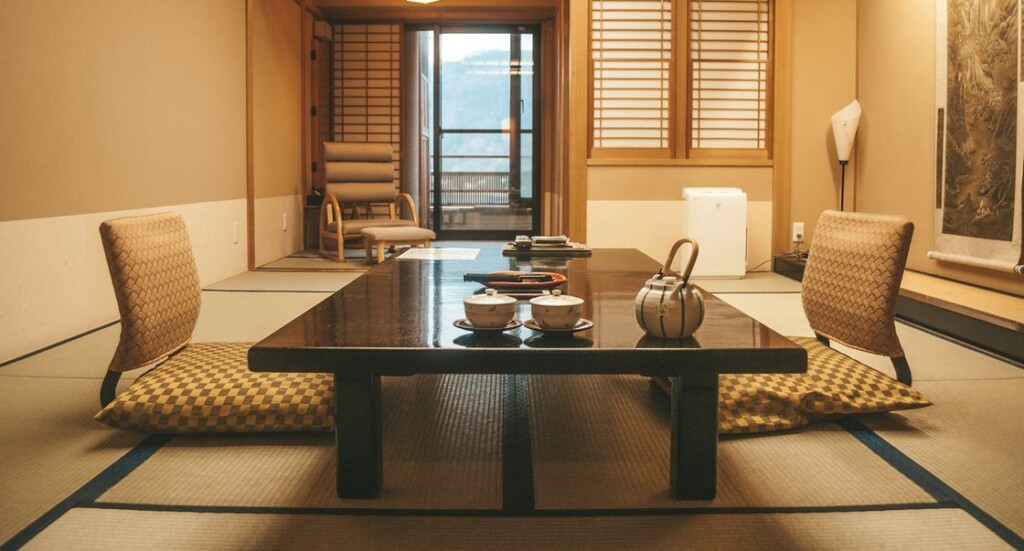
A modern tatami room – credit, Filiz Elaerts on Unsplash
Western admirers of Japanese aesthetic are keeping afloat tatami craftsmen in Japan, where modernity and maintenance requirements are driving down interest in this artisanal form of flooring.
From Europe to the US and even in the Middle East, eager importers of tatami mats now account for a sizable amount of orders from workshops like that run by Mr. Fumio Kuboki.
Kuboki is just the latest of his kin to run the family business which has been making tatami mats for 280 years. He still sells mostly to the Japanese market, but substantial help is coming from across the Pacific.
Half of the company’s international orders come from the US, Kuboki told the Japan Times.
For hundreds of years, a Japanese house wouldn’t be complete without wall-to-wall mats made of woven grass, called tatami. Made of tightly woven igusa grass, they were the standard feature in all dry rooms.
But one of Japan’s great marvels is that, even with as characteristic and attractive a traditional culture as it cultivated over the centuries, its modern aesthetic and lifestyle is almost just as iconic. As a result, the tatami mat has become somewhat neglected among Japanese crafts: reminiscent of your grandparents house and rural living.
Western-style flooring began to be the norm starting in the 1970s, and China began mass producing synthetic tatami that was easier to clean, longer-lasting, and cheaper to replace. As a result, it’s estimated that every year, 40 traditional tatami makers close up shop for good.
Yet for the increasing number of foreign residents, tatami represents the attractiveness of the Japanese aesthetic, and as well as installing it in their residences in the country, many of them bring it back to Europe or the US.
Arno Suzuki, a professor of architectural design at Kyoto Tachibana University who has studied the use of tatami in Spain, Italy and France, told the Times that seeing the appreciation for tatami among the rest of the world has somewhat reminded the younger generations of Japan of its value
Having a tatami “space” in an apartment or house is suddenly not as uncool as it once was.
“Nowadays they have a tatami space—not a tatami room, but at the corner of their living room they have three or four tatami mats, and they enjoy it. And also, many people realize that it’s better for when—especially when they have small kids, like toddlers and babies, it’s safer for them to crawl,” Suzuki told the Times.
In the city of Kobe, Taro Mano is the 4th in his family to take over the 70-year-old tatami business. He too has seen a rise from foreign buyers in countries like those Suzuki studied in.
“Tatami is a kind of symbol of Japan. It’s an easy way to express a Japanese atmosphere, even in other countries,” Mr. Mano said, adding that he first thought the interest would come from the United States, but it came to be far more diverse than that.
Mr. Kuboki makes some 10% of his revenues from overseas sales, with many of his products being stocked year-round at Japan House in Los Angeles. 100 years ago, no one ever wondered what else could be made of tatami, but now, whether it’s a coaster or a book cover, the artform is being reimagined.“Every day I talk with visitors and listen to what kind of tatami they want,” Mr. Kuboki said. “The products that are selected and loved by people are the ones that will naturally become the future of tatami. The future of tatami will be decided by customers.” Western Tatami Mat Mania Keeping Alive Japan’s Traditional Woven Grass Flooring Industry
It’s summer so kids’ playdates and birthday parties might start moving from the playground to the pool.
I research how to prevent drowning. I’m also a mum of two kids living in a house with a pool. So water safety is always front of mind.
Drowning deaths are at a record high in Australia. For pre-schoolers, this often happens in backyard pools. Although school-aged children have a much lower risk it’s still important to be vigilant.
Here are some key questions to ask and things to consider before you accept an invitation to a pool party or host your own.
With these tips, you’ll be able to navigate pool safety while ensuring the kids have heaps of fun.
Not everyone knows how to swim
First, think about your child’s swimming ability. Have they learned to swim? Do you know how their ability stacks up against their peers? Check their skills against the recommended minimum national swimming and water safety benchmarks for their age.
Perhaps some top-up lessons or some intensive lessons over summer might give their skills a boost ahead of a busy swim season.
As important as swimming skills are, so too is knowing how to be safe around the water. Have you talked to your kids about water safety? Are they mindful that others may not be able to swim as well as they can and may not be comfortable disclosing this to their friends?
Have you discussed how dangerous it can be to hold each other down under the water or hold their breath to swim to the end of the pool repeatedly? It can lead to someone blacking out.
It’s also not just about drowning. Knowing about water depth, the dangers of diving into shallow water, and not running around a wet and slippery pool can help avoid injury.
It’s not just about the kids
You also have a more direct role in keeping everyone safe. If you’re hosting a playdate and planning to include a swim, have you checked with the child’s parents? Ask about children’s swimming abilities or fears.
Before everyone hits the water, discuss your pool safety rules and expectations with the kids, including your own. My kids, and their friends, are very used to my “lifeguard lectures” by now.
An important part of playing lifeguard is supervision. If your kids’ friends are weak or poor swimmers, regardless of their age, you should be in the water with them. This is usually more fun anyway.
For older kids and more confident swimmers it’s still best to supervise from a distance (maybe poolside) and be dressed ready to get into the water in an emergency.
If you’re expecting more than a couple of kids, you might need more than one adult to ensure adequate supervision (and keep your stress levels down). Ensure each person’s supervision responsibilities are clear to avoid tragic miscommunications, such as: “I thought you were looking after them.”
Have you refreshed your CPR skills lately? Does your pool have a CPR sign you can refer to? Is your pool fenced and compliant? Does the gate close and lock on its own?
What about at someone else’s house?
Are you confident in your child’s ability to swim and be safe around the pool, if you’re not there? Have the hosts asked about your child’s swimming ability and any concerns? If not, you should be proactive and flag them.
Remember that eveyone’s definition of “can swim” is different. Would the hosts mind if you stayed to help supervise?
If you’re going to do the “drop and run”, will the adults hosting be supervising?
How vigilant will they be? Will the adults be drinking alcohol?
Having the conversation early can ensure all parents involved are aligned on matters of water safety.
We’re heading to the local pool instead
Many of the same rules apply if you’re meeting up with friends for a swim at your local pool.
Conditions here are more controlled with depth markers and safety equipment. But none of this replaces good swimming skills and safe behaviours.
Although lifeguards are on hand to help should anything go wrong, they are not a substitute for active parental supervision and shouldn’t be treated as babysitters.
In fact, reports of aggression and verbal and physical abuse of lifeguards are increasing, so please be respectful and keep your cool.
Keep yourself safe too
Kids aren’t the only ones who can get into trouble in the water. Adult drownings in a variety of different waterways are also on the rise.
So if you’re hitting the pool this summer, avoid alcohol around the water. You can even be impaired the day after heavy drinking.
Older adults can also be at risk of drowning in backyard pools due to medical incidents, such as a heart attack, or accidentally falling into the water.
If you keep all these issues in mind, we can all have a safe and enjoyable summer by the pool.
Amy Peden, NHMRC Research Fellow, School of Population Health and Co-founder UNSW Beach Safety Research Group, UNSW Sydney
Watching your teenager grieve the loss of their social media account can be confronting. Many are genuinely distressed or struggling with the change, and many parents are unsure how to respond.
Australia’s social media ban, which started this week, means teens under the age of 16, have lost accounts to platforms such as TikTok, Snapchat and Instagram.
These are the platforms they relied on to talk to friends, find support, follow interests, or decompress after school.
While some teens feel relieved or not fussed, many are feeling sad, worried, powerless, helpless, disappointed or angry.
These aren’t signs of entitlement. They’re signs your teen may need support.
A mixed bag: here’s what more than 17,000 teenagers think of the ban.
Why losing social media hits some teens hard
There’s a neurological reason why the loss of social media can hit teens so hard.
Adolescence is a period of enormous social, neurological and emotional change. Teen brains are wired for peer connection, and their brains become more sensitive to feedback from their peers. Meanwhile the brain regions responsible for impulse control, managing strong emotions and long-term planning are still developing.
When teens say losing social media feels like being “cut off”, they aren’t being dramatic. Their neurological systems are reacting to a loss of social reinforcement.
Connect and validate their feelings
If your teen is upset, the instinct might be to justify the government’s decision or to explain why life offline is healthier. However, advice lands badly when a young person feels unheard. Teens often perceive even well-meaning advice as criticism.
Feeling angry or sad makes total sense. I know you used those sites to stay connected with your friends.
Losing your account feels huge. It’s a big change to deal with.
Then pause and listen.
Or you can sit with them without saying much. Some teens prefer parents to just listen sympathetically.
Supporting your teen doesn’t mean you agree with their perspective. It means you’re acknowledging their emotional reality. When teens feel understood, they become more open to talking – and eventually, to problem-solving.
The first two weeks may be the toughest. Some teens may experience grief and withdrawal-like symptoms: boredom, anxiety, irritability, restlessness and a powerful urge to “just check once”.
Help teens understand these reactions are normal. Social media platforms are designed to keep users hooked.
Understand the ‘why’ together
It might help to explore the governement’s concerns about social media with your teen – but not as a lecture. The ban isn’t about social media being inherently bad, but about how platforms are designed.
You can talk about algorithms maximising engagement using the same mechanisms as gambling to encourage dependence and addiction. Or you can talk about how feeds are personalised to keep users scrolling for longer.
Ask your teen what they think about these concerns. This isn’t about convincing them the ban is right, but developing their awareness of how digital platforms work. This prepares them for use when they’re older.
find community around a niche interest or identity?
share creative work, or find outlets for self-expression?
de-stress after a busy day?
know what others are talking about?
Once you understand this, you can help them find alternatives that genuinely meet their needs. They might be able to maintain:
connection by organising a get-together, make FaceTime calls, join clubs, or have group chats on allowed platforms
creativity by finding other outlets such as photography, video-making, music, writing, art, or gaming communities with safe age settings
relaxation by reading, exercise, podcasts, nature time, shows you can watch together.
Many teens won’t immediately know what they want to try. They may need time and space to have their feelings first. Once they are ready, inviting them to brainstorm a few options (without pressuring them) can help.
Problem-solve together, notice efforts
Once emotions settle, gently shift to collaborative problem-solving. You can ask:
What’s been the hardest part this week?
How could we help you stay connected in ways that are allowed?
What would make this change even a tiny bit easier?
Let your teen lead. Young people are much more likely to follow through on strategies they helped design.
Even small signs of coping deserve acknowledgement. You can say:
I can see you’ve been finding other ways to talk to friends. That takes maturity.
I’m proud of how open you’ve been about how you’re feeling.
But if something doesn’t work, treat it like an experiment. You can say:
OK, that didn’t help as much as we hoped. What else could we try?
Check in later
For teens, losing social media isn’t simply losing an app. It can feel like losing a community, a creative outlet, or a place where they felt understood.
Keep an eye out and offer opportunities to check in with how they are going. This ensures teens don’t navigate this transition alone or become secretive – and that your relationship remains a source of support.
The eSafety Commissioner website explains why the rules were brought in and how they will work; youth mental health service headspace has seven tips for navigating the social media ban; the Raising Children’s website explains how teens use technology for entertainment; tips for digital wellness and how to draw up a “contract” for use of a child’s first phone are also available.
New Delhi, (IANSlife) Friendship is a bond that knows no limits, and as Friendship Day approaches, it's time to commemorate the particular bond we share with our closest buddies. Social media has become a vital part of our lives in this digital age, and it provides a perfect platform for us to express our love and appreciation for our best friends. Whether you're physically separated or only a few feet apart, social media can help you make your closest buddy feel particularly special on this happy occasion.
Moj creator Sushil Brahmbhatt shares a sincere guide with five social media actions that will certainly make your BFF smile. Let's get started and spread the love with these heartfelt and imaginative ideas!
The Nostalgic Flashback: Craft a touching post/video celebrating your cherished moments together, inviting your BFF to embark on a nostalgic journey down memory lane, honoring the beautiful path of your friendship. Share it on social media, accompanied by a heartfelt caption that weaves the tale of your bond. Let these precious images and memories serve as a gentle reminder of the incredible adventures, laughter, and unwavering support you've shared throughout the years. This heartfelt gesture is certain to touch their soul, evoking a lovely sense of reminiscence and appreciation.
Personalised Video Message: Create a video message for your best buddy expressing your thoughts and emotions with a touch of humor. Tell them how much they mean to you and how thankful you are to have them in your life. Share some embarrassing stories, or inside jokes, or even organize a virtual toast to your relationship. Posting this video on your social media profile will not only make your BFF feel treasured, but it will also demonstrate the depth of your friendship to others.
A Friendship Playlist: Create a playlist of songs that represent your friendship or have a common meaning. These might be music that reminds you of each other, tunes you've danced to together, or melodies that have helped you through difficult times. Share the playlist on social media, and don't forget to explain why each song is meaningful to you. Your BFF will appreciate the thought and effort that went into this musical gesture.
Virtual Celebration: If physical distance stops you from meeting your best friend on Friendship Day, organise a virtual get-together. Plan a group video conference with mutual friends and participate in fun activities together. You can play online games, watch a movie, or simply chat and catch up with your friends. Take screenshots of the virtual meeting and post them on social media with a caption on how distance will never dim the brightness of true friendship.
Appreciation Post: Spend some time publicly appreciating your best friend by making a sincere post on your social media site. Express your emotions and explain why your best friend is the most amazing person in your life. Mention what sets them apart, how they've made a difference, and how they offer joy to your life. This public display of affection and adoration will not only make your BFF feel special, but it will also motivate others to cherish their friendships.Friendship Day is all about acknowledging the incredible bond you share with your best friend and showing them just how much they mean to you. With these five awesome social media gestures, you can brighten your BFF's day and make this Friendship Day an unforgettable celebration of your beautiful friendship. Let the world witness the power of true friendship and join in on the joyous festivities. 5 heartwarming gestures for your best friend | MorungExpress | morungexpress.com
You may be surprised that fully 85% of parents whose kids previously moved out are delighted their birds have came back to the nest, according to a new poll.
A survey of 2,000 parents whose kids in their 20s live at home aimed to figure out what this experience of housing their 20-somethings has been like—and it uncovered some interesting trends.
42% had kids who initially moved out, while 58% said their chicks had never flown the coop.
For those who spread their wings and left their parent’s house, the top reasons included: to experience living on their own (41%), go to college (29%) or to live with a partner (26%).
Of these respondents, seven in ten said they recall the moment their child asked to move back in (69%). 42% agreed the reason for moving back was not begin able to afford living on their own, and 33% simply wanted to save money (perhaps for a down payment on their own mortgage).
Conducted by Talker Research for BOK Financial, the survey found that convenience also played a factor in why these adult kids returned home (32%).
Most interestingly, one-quarter of the homebound youth wanted to be closer to their family (25%)—and nearly half of parents (45%) said it actually improved their relationship when the child moved back.
A quarter of those surveyed admitted they weren’t financially prepared to have their child live with them later in life (27%), but just 19% said the situation had a negative impact on their own financial planning or retirement plans.
“If you have adult kids living at home—which isn’t uncommon nowadays!—it’s an opportunity to model good financial practices while encouraging them to save diligently,” said Leasa Melton, manager of product strategy for BOK Financial.
29% reported their child rarely (or never) contributes to the household financially, but Melton encourages patience.
“They’re often living at home to save up for their next step of independence and having them in your house gives you a chance to cheer them on in a safe environment.”
“Like everything else in parenting, it’s a balance between letting them learn and helping guide them.
On average, parents estimate that their kids will remain under their roof for another 16 months, while a third of respondents aren’t sure about their children’s tenure (32%). Indeed, 56% have doubts about their kids being financially prepared now to leave home at this time.
For their children to gain financial independence, 28% of parents wish there were more resources for financial education or planning. However, a whopping 90% agreed that it was important for them to teach their children financial lessons before they exit high school.
Teaching Good Financial Habits
Just 20% would grade their child’s understanding of financial matters with an A—although 27% gave the same grade to themselves.
There’s always time to learn, though. Parents have taught their children all sorts of lessons in adulthood, primarily finance-related (66%), domestic-related (59%) and lifestyle-related (52%).
A third of parents also recall being late bloomers, sharing that all of the financial advice they taught their child was learned in adulthood (32%).
While their adult children have been living with them, parents reported having emphasized lessons on how to save money (77%) and budget (71%), above all. Parents also stress the importance of paying down debt (53%) and investing (46%).“Children might not always pick up on financial lessons when they are young,” said Melton. “But as they gain independence, living at home provides another opportunity to help them establish good financial habits—a win for both parents and their adult children.” Parents Reveal the Pros (and Cons) of Having Adult Kids Still Living at Home
Craig Campbell and his Doberman named Night – Supplied, Craig Campbell
A Canadian dog-lover has gotten to learn all over again why they call the animal Man’s best friend after his own brave pooch deterred a bear attack.
On a familiar trail in Cochrane, near Calgary, Craig Campbell was on a walk with his dog, a 10-year-old Doberman named Night. It was a trail he had taken with Night several times, but the routine physical activity suddenly turned into a life or death situation.
There in the bushes, a grizzly sow with her 2 cubs had wandered into the woods sandwiched between farms. Even still, Campbell had his bear spray, but having it is only half the challenge; the other half is using it.
“I managed two thoughts,” Campbell recalled in an interview with CTV News. “First of all, I said to myself, ‘This can’t be happening.’ And then I realized I wasn’t going to get the bear spray out (in time) and I said to myself, ‘I’m about to die.’”
Just then, Night came from beside in a flash and put himself between man and bear. Towering 7 feet on its hind legs above the crouching, barking dog, it gave enough time for Campbell to arm himself, but by then the bear huffed and went back to her cubs.
An avid trainer, Campbell has for years been training Night in the German sport of Schutzhund, often used to train the breed and others like it as police dogs. He believes this is why Night ran at the bear when others might have ran away, tail between their legs as it were.
“He is a very brave dog,” Campbell said. “To have an animal that literally stood between me and death, there’s no better friend than that.”
The story won Night an award in Purina’s Animal Hall of Fame for 2025, Canada’s longest-running pet recognition award. Inductees receive a medallion, recognition at a ceremony in Toronto, and one year’s worth of free pet food.Despite the sports and the bravery, Campbell said Night is a playful dog too, loving few things more than jumping into a stream and watching minnows swim through his paws.
Independent Makeup Artist, Kelenuo Tepa, creating magic strokes on her clients through makeup.
Vishü Rita Krocha, Kohima, every typical Naga family, Kelenuo Tepa was also expected to appear for competitive examinations and secure a white-collar job. But even as a child, she was always fascinated by creative things like makeovers. Given her interest, she vividly remembers how people would often approach her for a glam up and also appreciate her works.
Having nurtured such a dream from a young age, she indulged herself in a lot of self-practice by watching videos and updating herself with the latest trends in the makeup industry. Although interestingly, she is a Commerce Graduate, her love for makeup never wavered. “During those days, I didn’t know that I could pursue a professional course in Makeup”, she related to The Morung Express.
Throughout her high school, she excelled in Mathematics, and pursuing Commerce seemed like the best choice. But as an independent makeup artist today, she said, “studying commerce has not gone to waste. It is helping me in the venture I have chosen.” In between her years of education, she would have brides and others approaching her to do their makeup, and when it became quite frequent, that was when she also started rediscovering her career path again.
“I felt that this could be God’s plan for my life. I would pray earnestly, asking God to show me a sign in my dream, and when He finally did, coupled with the motivation I received from various clients, I underwent a professional makeup artist class”, she recalled her journey into becoming a professional independent makeup artist.
Kelenuo Tepa is especially driven by the profound impact that makeup has on people, even as she expressed that, “it’s the thrill I feel when I use my talent to enhance a person’s natural beauty.” “I believe doing makeup is not just a job, but it is a powerful form of transforming people to feel beautiful and confident”, she underlined.
Observing that with the change of time, there are many people looking for makeup services for every occasion, she also highlighted that, “it’s not only the bride but also the wedding guests, families, and even those who are attending a birthday party, etc.”
Most of her clients are looking for makeup that emphasises their natural look. This, she explained, is done with the help of “products and techniques that create a flawless and healthy looking base while still allowing their individual features to shine through rather than drastically altering one’s natural appearance.”
Glamming up Oscar-winning composer A.R. Rahman
Even as she ventured into pursuing makeup professionally, Kelenuo Tepa also got the opportunity to glam up Oscar-winning composer A.R. Rahman, who was the guest of honour at the 25th Edition of Hornbill Festival last year.
“Although I had been doing makeup all my life, I was very nervous to work with a celebrity like him. But I took it as an opportunity”, she recalled. Stating that he was friendly and made the process very comfortable, she also elatedly added, “he said he was very happy with the service and also took a photograph with me in memory of it.”
Glamming up the celebrity artist involved close to one hour prior to the event and touch-ups on the makeup throughout the day during breaks. The difference between men’s and women’s makeup is that men require a shorter duration while women’s makeup takes more time as it requires more detailing involving the hair, eye, etc., which is a long procedure, she further highlighted.
However, for both genders, she emphasised on achieving a natural finish and making it appear most natural. “Through my makeup, I want to bring out the best version of my clients, since makeup can be a powerful way for individuals to feel good about themselves and build their confidence”, she reiterated while also adding that, “my signature style would be the dewy makeup, which my clients mostly prefer.”
Her clients mostly include bridal makeovers, but it also extends to the fashion industry, where she works with models, pageants, and song artists for music videos, etc. Further highlighting that occasion makeup is cheaper as compared to bridal makeup, she expressed that, “the prices also change with the distance of location since I work as a freelancer. And my makeup services are open for bridal, groom, beauty pageants, parties, fashion industries, and to anyone who loves makeup.”
Kelenuo Tepa also gives classes on professional and self-makeup, enabling those who enrol to get more knowledge about different types of makeup, such as Thai, Douyin, Korean, Indian, etc. While there are always clients looking for makeup every season, the maximum demand, she revealed, is from October through January, with lots of weddings, shows, and events taking place during that time.To those aspiring to become a makeup artist, she enunciated that, “If your passion lies in this field, embrace your creativity and bring out the best artistry in you because nowadays, this profession offers a lot of positive, high-paying opportunities.” Building confidence & transforming people’s lives through Makeup | MorungExpress | morungexpress.com
Beard can also change the appearance of face look. It increases your personality and makes you different from others. As many boys watch some other to have bearded and they try to adapt the same. But it is not necessary that a beard suits to one will also suit to you. Beard shape depends on the face’s shape. There are so many different type of beard that you can choose and apply to your face. The trim beard is in fashion and liked by many women. A man looks matured by keeping trimmed beard. Goatee beard is also popular. It is also called as French cut beard. This beard gives a unique identity to your personality. It makes you unique from rest. It is the best option to hide wrinkles on your chin. Handle Bar Moustache: This style is adopted by the guys whose have commanding personalities. Most of the army officers can be seen in this style. The wrestlers also keep such types of moustache. This type of moustache helps them to increase the confidence level. So, keeping beard is not a sign of rough personality these days. Go to a reputed salon and consult your barber and enjoy keeping the beard that suits to your face. Tips to maintain a beard: (1) The first thing when you are planning to keep a beard, it should be very clear that what the appearance you want for your face. See yourself in the mirror with keeping the idea to grow a beard. The beard should be according to your face shape. Before keeping a beard make sure that the beard will suit to your face or not.(2) If you are planning to keep a beard, stop shaving. I know, it is very easy to say, but difficult in practice. If you allow yourself to stop shave and let the beard to grow in full grace, it will help you to lot in selection of style. (3) Re-examine your face after weeks and weeks. Two weeks are more than enough. The disassembled beard on face can lost your face appearance in the beginning, but keep patience. Once you have full beard, then consult to beard parlor and go for proper style. (4) When you will re-examine your face, you can find the areas where hair grows more and best. These can be in the form of chest hair or sparse cheek growth. Re-examination of face will help to recognize the strengths and shape of hair. (5) Now there is time to give a shape to beard. Now you can go to the reputed beard parlor and consult with him that what type of beard will be suited to your face. It all depends upon your cheek growth, face shape, chin shape and also on mustache. (6) After selecting a style, allow the beard to grow with open mind. Thus by choosing the above mentioned tips, you can fulfill the dream to grow and maintain a beard, which make your appearance attractive. Source: Medley News, Image: flickr.com
Dixon Trail wildfire-resistant neighborhood in CA – KB Homes
One of the nation’s largest homebuilders have created a community of entirely wildfire-resilient homes to help reduce homebuyers’ risks of loss if another Palisades or Dixie fire comes roaring by.
With nothing flammable on the exterior or the roofs and curated desert foliage around the gardens and lawns, the homes aren’t necessarily fireproof, but the design of the entire community was informed by identifying and eliminating the most common causes of homes catching fire.
Available now, and with some already off the market, KB Homes estimates their price at around $1 million, a price consistent with disaster-proof housing around the country.
The Eaton and Palisades fires struck with little warning and launched embers across highways and valleys setting multiple communities ablaze. The rising risk of wildfires in the rural areas of Southern California comes with rising insurance premiums, which result in rising rents, higher mortgages, etc.
In many cases, private insurers are declining to issue new policies for homes in areas at a high-risk for wildfires.
KB Home’s Dixon Trail community in Escondido, California is designed to the Insurance Institute for Business & Home Safety’s (IBHS) highest level of protection against direct flame contact, radiant heat, and embers, which helps to meaningfully reduce the likelihood of wildfire spread.
The Dixon Trail community will have 64 beautifully designed homes upon completion. It will receive a provisional neighborhood-level designation based on its design, confirming that the community has implemented preventative measures to reduce the likelihood of initial ignitions from an approaching wildfire, protect against embers that could spark spot fires, and slow fire spread if ignitions occur.
Research shows that these measures at the community level are key in preventing wildfires from becoming catastrophic. As a model of wildfire resiliency, Dixon Trail has incorporated research-backed mitigation actions into the design of its homesites, including the installation of Class A fire-rated roofs, noncombustible gutters, upgraded windows and doors, and ember and flame-resistant vents as well as the creation of a five-foot noncombustible buffer around structures.
At the neighborhood level, wildfire risk is reduced by separating almost all structures by more than 10 feet and decreasing potential fuels through the use of fire-resistant materials, like all-metal fence systems.
“With fire becoming an increasingly common threat in the West, it’s crucial to reconsider how we construct communities in fire-prone regions,” said IBHS CEO Roy Wright. “KB Home is at the forefront, implementing our research-driven wildfire mitigation strategies for both the parcel and neighborhood levels at Dixon Trail.”
Already set within a wind corridor, Dixon Trail is actually in a high-risk area for wildfires, particularly for wind-blown embers coming off the wooded slopes all around the community.Previously, GNN has reported on storm and hurricane-proof housing on and along the Gulf Coast, including durable, three-story homes with a community-level flood control system, and Deltec’s cylindrical houses mounted on stilts, which allow winds to pass around and under the structure without smashing into it. California Developer Builds First Neighborhood Where All the Homes Are Resistant to Wildfires
Western India is home to one of the hottest deserts on Earth, and the residents of the western states of Rajasthan and Gujarat have traditionally used architecture to keep cool.
Utilizing principles of thermodynamics, one house in the city of Bharuch, where temperatures can hover at 110°F for days during the summer, stays cool all day and all summer without ever needing the air conditioning switched on.
In fact, the building’s interior is a breezy, green, “introverted space” that passively cools the air inside by a whopping 18°F all using simple science.
“We used the direction of the winds, design, and cooling materials to lower the heat of the house,” Samira Rathod, the principal architect of the ‘Cool House’ and founder of Samira Rathod Design Atelier (SRDA), told The Better India reporting on the story.
“The plot had three buildings around it and a road on one side. The only view that the house would have was the neighbor’s building. An introverted house was a good choice in that sense. It is basically one where the house opens up when you go inside it. From the outside, it would look like a rather closed structure,” she explains.
Indeed, it might even be called depressing, as its front door is hidden between two giant, 18-inch thick facades of gray and black. But inside, a design reminiscent of a railroad track sees the rooms divided on either side of a giant split in the house that was built to align with the current of the wind off the ocean.
Bharuch is situated on the Indian Ocean, and despite the scorching temperatures, at various times during the day, a breeze is present throughout much of the city. The narrow slit in the house leverages the Venturi effect, which states that the narrower the space an element must pass through, the faster and colder it becomes.
The principle can be seen in human breath, which through an open mouth emerges hot, but through pursed lips emerges cool. The same effect can be seen in rivers, where narrow channels cause the water to speed up and form rapids, while wide, flat lands cause the water to slow down.
The wind from the sea enters the split and hits an interior courtyard where a pool of water cools it down further. Entering the 10,500 square foot home interior, a second courtyard aids in circling it around to each room, where the family lives with three generations.
“The house looks inwards and we have created courtyards with trees so it feels like you are looking outside rather than inside,” said Rathod.
Mirai House of Arches in Bhilwara – credit Sanjay Puri Architects
GNN has previously reported on Indian architecture in this part of the country. Natural designs like envelopes, air channels, and even “wind towers” could, and probably should, become normal designs in parts of the world where temperatures are predicted to rise, such as the southwest United States or Southern Europe.
In Rajasthan’s city of Bhilwara, a “House of Arches” ensures that no part of the building is exposed to the sun thanks to a building envelope that provides shade and air circulation.The science lies in the separation of the envelope from the house itself. Even as the rays of the sun heat the envelope, wind and moisture evaporation can make their way into the space between the house and the envelope to reduce the radiative heat that enters the living areas. No AC Needed in India’s Heat: Inside Gujarat’s Eco-Friendly ‘Cool House’
I don’t know the first thing about NFL football, but I have no trouble relating to Buffalo Bills running back Ty Johnson’s struggle to overcome bouts of crippling self-doubt.
A few years back, Johnson was dropping balls and questioning his abilities at every turn.
“There was a lot of things as a player I was experiencing, and you know it makes you question yourself as a player,” Johnson told WKBW news reporter Michael Schwartz a few days before the Bills trounced my hometown team, the Ravens.
Johnson then posed a question that’s plagued us all, at one point or another: “Do I deserve to be here?”
Fortunately, Johnson found a way toward, as he put it, “having positivity” by writing affirmations like I’m great or Be present on his wrist before every game.
This solution might not work for everyone, but it’s clearly helped Johnson to put doubt in its place so that it no longer dominates his every waking moment.
We should all be so lucky. Living with doubt breeds a lot of uncertainty, as we postpone decisions and plans, not sure how they’ll turn out. Furthermore, as mental health professionals have long known, self-doubt often leads to a vicious cycle involving anxiety, procrastination, low self-esteem, and depression.
The good news? We have the power to turn this around—to go from doubtful to purposeful.
My own lifelong strides with doubt led me to conversations with doubters around the world—from artists to entrepreneurs. And I’ve come up with five strategies every self-doubter can adopt to shift their mindset toward feeling motivated and more self-confident.
1) Change the channel. Competing inner voices clamor in our heads for attention. Your “doubt monster” may be among the loudest and most persistent—but it’s not the only voice. Acknowledge the fear and insecurity. Then invite your self-affirming voices to speak up: Look at what I’ve already accomplished! Put the positive voices on repeat—and even try saying them out loud in the mirror each morning. You’ll be surprised at how changing the channel will alter your perspective.
2) Focus on your ‘why.’ When the jitters kick in, take a beat and remind yourself why you’re doing the work you do in the first place. Whether you’re a major league athlete or an entrepreneur embarking on a new start-up, you’re going all-in on something you love, something that lights you up and gets you out of bed in the morning. Your ‘why’ holds the key to driving your passion forward. Any doubts you feel are worth the price—and it’s not their job to slow your roll.
3) Put your doubts to good use. Doubt can be a force for good. Think of the surgeon who pauses before cutting into a patient. Doubt focuses your attention. Your doubts are not telling you “no,” they’re telling you where to sharpen and apply your skill, talent, and intellect so as to achieve your goal. This is a classic “yes-and” strategy: acknowledging doubt’s downside while harnessing its upside.
4) Gather the right allies. Anytime you take a big creative risk, friends and family will question your motives and possibly your sanity. You cannot comfortably make big moves surrounded by doubters who exacerbate your doubts. Instead, expand your networks to identify more allies—people and institutions that will back you and encourage you every step of the way. Dial down the adversaries and dial up the allies.
5) Renegotiate your relationship to risk and reward. Our culture prizes efficiency and a fast return on investment. But anytime you set an ambitious plan in motion, doubt quickly kicks in when conventional measures of success, whether profit or external validation, do not materialize. Try uncoupling risks from traditional rewards. Start-up companies and novelists often fail many times before succeeding. The time and effort invested in your passion project or career is intrinsically valuable; productivity and accolades are not the only—or even the best—measures of a worthy pursuit.
Doubt is a trickster, often masquerading as fear and lack of confidence. It wields enormous and sometimes undetected influence on how we make decisions. All the more reason to take stock of your self-doubts and ask whether they are serving you or holding you back.
Never forget that at every stage of life, we retain the capacity to change in ways that give our lives meaning and show us we have not yet finished becoming who we really are. There is room to grow and discover. Chances are, you’re still well on the way to finding that out for yourself. Don’t let self-doubt hold you back.Amy L. Bernstein is the author, most recently, of Wrangling the Doubt Monster: Fighting Fears, Finding Inspiration, an inspirational book for self-doubting creatives. She is an award-winning novelist, a former journalist, and a certified nonfiction book coach helping authors find their best path to publishing. She also teaches workshops and brings an empowering message to conferences and podcasts around the world. Five Ways to Move Beyond the Monster of Self-Doubt and Pursue Your Passion:
News Track India, Washington, Nov 7 (ANI): Men and women respond differently to the same level of stress, a new study has claimed. James Harnsberger and his team from the University of Florida, Gainesville, enrolled the study subjects from community or religious groups who were considered "committed", that is, strongly affiliated with a group identity. They were audio - visually recorded while
coached by the researchers to vocalize both truthful and deceptive statements with the threat from them that the recordings would be shown to fellow community members for judgment. In some conditions,
stress was also induced by the administration of electric shock at levels calibrated by the individual volunteer, while other stress responses were measured by pulse rate, skin conductance level, pulse rate, and two self - report scales of perceived discomfort. The researchers found that the male and female subjects responded differently for the same level for stress, with men abiding by the "tough guy"
response."In male subjects, higher degrees of physiological arousal were under- reported - what you might call a 'tough guy' response," James Harnsberger, the lead researcher, said. "The results were a surprise. We had expected that higher stressors would prompt both increased physiological response and increased self-reported stress levels in all test subjects fairly uniformly for both men and women," he added. (ANI) , Image Fickt Link1, Link2, Link3, Link3, Link4, Source: Daily Protein





 Craig Campbell and his Doberman named Night – Supplied, Craig Campbell

 Dixon Trail wildfire-resistant neighborhood in CA – KB Homes
 The Gujarat ‘Cool House’ – credit SRDA
 Mirai House of Arches in Bhilwara – credit Sanjay Puri Architects
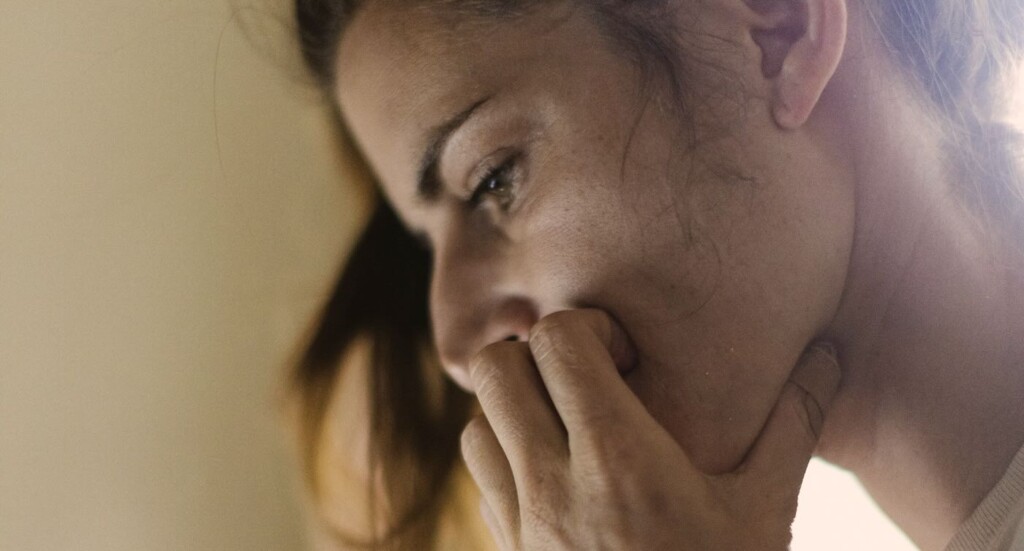 Photo by Daniel Martinez For Unsplash+


