How to handle teen ‘big feelings’ as the social media ban kicks in

Christiane Kehoe, The University of Melbourne and Elizabeth Westrupp, Deakin University

Watching your teenager grieve the loss of their social media account can be confronting. Many are genuinely distressed or struggling with the change, and many parents are unsure how to respond.

Australia’s social media ban, which started this week, means teens under the age of 16, have lost accounts to platforms such as TikTok, Snapchat and Instagram.

These are the platforms they relied on to talk to friends, find support, follow interests, or decompress after school.

While some teens feel relieved or not fussed, many are feeling sad, worried, powerless, helpless, disappointed or angry.

These aren’t signs of entitlement. They’re signs your teen may need support.

A mixed bag: here’s what more than 17,000 teenagers think of the ban.

Why losing social media hits some teens hard

There’s a neurological reason why the loss of social media can hit teens so hard.

Adolescence is a period of enormous social, neurological and emotional change. Teen brains are wired for peer connection, and their brains become more sensitive to feedback from their peers. Meanwhile the brain regions responsible for impulse control, managing strong emotions and long-term planning are still developing.

When teens say losing social media feels like being “cut off”, they aren’t being dramatic. Their neurological systems are reacting to a loss of social reinforcement.

Connect and validate their feelings

If your teen is upset, the instinct might be to justify the government’s decision or to explain why life offline is healthier. However, advice lands badly when a young person feels unheard. Teens often perceive even well-meaning advice as criticism.

Accepting their feelings about the changes helps validate their experience. You can say:

Feeling angry or sad makes total sense. I know you used those sites to stay connected with your friends.

Losing your account feels huge. It’s a big change to deal with.

Then pause and listen.

Or you can sit with them without saying much. Some teens prefer parents to just listen sympathetically.

Supporting your teen doesn’t mean you agree with their perspective. It means you’re acknowledging their emotional reality. When teens feel understood, they become more open to talking – and eventually, to problem-solving.

The first two weeks may be the toughest. Some teens may experience grief and withdrawal-like symptoms: boredom, anxiety, irritability, restlessness and a powerful urge to “just check once”.

Help teens understand these reactions are normal. Social media platforms are designed to keep users hooked.

Understand the ‘why’ together

It might help to explore the governement’s concerns about social media with your teen – but not as a lecture. The ban isn’t about social media being inherently bad, but about how platforms are designed.

You can talk about algorithms maximising engagement using the same mechanisms as gambling to encourage dependence and addiction. Or you can talk about how feeds are personalised to keep users scrolling for longer.

Ask your teen what they think about these concerns. This isn’t about convincing them the ban is right, but developing their awareness of how digital platforms work. This prepares them for use when they’re older.

Help teens rebuild what social media gave them

To support your teen, it helps to understand the function social media played in their life. Was it to:

  • connect with friends?
  • find community around a niche interest or identity?
  • share creative work, or find outlets for self-expression?
  • de-stress after a busy day?
  • know what others are talking about?

Once you understand this, you can help them find alternatives that genuinely meet their needs. They might be able to maintain:

  • connection by organising a get-together, make FaceTime calls, join clubs, or have group chats on allowed platforms
  • creativity by finding other outlets such as photography, video-making, music, writing, art, or gaming communities with safe age settings
  • relaxation by reading, exercise, podcasts, nature time, shows you can watch together.

Many teens won’t immediately know what they want to try. They may need time and space to have their feelings first. Once they are ready, inviting them to brainstorm a few options (without pressuring them) can help.

Problem-solve together, notice efforts

Once emotions settle, gently shift to collaborative problem-solving. You can ask:

What’s been the hardest part this week?

How could we help you stay connected in ways that are allowed?

What would make this change even a tiny bit easier?

Let your teen lead. Young people are much more likely to follow through on strategies they helped design.

Even small signs of coping deserve acknowledgement. You can say:

I can see you’ve been finding other ways to talk to friends. That takes maturity.

I’m proud of how open you’ve been about how you’re feeling.

But if something doesn’t work, treat it like an experiment. You can say:

OK, that didn’t help as much as we hoped. What else could we try?

Check in later

For teens, losing social media isn’t simply losing an app. It can feel like losing a community, a creative outlet, or a place where they felt understood.

Keep an eye out and offer opportunities to check in with how they are going. This ensures teens don’t navigate this transition alone or become secretive – and that your relationship remains a source of support.


The eSafety Commissioner website explains why the rules were brought in and how they will work; youth mental health service headspace has seven tips for navigating the social media ban; the Raising Children’s website explains how teens use technology for entertainment; tips for digital wellness and how to draw up a “contract” for use of a child’s first phone are also available.The Conversation

Christiane Kehoe, Senior Lecturer in Psychiatry, The University of Melbourne and Elizabeth Westrupp, Associate Professor in Psychology, Deakin University

This article is republished from The Conversation under a Creative Commons license. Read the original article.

Read More........

19-year-old Ritsala Thonger crowned Miss Kohima 2025

19-year-old Ritsala Thonger, Contestant No.16 was crowned Miss Kohima 2025 at the Regional Centre of Excellence for Music & Performing Arts (RCEMPA) Jotsoma on October 14. 19-year-old Neilanuo Sachü, Contestant No.2 and 19-year-old Kechangunuo Kelio, Contestant No.9 were adjudged first runner-up and second runner-up respectively.

19-year-old Ritsala Thonger, Contestant No.16, who aspires to be a social worker was crowned Miss Kohima 2025 at a glittering event held under the theme “Beauty. Health. Beyond” at the Regional Centre of Excellence for Music & Performing Arts (RCEMPA) Jotsoma on October 14.

19-year-old Neilanuo Sachü, Contestant No.2 and 19-year-old Kechangunuo Kelio, Contestant No.9 were adjudged first runner-up and second runner-up respectively.

During the question and answer round, Ritsala Thonger said failure does not define one’s journey but rather strengthens it. When asked her thoughts on whether men or women sacrifice more, she maintained that women are the strongest in the world and sacrifice more by giving up their dreams and careers for their loved ones.

Neilanuo Sachü felt that the biggest challenges faced by young women today is “women safety” while pointing out that this should not only be a privilege but a right. “Safety is not just physical safety but mental, emotional and digital safety”, she noted. She further maintained that what makes a woman powerful in today’s world is “her voice, and the courage to use her voice.”

Kechangunuo Kelio, who described herself as compassionate , resilient and curious in three words cited “character” as an important aspect of a true beauty pageant title holder.

Earlier, in her welcome note, Pelevinuo Rüpreo Co-founder of 4Front Event Management, noted that Miss Kohima is not just a beauty pageant but also about learning and advocacy. Dwelling on the theme, “Beauty. Health. Beyond”, she also highlighted that “beauty shines brightest when rooted in good health.”

Speaking on behalf of Kohima Science College, Jotsoma, the institutional partner for Miss Kohima 2025, Wenitso Kapfo, remarked that the Miss Kohima Beauty Pageant is a prestigious event and platform that has produced proud ambassadors of the Naga culture. He expressed hope to strengthen the partnership in the future while stating that their values alignnand further emphasized on but building character through the platform so that young people can become catalyst of change in the society.

The panel of judges included Lipokzulu Lemtur, General Secretary of BASN (Beauty & Aesthetics Society of Nagaland) as Chief Judge, Neisavinuo Mor, School Administrator & Headmistress of Footprints Academy, Dimapur, Dr Keduovinuo Keditsu, Consultant Surgical Oncologist & Medical Director of Putuonuo Hospital, and Ketou-ü Pfüsenuo, Miss Kohima 2022, 2nd Runner up.

Theja Sekhose was the show director while Peweu Tunyi Khamo was the official groomer and choreographer. Official designers for evening wear included faculties of TS Academy of Design while the official makeup artist team comprised of graduates of Evara Studio by Elilo and official designers for designer round were TS Academy of Design Class of 2024. Special performances were also presented by Azeno Nakhro, Khunyu T, Himshanchuba, and Thanggoumang Lotjem.

It may be noted here that Miss Kohima is presented by 4Front Event Management with the support of BASN and powered by Putuonuo Hospital Kohima.

Subtitle Winners
  • Miss Multimedia: Kechangunuo Kelio, Contestant No. 9
  • Miss Talent: Kechangunuo Kelio, Contestant No.9
  • Miss Beautiful Smile: Methasunu Luho, Contestant No.7
  • Miss Perfect 10: Ritsala Thonger, Contestant No.16
  • Queen of Hearts: Neikecüno Vimero, Contestant No. 10 
Read More........

Britain’s Strongest Grandmother Breaks 4 World Records Just Months After Taking Up Powerlifting

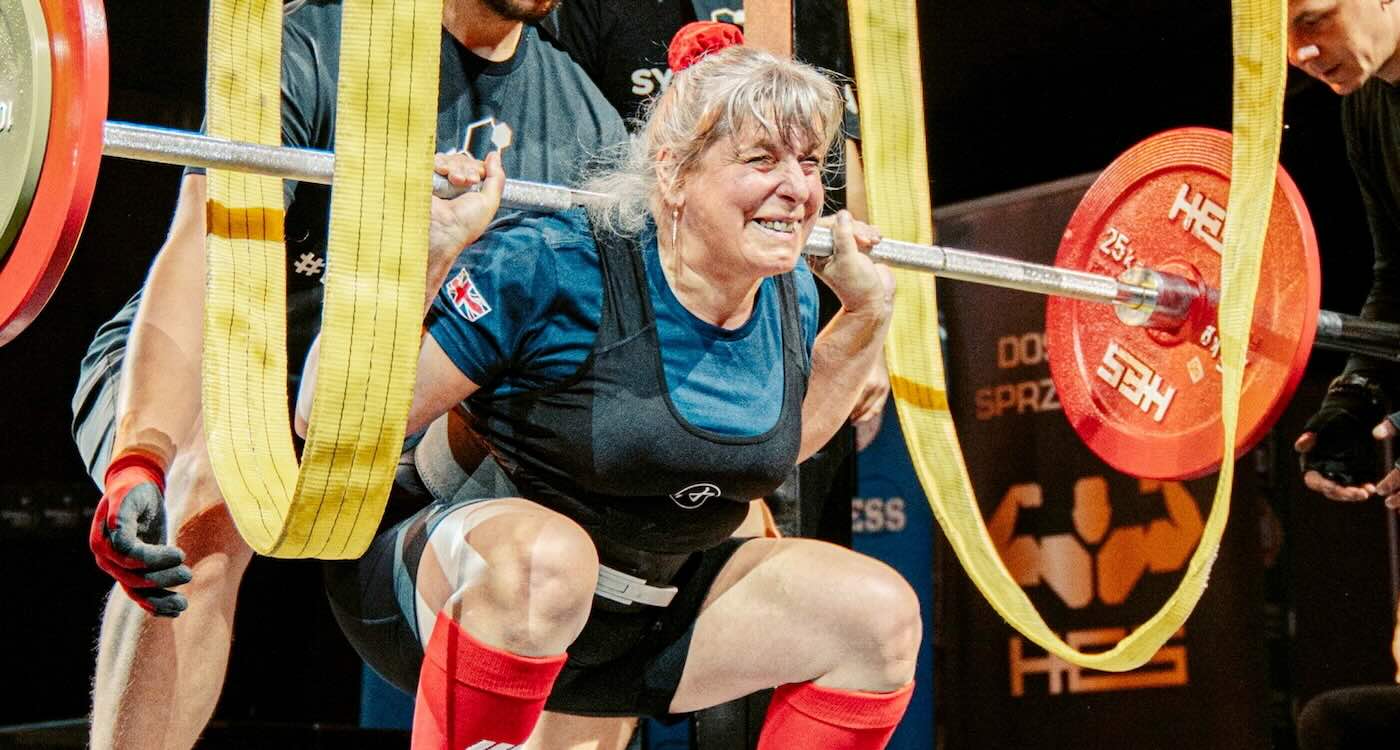
Powerlifter Martine Barons competing in Squat at the European Championships – SWNS

‘Britain’s strongest grandmother’ has broken four world records just 18 months after taking up powerlifting “by accident”.

At the age of 65, Martine Barons has become a four-time champion after lifting for Great Britain at the World and European Championships.

The 5-foot 6-inch mother-of-three with four grandchildren started lifting weights for fun back in December 2023 but soon realized she had a natural gift.

She’s since been training five times a week for two hours a day—all while working full-time as an academic researcher at Warwick University.

“I was surprised to find a talent for powerlifting at the age of 63 after being poor at sports all my life.

“I get enormous pleasure from training and competing—and the health benefits of increased strength and mobility are astonishing.”

She first won the European Championships in Finland last June before successfully defending her title again this June in Poland.

Twelve weeks later, she continued her winning streak in the U.S. at the World Powerlifting championship in Idaho. She previously won the 2024 World Championships in Limerick, Ireland, so all together she’s won four major titles in her division since taking up the sport.

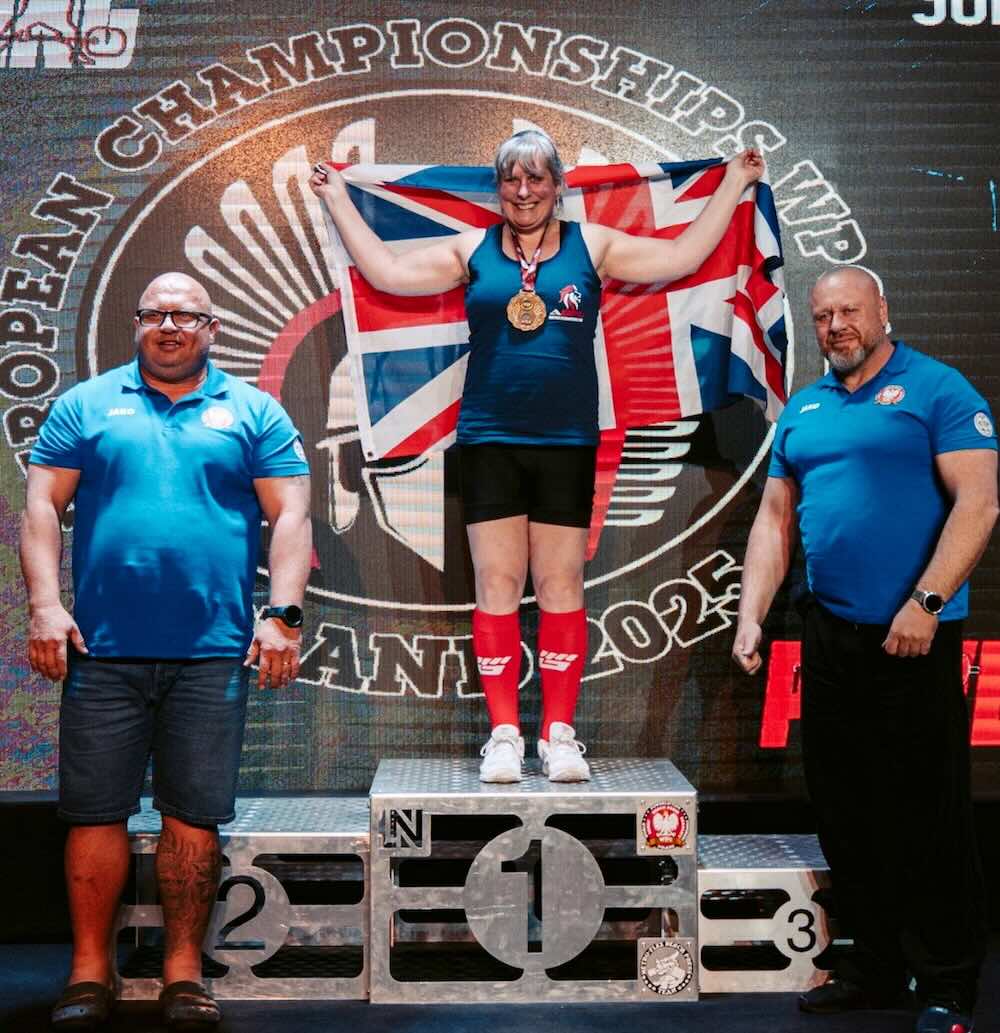
Powerlifter Martine Barons on winners platform at European Championships – SWNS

“It does make me happy and quite emotional to think about what I have managed to achieve. I never thought in the space of 18 months I could have achieved this.

“I have to pinch myself sometimes as I can’t believe it’s me. I’m still in shock, as it all started by chance, really.”

The married woman from Stratford-upon-Avon, in Warkshire, England told SWNS news agency it began as a fun gym session with a work colleague last April.

“I took up powerlifting by complete accident. I went to a gym with a friend of mine who is a physical training instructor and she showed me how to deadlift.

“She was impressed that I could pick up 60kg. Then I picked up 100kg a few weeks later.

“It must be good genetics. I’m unusually strong for my age and gender.”

SWNS

Martine added 10kg to the squat world record to lift 100kg (220 lbs) and 7.5kg to the deadlift world record by lifting 155kg (342 lbs).

She also bench pressed 57.5kg (127 lbs) and added 12.5 kg to the powerlifting total world record by lifting 312.5kg (689 lbs).

Her most recent success was becoming the 2025 world champion in powerlifting, deadlift, and bench press in the Masters 5, Raw, U90kg division.

“I’m a person who needs a goal, so when my friend said you should compete, it was ‘all hands on deck’.

“To be good at a sport for the first time is kind of nice,” she added. “I’ve found I’m good at something, so why not?”

Her next big competition is the British Single Lifts Championship at the Arnold Sports Festival at Birmingham’s NEC in March 2026.“I’m proud to be represent my country. It’s not something I thought I’d ever do!” Britain’s Strongest Grandmother Breaks 4 World Records Just Months After Taking Up Powerlifting
Read More........

Study shows young adults not as happy as before


New Delhi, (IANS) Young adults across the world between the ages of 18 and 29 are struggling, not only with happiness but also with their physical and mental health, according to a new study.

The study showed that young adults are struggling with perceptions of their own character, finding meaning in life, the quality of their relationships, and their financial security, Xinhua news agency reported.

The data, collected by Gallup primarily in 2023, was derived from self-reported surveys of more than 200,000 people in over 20 countries and published in the journal Nature Mental Health.

The study was one of a collection of papers based on the inaugural wave of data from the Global Flourishing Study, a collaboration between researchers at Harvard and Baylor University.

The study found that the participants had relatively low measures of flourishing on average until age 50.

“It is a pretty stark picture,” said lead author Tyler J. VanderWeele, of the study. The findings raise an important question, he said: “Are we sufficiently investing in the well-being of youth?”

The condition was found to be similar in a number of countries, including the UK, Brazil, and Australia. But the difference between younger and older adults was largest in the US, The New York Times reported, citing the researchers.

"Young adulthood has long been considered a carefree time, a period of limitless opportunity and few obligations. But data from the flourishing study and elsewhere suggests that for many people, this notion is more fantasy than reality," said The Times in its report about the study.

"Study after study shows that social connection is critical for happiness, and young people are spending less time with friends than they were a decade ago," Laurie Santos, a psychology professor at Yale and host of "The Happiness Lab" podcast, was quoted as saying."Plus, like folks of all ages, young people are facing a world with a whole host of global issues, from climate to the economy to political polarisation," Santos added. Study shows young adults not as happy as before | MorungExpress | morungexpress.com
Read More........

Teen Who Was Told He'd Never Walk with Cerebral Palsy Just Took 1st Place in Bodybuilding Competition

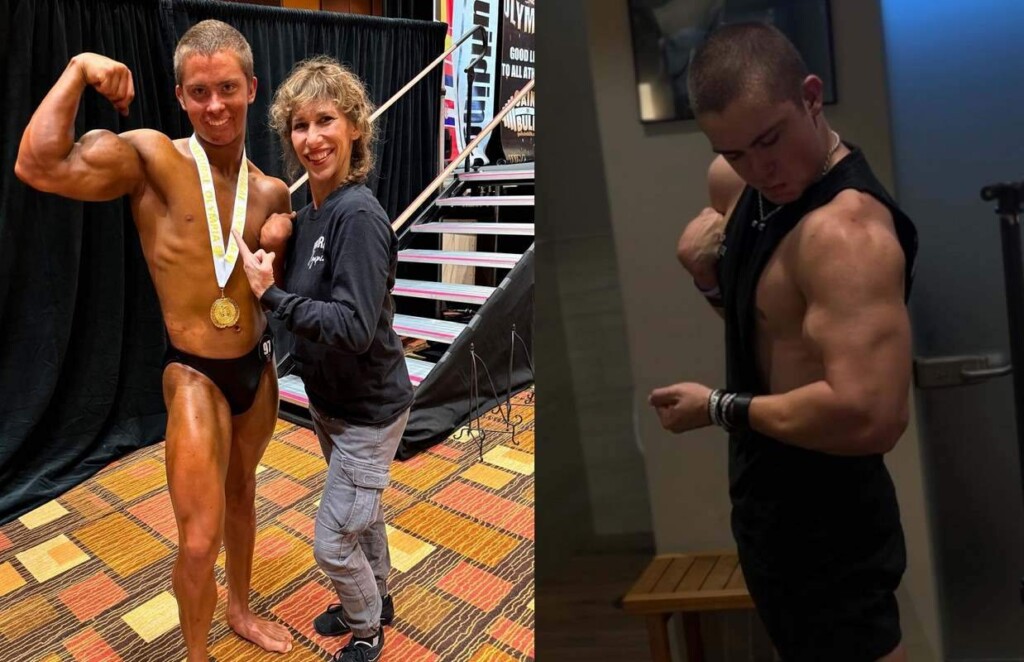
Instagram – @hunter_moore_123

Hunter Moore is just like any other teen athlete. He loves to play sports, made the varsity team, and doesn’t mind throwing up a few gym selfies on his Instagram.

“It’s all genetics, bro,” he says laughingly while pumping his nearly 20-inch bicep. The genetics, in Moore’s case, is Dystonic Cerebral Palsy from a stroke he suffered as an infant that left him partially paralyzed on his left side.

In this case, the genetics are the obstacle to overcome, not the immutable advantage some athletes enjoy. Yet Moore was born into a military family, and so received an upbringing full of dictates to never give up, to prove them all wrong, and it drove Hunter to spend most of his childhood building a body that was capable of the rigors of athletics.

For 7 years he always made his schools’ soccer teams, and now plays as the long snapper for his junior varsity football team, while regularly posting pretty impressive weightlifting numbers that even a non-paralyzed person could feel safe bragging about.

Even though he can’t use his left arm for isolated lifts, he still tries to incorporate it as often as possible for the sake of symmetry—one of bodybuilding’s most important judging criteria. He’ll lock his left arm around a bar, and pry it away from where it usually sits tucked up into his armpit. Like this, he can do a squat or a deadlift.

By the time he competed last summer in the Professional Natural Bodybuilding Association, he was pressing 120 lbs. with one arm, and deadlifting 405. He took first place in his category in Dallas, Texas, and competed again in November in Las Vegas to win first place in the professional class for Men’s Disabled Standing.

In an interview, Moore described posing on stage as “one of the scariest things that I have ever attempted,” but the whistles and cheers he received were a tangible reward for an amount of hard work that the majority of people, disabled or not, cannot manage.

“I will define myself and not let cerebral palsy or anyone else define me,” he told Joker Magazine, adding that he plans to go to university to study marine biology and hopes to also pursue motivational speaking. Teen Who Was Told He'd Never Walk with Cerebral Palsy Just Took 1st Place in Bodybuilding Competition
Read More........

Love is good for health

By Cena, Although it sounds funny or weird, studies and experiments have demonstrated a closerelationship between health and love. It has been shown that the bonds offriendship, love and affection, enhance health and happiness. Some of the benefits of love on health are: improving attention, motivation and memory. There is a significant reduction in anxiety, stress and depression. Strengthens the immune system, dispels wrinkles and low levels of hypertension. Here are some findings that relate to health and love: 

  • (1) Strengthens the immune system. Biochemical reactions experienced by the body of a person when being in love help improve health and help to "strengthen the immune system," according to experts. With love our quality of life is better and tend to get sick less, and that negative feelings are outweighed by the positive and our body works better. 
  • (2) Influences on the rapid recovery. We have seen that sick people who have someone to love them and watch for them, have a faster recovery than patients who have no affection from anyone. (3) Improves quality of life. We are more likely to get sick and depressed when we have problems and we are alone. However, the love we prolong life. Being loved makes problems feel lighter with the support of others.  
  • (4) Energy and stress. According to experts, the emotional well it feels like to be able to give love and helping others makes people feel more energy and fighting stress. 
  • (5) A feeling of great comfort. From the endocrinological point of view, love brings change for the better. As Jesus says Dr. Rocca, Ricardo Palma Clinic, "the first thing you are beta releases endorphins that trigger when you're in love, and are responsible for the feeling of great comfort.  (6) Love rejuvenates. "The hormones, the nervous system and skin, forming a narrow triangle, so the separation of estrogen in women improves hair, nails, skin," says Sandro Tucto dermatologist. 
  • (7) Fewer doctor visits. Another study found that couples who have spent more time together, make fewer doctor visits. The psychiatrist Enrique Galli said that "stable relationships get colds less than singles, while elderly couples suffer less pain than the lonely elderly. This is due to segregation of hormones that allow for greater resistance to pain. " 
  • (8) Making love, health benefits. Keeping sexually active and safe, influences our physical and emotional state is very important to our overall health. It is scientifically proven that people who frequently make love, get sick less and are happier. The list of health benefits that are attributed to sex as therapeutic activity include: well-being, improves self-esteem, makes you look younger, is a natural pain reliever, improves interpersonal relationships, reduces snoring, strengthens immune system, increases energy, relieves symptoms of depression, anxiety and psychosomatic disorders. So now you know, since love helps heal, self-medication is recommended a good dose of love every day to live healthy and happy. Source: Forum Human HealthImage: flickr.com
Read More........

How to be Beautifil


In the world of beauty, it is important to let you know so that you stand above your feasible "competition". This is where smart beauty come in handy. This will help people to remember what lead to more customers or more candidates. Follow these tips to help you. Out from the rest Avoid commercial "body butter", the chemicals, dyes and additives. All natural walnut oil or peanut oil make great moisturizing body all-over. They are very cheap and are fragrance-free. If you want flavor, you can use the essential oil of your choice. After the bath, slather walnut or peanut oil on consuming. Wrap yourself in an old bathrobe and relax with a good book or a movie during treatment takes moisture in. Be a part of your beauty bag honey. Honey has many benefits for your skin and some of them have to eat like you. You can add honey to your current skin routine by using it with sugar to exfoliate the skin. Add your honey cream increases moisture retention. If you add honey to your shampoo, your hair is soft and shiny.Rub Vaseline on your cuticles once a week. To ensure that your nails will grow faster because it feeds your nails. It will also help keep your nails and cuticles look healthier. They are the results after the first time you try to see this as they almost immediately your nails look better. Try using an eye pencil instead of liquid eyeliner if you can. Eye pencils give less dramatic, while liquid eyeliner can. If you use liquid eyeliner, make sure that your cover down to remove one hand while. Their application with the other hand It is important that you buy a special remover if you use waterproof make-up. It is water resistant, it is more difficult to remove than normal make-up and requires more than water. Always remove your makeup before, so that the pores are blocked to bed. Her eyebrows are waxed professionally or trimmed. Eyebrows are often overlooked, but they can shape the face like nothing else. Flip through magazines and find eyebrow shapes that you think will suit you, and give them a professional so they have an idea of ​​what you are looking for. You will find that your eyebrows look more clean and your face looks even more impressive. To soothe skin inflammation rose and lavender are excellent ways to calm these areas. It may be a lotion or cream and can be used in any area of ​​the body. There are a number of products in the form of an organic and many have not been tested on animals. Instead of the fake eyelashes that may fall during the day, use an eyelash curler. An eyelash curler to curl your lashes up and away from your eyes, your eyes so that they appear larger. Make sure before the curlers, or you must submit a new application. Use a little Vaseline on an old toothbrush to brush on the lips. To do this, every day, and you will see a big improvement in the way your lips look and feel for themselves. Your lipstick will continue steady and your lips are much softer than they were. They are very happy with the results. When you fight an itchy scalp, itchy and flaky, you can yogurt to remove flakes and keep your scalp itch-free. Just a simple Greek yogurt or milk products massaged into your scalp, then let stand for 15 minutes. Once you flush, you will notice less flakes and itching. If you need to add extra oil on your T-zone, you can use blotters quickly give your face a dull appearance. These leaves often come in small packages, pocket-sized, many offered with rice or powder-free option. Packages are very cheap and can be plugged into your purse or drawer. Wipes in the same place you keep holding your makeup. Beauty experts rely on the removal wipes for quick fixes, if something goes wrong while applying makeup. You can quickly fix like a pro with minimal effort or investment. Make removal wipes part of your beauty routine. If you have an important appointment, special care with your perfume. Keep the scent light and airy so as not to overwhelm. You should put a small amount behind the ears and on the wrists. This will ensure that you feel great when you hug and shake hands at the meeting. Now do not you feel better after reading all this stuff? It was to read a lot of information, but at least now you know what to do and where to start your beauty regimen. In addition, you can always return to the above list of tips if you forget. Source: Makeup SpotImage: flickr.com
Read More........

Lack of proper sleep may raise hypertension risk in teenagers


New Delhi, (IANS) Teenagers who do not get the right amount of sleep may be at an increased risk for high blood pressure or hypertension -- a common risk factor for cardiovascular diseases --, warned research on Friday.

Researchers from Pennsylvania State University in the US defined insomnia as reporting difficulty falling and/or staying asleep and defined objective short sleep duration as less than 7.7 hours, based on the median total time asleep in a lab-based sleep study.

The study on more than 400 teenagers in the US showed that teenagers who reported insomnia and slept less than 7.7 hours were five times more likely to have clinical hypertension than "good sleepers" (those who did not report insomnia and obtained sufficient sleep defined as 7.7 hours or more).

Teenagers who slept less than 7.7 hours but did not report insomnia had nearly three times the risk of elevated blood pressure compared to good sleepers. Those who self-reported insomnia but obtained sufficient sleep did not appear to be at higher risk for elevated blood pressure or stage 2 hypertension.

Teenagers need 8 to 10 hours of sleep each night, according to the American Academy of Sleep Medicine, yet the average high school student is estimated to sleep only 6.5 hours per weeknight.

The findings suggest the combination of insomnia and inadequate hours of sleep likely contributes to more severe conditions than lack of sleep alone, the researchers noted.

Julio Fernandez-Mendoza, Professor of Psychiatry at the varsity noted that while poor sleep was a risk factor for high blood pressure in adults, its associations in adolescents were unknown.

"While we need to explore this association in larger studies on teenagers, it is safe to say that sleep health matters for heart health, and we should not wait until adulthood to address it," Fernandez-Mendoza said.

"Not all teenagers who complain of insomnia symptoms are at risk for cardiovascular issues. However, monitoring their sleep duration objectively can help us identify those who have a more severe form of insomnia and are at risk for heart problems."The study was presented at the American Heart Association's Epidemiology, Prevention, Lifestyle and Cardiometabolic Health Scientific Sessions 2025, being held in New Orleans. Lack of proper sleep may raise hypertension risk in teenagers | MorungExpress | morungexpress.com
Read More........

Study shows young adults not as happy as before


New Delhi, May 1 (IANS) Young adults across the world between the ages of 18 and 29 are struggling, not only with happiness but also with their physical and mental health, according to a new study.

The study showed that young adults are struggling with perceptions of their own character, finding meaning in life, the quality of their relationships, and their financial security, Xinhua news agency reported.

The data, collected by Gallup primarily in 2023, was derived from self-reported surveys of more than 200,000 people in over 20 countries and published in the journal Nature Mental Health.

The study was one of a collection of papers based on the inaugural wave of data from the Global Flourishing Study, a collaboration between researchers at Harvard and Baylor University.

The study found that the participants had relatively low measures of flourishing on average until age 50.

“It is a pretty stark picture,” said lead author Tyler J. VanderWeele, of the study. The findings raise an important question, he said: “Are we sufficiently investing in the well-being of youth?”

The condition was found to be similar in a number of countries, including the UK, Brazil, and Australia. But the difference between younger and older adults was largest in the US, The New York Times reported, citing the researchers.

"Young adulthood has long been considered a carefree time, a period of limitless opportunity and few obligations. But data from the flourishing study and elsewhere suggests that for many people, this notion is more fantasy than reality," said The Times in its report about the study.

"Study after study shows that social connection is critical for happiness, and young people are spending less time with friends than they were a decade ago," Laurie Santos, a psychology professor at Yale and host of "The Happiness Lab" podcast, was quoted as saying."Plus, like folks of all ages, young people are facing a world with a whole host of global issues, from climate to the economy to political polarisation," Santos added. Study shows young adults not as happy as before | MorungExpress | morungexpress.com
Read More........

Identify a man from his body language

Body language plays an important role to hide and show the desires of any person. By gestures one can guess a personality of any human. The body language of man helps a woman to understand what a man wants from woman. What he feels for a woman. Here in this article we are giving some tips that help to women to understand what a man thinks about her: If a man is standing near you and watching you but when you watch him he starts to watch somewhere else and again starts to watch you when you are concentrating to some other work. It shows that he has an interest in you and wants to talk you. Eyebrow flash also gives a signal of his interest in you. While talking to you if his eyebrows rise up it means he has a keen interest in you. If he starts him blush and fluster it means he is trying to flirt you. Show of his muscles also is a sign that he wants to impress you. If he tucked off his chest buttons and fold his sleeves up to shoulder or try some other method to show his muscles understand that he tries to impress you. In hotel s, resorts or in some other public place he does some funny activities or speak loudly to get attention of yours. Image Link Flickr, Source: Medley News
Read More........

New research shows small lifestyle changes are linked to differences in teen mental health over time

Judging by recent headlines and policy ideas, you might think screen time is the only lifestyle behaviour influencing teen wellbeing.

But with young people struggling to deal with mounting mental health issues, it’s crucial we don’t get tunnel vision and instead remember all the lifestyle levers that can play a role.

Our research, published today, tracked Australian high school students from 71 schools across New South Wales, Queensland and Western Australia. Over time, improvements in sleep, fruit and vegetable intake, and exercise were associated with small but significant improvements in mental health.

The reverse was also true when it came to unhealthy behaviours like screen time, junk food, alcohol use and tobacco.

A comprehensive look at adolescent lifestyles

Our new study of more than 4,400 Australian high school students looks at a suite of lifestyle behaviours: sleep, moderate-to-vigorous physical activity, sedentary (inactive) recreational screen time, fruit and vegetable intake, consumption of junk food and sugary drinks, alcohol use and smoking.

Firstly, we asked year 7 (students aged 12–13) to report their levels of these lifestyle behaviours and to rate their psychological distress (a general indicator of mental ill-health) using a well-known measurement scale.

Then we examined how changes in each of the lifestyle behaviours between year 7 and year 10 (age 15–16) were linked to psychological distress levels in year 10. Importantly, we accounted for the level of psychological distress participants reported in year 7, as well as their lifestyle behaviours in year 7. This means we can see the average benefits associated with behaviour change, no matter where people started out.

Our research showed increases over time in healthy behaviours were associated with lower psychological distress. Conversely, increases in health risk behaviours were associated with higher psychological distress.

How much makes a difference?

On average, when looking at the change between year 7 and 10, every one-hour increase in sleep per night was linked to a 9% reduction in psychological distress.

Each added day of 60 minutes of moderate-to-vigorous physical activity per week was linked to a 3% reduction in psychological distress. Each added daily serve of fruit or vegetables was linked to 4% lower psychological distress.

By contrast, each added hour of screen time was linked to a 2% increase in psychological distress, as was each unit increase in junk food or sugary drinks.

Because drinking alcohol and smoking are less common in early adolescence, we only looked at whether they had or hadn’t drank alcohol or smoked in the past six months. We saw that switching from not drinking in year 7 to drinking in year 10 was associated with a 17% increase in psychological distress. Switching from not smoking to smoking was linked to a 36% increase in psychological distress.

It’s important to note our study can’t definitively say lifestyle behaviour change caused the change in distress. The study also can’t account for changes in a student’s circumstances such as in their home life or relationships. With the baseline survey done in 2019 and the year 10 survey done in 2022, there was also the potential impact of COVID.

But our longitudinal design (tracking the same subjects over an extended period) and the way we structured the analysis does help illustrate the relationship over time.

Our study didn’t measure vaping, but evidence shows that, like smoking, it has clear links with adolescent mental health.

What does this mean for teens and parents?

National guidelines for these behaviours set out aspirational targets based on optimum health goals. But movement guidelines and dietary guidelines might seem out of reach for many teens. Indeed, most participants in our study were not meeting guidelines for physical activity, sleep, screen time, and vegetable consumption in year 10.

What our research shows is that a healthy lifestyle change doesn’t have to be all or nothing.

Even relatively small changes – getting an extra hour of sleep each night, eating one extra serve of fruit or vegetables each day, cutting out one hour of screen time, or adding an extra day of moderate-to-vigorous physical activity per week – are linked to improvements in mental health. And stacking changes in multiple areas is likely to stand you in even better stead.

Parents can play a major role in shaping lifestyle behaviours (even into the teenage years!). Expense and time can be barriers, but anything parents can do within their means is a step in the right direction.

For example, modelling healthy social media use, making affordable changes to your grocery shop to improve nutritional content, or even introducing set bedtimes. And parents can gather information so young people can make positive choices around alcohol, tobacco and other substance use including vaping.

The bigger picture

Lifestyle changes can support better adolescent mental health, but they’re only one piece of the puzzle. We can’t place the burden of addressing the youth mental health crisis solely on teen lifestyles. There is plenty to be done at a school, community, and policy level to create a society that supports youth mental health.

Young people who are struggling with their mental health may need professional support, which parents and carers can support them to access. Teenagers or young people can also contact ReachOut or Kids Helpline directly for resources and support.The Conversation

Scarlett Smout, PhD Candidate (under examination) and Research Associate at The Matilda Centre for Research in Mental Health & Substance Use and Australia's Mental Health Think Tank, University of Sydney; Katrina Champion, Senior Research Fellow & Sydney Horizon Fellow, The Matilda Centre for Research in Mental Health and Substance Use and School of Public Health, University of Sydney, and Lauren Gardner, Senior Research Fellow & Program Lead of School-Based Health Interventions, University of Sydney

This article is republished from The Conversation under a Creative Commons license. Read the original article.

Read More........

The future looks bright: Study shows optimistic youth lead healthier lives

If you’ve ever told your child to look on the bright side, or taught them to see the glass as half full, you might wonder if there are real benefits to positive thinking.

As it turns out, people who are more optimistic about their future actually tend to be significantly healthier. Many studies show that optimistic adults have better cardiovascular health, less disease and can even live longer than their less optimistic peers. As scientists interested in personality and health across the lifespan, we were curious about whether these same benefits are found for kids and teenagers. The answer from our new review study? Keep the positive thinking coming!

To address our research question, we did a deep dive into the published research on optimism and health in youth. Using a structured approach, we narrowed more than 5,000 search results down to 60 relevant studies. These papers were published across more than three decades and sampled kids and teenagers with and without pre-existing health conditions such as diabetes or cancer.

We learned that across studies, associations between optimism and physical health tended to be positive — meaning that young people who were more optimistic or less pessimistic were healthier. Specifically, we found that optimistic youth had better diets, exercised more often, and used alcohol and drugs less frequently. They also tended to consider themselves to be physically healthier, had better cardiovascular health and experienced less pain.

Why optimists feel better and live longer

You can probably think of two friends (or children) in your life: one who is relatively more optimistic and the other relatively more pessimistic. Imagine these two people experiencing the same stressful event, such as failing a test. Odds are they will probably experience and handle the situation in very different ways. And this is precisely how optimism is thought to influence our health.

Optimistic people tend to cope with stress more effectively, working to confront challenges head-on and positively reframing their feelings. Meanwhile, more pessimistic people tend to withdraw from the problem and their emotions. Optimistic thinking has also been related to better mental health in children. In much the same way, research shows that optimistic and pessimistic children and adults engage with their physical health in different ways.

A person who expects positive outcomes is more likely to proactively protect their health through better diet and exercise and reduced smoking. Similarly, when confronted with a health scare like cancer, more optimistic people tend to lead healthier lifestyles that can slow the disease or promote recovery.

More optimistic thinking can also protect people from the physiological effects of stress. For example, some experimental research has found that when more optimistic people are put through a stressful laboratory task, they have a healthier cardiovascular response. Optimistic thinking can also protect people from elevations in the stress-related hormone cortisol, which can have long-term consequences for physical health.

While our review found that optimistic youth behaved in healthier ways and had healthier physical functioning, more research is needed to understand whether and how these could explain decreased rates of disease or illness over time.

Can people become more optimistic?

Like most personality traits, optimism is typically viewed as a stable characteristic that is determined partly by genetics and family environment. However, some research suggests that optimism can change when people experience important life events or transitions. For instance, levels of optimism were more amenable to change as university students graduated and entered the workforce.

If you’re looking to boost you or your child’s optimistic thinking, one promising line of research has found that a simple writing exercise can have noticeable effects. When people wrote about their “best possible self” in an imagined future where they have reached all their goals, they reported increased optimism. Some early experimental research indicates that boosting optimism through this intervention can help adults better manage pain.

Is optimism a cure-all?

So, is encouraging optimistic thinking the answer to keeping our kids from catching the common cold, stopping our teens from vaping or ensuring they’re protected from harms?

Sadly, although it appears to be an important ingredient to happier and healthier living, optimism isn’t a magic cure. Working on how we think about and navigate stressful situations is certainly important and forms the basis of interventions like cognitive behavioural therapy. However, if you and your kids or teens are setting a goal of increasing your optimistic thinking, make sure you’re balancing those efforts with healthy lifestyle choices.The Conversation

Eloïse Fairbank, PhD Candidate, Psychology, Concordia University and James Borenstein-Laurie, PhD Candidate, Psychology, Concordia University

This article is republished from The Conversation under a Creative Commons license. Read the original article.
Read More........

10 practical tips for managing stress in college


New Delhi, (IANSlife) Once students start going to college, that is the time a sense of independence, a sense of individuality, and also a sense of defiance comes into play. Why defiance? Because independence and individuality want to override the wisdom of the world, especially when it comes from parents, grandparents, and teachers.

That age is the time to try new things, starting with vocation experiments, food experiments, and partner experiments, which entails relationships. Because they were firmly constrained in school, their attention on studies becomes a little loose-ended in college. Furthermore, college students' fickleness, waviness, and indecisiveness place them at high risk of stress and anxiety.

Mickey Mehta, a global leading holistic health guru and corporate life coach shares with IANSlife some effortless and quick ways to relax:

Splash or keep your face in running water for a while till everything cools down and your eyes are relaxed, Just pat dry, and then breathe.

Herbal teas can help you feel better, alleviate depression's physical symptoms, and reduce stress. You can also choose to do nothing and close your eyes. As you inhale and exhale, observe your breath while you're sitting. Your mind automatically comes to the present moment when you are conscious of every breath that you take in and out. The steadiness of the mind, its capacity for ability, and its capacity to work in unison are all present when the mind is present in the moment. The shattered parts of the mind become one piece, the mind becomes one and enters that state of oneness, and so well-being and tranquility happen, going from stress and strain to harmony.

Step beyond the four boundaries, stroll slowly, and up and descend the steps. A relaxing stroll can do wonders for your mental health. It enhances self-perception, self-esteem, mood, and sleep quality while lowering stress, anxiety, and exhaustion.

Go to the nearest tree and embrace or touch it to get some oxygen. They support the body in reducing the physiological effects of stress. The stress-related chemicals cortisol and adrenaline are both lowered by simply sitting and gazing at trees.

Go outside and spend some time in the sunlight, stand or sit and feel the breeze on your skin (wind bath), Be mindful.

A natural method of curing one's mind, body, and spirit is aromatherapy. Inhaling fragrances stimulates the olfactory system, which has a variety of psycho-physiological impacts on people. It assists in reducing stress and enhances one's general state of mind.

Call your loved ones on the phone and have a conversation. Laugh it away. Catharsis, or a sense of relief, is a result of talking. Increased levels of dopamine, oxytocin, endorphins, and other feel-good biochemicals are produced during positive conversations.

When you are at home and feeling anxious, you may either have a warm water bath with some sea salt or just sit under the shower, close your eyes, and let your breathing settle down and become regular. Sweating it out after a hot water bath also releases toxins. Hot baths can be a wonderful form of self-care. Your body's relaxation mechanism, the parasympathetic nervous system, can be activated by taking a bath. Every organ, including the brain, is impacted by circadian rhythms, which are strengthened and adjusted by taking a warm bath. Stress is released even when biological toxins are released. Even when muscle tension is relieved, stress is also relieved, which improves your mood.

To dissolve into gravity, lie down in Shavasana, often known as the position of a state of relaxation After that, begin to inhale and exhale slowly from your toes all the way up, imagining breathing out stress. After 5-7 minutes, you should feel light as a feather. As more and more mental stress and bodily tension are removed, the breath becomes more relaxed. It promotes mental clarity and harmony, which may also relieve tension and headaches while reducing weariness and fending off anxiety.

Chanting helps reduce imbalances and signs of depression, as well as promotes happiness, relaxation, and the ability to concentrate and pay attention. Chanting also modifies voice and breath. Humming is one of the most basic yet profound sounds we can create for ourselves. It is a self-soothing sound that has physical effects on us, lowering blood pressure and heart rate while releasing endorphins and oxytocin, two powerful neurochemicals that have been shown to reduce stress and promote calmness and sleep.Last but not least, seek out nice company or find a place to be alone and quiet so that you can find serenity and solace. Do you believe this helps to solve problems? certainly not, but the propensity to approach problems from diverse perspectives and opinions and the ability to deal with and cope with them develop, leading to a growth in self-assurance, self-conviction, self-reliance, and a positive outlook on life and skills. 10 practical tips for managing stress in college | MorungExpress | morungexpress.com
Read More........

Jillian Johnson competing in Miss Georgia Teen Pageant

Seminole County’s Jillian Johnson, Miss Flint River’s Teen, arrived in Columbus, Georgia Friday, June 7th. Upon arrival Jillian and other contestants competing in the Miss Georgia’s Teen Competition and Miss Georgia Competition were introduced at the Meet the Crowns event.

Pageant rehearsals began in full swing and Jillian has been rehearsing every day since her arrival, preparing for the competition which concludes on Saturday, June 15.

On Monday, June 10th at 8:30 a.m. Jillian went into her private interview with the panel of five esteemed judges. In this interview, Jillian got to share and explain her Community Service Initiative and show the judges why she should be the next Miss Georgia’s Teen. On Tuesday, Jillian continued rehearsals, On Wednesday night, Jillian competed in the talent phase of the competition, and Thursday night June 13, Jillian will compete in the evening wear and on-stage question phase.

This Friday, Jillian will showcase her overall health and fitness in the fitness wear phase. Saturday will be finals night when a new Miss Georgia and Miss Georgia Teen will be crowned.

Jillian could not thank her community, friends, and family enough for their support, love, and encouragement through this week.

During the State pageant well wishers can send mail to Jillian Johnson, Miss Flint River’s Teen, in care of Omega 1, 25 West Tenth Street, Columbus, Georgia 31901.

Flowers may be sent to her at Omega 1, 1011 Broadway, Second Floor, Columbus, Georgia 31901.

Jillian Johnson is the 16 year old daughter of Truette and Jill Johnson and is a Junior at Seminole County Middle High School where she is also active on the softball team and in the FFA. Johnson was crowned the 2024 Miss Flint River’s Teen on October 22 at the historic Theatre Albany in downtown Albany.Jillian Johnson competing in Miss Georgia Teen Pageant
Read More........

Quadruplets Who Beat the Odds at Birth Are About to Turn 18 and Be Apart for First Time

(Left to right) Ellie, Holly, Georgie and Jess – SWNS
Identical quadruplets who beat all the odds just even being born are now turning 18, and are about to be apart from their sisters for the first time. Doctors told their parents that they were more likely to win the lottery than see all four babies survive, but 18 years later Ellie, Jessica, Georgie, and Holly are now happy and healthy, reaching adulthood. The girls have asked for a celebration night out for dinner with mom and dad—Julie and Jose—in Bedfordshire, England. And afterward, they’re all going to a concert together. “They haven’t really asked for much,” said Julie. “We’re going to celebrate the day as a family. We’re very close.” “They will then go off into the adult world and do their own thing. “I think they will miss each other but they will enjoy the freedom. In 2005, Julie and Jose learned from an 11-week scan that they were having quads, and they were monochorionic babies who were dependent on a shared placenta. “Initially, the sonographer said it was unlikely that they would survive. We were traumatized.
(L-R) 2-year-old Georgie, Holly, Ellie and Jess – SWNS
“Over the weekend we did some research and accepted it. We felt like we were given a gift.” When Julie reached 23 weeks on March 23, Ellie, Georgina, Jessica and Holly were born just minutes apart, weighing 2lb 8oz, 2lb 7oz, 2lbs and 1lbs 9oz respectively—before being rushed to the NICU for eight weeks. The day Julie and Jose were allowed to bring the siblings home was the ‘best day of their life’. They “thrived” and each branched out with different personalities.
SWNS
Ellie, Georgina, Jessica and Holly will be celebrating their 18th birthday on March 23, 2024. “Them turning 18 makes us really proud,” says Julie. “You don’t often get to look back at what you have done over the years. “It is only when someone points it out, we are like ‘oh my gosh, what we have done is amazing’.”“They will always have each other.” Quadruplets Who Beat the Odds at Birth Are About to Turn 18 and Be Apart for First Time
Read More........

Sleep well at 11 and kick the substances out in your teens

Sleep duration and quality of sleep during late childhood may affect the use of alcohol and cannabis later in adolescence years, a study has found. "Improve the amount and quality of sleep during late childhood as it would benefit in terms of reducing substance use in later life," said Assistant Professor Brant P. Hasler from University of Pittsburgh Medical Center. For the study, researchers analysed 186 boys of low-income family and examined factors associated with vulnerability and resilience. After accounting for race, socio-economic problems, neighbourhood threat, self-regulation, and internal and external factors, both sleep duration and sleep quality at the age of 11 were associated with early substance use throughout adolescence. The study, published in the journal Drug and Alcohol Dependence, said participants who slept the least, compared to those who slept the most, were more likely to report earlier use, intoxication and repeated use of both alcohol and cannabis. Every hour of less sleep at 11 years was associated with a 20 per cent increase in the first use of alcohol and/or cannabis. While the quality of sleep though associated with alcohol use, intoxication and repeated use was not responsible the first use. "After considering other possible influences, we were able to determine that sleep anomalies are preceding the substance use problems. Addressing sleep deficiencies may now be something we can add into the package of our substance abuse prevention and treatment efforts," Hasler added. — IANS Source: http://www.tribuneindia.com
Read More........

The Giant Growing School Boy

The Giant School Boy who is 7ft and still GrowingBradley Fisher may only be 15 but everyone looks up to him. At just an inch under 7ft, he is two and a half feet taller than the smallest girl in his year, 4ft 6in Zoe McDermott, with whom he is pictured. Bradley, a pupil at Southlands High School in Chorley, Lancashire, has size 15 feet and is still growing. He overtook his father Robert before he had left primary school. Mr Fisher is just over 6ft, while his wife Amanda is 5ft 10in. He has just been selected to represent England at under-16 level. ‘I love playing basketball so being tall really helps with that and it gives me an edge,’ said the teenager from Chorley, Lancashire. And despite having duck for every door frame, Bradley insists nothing tops being of great height. ‘I like being tall,’ said the Year 10 pupil at Southlands. ‘My friends think it’s really good and so do my mum and dad. The player already has five inches on the greatest basketball player of all time, Michael Jordan, who measured in at 6ft 6in.However, he has at least eight inches to grow before being in the running for the title of Britain’s tallest teen. Read More at icePice.blogspot.com
Read More........

Young Indians not eating enough fruit, veg

Tropical Fruits - Original Oil Painting
People below the age of 35 in India are consuming only 3.3 servings, while the WHO recommends five servings of fruits of vegetables in a day, revealed the Indian Council for Research on International Economic Relations (ICRIER) survey. The primary survey covered 1,001 respondents from Mumbai, Kolkata, Chennai, Hyderabad and Delhi-NCR. The WHO panel on diet, nutrition and prevention of chronic diseases recommends a daily intake of at least 400 grams (or five daily servings with an average serving size of 80 gm) of fruits and vegetables. It excluded potatoes, cassava and other starchy tubers to prevent diet-related chronic diseases and micro-nutrient deficiencies. “While the average for all Indian upper and middle class consumers is 3.5 daily servings – which implies that they are falling short of the WHO recommendations, for those below the age of 35, it is further lower at 3.3 servings,” the survey findings noted. “The youngsters argue that in India, there are limited options for cut and packed fruits and processed vegetables – which are ready to eat,” Mukherjee added. Apart from juices and certain processed vegetables like peas, there are hardly any processing fruits like lichee or different types of berries. According to Souvik Dutta, assistant professor at IIM Bangalore, young Indians are aware that there are issues related to the presence of pesticides in fruits and vegetables which stops them from eating those raw. Some survey respondents also pointed out that they are aware that daily intake of the five servings of fruits and vegetables reduced the risk of stroke and other diseases. Source: india.com, Publication date: 11/24/2015. Source: ArticleImage
Read More........

Eco-friendly Fashion is in trend


In these days, youth are crazy to try the eco-friendly fashion either they are going to shop fabrics or accessories. It becomes a new fashion trend if we carefully watch the shopping trends of youths. The fashion designers are also designing the eco friendly products as they know the trend is becoming popular in the market. The young girls prefer to purchase jewelry of bamboo, fabrics, joot and stone. These are not only inexpensive but also give a stylish look. In these days, bamboo, fabrics, joot and stone formed necklaces, ear-rings, bangles, hairclips and ring are becoming popular in the market. This jewelry can be used with any dress. Such types of jewelry can be designed by women at home also. No only eco-friendly dresses and jewelry but eco friendly accessories are also becoming popular in the market. The wooden bracelets, ear-rings, necklace are becoming the first preference of youth. The footwear of joot is also liked by the youth most. To protect the environment from the harm of polythene, youths have started to use paper bags that are more eco-friendly than polythene. Although the government also has banned the use of polythene bags, but youths and common people helped a lot to make this mission successful. What is green fashion: Green fashion is not a trend of green colors but it means a trend of eco-friendly or organic fashion. Today it is very necessary to use such a fashion, if we want to protect our environment. ‘Going back to nature’ is demand of today’s environment and to lead in this way everyone is trying to find the new ideas and concept to implement eco-friendly trend. Eco fashion fiber yarn, textile, printing, drawing, finishing all these process are bonded with nature in some way. The people have started to use natural fiber, cotton fiber, linen, joot and flex instead of artificial fiber. Jewelry Accessories: In these days, you can find huge varieties of joot, paper, natural fibers, silk and wood formed dresses and accessories in the market. So many experiments are going to design these natural color fashion trends. Youth are crazy about this eco-friendly trend. These are not only comfortable but also give a feeling of style statement. Feeling of environment protection: According to fashion designer Swati Soni, there are so many concepts in eco-friendly. The main concept of using eco-friendly fashion is to make people aware against the harms of polythene and other harmful elements. To protect environment and for Global Warming, the messages like ‘Save Environment’, ‘Grow Trees’, ‘Save Water’, ‘Save Earth’ etc. are printed by using a vegetable print technology. The main advantage of this technology is that this is not harmful for body thus we can say that vegetable print technology is also a part of ecofriendly fashion. Many of the fabrics are available in natural stuff. Pure cosa and pure cotton are the best examples of natural fabrics. We can implement the eco-friendly concept by choosing the eco-friendly colors. To wear green colors cloths, floral prints etc. are the good tools to implement the eco-friendly concept.  Source: Medley NewsImage: flickr.com
Read More........

Are parents' fears over teens' cellphones hyped?

Are parents' fears over teens' cellphones hyped?
Washington DC: A new study has suggested that the parents' fears about their teenagers' heavy use of cell phones and social media may be exaggerated. Duke University's Candice Odgers said that each generation worries about how young people are using their time, adding “we see young people constantly on their phones and assume ill-effects, but much of the research to date tells a more positive story." Teenagers' online lives closely resemble their experiences, connections and risks in the offline world, and cellphone use alone poses a few entirely new dangers, Odgers said. The review weighs commonly expressed fears regarding teenagers' use of mobile devices against existing research evidence. It calls for more rigorous research to evaluate how these quickly evolving technologies are impacting young people's lives. But, contrary to the early Internet age, when a small minority of teens was online and heavy Internet use was a sign of offline problems, now, teens' online worlds mirror their offline lives. The study appears in the journal Perspectives on Psychological Science. —ANI. Source: Article
Read More........