Visit famous Shiva temple at Tiruvannamalai and surroundings


How to reach TiruvannamalaiTiruvannamalai is on Katpadi-Vellore-Villupuram railway line, 68 km west of Villupuram and 83 km south of Vellore. Tirupati- Villupuram Passanger train leaving Katpadi at 6-40, reaches Tiruvannamalai at 9-30. Katpadi-Trichy Passanger leaving at 16-50 arrives at Tiruvannamalai at 19-25 via Vellore and then departs for Villupuram. The Passanger train that leaves Tiruvannamalai at 6-40 reaches Villupuram at 8-45 and then goes upto Pondicherry at 10-30. Buses take passengers from Tiruvannamalai to Jinji in 1 hour, Chennai in 5 hours and Pondicherry in 3 ½ hours. Tourists for Pondicherry are advised to go straight there by train or from Villupuram by a bus journey of 38 km. Railway station and bus stand at Tiruvannamalai is between 500 meters. To 100 km south of Kanchi, on the northern side of Shovaroi hill and around Arunchaleswar Temple Tiruvannamalai, a holy place dedicated to Lord Shiva. At the foothills 1.5 km from rail and bus stands, Tejalingam complex of over 100 temples has come up on 25 acre of land. This is towering temple, the largest in South India, built with the patronization of the Vijayanagar kings of the 16- 17th century.  What legend says about TiruvannamalaiLord Shiva emerges here as Agni Linga or one of the five sources of life in the midst of Lord Brahma and Lord Vishnu who clashed for supremacy. Lord Vishnu taking the form of a boar failed to bore the earth to determine the character of the Linga. Similarly, Lord Brahma in the form of a swan failed to scale the peak of the Lingam to do the same. Both accepted the superiority of Lord Shiva at Tiruvannamalai hill. The temple said to have taken 1000 years to built and Lord Shiva is worshipped here as Arunchaleswar. Other deities like Parvati, Subrahmanya (Kartik), Ganesh, Lakshmi, Venugopal are there in the temple.  The 66 meters high 13 storey Mandapam or Gopuram is a beautiful piece of art works. Carvings are simply marvellous. One will find after entering it on the east gate at the first courtyard the beautiful 1000 pillar Mandap built by the Vijayanagar  kings. To the north of the temple is a tree, a cross between Neem and Bodhi (Banyan). The holy tree is a symbol of peace, happiness and prosperity. Newly married women come and pray to the holy tree for happy married lives. In November-December on the occasion of Kartik full moon a grand Kartikai Deepam festival is organized. Lord Shiva travels around the town on a chariot alongwith Parvati, Kartik and Ganesh. People from far off places come here to take part in the 10-days festival. One has to make 14 km tour trek up the Tiruvannamalai hill to see the Shiva Lingam. Other attractions of Tiruvannamalai: Maharshi Raman's Ashram is another attraction. He died in 1950, cremated 2 km on the South West of the town. Further west is the
1100 meter high Shovaroi hill on the right side of the road and 300 meter high Kalrayan hill on the left side. Opposite the temple to the North West side is the holy hill with its Virupaksha cave. Further up Skandasraman cave. Places to visit surrounding Tiruvannamalai: 35 km west of Tiruvannamalai, in the Reserved Forest is Sathanur Dam (built in 1957) on the Ponnyar river which emerged out of North Bangalore. The lake created out of the dam has got a swimming pool and a crocodile project has also been taken up here. The park adjacent to the lake has a good ambience. Further south is Kuddalore. East India Company set up a commercial house here in 1684. Fort St David was also their creation. However, the French destroyed the fort in 1758. Tourists may visit by bus to sculpturally beautiful Krishna Temple 43 km west of Villupuram. South: Travel IndiaImage: https://upload.wikimedia.org
Read More........

Nirvana and Beyond: An Indian Journey


.Subscribe
Nirvana and Beyond: An Indian Journey' is a panoramic tale of the Indian civilisation beginning with the Harappan civilisation up until the formation of the Indian nation-state and thereafter. The film travels to different parts of the country and revisits the  rise and fall of empires and rulers; highlighting ancient Indian contributions to fields as diverse as economy, politics, religious and spiritual scholarship, medicine
and  science. It looks at monuments as testimonies to the flourishing diversity of cultures in India. And while drawing attention to this rich syncretic heritage, it also alerts one to the dangers inherent in a plural society. As the film traces the metamorphosis of the Indian civilization into a modern nation it essays some crucial concerns for India as a developing nation. Image: Screen Shot On Youtube Video
Read More........

Design your own tricolour bag for Republic Day

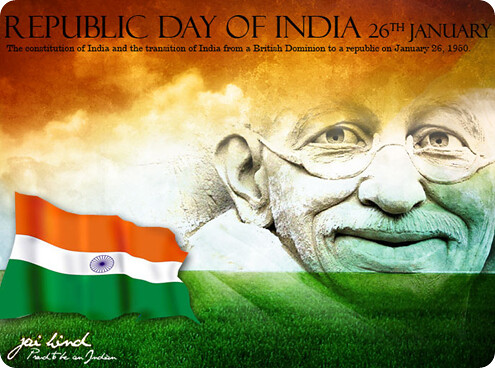
New Delhi, Jan 22 (IANS) Whenever Republic Day is around the corner, clothes and accessories in the Indian tricolour become a rage. How about designing your personalised handbag in a combination of saffron, white and green. Toteteca Bagworks, an online platform, allows you to experiment with your designing skills to create a bag that gives a 'patriotic' colour to your wardrobe. The saffron and green add boldness to the designs, which are available in various shapes, sizes and with different accessories. You can choose from its online library - there are totes, clutches, satchels and more. The customisation can be viewed on the website, and the final product will be delivered at your doorstep within the promised time. The bags are priced between Rs.900 and Rs.3,400 and are available in about 50 styles, which are updated every week. Made freshly at the brand's workshop, the product is delivered at your doorstep within the promised time. Source: ArticleImage: flickr.com
Read More........

Yoga: how we do it in Russia

Photo: RIA Novosti
Today yoga is a must-activity for every Moscow yuppie. However, this trend took years to settle in Russia, though some progressive intellectuals showed interest in the practice long before the Revolution of 1917. Russian artists and creative people were well familiar with Indian philosophy and yoga already in the late 19th century. In the article about yoga in Russia, Russia Beyond the Headlines writes that theatre director Constantin Stanislavski incorporated several yoga exercises and spiritual techniques into his Stanislavski’s System to stimulate actors' attention and concentration on stage. In the early 20th century, books on yoga begin to appear in Russia, like those by American writer William Atkinson, including his Yoga Series and The Science of Psychic Healing. Among other published books were Swami Vivekananda’s Raja Yoga, Yoga Sutras by Patanjali and Bhagavad Gita. Amazing fact: Bhagavad Gita first appeared in Russia under the reign of Ivan the Terrible; its manuscript was sent to the tsar as a gift from one of the Great Moghuls. Today, this manuscript is being kept in Moscow archives of the Foreign Ministry. However, yoga development in Russia was interrupted by the Revolution, and the following Civil War. Though yoga existed in the Stalin era, not that many dared to practice it. Some of the then-yogis were prisoners of numerous labor camps, which spread across the vast country. Russia Beyond the Headlines writes that one of the most well-known inmate-yogis was philosopher and writer Dmitry Panin, who became a character of Solzhenitsyn’s novel In The First Circle, and the famous diva Tatyana Okunevskaya, who told journalists that she had survived in GULAG camps only due to “fresh carrots and yoga”. Okunevskaya practiced yoga every day, and kept up the routine for the rest of her life. At that time there was one brave man who promoted yoga in the repressions-fear-gripped Russia, Boris Smirnov – a surgeon, who was arrested and sent to a camp in the Central Asian city of Ashgabat. In the camp Smirnov studied Sanskrit and in 1939 started his work to translate the Indian epos Mahabharata into Russian. After years of work he translated eight volumes. Stalin died in 1953, and the Khrushchev Thaw brought new hopes for at least some freedom. Then peaceful Brezhnev’s era of stagnation followed and people calmed down, their life settled and they could finally do something for their spiritual growth. It was the beginning of the second birth for Russian yoga. In 1963, Ivan Efremov's Razor's Edge novel was published, where the writer explained the basic principles of yoga in a simple and clear way. At the same time, articles about the therapeutic effect of yoga began to appear in magazines. They were authored by expert in Indian studies Anatoly Zubkov, the first certified teacher of yoga in the USSR, who spent many years in India and met yoga gurus there. They showed him the basics and later Zubkov promoted the activity all across the USSR. In the 1970s, Zubkov wrote a script for the first Soviet documentary about yoga. In the 1970s, the Soviet government invited the iconic yoga mentor Dhirendra Brahmachari to the USSR. Some rumors had it that it was done to apply yoga techniques in cosmonaut training. In the 1980s, first yoga groups appeared, its members practiced mainly in one another’s apartments, but things became legal in the late 1980s, when yoga was a subject for research by scientists who dealt with alternative healing methods. In 1989, the first Conference on Yoga was held in the USSR. After the Soviet Union collapse, yoga, which was officially taboo in the Soviet times, has been welcomed by Russia’s trendy and wealthy. Russians rushed to catch up with the trend for everything Indian. Goa became a top vacation and downshifting spot, while Indian clothes, furniture and food were a must have. In 2010, Russia had its first Yoga Week and guru Sri Sri Ravi Shankar visited St. Petersburg, Moscow, Kazan, Irkutsk; Sochi and the site of a new ashram in nearby Black Sea town of Tuapse. At a seminar called "Ethics in Business" at the Ritz-Carlton posh hotel in Moscow, Shankar spoke about Vedic philosophy and the spiritual subtext of corruption. "Corruption begins outside the purview of belongingness,” he said, in response to a question about how to battle corruption. The only way to overcome corruption, he said, was "to reorient people, educate them," adding "the governments, religious bodies, NGO’s, business, all of them have to work together." According to NYT, Shankar's Art of Living Foundation, which was started with the vision of creating a stress-free society, has its Russian headquarters in a Moscow business center. The organization sent instructors to North Ossetia to work with victims of the school hostage-taking in Beslan in 2002, and to Tskhinvali in South Ossetia after the Georgian aggression in 2008, and it has also worked with the Russian military. In 2007, shortly before he became president, Dmitry Medvedev told reporters that he was “mastering yoga,” as the activity helps him deal with the stress of political duties. That immediately led to speculation that yoga would become a national number one sports, as judo has under Vladimir Putin, or tennis under Boris Yeltsin. Though the Russian Orthodox Church regards some forms of yoga as dangerous sects, yoga studios began to appear in Moscow and finally could have been found in almost every health club or gym. Today, more and more Russians get involved with this Indian practice of physical and spiritual self-discipline as well as a lifestyle linked to it. There are at now at least 100,000 people who practice yoga regularly in Moscow and St Petersburg alone, according to the Russian version of Yoga Journal. Source: Voice Of Russia
Read More........

Beijing summit celebrates China's Qiqiao Festival

The Fifth China (Xihe) Qiqiao Cultural Summit Forum took place in Beijing on Wednesday and discussed China's Qiqiao Festival, also called Girls' Festival, and its assets in cultural protection and development. Qiqiao, an ancient cultural event hailing from Gansu Province's Longnan region in central China, is one of the most legendary traditional Chinese celebrations because of its spatiotemporal power and profound folk culture connotation. Qiqiao is a festival for girls to honor the goddess of Queen of Skills, entertain themselves and exchange life skills. The festival can be considered an accumulation of heavy aesthetic
Sun Xuetao, secretary of the Longnan city Party committee speaks at the Fifth China (Xihe) Qiqiao Cultural Summit Forum, August 7, 2013. [China.org.cn]
psychology and traditional Chinese virtues, similar to the worship of Athena in ancient Greece. Sun Xuetao, secretary of the Longnan city Party committee, said in his opening speech that the summit is a positive response to the UN Women's advocacy for gender equality and the empowerment of women, the Chinese government's promotion of female causes, the construction of cultural heritage and innovation, as well as the protection of intangible cultural heritage. "Qiqiao culture helps improve women's life quality and social status," Sun said, "To promote gender equality, maintain women's interests and help women live a better happier life, is the ultimate goal of the Qiqiao culture. We hope that China's Qiqiao Festival can be a medium to carry on women's wisdom, skills and virtues. We hope the festival can become a lecture on how to establish dignity, confidence, independence and self-improvement; help women develop
A photo exhibition is held at the Fifth China (Xihe) Qiqiao Cultural Summit Forum, August 7, 2013. [China.org.cn]
themselves to the fullest." Julia T. Broussard, the UN Women Country Programme Manager, also said at the summit that Qiqiao is mainly a girls' festival. "Girls will be mature women in the future and the festival can prepare them," Broussard said, "The festival and summit brought attention to the multiple social roles
women have played, and  reminded us of the long path ahead of us despite the big improvements in gender equality and female empowerment. We can discuss how to overcome the difficulties which still exist so that we can ensure the current girls and future women will be treated the same as the men when
they grow up." "I hope that one day, all women from Longnan and even the whole of China, will have big ambitions and work hard to become Nobel-winning scientists, CEOs of big corporations and even president of the nation. For me, that is the ultimate meaning of Qiqiao," Broussard added. Qiqiao beats all
other festivals nationwide in terms of history, the quality of its singing and dancing performances, the sincerity of its participants, the unity of its different events, and its number of participants. The festival is known as the "living fossil" of ancient Chinese customs. Qiqiao starts on the eve of the first day of the
seventh month of the Chinese lunar calendar and ends on the night of the seventh day of the seventh month. It is a comprehensive seasonal festivity incorporating tributes to the goddess, poetry, music, dancing, handicrafts and fine art. The festival offers young girls an opportunity to express and appreciate beauty in all its forms and shapes, which promotes the harmony in both families and neighborhoods. As a
result, the Qiqiao Festival plays a positive role in both the girls' healthy road to adulthood as well as the construction of a harmonious society. Ethnic, cultural and religious experts, archaeologists and scholars attended the summit and conducted discussions about how to explore the festival in particular and culture in general. The summit is part of 10 celebratory activities held in honor of the Qiqiao Festival, including musical creations, singing and dancing performances, short film productions, cartoon creations and the publishing of academic works. Source: China.org.cn
Read More........

Exceptional People: The Art of Judith Light

“Without wonder and insight, acting is just a trade. With it, it becomes creation.” --Bette Davis 
The landscape of television programming, what little remains that hasn’t given way to the dubiously-labeled genre of “reality programming,” is, populated by trades-people who offer passable and acceptable wares. Few, however, are what one might consider artists. When one stumbles upon such a creator of art, that individual’s name and face remain forever in his memory. One of those names, for over two decades,
has been Judith Light. Miss Light’s theatre roots are obvious at once. The Carnegie Mellon University graduate began her acting career on the stage in repertory theaters throughout the United States, Canada and Europe. Debuting on Broadway, Judith performed in the classic “A Doll’s House.” This successful introduction to the Great White Way led to a season at the Eugene O’Neil Playwright’s Conference. While most of us tend to associate the divine Miss Light with her television roles, it’s important to note that her heart will always be on the stage. After bringing her talent into homes across the world through the medium of television, Miss Light returned to live theatre with a 1999 with her starring role as the complex and commanding “Dr. Vivian Bearing” in the critically-acclaimed and Pulitzer Prize winning Off-Broadway production of “WIT”, at Union Square Theater. Miss Light’s performance was heralded as brilliant, and her achievement was recognized by her peers when Judith received the Helen Hayes Award and the Elliot Norton Award for the role. This star-turn in “Wit” led, in 2001, to Washington, DC, where at The Shakespeare Theater, Miss Light portrayed the eponymous character in the Henrik Ibsen classic “Hedda Gabler.” Several other celebrated stage roles followed. One brought a nomination for
a Tony Award for “Best Performance by an Actress in a Featured Role in a Play” in 2011, for Miss Light’s role in “Lombardi,” by Academy Award winner Eric Simpson. Most recently, in June of 2012, Miss Light’s acting genius afforded her a coveted Tony Award for “Best Performance by a Featured Actress in a Play,” for her work in “Other Desert Cities”—a role which also earned Judith a Drama Desk Award for Best
Featured Actress. Throughout all of this, Miss Light also found the time to entertain millions with her television in film work starting with her ingénue role as Karen Wolek on “One Life to Live,” a part which won her two Best Actress Emmy awards. Most of us, however, recognize Miss Light as Angela Bower from her beloved primetime series “Who’s the Boss?” A host of other featured television roles would follow in addition to work in films such as “The Shoemaker” with Danny Aiello, and “Ira & Abby” by Jennifer
Westfeldt, with Robert Klein, Fred Willard, and Frances Conroy. This year, we’ve seen Miss Light’s deliciously Oedipal turn on TNT’s “Dallas” reboot as a scheming villainess who looks remarkably younger than the son to which she is just a bit too attached. Though the many awards Miss Light has amassed throughout her career speak to her unique talent, the true measure of her art is evident to anyone who has seen her perform. It’s the “wonder and insight” of which Bette Davis once spoke that gives the bite and heart to all of Miss Light’s roles. Without this depth, an actor is simply parroting life. Judith Light clearly gives a new, remarkable life to each character she portrays. It’s this singular sense of creating, of being, 
of living which makes hers a very special talent. Thankfully for many, Miss Light doesn’t keep her talent limited to just her work. She is an active Board Member and advocate for many organizations representing AIDS-related and Human Rights concerns. These include: Broadway Cares: Equity Fights AIDS, The Names Project/The AIDS Memorial Quilt, The AIDS Memorial Grove, CDC’s Business Responds to AIDS/Labor Responds to AIDS, Hollywood Health and Society, Project Angel Food, The Matthew Shepard Foundation, The National Aids Memorial Grove, The Point Foundation, The Rome Chamber Music Festival, Faith In America and The Trevor Project. All Images from JudithLight.ComSource: Stalking the Belle Époque
Read More........

Over a crore bathe in Ganga on day one of Maha Kumbh


Allahabad, Jan 14 (IANS) The world's biggest gathering of people, the 55-day Maha Kumbh congregation, began in this north India town Monday with over a crore people, led by the ash-smeared Naga ascetics, taking a dip at the Sangam - the confluence of the Ganga, Yamuna and Saraswati rivers. Officials said the number could go up as the bathing would go on till late night on Makar Sankranti Monday. Divisional Commissioner of Allahabad Devesh Chaturvedi told said that the first day with record devotees passed
off peacefully. About 50 lakh people had bathed in the holy river by noon and the figure was pegged at 82 lakh at 4 p.m. Elaborate arrangements were made on the VIP ghat, where the 13 sects of sadhus lead bathers in a mutually agreed sequence. The fraternity was led by Maha Nirvani Akhada and was followed by Niranjani, Anand, Juna and Bairagi akahadas, among others. As the clock struck five Monday morning, heavily decked-up chariots, some in silver and gold, wound their way to the Sangam, with hundreds following in procession on foot, beating drums and blowing conch shells. There was a mad frenzy in the foreign and national media, with photographers rushing to get winner shots of the naked, ash-smeared Naga sadhus jumping into the chilly waters of the Ganga. Before they did so, the sadhus danced and threw garlands at the press gallery in gay abandon, waving to hundreds of followers on the other side. Carrying silver tridents, maces, axes and swords, some of the sadhus with flowing beards told IANS that they felt on top of the world as they "touched mother Ganges". "This is an electrifying moment," said a visibly elated 75-year-old Mokshanand from Vrindavan, who said he this was his seventh Kumbh in a row. Several rows of sand bags have been piled up on the three-km 'bathing stretch', said Mani Prasad Misra, the 'mela adhikari', in-charge of Kumbh 2013. Misra told IANS that arrangements had been made to ensure that the Ganges flowed "well and clean" during the major bathing days. A special team of 10,000 sweepers have been pressed into service to keep the area clean. "Deep water barricading has been done and an extensive presence of 'jal' police has also been pressed into service to avoid mishaps," Additional Director General of Police (ADG) Law and Order Arun Kumar told IANS. Policemen from Uttar Pradesh and neighbouring Uttarakhand were on vigil. Many policemen were seen blowing whistles to keep crowds in order, while some were spotted showing lost devotees the way. While some thought of the large crowd as a "spiritual mayhem", there were those who bit their nails as they watched Naga sadhus into the water. For the hundreds who have not been able to reach the bathing sites, 13 huge LED screens, both mobile and stationary, were playing the recording of the bathing sessions. An army of mediapersons is covering the event. Over 100 foreign journalists and more than 500 local and national journalists are present here. Special arrangements have been made for the coverage, likely to be beamed across the globe. Emerging from the cold waters of the Sangam, Indu Rani, a 70-year-old widow from Punjab, said she had arrived here on instructions from her guru who stays in Vrindavan. "I cannot explain the feeling when one takes a dip in the Ganga Maiyya (mother)," an elated Indu said. Chavi Sharma, working with an IT consultancy firm in Kolkata, confessed that she was "amazed to see such a mammoth gathering". "I had heard of it, but to actually be part of something so momentous feels so cool," she said. (Mohit Dubey can be contacted at mohit.d@ians.in), Image: flickr.com Source: News Track India,
Read More........

Trekking In The Land Of Gods

Trek is a long and an adventurous journey undertaken on foot, in areas where common means of transport are generally not available. It should not be confused with mountaineering. The Himalayan routes in India are famous for some of best trekking routes in the world, attracting a large number of trekkers. From trekking routes that challenges professional trekkers, to the routes easily accessible by even amateur and
first time trekkers, trekking is an awesome experience in the highGarhwal mountain ranges. Uttarakhand - the land of Gods and the home of Himalayas, located in the northern India, has many such trekking routes. It is the most popular area for trekkers form across the world. Uttarakhand is a region of
outstanding natural beauty, its marvels in its high Himalayan ranges and glaciers (towards the northern part of the state), while the lower reaches are densely forested. The state has always been a destination for mountaineering, hiking and rock climbing in India. With its gorges, deep valleys and lofty mountains
the geography of this land is idle. Roopkund is a popular trekking site among trekkers. The frozen Roopkund lake is famous for the mystery of skeletons, dating back to 850 AD, found in the lake, which was covered by the National Geographic Channel in a documentary. On the trek to Roopkund are also the beautiful meadows of Bugyal. The termination point for all these treks is Rishikesh. Rishikesh, a small picturesque spiritual town along the river Ganga, is located in foothills of the Himalayas . It is also considered to be the “Yoga Capital Of The World” and is a magnet for spiritual seekers. The place keeps
you spiritually enthralled, from the moment you enter Rishikesh, till you head back home. No wonder the Beatles choose Rishikesh for their  Transcendental Meditation at the ashram of Maharishi Mahesh Yogi. Thereafter, Rishikesh catapulted to Western fame. Trek on to the beautiful lake, Deorital for an easy, relaxed walk in which you don’t have to put much vigor into. From where you can trek on to Chandershilla top, which is the only place from where you can get a perfect 360 degrees view of the Himalayas. Another
easy trek is to the Surya Top, which also offers a mix of everything a Himalayan trek has to offer. You can catch a Himalayan black bear, musk dear or even a leopard while on your up through the forests or watch out for pheasants, eagles, butterflies and many varieties wild flowers. And if you want to see rare Himalayan birds like the Paradise Fly Catcher and the Fork Tail Fly Catcher you can easily trek to Har Ki Dun valley. The best time to visit the hills of Uttarakhand is from October to June, when you can expect
clear blue skies. In the summer months of April to June, avoid the plainsand take to the hills instead. Rains occur from end June to September, and though the snow-clad Himalayan views may not be visible, the monsoons in itself could be quite delightful. Famous as an offbeat destination, some compare the place with the heaven. Source: The Holiday India
Read More........

How to get ahead ... as a housing professional with a disability


Nine years ago Debbie Smith, who has a genetic autoimmune disease which affects her mobility and creates painful joints, was told by doctors that she would never work again. Smith was determined to prove them wrong. The former call centre manager decided to go to university and completed a part-time science degree, graduating with a 2:1. Then, by chance, she heard about a training programme encouraging disabled people to consider a career in housing. "I knew nothing about housing and it was nothing to do with my degree," Smith says. "When I found out more about it and the different roles available and discovered that disabled people were under-represented in the workforce, the more it appealed. It wasn't just a job; I realised that I could become a role model, not just for other disabled people but for other people who want to get back to work, and also be a role model in the organisation." After completing the Positive Action for Disability Programme (PAfD) run by the Chartered Institute of Housing (CIH), Smith is now a tenant advice and welfare benefits team manager for New Charter Homes with ambition to develop her professional housing career. "People tend to think that social housing is just about paying the rent and that's it, which couldn't be further from the truth," she says. "We work in neighbourhoods, on worklessness programmes and financial inclusion. A lot of what New Charter does is pioneering – it's all about providing the community with what it needs to be a sustainable community." Smith is one of 16 trainees who have completed the two year PAfD programme, run jointly with 15 host social housing associations. There are no specific qualifications required but trainees, who are expected to complete a level three or four CIH professional housing qualification as part of their development, must be committed to the housing sector and prove themselves to be motivated. Trainees, who receive an average annual £15,000 salary, are either taken on by a social landlord to learn about a specific housing role or spend the time working in a variety of different jobs with their host organisation. So far, 11 PAfD trainees have taken professional housing roles. Now the CIH, which is in the process of recruiting its third cohort, is expanding the programme, working with large housing associations to establish an in-house mentoring scheme for disabled employees. The intention is that the mentees, who can be working in any role within the organisation, will be encouraged and supported to train to become professional housing officers. The mentees would become role models within their organisation and take over the mentoring responsibility to help other disabled colleagues progress in their housing career. Graham Findlay manages the PAfD scheme for the CIH. He says: "The idea is to establish a mentoring network in the larger housing associations. The first mentors would be non-disabled people. I am going to be working with the organisations to help pair up a mentor with a disabled member of staff maybe somebody who is stuck in an admin job for example but has ambition to go further." Around 3% of the social housing workforce are people with a disability whereas 20% of social housing tenants are disabled, according to the CIH. It is these statistics which promoted New Charter Homes to become involved in PAfD from the outset. "We were the first housing association in the north west to take part in the programme," says head of HR Gary Sharp. "Six and a half percent of our workforce now have a disability compared to around three or four per cent a few years ago. I think that has happened because this programme is a visible programme in the workplace and gives a positive message to staff. I also think though that it's all about providing our customers with a better service."Source: SAM Daily Times
Read More........

Behind the curtains of shadow theatera

By: There are over 50 works of decorative theater art from the state and private collections of Russia and Indonesia. Some exhibits come from the State Museum of Oriental Art. “We really liked the idea of exhibiting Indonesian puppets and masks from our collection on the premises of the Museum of Decorative and Applied Art,” said deputy director of the State Museum of Oriental Art Tatiana Metaksa in her interview to the Voice of Russia. “It is wonderful when a museum dedicated to Russian art exhibits works from one of the beautiful Oriental countries.” The theatrical culture of Indonesia, which is one of the largest island countries in South East Asia, is practically unknown to the majority of Russian viewers. However, historically, theater performances became one of the main ingredients of the spiritual culture of the residents of the Malay Archipelago and the Islands of Java and Bali. The word “wayang”is used to denote both a theater performance and theater puppets. One of the main exhibits on show is a painting several meters wide that depicts episodes from a Javanese fairy tale about the adventures of the young knight Panji and his beloved princess Sekartadji. Such paintings are used for the performances of wayang
master  beber, during which –  the show accompanied by some music – tells Panji’s story by showing paintings that were wrapped around two vertical poles. It could be said that such performances in the past were the equivalent of today's cartoons. But they mostly remind one of a show of diapositive photography that was so popular in the 20th century. Today the art of wayang beber is almost extinct. Only two sets of ancient paintings dated around the 17th –18th centuries have survived to this day, and are considered to be sacred relics that possess magic powers. Performances that use these ancient paintings are held only during especially important ceremonies. The state of the paintings is quite poor, that is why about ten years ago their owners allowed them to be copied in order to preserve the unique heritage and let as many people as possible see them. One such work based on the scroll from the Javanese district of Pachitan is on show at the exhibition. Nonetheless, the exhibited work is still just a copy of the original scroll. Some details, the decoration of the background and the coloring of the canvas exhibited at the Museum of Decorative and Applied Art, are a product of the imagination of the artist who made the modern version. However, the composition as well as the basic artistic methods mirrors the original. According to Tatiana Metaksa, the good characters have “refined facial features: thin lips, thin noses, almond shaped eyes, while bad characters to the contrary are traditionally portrayed with thick red lips that are too big in size.” The story of Panji was also popular with the dancing drama show called wayang topeng, the masks from which are also exhibited at the museum. The actors themselves do not talk since they are holding the part of the puppet with their teeth that is attached to the inside of its mask. The show master tells the story for them. The only exclusion is the fool who wears the mask and makes the audience laugh. In 2003, UNESCO granted wayang world heritage status, thus acknowledging the importance of this type of theater. Photos provided by The All-Russian Museum of Decorative, Applied and Folk Art, Source: Voice Of Russia
Read More........

The Dazzaling Lake of Rewalsar in Himachal Pradesh

Lake in Himachal PradeshRewalsar Lake is a mid-altitude lake located in the Mandi district of Himachal Pradesh INDIA. Located on a mountain spur, 12 miles (19 km) or about an hour's drive from Mandi, brings you to this sacred dark jewel-like lake. With water, woodland and high hills, it presents a variety of natural beauty. Rewalsar is sacred to adherents of three major Dharma religions - Hinduism, Buddhism and Sikhism.  The Hindu history of Rewalsar is found in Sakand Puran. Rishi named Lomas was searching for place to worship. He traveled and climbed the top of Drona mountain, from the top of mountain he saw a beautiful lake surrounded by beautiful trees, flowers and birds. He decided to meditate at the bank of the lake. He  meditated here and according to Skand Purana Lord Shiva and Mata
Parvati blessed him by telling the secrets of this place where all the Devatas and Ganas are in the form
of flowers, floating lands and trees. The famous Rewalsar lake ('Tso Pema' to Tibetans) is associated with  Padmasambhava (also  known as Guru Rinpoche), who is recognized as the second Buddha of this age. One version of a legend has it that the king of Mandi had Padmasambhava burnt alive after rumours that the Guru had attempted to teach his daughter the Dharma, which was not accepted then. The pyre burned for a full week, with great clouds of black smoke arising from it, but after a week, a lake appeared at the spot where he was burnt and Padmasambhava manifested himself as a 16 year old boy from within a lotus in the middle of the lake. The king, repenting his actions, married his daughter with Padmasambhava. It was from Tso Pema that Padmasambhava went to Tibet to spread Vajrayana Buddhism.The tenth Guru of Sikhs, Guru Gobind Singh visited Rewalsar to consult with kings of the Hill states seeking support against Aurangzeb. He stayed at Rewalsar for a month The place
is particularly sacred to Namdhari Sikhs due to its mention  in  Sau  Sakhi  as a sanctuary.This 
gurudwara was built in 1930 by Raja Joginder Sen of Mandi. A country road winds up to the lake and right around the lakeshore, where you’ll find the ochre-red Debung Kagyud Gompa, with an active thangka (Tibetan cloth painting) school and a large central Sakyamuni statue. Just beyond is the pale blue gurdwara built in honour of Gobind Singh in the 1930s. In the other direction, the Tso-Pema Ogyen Heru-kai Nyingmapa Gompa has artful murals .Uphill from the lake is the towering white Zigar Drukpa Kagyud Institute, with outsized statues of Tantric deities. On the far side of the lake are a number of small Hindu temples dedicated to the sage Rishi Lomas, who was forced to do penance here as a dedication to Shiva.It is firmly believed that those who visit this holy lake and pays reverence towards Acharya Padmasambhav, his or her life certainly become meaningful by gaining wisdom, and eventually the state of Enlightenment. Source: The Holiday India Travel Blog
Read More........

Daily yoga or 20 mins of walking may benefit cancer patients

Indian Express, Agencies : Washington, Researchers are working towards being able to prove, with scientific certainty, that prescriptions for daily yoga or 20 minutes of walking will likely extend a cancer patient’s survival. But several studies at the University of Rochester Medical Center have suggested that knowing how to develop and apply specific exercise programs (dose and timing to achieve a certain outcome) is a realistic goal. Karen Mustian and Lisa K. Sprod from the James P. Wilmot Cancer Center at URMC investigated physical activity among older people, a group they describe as often overlooked and underestimated in terms of their ability to live with cancer. Mustian, Ph.D., M.P.H., assistant professor of Radiation Oncology at URMC and an exercise psychologist specializing in cancer, conducted a phase II clinical trial to discover whether six weeks of a home-based exercise plan (walking and resistance bands) improved cancer-related fatigue and strength in 58 men with prostate cancer who were treated with radiation and androgen deprivation therapy. The mean age of the group was 67. The men had a wide range of fitness levels, from frailty to golfers who were fit and active. A control group that did no exercise was also established. Researchers measured cardiopulmonary function (through a gold-standard test called Vo2-peak) and muscular strength, and found that all exercisers improved while the control group declined in performance. The most significant information, Mustian said, was that everyone who exercised regularly achieved some added benefit – even the fittest participants. K. Sprod, Ph.D., a junior faculty member who is being recognized with an ASCO Merit Award, investigated the appropriate amount, type, and intensity of exercise in cancer survivors older than 65, who are also experiencing the natural functional declines associated with aging. The double hit, she said, is an understudied issue. After analyzing a national sample of 14,887 people, Sprod established that older cancer survivors engage in less physical activity , even routine activity such as stooping, lifting, and walking – than people without a history of cancer. This may lead to less independence, a higher risk of the cancer coming back, and reduced survival. The study raises new questions, such as whether the treatment contributes to less activity, or whether patients and physicians are worried about the safety of becoming physically active during and after cancer treatment, or a combination of the two factors, Sprod said. In another exercise-related study, Luke J. Peppone, Ph.D., a research assistant professor, investigated the effects of a yoga program on women with breast cancer who were taking aromatase inhibitors, medications that deplete estrogen and often cause severe menopause-like symptoms. A frequent complaint is joint pain and muscle aches, sometimes making it difficult for women to get out of bed or grip a fork and knife. Peppone said a high percentage of breast cancer survivors discontinue aromatase inhibitor therapy because of side effects, putting them at greater risk for cancer recurrence. His study measured the self-reported quality of life and physical discomfort among 95 women taking aromatase inhibitors and 72 women who were not taking the drug. Each group took part in a four-week gentle yoga program. The women taking aromatase inhibitors reported a significant reduction in pain, muscle aches, and total physical discomfort, Peppone said. The study will serve as a pilot to launch a larger study of exercise to relieve musculoskeletal pain. Finally, a controlled study of yoga therapy in middle-aged, mostly female cancer survivors showed that a four-week, customized gentle yoga plan significantly reduced perceived difficulty with memory. Michelle C. Janelsins, Ph.D., research assistant professor at Wilmot, randomized patients to one of two groups: standard follow-up care after receiving adjuvant cancer treatment, and standard care plus a program that consisted of breathing exercises, gentle Hatha and Restorative yoga postures, and meditation. The yoga group had significantly reduced memory difficulty compared to the standard care control group. Improved memory also partially contributed to improved fatigue and improved quality of life, Janelsins noted. In some ways, Mustian said, the exercise-and-cancer dilemma harkens to the days when it was not known what types of chemotherapy and how much should be given to cancer patients. Through rigorous scientific inquiry, physicians were able to refine the way they prescribe and administer chemo and Mustian believes the same refinement is possible with exercise. “I think we do an incredible disservice to people who have just been diagnosed with cancer when we say, ‘Just do it!” Mustian said. “Sometimes we see 72-year-olds who are more fit than 55-year-olds, and so it is best to look at functional capacity, and then to be as specific as possible when it comes to personalizing exercise for people with cancer. Otherwise we are sending mixed messages,” he added. The findings will be presented at the American Society of Clinical Oncology (ASCO) 2012 annual meeting in Chicago, June 1-5, 2012. Source: Indian ExpressImage: flickr.com
Read More........

A More Suitable You: Adding Persona to the Workplace Uniform Is the Thoughtful Man's Power Play


Medley News: Every single workday, scores of entrepreneurs go over the gesture of setting on a gloomy suit and tie. These menfolk end up beholding almost indistinguishable from each other dude—and that’s part of the problematic. For the gentleman who desires to outlook out, but not baton out, there are methods both restrained and daring to give a shot persona into a suit-and-tie appearance deprived of provoking goggles from the office peanut portico. The habit is piloting how much to thrust the personalization. The appearance must be relaxed and assertive, not ever mandatory or exaggerated. If taken too far a gentleman jeopardies being blamed of consuming a mid-life emergency or fetching a slave to style. “Personalizing your suit demonstrates confidence and creativity,” says David Lisbon, a menswear personal shopper at Bloomingdale’s Manhattan flagship store. Males just opening their occupations may perceive the suit-and-tie item as constricting, a surrender to a forthcoming of being just another wishy-washy man in a ashen flattery suit. Older menfolk may need to add certain private aptitude to their longstanding standard. Robin Walker, a Chicago-based image tactician, says her regular customer is 45 to 60 years old: “They are bored wearing the same old stuff,” she says. “It may be stress-free and a no-brainer but they are tired of looking at it.”  At the gentlemen’s fashion demonstrations in Europe late last month, some stylists presented suits refurbished with gossamer mufflers, T-shirts, sandals and even shorts.  Still, a gentleman has to recognize when to give or take what’s accurate and what’s not for him—and evade being a slave to outrageous runway appearances.  Frequently, monograming a suit just includes small tugs and fittings. That can mean somewhat that isn’t instantaneously ostensible to others, like a scarcely there pocket square. Or leather interlaced or decorated anklet worn just above the wristwatch, mentions Eric Jennings, men’s fashion director at Saks Fifth Avenue. “When you’re reaching for your glass of wine or fork, [others] will see a flash of it.” Mr. Jennings says he observed an amount of menfolk trying such bracelets last month in Italy, where he was joining menswear demonstrations.  Additional way to identify a suit is with a custom belt, suggests Mr. Lisbon. The Trafalgar tag, for instance, has a plug-in in which consumers select belt color, leather kind, buckle and design style.  When it derives to cufflinks, profitable fanciful and idiosyncratic is satisfactory, says Mr. Lisbon, so long as the intentions aren’t obnoxious or aggressive (no pin-up girls). Cufflinks can enhance a clue of tint and the funny side to a more traditional appearance and also reproduce the wearer’s off-work benefits with, say, a golf theme or imageries of dinghies.  A pocket square is a relaxed way to discriminate a suit. “It’s a small thing but it does speak volumes,” directing the dispatch you caution about the technique you extant yourself, says Mr. Jennings.  “Don’t get hung up on the proper way to fold it,” he adds. “There is no right or wrong way.” Mr. Jennings records that the Brunello Cucinelli tag presented pocket squares creased in a quantity of diverse methods at a new trade show. Source: Medley NewsSource: flickr.com
Read More........

Sachin at Kukke Subramanya

October 28, 2010: Little-known till a couple of days ago, all of a sudden lakhs of people now want to visit – or at least know more about – the temple town of Kukke Subramanya, 105 km from Bangalore. Their inspiration: Sachin! Sachin Tendulkar's two-day pilgrimage to the Kukke Sri Subramanya temple drew 
scores of fans. It also had them sourcing details from a website on the town. As a result, the website saw over 17 lakh hits till 1.30 pm on Monday, leading to a server crash. The pilgrimage by Tendulkar, his wife Anjali, and his siblings Ajit, Nitin and Savitha, resulted in a massive 17,50,200 hits over Sunday and
Monday on www.kukkesubramanya.com. The website received traffic from all over the world, while the town attracted scores of fans. Many e-mails and telephonic enquiries were received at the temple's reception office at Kukke Subramanya in Dakshina Kanara district. "It was never like this in the past,"
said a source at the website. "Though VIPs from all parts of the country visit the Kukke Sri Subramanya temple, Tendulkar's  visit has led to a deluge of enquiries about the pujas here." At the temple, Lord Subramanya is worshipped as a snake. Tendulkar, wife Anjali, brothers Ajith and Nithin, and sister
Savitha spent Sunday and Monday at Kukke Subramanya, performing rituals aimed at helping him overcome sarpa dosha –perhaps one of the factors behind his nagging injuries. "He performed sarpa samskara on Sunday, and ashlesha bali and nagapratishte on Monday," said the source. "These rituals
were recommended by a family friend, VS Nayak, living in Bangalore." To fans eager to shake hands with him, Tendulkar said, "I've pain in my shoulders. Please don't disturb me." Posted by Senani at 12: Senani: Sachin at Kukke Subramanya
Read More........