2500-year-old Siberian ‘princess’ beauty secrets revealed


Fashion and beauty secrets of a Siberian ‘princess’ who died 2,500 years ago have been revealed from her ice-clad burial chamber in the Altai Mountains. Last month, remarkable modern-looking tattoos on the mummy of a 25-year-old woman were revealed, which were preserved in the permafrost on the Ukok Plateau, some 2,300 metres above sea level. Now details have been disclosed on the findings of Russian scientists, which show the ancient tattooed princess’s fashion sense, love of make-up and exotic headwear, the Daily Mail reported. According to the Siberian Times, the ice - a natural time capsule - also preserved her elegant clothing, enabling a reconstruction to show exactly how she looked “some 500 years before the birth of Jesus Christ.” “Archeologists even found items from her ‘cosmetics bag’, which lay inside her coffin next to her left hip, notably a face brush made from horse hair, and a fragment of an ‘eyeliner pencil.’ This was made from iron rings, inside which was vivianite, giving a deep blue-green colour on the skin. There was also vivianite powder, derived from an iron phosphate mineral, to be applied to the face,” the paper reported. The analysis of her clothing has led to the conclusion that the Pazyryk people - though living in remote southern Siberian - had extraordinarily wide connections as far afield as China, India, Iran and the Mediterranean, picking designs or materials or dyes from different cultures’ while also establishing their own unique look. Professor Natalya Polosmak, who discovered the burialchamber and analysed the clothing in painstaking detail, said: “The exotic dress of the of the ‘princess’ also ‘proved to be far more unusual and unique than any of our guesses. “She was dressed in a long and wide woollen skirt, made from three horizontal strips of fabric. The skirt was 144 cm long, 90 cm wide on the top, and 112.5 cm at the base. “Each strip of the fabric was coloured separately: the top one was crimson, the middle very slightly pinkish-yellowish, and the third of a very rich Bordeaux colour. All pieces of fabric were manually coloured. The skirt had a woollen braided belt, which could as well change the length of the skirt by holding it either around the waist, or higher, under the breasts,” she added. Archeological detective work found that the dyes used in her skirt came from the Eastern Mediterranean or Iran - almost 2,000 miles from the Altai Mountains. Her fine silk shirts were of a Chinese design. Yet the silks themselves came either from Assam in India or south-eastern Asia. On top she wore a smart and stylish light fur kaftan-style coat. As with male clothing for the period, it had long narrow sleeves, shorter at the front “and a tail from behind” - possibly the world’s first tailcoat. She also wore above-the-knee white felt boots as protection against the fierce cold with temperatures dropping to as low as minus 35C. The Pazyryk clothing included light fabrics not best suited to the cold temperatures in which they lived, suggesting perhaps their looks were more important to them than simply being warm.’ It also meant running repairs were needed on clothing and other burial mounds on the plateau have yielded examples of darned trousers.’ “The real eye-opener for Dr Polosmak was the high and distinctive head wear,” the Siberian Times reported. The ‘crowning glory’ of the wig was a giant feather some 68.65 cm long, made from felt and covered with black woollen fabric, with a stick inside it to help it stand straight. Then there was a ‘cap’ for the wig - some 84cm tall. When she was buried, her coffin, made from a hollowed out tree, was long enough to accommodate the headgear.’ The scientists - who dug the ‘princess’ from her icy grave 19 years ago - have released information on her as her remains are to be moved from Novosibirsk back to a specially built sarcophagus in the Altai republic where the mummy will in future be on public display. Experts remain puzzled over her baldness, and say some ‘Pazyryk women - both of royal and lower status - kept plaits of their own shaved hair with horse hair extensions.’Source: Indian ExpressReference-Image: https://upload.wikimedia.org
Read More........

The New 7 Wonders of the World

The Pyramid at Chichén Itzá (before 800 A.D.) Yucatan Peninsula, Mexico
MEXICO: Chichén Itzá, the most famous Mayan temple city, served as the political and economic center of the Mayan civilization. Its various structures - the pyramid of Kukulkan, the Temple of Chac Mool, the Hall of the Thousand Pillars, and the Playing Field of the Prisoners – can still be seen today and are demonstrative of an extraordinary commitment to architectural space and composition. The pyramid itself was the last, and arguably the greatest, of all Mayan temples.
Christ Redeemer (1931) Rio de Janeiro, Brazil
BRAZIL: This statue of Jesus stands some 38 meters tall, atop the Corcovado mountain overlooking Rio de Janeiro. Designed by Brazilian Heitor da Silva Costa and created by French sculptor Paul Landowski, it is one of the world’s best-known monuments. The statue took five years to construct and was inaugurated on October 12, 1931. It has become a symbol of the city and of the warmth of the Brazilian people, who receive visitors with open arms.
The Roman Colosseum (70 - 82 A.D.) Rome, Italy
ITALY: This great amphitheater in the centre of Rome was built to give favors to successful legionnaires and to celebrate the glory of the Roman Empire. Its design concept still stands to this very day, and virtually every modern sports stadium some 2,000 years later still bears the irresistible imprint of the Colosseum's original design. Today, through films and history books, we are even more aware of the cruel fights and games that took place in this arena, all for the joy of the spectators.
The Taj Mahal (1630 A.D.) Agra, India
INDIA: This immense mausoleum was built on the orders of Shah Jahan, the fifth Muslim Mogul emperor, to honor the memory of his beloved late wife. Built out of white marble and standing in formally laid-out walled gardens, the Taj Mahal is regarded as the most perfect jewel of Muslim art in India. The emperor was consequently jailed and, it is said, could then only see the Taj Mahal out of his small cell window.
The Great Wall of China (220 B.C and 1368 - 1644 A.D.) China
CHINA: The Great Wall of China was built to link existing fortifications into a united defense system and better keep invading Mongol tribes out of China. It is the largest man-made monument ever to have been built and it is disputed that it is the only one visible from space. Many thousands of people must have given their lives to build this colossal construction.
Petra (9 B.C. - 40 A.D.), Jordan
JORDAN: On the edge of the Arabian Desert, Petra was the glittering capital of the Nabataean empire of King Aretas IV (9 B.C. to 40 A.D.). Masters of water technology, the Nabataeans provided their city with great tunnel constructions and water chambers. A theater, modelled on Greek-Roman prototypes, had space for an audience of 4,000. Today, the Palace Tombs of Petra, with the 42-meter-high Hellenistic temple facade on the El-Deir Monastery, are impressive examples of Middle Eastern culture.
Machu Picchu (1460-1470), Peru
PERU: In the 15th century, the Incan Emperor Pachacútec built a city in the clouds on the mountain known as Machu Picchu ("old mountain"). This extraordinary settlement lies halfway up the Andes Plateau, deep in the Amazon jungle and above the Urubamba River. It was probably abandoned by the Incas because of a smallpox outbreak and, after the Spanish defeated the Incan Empire, the city remained 'lost' for over three centuries. It was rediscovered by Hiram Bingham in 1911. Source: Article
Read More........

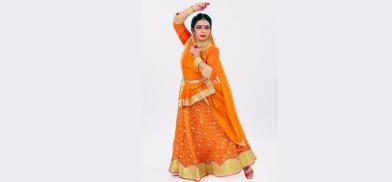
Artiste community bearing brunt of event cancellations: Kathak guru Rekha Mehra

a

Artistes were among the worst-hit communities due to the coronavirus pandemic and the resulting lockdown, Kathak exponent Rekha Mehra has organised an online talent hunt to assert that, despite all odds, the artiste community is active and waiting for opportunities to exhibit talent.

Founder of Urvashi Dance Music Art and Cultural Society in India, Dr Mehra will be holding the online talent hunt named 'Sur Taal, Hunar Ka Kamaal' as a virtual global platform for performing artists of Indian classical dance and Indian light music. The participation is free, and the participants are asked to upload their video online on a virtual platform till October 14, after which audition rounds begin, wherein the artists will be interacting with the dance masters and gurus online.

"Due to the outbreak of coronavirus pandemic and the lockdown, various artists suffered the brunt of the cancellation of the on-ground events. This online talent hunt during the COVID-19 spreads the message across the globe that despite all the odds the artist community is active and ready to perform to promote the tradition and culture even through a virtual platform. Besides, there is an immense talent and we just need to provide them with an opportunity to exhibit it," the Kathak exponent told IANSlife.

This event during the COVID-19 will give a direct message to society that the artist community is also active despite all odds and the show must go on, she added.

As per the organisers, the talent hunt so far has received queries from across the globe as several dancers from Russia, Canada, England, USA, and Bangladesh. There is much excitement among the artist community who are without any performance since March 2020, notes Dr Rekha. She adds that the online hunt will give a chance and opportunity to all, based on the performance of the artiste.

Renowned exponents and gurus to be part of the jury panel are Pt. Krishna Mohan Maharaj, Padma Shri Ranjana Gauhar, Rita Mustaphi, Sudeshna Maulik, Tapan Roy, Nishi, Punita Sharma, Sujata Maheshwari, Pratibha Sharma, Shashidharan Nair, Hemant and Vaishali Panwar, Sonia Chaudhury, Rumela Mukhopadhay, Tabassi Ahmed, Rani Khanam, Nandini Singh, Bala Vishwanath, and Sharmila Sharma.

Besides the prizes, the winner of the talent hunt will be given a chance to perform live at any auditorium in Delhi once it is safe. Performers can visit www.rekhamehra.com.

Read More........

Tiffany Tang's new drama to meet audience

The TV still shows actress Tiffany Tang in the Drama series, Princess Weiyang, which will debut on Nov 11, 2016.[Photo provided to CRI]

A new ancient Chinese costume drama, starring popular actress Tiffany Tang, is ready to hit small screens on Beijing Satellite TV starting on Friday.

Entitled 'The Princess Weiyang,' the TV drama aims to take audiences back 1500 years, by portraying the struggles and conflicts within the imperial family during the Northern Wei Dynasty.

The 33-year-old actress elaborates on her experience of playing the titular role in the series.

"She has an insightful mind. She cares about the long-term interest and knows how to set her ambitious goals step by step. Later several incidents happened but all under her control. I wear a total of 90 ancient costumes, which is unprecedented in all of my acting experiences in the TV drama series."

The story develops as the kind-hearted princess accidentally enters her enemy's territory, and centers on how she eventually utilizes her wisdom to become a powerful woman after suffering many hardships.

Actor Luo Jin, Vaness Wu, and Golden Bell award-winning Hong Kong actress Leanne Liu also star in this TV drama.

The 54-episode drama is inspired by the hit online novel with the same name. Source: China.org.cn
Read More........

Death, beauty and poetry come together in Ancient Rain


Light, movement and acoustics lent an intimate feel. Sarah Walker 
Christopher Wallace-Crabbe, University of Melbourne: This new concert, or you might say themed performance, opened at the Melbourne Art Centre on Wednesday evening. It gave the big audience lots of pleasure, with occasional puzzlement.

Paul Kelly is well known round here as a serious all-rounder, but especially as a grave song-writer. Now he has turned from Australian topics to those sounded by modern Irish poetry. He is paired with singer Camille O’Sullivan, dubbed “a shape-shifter”, who has worked with Paul and with pianist Feargal Murray in setting the melange of chosen poems ebulliently to music. She has an instinct for musical narrative.

The poets range agewise from W.B. Yeats through to the young Enda Wyley. But one has to grant that those who punters would call the favourites – at this racing time of the year – continue to stand out. 

Three famous Yeats poems, including a rendition of Easter 1916, that great Rebellion lament, were compelling above all on Wednesday night. But then, so was the quietly plangent ending of Joyce’s story The Dead, read here a deux. There is nothing like it in modern fiction.

We tend to think of Ireland as a land continually sprayed by the showers of the Atlantic, or from any nearby waters. “Ancient Rain” is a title as metaphor. Rain like history wears everything down to its present form, that is to say its present fate. The roles of Irish women, soldiers, rebels, parents and of the young dead are all invoked as drenched by that rain.

How can you draw a dilly-bag of poems together to make an event, an evening? Well, in Chris Drummond’s direction, use was made of the stage’s great depth, as well as of lighting as a form of eloquence.

The poems were rendered with spectacular variation, sometimes deeply moving, if at times distracting from the lyrics.

Sequence matters, so that Seamus Heaney’s Digging, with its fertile sense of national soil, turned poetry up to our immediate attention. What you dig up with the warmest of energy may well end up chill as falling snow, as this program displayed for us. Mind you, in a number of these musical settings, volume was heartily turned up before the last lines were over. Human predicament as climax?

Musical accompaniment was close, four instruments only. Between them Camille often moved rhythmically, articulating space as though alluding to the four provinces of Ireland. It’s a rural land, after all. But city music came frequently to mind as the songs mediated between pub music and concert hall. Yeats’s An Irish Airman Foresees his Death, a proleptic elegy for a close friend’s son, was of neither genre, only its passionate self.

Camille had a key role in presenting Paula Meehan’s piece, turning on a statue of the Virgin. She was oddly compelling, but the Virgin’s role is not my cup of tea. This item was surely too long, its form straggly, even if its function was to end the first half of our evening. Across the program, however, Camille interacted subtly with Paul again and again, reality coming back at unexpected angles.

Like history itself, Act Two opened with the theme and cost of wars: in a passionate compulsion from the two stringed instruments. These led in turn into another dated poem by Yeats, September 1913 as hot ballad. And what is that date but the eve of the Great War, a monstrous conflict in which many Irish
‘They call me Mary – Blessed, Holy, Virgin.’ Sarah Walker 
fought and suffered, although they didn’t have to. Yet in the heart of 1916 Dublin some patriots died who

Wherever green is worn, 
Are changed, changed utterly: 
A terrible beauty is born.

There is the human oxymoron for us all.

Perhaps the emerald isle is always paradox. Yes, it long has been, for six or seven decades, at least. But also deeply poetic and musical, rooted in family life, as Patrick Kavanagh’s two poems reminded us. They were the very opposites of that warlike thrumming that opened Act Two.

I should note that on the night the diction did not always carry to the back of the hall. Well, it was a large auditorium, while some of the songs had a more intimate feel. At least until the accompanists turned up volume and tempo. Then the rafters were lifted.

And quiet voices could also sway us with soft eloquence. As when Camille and Paul finally evoked the falling snow, which 

lay thickly drifted on the crooked crosses and headstones, on the spears of the little gate, on the barren thorns.

Death can indeed be the mother of beauty.

Perhaps there was a strong meaning to all these contrasts of light and movement, piano and fortissimo. The contagious music of Ireland is no single thing. Neither metropolitan nor village square, it is eloquence above all. And was so, on the night.

Ancient Rain is showing at the Melbourne Arts Centre from October 12 to October 15. Christopher Wallace-Crabbe, Honorary Professor, Culture and Communication, University of Melbourne, This article was originally published on The Conversation. Read the original article.
The Conversation
Read More........

Shakespeare's historical play to stage in China

A stage scene captured from the Henry V play. [Photo: wzaobao.com] 
It has been announced that the Royal Shakespeare Company is planning to bring Henry V to Beijing, Shanghai and Hong Kong in February next year. It'll be the first time the RSC has brought the history play to China and has already played to rave reviews in London. As one of the most famous and influential Shakespearean history plays, Henry V tells the story of the Battle of Agincourt during the Hundred Years' War. The introduction to Chinese theatres is part of the troupe's "King & Country" tour to China, which will also see such acclaimed productions of Shakespeare's as Henry IV Part I and Part II. Furthermore, a Chinese version of Henry V is to be staged in Shanghai in October next year. It's being directed by the associate director of the English version Owen Horsley. The Royal Shakespeare Company is also working with its Chinese partners on two other projects, namely "The Shakespeare Folio Project" and "The Chinese Classics Project," the latter aiming to translate Chinese classics into English. Follow China.org.cn on Twitter and Facebook to join the conversation. Source: China.org.cn
Read More........

Wisdom in steps

Stage act: The team behind the dance performance Buddha— The Why Within
Ever wondered about Buddha’s wisdom combined with elements of dance? If not, Buddha—The Why Within, an Indo-French dance performance will act as a guiding light. Manpriya Singh: Centuries-old institutions could do with a whiff of innovation, as much as current troubled times with a bit of old-world wisdom. Alliance Française de Chandigarh in association with CITCO presents Buddha— The Why Within, an Indo-French dance performance, bringing in the elements of Kathak and tap dance. “This performance is not about the life of Buddha, but about his philosophy — of peace, sacrifice and renunciation,” Mitul Sengupta, from Kolkata-based Kathak and Western contemporary dance company gets started about the collaboration. The presentation is about the most pragmatic yet unsung characters from the Mahabharata—Ulupi, Barbareek and Aravan, who dwell on love and sacrifice as they search for the eternal truth as embodied by Buddha. Current context: But underlying the blend of two influences is an attempt to find a current context to ancient tradition, while in the process make it connect with youngsters. “In the production, we’ve tried infusing Kathak with elements of contemporary dance,” shares the artistic director Ronnie Shambik Ghose. “The idea was to make it more appealing to youngsters while at the same time keep the essence of Kathak alive.” A combination of Western classical music, Buddhist chants and Indian classical music reflect a sense of deep turbulence as also a reflective peace. “I will be performing the traditional art with a different kind of body language,” adds Mitul Sengupta, having already taken the performance to cities in India and currently on a five-city tour. The 30 minutes of Buddha will be followed by yet another 30 minutes of excerpts from Swan Lake. “We have also performed at the Royal Danish Theatre,” shares the other member. Tough times: Amidst all the talk of stage props and the impending performance in the evening, a passing mention of the situation back home and “It is very difficult, as these are troubled times but you have to be a professional. Can’t leave the tour mid-way,” shares Yorma Loringett, having been with the group since 2011 and all set to regale the audience with his exhilarating tap. Chips in Viviana Salvo, joining in the group only four days before the tour started, “Yes we were here while the attacks happened. It was unfortunate...but we’ll cope. As for India, I like this culture and the meaning it has to lend.” Cheers to human resilience.manpriya@tribunemail.com, Source: Article
Read More........

lluminated Manuscripts & a few early Spring poems

A calendar page for April The Dunois Hours, c 1440-50, British Library MS Yates Thompson 3 f. 4r

Lenten ys come with love to toune,
With blosmen & with briddes roune,
That al this blisse bryngeth;
Dayes eyes in this dales,
Notes suete of nyhtegales;
Uch foul song singeth....
—Anonymous Medieval Lyric (c1310)
_______________________________________________________________________________________

Whan that Aprille with his showres sote
The droght of Marche had perced to the rote...
And smale fowles maken melodye....
—Chaucer, General Prologue, 
Canterbury Tales (late 14C)
______________________________________________________________________________________

Spring, the sweet Spring, is the year's pleasant king;
Then blooms each thing, then maids dance in a ring,
Cold doth not sting, the pretty birds do sing,
Cuckoo, jug, jug, pu-we, to-witta-woo!
—Thomas Nashe, Spring (c1590)
______________________________________________________________________________________

May never was the month of love,
For May is full of flowers;
But rather April, wet by kind,
For love is full of showers.
—Robert Southwell, Love's Servile Lot (late 16C)

Read More........

Jeu de l'Echarpe,' 1898-1904

This delicate figure of white biscuit porcelain is part of a grand table design of fifteen standing female sculptures of the “scarf dance” made famous by Loïe Fuller. The group was made between 1898 and 1904, designed by Agathon Léonard for the Sèvres porcelain factory in Paris. This fluid, elegant group was intended for display on a table or sideboard and depicts each step in Fuller’s celebrated dance—“Jeu de l'Echarpe.” Agathon Léonard was careful in the design of the group, mastering each motion and expression of Fuller’s dance. He was born Léonard Agathon van Weydeveldt of Belgian parents and trained as a sculptor, specializing in ceramic modeling. The group from which this sculpture comes is considered one of his great triumphs. The full group, fittingly entitled “Jeu de I'Echarpe,” was first shown in the Paris 1900 Exhibition at which Sèvres won a Grand Prix, and was described in the exhibition report as "elegant figures in a graceful and charming ensemble which were a great and deserved success.” This figure and its porcelain sisters typify the spirit of Art Nouveau style—undulation, movement, and the idealized female form. Léonard couldn’t have picked a better subject than Miss Fuller. The American dancer was a regular fixture at the Folies Bergère, Paris where her free-flowing, silk-clad dance caught the attention of many an artist, including the French artist Henri Toulouse-Lautrec who was also drawn to the elegant theatricality of the spectacle. The figure is marked number “12” of the group of fifteen and bears the marks “S” and “1904.” Source: Stalking the Belle Époque
Read More........

Da Vinci’s last painting discovered in Scottish farmhouse

Fragment of the cover of “Da Vinci's Last Commission: The Most Sensational Detective Story in the History of Art” by Fiona McLaren
A painting believed to be the last work by Leonardo da Vinci has been discovered in Scotland. The owner almost threw the old painting away, but money issues forced her to contact auctioneers. Fiona McLaren, 59, arranged a meeting with the Scottish director of Sotheby's Harry Robertson to value the picture, The People newspaper reports. "I showed it to him and he was staggered, speechless save for a sigh of exclamation,” Fiona told the newspaper. Old masters’ art experts are intrigued. Some believe the work is from the school of Leonardo and dates to the 16th century, others concede Da Vinci might have had a hand in it. “Experts have confirmed Leonardo at least did the under drawing,” Fiona McLaren said. She inherited the painting from her doctor father who received it from one of his patients. For 40 years the possible Renaissance marvel hung in the family’s London home before Fiona and her mother moved to Scotland. The painting might be 500 years old and worth millions, got covered with small stains of white emulsion paint when the McLaren house was redecorated. An examination of the painting will take place at the University of Cambridge's Hamilton Kerr Institute where experts will date and attribute the artwork. "Every time I thought to myself, 'This cannot be right,' I found more evidence that proved it was…I'm convinced without a doubt that it is a genuine Leonardo," McLaren says. Thrilled with possibility of holding Da Vinci’s masterpiece, Fiona McLaren has written a book “Da Vinci's Last Commission: The Most Sensational Detective Story in the History of Art”. Leonardo Da Vinci is widely regarded as one of the greatest artists and the greatest minds of all time. Source: SAM Daily Times
Read More........

Hamlet en pointe

Wang Yuanyuan’s new ballet production narrates through the inner self of Hamlet, who struggles between revenge and love. [Photo/China Daily]
A star choreographer packages the madness, grief and rage of Shakespeare's prince of Denmark into a dance drama all her own, Chen Nan reports. Wang Yuanyuan first collaborated with renowned filmmaker Feng Xiaogang in 2006, choreographing dance sequences for composer Tan Dun's music in Feng's film, The Banquet, an adaptation of Hamlet. "It's an alternative work compared to my other films," Feng told Wang on the set, referring to his departure from the comedy films he was known for. "It fulfilled my longtime desire to interpret traditional Chinese aesthetics." Sharing the same understanding for traditional
Wang Yuanyuan's new ballet production narrates through the inner self of Hamlet, who struggles between revenge and love. [Photo/China Daily]
Chinese aesthetics, Wang choreographed several dance pieces for the actors, including Zhang Ziyi, Zhou Xun and Daniel Wu. "Both of us enjoyed our collaboration very much," Wang recalls. It wasn't the end of the story, though. The two were keen on the idea of developing the dance pieces for The Banquet into a complete ballet. But they had to wait until the time was right. Over the past seven years, Feng has made films of different genres and returns to comedy this year. He was too busy directing the 2014 CCTV Spring Festival Gala to attend Wang's press conference for her new show. Wang founded Beijing Dance Theater with veteran lighting director Han Jiang and set designer Tan Shaoyuan in 2008, looking for artistic
Wang Yuanyuan's new ballet production narrates through the inner self of Hamlet, who struggles between revenge and love. [Photo/China Daily]
f reedom in contemporarydance. The same year, she choreographed for the opening ceremony of the Beijing Olympic Games, collaborating with director Zhang Yimou, whom she had worked with on a ballet version of Raise the Red Lantern in 2001. Her works such as Haze and Golden Lotus have toured around the world, making her one of the most pioneering choreographers in China. It wasn't until last year that Wang picked up the Hamlet idea again. After a year of preparation, the modern ballet dance, Hamlet, will premiere in Beijing on Dec 3 and 4, followed by an international tour after the 2014 Spring Festival. "The
Wang Yuanyuan’s new ballet production narrates through the inner self of Hamlet, who struggles between revenge and love. [Photo/China Daily]
idea has been lingering in my mind for years but I was looking for the most appropriate way to interpret it through modern ballet dance," says Wang. Unlike film, dancers don't talk onstage, so the choreographer must use physical movements, stage design and music to display the characters. Wang says that over the years, her idea of choreographing a dance adapted from Shakespeare's Hamlet has evolved greatly. The historical story gets a modern edge in Wang's bold new ballet, far beyond the dance pieces for The Banquet which have a strong traditional Chinese style. Source; China.org.cn
Read More........

An Antique Collage, 18th-19th C.

Click on image to join the fun.Collage of Scraps, 18th-19th C., Germany?, The Victoria & Albert Museum
While at first glance, this looks like a single chromolithograph, it’s actually a collage which was assembled in the early Nineteenth Century from late Eighteenth Century scraps and hand-colored lithograph pieces. The different elements have been put together to create a scene of children watching a Chinese puppet show. We don’t know who created this collage, but it’s a great representation of the sort of artistic activities which people did at home. I wish we did more of this sort of thing today. Source: Stalking the Belle Époque
Read More........

Scholars: Shaolin Kung Fu comes from Yexia Temple


The world-famous Shaolin Kung Fu may have originated from Yexia Temple in ancient China's Yecheng City, instead of from the popularly believed Bodhidharma, according to scholars at an annual culture summit in Hebei Province. Yexia Temple, located in today's Anyang of Henan Province, is the earliest temple found in China's historical records where the monks practiced Wushu, or martial arts. Since Buddhist Monk Chou from Yexia Temple became the second abbot of Shaolin Temple, Shaolin Kung Fu had thus been born, the scholars said. Meanwhile, the mainstream belief in Bodhidharma being China's first martial arts teacher can be traced to a popular phrase in Chinese martial arts novels: "All martial arts in the world come from Shaolin Temple, and Shaolin Kung Fu originates from Bodhidharma." Liu Yushan
and Liu Wenying, scholars who researched the history and culture of Yecheng City, said both propositions were found in their studies. However, they are leaning toward the textual research by Professor Ma Aimin of Anyang Normal University, who concluded that the first Shaolin Temple abbot Buddhabhadra and Indian monk Bodhidharma were eminent monks on Buddhism, but not on martial arts. Bodhidharma came to visit the nearby area of Shaolin Temple during the Northern Wei Dynasty in the year of 486, and left before 495, while Shaolin Temple was built in the west of Songshan Mountain in 495, when Bodhidharma had already moved on. It was not until Monk Chou came to Shaolin Temple with his Wushu skills when he was 33 that Shaolin monks started to practice martial arts, according to Ma. Historical records indicate that Monk Chou was born and lived in the area around Anyang all along. He already had excellent skills in martial arts before coming to Shaolin Temple to study Buddhism from Buddhabhadra. As Shaolin Temple's second abbot and its earliest Kung Fu instructor, Monk Chou combined the martial arts with Buddhism ideas, which had profound influences on the formation and the enduring characteristics of Shaolin Kung Fu. Ma published his research with a number of academic essays on several periodicals to explain his idea in detail about Shaolin Kung Fu being originated from Yexia Temple. Source: China.org.cn.
Read More........

New standards boost age-old martial art

Representatives from different schools of Wushu, a traditional Chinese martial art, demonstrate their skills on the grasslands near Tianshan Mountain for a kung fu show this week. They were criticized online for putting on a show rather than popularizing martial arts. [Photo/China Daily]
Created by the Chinese Wushu Association in 2011, the Chinese Wushu Duanwei System, a hierarchical system that evaluates practitioners' qualifications, combat skills, theoretical knowledge and martial morality, has effectively provided unified access and understandable education to learners, according to a development report released by the association on Tuesday. Wushu, a traditional Chinese martial art, has made a major development in global self-promotion with the development of a standardized evaluation system over the past two years. According to the report, 257,137 domestic exercisers and 3,409 overseas practitioners from 69 countries and regions have obtained classifications in the system, which grades players from low to high as follows: Primary Duan (first through third), Middle Duan (fourth through sixth) and Advanced Duan (seventh through ninth). There is also pre-Duan grading, which has three levels. Each Duan class requires a certain number of years of practice, a level of theoretical and practical ability, martial arts ethics and etiquette. Wushu, which has long intrigued foreigners with its miraculous moves in kung fu movies and novels, has developed into hundreds of styles and schools, some of which grew in popularly while others gradually vanished. The charm of wushu's extensive and profound roots has attracted worldwide attention while presenting challenges to promoting the martial-art form internationally.
Liu Suibin, a representative of the Qingchengpai, a school of traditional Chinese martial arts, demonstrates his style. [Photo/China Daily]
As a result, the introduction of unified standards was important, a top official said. "The formulating of the Duanwei System helped wushu lift its veil to the world by offering clear classifications, straightforward training methods, and unified management of all schools," said Xiao Tian, China's deputy sports minister, who is in charge of wushu development. The system covers 23 of the most popular styles, including changquan, shaolinquan and taijiquan (tai chi) out of the 129 schools identified by the CWA, which compiled textbooks, offered assessment methods and organized exams at 629 test centers around the country. The standardization has worked well on earning international acceptance but has also sparked disputes in Chinese wushu circles. "Diversity is the unique character of Chinese martial arts, but it's also a headache," said Wu Bin, the former technical committee director of the International Wushu Federation who trained kung fu star Jet Li in the 1980s. "Different schools all claimed wushu originated from their tradition, and debates on which style represents the most authentic Chinese martial arts or which one is the strongest never end," Wu said. Wu said representatives of some schools excluded out of the 23 categories even urged students to boycott the system. Meanwhile, some leaders of other schools didn't accept the training methods in the system, saying that standardized stunts in textbooks failed to reflect the deep tradition and cultural roots of wushu. Zhou Jinsheng, master of kunlunpai, which is a longstanding school that originated around the Kunlun Mountains, said the gestures and motions in the system are too simple to embody wushu. "The categories granted by the system are only a drop in the bucket of Wushu and couldn't represent the massive amount of sects that originated from the grassroots," Zhou said on Tuesday during the Tianshan Mountain Cultural Week. The Tianshan event, which was held in the Ili Kazak autonomous prefecture of the Xinjiang Uygur autonomous region, invited representatives from 11 wushu schools to share experiences while displaying characteristic skills and uniforms. However, the event received negative reviews from the public, as the local county governor admitted it was held to promote local tourism, and Wushu fans claimed it was more like a cosplay show. Still, pundits said such activities should be welcomed as they focus media attention on wushu's development. "I think it has a positive impact as it helped to gain more exposure," said Kang Gewu, secretary-general of the Chinese martial arts research institute. "With more and more people paying attention to Chinese wushu, we could better promote the current duanwei system and find something in common among different styles." Source: China.org.cn
Read More........

A Ball Scene, c. 1595-1605

A Ball Scene, Jacob Matham, 1595-1605, Crown Copyright, The Royal Collection, Image Courtesy of Her Majesty Queen Elizabeth II
This work of pen and brown ink is finished with a wash of brown and grey and touches of red and white chalk to add depth. The sketch is attributed to Jacob Matham (1571-1631) and it was acquired by King George III (1738-1820) around 1810, about two hundred years after it was created. The scene depicts a Renaissance-style room inhabited by an elegant party engaged in an elegant dance. As this is likely a cartoon for a later painting, the sketch is somewhat rough and displays a rather inconsistent perspective. The drawing has long been the subject of much interest, in large part because of the rather eerie appearance of some of the figures. Their ghostly look, it was discovered, owes to over-painting which changed their position—their original poses bleeding through the white gouache which was used to cover them. There’s also a problem with the signature. While the piece is signed by Matham, it is also inscribed, “Venice (vinetia), 1605.” This is problematic in that, in 1605, Matham was in Haarlem. He visited Venice in 1595, not 1605. Furthermore, the room in the composition is clearly not Venetian. Also, the size of the piece is not consistent with Matham’s other works. For these reasons, some question the veracity of the attribution to Matham. Still, it’s likely that the artist produced the piece ten years after his Venetian trip in an effort to remember what he’d seen as well as to capitalize on the growing popularity of ballroom scenes. Source: Stalking the Belle
Read More........

Museum Edition: Maria, 1836

Maria Charles Landseer, England, 1836, The Victoria & Albert Museum
“Poor Maria, sitting under a poplar…with her elbow in her lap…and her head leaning on one side…dressed in white.”  --from “A Sentimental Journey through France and Italy” by Laurence Sterne. Charles Landseer (1799-1879, the elder brother of Sir Edwin Landseer) was inspired to create this painting upon reading Laurence Sterne’s novel “A Sentimental Journey through France and Italy,” 1768. The subject is lifted right from the book, specifically, a character called Maria who lost her true love. At her side is a loyal dog who keeps her company in her grief. Painted in 1836, the canvas shows that Charles Landseer was just as talented as his better-remembered young brother. However, in this composition, like many of his works, it has eben long believed, Charles looked to Edwin for assistance in painting the figure of the dog. Edwin was well-known for his portraits of dogs and animals in general. His handling of animal subjects made Edwin a favorite of Queen Victoria and Prince Albert who commissioned the artist to paint their beloved pets. The painting was exhibited at the British Institute under the title “Sterne’s Maria.” The character of the inconsolable Maria was quite popular in the later 18th century. Engravings of this piece were big sellers. Source: Stalking the Belle Époque
Read More........

A Design by Vermont, c. 1913

Dress Designs, Melanie Vermont, 1913, The Victoria & Albert Museum
Melanie Vermont created these pencil sketches in 1913 as designs for two evening gowns. They’re an excellent window into the mindset of a designer of the 1910s, a time when flowing material and drapery were quite en vogue. To this end, lighter and softer textiles were being employed. These free-flowing designs allowed a woman to be less-corseted and restricted.Source: Stalking the Belle Époque
Read More........

Anne of Denmark, 1614

Anne of Denmark, Attributed to Marcus Gheeradts the Younger, 1614, Crown Copyright, The Royal Collection, Image Courtesy of Her Majesty Queen Elizabeth II
This lovely portrait is attributed to Marcus Gheeradts the Younger (c.1561-1635). The work of oil on panel dates to 1614 and depicts Anne of Denmark in an interior. She’s adorned in her regal jewels and a beautifully embroidered dress. The painting was first recorded in the Royal Collection during the reign of King James II. Source: Stalking the Belle Époque
Read More........

Crafting Remembrance

'HMS Kimberley' by Vanessa Rolf, 'Poems to the Sea' series, 2012. 210cm x 104cm, cotton canvas and thread Source:aestheticoutburst.blogspot.ca via minouette on Pinterest
By minouette (scientist by vocation artist by avocation) : As we approach Remembrance Day, I am thinking about art about war, and memorializing the lost. Textile artist Vanessa Rolf's series 'Poems to the Sea' 2009-2011 includes quilts and needlework documenting naval warfare in WWII. Her beautiful
Vanessa Rolf, His lowly grave, 2012. 55cm x 40cm, canvas and thread
Inherited patched canvas embroidered with the names of German battleships sunk during World War 2. 170cm x 105cm. Canvas and thread.
tapestries and quilts, on inherited canvas, and in their limited colour palette of blues and whites, are quite evocative. The HMS Kimberley above, was a Royal Navy K-class destroyer, which was one of only two of its class to survive the war. The pieces below shows the name of all German vessels which did not survive
Vanessa Rolf. Mers el Kebir,2012. 45cm x 40cm, cotton and thread
and a memorial to the sailors who died for France at Mersel Kabir in 1940. I wrote previously (Juxtaposition and Craftivism) about the power of contrasting media (in artworks which have been traditionally deemed 'craft' and even sometimes 'women's work') with implements of war and violence. Remembrance Day is not only a day to give thanks to those who gave up their lives, and surviving vetrans
Magnus Gjoen, Delft Machine Gun, Digital. Source: neeed.com via minouette on Pinterest
who served their nation in times of war, but to recall the horrors of war and the senselessness of violence. We also mustn't forget the thousands of civilians lost to wars. This brings to mind two other artists, who have created works about and with weapons. British artist Magnus Gjoen "often questions the correlation 
Magnus Gjoen, Flowerbomb, Digital Vexel art
between religion, war, beauty & destruction in his art," and plays with making extremely destructive weapons beautiful and fragile. Mexico-city based artist Pedro Reyes has created a series of 50 musical
Magnus Gjoen, AK-47 Concert of Birds, Digital Vexel art
instruments called 'Imagine' working with 6,700 guns seized by the Mexican government related to gun violence and the drug war in the country. He is constrasting their new, modified, potential to create
beautiful music from their  violent pasts. Almost  80,000 people have lost their lives to gun violence in Mexico over the last six years and the project serves as requiem. He writes, "It’s important to consider
that many lives were taken with these weapons; as if a sort of exorcism was taking place the music expelled the demons they held, as well as being a requiem for lives lost.
Read More........

Treasures from China's rich tapestry of cultures

Survivors of time: Gilt silver Ashoka pagoda (Northern Song Dynasty, 1011); Sandstone pillar plinth (Northern Wei Dynasty, 484); a bronze jue tripod wine vessel (Yin dynasty, 16th-15th century B.C.) NANJING MUSEUM; SHANXI MUSEUM; ZHENGZHOU MUSEUM
By C.B. LIDDELL: "China" has always been something of a simplification. This is because it is an idea that has been used to encapsulate a vast heterogeneous portion of the World's population. With current relations with Japan tense, the idea of China as a monolithic giant with a single purpose, bringing its weight to bear on a tiny territorial dispute, is indeed a frightening one. But, as demonstrated by the recent anti-Japanese riots, which afflicted some areas while bypassing others, China is and always has been a diverse patchwork. This is also the message of the latest exhibition at the Tokyo National Museum. 
Bronze mirror (Tang Dynasty, 736) SHAANXI ARCHAEOLOGICAL RESEARCH INSTITUTE
"China: Grandeur of the Dynasties" is unlucky in its timing. With reports of Chinese mobs vandalizing anything Japanese fresh in the public's mind, there could well be a backlash here. But, given how crowded exhibitions of Chinese historical relics and artifacts normally are, this might turn out to be a blessing for those visitors who choose to visit. With 168 items, including pottery, sculpture, metalwork, jade and the obligatory member of Emperor Shi Huang's terra cotta army, there is plenty to see. Also, it is never more important to understand our neighbors than when relations are at low ebb. The thesis is also interesting. According to the curator, Nobuyuki Matsumoto, Director of Curatorial Planning at the TNM, the exhibition's keyword is "pluralism." The show intends to highlight the variety in Chinese culture and history by focusing on interesting counterpoints within the conventional historical framework of consecutive dynasties. "The dynastic periods are merely intended for political history," Matsumoto tells the Japan Times. "When we consider cultural history, in some cases the culture has changed dramatically between the start and end of the same dynasty. It is necessary to use the most obvious division in the history of politics to explain the events of history, but this is not necessarily consistent with the perspective of cultural history." Cultural history in these cases tends to be represented by those items that have best survived the ravages of time and been lucky enough to encounter an archaeologist's trowel. This usually means grave items, such as the bronze mirror with bird-and-flower design in mother-of-pearl from the tomb of the Tang Dynasty Princess Li Chui, or else things casually thrown away or lost in the normal course of life. This process itself, naturally enough, puts its own spin on history. One of the quaintest pieces at the exhibition gives you a sense of how this principle of random survival works. It is a small headless bronze figure from the Shu Kingdom (c. 1046 B.C.-c. 316 B.C.), in the Upper Yangtze Valley. What is so odd about this piece is that it has an aesthetic completeness. Rather than a gap, the hole in the upper part, where the head should be, seems like a kind of sentient eye, unwittingly giving the piece a unique, almost extra-terrestrial character. The more mundane explanation, however, is that the hole was probably used to
Gold mask (Yin-Western Zhou Dynasty, 12th-10th century B.C.). JINSHA SITE MUSEUM, CHENGDU
attach a head of some sort, possibly of a different material, which has simply disappeared. Thanks to recent excavations, there has been an enormous increase in the amount of relics from the Shu Kingdom, including ritual jade objects and gold masks. These have been given a prominent place in the exhibition, allowing Matsumoto to use the Shu Kingdom as an effective counterpoint to the Xia and Yin Dynasties, states from the central plains of the Yellow River area that usually dominate exhibitions focusing on the beginnings of Chinese civilization. This allows the exhibition to emphasize the plurality of Chinese culture at the very start. Other sections of the exhibition explore more interesting oppositions, such as that between Confucianism and animist mysticism, or between North and South, centre and periphery, and civilized and "barbarian." The message of plurality is even reflected in the chronological cut-off point of the exhibition, which is the rather confused period from the 10th to 12th centuries, when the rival Liao and Song dynasties faced each other in an uneasy stalemate. "Stopping at the Song and Liao dynasties may give an incomplete impression to some people," says Matsumoto. "However, the primary purpose of this exhibition is to look at the diversity of Chinese culture. We actually thought that we could achieve the goal of the exhibition more clearly by stopping at the Song and Liao period." Any exhibition on this scale that is entirely sourced from Chinese museums can only proceed with the express cooperation of the Chinese government, so it is a natural assumption that the Chinese government must have had some interest in the show's message, especially in view of comments made last year by President Hu Jintao, which suggested China was becoming much more aware of issues of soft power. But Matsumoto is keen to downplay this aspect. "When the exhibition was planned, I assembled the content in terms of a purely cultural history, without taking into account any of the particular problems regarding current political relations," he recalls. "A number of exhibitions of Chinese cultural relics have been held in Japan, so the image of Chinese culture has tended to become somewhat fixed. We wanted to break this down somehow. Also, by configuring the exhibition along the lines of a two-by-two arrangement, we thought we
Kneeling archer figure (Qin Dynasty, 3rd century B.C.) MUSEUM OF THE TERRA-COTTA WARRIORS AND HORSES OF QIN SHIHUANG 
could present a more multi-faceted view of Chinese culture." One of the fascinating points about the show is that, although it presents Chinese history as a process of political and cultural plurality, the Chinese government happily supported it. This is surprising because it seems out of kilter with the centralizing ethos of the Communist regime, which has earned a reputation for "Sinicizing" non-Chinese areas, such as Tibet and Sinkiang, through modernization, erosion of traditions, and encouraging an influx of Han Chinese. "From the earliest stages we sought the consultation and cooperation of the Chinese in the planning," Matsumoto points out. "Full consideration was taken of China's position as a multi-ethnic nation. From the moment we introduced the concept of 'pluralism,' no one asked us to change the contents. On the contrary, the contents of the original plan were consistent with the policy of the current Chinese government." This seems an odd fit with a state that occasionally takes a heavy-handed approach in potential breakaway regions and projects an appearance of monolithic unity abroad. The key to this paradox is that the Chinese government is aware that over-centralization at home is counterproductive, and instead it conceptualizes Chinese unity as a "symphony of peoples and histories" that recognizes the contribution of the peripheral peoples as well as the majority Han Chinese. This strategy was evident in two other big Chinese exhibitions held in Tokyo this year: "200 Selected Masterpieces from the Palace Museum Beijing," also at the TNM, and "The Splendor of the Khitan Dynasty," which recently closed at the University Art Museum, Tokyo. The first focused mainly on the Manchu Qing Dynasty that conquered China in the 17th century, and the second on the Khitan, a Mongolian people who ruled in the North during the Liao Dynasty from the 10th to 12th centuries. Both
Lacquered drum (Warring States, 4th century B.C.). JINGZHOU MUSEUM
groups were non-Han Chinese peoples who played an integral part in Chinese history. One of the main lessons to be derived from Chinese history is the destructiveness of extreme militarism and over-centralization. This was the mistake that China's first great dynasty, the Qin made. Under the megalomaniac leadership of Shi Huang they succeeded in uniting most of China, but their harsh, inflexible rule meant that their power ended in a rebellion that ushered in the softer, more devolved rule of the Han Dynasty. The saber-rattling nature of the Qin is represented here by the terra cotta warrior, a deadly-looking crossbow, and a servile, kneeling figure. These contrast with the elegant dignity of the Han Dynasty items, including a gilt bronze censor on a high stand that exudes an atmosphere of urbane sophistication as it once did when it sweetened the air with its perfume. The present Chinese government's endorsement of historical pluralism suggests they are taking more inspiration from the Han than the Qin in their internal relations. Let us hope that they can extend a similar pragmatism to their external relations, most notably with important neighbors like Japan. In such a case exhibitions like this could expect a flood of visitors. "China: Grandeur of the Dynasties"at the Tokyo National Museum runs till Dec. 24; open 9:30 a.m.-5 p.m. (Fri. till 8 p.m.), closed Mon.; admission is ¥1,500. For more information, visit www.tnm.jp.Source: The Japan Times Online
Read More........