An artistic journey from New Delhi to Beijing

Bharat Singh (R) and his younger sister Gurjinder pose with Bharat's "Prayer for World Peace" placed at their studio in Songzhuang, Beijing [Photo by Zhang Junmian/China.org.cn]
Bharat Singh and his younger sister Gurjinder are busy creating a whale protection-themed statue.
Molding of the stainless steel art work" Love", which portrays two dolphines dancing around a mermaid, will be completed at the end of July. "Next month, we will bring it to the Ulsan International Whale Sculpture Exhibition in South Korea," said Bharat from the duo's B&G Art Studio in Songzhuang, Beijing, the largest art zone in both China and the world. "This work depicts the harmonious relations between human and nature, and we hope it can help arouse the public's awareness of wildlife protection," said Bharat, who has lived in Beijing for 13 years and is
Gurjinder's "Childhood Dreams" [Photo provided to China.org.cn]
fluent in Chinese. Ulsan will be one of the 60-plus large-scaled art exhibitions Bharat has participated in since the 1990s. The sibling duo's sculpture work, which are mostly bronze figures in the round showcasing the power of love, life, friendship, music and kindness, always easily touch and captivate a large number of spectators when they are unveiled at different sculpture exhibitions around Asia, everywhere from India to China to South Korea to Malaysia. Their works have also been acquired by
Bharat and Gurjinder are busy creating a whale protection-themed statue [Photo provided to China.org.cn]
museums, galleriesand private collectors around the world includingthe U.S., the U.K., Japan, Canada, Spain and the aforementioned Asian countries. Around China, their work has been featured prominently in Beijing, Harbin, Changchun, Datong, Qingdao, Xiamen, Xuzhou and Foshan. From New Delhi to Beijing
Bharat's "Waves of Music" [Photo provided to China.org.cn]
The two promising sculptors, who are also well-versed in oil painting, took similar paths to the art world. Bharat, a fiercely-mustached but gentle man, fell in love with Beijing at first sight when he arrived in 2000 via a Chinese Government Scholarship. Before his journey to China, he graduated from College of Art, Delhi, where he received his BA and MA degrees in fine arts, in 1996 and 1999, respectively. Bharat was the final student of Professor Qian Shaowu, a well-established Chinese sculptor at the Central Academy of Fine Arts in Beijing. Bharat received his Ph.D from the Central Academy this summer. Bharat said that
Bharat's "Sweet Memories" [Photo provided to China.org.cn] 
he has always had great interest in both Indian and Chinese cultures, as the two are among the four oldest civilizations in the world. "I think I should draw on the strong points of the two cultures, and I believe, only in the Eastern culture can my artistic creation flourish and bear juicy fruits," said Bharat. "I love India, and I also love China. Beijing is like my second home."Source: China.org.cn, Gurjinder also graduated from College of Art, Delhi, where she received her BFA and MFA degrees, in sculpture, in 2001 and 2004, respectively. She then came to Beijing via Chinese Government Scholarship in 2008 after
Bharat (L), his professor Qian Shaowu (C) and Gurjinder [Photo provided to China.org.cn]
getting her MFA in painting at Jiwaji University. She obtained her third MFA degree from the Central Academy of Fine Arts in Beijing this summer, and will start her PH.D research there this September. Like Bharat, Gurjinder fell in love with Chinese culture and is enthralled by the rapid development of Chinese contemporary arts. "I will stay here with Bharat, and create more excellent works to make Chinese cities more beautiful," said Gurjinder, who is also fluent in Chinese. The brother and sister lead a colorful life in
Bharat and Gurjinder pose with embassy officers in front of Gurjinder's work at the National Museum of China in Beijing [Photo provided to China.org.cn]
China. The siblings appeared in the 2011 Chinese hit TV series "Xia Nan Yang," on which Gurjinder played the hostess of a hotel in Malaysia, and Bharat appeared as a guest. Love, yoga and Bharat's "huge bare feet" Bharat, who developed his interest in drawing and art when he was five years old, hopes to be Qian's best student. His sculptures usually depict green figures with a very concise and simple
Bharat at the set of "Xia Nan Yang" with Chinese actor Zhang Guoli [Photo provided to China.org.cn]
outward appearance. Females often have huge bare feet and excessively strong legs, which Bharat said are often used to inspire viewers to dwell on the relations between individuals, between individuals and nature and between individuals and society. The artist believes that the key to all conflicts and social problems is love and virtue. His belief is demonstrated in his works such as "Unlimited Desire," the
Bharat's "Unlimited Desire" [Photo provided to China.org.cn]
"Together" series, "Prayer for World Peace", "Friendship Above All," "Waves of Music" and "Sweet Memories". Explaining how large feet relate to such concepts, Bharat invoked yoga. "The practice of yoga began some 5,000 years ago in India, and we have practiced it since we were kids. In meditation, we feel our bodies become lighter and brisker starting from the feet upwards," said Bharat. Bharat said, "I
Bharat's oil painting "Hope" [Photo by Zhang Junmian/China.org.cn]
like green, because it's the color of nature, and in our traditional culture, human co-exists with nature in a harmonious way." Love, childhood memories and Gurjinder's romantic style In her personal statement, Gurjinder writes: "My art works are always very simple compositions of my memories, dreams and desires. My childhood was filled with countless memorable moments that I would love to relive. By the development of cities, living situations are changed, families are changed, relations are changed. Day by day society is changing and day by day I am missing more and more, those beautiful passed days and
Gurjinder's "Monsoon Days" [Photo provided to China.org.cn]
its wonderful unforgettable moments."Gurjinder said she relives her childhood through her statues, which depict joyful scenes from her past, like as playing with mud, making paper-boats, playing on the swings, family gatherings, picnics and traditional festival celebrations. Source: China.org.cn, Her works, such as "Freedom," "Towards Temple," "Monsoon Days," the "Childhood Memories" series and "Mother's Moon," convey love, warmth and delight of life in an unaffected and idyllic way. They reflect the artist's hopes of preserving traditional cultural values, her pursuit of happiness and her thoughts on the social development that is changing so much in both China and India. She also calls for peace and love in some works such
Gurjinder's "Freedom" [Photo provided to China.org.cn]
as "Goddess of Peace" and "World Peace."Gurjinder's sculpture works are mostly in cuprine, while her paintings feature harmoniously bright colors. She even boldly blends traditional Chinese elements, such as "one-tile" hair style for kids and Chinese "Qipao" into her works. What we want: simple life and better works Bharat and Gurjinder love artistic creation. They hope they will always be able to push creative
Bharat's "Friendship Above All" [Photo provided to China.org.cn]
boundaries and, hopefully, bring joy to others with their art. The brother and sisters duo have never thought that taking art as their life career means an arduous road. They just enjoy it, and may continue work for many hours without any rest. They often forget to eat and go to bed in time when they are engaged in creation. The suffering is worth it, however, when the final work is completed, Gurjinder said,
Gurjinder's "Towards Temple" [Photo by Zhang Junmian/China.org.cn]
who has  been suffering back pain from her long hours sitting. Bharat said he believes that artistic works shouldn't be done in a rush and they have never considered mass producing their work. "Artists should always maintain [their] independence and freedom in creation. Those who lose themselves in the market will end up as workman and businessman," said Bharat."What we want is very simple -- Live in a simple way, and create more outstanding statues for different cities in China, as well as in other countries," Bharat said. Source: China.org.cn
Read More........

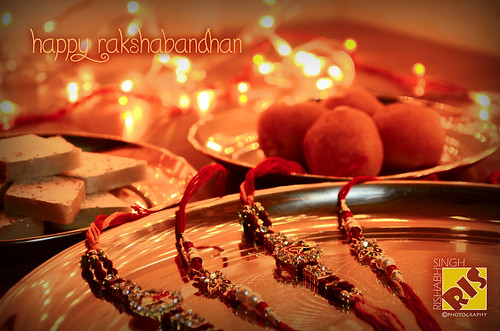
Raksha Bandhan being celebrated across India

Rakshabandha copy
.Subscribe
The school children tying ‘Rakhi’ to the President, Shri Pranab Mukherjee, on the occasion of ‘Raksha Bandhan’, in New Delhi
New Delhi, Aug 20 (ANI): RakshaBandhan, the festival of love between brothers and sisters, is being celebrated across the country today with full enthusiasm. The central ceremony involves the tying of a sacred thread, Rakhi by a sister on her brother's wrist. This symbolizes the sister's love and prayers for her brother's well being, and the brother's vow to protect her long life. President Pranab Mukherjee, Vice President Mohammad Hamid Ansari and Prime Minister Dr. Manmohan Singh have greeted the nation on the occasion. President Mukherjee in his message said the festival of Raksha Bandhan symbolizes the sacred bond of love, trust and commitment between sisters and brothers. "It is an occasion for us to dedicate ourselves to the well-being of women and in particular, the child. Women should be provided a safe, secure and congenial environment in which their talents can flower and they can contribute their full share in the building of our nation. Traditional cultural values of respect for women need to be fully entrenched in our minds," he said. "May this unique festival inculcate in every member of our society the highest respect for women, as we strive collectively for the prosperity of our people," he added. In his message, Ansari said called upon people to imbibe the valuable message of  Rakshabandhan to promote the spirit of amity, fraternity and harmony in our lives. "This festival not only celebrates the immaculate love between brothers and sisters but also transcends the confines of family to cover the entire society by underscoring the need for harmonious social life and peaceful co-existence," he said. In a separate message, Dr. Singh said that Raksha Bandhan is a festival celebrated to strengthen the bonds of love and affection in our family and society. "It is also an occasion to re-commit ourselves to ensuring the safety and security of women," he added. (ANI). Source: News Track India,
Read More........

Brand Ambassador Sonam Kapoor walks the ramp at the IIJW 2013 inaugural

Brand Ambassador Sonam Kapoor walks the ramp at the IIJW 2013 inaugural, After three phenomenaleditions in Mumbai and the successful New Delhi edition, GJEPC once again proudly presents The India International Jewellery Week 2013, The inauguration was held on Sunday, 4th August and graced by the honorable Chief Guest, Mr. Rajeev Shukla, Member of Parliament, Mr. Vipul Shah, Chairman, GJEPC, Mr. Pankaj Parekh, Vice Chairman, GJEPC, senior members of GJEPC, high ranking government officials as well as GJEPC Brand Ambassador and Bollywood Diva, Sonam Kapoor.The IIJW is being presented by the Gemological Institute of America (GIA) this year in association with PC Jeweller
(PCJ). The inaugural show this year featured a scintillating line up of jewellery collection by Gitanjali Gems adorned by not only the impressive model lineup, but also by the bevy of television celebrities. The crowning glory of the inaugural show was the mesmerizing Bollywood Diva, Sonakshi Sinha, who looked ravishing in breathtaking jewellery from Gitanjali along with Akshay Kumar. The grand finale on 8th of August will feature the “Best of Best” show that highlights the best creations by each designer. IIJW is an initiative to showcase India's finest in jewellery, be it designs, innovation, craftsmanship, technology or quality to the customers from around the globe. India, the world diamond leader, is today burgeoning with energy and passion when it comes to jewellery. As the fastest growing manufacturing centre, the world is eyeing "INDIA" and the industry is fast progressing to be the world's "Jewellery Hub". IIJW 2013will be one glamorous destination with a lot of international buyers & media attending. Furthermore with the scintillating glitterati comprising celeb showstoppers and red carpet attendance, IIJW is ready to set the mercury sizzling with their presence bringing the event on an international edge. The event will not only showcase established design houses and designers, but will also give an opportunity to new talented designers to showcase their skill set.IIJW 2013 will feature 24 budding designers from GIA, IGI, NID and IIGJ, marking the popularity that the show has been receiving from the young designers keen to make a mark in the industry. The show will also feature 21 renowned jewellery houses of international repute besides leading designers including Nirav Modi, Pallavi Foley, Vijay Golecha, amongst others. These renowned names are known to have adorned many of the Bollywood celebrities and prominent socialites. The gorgeous Bollywood heartthrob, Sonam Kapoor looked splendid at the inauguration in her designer attire and bedecked by a dazzling neck piece by the celebrated designer Nirav Modi. “We are proud to announce the 4th edition of India’s most sought after jewellery show which has been an ideal platform for not only the established jewelers and designers, but also encouraged next gen designers to showcase their immense talent, craftsmanship and innovation in the field of jewellery design”, said Mr. Vipul Shah, Chairman, GJEPC. Sonam Kapoor, Brand Ambassador, GJEPC said, “I am very proud to be a part of IIJW
which has created a benchmark for itself in the field of fashion and style since it first started. Each year the show has evolved and has been introducing exceptional jewellerycreations by not only young upcoming designers but has also been consistently showcasing the exquisite design and collections by Indian leading jewellery manufacturers and designers.” This year, the participantswill showcase the finest in design, innovation and present the latest trends and styles. Each of the 4 days will feature a series of 7-8 shows including Gehna Jewels, Birdhichand Ghanshyamdas, Kays Jewels, Golecha’s Jewels, Charu Jewels, Kashi Jewellers, D.Navinchandra, SethInternational, Laxmi Jewellery Exports, Shringar - House of Mangalsutra, Shobha Shringar Jewellers, Auro Gold, Jewel Trendz, Saboo Fine Jewels, established designers including Nirav Modi, Pallavi Foley, Moni Agarwal and Dipti Amisha, and over 22 budding designers from GIA, IGI, NID and IIGJ as well as Dhora by Aavriti Jain and Sidharth Daspan. “The show has received much appreciation and enormous goodwill from the participants, sponsors as well as the audience over the years, which is a reflection of the fact that many have been a part of the show since inception. We are happy to have created a platform that has successfully brought to the forefront, the exquisiteness and beauty of the Indian jewellery, thereby opening up wide opportunities for the participants and the industry”, said Sanjay Kothari, Convener, help, Marketing & Business Development Sub-committee, GJEPC. “IIJW is a unique platform in the gem and jewellery industry that showcases India’s talent at the highest level,” saidNirupa Bhatt, Managing Director, GIA India and the Middle East. “GIA’sobjective is to support this event and encourage innovation in jewellery arts. And IIJW is a platform that recognizes these innovations.” Mr. Balram Garg, Managing Director and CEO, PC Jeweller said, “IIJW has been an inspiring platform for all established as well as young designers to feature their best collections with respect to innovation, style and design. Over the years, IIJW has emerged as one of India’s premier events in the gem & jewellery industry promoting India as the leading design hub globally.” The IIJW is being presented by GIA in association with PC Jeweller (PCJ). The event is co-sponsored by Gitanjali Gems, and partners includePlatinum Guild India& Forevermark, besides UB Group as Good Times & Beverage Partners, Star Plus as broadcast partner and Bright Outdoor as Outdoor partner. Source: Page3
Read More........

Couture establishing unique identity in India

Delhi is gearing up for two fashion weeks this month. India Bridal Fashion Week starts from today and the fourth edition of Delhi Couture Week starts on July 31. In India couture and bridal wear have been considered similar unlike in the West, where couture is treated separately. But gradually, a few Indian designers are trying to break that mindset and invent haute couture in the country. In Paris, the term ‘Haute Couture’ includes presenting a collection that has at least 35 looks and is a mix of both day and evening wear. So far, Lecoanet-Hemant are the only Asian designers to have been part of this prestigious chamber. They have showed their collections at Paris Haute Couture from 1984-2000. India wakes up to the term haute couture Now, India seems to be waking up to the term haute couture with fashion weeks like the PCJ Delhi Couture Week, Amby Valley Indian Bridal Week, and Tarun Tahiliani’s Couture Exposition taking place in quick succession between June and July. Indeed these mega fashion events showcase more of bridal wear. There has always been a confusion in the industry as to what is the difference between bridal and couture. Couture in India is all about catering to the weddingwear market since that is where designers try to get their highest returns on investment, where the garments have to be heavily embellished and priced. However, gradually, the difference between couture and bridal is becoming more evident with designers trying to portray their designs separately. However, one cannot expect a French concept to work in the Indian context. While in Europe, couture is primarily worn at balls, red carpet events and other special occasions, in India, such designs and garments are preferred for weddings. Only difference being seen now is that designers who focus on couture are working towards staying true to the essence of couture. There are nine designers showing at this year's Couture Week - of them Gaurav Gupta, Varun Bahl, Anamika Khanna and Anju Modi all showed collections last year that were faithful to the spirit of couture. So though very different from the western understanding of the word, couture in India is developing its own identity without heavily depending on opulence and embroidery. Indeed couture design in India may have a bridal feel as today’s modern brides no longer just want the wear heavy traditional bridal attire. Indian designers are surely giving a distinct ethnic flavour to haute couture while adapting western sensibiltities into their creations. Source: Fashion United
Read More........

Indian mothers give up their dreams for their children


New Delhi, May 11 (IANS) An overwhelming 77 percent of Indian mothers stopped pursuing their dreams after their first child was born, even though 68 percent said they still desired to chase their dreams, a survey has revealed. "What Moms Want" was conducted by P&G Thank You on the occasion of Mother's Day, which is on May 12. It surveyed over 500 mothers in the age bracket of 25-45 years and over 600 children between 18 to 45 years in Delhi, Mumbai, Hyderabad and Lucknow. "A total of 73 percent of mothers in Delhi admitted that they stopped chasing their dreams after the birth of their child; the figure was the highest in Hyderabad at 94 percent," said the survey. A whopping 91 percent of the mothers in Delhi said that they would like it if their children fulfilled their dreams. Again, this figure was the highest in Hyderabad at 100 percent, followed by Mumbai at 95 percent. At 36 percent, which is the highest among all the other cities, mothers in Delhi admitted that they would like to have a career while being a mother. As far as children were concerned, 90 percent said that they motivated their mother to pursue their dreams, and 95 percent of them said they would like their mothers to take better care of themselves. Source: News Track India
Read More........

Wills Lifestyle India Fashion Week - Autumn Winter 2013


.Subscribe
Delhi might be dumping in their warmers and welcoming sunny summers, but the fashion world works the other way round! 
Wills Lifestyle India Fashion Week is going to celebrate Autumn Winter 2013 from March 13th - 17th at Pragati Maidan, New Delhi. 128 designers from different parts of India will be showcasing their AW'13 collection through runways and exhibitions. Announcing the list of designers, Mr. Atul Chand, Divisional Chief Executive, ITC’s Lifestyle Retailing Business and Mr. Sunil Sethi, President, FDCI said, “Designers have the power to influence global fashion with their unique designs. These myriad style gurus are ready to showcase their creations both on the runway and exhibition area. The interesting mix of innovation, creativity and tradition will usher in the best at the WIFW Autumn-Winter showing, this season. I wish them  the very best for the upcoming show.” 
Masaba Gupta will be opening the Fashion Week by showcasing her debut collection for Satya Paul
“I am truly honored to open fashion week in my new home city. It’s a coveted spot, and I am committed to creating a collection that does this slot, as well as the house of Satya Paul, proud. I am excited, and deeply thankful to Mr. Sunil Sethi, the board at FDCI, and to Satya Paul, for this opportunity,” says Masaba Gupta, Fashion Director, Satya Paul. Fiama Di Wills Presents Rahul Mishra and Payal Pratap at WIFW Autumn-Winter’13
Fiama Di Wills brings out its passion and concept of continuous innovation and creativity, this season, with designers Rahul Mishra and Payal Pratap Singh, at the Autumn-Winter 2013 edition of the Wills Lifestyle India Fashion Week (WIFW).
Mr Nilanjan Mukherjee, Head of Marketing, personal care products’ business, ITC Limited said,“Fiama Di Wills is proud to celebrate the intrinsic bond of beauty and fashion at India’s premium fashion platform, the Wills Lifestyle India Fashion Week. To inspire and stimulate with the brand core of innovation and promise of eternal beauty, this season, we are extremely glad to present designers Rahul Mishra and Payal Pratap Singh.” Stay tuned for more updates!! Or log on to FDCISource: Kalapalette
Read More........

Lohri Function at Rashtrapati Bhavan in New Delhi


Watch an in-house delightful Lohri Function's video, held at Rashtrapati Bhavan in New Delhi on January 13, 2013
'
Read More........

Expect writers, more events at book fair

World BOok Fair New Delhi
After the Jaipur Lit Fest, it will be Delhi’s turn to host a literary festival next week. The National Book Trust (NBT), which organises the New Delhi World Book Fair every year at Pragati Maidan, has decided to introduce writers’ corners and interactive sessions this year. The decision was taken after taking into consideration the people’s enthusiasm at the Jaipur Lit Fest. NBT’s director MA Sikandar said, “This year’s book fair will be held from February 4 to 10. This time, we have planned four-five events such as talks, readings, debates, workshops and Q&A sessions every day. Earlier, the focus was on the sale of books. But we wanted to innovate. Allowing book lovers to interact with authors was one such way.” There will be four writer corners at the book fair. NBT expects 50-55 English and 25-30 Hindi and language writers to show up for the event. There will be literary encounters and book-signings by noted French authors such as Tahar Ben Jelloun, Kenizé Mourad and Dominique Sigaud. There will also be training on publishing, film screening, interaction with photographers and their exhibitions and writing workshops. The book trust is still in the process of finalising the list but some of the other participating authors include Amit Shankar, Nilanjana Roy, Nirupama Subramanian, Nandita Bose and Girija Kumar, among others. However, the furore that sociologist Ashis Nandy’s comments created at the Jaipur Lit Fest has made the NBT wary. “We’re not going to invite controversial authors. People will be free to air their views, but they should be careful. Everyone is responsible for their actions. We are hoping and praying that everything goes well,” said Sikandar. Literature and cinema was the theme last year and the fair had attracted nearly 1,300 Indian and 30 foreign exhibitors. This year’s theme is ‘Indigenous Voices: Mapping India’s Folk and Tribal Literature’. Multifarious expressions of native cultures will be showcased through book exhibits, art forms, crafts, panel discussions and performances. Riding on the Lit Fest wave, NBT expects an even better response this time. This year France is a ‘guest of honour country.’ “Many authors and scholars from France will engage in conversations with their Indian counterparts at the literary events and professional round tables,” Sikandar said. “Unlike the Jaipur event, ours is a government initiative. We have involved various government literary bodies. For instance, Sahitya Akademi has been entrusted with the task to bring regional language writers,” he said. Image Link Flickr, Source: Hindustan Times
Read More........

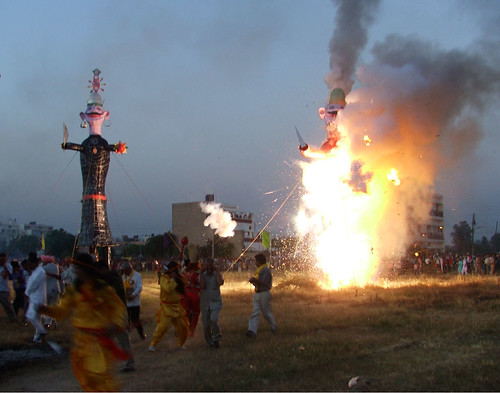
President, VP, PM, Sonia witness Dussehra celebrations at Delhi's Subhash Maidan

VIJAY DASHMI
New Delhi, Oct.24 (ANI): President Pranab Mukherjee, Vice-President Mohammad Hamid Ansari, Prime Minister Manmohan Singh and Congress president Sonia Gandhi attended the culmination of the annual Dussehra celebrations at the Subhash Maidan in the capital on Wednesday. The VIPS, who arrived as per protocol and amidst tight security arrangements, offered homage to statues of Lord Ram, his wife Sita and brother Lakshman, and performed the traditional aarti with lit lamps. They also applied vermilion streaks tothe foreheads of the dieties. They were then escorted to a flower bedecked stage and garlanded with flowers by the organisers of the event. Each VIP was also presented with a gift. Among the other important guests present were the Lt. Governor of Delhi Tejinder Khanna, Delhi Chief Minister Sheila Dikshit and Union Minister and local MP Kapil Sibal. The VIPS used the ceremonial bow and arrow to
start off the proceedings and celebrations in which the three cracker-laden effigies of demons - Ravana, Kumbhakarna and Meghdoot were set  alight. The atmosphere in  the ground was one of traditional gaiety, fun, frolic. Some of the participants were seen carrying and waving green, orange and white balloons. The effigies were set on fire at around 6.15 in the evening with commoners shouting Shri Ramchandra ki Jai amid Vedic chants in the background. Dussehra is the culmination of Navaratis in India. Popularly known as Vijayadashmi, Dussehra is celebrated with great enthusiasm, all over India. It is observed differently in different parts of the country,depending upon the legend that is followed in each region. In North India, Ramlila forms the  highlight of Dusshera, while in south India, it is the triumph of Goddess Durga over  Mahishasura that is celebrated. Eastern state of West Bengal has its own story connected to the festival, while in Mysore the concept of Shami tree is centered. Learn about the celebrations of Dussehra in different parts of India, by going through the following lines. (ANI), Source: News Track IndiaImage: flickr.com
Read More........

Top reasons why people should walk

Two female joggers on foggy Morro Strand State Beach
Indian people are gearing up for the festive seasons with zeal and enthusiasm. The festive season, however, bring in lots of issues and concerns particularly, when one steps out from home. Primary among them are traffic congestion, pollution, rising fuel prices, which in-turn increase stress and create health problems. Experts are of the opinion that walking is simplest way and most economical method to reduce the problems and enjoy the festive season to the fullest: Here are the reasons: Contribute to Environment: Stance: When you walk you are also contributing to the planet’s health. Simple measures like walking the smaller distances instead of taking your car can also do wonders for the environment. Just imagine a place like Delhi with over million vehicles plying on the road very day. What could be the impact if we take a pledge to walk smaller distance wherever possible and not use vehicles? Proof points: * If we all swap one car journey a week to walking, traffic levels would reduce by at least 10 per cent * One person switching five journeys of under 2 km a week from car travel to walking would reduce their carbon footprint by 86 kg of CO2 a year. The average car produces three tonnes of CO2 a year. Reduce stress and be Healthy:  Stance: Walking is a magic pill, a panacea for reducing the risk so many lifestyle diseases. And the best part is that this pill is free!! It needs just a bit of your time. Proof points: * What if you were to find a magic pill that can reduce your risk of getting cancer by 20%, heart disease by 30% and diabetes by as much as 50%? * In the rat race of life, we tend to take important things like health for granted. We hate the deadlines and the pressures but cannot avoid it. We are on the move constantly and the stress finally gets to us in the form of the various chronic lifestyle diseases we are now struggling with. * Most Indians also work very long hours in high pressure jobs, generally up to 6 days a week, leaving no time for regular leisure time physical activity. Time consuming long distance commutes to work make it even more difficult to squeeze in a gym workout into their schedules. This makes walking a significant source of the minimum exercise needed by human bodies * Urbanisation has cost us dearly too. In India, cities initially built for walking and cycling have become overrun by cars, at the expense of walkers. The greater use of cars has resulted in a decrease of walking and corresponded with rising obesity levels around the world. * According to data available till December 2011, nearly 110 million people are believed to be suffering from serious illnesses like diabetes, heart diseases and cancer in India collectively. This figure is estimated to double in 15-20 years. * According to Dr Rajeev Virmani, Head of relationship, Max Bupa, 50% of those with symptoms of diabetes are not even aware that they have a serious health problem. In the case of people with coronary (heart) problems, it is even more startling that a majority of them are either not aware of it or simply continue to live in denial of the severity of their conditions. So what can we do to make our lives better? - In a study of women age 50 to 75, those who took one-hour morning walks were more likely to relieve insomnia than women who didn’t walk – Just 15 minutes more a day of brisk walking can have significant health benefits, even adding up to three years to our life expectancy. – A new study recently published online in the 'Current Archives of Internal Medicine' combined with a meta-analysis of several previous studies, has shown that moderate exercise can reduce the occurrence of serious illnesses by as much as 38 - 40%. According to the World Health Organization, a 150 minutes of exercise every week is highly recommended. To achieve this, it doesn’t necessarily mean a gruelling session at the gym or running a marathon – a simple change, like walking in either slow or brisk pace (individually or in group) will do. Walk for your loved one’s: Stance: Did you know that research data show 79 % of Indians feel that their attitude towards health stems from early influence of parental behavior. So it is on you to inculcate good healthy lifestyles in your children, so why not instill in them the benefits of walk by setting examples. Moreover while walking a distance with your loved ones bring you closer to the them, since you are able to interact more while you walk. This small investment of time can make your relationship much more smoother, Proof points: * A person's attitude towards healthy living stems from childhood days. It is influenced by parental behaviour. According to Bupa’s Survey, it has been found that 67% Indian respondents confirmed that they have been actively encouraged by their parents to exercise – in fact 30% agreed that their parents exercised regularly! * Walking is a good way to spend time with friends or family members and enjoy nature. Parking Woes: With at least 1,200 new vehicles being added to the city’s vehicular population every day, parking has become a huge headache. Encouraging people to walk while they go for a shopping can reduce this problem drastically. Keeping yourself healthy: Stance: Usually people eat more than they usually do during festivals especially, during Diwali. There are sweets of different kinds to a heavy menu of non-vegetarian food. Wherever you go, sweets are served. Not everyone makes sweets at home and people might offer what has been bought in stores. There is no guarantee what kind of oil, ghee or milk have been used, and whether the hygiene standards have been followed in mass production. While you might be tempted to taste some of these mouth-watering dishes, you might be able to reduce the impact on your health by walking the distance. Proof Points: * Diabetic clinics are flooded with people who have awry blood sugar levels on the morning after a festival. A doctor at MAX Healthcare, said, “Healthy sweet options, sugar-free, are now available... If you must eat, eat sugar-free sweets,” he adds. It is not wise for diabetics to miss medication. * A healthy trend that he has noticed this year is that boxes of nuts and dry fruits are increasingly taking the place of sweet boxes. * “Though high in calories, most nuts (almonds, walnuts, even groundnuts) are high in mono-unsaturated fatty acids that do not increase bad cholesterol,” he said. He also suggests that fruit baskets be given as gifts during the festive season. Source: Indian ExpressImage: flickr.com
Read More........

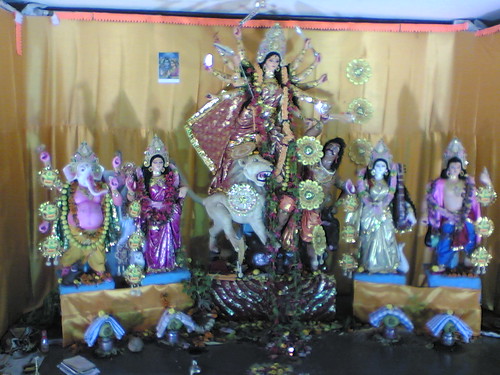
President greets people on Durga Puja


New Delhi, Oct 22 (IANS) President Pranab Mukherjee greeted  people on Durga  Puja  Monday  &  asked them to pray to Goddess Durga for peace, happiness and prosperity. In a message of greetings to the people, Mukherjee said: "The festival of Durga Puja marks the victory of good over evil. It is the celebration of shakti (power) and bhakti (devotion) and symbolises our inner struggle to rise to higher levels of consciousness. This is a festival in which every household brims with worship and merriment." "Let us pray to mother Durga, who epitomises female dynamism, that she guides us in the path of righteousness and blesses our land with peace, happiness and prosperity," said Mukherjee. The message added: "May this festival strengthen bonds of brotherhood and may Goddess Durga shower her blessings on all our people for years to come." President Mukherjee is celebrating Durga Puja at his ancestral home in Mirati village in West Bengal. Source: News Track IndiaDurgapuja : Bengali's Favourite Festival: Durga Puja is performed during the autumn season every year. For the Hindus, it is the greatest festival. The puja is held for  the three consecutive days :  the Saptami, the Astami and the Navami and the fourth day, the Dashami, the image is immersed in the water of a tank or a river. Sindur khela(vermilion play) is a major event of Dashami. Married women apply vermilion to each other and greet each other with sweets. It is in the evening when the image of Goddess Durga is immersed in the water. Bengalis greet each other with Bijoya Greetings and men follow the customary 'Kola-Kuli' (embracing each other). Durga Puja is a festival that the Bengalis celebrate without religious inhibitions. It is more of a socio-cultural celebration that tends to renew kinship with friends and relatives. The image is worshipped along with those of other deities like Lakshmi, Saraswati, Ganesha and Kartikeya. The frame, on which the said images are installed, contains also the image of Asura (demon) and the lion, the vehicle of Goddess Durga. There is also a rat at the feet of Ganesha. There is a Chal-Chitra which is a circular canvas of mat containing paintings of heavenly scenes placed at the back of the idols. The entire frame of the Gods and Goddesses is placed on a raised platform of altar made of wooden plunks. The Mandap is decorated savilion with beautiful illumination. Every evening, the priest performs aarati or greets the Goddess by waiving lamps and incense in accompaniment of the beating of drums, while the puja (worship) is held. During this great festival, the Hindus buy new clothes for their near and dear ones. they  want to forget their past differences with their rivals or enemies. After the immersion, on the occasion of Vijaya Dashami, the Hindus embrace one another as a token of love and affection, and distribute sweets among all. Durga Puja is now-a-days more a festival than a religious rite. Sometimes the non-Hindus are also found to participate in the festival as a social gesture. Durga Puja is more popular in Bengal. It is performed with more pomp and grandeur there than in any other state of India. People from neighbouring states come to Kolkata during the time, in order to witness the attractive Puja pavilion. Durga Puja is also held at Delhi, Mumbai, chennai and other important cities and towns of India, and also the villages. Durga Puja was first performed in Bengal by a Zaminder (Landlord). Then it came to be popular with the introduction of the Sarvojanin pujas performed with the joint effort of about twelve Zaminders; and hence it is called Barwari (twelve years or friends). Now-a-days, Durga Puja is also held at London and New York, where the Indians perform the puja every year. Mother Goddess Durga is considered as the most powerful Goddess who is the bestower of strength, prosperity and all the best gifts in life. So the devotees pray to Her for various boons. She killed the demon king Mahishasura who had been troubling the Gods and Goddesses and occupied Indra's throne in heaven. So the Gods and Goddesses also worship the great Goddess Durga. She is also known as Mahisasuramardini. The legend is incorporated inSri Sri Chandi, a chapter in the Markandeya Purana composed by sage Markandeya. Source: BengalMediaImage: flickr.com
Read More........

Vitamin B can help reduce heart diseases: Study

New Delhi, (IANS) Adequate folic acid and vitamin B intake could help reduce vascular disease risk in Indian patients, a study released here said Friday. Conducted by Sir Ganga Ram Hospital and Jamia Millia Islamia, the study said foods containing vitamin B, like potato, greens, beans and fish and animal products, should be consumed regularly. "Plasma homocysteine concentrations, responsible for plaque formation that lead to blockage of arteries have a negative relation with vitamin B12 levels in patients with stroke and deep vein thrombosis and with folate levels in patients with coronary artery and cerebrovascular disease," said the study. Seema Bhargava, lead author of the study and senior consultant, Department of Biochemistry, Sir Ganga Ram Hospital, said: "Large-scale corrective measures like food fortification or dietary supplementation with folate and B-12 might benefit the Indian population and reduce the incidence and morbidity of vascular disease." "It would be pertinent to suggest that scientists, clinicians and policy-makers in our country should further evaluate the relevance of food fortification with folate and vitamin B12 so as to correct nutritional deficiencies as well as reduce risk for vascular disease -- the double benefit for the double burden of disease in the developing countries." Rajasthan was the first state in the country to launch a food fortification programme in February, said the study.Source: News Track IndiaImage: flickr.com
Read More........

Lonesome in Delhi? Floh floats hope


ALL EARS AND EYES - Left: Floh members at the Vintage car event in Bangalore; Top Right: Siddharth Mangharam at an event; Bottom Right: A Floh member at the vintage car ralley in Bangalore
Have all your friends been taken and are you wondering if you'll ever find someone to grow old with? Shove despair out of that office window. Come October 14 and Delhi will discover a unique way of finding a soul mate. But Floh has been around since over a year in India. We were quite intrigued by the concept of Floh so we’d caught up with Siddharth Mangharam, CEO, Floh in March.Read full interview here. A quick insight - Floh is a platform for singles looking to meet like minded people in a safe environment. More importantly it's an "invitation only network" and not a dating or matrimonial site. Launched in May 2011, Siddharth along with his wife Simran launched Floh in Bangalore. Now the plan is to go national, slowly. And the team decided to stop at Delhi first. The October 14 event is sold out. What's in store for the group of 20-25 people who are zeroed in on to meet up this Sunday? Floh's blog declares: "We have a totally unique line up of experiences for Delhi starting with a spectacular Vintage and Classic Car event exclusively for Floh members, right in front of the Qutab Minar. This has been organised in arrangement with the Heritage Motoring Society of India and the line-up features Rolls Royce, Jaguar, Cadillac, Buick and many more classic cars in addition to a collection of pre-WW II motorcycles. Members will not only get to see these beauties but will be offered a once-in-a-lifetime chance to actually ride in them!" The good news is that more events will follow in the coming weeks in Delhi. I met the helmsman again before their startup jives into the second phase. It had to be asked, why Delhi? "We are most excited about Delhi, even more than Mumbai because the problem is more acute in Delhi. Bangalore is laid back and Mumbai is more chilled out but if you don't have a clique in Delhi one doesn't know how to go about it." I ask Siddharth how Floh will help Delhiites find likeminded people. He tells me the three ways in which his idea can help people who are single but don't quite know how to go about exploring options. He avers that Floh saves times (no sifting through data), is more real (you meet people in person) and he says that his research shows that parents are loving the concept. So can anyone and everyone in Delhi play? Not quite and Siddharth is unequivocally insistent about this. "Education background is very important, we are speaking to a very specific educated urban audience. Most of our folks will have Masters degree and they'll be well-travelled." I insinuate if Floh is elitist but he dispels the cloud. "That's just a business call, it's a market that we understand well and it's a need that's not being served. It's not as if we don't acknowledge other segments but we're not going there. Frankly we don't have the wherewithal to handle that and there are other players who are addressing that. If you look at a matrimonial site, they would go to a tier 3 city and cater to everyone."  Still keen to undersatnd if lack of class or money can diminish right of admission for a Delhiite. "It isn't elitist in the sense that one needs to be super wealthy but I would say that it is selective based on your taste and exposure and where your mind is oriented towards. Some of our events are even Rs. 500 - for example a Heritage Walk event- would include a full breakfast."  How do group dynamics work? Siddharth said that contrary to our presumption men are lone rangers joining the group alone and women on the other hand come in groups, finding strength in number. Since last I met him, out of curiosity I ask him, if Floh is now a money-making venture. He answers in the affirmative. It's now a team of 8 in all with 3 founders. Is there a prototype anywhere for Floh? He says there isn't any anology in the West for what they are doing at Floh. But is Delhi, is India truly ready for the concept? Take the poll and tell us. Source: Hindustan Times
Read More........

Are pubs the new culture hubs?

Red Leaf The Band playing at The Blueberry pub, Norwich 2
Intellectual discourse, avant garde art, evening music performances — pubs are slowly maturing into cultural exchange zones with youngsters looking for more than just an alcohol high. Stand-up acts, photo exhibitions, live music (that is experimental and not just Billy Joel-Piano Man type), art installations, plays, all mix well with alcohol it seems, contrary to what the right brigade will have us believe. Sabrina Price, a karaoke singer from Bengaluru, says, “Pubs are definitely becoming a place for cultural activities — they’ve got music, board games and performing artistes coming in.” Barriers are broken in more than one way, she says as, “In a pub, unlike a coffee shop, I could enjoy the show and also have a drink without having to be prim and proper as is required in typical culture spaces.” Bharatanatyam danseuse Anita Ratnam says, “This is similar to the legendary White Dog café in Philadelphia, where authors, stand-up comedians and campaigning politicians shared time and a platform to speak their mind. Gen-Y today is congregating at social centres where they meet and greet, have some food and drink, and can indulge in an eye-catching performance or art.” Does it place the artiste, who caters to a typical culturally vested crowd, in a tight spot? “Art like mine is not compatible with these new venues, but it is time for inventive, adaptable and creative artistes to recognise this valuable audience base and build appropriate culture capsules to catch their attention. The lines between high art and popular art are also blurring. It is all about eyeballs and how we can catch them,” says Anita. Ajay Krishnan, a theatre artiste who staged a series of plays in restaurants and pubs across Bengaluru recently, says, “Coffee shops haven’t lost their charm but are now a setting for people of a different generation.” In Chennai, too, the historical “sabha” culture is slowly changing. Book reading sessions and art walks are gaining popularity. At the Park’s New Fest curated by Prakriti Foundation, Ranvir Shah, the curator, showcased poetry entwined with music and dance. These capsules are all about culture meeting casual comfort. The ambience lends itself to being informal and inclusive, says Narendran Subramani-am, a drummer. “Unlike at sabhas or big auditoriums, people needn’t dress in pure silk saris or drip jasmine flowers in their hair to prove their appreciation of culture. True lovers of music and art can revel in it in a casual setting. This takes away the elitism in appreciation.” Deepali Narula, CEO, F Bar and Lounge, New Delhi, says, “There is a change in the mindsets of people now and more people are opening up to the idea of trying out various places in the city. When we started this place, our main focus was nightlife but we also encouraged the creative crowd to come in and showcase their talent. From photo-exhibitions to book launches and art exhibitions, a lot of cultural events happen here. In fact, we started the concept of a ‘celebrity’ in focus, where we have people showcasing their artworks, sculptures, fashion-related installations etc. These events witness an eclectic crowd.” In Kolkata, the scene is fast changing with chai addas turning into slick tea lounges and hookah bars, frequented by an intellectual gathering of poets, writers, musicians and painters. Dotting Kolkata’s Park Street stretch are pubs like Bar-b-q, Roxy, Someplace Else, Aqua, Shisha, et al. From live-band gigs to music album launches, movie promos, stand-up comedies and talk shows, the pubs have them all on their events list. “The Roxy bar at the Park hotel hosts comic acts and skits where reputed artistes like Neville Shah come in to enthrall audiences. And yes, book releases also happen quite a lot in pubs,” says ace stand-up comedian and screenwriter Anuvab Pal. Today’s exuberant lounge bars are designed elegantly, eye-catching through their infusion of warm, contemporary design and engineered interiors with easy flowing space. While singers like Bappi Lahiri and Babul Supriyo have entertained at Tantra on Park Street, new-age comedians like Vir Das and Cyrus Broacha frequent places like Incognito. Author Amit Chaudhuri, apart from unveiling his literary titles, has also unwrapped his electro-classical CDs and performed from playlists live at the scintillating Someplace Else in Kolkata. In recent times, the HHI pub has featured names like the Sufi rockband Wagah Road, Japanese guitarist-crooner Mc Chon, stand-up comedian Sorabh Pant, ambient acoustic band Ashmaan, singer-duo Mistie & Flavian, acoustic duo Crystal Glass, et al. Gathering together all the elements essential for a pleasant evening out, pubs today welcome the young crowd that can hold their drink and conversation well. It remains to be seen if pubs can take over from traditional cultural spaces that firmly hold a certain sensibility and sanctity, but they reaffirm the belief that art can be for everybody. Source: Deccan ChronicleImage: flickr.com
Read More........

Delhi book fair begins

The 18th annual Delhi Book Fair began at Pragati Maidan in New Delhi on Saturday. The nine day book fair will have e-books as its theme. There will also be seminars and book reading sessions. The book fair from Sep 1-9 will play host to 300 publishers -- both regional and international, including those from China, Pakistan, US, Britain, France and Germany. Inaugurating the fair, Delhi Lt Governor Tejendra Khanna said, "Hope the publishers would have inspirational books to spread the message of peace and brotherhood among people." According to the organisers, the theme of book fair is "e-books" which will remain the centre-stage during the event. "The central theme of the fair is e-books. It will bring together technology and literature. Other than the theme of e-books, the fair will screen adaptations of popular novels in diverse languages," said an organiser. "The Delhi book fair also gives 50 percent discount on stall rentals to encourage small publishers," said an official. The entry tickets are priced at Rs.20. Students with identity cards can avail 50 percent off on the tickets. Source: Hindustan Times
Read More........

Working women in urban India put career ahead of motherhood

New Delhi, Working women in urban areas give precedence to their career and professional ambitions over plans to start a family, a study said today. The survey was conducted on about 1,200 married, young working women and home makers in cities like Ahmedabad, Delhi, Bangalore, Chennai, Hyderabad, Kolkata and Pune. Over half of married women in the aforesaid centres said they have shelved plans to start a family as career advancement and higher-education is their priority and cannot sacrifice the same to raise kids. About 200 respondents from the working women category said they have put off their plans to have a baby as it would disfigure their physical appearance. "Ambitious working women in India are not willing to give up their career for the sake of family as they are apprehensive about dealing with stress," said Secretary General D S Rawat while releasing the study. Nearly 65 out of total 150 working women interviewed in Delhi said they are deliberately avoiding to begin a family. Though, 100 out of 150 working women in Mumbai and 80 in Bangalore said they are averse to having a baby for the time being as their respective career is primary for them. Off the 800 stay-at-home moms interviewed, about 25 per cent said they regret not being able to work as they are less educated. Of these about 80 said they regret motherhood as they have lost their social identity. Source: Indian Express
Read More........

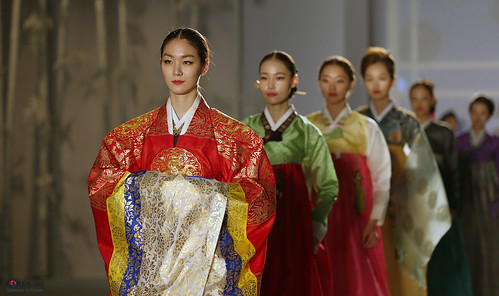
Japanese Trends in India

Korea_Hanbok-AoDai_FashionShow_31
Go to two to three decades back, and sing the song of Raj Kapoor, ‘Mera Joota Hai Japani….’. Yes friends, the fashion of Japan is growing in India at high extent. Not only is this song but there so many other items that indicate the growing fashion of Japan in India. From the food to culture both the countries are providing the good services to each other. From both countries, many people are trying their best to grow this mixed culture. In India, many of the metro cities, we can find Japanese food and fashion. Many of the designers have display a show under the banner of Cross Cultural Exchange in Mumbai. According to a designer, the fashion trends of Japan are appreciated most at high level. Not only Japanese food but pop music and fashion is also very much liked by Indians. Not only Indians, but other countries are also attracted towards the fashion trends of Japan. What is the reason that people are attracted toward the fashion trends of Japan? Some of the designers have opinion that it is very easy to wear the fabrics and costumes of Japan. A person feels comfortable by wearing the Japanese costumes. Anuj Jodhani, who is running an organization for promoting the art and culture of Japan in India, has opinion that Indians has developed the taste in Japanese food. The opening of Japanese restaurants in Delhi, Mumbai and other cities are indicating this fact as a true opinion. It is noticed that Indians are attracted towards art and culture of Japanese from last four to five years. Japanese food has earned a good market as compare to Japanese fashion. The fact is surprising that there are so many similarities between art and culture of Japan and India. Even you can find the similarities between the values and principles. For example it is also the culture of Japanese to put off their shoe before entering in house and do the prayer before taking meals. One of the designers have a view that those who were fond of western culture now also agreed that Japan has a rich and sound culture and art. Every art and culture has some meaning in Japan. Japanese fashion if going popular in entire world. In Delhi and Mumbai people are very aware about their health. They want to consume low calorie food, which can fit them healthy and make them active for full day. The low calorie Japanese diet is becoming a choice of people residing in Delhi and Mumbai. Some of the Japanese food that is becoming the choice of Indians is: Sushi: Sushi is a combination of fish and rice which is sour in taste. The food is considered as low in fat and high in protein, carbohydrates, vitamins and minerals. Simmered Tempura: This dish is served on rice and prepared with eggs. Tamogoyaki: The dish is rolled omelets prepared with eggs. Stuffed Mushrooms: This dish is used as snacks. Shiratama Dessert: Chewy dumplings made from rice flour and flavored with fruits and jams. Source; Medley NewsImage: flickr.com
Read More........