Famous monument in Artsakh vandalized


Azerbaijan has vandalized Artsakh's symbol, the We Are Our Mountains (Papik and Tatik) monument, the Geghard Foundation reports, citing social media footage.

In particular, an ethnic Talysh Azerbaijani journalist, Rahim Shaliyev, wrote about this on his microblog on X, posting a video of the monument. “The historical monument "We Are Our Mountains", considered a symbol of Artsakh, was vandalized by Azerbaijanis.” Shaliyev noted.

In the video he posted, various Azerbaijani inscriptions can be seen carved on the front of the monument.

In the comments of the journalist’s post, another user shared a video showing more Azerbaijani inscriptions carved onto other parts of the monument.

Since September 19, 2023, after Azerbaijan’s military aggression against Artsakh, followed by ethnic cleansing and the depopulation of Armenians, the We Are Our Mountains monument has been particularly targeted by Azerbaijanis. During this period, various photos and videos have repeatedly appeared online showing acts of vandalism against the monument, people taking photos next to it with the Azerbaijani flag, making insulting statements about Armenians, and leaving offensive inscriptions.

From time to time, statements are even made in Azerbaijan calling for the destruction of this Armenian monument.

In particular, this August, Gudrat Hasanguliyev, a member of Azerbaijan’s Milli Majlis and chairman of the “Justice, Law, Democracy” party, proposed demolishing the monument.

“The monument called We and Our Mountains, built in 1967 in Khankendi (referring to Stepanakert) and turned into a symbol of Armenian nationalism and separatism, must be demolished, and in its place a grand monument should be erected in honor of the Azerbaijani soldier,” Hasanguliyev said.

Azerbaijani political analyst Ramiz Yunus wrote:

“In medicine, when metastases spread throughout the human body, urgent surgical intervention is sometimes necessary. Likewise, in order for the contagious metastases of Armenian ‘miatsum’ to never again appear on Azerbaijani soil, they must be surgically removed from the root. This applies to all Soviet-era monuments, including the ugly pedestal of ‘Grandpa and Grandma,’ installed in 1967 in Khankendi (Stepanakert), which was depicted on the emblem of the so-called ‘NKR’.”

Another member of the Milli Majlis, Fazail Ibrahimli, has also supported statements about removing Armenian traces in Artsakh, especially in Stepanakert. Supporting Hasanguliyev’s proposal to dismantle the “We are our Mountains” monument, he stated that he considers important to completely remove the Armenian traces in Khankendi (Stepanakert).

“There are ugly scenes in Khankendi, and naturally, they must be removed from there…” Ibrahimli said, adding that those “who present this issue as cultural destruction are hiding their real intentions, and this should be understood as the elimination of separatist symbols.”

The “We are our Mountains” monument was erected in 1967. Its sculptor is Sargis Baghdasaryan, and its architect is Yuri Hakobyan. Located at the entrance to Stepanakert on a hilltop, the statue is made of red tuff. It symbolizes the connection between the land of Artsakh and its people. The monument depicts an elderly Artsakh Armenian couple in traditional attire—standing shoulder to shoulder, proud, steadfast, and with a firm gaze.

It is noteworthy that Azerbaijan is not restrained even by the decision of the International Court of Justice from December 7, 2021, which obliged Azerbaijan to “take all necessary measures to prevent and punish acts of vandalism and desecration affecting Armenian cultural heritage…”

Despite its policy of cultural vandalism in Artsakh, yesterday Azerbaijan was once again elected a member of the UNESCO World Heritage Committee, thereby formally committing itself to preserving cultural monuments."It is evident that Armenian religious, historical, and cultural heritage in Artsakh remains under threat. Baku has not abandoned, and will not abandon its efforts to erase Armenian traces from the settlements of Artsakh, change their Armenian character and “Azerbaijanize” them," the foundation said. Source: https://www.panorama.am/
Read More........

Poor air quality can affect your joints, trigger severe rheumatoid arthritis: Experts


IANS Photo

New Delhi, (IANS): Poor air quality may not just be choking your lungs, it can also attack joints, leading to severe rheumatoid arthritis, experts said here on Thursday.

Rheumatoid arthritis (RA) is a chronic autoimmune disorder in which the immune system attacks the body’s own tissues, especially the joints, causing persistent pain, swelling, stiffness, and disability.

Traditionally linked to genetics and immune system dysfunction, RA is now increasingly being associated with environmental triggers like air pollution.

Recent studies in Europe, China, and now India suggest that exposure to PM2.5 -- the dangerous fine particulate matter that penetrates deep into the lungs -- may be linked not only to heart and lung diseases but also to autoimmune disorders like RA.

“We are observing a rise in cases of RA in patients living in polluted areas that have no family history or genetic predisposition to autoimmune disease. Pollutants induce inflammatory reactions, exacerbating joint damage and promoting disease progression,” said Dr. Uma Kumar, Head of Rheumatology at AIIMS, New Delhi.

“These toxins trigger systemic inflammation and oxidative stress, causing an overactive immune response. This is a public health emergency we can no longer ignore,” added Kumar, while speaking at the 40th Annual Conference of the Indian Rheumatology Association (IRACON 2025), at Yashobhoomi, Dwarka here.

Current estimates suggest that RA already affects around 1 per cent of India’s adult population, but with pollution as a trigger, these numbers may spike dramatically.

Dr. Pulin Gupta, Professor and Rheumatologist at Dr. Ram Manohar Lohia Hospital highlighted that the pollution-related cases of RA are more severe than the general ones.

“What we are witnessing is not just more RA cases but also more severe ones. Patients exposed to higher concentrations of PM2.5 are presenting with aggressive disease that progresses faster. Reduced green spaces in urban areas are worsening the problem, depriving residents of protective environmental buffers,” Gupta said.

Studies have shown strong associations between exposure to PM2.5, nitrogen oxides, and ozone, with increased risk of RA and worsening symptoms, especially in genetically susceptible individuals. Living near busy roads, which means constant traffic-related pollution, has also been linked to higher RA risk.

The experts also pointed out that autoimmune diseases like RA are lifelong conditions with no permanent cure, only management.The health experts stressed the urgent need for multidisciplinary action: stricter pollution control, increased public awareness, and early screening of at-risk populations, and lifestyle changes to reduce exposure. They also called for expansion of urban green cover, cleaner transport solutions, and stronger national policies linking air quality to health. Poor air quality can affect your joints, trigger severe rheumatoid arthritis: Experts | MorungExpress | morungexpress.com.
Read More........

Italy’s Tourist Spots Are More Crowded Than Ever–But These Alternatives Are Also Breathtaking

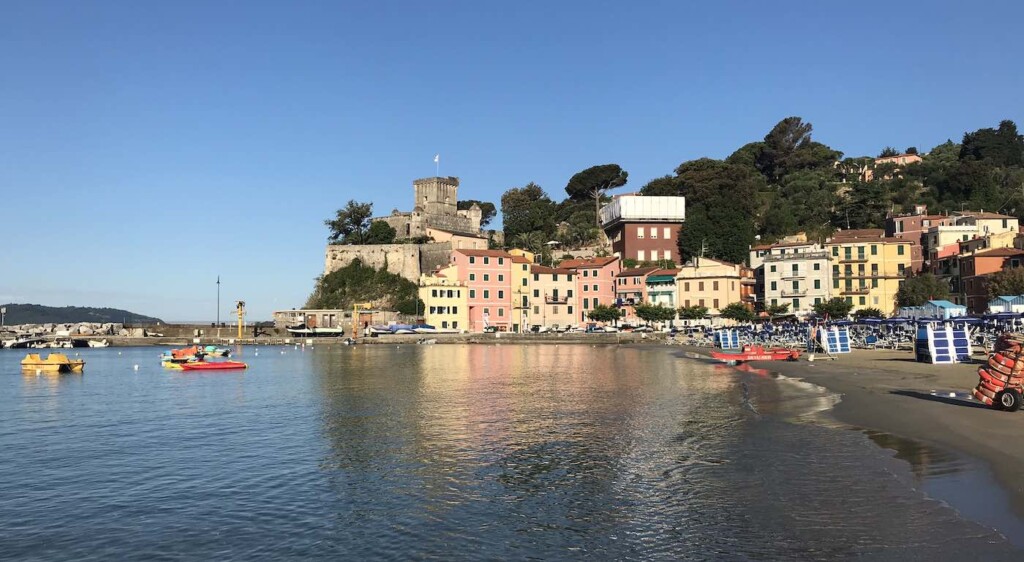
Public beach at Lerici in Italy is the Ante-Cinque Terre © Andrew Corbley

Reprinted with permission from World At Large, a news website of nature, politics, science, health, and travel.

With the high season in Europe underway, many famous cities are already analyzing the results of new controls and taxes on tourism to manage overcrowding. The movement towards hindering tourism is nothing short of unprecedented.

One quote from AP is particularly jarring.

“Tourists are waiting more than two hours to visit the Acropolis in Athens,” it read. “Taxi lines at Rome’s main train station are running just as long. And so many visitors are concentrating around St. Mark’s Square in Venice that crowds get backed up crossing bridges—even on weekdays”.

But this year is just a demonstration. Come 2025, even more protocols will be implemented, including an EU-wide travel authorization system that will rake in tens of millions of euros and allow offenders of various tourist control measures to be easily identified.

There has never been a better time to look for B, or even C-list cities in Europe, and in fact there are many advantages to doing so.They are easier on the wallet—though this doesn’t mean you have to skip first-class attractions.
They offer a surprise—and a more unique window into a country’s culture, both those of the locals and of the nation.
They also allow a visitor to bring home an experience their friends and colleagues are unlikely to have had.

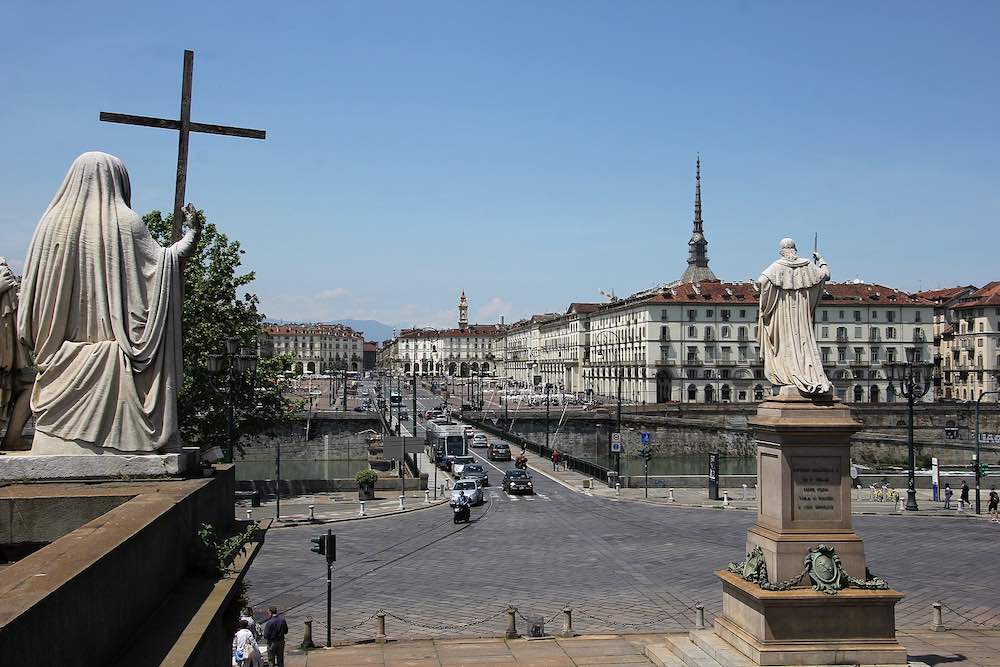
Piazza Vittorio Veneto in Turin – by Gianni Careddu, CC BY SA 4.0 license

Italy — the land of overtourism

Hoping to escape tourists in Italy is like moving a house next to a termite nest and hoping to escape termites. To see Venice, Rome, Naples, Florence, or Milan, visitors must be ready to bear the tourists, controls, and taxes.

Even if you visit a secondary B-list city, like Trieste, Siena, Genova, Lucca, or Verona, there’s no guarantee of escaping tourists. The city footprint is smaller, so the tourists may seem to be closer together.


In Rome, the city is now charging for entry to the Pantheon, and controlling crowds at the Spanish Steps and Trevi Fountain. Florence is now deliberately shrinking the number of short-term vacation rental properties in the city, a measure also implemented already in Rome that may lead to a price spike for accommodations.

Venice is doing the same but to an even greater degree. They’re also trialing a new access tax for day-trippers and regulating tourist group sizes to 25. The Guardian reports that €250 fines have been implemented for simply sitting down on the famous Spanish Steps in Rome.

Consider leaving all this behind for the city of Torino (Turin). The capital of the Piedmont region of Italy. This B-list destination is beautiful, spacious, and verdant—especially because a tree-planting program in the city has added two million urban trees.

Although last year the city saw record numbers of tourists—including the first time that international tourists overtook domestic ones—images from local papers reveal the size of the ‘crowds’ at the peak season, and lengths of the ‘lines’, which are quite modest.

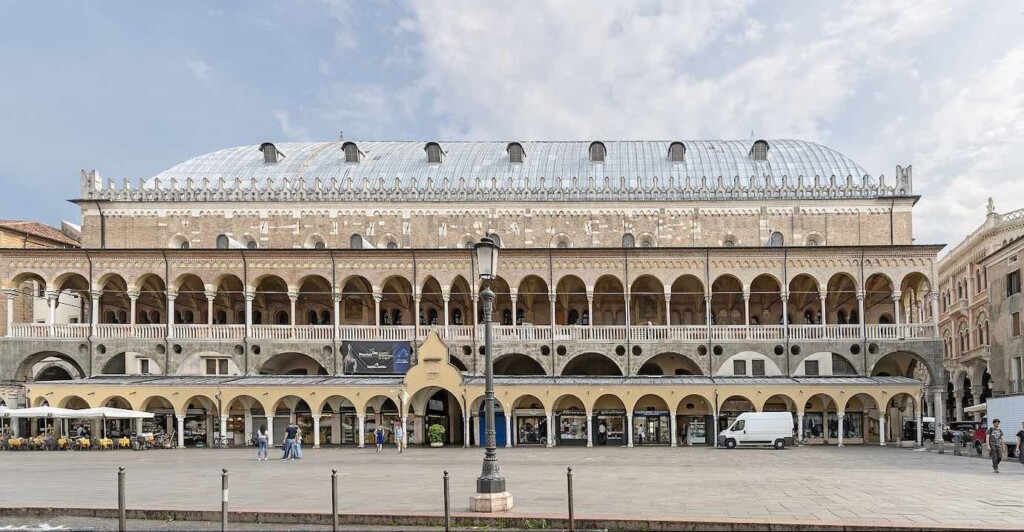
The Palazzo della Ragione in Padua is the old seat of the city administration and courts – View from Piazza della Frutta during high season by Didier Descouens CC BY SA 4.0

Yet, Turin is a big city—just a little smaller than Bologna, and though it’s one of the 250 most visited cities worldwide, it’s merely the 10th most frequented in Italy. The per-night tourist tax at €3.70 per person for 4-star accommodations is half of Rome’s, and one-third less than Naples.

Do a search and gaze at the gorgeous scenery of Turin, which shares much of the iconic imagery of Florence and Verona, i.e. stunning plazas, a beautiful and broad riverside, and important museums.

Follow up with a visit to Padua, in Veneto, where there is no tourist tax to speak of. This hidden gem is just a 40-minute drive from the Venice airport and has been a center of higher learning and scholarship since the Middle Ages. It contains the oldest university in Europe, and perhaps the world’s oldest botanical garden for the purposes of scientific research.

Alongside numerous architectural treasures and achingly beautiful 14th-century frescoes that are recognized as a UNESCO World Heritage Site, it’s a mystery that Padua is not more frequented.

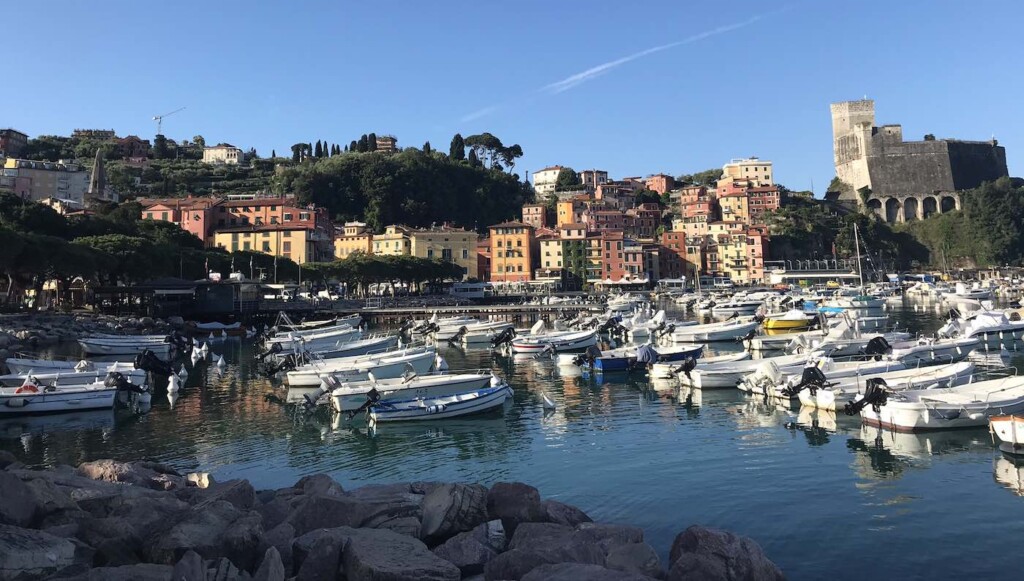
A view across the harbor at Lerici in Italy – © Andrew Corbley

The Ante-Cinque Terre

Forbes reports that the problem of overcrowding is equally as bad, if not worse, in the small towns of Cinque Terre in Liguria, with congestion at Portofino—what is essentially a fishing village nestled in a sheltered cove—being so bad that anyone stopping to take so much as a photograph in a way that is intrusive or obstructive can be fined up to €275.

That’s a pittance compared to the €2,500 fine you will receive for walking the paths above the Cinque Terre in flip-flops or sandals. The Italian authorities mean business—behave yourself, or begone… There are good options, however, if you take them up on that offer.

If the sea is a must in your holiday plan, consider the Ante-Cinque Terre, an area south of the major city of La Spezia with very similar scenery, but perhaps one-third of the visitors. Much like Cinque Terre, this area is defined by small municipalities on the seaside, painted a variety of colors.

The route includes Fezzano, Le Grazie, Portovenere, Lerici (pictured at the top), Tellaro, and Montemarcello, which together line the shores in a curve around an aquatic feature called il Golfo dei Poeti, because it was here that the famous Romanticists Percy Shelly and Lord Byron both stayed for long periods during their exiles from Britain.

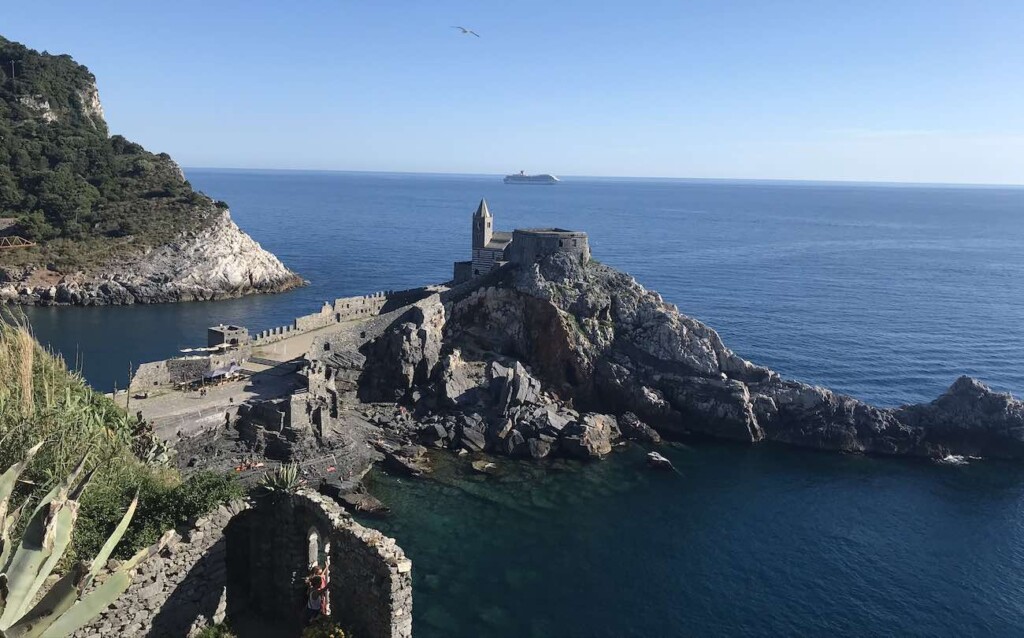
Portovenere’s iconic chapel on the rocks at the end of the port – ©Andrew Corbley

This author has seen both versions of Cinque Terre, and the differences are minimal, with perhaps the only exception being the verticality of the Cinque Terre villages adding to their drama.

But some of the towns in the Ante-Cinque Terre, like Le Grazie and Tellaro, are still just towns—exactly like Cinque Terre used to be before Rick Steves announced their stupendous presence to the world. Italy’s Tourist Spots Are More Crowded Than Ever–But These Alternatives Are Also Breathtaking
Read More........

Italy’s Tourist Spots Are More Crowded Than Ever–But These Alternatives Are Also Breathtaking

Public beach at Lerici in Italy is the Ante-Cinque Terre © Andrew Corbley

Reprinted with permission from World At Large, a news website of nature, politics, science, health, and travel.

With the high season in Europe underway, many famous cities are already analyzing the results of new controls and taxes on tourism to manage overcrowding. The movement towards hindering tourism is nothing short of unprecedented.

One quote from AP is particularly jarring.

“Tourists are waiting more than two hours to visit the Acropolis in Athens,” it read. “Taxi lines at Rome’s main train station are running just as long. And so many visitors are concentrating around St. Mark’s Square in Venice that crowds get backed up crossing bridges—even on weekdays”.

But this year is just a demonstration. Come 2025, even more protocols will be implemented, including an EU-wide travel authorization system that will rake in tens of millions of euros and allow offenders of various tourist control measures to be easily identified.

There has never been a better time to look for B, or even C-list cities in Europe, and in fact there are many advantages to doing so.
  • They are easier on the wallet—though this doesn’t mean you have to skip first-class attractions.
  • They offer a surprise—and a more unique window into a country’s culture, both those of the locals and of the nation.
  • They also allow a visitor to bring home an experience their friends and colleagues are unlikely to have had.

Piazza Vittorio Veneto in Turin – by Gianni Careddu, CC BY SA 4.0 license

Italy — the land of overtourism

Hoping to escape tourists in Italy is like moving a house next to a termite nest and hoping to escape termites. To see Venice, Rome, Naples, Florence, or Milan, visitors must be ready to bear the tourists, controls, and taxes.

Even if you visit a secondary B-list city, like Trieste, Siena, Genova, Lucca, or Verona, there’s no guarantee of escaping tourists. The city footprint is smaller, so the tourists may seem to be closer together.


In Rome, the city is now charging for entry to the Pantheon, and controlling crowds at the Spanish Steps and Trevi Fountain. Florence is now deliberately shrinking the number of short-term vacation rental properties in the city, a measure also implemented already in Rome that may lead to a price spike for accommodations.


Venice is doing the same but to an even greater degree. They’re also trialing a new access tax for day-trippers and regulating tourist group sizes to 25. The Guardian reports that €250 fines have been implemented for simply sitting down on the famous Spanish Steps in Rome.

Consider leaving all this behind for the city of Torino (Turin). The capital of the Piedmont region of Italy. This B-list destination is beautiful, spacious, and verdant—especially because a tree-planting program in the city has added two million urban trees.

Although last year the city saw record numbers of tourists—including the first time that international tourists overtook domestic ones—images from local papers reveal the size of the ‘crowds’ at the peak season, and lengths of the ‘lines’, which are quite modest.

The Palazzo della Ragione in Padua is the old seat of the city administration and courts – View from Piazza della Frutta during high season by Didier Descouens CC BY SA 4.0

Yet, Turin is a big city—just a little smaller than Bologna, and though it’s one of the 250 most visited cities worldwide, it’s merely the 10th most frequented in Italy. The per-night tourist tax at €3.70 per person for 4-star accommodations is half of Rome’s, and one-third less than Naples.

Do a search and gaze at the gorgeous scenery of Turin, which shares much of the iconic imagery of Florence and Verona, i.e. stunning plazas, a beautiful and broad riverside, and important museums.

Follow up with a visit to Padua, in Veneto, where there is no tourist tax to speak of. This hidden gem is just a 40-minute drive from the Venice airport and has been a center of higher learning and scholarship since the Middle Ages. It contains the oldest university in Europe, and perhaps the world’s oldest botanical garden for the purposes of scientific research.

Alongside numerous architectural treasures and achingly beautiful 14th-century frescoes that are recognized as a UNESCO World Heritage Site, it’s a mystery that Padua is not more frequented.

A view across the harbor at Lerici in Italy – © Andrew Corbley

The Ante-Cinque Terre

Forbes reports that the problem of overcrowding is equally as bad, if not worse, in the small towns of Cinque Terre in Liguria, with congestion at Portofino—what is essentially a fishing village nestled in a sheltered cove—being so bad that anyone stopping to take so much as a photograph in a way that is intrusive or obstructive can be fined up to €275.

That’s a pittance compared to the €2,500 fine you will receive for walking the paths above the Cinque Terre in flip-flops or sandals. The Italian authorities mean business—behave yourself, or begone… There are good options, however, if you take them up on that offer.

If the sea is a must in your holiday plan, consider the Ante-Cinque Terre, an area south of the major city of La Spezia with very similar scenery, but perhaps one-third of the visitors. Much like Cinque Terre, this area is defined by small municipalities on the seaside, painted a variety of colors.

The route includes Fezzano, Le Grazie, Portovenere, Lerici (pictured at the top), Tellaro, and Montemarcello, which together line the shores in a curve around an aquatic feature called il Golfo dei Poeti, because it was here that the famous Romanticists Percy Shelly and Lord Byron both stayed for long periods during their exiles from Britain.

Portovenere’s iconic chapel on the rocks at the end of the port – ©Andrew Corbley

This author has seen both versions of Cinque Terre, and the differences are minimal, with perhaps the only exception being the verticality of the Cinque Terre villages adding to their drama.

But some of the towns in the Ante-Cinque Terre, like Le Grazie and Tellaro, are still just towns—exactly like Cinque Terre used to be before Rick Steves announced their stupendous presence to the world. Italy’s Tourist Spots Are More Crowded Than Ever–But These Alternatives Are Also Breathtaking
Read More........

Work-related stress? Try to stay fit first

Www.Sciencedaily.Com: It is a well-known fact that fitness and well-being go hand in hand. But being in good shape also protects against the health problems that arise when we feel particularly stressed at work. As reported by sports scientists from the University of Basel and colleagues from Sweden, it therefore pays to stay physically active, especially during periods of high stress.

Psychosocial stress is one of the key factors leading to illness-related absence from work. This type of stress is accompanied by impaired mental well-being and an increase in depressive symptoms. It also raises the likelihood of cardiovascular risk factors such as high blood pressure and an unfavourable blood lipid profile. Conversely, a high fitness level is associated with fewer depressive symptoms and fewer cardiovascular risk factors.

Fitness, risk factors, and self-perceived stress —The data from the study published in the US journal Medicine and Science in Sports and Exercise shows that a high fitness level offers particularly effective protection for professionals who experience a high degree of stress in the workplace. To obtain this data, the researchers recorded the fitness levels of almost 200 Swedish employees — 51 per cent men, mean age 39 years using a so-called bicycle ergometer test. In addition, they measured various known cardiovascular risk factors such as blood pressure, body mass index, cholesterol, triglycerides and glycated hemoglobin. The participants were then asked to provide information on their current perception of stress. As expected, the study conducted by the Department of Sport, Exercise and Health at the University of Basel, the Institute of Stress Medicine, and Sahlgrenska University Hospital in Gothenburg illustrates that stressed individuals exhibit higher values of most cardiovascular risk factors. Furthermore, it was confirmed that cardiovascular fitness is linked to virtually all risk factors, with the risk factors being less high in people who are physically fit.

Clinical cut-offs exceeded in unfit individuals — The researchers demonstrated for the first time that the relationship between the subjective perception of stress and cardiovascular risk factors is moderated, so to speak, by fitness. In other words, among the stressed employees, there were particularly large differences between individuals with a high, medium, and low fitness level.

For example, when stress levels were high, the LDL cholesterol values exceeded the clinically relevant limit in employees with a low fitness level but not in those with a high fitness level. By contrast, where the exposure to stress was low, far smaller differences were observed between fitness levels.

Promotion of an active lifestyle — “Above all, these findings are significant because it is precisely when people are stressed that they tend to engage in physical activity less often,” says Professor Markus Gerber of the University of Basel. Furthermore, he says that the study has direct implications for the therapy and treatment of stress-related disorders. Source: The Asian Age
Read More........

Greece might rebuild the Colossus of Rhodes

A rendering of the 400-foot Colossus of Rhodes reboot. (Photo: Colossus of Rhodes)
Until an earthquake in 226 BC knocked it down, the Colossus of Rhodes, a 30-metre-high iron and bronze statue of the Greek god Helios, sat near the harbour of Rhodes, Greece, for 54 years. Now, a plan put forth by a small team of scientists seeks to rebuild the ancient statue and boost tourism and local jobs in the process. The plan calls for a new statue that’s way taller than the ancient one. At 122 metres tall, the new Helios would be nearly four times the height of the original. The proposal also includes an interior library, museum, cultural centre, exhibition hall, and, of course, a crowning lighthouse that’s visible for 56 kilometres. One obvious change to the new structure is that it would use modern construction techniques and technology to make it earthquake-proof. The exterior would be completely covered in golden solar panels, making it entirely self-sufficient, which is appropriate for the Greek god of the sun. It’s estimated that the project can be completed in three to four years at a cost of 240 to 260 millions euros (US $264 to US $286 million). Funding is expected to come from cultural institutions and international crowdfunding. In addition to renewing and extending Greece’s tourism season, the statue’s construction would bring much-needed jobs. Whether or not this will all come together depends on how much support and money the team behind the plan can raise. No construction dates have been released. Source: The Asian Age
Read More........

Beautiful faces work like a drug on the brain: research


Pretty faces have the same effect on the brain as drugs. (Thinkstock)Beauty appears to stimulate the same brain region as the opioid morphine, found a new study published in the journal Molecular Psychiatry. Just like tasty food or good music, “being attached to someone, like a romantic partner, is rewarding for people,” said study researcher Olga Chelnokova, a psychologist at the University of Oslo, in Norway. Chelnokova and her colleagues recruited 30 healthy men for their study. Some of the men were given morphine, which activates receptors in the opioid system, and others received an opioid suppressor. The scientists showed the men photographs of women’s faces that varied in attractiveness, which the men could flip through at their own speed. The scientists asked the men to rate how much they liked each of the faces and measured how long they lingered on each one, ‘LiveScience’ reported. Participants who were given morphine rated the most objectively attractive faces very highly. In addition, the morphine takers spent more time viewing the pictures of the faces they found most attractive and less time viewing unattractive faces, suggesting they also wanted those faces more. In comparison, the men taking the opioid suppressor showed less liking and wanting: They rated the attractive faces less highly and spent less time viewing them. to help us personalise your reading experience. Thus, the opioid system might help humans choose the best mate by producing rewarding feelings when seeing those mates, while making unattractive mates less desirable, researchers said. Source: The Indian Express
Read More........

Getting to Know Mister Denmark 2014, Nicklas Pedersen

NICKLAS PEDERSEN, 23, was selected by the Miss & Mister of Denmark Organization as Denmark's representative to Mr. World 2014 competition scheduled to be held at The Riviera International Conference Centre, Torbay, Devon, England on June 15. Critical Beauty is grateful to Nicklas and to his national director, Lisa Lents, for allowing this e-mail interview.  How does it feel to represent Denmark in Mr. World 2014?: I would lie if I told you that it doesn’t feel absolutely amazing, because it definitely does! I’m extremely honoured and very proud to represent my country in a massive beauty pageant like this. It doesn’t get much bigger than this!! I’m so excited! You have been living in Australia for two years and you speak with an Australian accent? Do you feel more Aussie than Danish, or do you feel equally Aussie and Danish at the same time? It’s a bit funny because I actually don’t speak with an Australian accent. I have got family from New York and they used to spend summer holidays in Denmark when I was a kid. So while they were staying here, they taught me English and from there I adapted an American accent. But even now it’s not even American either. During my time in Australia I have become friends with people from all over the world and now it’s all just a big mixture of accents from around the world. It’s always a big mystery when people try to pick where I am from. I definitely feel Danish. I grew up in Denmark with Danish values and Danish traditions so I would say I’m still as Danish as it gets. Even though I don’t live there at the moment, Denmark will always be my number one and that’s where I want to settle down one day. What is the best thing you like about living in Australia? And what is the best thing about living in Denmark? Oh, that’s a hard one. But I reckon that the best thing about Australia would have to be the weather. I have always loved summer and being in the sun and just being able to be outdoors. Best thing about Denmark? It has to be the pastries. Haha! :) The best thing has to be that we are the happiest people in the world. We have a lot of benefits. Education is completely free, so is the medical system and the fact that if you lose your job, the government will support you with a decent income for up to two years if you are still unemployed. And then of course our cycling culture. We love our bikes and would rather jump on the bike than use our car. What makes you laugh? What makes you cry? I absolutely love to walk down memory lane and talk about all the silly and unforgettable things I have done with family and friends. Even
though I am still young, I have traveled quite a fair bit and experienced some amazing things I wouldn’t change for a thing.  You only live once, so it’s about making the best of it. There is nothing better than catching up with people and reliving the moments that made you laugh and made you the person, you are today. That always makes me smile and truly brightens my day. Unfortunately life is full of ups and downs. Something that has always had a great impact on me, is when you hear of people losing a friend or a relative. Nothing hurts more than when people pass away, often too early and the thought of never seeing them again is truly devastating. When you were a child, what did you want to be when you grew up? I remember when I was a kid I always used to watch movies and admire police officers for being brave and for their heroic actions. So I thought being a policeman and saving the world would be the coolest thing ever. When I got older and realized it wasn’t all about playing cops and robbers, I decided to go down another path. What are your strengths and weaknesses? I consider myself quite the optimist. I am always happy and look at the bright side of life. I am a winner and won’t give up until I have reached my goal. And combined I have managed to come a long way. I believe that if you want something bad enough, you can always find a way to succeed. When it comes to weaknesses, I would have to admit that I can be very lazy with some things. I attend to postpone things that don't interest me or leave things until the last minute. I am possibly the most indecisive person in the world. I could walk into Blockbuster to rent a movie but come out
empty handed because there would be too many good ones to choose. If you were to come back as an animal in the next life, what would you be and why? If I had to choose one I would probably say as a dolphin. It is a beautiful animal that likes to play and when interacting with humans, they come across very friendly. I love to swim and have always loved the ocean. True or False: People who are attractive tend to be more successful. I wouldn’t say it is true but not false either. In today’s world being attractive can make things easier for some people. With that being said, if you don’t have the personality and brains to back you up, you are not better/more successful than the not-so-attractive person. There are obviously some industries, which are purely based on looks like modelling, but most of the industries in today’s world rely on skills and talent.  Many times we hear older generations comment on how younger generations lack motivation, passion, drive or respect. Do you think there is any truth to this or is it all nostalgia? That is so true. I think we have all heard our grand parents telling stories from when they were young and acknowledges that things were very different back then. My mom works at a school and often talks about how disrespectful kids are these days. Especially the language has changed with smaller kids using the F word daily. If that happened 40 years ago, you would
have been sent home, but these days people barely even notice.  Describe three things that you would never do to someone you love. One thing is for sure. I would never commit infidelity. It’s unacceptable and shouldn’t occur at all. I would never let money become a conflict or issue with someone I love. Honesty is very important. I am a terrible liar and people can usually see when I am trying to lie. I can’t hold a straight face and usually start laughing.  If you could change one thing about yourself, what would it be and why? I would say that I wish I didn’t bite my nails. It’s the worst habit and it doesn’t look nice. I have actually decided that after my crowning as Mr. World Denmark 2014, I will stop! So hopefully I will be able to quit completely. If Playgirl offered you a million dollars to pose totally nude, would you do it? No, I wouldn’t pose totally nude. I can imagine how hard it would be to turn down a million dollars if you got the offer, but money isn’t everything for me, so posing nude would be taking it too far for my personal opinion. 
Would you date an individual that you did not think was attractive? I think I would. I have met women before whom I didn’t find physically attractive, but when I got to know them and witnessed how amazing their personalities were and suddenly everything about them became beautiful. If you could change one thing about your past, what would it be? I probably wanted to change the fact that I was quite stubborn when I was a kid. I was very difficult and never did as I was told. I didn’t want to go to bed at night and didn’t want to wear any other clothes than gym wear. I was very picky about food and didn’t want to eat anything. I literally lived on Nutella on toast. When thinking back I must have been a nightmare. How would you describe your ideal vacation? I love to travel and have a lot of things and places to see on my bucket list. From trekking in South America to living it up in Vegas. But the most ideal one would be with friends and family in an amazing luxury resort in the Maldives. I have always wanted to lie in a hammock on the beach between two palms, just like you see in the movies. What are your plans for the future? I would like to remain in Australia if possible. I enjoy living here and I have built a life here now. But with that being said you never know what’s going to happen. I am extremely excited about representing Denmark at Mr.World 2014 and to see if that could open any doors for me. I don’t expect anything and I’m just going to do my best and see how it goes. Otherwise I still dream about travelling in South America and the U.S. How are you preparing yourself for Mr. World 2014? After being crowned as Mr. World Denmark 2014, I have started a healthy diet and serious training. I have been looking at the previous Mr.World competitions and discovered that
fitness and physical obstacles are a big part of it. I am doing my best to obtain the best shape so I can bring Denmark to the top. Why do you want to be Mr. World 2014? To win Mr. World 2014 would be a massive achievement. Not just for me but for Denmark as well. Male beauty pageants are not common in Denmark so winning a title like this on the world stage and being able to put Denmark on the world map would mean the world to me! I love to travel and experience different cultures. So being able to do that, as Mr. World 2014 along with doing great things around the world would be the
greatest experience. To volunteer, help people and make a difference in the world is something that would make any human being proud. Nicklas's Favorites: Singer/Musician – Justin Timberlake, Actor – Leonardo Dicarprio, Actress – Scarlett Johansson, Color – Blue, Fashion Designer – Ralph Lauren, Cologne – Chanel, Sport - Soccer, Flower – Red rose, Writer – Hans Christian Andersen, Book – “The Brothers Lionheart” by Astrid Lindgren, Reality Show – “Geordie Shore”, Movie – “Troy”, Proverb – The world is your oyster PHOTO CREDITS: MISS & MISTER DENMARK
ORGANIZATION You're very welcome, Nicklas! Good luck at Mr. World 2014! Source: Critical Beauty
Read More........

Dettifoss Waterfall - Europe's Most Powerful Waterfall


.Subscribe
The waterfall Dettifoss is located in Vatnajökull National Park in Northeast Iceland, and reputed to be the most powerful waterfall in Europe. It is also the largest waterfall in Europe in terms of volume discharge, having an average water flow of 193 cubic meter per second. Its volume often increases, especially when the weather or volcanic activity prompts glacial melting on the Vatnajokull glacier icecap. The waterfall is so powerful that it makes the surrounding rocks vibrate, the vibrations can be felt by hand. Dettifoss is situated on the Jökulsá á Fjöllum river, which flows from the Vatnajökull glacier and collects water from a large area in Northeast Iceland. The fall is 100 metres wide and have a drop of 45 metres down to the Jökulsárgljúfur canyon.
Read More........

Miss World Denmark 2013 crowned

The new Miss World Denmark 2013 is Malene Riis Sørensen (center), 20, who was crowned August 3rd at the First Hotel in Copenhagen. She will represent Denmark in Miss World 2013 to be held in Indonesia on September 28. The 1st runner-up is Sofie Schjølin (left) and the 2nd runner-up is Freia Anemone Harmundal Petersen. Completing the top 5 were 3rd runner-up Karolina Krystyna Hansen and 4th runner-up Frederikke Engholm Schmidt.
Read More........

Fruitylife: how to get fit and healthy in time for summer!

Summer is on the way, and the best way to cope with the heat, and pass the feared "bikini test", is a healthy, tasty diet.  Fruit and vegetables are the best foods to fill up on without piling on the pounds, get ready for the heat, help your skin to tan and top up with vitamins. Fresh, with high water  content  and 
low fat and calorie counts, fruit and vegetables offer you a healthy way to improve your daily diet with their wealth of minerals and properties, from those antioxidants to those toning up and detoxing your body. With the right consumption of fruit and vegetables, you can enjoy a summer full of flavour, without saying no to anything. Combat the classic heatstroke and prostration due to the heat by eating the right supply of  fibre, mineral salts and vitamins, as well as helping your skin to tan and getting in shape for the holidays: fruit and vegetables, taken following the WHO's recommended daily amounts (at least 400g per day), are a valid aid not only for a healthy diet but also to cope with the summer months in the best possible way. Precisely during the summer, nature offers us a vast range of fruit and vegetables, pleasing to the eye and the palate with their wide variety of colours and  flavours.  Moreover,  by  choosing seasonal fruit and vegetables, you will get the best out of each product. For example? Eat an apricot during your lunch break to stock up on beta-carotene, which helps to protect your skin from rays of sunshine. What's more, apricots are very low in calories and have a high water content, which your body needs to stay hydrated and reduce water retention. Peaches are refreshing and provide fatigue-busting minerals like potassium and calcium. Melons are thirst quenching and have diuretic properties, while damsons are perfect if you're looking to detox and boost your energy, thanks to their content of fructose, mineral salts and vitamin A, ideal for slowing down the ageing of your skin. If you're looking to tone up your muscles, cherries are the best fruit for you, rich in re-mineralising  and  detoxifying substances. Don't stop with just fruit. Summer is rich in coloured vegetables: from courgettes with their high levels of fatigue-busting potassium and tomatoes containing antioxidants useful for keeping your skin young and healthy, to green beans rich in folic acid and potatoes, an extremely versatile source of vitamin C. To find out which fruit and vegetables are in season, or discover practical, tasty and original recipes, visit www.fruitylife.eu, created as part of the "Fruitylife – Fruit and vegetables, healthy and safe" project co-funded by the European Union together with the Ministry of Agricultural, Food and Forestry Policy, and coordinated by Alimos-Alimenta la Salute, a cooperative formed of public institutions, farmers’ unions and cooperatives in the agri-food sector. On the site, you will also find lots of information on the European fruit and vegetable production, the 10 rules of  healthy eating, nutritional tables, fun videos to get fruit and vegetables into our daily lives, interviews explaining labelling regulations, traceability and the various farming methods (organic and integrated lots) and the type of guarantees offered by quality denominations (DOP and IGP). You can also find useful and fun tips on the advantages of a diet rich in fruit and vegetables, and how to get children to eat them, on Fruitylife's Facebook page (www.facebook.com/FruitylifeEurope). Publication date: 6/24/2013. Source: Fresh Plaza
Read More........

Best countries to be mom named in Mother’s Index released today


Finland, Sweden and Norway are named the best three places in the world to be a mother, according to a global survey released on Tuesday by the Save the Children Fund ahead of Mothers’ Day to be celebrated on the second Sunday of May. The charity has assessed 176 countries by a range of criteria: education, income, female political representation and the chances a mother and her baby will survive – and compiled the so-called Mother’s Index, where the three northern European countries have filled the three top positions. Germany was placed on the ninth place, Australia – on the 10th, France – on the 16th, Ireland – on the 20th, Britain – on the 23rd . The United Stated has filled the 30th position. Democratic Republic of the Congo was named as the toughest place in the world to be a mom. According to yet another and new part of the annual global survey – the Birth Day Risk Index, yearly 1 million babies die on the day they are born, making the first day of their life the most dangerous day. It has turned out that the US has more first-day deaths than the rest of the industrialized world combined. In some US counties the first-day death rate is similar to the one common for the developing world, where the rate is as high as 98 percent. The report indicates child mortality has decreased from 12 million annual deaths in 1990ies to under 7 million. However, the new-born death rate, on the whole, has remained on the same level, it adds. The main culprits for the high child mortality figures are prematurity, birth complications and severe infections, the report says. Voice of Russia, Heraldonline.com, The Independent, Source: The Voice Of Russia
Read More........

Exceptional People: The Art of Judith Light

“Without wonder and insight, acting is just a trade. With it, it becomes creation.” --Bette Davis 
The landscape of television programming, what little remains that hasn’t given way to the dubiously-labeled genre of “reality programming,” is, populated by trades-people who offer passable and acceptable wares. Few, however, are what one might consider artists. When one stumbles upon such a creator of art, that individual’s name and face remain forever in his memory. One of those names, for over two decades,
has been Judith Light. Miss Light’s theatre roots are obvious at once. The Carnegie Mellon University graduate began her acting career on the stage in repertory theaters throughout the United States, Canada and Europe. Debuting on Broadway, Judith performed in the classic “A Doll’s House.” This successful introduction to the Great White Way led to a season at the Eugene O’Neil Playwright’s Conference. While most of us tend to associate the divine Miss Light with her television roles, it’s important to note that her heart will always be on the stage. After bringing her talent into homes across the world through the medium of television, Miss Light returned to live theatre with a 1999 with her starring role as the complex and commanding “Dr. Vivian Bearing” in the critically-acclaimed and Pulitzer Prize winning Off-Broadway production of “WIT”, at Union Square Theater. Miss Light’s performance was heralded as brilliant, and her achievement was recognized by her peers when Judith received the Helen Hayes Award and the Elliot Norton Award for the role. This star-turn in “Wit” led, in 2001, to Washington, DC, where at The Shakespeare Theater, Miss Light portrayed the eponymous character in the Henrik Ibsen classic “Hedda Gabler.” Several other celebrated stage roles followed. One brought a nomination for
a Tony Award for “Best Performance by an Actress in a Featured Role in a Play” in 2011, for Miss Light’s role in “Lombardi,” by Academy Award winner Eric Simpson. Most recently, in June of 2012, Miss Light’s acting genius afforded her a coveted Tony Award for “Best Performance by a Featured Actress in a Play,” for her work in “Other Desert Cities”—a role which also earned Judith a Drama Desk Award for Best
Featured Actress. Throughout all of this, Miss Light also found the time to entertain millions with her television in film work starting with her ingénue role as Karen Wolek on “One Life to Live,” a part which won her two Best Actress Emmy awards. Most of us, however, recognize Miss Light as Angela Bower from her beloved primetime series “Who’s the Boss?” A host of other featured television roles would follow in addition to work in films such as “The Shoemaker” with Danny Aiello, and “Ira & Abby” by Jennifer
Westfeldt, with Robert Klein, Fred Willard, and Frances Conroy. This year, we’ve seen Miss Light’s deliciously Oedipal turn on TNT’s “Dallas” reboot as a scheming villainess who looks remarkably younger than the son to which she is just a bit too attached. Though the many awards Miss Light has amassed throughout her career speak to her unique talent, the true measure of her art is evident to anyone who has seen her perform. It’s the “wonder and insight” of which Bette Davis once spoke that gives the bite and heart to all of Miss Light’s roles. Without this depth, an actor is simply parroting life. Judith Light clearly gives a new, remarkable life to each character she portrays. It’s this singular sense of creating, of being, 
of living which makes hers a very special talent. Thankfully for many, Miss Light doesn’t keep her talent limited to just her work. She is an active Board Member and advocate for many organizations representing AIDS-related and Human Rights concerns. These include: Broadway Cares: Equity Fights AIDS, The Names Project/The AIDS Memorial Quilt, The AIDS Memorial Grove, CDC’s Business Responds to AIDS/Labor Responds to AIDS, Hollywood Health and Society, Project Angel Food, The Matthew Shepard Foundation, The National Aids Memorial Grove, The Point Foundation, The Rome Chamber Music Festival, Faith In America and The Trevor Project. All Images from JudithLight.ComSource: Stalking the Belle Époque
Read More........

The treasures of European antiques presented in Moscow

© Photo: Armen Apresyan
From Rembrandt to Picasso and Marc Chagall, from Pieter Bruegel the Younger to Fernando Botero... European, American and Russian art from the 16th century to now are presented at the first Russian exhibition of antique art at the Volkhonka Fine Arts Center. 
The first Russian Antiques fair organised jointly by the Volkhonka Fine Arts Center and several foreign galleries and museums has opened in Moscow. Strictly speaking, there are more than antiques at the fair: the works of 16th and 17th century German and Dutch masters are exhibited next to some avant-garde stars of the 20th century, such as famous modern Colombian figurative artist, Fernando Botero.
Tarkhov, 'Breton women' © Photo: Armen Apresyan
Galina Churak is an Art historian and heads the section of paintings from the late 19th - to early 20th century at the State Tretyakov Gallery. She shares with the Voice of Russia her impressions of the show. "It is very good that a wide spectrum of works spanning art from the 16th century to our days are on display for a mass audience. It is important that works of Russian painters are included in this international context. It is taking place not for the first time, but unfortunately, so far it has been not a widespread practice".  According to Marina Churak, Russian art is not sufficiently known in the West, a historic situation that was shaped a long time ago by many factors. "One of the main causes was the notorious Iron Curtain, which blocked people as well as works of art from moving around openly", says Galina Churak, "we are now witnessing how people can freely move around the world, art now travels freely as well. And Russian art is gradually starting to open up to Western viewers, despite the fact that in this exhibition, the section on Russian art is quite modest, both in terms of quantity and quality of the selected works". Works of practically all styles and genres are presented in the halls of the Fine Arts
Cranach, 'The Virgin and Child with St. Catherine' © Photo: Armen Apresyan
"Old masters produce a very pleasant impression," Galina Churak points out. "As a person who specialises in classic art, I intentionally or unintentionally prefer the old masters. There are quite a few Dutch painters of the 16th and 17th centuries on show here. Pieter Bruegel the Younger, the wonderful work of Lucas Cranach, 'The Virgin and Child with St. Catherine' are examples of the highest standard. I don't think every museum has works of such quality. Besides that, one can see works by Alexey Yavlensky, an artist of Russian origin who belongs equally to the Russian and European schools of early 20th century art. Also on show are sculptures by Alexander Arkhipenko and Paolo Trubetskoy... Those artists, whose lives were connected to European art, helped reveal to the modern world the standard and
Rembradt, 'Joseph Telling His Dreams' © Photo: Armen Apresyan
quality of the Russian masters". The works of Fernando Botero are one of the star features of the fair. At present, Botero is the most famous and one of the most expensive Latin American artists of his generation. His art, deeply rooted in Colombian culture, is extremely popular all over the world. Leading world museums fight to own his paintings and sculptures, so full of sunny expression and good-natured humour. His sculptures decorate many European cities. Botero's works are very popular at art auctions and their prices often exceed a million dollars. There is only one work by Botero in a Russian museum; 'Still Life with Watermelon', which the artist himself presented to the State Hermitage and is on show in the hall of European and American 20th century art. Source: Voice of Russia
Read More........

The mystery of Napoleon's death

наполеон москва захват ожидание отечественная война 1812
The Voice of Russia continues a series of programs dedicated to the bicentenary of Russia’s victory in the 1812 war against Napoleon. In this program we’ll try to lift the curtain on the mystery of Napoleon’s death. By a whim of destiny and history, Napoleon spent the last years of his life in exile, on a remote island in the South Atlantic. Saint Helena Island was discovered by Portuguese travelers on May 21, 1501 and was named “Santa Helena” after Helena of Constantinople whose Remembrance Day was celebrated on May 21. In the 17th century the island belonged to the Dutch but was seized by the English in 1673. The English government used St.Helena as a place of exile. Napoleon Bonaparte arrived on the island on October 15, 1815. Even though the climate on St.Helena was warm and mild, Napoleon’s health began to deteriorate rapidly in 1819. He would start saying something and stop in the middle of a sentence, plunging into deep thought. At the beginning of 1821 Napoleon’s English doctor, Doctor Arnott, found his condition fairly grave. Nevertheless, there were periods when the emperor felt better and would go out for a walk. He was rarely seen riding in his carriage after 1820 and stopped riding on horseback. By March 1821, he must have realized that the internal pains he was suffering from were caused by cancer, a disease that was hereditary in Napoleon’s family. Cancer killed Napoleon’s father, Carlo Bonaparte, when he was only 40. On April 5, 1821 Doctor Arnott notified Napoleon’s entourage which consisted of Marshal Bertrand and Count Montholon about his patient’s critical condition. When the pains subsided, Napoleon was perky and laughing at his illness. “Cancer is Waterloo that went inside”, - he joked. On April 13 the emperor dictated his will to Count Montholon, who put it down. On April 15 Napoleon re-wrote his will and put his signature under it. Napoleon bequeathed half of his fortune, which totaled 200 million francs in gold, to officers and soldiers who fought under his command, and the other half – to areas of France that were left devastated following the invasions of 1814 and 1815. A point in his will was dedicated to the English and St.Helena Governor Hudson Lowe: “I’m dying an untimely death, killed by the English oligarchy and its mercenary. The English people will take revenge for me”. He bequeathed to his son that he never campaign against France and remember the motto: “Everything for the French people”. Witnesses’ accounts say Napoleon was quite calm as he dictated and then re-wrote his will. In a separate letter, to be delivered after his death, Napoleon asked St.Helena governor to organize the transportation of his entourage and servants to Europe. Napoleon died on May 5, 1821, at 6 pm. He was 51. His funeral took place four days later. Besides Napoleon’s aides and servants, his funeral was attended by the English garrison in full, all sailors and naval officers, all civil servants with the governor, and nearly the entire population of the island. The burial ceremony was accompanied by a gun salute – the English paid their last military honors to the emperor. Even though the official cause of Napoleon’s death was stomach cancer, some historians put the blame for his death on English politicians who they say set their minds on ending Napoleon’s influence in Europe which remained strong despite his incarceration on Saint Helena. Reports that Napoleon was poisoned with arsenic appeared in the 1960s, after a forensic analysis of a lock of Napoleon’s hair revealed lethal levels of arsenic. recent research refutes those findings. A group of French experts who examined locks of Napoleon’s hair that had been cut off before his exiles in 1804 and 1814 found that these hairs contained an equally high level of arsenic, which exceeded the norm by more than 30 times. Nevertheless, a number of French experts still believe that arsenic poisoning was one of the most probable reasons behind Napoleon’s death. They say that the emperor had been exposed to arsenic on several occasions and long before his exile to Saint Helena. How it could have happened, remains a mystery. Scientists suppose that the presence of arsenic in Napoleon’s hair could be explained by its presence in cosmetic remedies for hair loss. All attempts to secure permission for exhumation of Napoleon’s remains from the French authorities have brought no results. Apparently, the mystery of Napoleon’s death was buried together with the emperor. On the Voice of Russia World Service we presented another program dedicated to the bicentenary of Russia’s victory in the 1812 war. Source: Voice of Russia
Read More........