Man’s Best Friend Recognized as Dog of the Year For Saving Him from a Bear Attack

Craig Campbell and his Doberman named Night – Supplied, Craig Campbell
A Canadian dog-lover has gotten to learn all over again why they call the animal Man’s best friend after his own brave pooch deterred a bear attack.

On a familiar trail in Cochrane, near Calgary, Craig Campbell was on a walk with his dog, a 10-year-old Doberman named Night. It was a trail he had taken with Night several times, but the routine physical activity suddenly turned into a life or death situation.

There in the bushes, a grizzly sow with her 2 cubs had wandered into the woods sandwiched between farms. Even still, Campbell had his bear spray, but having it is only half the challenge; the other half is using it.

“I managed two thoughts,” Campbell recalled in an interview with CTV News. “First of all, I said to myself, ‘This can’t be happening.’ And then I realized I wasn’t going to get the bear spray out (in time) and I said to myself, ‘I’m about to die.’”

Just then, Night came from beside in a flash and put himself between man and bear. Towering 7 feet on its hind legs above the crouching, barking dog, it gave enough time for Campbell to arm himself, but by then the bear huffed and went back to her cubs.

An avid trainer, Campbell has for years been training Night in the German sport of Schutzhund, often used to train the breed and others like it as police dogs. He believes this is why Night ran at the bear when others might have ran away, tail between their legs as it were.

“He is a very brave dog,” Campbell said. “To have an animal that literally stood between me and death, there’s no better friend than that.”

The story won Night an award in Purina’s Animal Hall of Fame for 2025, Canada’s longest-running pet recognition award. Inductees receive a medallion, recognition at a ceremony in Toronto, and one year’s worth of free pet food.Despite the sports and the bravery, Campbell said Night is a playful dog too, loving few things more than jumping into a stream and watching minnows swim through his paws.
s-best-friend-recognized-as-dog-of-the-year-for-saving-him-from-a-bear-attack. Man's Best Friend Recognized as Dog of the Year For Saving Him from a Bear Attack

Read More........

New Study of 10,000+ People Revealed Regular Physical Activity Is Linked to Larger Healthier Brains

– credit, Getty Images for Unsplash +

In a new study, scientists seeking to better understand how physical activity protects against neurodegenerative diseases like Alzheimer’s found it’s because exercise makes the brain larger.

2 to 3 days of moderate to vigorous physical activity was correlated to a significant increase in total brain matter and in specific regions like the temporal lobe and hippocampus.

To ensure the record is understood absolutely clearly—there’s no doubt that physical activity protects the brain from neurodegenerative diseases, including mild and severe cognitive impairment, Alzheimer’s, Parkinsons, and other forms of dementia.

The Canadian/American research team sought to better understand the mechanisms behind this effect.

Light physical activity, number of steps taken per day, and number of city blocks traversed per day, are all modalities that have been used to measure connections between physical activity and preventing these diseases, showing that even pedestrian, non-athletic, non-sportive activity can be neuroprotective in some cases.

One of the main culprits, in a positive sense, for this effect is brain-derived neurotrophic factor (BDNF). BDNF is released into the brain during periods of exercise where it lowers neuro-inflammation, improves synaptic connection, and performs other functions too numerous to list here.

The study benefitted from the use of a deep-learning neural network that allowed for multiple MRI scans of the same brain to be analyzed rapidly.

10,000 participants (and their brains) with an average age of 54, but ranging from 18 to 97, who were about half men and half women made up the study cohorts.

Exercise was self-reported—an inevitable flaw when conducting large population studies like this one. Participants were asked how many days of the week they engaged in 10 minutes or more of moderate or vigorous intensity exercise.

While previous studies quantified moderate and vigorous intensity through heartbeats per minute, this and other more modern studies simply define moderate as being engaged in physical activity and still being able to talk, but not being able to sing. Vigorous was defined as being in a state where only a few words could be spoken before pausing to breathe.

10,125 brain MRI scans were examined, and it was determined that a higher number of days of moderate to vigorous physical activity “predicted larger normalized brain volumes in multiple regions, including total gray matter volume, total white matter volume, hippocampus, frontal cortex, parietal lobes, and occipital lobe,” the authors wrote.

This was particularly true for the occipital lobe, parietal lobe, hippocampus, posterior cingulate, and temporal lobe, which all had correlative significance (also known as the p-value) of 6 or higher. A result of 6 or higher is typically when scientists begin to take notice of correlations—trained as they are to take them always with a grain of salt.

Brain matter and size are all predictors of better cognitive and neurological health as we age, while neurodegenerative diseases are often found in less-dense brains.

“The study included adults aged 18-97, showing it’s never too early or late to start,” wrote Chris Kresser, founder of the California Center for Functional Medicine, who was not involved in the study.

“While 75% of participants reported doing some regular physical activity, many didn’t meet standard exercise guidelines—yet still showed brain benefits. This adds to growing evidence that even modest physical activity can protect brain health.”

“Notably, moderate exercise appeared more beneficial than vigorous activity, suggesting you don’t need to be a super-athlete to reap the brain benefits,” he added. New Study of 10,000+ People Revealed Regular Physical Activity Is Linked to Larger Healthier Brains
Read More........

Canada’s First Grocery Store Where Food is FREE Opens in Saskatchewan

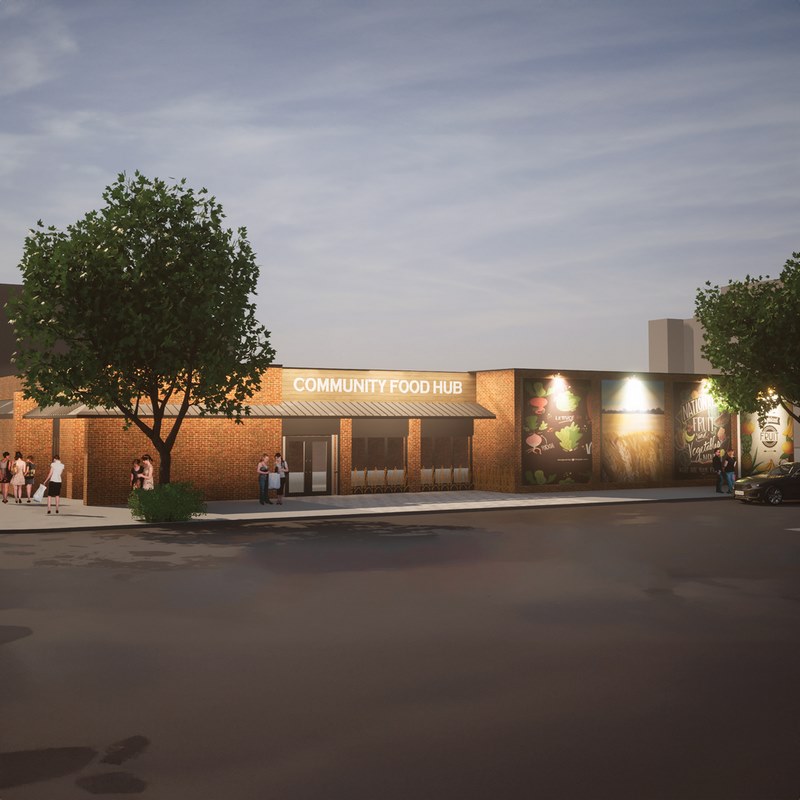
Early rendering for the Community Food Hub – Credit: Regina Food Bank

In Saskatchewan, Canada’s first free grocery store is set to open as a flourishing food bank continues to look for ways to support the community.

Located at 1881 Broad St. in Regina, the Food Hub will be stocked like any old grocery store, and unlike similar projects that operate out of churches or community centers, it will feature a produce section, floor-to-ceiling display fridges, and be open all week.

The Regina Food Bank believes that allowing people who rely on the food bank for food security to fill out a cart just like a normal grocery store gives back agency, and may actually help feed more people by reducing waste.

“None of us fit in a box, but that’s what we give our clients today,” Regina Food Bank vice-president David Froh told CBC News. “When you give choices, you give not just dignity, but actually, we figure we can feed about 25% more people.”

One client explained that getting handed a crate of canned/boxed goods put together in a hurry based on what was in stock rarely provides a selection that accounts for things like dietary restrictions, allergies, proper nutrition, or even just synergistic flavors between the foods.
Credit – Regina & District Food Bank

“Normally I barter with my neighbors and we swap back and forth, so it kind of works out that way. But a lot of people don’t do that,” said food bank client Jon White. “So there’s a lot of stuff that just goes to
 Credit – Regina & District Food Bank

The Regina Food Bank doesn’t just support the unhoused or others in dire need of aid; 18% of its clients work full-time, and 2,000 students receive school snacks and meals through their work. Part of their overall objectives with the Food Hub is to reduce societal stigma against using a food bank.

Food banks do not receive government subsidies, so Froh and his colleagues had to look for private donations to raise the CAD$3.7 million they needed to get the Food Hub off the ground. Some of this came from piggy bank-sized gifts, but they also received a CAD$1 million donation from The Mosaic Company.

Much of the stock is produced, grown, or processed in Saskatchewan—part of Regina Food Bank’s goal to improve the sustainability and nutritional quality of the food their clients rely on. Source: 
Read More........

Depression, anxiety rise among new moms amidst COVID-19 pandemic: Study

TORONTO: The COVID-19 pandemic has increased the risk of depression and anxiety in new moms, according to a study which says one in seven women already struggle with these mental illness symptoms in the perinatal period. According to the research, published in the journal Frontiers in Global Women's Health, the likelihood of maternal depression and anxiety has substantially increased during the pandemic. "The social and physical isolation measures that are critically needed to reduce the spread of the virus are taking a toll on the physical and mental health of many of us," said Margie Davenport, study co-author from the University of Alberta in Canada. For new moms, the scientists said, these stresses come with side effects. "We know that experiencing depression and anxiety during pregnancy and the postpartum period can have detrimental effects on the mental and physical health of both mother and baby that can persist for years," Davenport explained. Such effects, according to the researchers, can include premature delivery, reduced mother-infant bonding, and developmental delays in infants. The study surveyed 900 women -- 520 of whom were pregnant and 380 of whom had given birth in the past year -- and asked about their depression and anxiety symptoms before and during the pandemic. Before the pandemic began, the scientists said 29 per cent of those women experienced moderate to high anxiety symptoms, and 15 per cent experienced depressive symptoms. During the pandemic, these numbers have increased with 72 per cent experiencing anxiety and 41 per cent dealing with depression, the study noted. Since the lockdown measures have affected daily routines and access to gyms, the scientists also asked women whether their exercise habits have changed. Of the women surveyed, 64 per cent said they reduced their physical activity since the pandemic began, while 15 per cent reported that they increased and 21 per cent experienced no change. The researchers believe that limited physical activity may have resulted in an uptick in depressive symptoms. According to the study, women who engaged in at least 150 minutes of moderate physical activity a week had significantly lower symptoms of depression and anxiety. The scientists cautioned that the findings are limited since they could not survey women before the pandemic began, and the women surveyed could only offer their pre-pandemic symptoms in hindsight. While the study was specifically interested in the impact of COVID-19 on new moms, Davenport said maternal mental health is a critical issue no matter the time. "Even when we are not in a global pandemic, many pregnant and postpartum women frequently feel isolated whether due to being hospitalized, not having family or friends around or other reasons," she said. "It is critical to increase awareness of the impact of social isolation on the mental health of pregnant and postpartum women," Davenport added. Copyright © Jammu Links News, Source: Jammu Links News
Read More........

Sleep 7 hrs a night to prevent brain from ageing

Sleep, Baby, Sleep
Sleeping for seven hours a night can prevent your brain from ageing by an extra two years, according to a new research. American researchers found that older women who slept for seven hours a night had far better concentration and memories than those who slept for nine hours. Those who got less than five hours were also found to suffer, the 'Daily Mail' reported. Scientists believe that those who restrict themselves to seven hours a night can prevent their brain from ageing by an extra two years, compared with those who get too much sleep or not enough. Earlier research has shown that having more than seven hours of sleep a night can lead to weight gain and increase the risk of heart problems and diabetes. However, the new study is one of the first to link it to concentration problems. The research, presented at the Alzheimer's Association International Conference in Vancouver, Canada, looked at 15,000 women in their seventies over five years. All the participants underwent regular tests to check their memory, concentration and attention span. Those who usually slept for seven hours performed far better than those who got less than five hours, or more than nine. "Our findings support the notion that extreme sleep durations and changes in sleep duration over time may contribute to cognitive decline and early Alzheimer's changes in older adults," lead researcher Elizabeth Devore of Brigham and Women's Hospital, Boston, was quoted as saying by the paper. "The public health implications of these findings could be substantial, as they might lead to the eventual identification of sleep-based strategies for reducing risk of cognitive impairment and Alzheimer's," she added. "A good night's sleep is one of life's pleasures but, once again, this robust research suggests that the quality and duration of sleep are also linked to our cognitive health," a spokesman for the Alzheimer's Society said. "We're not saying you shouldn't enjoy the occasional lie-in, but good-quality sleep, eating a balanced diet, maintaining a healthy weight and exercising regularly can all make a difference in reducing your risk," he said Source: Indian ExpressImage: flickr.com
Read More........

Almonds have cholesterol benefit

A handful of almonds could significantly lower your ‘bad’ cholesterol levels, say doctors in Canada. Previous research suggests that nuts can lower the risk of heart disease. Now a study points to the striking health benefits of almonds. A group of 27 men and women with high cholesterol followed three different one-month diets, in rotation. The first included a large helping of almonds – 74 grams – making up a quarter of the day’s calorie intake. The second had half the amount of almonds – about a handful. In the third diet, a low-saturated fat, wholewheat muffin replaced the almonds. Those on the high almond content diet had a reduction in LDL (low density lipoprotein or ‘bad’) cholesterol of 9.4 per cent compared to a reduction of 4.4 per cent for those on the low dose. No reduction in LDL cholesterol was seen on the muffin diet. What is more, the ratio of LDL cholesterol to HDL (high density lipoprotein or ‘good’) cholesterol fell. In the high almond group it went down by 12 per cent and in the low almond group by 7.8 per cent. This ration is considered significant in assessing the risk of heart disease – the lower it is, the better. Almonds are, however, high in calories and fat (though not saturated fat), so they are best as a replacement for other foods – rather than an addition – if you are watching your weight. It’s also a good idea to avoid nuts with added oil or salt. Source: Fresh Plaza
Read More........

Incredible Book Carving Art by Guy Laramee

Incredible Book Carving Art by Guy Laramee -Guy Laramee of Canada creates incredible sculptures out of books. Often set spine to spine, Laramee has carved mountainous glacial landscapes, stepped plateaus, and deep valleys rife with greenery. His work does not only encompass topography, but ancient architecture as well. A Buddhist temple appears to be carved into a cliff side in his piece “Longmen.” A stack of volumes reveals a cave dwelling that is carved into from the book corners. Laramee even carved a detailed rendering of the Temple at Petra from yellowed pages, which looks like the real thing when photographed. In addition, the author deals with many other creative ways. Scripting and music directing in the theater, the design of musical instruments, singing, video, painting. For 30 year career he has received more than 30 major awards at various festivals.
Read More........

Exceptional People: The Art of Judith Light

“Without wonder and insight, acting is just a trade. With it, it becomes creation.” --Bette Davis 
The landscape of television programming, what little remains that hasn’t given way to the dubiously-labeled genre of “reality programming,” is, populated by trades-people who offer passable and acceptable wares. Few, however, are what one might consider artists. When one stumbles upon such a creator of art, that individual’s name and face remain forever in his memory. One of those names, for over two decades,
has been Judith Light. Miss Light’s theatre roots are obvious at once. The Carnegie Mellon University graduate began her acting career on the stage in repertory theaters throughout the United States, Canada and Europe. Debuting on Broadway, Judith performed in the classic “A Doll’s House.” This successful introduction to the Great White Way led to a season at the Eugene O’Neil Playwright’s Conference. While most of us tend to associate the divine Miss Light with her television roles, it’s important to note that her heart will always be on the stage. After bringing her talent into homes across the world through the medium of television, Miss Light returned to live theatre with a 1999 with her starring role as the complex and commanding “Dr. Vivian Bearing” in the critically-acclaimed and Pulitzer Prize winning Off-Broadway production of “WIT”, at Union Square Theater. Miss Light’s performance was heralded as brilliant, and her achievement was recognized by her peers when Judith received the Helen Hayes Award and the Elliot Norton Award for the role. This star-turn in “Wit” led, in 2001, to Washington, DC, where at The Shakespeare Theater, Miss Light portrayed the eponymous character in the Henrik Ibsen classic “Hedda Gabler.” Several other celebrated stage roles followed. One brought a nomination for
a Tony Award for “Best Performance by an Actress in a Featured Role in a Play” in 2011, for Miss Light’s role in “Lombardi,” by Academy Award winner Eric Simpson. Most recently, in June of 2012, Miss Light’s acting genius afforded her a coveted Tony Award for “Best Performance by a Featured Actress in a Play,” for her work in “Other Desert Cities”—a role which also earned Judith a Drama Desk Award for Best
Featured Actress. Throughout all of this, Miss Light also found the time to entertain millions with her television in film work starting with her ingénue role as Karen Wolek on “One Life to Live,” a part which won her two Best Actress Emmy awards. Most of us, however, recognize Miss Light as Angela Bower from her beloved primetime series “Who’s the Boss?” A host of other featured television roles would follow in addition to work in films such as “The Shoemaker” with Danny Aiello, and “Ira & Abby” by Jennifer
Westfeldt, with Robert Klein, Fred Willard, and Frances Conroy. This year, we’ve seen Miss Light’s deliciously Oedipal turn on TNT’s “Dallas” reboot as a scheming villainess who looks remarkably younger than the son to which she is just a bit too attached. Though the many awards Miss Light has amassed throughout her career speak to her unique talent, the true measure of her art is evident to anyone who has seen her perform. It’s the “wonder and insight” of which Bette Davis once spoke that gives the bite and heart to all of Miss Light’s roles. Without this depth, an actor is simply parroting life. Judith Light clearly gives a new, remarkable life to each character she portrays. It’s this singular sense of creating, of being, 
of living which makes hers a very special talent. Thankfully for many, Miss Light doesn’t keep her talent limited to just her work. She is an active Board Member and advocate for many organizations representing AIDS-related and Human Rights concerns. These include: Broadway Cares: Equity Fights AIDS, The Names Project/The AIDS Memorial Quilt, The AIDS Memorial Grove, CDC’s Business Responds to AIDS/Labor Responds to AIDS, Hollywood Health and Society, Project Angel Food, The Matthew Shepard Foundation, The National Aids Memorial Grove, The Point Foundation, The Rome Chamber Music Festival, Faith In America and The Trevor Project. All Images from JudithLight.ComSource: Stalking the Belle Époque
Read More........

CNNGo lists world's best Chinatowns


CNN's travel site, CNNGo, recently published an article titled "World's Best Chinatowns."
There is a Chinatown in almost every major city in the world, and such is the huge footprint of overseas Chinese. CNN's travel site, CNNGo, recently published an article titled "World's Best Chinatowns." The following are some of the best Chinatowns in the world, according to CNNGo. Havana, Cuba – Havana's Chinatown is called "Barrio Chino" in Spanish by locals. It was started by coolies brought in from Guangdong in the 1840s to work on the sugar plantations, and was once Latin America's largest Chinatown. There are about 150 native Cuban Chinese left in Havana. Kolkata, India – Many Chinese people, predominately from South China, fled early 19th-century war and famine in their homeland, and found their way to Kolkata. There are still some Taoist temples in the city, and Chinese food is the most popular cuisine there. Bangkok, Thailand – At night, Bangkok's Chinatown resembles Hong Kong in 1960s. The main attraction is the food. One of the easiest ways to enjoy it is to sign up for a tour with Bangkok Food Tours' Chinatown Foodie Walk. Manila, Philippines – Binondo in Manila is the world's oldest Chinatown, established in the 1590s by the Spanish colonists as a settlement for Catholic Chinese. One can find some of the best Chinese food there. Johannesburg, South Africa – Transvaal was found in the 1880s to lay the largest deposits of gold in the world, which attracted many Chinese gold diggers. Johannesburg is actually home to two Chinatowns. Most residents of the Chinatown in the suburbs are recent Mandarin-speaking immigrants. A growing number of Chinese people have moved to South Africa either for work or study in recent years. One can find authentic Shanghainese and Sichuan food in the city. Melbourne, Australia – The first batch of Chinese migrants went there mainly due to gold rush. Beginning in 1851, ships laden with gold diggers began to set sail from Hong Kong for Melbourne. Today, the historic three-story brick buildings in Melbourne's Chinatown remain home to various Chinese restaurants, groceries, and herbal medicine shops. It holds the world's largest dragon boat race every year. Vancouver, Canada – Chinese people account for nearly 50 percent of the residents of Richmond, modern-day Chinatown in Vancouver. In recent years, a reverse brain drain has seen Canadian-born Chinese moving back to Hong Kong and the Chinese mainland in search of better job opportunities. San Francisco, United States – After more than 150 years in San Francisco, Chinese have become an integral part of the rich fabric of the city. In the late 1880s, San Francisco's Chinatown was the city's sleaziest area, and was best known for authentic Cantonese food. London, England – London is home to Europe's largest Chinatown, which attracts 300,000 people for the Lunar New Year celebrations every year. The Chinese community in the city is mainly made up of migrants from Hong Kong. Attracted by cheap rents and short leases on offer, many of them have opened restaurants, teahouses, Chinese medicine clinics, and supermarkets in the city. Source: China.org.cn
Read More........

I do believe, I do believe in fairies

Mark Bergin, Kingston EMC: Artist Zena Bernstein's work exhibits a delicate and lifelike quality.
After visiting Zena Bernstein's Studio on Horse Thief Bay, you might find yourself believing in fairies. Irish poet W.B. Yeats once noted that if you ask the Irish if they believe in fairies you'll get the answer, "No, but they're there." Yeats wrote a book called The Celtic Twilight. In it, in his ever poetic manner, he wrote: "Hope and Memory have one daughter and her name is Art, and she has built her dwelling far from the desperate field where men hang out garments upon forked boughs to be banners of battle. O beloved daughter of Hope and Memory, be with me for a little." That "Art" of whom Yeats wrote could easily be Zena Bernstein. Art lives in her creative soul. Bernstein's not Irish, but she knows the fairies are there, all around her. Her studio is nestled in a wooded area near Rockport, along the St. Lawrence River. As soon as you step onto the short path leading to the studio, you enter another world. Branches twist and caress the studio in a way that seems otherworldly. I almost expect Bilbo Baggins himself to greet me when I walk toward the studio. "When I was young, my father brought the family to the Rockport area for the last
Mark Bergin, Kingston EMC: Zena Bernstein with her "Birth of a Fairy" print.
two weeks of Augustevery year," said  Bernstein. "It was a place we loved. When my dad died we thought we'd never get back." But when her sister got married, Zena did get back. "I remember being out in the boat and fell in love with the river again," she said. "My mother bought a little island in 1957 and we continued to visit every summer. I did my art there. We were thinking of winterizing on the island but that wasn't going to be possible, so my mother and I bought this lot (where Horse Thief Bay Studio is) in 1963 and built the house in 1965." Bernstein completed her Bachelor of Fine Art degree at Syracuse University that same year. She now lives in her Rockport studio with her partner, Ian McKhann, a fellow artist. Zena Bernstein uses a combination of watercolour and acrylics in her work. Through a meticulous process, she carefully places several layers of dots of pure colour to suggest subtle tones and shades. She refers to her creative work as a labour of love. Her art career began as a book illustrator in New York City. Her drawings range from the natural world of mushrooms and insects to the unseen world of fairies and gnomes. In 1981 Bernstein officially immigrated to Canada. It's her home now. It's also the home of the fairies she draws and writes about. If you aren't familiar with the name of this artist, there's little doubt you've seen her work, especially if you have children. Bernstein's art has graced the pages of many books. The best known is likely Mrs. Frisby and the Rats of NIMH, which went to Hollywood and became The Secret of NIMH. Bernstein was responsible for the delicate, life-like depictions of the animals described in the story. Bernstein breathes life into the world of the unseen. An exquisite piece I saw was a limited edition print titled The Birth of a Fairy. In nature's womb, a fairy infant is born. Amidst autumn colours, filled with love and nurtured by the Earth, the newborn fairy could be a poster child for an environmental cause. Bernstein's latest project is a book on the world of fairies. She's finished the writing portion, which she started several years ago. Currently untitled, Bernstein unofficially calls it "My Life with Fairies and Gnomes." She's still working on the illustrations. "I've been doing it like a journal," said Bernstein. "It's seen through the eyes of an anthropologist who's studying another culture. I've been learning the ways of fairies and gnomes, where they live, their psychology, tools they use, their holidays, what they eat, how they hunt and fish for food. I feel very close to them. It's almost like a play. I'm trying to stress that if people don't take care of nature, the fairies will be gone. This is not a legend. It's a story about life in the woods." In her book, she tells the story of the many ways that modern developments affect the fairy world. Bernstein explained that, as we destroy the woods, pollute the rivers and affect nature, we hurt the fairies, gnomes and nymphs. She said that with monstrosity homes being built, beautiful woodlands are destroyed along the river. The noise from cigarette boats kills fairies. The Alberlings, fairies native to the area, live in a community that is almost circular, about two feet underground. They even have a water filtration system that involves charcoal and sand filtration. The other group of native fairies, Pucums, like to live in the cattails. In the winter they live in the fairy equivalent of longhouses. In her book, she explains, from an anthropological perspective, how beings like gnomes, elves and dwarves emigrated from Europe to North America during times of Viking raids and wars in Europe. "A certain kind of life is being lost. In the book, I preserve the woods for the fairies." Berstein said that art is important because it helps us understand things without needing words to explain. "It's much easier to explain things in a drawing or painting," she said. "Drawings tell us what went on in the past. With writing, we do not always know how to read ancient languages, but through the art of cultures like the Mayan, we understand their world. Pictographs and cave drawings tell us what went on back to the dawn of time." Bernstein feels close to the natural world. In addition to her art, she also uses a microscope and magnifying glass to study things like leaves. "I love nature," she said. "I don't go to church. I have my woods here. That gives me a more religious feeling than going to church in a building. It brings so much peace and it calms the nerves and spirit. I really can't feel lonely with all of this around me. I don't think you can really feel depressed in a place like this either. All life surrounds you." There is one problem with the studio: It's like visiting the humane society. It's hard to come home without something following you. In my case it was "The Birth of a Fairy." It's on my living room wall. The soul is soothed. If you'd like to visit this fascinating artist, her Horse Thief Bay Studio is usually open from 10 a.m. to 4 p.m., but it's best to call (613-659-2092) first to make sure she'll be there. To find her, take the Thousand Islands Parkway. Horse Thief Bay Road is 1.9 km past Highway 137 (the road leading to the Thousand Islands Bridge), on your right. The studio is only a few steps in at the first laneway. Be prepared for magic. Source: Emckingstone
Read More........

Guelph Jazz Festival Seeks Volunteers

GUELPH, Ontario - August 16, 2012 - University of Guelph News Release - Guelph Jazz Festival organizers are looking for volunteers for the 19th annual festival and colloquium, which will be held Sept. 5 to 9 in venues around the city of Guelph and at the Macdonald Stewart Art Centre (MSAC). Started in 1994 by University of Guelph English professor Ajay Heble, the Guelph Jazz Festival offers jazz performance and education and is considered among the most visionary musical events in Canada. U of G sponsors include the schools of Fine Art and Music, Languages and Literatures, and English and Theatre Studies, the MSAC and the Central Student Association. Volunteer duties include hospitality services, box office and merchandise sales, beverage sales and service, and festival promotions/materials distribution. Volunteers are needed for free jazz events being held Saturday, Sept. 8 at Market Square in front of City Hall. You may complete an advance online application. For six hours of service, you will receive a complimentary ticket to a festival event, a T-shirt and an invitation to a volunteer appreciation party. Considered one of Canada’s most influential music festivals, the Guelph Jazz Festival has earned critical acclaim for presenting innovative jazz and creative improvised music in a community setting. It’s the only festival in Canada that includes free workshops, lectures and panel discussions on the influence of jazz on society and culture. The festival has received the Lieutenant-Governor’s Award for the Arts and the Premier’s Award for Excellence in the Arts administered by the Ontario Arts Council. For more information about the festival and volunteer opportunities, visit the website or e-mail volunteer@guelphjazzfestival.com. Source: Take Advantage of Your Seniority
Read More........

America Ahead

Well, well, well. What have we here? Something of a mystery, I think. Who doesn’t love a mystery? Actually, some people don’t. But, I do. So, let’s take a look. Obviously, we have a trade card. No surprise. It’s Victorian. Also not a shock. Spools of thread—giant ones at that—are clearly involved. However, the maker of the thread is almost illegible due to the way the spools have been drawn. Foreshortening is the enemy of readability. What exactly is happening here? We see an elephant being forcibly dragged to America. Okay, then this is a card advertising the arrival of a product from somewhere else. Or is it? Is it elephants? Is it enormous thread? Is it horsies? Elephant saddles? No. I think not. Is it an ad for a specific elephant? He seems to be called Jumbo. But, aren’t all elephants? Let’s make a list of our clues. 1. Elephant labeled as “Jumbo.”, 2. Spools of thread with glandular problems., 3. America being somewhere other than where they are., 4. A parade of animals., 5. Violent abduction of said elephant., So, what could all of this mean?, Let’s start with “Jumbo.” Could this be the well-known elephant of circus lore? Yes. Yes it could. And, it is. “Jumbo” was born in Africa in 1861. After he was captured, he was taken to Cairo and sold to a zoo in Paris. But, by 1865, the Paris Zoo had too many elephants, and so, the Parisians traded Jumbo to the London Zoological Gardens for a rhinoceros. Poor Jumbo, in 1865, wasn’t so very jumbo. In fact, he was quite sickly and small. In London, he found a friend in the form of his keeper, Matthew Scott, who cared for Jumbo and grew him to a gargantuan and unusually large size—11 feet tall, weighing 6.5 tons. His trunk alone was 27 inches in circumference and he quickly became known as the largest elephant ever known in the world. He was christened “Jumbo.” Some believe that his name, possibly the first European use of the word which we now associate with largeness, was derived from a Swahili salutation which means both “Hello” and “Chief.” Others think the name came from the African
word for elephant.  Now, Jumbo wasn’t just big, he was sweet. He liked people. He enjoyed being around them—especially children and he delighted in giving rides to them. It’s thought that he gave thousands of rides to British school children during his time at the Zoological Gardens in London. HE quickly became their star attraction. But, Jumbo was getting older. Some of the zoo officials feared that as he aged, his gentle nature might fade and, given his enormity, he could be dangerous to the very children he loved. Enter P.T. Barnum. Mr. Barnum (1810-1891) had a habit of showing up and causing trouble in his showy, hokey, fun and charming way. Barnum was a fan of Jumbo, and, when Mr. Barnum was a fan of something, he wanted it. And, Mr. Barnum always got what he wanted. Barnum offered the London Zoological Gardens $10,000 American dollars for Jumbo, and, the zoo officials accepted. After all, they thought, that money could buy a lot of younger elephants who, though not as big, were probably—in their thinking—safer. Outrage ensued. People all over Britain protested upon the announcement of Jumbo’s sale. Queen Victoria herself denounced the sale and demanded that Jumbo stay in London. The zoo officials quietly told Mr. Barnum that they would have to back out of the deal, but, as I said, Mr. Barnum wasn’t too keen on not getting what he wanted. Furthermore, if there’s any one thing to know about P.T. Barnum, it’s that he loved publicity—especially free publicity. And, so…as one does…he sued. The press in both the U.S. and the U.K. went wild with the story which became an international controversy. In February of 1892, Barnum was sent a telegram from the London “Daily Telegraph” which asked the famous American under what conditions he might accept the cancellation of the sale of Jumbo. His response was, “Hundred thousand pounds would be no inducement to cancel purchase.” The decision was made that Barnum was in the right. But, Jumbo didn’t agree. He liked where he was. He liked the gardens. He liked the kids and he liked his keeper. When Barnum’s men came to collect their prize, Jumbo wouldn’t budge. He refused to leave the Zoological Gardens. That’s a lot of stubbornness. I have trouble moving Bertie when he’s not interested and he’s a twenty-something pound terrier, not a 6.5 ton elephant. So, I’m sure you can imagine that there was trouble ahead. Finally, Jumbo was somehow convinced to leave. I suspect that his cooperation stemmed from the fact that he saw that his devoted trainer—the man who nurtured him to his exceptional size—was going to go with him. Jumbo sailed from England on the freighter “Assyrian Monarch” and arrived in America on April 8, 1882. It seems this card is accurate. Jumbo did, in fact, have to be forced to leave his home and travel across the sea to yet another continent. But, I don’t think he was restrained by giant spools of thread. Let’s see what that’s all about. The Ephemera Society of America tells us that after making numerous sensational headlines on two continents, Jumbo was a star, and being a star, his image was used for a plethora of advertising—a lot of it without the proper licensing, of course, and mostly without Barnum’s consent. But, still, Barnum concluded, publicity is publicity. The card that I have here is not a British card as I originally thought. The arrival refers to Jumbo himself and capitalizes on his ordeal. This trade card was produced by the Willimantic Thread Company in the U.S. Originally, it had a caption which read: JUMBO MUST GO, because drawn by Willimantic Thread! Hmmmm…I think not. If you look closely, you can see that this card has been trimmed to fit into an album. When altered, it lost its caption, but I think we 
One of many monuments to Jumbo.
figured it out now. By the way, Jumbo only lived three more years. He did not die of natural causes, but was, instead, oddly enough, hit by a train in Canada. Barnum, making sure to use every last bit of that elephant, made up a ridiculous story that Jumbo had died while trying to rescue a baby elephant, “Tom Thumb,” from being hit by the locomotive. But, that’s pure Barnum hokum. After his death, vets found that, over the years, Jumbo had eaten a lot of bizarre things that he shouldn’t have. Dozens of coins were found in his stomach. I guess kids gave him coins over the years. They also found lots of keys in there. Barnum did more atrocious things to him after the fact, too. However, Jumbo had the last laugh. He is very fondly remembered. Sculptures and tributes and monuments were erected to the plucky pachyderm all over the world, and his name, now a popular word, will forever be associated with something of exceptional size. He inspired songs and countless works of art, and, in many ways, made the world pay close attention to how animals are treated. Yay for Jumbo! Source: Stalking the Belle Époque
Read More........

Diabetes drug costing two pennies can beat prostate cancer

Prostrate drugA diabetes drug costing just two pennies per tablet can also treat prostate cancer by slowing the growth of cancerous cells, a new research has claimed. According to the research, the medicine, called metformin, causes tumours to shrink by slowing the rate at which the cancerous cells grow. The finding has raised the possibility that men could benefit from the cheap, readily available drug as soon as they are diagnosed with the disease, provided the results are confirmed in bigger trials, the Daily Mail reported. Doctors at the Princess Margaret Hospital in Toronto, Canada, tested the drug on 22 men after they noticed that it stunted prostate cancer cell growth in laboratory experiments They were diagnosed with tumours and were due to undergo surgery to have their prostates removed. Each person took 500 mg of metformin three times a day for six weeks before the operation, during the time researchers measured the rate at which the tumour cells multiplied. The results, presented at the recent American Association for Cancer Research annual meeting in Chicago, showed malignant cells grew at a significantly slower rate once the men were put on the drug, suggesting metformin might be able to keep tumours under control. The findings support a 2009 study which found that men taking metformin every day to control their diabetes were up to 44 per cent less likely to develop prostate cancer. “We compared what the prostate cancer looked like when .it was first diagnosed to what it looked like when it was removed,” said Dr Anthony Joshua, a cancer specialist who carried out the study. “And although these are preliminary results, it appeared to reduce the growth rate of prostate cancer in a proportion of men,” Joshua said. Metformin works by reducing the amount of glucose produced by the liver and helping cells mop up sugar that is circulating in the bloodstream, preventing damage from excessive blood sugar levels. At about 30 pounds per patient per year or just 6-8 pennies a day - it could be a highly cost-effective way to tackle prostate tumours. Researchers around the world are investigating metformin's powers against skin, lung and pancreatic cancer, with promising early results.Source: Indian Express
Read More........

Towering above the competition: 2012 list of best tall buildings in the world is revealed

Winner: The Absolute Towers in Mississauga, Canada, a fast-growing suburb of Toronto, were named the best tall buildings in the Americas
By TAMMY HUGHES: Dramatic skyscrapers in Canada, Qatar, Australia and Italy have been named the best tall buildings in the world for 2012 by the Council on Tall Buildings and Urban Habitat. The four regional winners include the Absolute Towers in Mississauga, Canada (Americas), 1 Bligh Street, Sydney (Asia and Australia), Palazzo Lombardia, Milan (Europe), and Doha Tower/BurjQatar, Doha (Middle East and Africa). The Al Bahar Towers in Abu Dhabi won the CTBUH’s first Innovation award for the project’s
The Absolute Towers are set to be completed in August 2012, and will reach a height of 179.5 meters (589 ft.) and 158 meters (518 ft.)
remarkable computer-controlled sun-screen. While Palazzo Lombardia is the first tall building in Italy to earn CTBUH recognition and 1 Bligh is the first building in Australia to be honoured. A record number of towers taller than 200 meters were completed in 2011 - 88 compared to 32 in 2005. Another 96 are due to be completed this year. An overall winner for the 'Best Tall Building Worldwide' will be named at the CTBUH 11th Annual Awards Ceremony and Dinner at the Illinois Institute of Technology, October 18.
Striking: 1 Bligh Street was named the best tall building in Asia and Australasia. This 28-story elliptical tower stands out from the boxy structures nearby, in the heart of Sydney¿s central business district
The centerpiece of 1 Bligh Street is the glass- and aluminum-lined atrium, Australia¿s tallest naturally ventilated sky lit atriumImpressive: The centerpiece of 1 Bligh Street is the glass- and aluminum-lined atrium, Australia¿s tallest naturally ventilated sky lit atrium
The CTBUH Best Tall Building Awards are an independent review of new projects, judged by a panel of industry executives. Projects are recognised for making an extraordinary contribution to the advancement of tall buildings and the urban environment, and for achieving sustainability at the broadest level. This year the CTBUH Board of Trustees also awarded the Lynn S. Beedle Lifetime Achievement Award to Helmut Jahn, the architect known for his simple and elegant designs
Skyline: Palazzo Lombardia, in Milan, was named the best tall building in Europe. This 40-story government building is the first CTBUH award winner from Italy
Distinct: The Doha Tower in Qatar was named the best tall building in the Middle East and Africa
Al Bahar Towers in Abu Dhabi was named the most innovative tall building in the world
The Council received 78 entries from around the world for the Best Tall Building awards. The majority of the entries were from Asia, followed by the Middle East. The number of entries from the Americas continued to decline, reflecting the impact of the recentglobal recession. Winners and finalists are featured in the annual CTBUH Awards Book, which is published in conjunction with a major global publisher and distributed internationally each year. Source: Travelfwd, Open Images In New Tab To Find Its Source Sharing
Read More........

Quebec City


The charming narrow streets of the old city are best seen on foot, especially since most of the historic sights are located within a small area of the walled city. If you need to travel farther to see one of the more distant sights such as the Mussée du Québec, the bus system is frequent and reliable. Fare are cheaper if you buy a ticket before boarding and are on sale at several outlets in grocery stores and supermarkets. There are also oneday passes for Can$4.60. The bus station is in the Lower Town on Boulevard Charest Est. Most of the main routes stop centrally on the Place d'Youville in the Old Town. Taxi stands are located in front of the major hotels or outside city hall. House-drawn carriages or calèches may be hired for a gentle trot around the Old Town, but expect to pay Can$50 for 40 minutes. Source: Canada - Survival Guide
Read More........

Bolshoi dancers stun Toronto audiences

Bolshoi dancers stun Toronto audiences The ballet Swan Lake to the music by Pyotr Tchaikovsky in the choreography of the Moscow Bolshoi Theatre has triggered a storm of applause in Toronto.The dancers earned a standing ovation and took a lot of encores
Read More........

High Blood Pressure Affects 1 in 3


One in three adults suffers from high blood pressure, a key cause of strokes and heart disease, according to World Health Organization figures released on Wednesday. Canada and the United States have the fewest patients, at less than 20 percent of adults, but in poorer countries like Niger the estimated figure is closer to 50 percent, the UN body said. While wealthier countries have seen their cases drop thanks to effective, low-cost treatment, in Africa many remain people undiagnosed and are not getting help, according to the WHO. Source: The Coming Crisis
Read More........

World's largest art car parade rolls through Houston

The world's largest art car parade rolled through the fourth-largest U.S. city of Houston on Saturday, attracting an estimated more than 300,000 spectators. The parade, now in its 25th year, gave art car-lovers a rare chance to view more than 300 cars of every shape and design imaginable, from a giant Radio Flyer wagon, a rolling banana, to a giant metal dragon. Parade entries include anything on wheels from unicycles, lawnmowers, to cars and go-carts. Participants are community groups, public and private schools, professional organizations, as well as individuals. "The Houston Art Car Parade captures the essence of Houston's eclectic and fun culture,"said Houston Mayor Annise Parker. "It is among my favorite events and one of the most unique treasures our great city offer." Kerri Kepler, who built her miniature ship out of a shopping cart, said her art car was "a super fun project to work on." The parade
The world's largest art car parade rolled through the fourth-largest U.S. city of Houston on Saturday, attracting an estimated more than 300,000 spectators.
day "is probably my most favorite day of the entire year," she said. The Earth, Wind and Fire car was built by art students at a local high school in collaboration with the robotics class. Participants were not only enjoying the process of transforming an ordinary car into a great peace of art, they also were participating to deliver the message that art is an integral part of everyday life. For the spectators, they were taking a day off from their busy work as well as sharing the fun of the art cars made out of their creators' limitless imagination. A mother who took her two children to the parade said though they have lived in the city for years, it's the first time for them to view the parade, because she is always very busy and have too many things to do. "I think it's big fun today. I have not expected so many cars. It's a surprise to me," she said. For her two kids, she said the parade is good experience for the children's imagination. The children's favorite entry is the giant metal dragon which rolled down the streets as the last car of the parade. The Houston Art Car Parade was born in April, 1988, with a 40- car parade seen by an estimated 2,000 spectators. Participants in this year's parade came from across the country as well as from Canada and Mexico. Source: China.org.cn
Read More........