Avila–a fortified town in Spain


By LakshmiIt is the early afternoon. I am standing in front of a little shrine called Los Cuatro Postes or
My PhotoThe  Four Posts where four pillars encloses a cross. I climb up a short flight of steps and look out into the vast open space from the shrine. In the immediate distance lies an entire town enclosed by massive granite walls. Towering and formidable, these walls rise above the ground to touch the dark gloomy sky pregnant with droplets of rain. Tinged with a shade of brown ochre, the walls are intact and they look aesthetic as their flat surfaces are interrupted by a series of semi-circular turrets, adding a geometric pattern to them. Standing tall at 12 metres, these brown walls are punctuated with nine gates built across the length of 2.5 kms, with 88 towers that give the city its stony look. It feels a bit mysterious to live in a town that is almost completely surrounded by these stone walls. I shiver a bit in the cold, lost in a land that seems to be out of a fairy tale, dwarfed by these imposing structures. But there is a beauty in the barrenness. As I am admiring the view, a newly married couple lock lips and pose for a wedding portrait against the backdrop of the town Ringed in by the Sierra Gredos mountains, Avila 
is a Roman town perched on a rocky outcrop on the banks of the Adija River in Spain. Often referred to as the land of saints and stones with the Gothic and Romanesque churches dotting its landscape, Avila is a UNESCO World Heritage City that looks lost in a dreamy stupor of the past. The walls, built in the Middle Ages are virtually the symbol of the town, visible from almost any part of Avila Avila however has had a war torn history prior to the construction of its impregnable walls. It was the home of the Celtic tribes known as “Vettones” around the 5th-7th centuries BC and was called the Obila or the High Mountain then. The Romans invaded it around the 1st century AD and called it Abila and ruled for almost six centuries. However it became a war zone during the Middle Ages between the 7th – 11th centuries with frequent wars between the Islamic Moors and the Christian kingdoms leading to Avila becoming a ghost town eventually. Avila was finally repopulated under the reign of Raymond of Burgundy in the 11th century who ordered the construction of these walls to protect it from further attacks .Ever since they have remained as
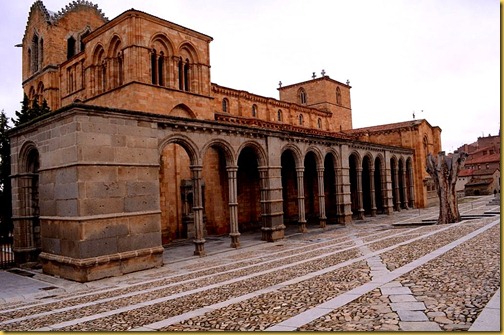
a strong formidable presence in the town, keeping all invaders at bay. However Avila has a mystical side as well. It was home to several saints, including St Theresa of Jesus, the 16th century patron saint of Avila who had reformed the Carmelite Order across Spain. And my guide, Blanca shares a little anecdote from her life that took place at The Four Postes. St Theresa ‘s childhood was rather dramatic. She had visions of Christ besides being tormented by The Devil. When she was barely seven , she was planning to run away with her brother and fight for her state against the Moors. It is believed that her uncle stopped her right here at the Four Posts, just as she was planning her escape . St Theresa however grew up to become a reformist and started spreading her faith, not just in Avila but across Spain as well. The sky suddenly turns blue as dreamy clouds appear, pushing the rain away. Done with the introduction to the city, I now move on to explore the two key facets of the town – the stones and the saints that give Avila its
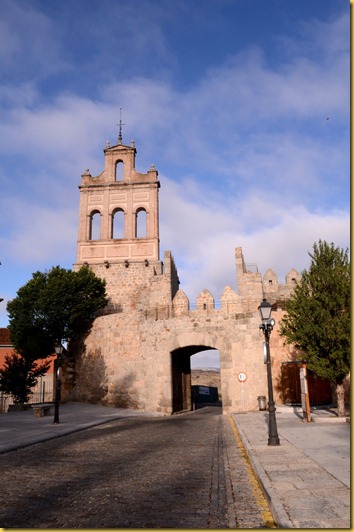
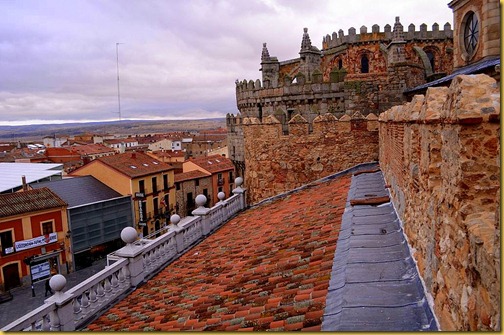
identity. I start with a journey up the walls. There are several routes and I begin at the Puerta Del Carmen , or the Gate of El Carmen, that takes its name from a Carmelite convent attached to the walls . I walk right atop the wall, along the entire length, only to see them stretching endlessly for miles.. The town now wears a fresh coat of paint as Avila shows me her true colours. Huddled below are several pink, white and red houses looking petite as the walls wrap them in their folds. As we look down the sloping roof while palaces and cathedrals dot the landscape, my guide , Blanca shows me some stone sculptures of bulls or boars carved on the surface of the walls that date back to a period before the Romans arrived. Standing there, I am lost in my thoughts, with the wind blowing right into my face. I imagine it during the medieval era when knights guarded their fortresses and horse hoofs trotted in the distance. I am back on the cobbled streets that take me into palaces, monasteries, chapels and churches. I stop by at The Cathedral of Avila, built between the 11th-12th centuries in the Gothic style of architecture, around the same time when the city was fortified. Built with granite, it is looks like a fortress with its apse shaped like a turret as it forms a part of the city walls, probably reflecting the history of the era where battles were raged
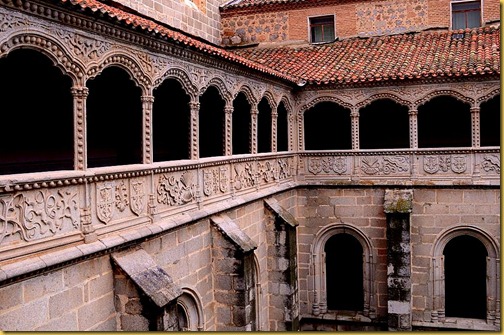
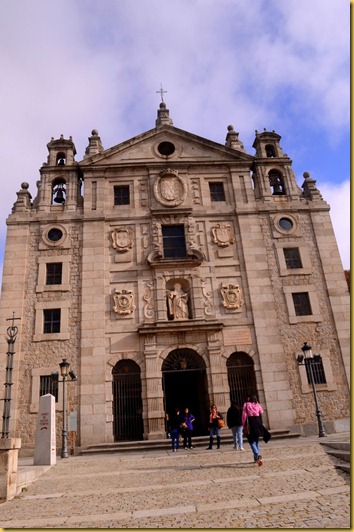
constantly. Another monument that draws me is the Santo Thomas Royal Monastery, built in the 15th century in a Gothic style. With three elegant cloisters, built across two storeys, the monastery holds the tomb of Prince Don Juan, the crown prince of King Ferdinand and Queen Isabella, who are best known for sponsoring Christopher Columbus’ voyage . While the marble crypt remains, the guide tells us that tomb is empty as his remains were desecrated during one of the wars. Our next stop is a small shrine that Avila is proud of. The sky gets gloomy again, but in that grey atmosphere, a colourful toy train chugs along bringing in a group of tourists through one of the many city gates. The train, taking the tourists through the nine gates of Avila finally stops in front of a 17th century convent, which was once the home of St Theresa, the saint and writer who travelled from Avila to all over Spain reforming the Carmelite Order. Built after her canonisation, the convent is closed to the public, but tourists can visit the chapel located inside
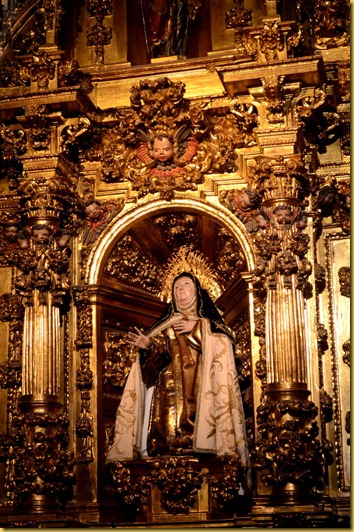
the Baroque church.  We walk in to see her relics and amidst the rosary and other personal effects, is a fragile finger with a ring is placed there as well. It is believed to be her finger from the right hand. But it is not just the relics. The silence in the chapel draws me like a magnet as I sit there for a while inside a reconstructed version of a cell where she prayed. I move on to a livelier part of Avila. The city square is vibrant and is thronged with tourists. Avila’s proximity to Madrid (it takes barely a couple of hours by road) and its World Heritage status seems to draw a lot of them here. Little surprises spring on me as I wander around aimlessly. A South American, from Argentina wearing a bright colourful costume plays a guitar and entertains the locals. In the square a young choir group is in the midst of an energetic performance of hymns. Elsewhere a little bit of India is tucked away in a small souvenir shop called The Taj Mahal. 
It is almost dusk and darkness descends on Avila within minutes, even as the city glows in a spectacular display of lights as the walls and the monuments are lit. I walk along the tiny cobbled lanes running into statues of saints. Bells greet me in every corner. I shiver in the cold as the stars come out into the sky. It is a surreal moment. The outlines of the walls stand out reassuringly against the dark sky, as silence wraps the ancient town in a thick blanket. Every lane leads to a little piece of history. Legends are written in small sculptures that are tucked away in the corners. And St Theresa greets me everywhere – on names of squares and streets. My last stop at Avila is a quaint sweet shop that serves the traditional sweet made of egg yolk that goes by the name of “Yemas de Santa Theresa” . As I bite into the juicy piece of dessert, I see more sweet shops on the way and the road finally leads me back to the walls . Source: Article
Read More........

Mariinsky presents extensive program in Spain

балет Чайковский Лебединое озеро Мариинский театр Санкт-Петербург
Photo: RIA Novosti
St.Petersburg’s Mariinsky Theatre presented the concert version of the opera Iolanthe at the Gran Teatre del Liceu in Barcelona on Thursday. The title part was performed by Russian operatic soprano Anna Netrebko. The itinerary of the Mariinsky Threatre’s current tour of Spain includes five more cities, the last one being Santa Cruz de Tenerife, the capital of the Canary Islands. The Mariinsky company will perform Tchaikovsky’s First Piano Concerto and Shostakovich’s Tenth Symphony, and will present the world premiere of Clarinet Concerto No.2 by Nino Diaz. Source: Voice of Russia
Read More........

Watch your brain of a stroke

Stroke is a cardiovascular disease that causes physical and cognitive impairment is a major cause of mortality and low labor around the world. It mainly affects older people but can occur in younger patients and even children. Despite its high incidence, there is widespread ignorance about the stroke. Statistics show that every 40 seconds someone suffers a stroke or stroke in the United States, while in Spain, there are about 100 000 new cases each year. Men tend to have more strokes than women, although they present risk during pregnancy or in the weeks afterwards. Stroke or stroke is defined as the interruption of blood supply to anypart of the brain. It is caused by a ruptured blood vessel or because it becomes clogged by a clot or other particle. This is due to the development of fatty deposits on the walls of the vessel (known as atherosclerosis). Watch your brain of a stroke (I) Fat deposits can cause two types of obstruction: 1) thrombosis, which occurs when a clot develops in the same cerebral blood vessel, or 2) embolism, the clot develops somewhere else in the body and then a portion of it breaks off and travels through the bloodstream until it finds a smaller vessel and blocks it. As a result, nerve cells in the brain affected area no longer receive oxygen and unable to work, die after a few minutes. Stroke is known by many names or synonyms, including: Cerebrovascular Accident (stroke or CVA), stroke, stroke, cerebral hemorrhage, ischemic stroke, stroke, stroke, stroke or apoplectic stroke, among others. Risk factors for stroke : Age, sex, race and family history are factors that increase the risk of stroke or stroke. There are other risk factors such as having suffered a stroke earlier, having high blood pressure, diabetes mellitus, high cholesterol, excessive alcohol, taking drugs like cocaine, smoking, head trauma, or consumption of certain medications such as birth control pills, among others. Source: Forum Human Health
Read More........

Spain: “Oranges purify the blood”

Sliced Oranges
“Drinking orange juice every morning purifies the blood and cures diseases of the respiratory system,” claims Maria Fernandez, a GP with over 10 years of experience. She adds that "the orange, lemon and mandarin, are fruits with a high content of calcium, an element that is part of our blood and bones." She also said that the fruit helps regulate heart rate and heals sores in the gums and the mouth. Source: Fresh-PlazaImage: flickr.com
Read More........

Everyone stay very still… I’m trying to smash a record: Wine expert sets world best after balancing 51 glasses on one hand

Phillip, pictured, managed 45 glasses in his first attempt and then an impressive 51 in his second smashing the previous record of 39
Philip, pictured, managed 45 glasses in his first attempt and then an impressive 51 in his second smashing the previous record of 39
By DAILY MAIL REPORTER: One wrong breath - let alone move - and there would be an awful lot of sweeping up to do. This is Philip Osenton as he broke the world record for the number of wine glasses held on one hand. He went on to balance 51, far surpassing the previous record of 39. Phillip, 43, pictured getting a helping hand from two judges as he broke the world record, learnt his art working as a sommelier at the Savoy and the Ritz in London
Philip, 43, pictured getting a helping hand from two judges as he broke the world record, learnt his art working as a sommelier at the Savoy and the Ritz in London
The 43-year-old British wine consultant, who works in Beijing, said he learnt his art when he was head sommelier at the Ritz and the Savoy in London. 'The carrying of glasses is a sommelier thing. When I was head sommelier at the Ritz hotel, I’ve had a 140-cover restaurant to set up in the morning between breakfast and lunch, so basically with two glasses per setting I had got 280 glasses to put out with a veryA photo finish for Philip as he poses with his record-breaking haul of glasses for the cameras
A photo finish for Philip as he poses with his record-breaking haul of glasses for the cameras
short amount of time. 'You have a lot of pressure to get the room ready.' In his first attempt Philip managed 45 glasses in one go, but made it to 51 on a second try, stacking the glasses on their side on top of each other in his left hand. The previous record of 39 glasses was made in 2007 by a Filipino man in a Barcelona restaurant.  Source: Travelfwd+,
Read More........

Discovering the mystery of Le Corbusier

The exhibition headlined “Le Corbusier. The Secret Laboratory: between art and architecture” opened at the Pushkin Museum of Fine Arts in Moscow to run through November 18th.
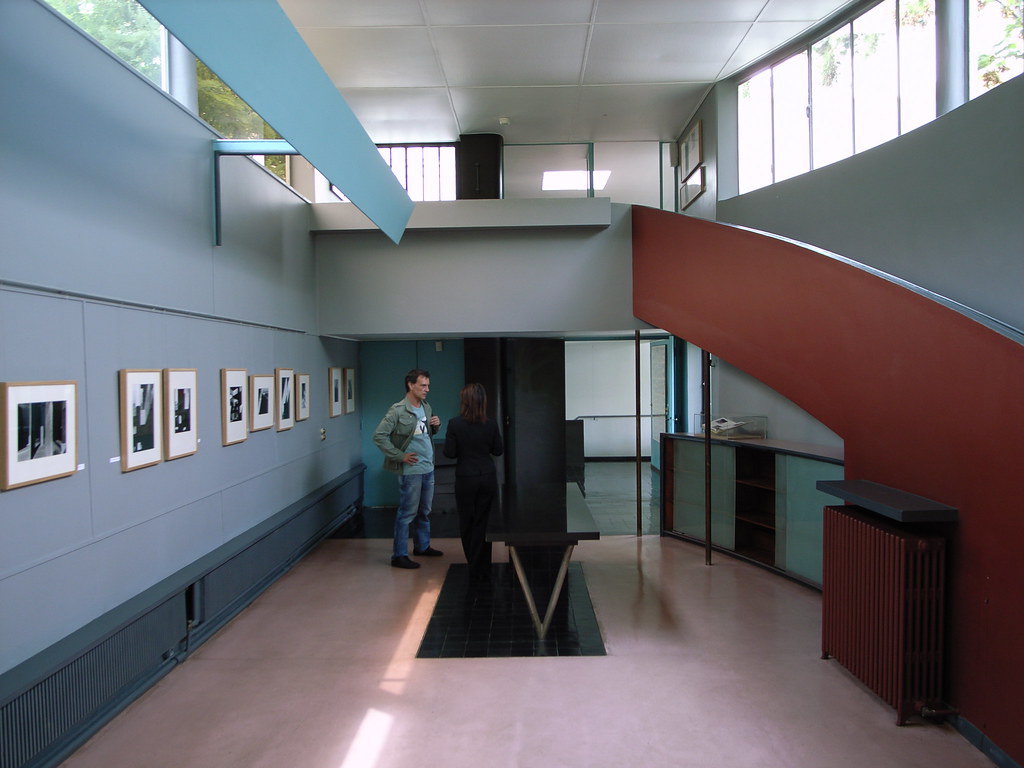
By Tatiana Zavyalova, This is the first time that Le Corbusier`s legacy is so widely represented in Russia. The collection features over 400 pieces created by outstanding French architect of the 20th century: paintings, drawings, wooden sculptures and tapestries, tables, armchairs, photographs and architectural models. This all helps to have a deeper insight into the life of Corbusier as a pioneer of modernism. The architect’s legacy includes buildings in twelve countries, including Russia. In Moscow he designed the Tsentrosoyuz Building on Myasnitskaya Street which currently is the home to the Russian State Committee for Statistics. Constructed in 1933, the building still looks impressive. Le Corbusier was very interested in working in the Soviet Union, he was inspired by the Soviet ideology of a new world order. Encouraged by the success of his first project in Moscow, Le Corbusier expected his project of the Palace of the Soviets to be implemented, too. But the jury was not impressed with the interior designs which they found ‘too liberal’. Professor at Sorbonne in Paris and at the New York Institute of Fine Arts, Jean-Louis Cohen: “Le Corbusier invented the so-called architectural promenade,a kind of a pathway which allowed people walk freely inside the building.” In the 1930s Le Corbusier suggested a new look on the Moscow urban policy but his ideas were not accepted. Today when the Russian capital is expanding the ideas again sound up-to-date. The deputy director of the Moscow Pushkin Museum of Fine Arts, Andrei Tolstoy: “In the 1930s the central Moscow looked differently. Now we can hardly breathe due to the jam packed traffic even in broad streets. Then practically all streets in Moscow were much narrower. Le Corbusier predicted the city expansion and offered his solution.” It took two years to prepare the exhibition at the Pushkin Museum. The company’s unchallenged director Irina Antonova insisted that the collection transported from France comprised as many pieces as possible, including Le Corbusier`s collection of sea shells. The Barcelona School of Architecture made over 10 architectural models byLe Corbusier especially for the exhibition in Moscow. By the way, the Tsentrosoyuz Building in Moscow designed by Le Corbusier is open to everyone willing to have a stroll inside this modernist building. Soon, a memorial dedicated to the great constructivist architect is going to be unveiled outside the Tsentrosoyuz. Source: Voice of RussiaImage: flickr.com
Read More........

Stress and anxiety related to family and work


Stress and anxiety related to family and work are of greatest concern to the scientific community Stress is an experience of psychological instability in response to environmental factors. This disease is a source of pathology and effects in the short, medium and long term. You can also damage the brain at the molecular level and from there spread its damage to the body. Anxiety and stress are disorders that involve a huge social burden in terms of disability and social costs. It is estimated that between 25 and 40 percent of the population has an episode of anxiety throughout his life. Anxiety disorders are the most prevalent psychiatric disorder among the general population. Anxiety and stress appear as two sides of same coin. "Anxiety is the psychological aspect of stress and this is the slope somatic, the biological side, anxiety," said José Luis Carrasco, section chief of the Psychiatry and Director of the Unit Personality Disorders Clinical Hospital San Carlos, Madrid, Spain. "Normally, anxiety and / or stress allow the individual to interact with their environment, but when they become pathological can be generated in the individual suffering, disability to cope with everyday life and an increased risk of suicide and fall into addiction . In this sense, stress and anxiety related to family and work are of greatest concern, "notes Carrasco. In the words of the expert, "anxiety disorders involve a huge social burden in terms of disability and social costs due to, among other factors that usually appear early (in adolescence) are very persistent, cause much suffering, require significant assistance partner -health cause frequent absences from work, etc. ". This issue is connected with one of the great concerns of our time: the crisis. José Luis Carrasco believes that "the syndrome of the crisis affecting all branches of medicine, since after several underlying symptoms of anxiety and distress, whose origin is uncertain about the future." The specialist distinguishes between "two types of conditions. On the one hand of the individual who has not lost his job and is in a more normal situation, whose main problems are dizziness, headaches, lack of sleep or appetite and pain. On the other hand, are directly affected by the crisis, either because they have lost their jobs or because they are in a critical situation. In this case there is a basis of hopelessness that leads to symptoms of depression, discouragement, tiredness or lack of interest "Source: Forum Human Health,
Read More........

Will they never learn? Thrill-seekers gored at Running Of The Bulls festival

One thrill-seeker was gored in a leg and four others injured as this year's Pamplona bull running festival kicked off today. Thousands of adrenaline-fueled runners raced ahead of six fighting bulls in the streets of the northern Spanish city as part of the San Fermin festival, officials said. Runners, in traditional white clothing and red kerchiefs around their necks, tripped over each other or fell in the mad daredevil annual rush along early morning dew-moistened slippery streets to the city's bull ring. One youth got the top of his shirt caught on a bull's horn, inches from his face, and was dragged several yards along the ground, but was seen to get up and run away. The gored runner, meanwhile, was taken to a local hospital and four others were treated for cuts and bruises, Red Cross spokesman Jose Aldaba said. The San Fermin running of the bulls festival became world famous with the publication of Ernest Hemingway's 1926 novel The Sun Also Rises.It is also known around the world for its wild all-night street parties which commemorate the city's patron saint. Drunken revellers filled the streets for the first, the Chupinazo, which marks the start at noon sharp of the main festival. Today, the massive bulls belonging to the Dolores Aguirre breeding ranch raced from a holding pen on the outskirts of town, where they spent the night before the run, along a 928-yard course to the ring in 2 minutes, 53 seconds, a relatively slow time. The last bull in the pack became disoriented and charged into the ring several seconds after the leaders.Once in the bullring it caused panic as it chased several runners around before being coaxed into the safety of
stables by cape waving attendants.'Running with the bulls was the best experience I've had, so much adrenaline,' said Mark Martinez, 27, a student from Los Angeles, California, who said he was in Spain on a 10-day vacation. 'I couldn't touch the horns, I might try that tomorrow,' he said, clearly oblivious to a basic rule of the centuries-old fiesta that runners should never touch the ornery animals that can weigh some 1,100lbs. 'Spain is different to anything I've experienced before,' said Michael Arraztoa, 25, from Bakersfield, California.He said his dad was from originally from Irurita, not far from Pamplona, and that he too was over on summer vacation. The 8am runs take place daily until July 14 with each charge broadcast on state television. And then, on the afternoon of each day, the same bulls face matadors in the ring. In the bullring the bulls caused panic as they chased several runners around before being coaxed into the safety of stables by cape waving attendantsTravelfwd+: Will they never learn? Thrill-seekers gored at Run
Read More........

Europe’s grand old theme parks


While most people assume amusement parks are an American invention, their roots are in fact grounded in the Old World. Many of Europe’s best-known theme parks are centuries old, evolving from upper class “pleasure gardens” -- public spaces that included recreational activities in the 18th and 19th century -- to established tenants of local culture. Even Walt Disney travelled to Europe in the 1950s, searching for inspiration for what would become the world-famous Disneyland, his first theme park project in California. The oldest operating theme park in the world,Bakken, opened in 1583, just outside Copenhagen in Bakken, Denmark. In the summer months, crowds would flock to the area to drink from a spring that promised health and vitality. This attracted performers, vendors and hawkers, and eventually a fair was born. Today, the park is filled with modern amusements as well as the Rutschebaren, a wooden friction rollercoaster built in 1932.While Bakken is still popular, better known is Copenhagen’s 169-year-oldTivoli Gardens. In addition to having gut-churning rides -- including one of the world’s oldest rollercoasters, the Bjergbanen, which opened in 1914 -- the park is also surprisingly highbrow, featuring a concert hall and a theatre. The key feature of Tivoli is its manicured gardens, which are illuminated at night by more than 120,000 lamps, swelling to more than two million lights during the winter Christmas markets. The fairytale-like design of the eight hectare gardens were said to have inspired Walt Disney when he designed Disneyland. In the 1950s, Disney also made repeated attempts to purchase the antique penny arcade collection at Barcelona’s Tibidabo amusement park, which opened in 1901. Called the Museum of Automations, the collection of 40 automated figurines collected between 1890 and 1950 are still in pristine working order and considered by some to be priceless. Some automatons are familiar, like the fortune-telling gypsy bearing an eerie resemblance to the one from the Tom Hanks film, Big; some are not very politically correct, like the automaton from the turn of the century that raises the French flag as a man is guillotined; and others in the ballroom-turned-museum are simply spectacular. With a push of a button, a curtain pulls back to reveal a stage filled with life-size dancers and musicians performing a jig. Tibidabo perches in the mountains overlooking Barcelona and is accessed by a rickety, 100-year-old funicular. While the park has added newer amusements, most visitors come for the vintage attractions, including a two-tier carousel built in 1921, the Talaia, which raises guests with a rickety metal arm to a height of 550m above sea level, and the iconic Avio ride, modelled on the first plane to fly between Barcelona and Madrid. Opened in 1928, the plane simply rotates in a circle powered only by its noisy propeller. Sitting inside the wood-panelled, red leather interior, the ride offers amazing views of the city and the sensation of being on an airplane -- an incredible thrill in the 1920s. By today’s standards, Avio is fairly tame, but the simplicity of it is charming. Some of Europe’s lesser-known parks include the Efteling in south Holland, Recently the Netherlands visitor and conventions bureau named Efteling the most popular day out in Holland, beating the country’s famousVan Gogh museum by three million visitors. Developed in the 1950s around the theme of European fairytales, it so well loved in the community that some staff continue to volunteer there after they retire. The key feature of the park is the 15-acre fairytale forest filled with electronically animated scenes from Grimm’s Fairy Tales, such as Little Red Riding Hood and Snow White, along with Hans Christian Anderson’s The Little Match Girl and The Little Mermaid. The Europeans were also responsible for the establishment of many modern-day amusement park staples. The carousel, for example, evolved from machines designed to help princes learn to ride ponies in the 17th and 18th Centuries. The world’s oldest Ferris wheel, the Riesenrad, is located in Vienna’sPrater Park. The 212ft structure has been synonymous with the city since it was erected for Emperor Franz Jospeh’s Golden Jubilee in 1897 on the old Imperial hunting grounds. The wooden, wagon-shaped gondolas rotate on a large steel frame offering panoramic views of the city and surrounding fairground; the interiors are covered in graffiti left by lovers and rebels over the decades. Prater Park’s amusements also include a toboggan slide from the 1950s and the Praterturm, the world’s highest carousel swing ride, twirling guests 117m in the air. But the use of live ponies in a merry-go-round-style carousel, a traditional ride from the beginning of the 20th Century, is one of the less charming historical features, drawing criticism from those who see using live animals as out-dated and cruel. However, what remains most significant about these parks is that they exist at all. Most of Europe’s amusement parks survived extreme circumstances: the Prater Ferris wheel was slated to be demolished but the city ran out of funds to level it; Tibidabo survived both the Spanish Civil War (1936 to 1939) and bankruptcy. The 20th Century was not kind to Europe. The Great Depression and two World Wars shook the continent to its core, and rapid industrialisation and urbanisation saw the need for space in cities at a premium. The survival of these antique, vintage and old-school parks is evidence of a society’s need to preserve a sense of fun and also the public’s nostalgia for a simpler age (BBC) Source; SAM Daily Times
Read More........

Spain: Watermelons "Fashion" take a turn with football

Fresh Plaza: This way and during the next days, AGF used a laser system in the peel of the watermelons to brand part of their production with the symbol of those two teams and send them, with their congratulations, to several players from both teams and to several personalities from the music and culture, know for their
Read More........

Age of ancient European rock paintings determined

Cave Paintings
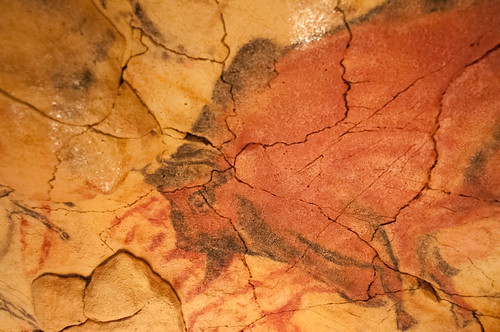
Archeologists have managed to estimate the exact age of rock paintings discovered in a cave in northern Spain, and have concluded that these drawings are the most ancient examples of rock painting in Europe, as reported by the Independent newspaper in London on Friday, June 15.The research showed that the paintings were made not 25,000 years ago, as it was initially estimated, but 41,000 years ago. Mineral formations that have appeared on the drawings over time have lead to miscalculations. Source: Voice of Russia. , Reference-Image: flickr.com
Read More........

Health Benefits of Saffron

Saffron,,,
By Dr Garima Sancheti Saffron (kesar) also known as Crocus sativus, is the most expensive spice of the world. It is derived from the female part of the flower, i.e, the dried stigmas. Saffron's flavor and aroma makes it a favorite spice for culinary uses; it is used for medicinal purposes as well. Saffron is cultivated in India, Iran,Greece and Spain. Saffron is a boon for the brain as well as the entire nervous system.Its consumption improves digestion, effective against cold and is good for skin. Saffron acts as a tonic, aphrodisiac and anodyne. It can be boiled with milk and administered; can be used in puddings and sweets. Consumption of this herb in any form is said to be beneficial in treating numbness of limbs as well. Adding a pinch of saffron to milk and having at bedtime is good for health. Source: Article
Read More........

The world's most romantic destinations

In this world couples want to have more and more romantic trips with their buddies but sometime they get confused to choose the best romantic destination. So here we have brought some of world’s best romantic destinations for the romantic couples. Schönbrunn Palace, Vienna , Austria it comes on the top among the topper list of romantic destinations. It is best for lovers and this palace has inspired poets, writers and painters. It has 1,441-room imperial building and grounds that drag back to the 16th century. Paris, France this is the most romantic location for love birds it is known as Luxembourg Gardens. It has a quality to push the humans near it. Agra, India, it is a monument in white marble and it is popularly known as a place for romantic couple because it was made in the memory of a beautiful queen. It is beautifully designed and a lot of tourists and people from overseas visit here and enjoy. Alhambra, Granada, Spain, this place was constructed in 14th century by a Muslim dynasty. It was rediscovered in 19th century now it is restored. London, Great Britain, looks great when you go up and say your partner that 3 magic words, amazing experience. It has ignited a lot of couple’s romance. San Francisco, California San Francisco what we should say about it is dearth of heart stopping place. Here anyone can take a beautiful experience its best part is the art museum. Vancouver, British Columbia, Canada it is salubrious for everyone as it’s water waves are charming when anyone goes at Vancouver, definitely ignites the romance. Verona, Italy it is a place where many of love stories converted into a heavenly life. It is best for smitten lovers and it attracts the many of couples form whole world. Bourbon Street, New Orleans, USA it is a historical street and full of dynamism. It has complete store of strip bars, restaurants as well as gay nightclubs. Australia – The Whitsundays, it is a group of island in Australia. It is a largest Whitsundays island and a haunt for honeymooners. Source: Medley News , Image: flickr.com, 
Read More........