 Art is anything that people wouldn’t look at and say ‘oh, how pseudo’. To me, it is simplicity and depth-Pranati Khanna, Media artist Media artist Pranati Khanna talks about her inspiration, work and her future plans in an interview to Sunday Hans. What do you think art is all about? Art, in this day and age, is anything that people wouldn’t look at and say ‘oh, how pseudo’. To me, it is simplicity and depth. At the same time, it helps in expressing one’s thoughts and emotions in ways that everyone can relate to. It’s expression in colour as well. What inspired you to be a media artist? I grew up with a computer. I took to animation and was exposed to the world of creation on a medium that wasn’t paper. So, while I was doing 3D work, I started to explore drawings on my digital tablet (WACOM) more than ever. I have been exposed to the world of rock music, bands and album art as well. Many artists and photographers abroad have influenced me. Please tell us something about your unique style of graphics and about your discovery? My style of art is something that’s new to Hyderabad, but a lot of it is done abroad! I have been exposed to numerous album covers of rock and metal bands. The artists who come up with these covers work largely in digital/new media format, merging photographs, drawings and other elements to make graphics. I followed and studied many of such artists’ works and thus began my discovery of what I feel is an incredibly expressive and versatile medium of art. I kept working at it and eventually broke away from trying to ape other people’s styles. I developed my own style which I'm very proud of! What is the significance of the title ‘Metamophorescence’ that you have coined? This title is basically a portmanteau -- the merging of the words “metamorphosis” and “phosphorescence”. My mum helped me coin the word. She’s an incredibly talented author! I wanted a unique word that would convey the theme of my exhibits: turning the negatives in life into positives. So, we settled on this one. It states very simply that I took all my lessons in life, absorbed them, and now I’m radiating out (or illustrating) the outcome of these experiences on my canvases. How did you get to this form of art? I got to this medium of art after mastering the basics of traditional mediums like pastels and water colours. Once I started my 3D animation course, I learned about digital mediums and that’s how I began my journey of experimentation. Eventually because of my exposure to the music culture, my influences lay in album covers, websites, hours of research etc.You say your exhibition is all about turning the negatives in our lives into positives. What does this mean? What it means is: I grew up. I have learnt that everything we believe in is a lie; and everything we’re told is mostly false. We need to pop this bubble of idiocy most of us live in and realise where our true peace really lies in our lives. How would you compare life in Dubai, India and the US? As far as art goes, each is so unique! So, I can’t really say. Has being artist Krishna Khanna’s grand niece helped you in any way? It’s been nice to be his grandniece only in the sense that I have learnt a lot from his art and also from the stories about his life.Why have you not taken to traditional form of painting? It just happened. I’m not sure why. Besides, I wanted to be among those artists who break away from tradition a little bit and try to encourage progression. I do, after all, belong to a new generation and I want us to have something unique when it comes to art. Askari Jaffer, Source: The Hans India, Image: flickr.com
Art with digital touch
Art is anything that people wouldn’t look at and say ‘oh, how pseudo’. To me, it is simplicity and depth-Pranati Khanna, Media artist Media artist Pranati Khanna talks about her inspiration, work and her future plans in an interview to Sunday Hans. What do you think art is all about? Art, in this day and age, is anything that people wouldn’t look at and say ‘oh, how pseudo’. To me, it is simplicity and depth. At the same time, it helps in expressing one’s thoughts and emotions in ways that everyone can relate to. It’s expression in colour as well. What inspired you to be a media artist? I grew up with a computer. I took to animation and was exposed to the world of creation on a medium that wasn’t paper. So, while I was doing 3D work, I started to explore drawings on my digital tablet (WACOM) more than ever. I have been exposed to the world of rock music, bands and album art as well. Many artists and photographers abroad have influenced me. Please tell us something about your unique style of graphics and about your discovery? My style of art is something that’s new to Hyderabad, but a lot of it is done abroad! I have been exposed to numerous album covers of rock and metal bands. The artists who come up with these covers work largely in digital/new media format, merging photographs, drawings and other elements to make graphics. I followed and studied many of such artists’ works and thus began my discovery of what I feel is an incredibly expressive and versatile medium of art. I kept working at it and eventually broke away from trying to ape other people’s styles. I developed my own style which I'm very proud of! What is the significance of the title ‘Metamophorescence’ that you have coined? This title is basically a portmanteau -- the merging of the words “metamorphosis” and “phosphorescence”. My mum helped me coin the word. She’s an incredibly talented author! I wanted a unique word that would convey the theme of my exhibits: turning the negatives in life into positives. So, we settled on this one. It states very simply that I took all my lessons in life, absorbed them, and now I’m radiating out (or illustrating) the outcome of these experiences on my canvases. How did you get to this form of art? I got to this medium of art after mastering the basics of traditional mediums like pastels and water colours. Once I started my 3D animation course, I learned about digital mediums and that’s how I began my journey of experimentation. Eventually because of my exposure to the music culture, my influences lay in album covers, websites, hours of research etc.You say your exhibition is all about turning the negatives in our lives into positives. What does this mean? What it means is: I grew up. I have learnt that everything we believe in is a lie; and everything we’re told is mostly false. We need to pop this bubble of idiocy most of us live in and realise where our true peace really lies in our lives. How would you compare life in Dubai, India and the US? As far as art goes, each is so unique! So, I can’t really say. Has being artist Krishna Khanna’s grand niece helped you in any way? It’s been nice to be his grandniece only in the sense that I have learnt a lot from his art and also from the stories about his life.Why have you not taken to traditional form of painting? It just happened. I’m not sure why. Besides, I wanted to be among those artists who break away from tradition a little bit and try to encourage progression. I do, after all, belong to a new generation and I want us to have something unique when it comes to art. Askari Jaffer, Source: The Hans India, Image: flickr.com
Getting to Know Mister Denmark 2014, Nicklas Pedersen

NICKLAS PEDERSEN, 23, was selected by the Miss & Mister of Denmark Organization as Denmark's representative to Mr. World 2014 competition scheduled to be held at The Riviera International Conference Centre, Torbay, Devon, England on June 15. Critical Beauty is grateful to Nicklas and to his national director, Lisa Lents, for allowing this e-mail interview. How does it feel to represent Denmark in Mr. World 2014?: I would lie if I told you that it doesn’t feel absolutely amazing, because it definitely does! I’m extremely honoured and very proud to represent my country in a massive beauty pageant like this. It doesn’t get much bigger than this!! I’m so excited! You have been living in Australia for two years and you speak with an Australian accent? Do you feel more Aussie than Danish, or do you feel equally Aussie and Danish at the same time? It’s a bit funny because I actually don’t speak with an Australian accent. I have got family from New York and they used to spend summer holidays in Denmark when I was a kid. So while they were staying here, they taught me English and from there I adapted an American accent. But even now it’s not even American either. During my time in Australia I have become friends with people from all over the world and now it’s all just a big mixture of accents from around the world. It’s always a big mystery when people try to pick where I am from. I definitely feel Danish. I grew up in Denmark with Danish values and Danish traditions so I would say I’m still as Danish as it gets. Even though I don’t live there at the moment, Denmark will always be my number one and that’s where I want to settle down one day. What is the best thing you like about living in Australia? And what is the best thing about living in Denmark? Oh, that’s a hard one. But I reckon that the best thing about Australia would have to be the weather. I have always loved summer and being in the sun and just being able to be outdoors. Best thing about Denmark? It has to be the pastries. Haha! :) The best thing has to be that we are the happiest people in the world. We have a lot of benefits. Education is completely free, so is the medical system and the fact that if you lose your job, the government will support you with a decent income for up to two years if you are still unemployed. And then of course our cycling culture. We love our bikes and would rather jump on the bike than use our car. What makes you laugh? What makes you cry? I absolutely love to walk down memory lane and talk about all the silly and unforgettable things I have done with family and friends. Even

though I am still young, I have traveled quite a fair bit and experienced some amazing things I wouldn’t change for a thing. You only live once, so it’s about making the best of it. There is nothing better than catching up with people and reliving the moments that made you laugh and made you the person, you are today. That always makes me smile and truly brightens my day. Unfortunately life is full of ups and downs. Something that has always had a great impact on me, is when you hear of people losing a friend or a relative. Nothing hurts more than when people pass away, often too early and the thought of never seeing them again is truly devastating. When you were a child, what did you want to be when you grew up? I remember when I was a kid I always used to watch movies and admire police officers for being brave and for their heroic actions. So I thought being a policeman and saving the world would be the coolest thing ever. When I got older and realized it wasn’t all about playing cops and robbers, I decided to go down another path. What are your strengths and weaknesses? I consider myself quite the optimist. I am always happy and look at the bright side of life. I am a winner and won’t give up until I have reached my goal. And combined I have managed to come a long way. I believe that if you want something bad enough, you can always find a way to succeed. When it comes to weaknesses, I would have to admit that I can be very lazy with some things. I attend to postpone things that don't interest me or leave things until the last minute. I am possibly the most indecisive person in the world. I could walk into Blockbuster to rent a movie but come out 

empty handed because there would be too many good ones to choose. If you were to come back as an animal in the next life, what would you be and why? If I had to choose one I would probably say as a dolphin. It is a beautiful animal that likes to play and when interacting with humans, they come across very friendly. I love to swim and have always loved the ocean. True or False: People who are attractive tend to be more successful. I wouldn’t say it is true but not false either. In today’s world being attractive can make things easier for some people. With that being said, if you don’t have the personality and brains to back you up, you are not better/more successful than the not-so-attractive person. There are obviously some industries, which are purely based on looks like modelling, but most of the industries in today’s world rely on skills and talent. Many times we hear older generations comment on how younger generations lack motivation, passion, drive or respect. Do you think there is any truth to this or is it all nostalgia? That is so true. I think we have all heard our grand parents telling stories from when they were young and acknowledges that things were very different back then. My mom works at a school and often talks about how disrespectful kids are these days. Especially the language has changed with smaller kids using the F word daily. If that happened 40 years ago, you would

have been sent home, but these days people barely even notice. Describe three things that you would never do to someone you love. One thing is for sure. I would never commit infidelity. It’s unacceptable and shouldn’t occur at all. I would never let money become a conflict or issue with someone I love. Honesty is very important. I am a terrible liar and people can usually see when I am trying to lie. I can’t hold a straight face and usually start laughing. If you could change one thing about yourself, what would it be and why? I would say that I wish I didn’t bite my nails. It’s the worst habit and it doesn’t look nice. I have actually decided that after my crowning as Mr. World Denmark 2014, I will stop! So hopefully I will be able to quit completely. If Playgirl offered you a million dollars to pose totally nude, would you do it? No, I wouldn’t pose totally nude. I can imagine how hard it would be to turn down a million dollars if you got the offer, but money isn’t everything for me, so posing nude would be taking it too far for my personal opinion. 

Would you date an individual that you did not think was attractive? I think I would. I have met women before whom I didn’t find physically attractive, but when I got to know them and witnessed how amazing their personalities were and suddenly everything about them became beautiful. If you could change one thing about your past, what would it be? I probably wanted to change the fact that I was quite stubborn when I was a kid. I was very difficult and never did as I was told. I didn’t want to go to bed at night and didn’t want to wear any other clothes than gym wear. I was very picky about food and didn’t want to eat anything. I literally lived on Nutella on toast. When thinking back I must have been a nightmare. How would you describe your ideal vacation? I love to travel and have a lot of things and places to see on my bucket list. From trekking in South America to living it up in Vegas. But the most ideal one would be with friends and family in an amazing luxury resort in the Maldives. I have always wanted to lie in a hammock on the beach between two palms, just like you see in the movies. What are your plans for the future? I would like to remain in Australia if possible. I enjoy living here and I have built a life here now. But with that being said you never know what’s going to happen. I am extremely excited about representing Denmark at Mr.World 2014 and to see if that could open any doors for me. I don’t expect anything and I’m just going to do my best and see how it goes. Otherwise I still dream about travelling in South America and the U.S. How are you preparing yourself for Mr. World 2014? After being crowned as Mr. World Denmark 2014, I have started a healthy diet and serious training. I have been looking at the previous Mr.World competitions and discovered that

fitness and physical obstacles are a big part of it. I am doing my best to obtain the best shape so I can bring Denmark to the top. Why do you want to be Mr. World 2014? To win Mr. World 2014 would be a massive achievement. Not just for me but for Denmark as well. Male beauty pageants are not common in Denmark so winning a title like this on the world stage and being able to put Denmark on the world map would mean the world to me! I love to travel and experience different cultures. So being able to do that, as Mr. World 2014 along with doing great things around the world would be the

greatest experience. To volunteer, help people and make a difference in the world is something that would make any human being proud. Nicklas's Favorites: Singer/Musician – Justin Timberlake, Actor – Leonardo Dicarprio, Actress – Scarlett Johansson, Color – Blue, Fashion Designer – Ralph Lauren, Cologne – Chanel, Sport - Soccer, Flower – Red rose, Writer – Hans Christian Andersen, Book – “The Brothers Lionheart” by Astrid Lindgren, Reality Show – “Geordie Shore”, Movie – “Troy”, Proverb – The world is your oyster PHOTO CREDITS: MISS & MISTER DENMARK 

ORGANIZATION You're very welcome, Nicklas! Good luck at Mr. World 2014! Source: Critical Beauty
Russian fairy-tale at Viennese Ball

The Russian ball in Vienna appointed on the 7th of February promises a fairy-tale to its guests. This festive night at the formerly imperial and now presidential residence of Hofburg is, on the one hand, part of the traditional Viennese ball season and, on the other, a beautiful introduction to an exchange of cultural seasons planned between Russia and Austria for the next three years.
By Karina Ivashko: This will be the seventh Russian ball in the Austrian capital. It always attracts attention, and not only of Austrians interested in Russian history and culture. This time, for example, guests are expected to arrive from 13 countries, the hostess of the ball Nathalie Holzmueller said in her interview with The Voice of Russia. “Just imagine the imperial palace which is called one of the most elegant palaces in Europe. Imagine the room with chandeliers given by Russian Emperor Alexander I to the Austrian monarchy. It was at the time of the Congress of Vienna 1814-1815, which is known to have determined the fate of Europe. Alexander I lived in Vienna for a long time and took part in that congress which came down in history as a ‘dancing congress’. Three is a suite of rooms in Hofburg that bears Emperor Alexander’s name.” The figure of Johann Strauss Jr., the Waltz King, became the symbol of cultural relations between Russia and Austria in the 19th century. He spent 11 summer seasons in Russia performing with his orchestra and also Russian musicians in the palaces of St. Petersburg and its environs, such as the Czar’s Village, Pavlovsk and Peterhof. At present residents of St. Petersburg hold and international festival called The Great Waltz in memory of those seasons. At the turn of the 21st century Russian musician and conductor Vladimir Fedoseyev had an impact on the Viennese musical environment. He was the main conductor of the Vienna Symphony Orchestra for 8 years. The Russian ball in Vienna did not emerge out of the blue either but was evoked by impressions of today’s cultural life in Russia. Nathalie Holzmueller, a native of Russia and a graduate of St. Petersburg Conservatory, says: “Several times I was a guest at the Mariinsky Theatre balls called White Nights Balls in the Catherine Palace in the Czar’s Village. I was stupefied with the splendour of the throne room, smart and elegant guests, wonderful ornaments, delightful tables, flowers and the Mariinsky Theatre orchestra with Maestro Gergiev and the best soloists. The fireworks and ballet on the ponds were mind-boggling. As a child I always dreamed of being invited to a real ball, so I developed a passionate desire to organize something similar and persuaded Valery Gergiev to throw a ball in Vienna, the European ball capital.” Maestro Gergiev liked the idea. The first three Russian balls were under the auspices of the Mariinsky Theatre which showed its young talents in Vienna. With time the circle of performers grew wider and balls started to be dedicated to a certain theme. This year’s theme is The Russian Fairy-Tale. It is a fairy-tale and also a dream come true. The hostess will play the part of a fairy and wonders of performing art will be demonstrated by the Bolshoi Theatre soprano Dinara Alieva, The Indian Summer vocal group from Moscow and The Merry-Go-Round children’s dancing workshop from Vienna. The sponsors’ aim is not only to make people happy but also to show the Russia which they know and love, without stereotypes and primitive iconic images. Austrian journalists call the Russian Ball a symbol of Russian culture abroad. Its hostess Nathalie Holzmueller assures that most Austrians are delighted with Russia and interested in it. Source: Voice of RussiaSingapore’s healthy diet gets boost as residents say will pay more
 SINGAPORE: Singapore residents love to dine out. On any given evening, restaurants across the city are packed with eaters searching for the next tasty meal. For Tanya Kim, a Singapore citizen, she wants healthier food on the menu, and isn’t afraid of paying extra for it. “I believe that searching for those restaurants and cafes that have more healthy options is better and we should be giving them business no matter what, even if it is a few extra dollars,” she told that She isn't alone in Singapore, as a recent study showed that a growing number of Singaporeans are also wanting healthy food options, and are willing to pay a little extra for the dishes. A recent survey conducted by Unilever Food Solutions said that more than half of the 200 participants interviewed for the survey said that they “actively look for healthier alternatives when they are dining out.” More than 80 percent also indicated that they would order the healthier alternative if the option was presented to them, and 63 percent said that they would be willing to pay slightly more for the healthier menu option. It was part of Unilever’s third survey as part of its World Menu Report conducted across 10 countries on eating habits and dining preferences. The report supported the notion already believed in Singapore that the majority of diners “will seek the healthier option on a menu, even if they don’t end up choosing it.” Not surprising, nearly two-thirds of all respondents hoped that restaurants they regularly head to would make small changes to their favorite dishes to make them healthier instead of changing their choice at the restaurant.“More than half also said that they believe the healthier option tends to be more expensive, while 45 percent said that healthy food isn’t filling,” the report said. “A worrying four out of 10 said that the healthier option usually sounds less appetizing – which shows that one of the main barriers to diners choosing a healthy option is the unappealing way it is described,” the report added. But with the rise in the global vegan and vegetarian community, there are an increasing number of options for eaters that are less expensive and healthier than their meat counterparts. For Tanya, it is all about doing a bit of research before heading out. “I have found some really great restaurants in my city that are healthy and just as good, or better, than the places I used to go, so this is just laziness on people’s part.”Source: Bikyamasr, Image: flickr.com
Top reasons why people should walk
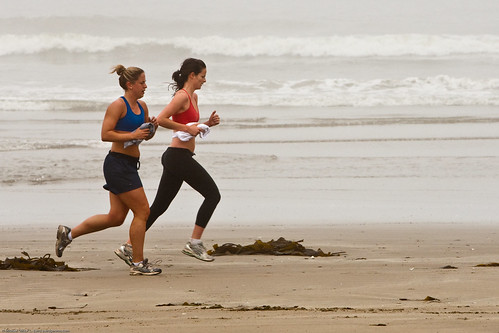
Indian people are gearing up for the festive seasons with zeal and enthusiasm. The festive season, however, bring in lots of issues and concerns particularly, when one steps out from home. Primary among them are traffic congestion, pollution, rising fuel prices, which in-turn increase stress and create health problems. Experts are of the opinion that walking is simplest way and most economical method to reduce the problems and enjoy the festive season to the fullest: Here are the reasons: Contribute to Environment: Stance: When you walk you are also contributing to the planet’s health. Simple measures like walking the smaller distances instead of taking your car can also do wonders for the environment. Just imagine a place like Delhi with over million vehicles plying on the road very day. What could be the impact if we take a pledge to walk smaller distance wherever possible and not use vehicles? Proof points: * If we all swap one car journey a week to walking, traffic levels would reduce by at least 10 per cent * One person switching five journeys of under 2 km a week from car travel to walking would reduce their carbon footprint by 86 kg of CO2 a year. The average car produces three tonnes of CO2 a year. Reduce stress and be Healthy: Stance: Walking is a magic pill, a panacea for reducing the risk so many lifestyle diseases. And the best part is that this pill is free!! It needs just a bit of your time. Proof points: * What if you were to find a magic pill that can reduce your risk of getting cancer by 20%, heart disease by 30% and diabetes by as much as 50%? * In the rat race of life, we tend to take important things like health for granted. We hate the deadlines and the pressures but cannot avoid it. We are on the move constantly and the stress finally gets to us in the form of the various chronic lifestyle diseases we are now struggling with. * Most Indians also work very long hours in high pressure jobs, generally up to 6 days a week, leaving no time for regular leisure time physical activity. Time consuming long distance commutes to work make it even more difficult to squeeze in a gym workout into their schedules. This makes walking a significant source of the minimum exercise needed by human bodies * Urbanisation has cost us dearly too. In India, cities initially built for walking and cycling have become overrun by cars, at the expense of walkers. The greater use of cars has resulted in a decrease of walking and corresponded with rising obesity levels around the world. * According to data available till December 2011, nearly 110 million people are believed to be suffering from serious illnesses like diabetes, heart diseases and cancer in India collectively. This figure is estimated to double in 15-20 years. * According to Dr Rajeev Virmani, Head of relationship, Max Bupa, 50% of those with symptoms of diabetes are not even aware that they have a serious health problem. In the case of people with coronary (heart) problems, it is even more startling that a majority of them are either not aware of it or simply continue to live in denial of the severity of their conditions. So what can we do to make our lives better? - In a study of women age 50 to 75, those who took one-hour morning walks were more likely to relieve insomnia than women who didn’t walk – Just 15 minutes more a day of brisk walking can have significant health benefits, even adding up to three years to our life expectancy. – A new study recently published online in the 'Current Archives of Internal Medicine' combined with a meta-analysis of several previous studies, has shown that moderate exercise can reduce the occurrence of serious illnesses by as much as 38 - 40%. According to the World Health Organization, a 150 minutes of exercise every week is highly recommended. To achieve this, it doesn’t necessarily mean a gruelling session at the gym or running a marathon – a simple change, like walking in either slow or brisk pace (individually or in group) will do. Walk for your loved one’s: Stance: Did you know that research data show 79 % of Indians feel that their attitude towards health stems from early influence of parental behavior. So it is on you to inculcate good healthy lifestyles in your children, so why not instill in them the benefits of walk by setting examples. Moreover while walking a distance with your loved ones bring you closer to the them, since you are able to interact more while you walk. This small investment of time can make your relationship much more smoother, Proof points: * A person's attitude towards healthy living stems from childhood days. It is influenced by parental behaviour. According to Bupa’s Survey, it has been found that 67% Indian respondents confirmed that they have been actively encouraged by their parents to exercise – in fact 30% agreed that their parents exercised regularly! * Walking is a good way to spend time with friends or family members and enjoy nature. Parking Woes: With at least 1,200 new vehicles being added to the city’s vehicular population every day, parking has become a huge headache. Encouraging people to walk while they go for a shopping can reduce this problem drastically. Keeping yourself healthy: Stance: Usually people eat more than they usually do during festivals especially, during Diwali. There are sweets of different kinds to a heavy menu of non-vegetarian food. Wherever you go, sweets are served. Not everyone makes sweets at home and people might offer what has been bought in stores. There is no guarantee what kind of oil, ghee or milk have been used, and whether the hygiene standards have been followed in mass production. While you might be tempted to taste some of these mouth-watering dishes, you might be able to reduce the impact on your health by walking the distance. Proof Points: * Diabetic clinics are flooded with people who have awry blood sugar levels on the morning after a festival. A doctor at MAX Healthcare, said, “Healthy sweet options, sugar-free, are now available... If you must eat, eat sugar-free sweets,” he adds. It is not wise for diabetics to miss medication. * A healthy trend that he has noticed this year is that boxes of nuts and dry fruits are increasingly taking the place of sweet boxes. * “Though high in calories, most nuts (almonds, walnuts, even groundnuts) are high in mono-unsaturated fatty acids that do not increase bad cholesterol,” he said. He also suggests that fruit baskets be given as gifts during the festive season. Source: Indian Express, Image: flickr.com
Lonesome in Delhi? Floh floats hope
ALL EARS AND EYES - Left: Floh members at the Vintage car event in Bangalore; Top Right: Siddharth Mangharam at an event; Bottom Right: A Floh member at the vintage car ralley in Bangalore
Have all your friends been taken and are you wondering if you'll ever find someone to grow old with? Shove despair out of that office window. Come October 14 and Delhi will discover a unique way of finding a soul mate. But Floh has been around since over a year in India. We were quite intrigued by the concept of Floh so we’d caught up with Siddharth Mangharam, CEO, Floh in March.Read full interview here. A quick insight - Floh is a platform for singles looking to meet like minded people in a safe environment. More importantly it's an "invitation only network" and not a dating or matrimonial site. Launched in May 2011, Siddharth along with his wife Simran launched Floh in Bangalore. Now the plan is to go national, slowly. And the team decided to stop at Delhi first. The October 14 event is sold out. What's in store for the group of 20-25 people who are zeroed in on to meet up this Sunday? Floh's blog declares: "We have a totally unique line up of experiences for Delhi starting with a spectacular Vintage and Classic Car event exclusively for Floh members, right in front of the Qutab Minar. This has been organised in arrangement with the Heritage Motoring Society of India and the line-up features Rolls Royce, Jaguar, Cadillac, Buick and many more classic cars in addition to a collection of pre-WW II motorcycles. Members will not only get to see these beauties but will be offered a once-in-a-lifetime chance to actually ride in them!" The good news is that more events will follow in the coming weeks in Delhi. I met the helmsman again before their startup jives into the second phase. It had to be asked, why Delhi? "We are most excited about Delhi, even more than Mumbai because the problem is more acute in Delhi. Bangalore is laid back and Mumbai is more chilled out but if you don't have a clique in Delhi one doesn't know how to go about it." I ask Siddharth how Floh will help Delhiites find likeminded people. He tells me the three ways in which his idea can help people who are single but don't quite know how to go about exploring options. He avers that Floh saves times (no sifting through data), is more real (you meet people in person) and he says that his research shows that parents are loving the concept. So can anyone and everyone in Delhi play? Not quite and Siddharth is unequivocally insistent about this. "Education background is very important, we are speaking to a very specific educated urban audience. Most of our folks will have Masters degree and they'll be well-travelled." I insinuate if Floh is elitist but he dispels the cloud. "That's just a business call, it's a market that we understand well and it's a need that's not being served. It's not as if we don't acknowledge other segments but we're not going there. Frankly we don't have the wherewithal to handle that and there are other players who are addressing that. If you look at a matrimonial site, they would go to a tier 3 city and cater to everyone." Still keen to undersatnd if lack of class or money can diminish right of admission for a Delhiite. "It isn't elitist in the sense that one needs to be super wealthy but I would say that it is selective based on your taste and exposure and where your mind is oriented towards. Some of our events are even Rs. 500 - for example a Heritage Walk event- would include a full breakfast." How do group dynamics work? Siddharth said that contrary to our presumption men are lone rangers joining the group alone and women on the other hand come in groups, finding strength in number. Since last I met him, out of curiosity I ask him, if Floh is now a money-making venture. He answers in the affirmative. It's now a team of 8 in all with 3 founders. Is there a prototype anywhere for Floh? He says there isn't any anology in the West for what they are doing at Floh. But is Delhi, is India truly ready for the concept? Take the poll and tell us. Source: Hindustan Times
Have all your friends been taken and are you wondering if you'll ever find someone to grow old with? Shove despair out of that office window. Come October 14 and Delhi will discover a unique way of finding a soul mate. But Floh has been around since over a year in India. We were quite intrigued by the concept of Floh so we’d caught up with Siddharth Mangharam, CEO, Floh in March.Read full interview here. A quick insight - Floh is a platform for singles looking to meet like minded people in a safe environment. More importantly it's an "invitation only network" and not a dating or matrimonial site. Launched in May 2011, Siddharth along with his wife Simran launched Floh in Bangalore. Now the plan is to go national, slowly. And the team decided to stop at Delhi first. The October 14 event is sold out. What's in store for the group of 20-25 people who are zeroed in on to meet up this Sunday? Floh's blog declares: "We have a totally unique line up of experiences for Delhi starting with a spectacular Vintage and Classic Car event exclusively for Floh members, right in front of the Qutab Minar. This has been organised in arrangement with the Heritage Motoring Society of India and the line-up features Rolls Royce, Jaguar, Cadillac, Buick and many more classic cars in addition to a collection of pre-WW II motorcycles. Members will not only get to see these beauties but will be offered a once-in-a-lifetime chance to actually ride in them!" The good news is that more events will follow in the coming weeks in Delhi. I met the helmsman again before their startup jives into the second phase. It had to be asked, why Delhi? "We are most excited about Delhi, even more than Mumbai because the problem is more acute in Delhi. Bangalore is laid back and Mumbai is more chilled out but if you don't have a clique in Delhi one doesn't know how to go about it." I ask Siddharth how Floh will help Delhiites find likeminded people. He tells me the three ways in which his idea can help people who are single but don't quite know how to go about exploring options. He avers that Floh saves times (no sifting through data), is more real (you meet people in person) and he says that his research shows that parents are loving the concept. So can anyone and everyone in Delhi play? Not quite and Siddharth is unequivocally insistent about this. "Education background is very important, we are speaking to a very specific educated urban audience. Most of our folks will have Masters degree and they'll be well-travelled." I insinuate if Floh is elitist but he dispels the cloud. "That's just a business call, it's a market that we understand well and it's a need that's not being served. It's not as if we don't acknowledge other segments but we're not going there. Frankly we don't have the wherewithal to handle that and there are other players who are addressing that. If you look at a matrimonial site, they would go to a tier 3 city and cater to everyone." Still keen to undersatnd if lack of class or money can diminish right of admission for a Delhiite. "It isn't elitist in the sense that one needs to be super wealthy but I would say that it is selective based on your taste and exposure and where your mind is oriented towards. Some of our events are even Rs. 500 - for example a Heritage Walk event- would include a full breakfast." How do group dynamics work? Siddharth said that contrary to our presumption men are lone rangers joining the group alone and women on the other hand come in groups, finding strength in number. Since last I met him, out of curiosity I ask him, if Floh is now a money-making venture. He answers in the affirmative. It's now a team of 8 in all with 3 founders. Is there a prototype anywhere for Floh? He says there isn't any anology in the West for what they are doing at Floh. But is Delhi, is India truly ready for the concept? Take the poll and tell us. Source: Hindustan Times
Dangerous and healthy chocolate

Swedish scientists have proved that a chocolate diet can prevent a stroke. However, their British colleagues immediately proved false the results of several months' worth of studies. Chocolate can be good for the heart, but also simultaneously present a danger to human health, according to experts interviewed by the Voice of Russia.
By Alexandra Zakharova, Over the course of ten years the Swedish scientists fed chocolate to a control group of men. It turned out that taking flavonoids contained in cocoa beans on a regular basis strengthens the blood vessels, thus reducing the risk of a stroke, claim the scientists. However, it is too early to announce that chocolate brings absolute good. Alexander Sharandak, a Russian cardiologist, is convinced that even if the sweets do decrease the risk of heart disease, it is due to the fact that it improves a person’s mood. Happy people get sick less often: “Eating chocolate does improve one's mood to a certain degree. The fact that depressed people are prone to heart disease has been long proved. Some sweets, chocolate included, are good for you to some extent, but only if not taken in large quantities. It is the dark chocolate that contains real caffeine and not the milk chocolate that has nothing but carbohydrates. By fighting depression and improving one's mood, chocolate helps to prevent heart disease. Often headaches are related to low blood sugar. People complain about headaches and weakness, but if we raise the level of blood sugar with the help of chocolate, not only would their mood improve, but it would also raise their blood sugar and increase efficiency.” Scientists from Australia and Denmark also conducted a number of experiments and found that dark chocolate curbed the desire to eat salty, spicy or other types of sweets - in other words all the potentially dangerous products. The Australian scientists state that chocolate helps control weight. But Julia Bastrigina, a dietitian, warns that humans cannot only eat cacao beans: “In this case a person could disturb the functioning of the bile duct, the pancreas and other organs. One cannot live on chocolate. It is not a food that helps prevent any diseases and is not so healthy to eat it on a daily basis instead of normal food.” Cacao beans also stimulate the production of endorphins in the body. These hormones of happiness not only improve one's mood, but also cause addiction. Thus, one must be cautious with chocolate, psychologist Sergey Klyuchnikov believes: “It does lead to the production of endorphins in our body as well as to positive emotions. But if a person gets addicted to this or that food, even the sweetest food, he gets used to it. And then the positive effect disappears. The person has to start eating more. Some people can even become sweet addicts. They think they simply experience a pleasant taste in their mouth, when in fact their blood sugar goes up. It brings on the risk of diabetes. But chocolate itself in small quantities is a healthy.” Dark chocolate is healthy. In milk chocolate there is significantly less cacao and the good antioxidants. In white chocolate there are only carbohydrates. Nevertheless, the sweeter the treat, the more endorphins it produces. That is why the sales volumes of cacao beans based treats are constantly growing. Source: Voice of Russia
Your body talks
Body can express your thoughts and ideas to the person you are communicating without uttering a word. Here are a few signs and languages to help your body convey right messages Did you know that your body has a language? It is a very important medium of communication which constitutes to 60 per cent of what your communicating. Also known as ‘non-verbal communication’, in this type, communication happens via body postures, gestures, eye movement, facial expression, movement of hands, shrugging the shoulders, standing or sitting postures, etc. If you wish to communicate well, then it makes sense to understand how you should use your body to say what you mean. Behavioural psychologists have conducted considerable research programmes on non-verbal communication and have studied human behavioural clues that could be useful for developing a better rapport with the person one is communicating with. Unintentional human gestures such as making an eye-rub, a chin-rest, a lip-touch, a nose-itch, a head-scratch, an ear-scratch, crossing arms, and a finger-lock have been found conveying some useful information in a specific context. Experts say first impression is the best impression. So, let us practice how to give the best first impression to others by altering/improving our body language. While our parents taught us to use physical expressions like waving the hands, pointing fingers, thumbs up, touching, shaking hands, folding hands, etc, it is necessary to practice accepted international gestures also. This will help you communicate with everyone more effectively. For instance, in India most people nod their head horizontally in a slow motion to say ‘Yes’ and in a fast motion to say ‘No’. Please note that the international practice is different. They nod their head vertically to say ‘Yes’ and horizontally to say ‘No’. Well, I didn’t know it myself when I first visited America in 1985. These are the common gestures in most of the countries. There is no specific universal sign for any expression. For instance, when you show two fingers, ‘V’, it is a sign of victory, whereas in some of the African countries, it is a sign of accepting defeat. During the seminars, group discussions and in interviews, your body language is being observed by the other participants to know your real intention. Therefore, mind your language and body language too. The body language can be altered and improved on practice. (Dr BV Pattabhi Ram is a renowned personality developer who holds a PhD from Osmania University. He conducts workshops on Soft Skills / HRD; and motivates students and teachers on study skills. Contact him at bvpattabhiram@yahoo.com), Source: The Hans India
Behind the curtains of shadow theatera

By: There are over 50 works of decorative theater art from the state and private collections of Russia and Indonesia. Some exhibits come from the State Museum of Oriental Art. “We really liked the idea of exhibiting Indonesian puppets and masks from our collection on the premises of the Museum of Decorative and Applied Art,” said deputy director of the State Museum of Oriental Art Tatiana Metaksa in her interview to the Voice of Russia. “It is wonderful when a museum dedicated to Russian art exhibits works from one of the beautiful Oriental countries.” The theatrical culture of Indonesia, which is one of the largest island countries in South East Asia, is practically unknown to the majority of Russian viewers. However, historically, theater performances became one of the main ingredients of the spiritual culture of the residents of the Malay Archipelago and the Islands of Java and Bali. The word “wayang”is used to denote both a theater performance and theater puppets. One of the main exhibits on show is a painting several meters wide that depicts episodes from a Javanese fairy tale about the adventures of the young knight Panji and his beloved princess Sekartadji. Such paintings are used for the performances of wayang
master beber, during which – the show accompanied by some music – tells Panji’s story by showing paintings that were wrapped around two vertical poles. It could be said that such performances in the past were the equivalent of today's cartoons. But they mostly remind one of a show of diapositive photography that was so popular in the 20th century. Today the art of wayang beber is almost extinct. Only two sets of ancient paintings dated around the 17th –18th centuries have survived to this day, and are considered to be sacred relics that possess magic powers. Performances that use these ancient paintings are held only during especially important ceremonies. The state of the paintings is quite poor, that is why about ten years ago their owners allowed them to be copied in order to preserve the unique heritage and let as many people as possible see them. One such work based on the scroll from the Javanese district of Pachitan is on show at the exhibition. Nonetheless, the exhibited work is still just a copy of the original scroll. Some details, the decoration of the background and the coloring of the canvas exhibited at the Museum of Decorative and Applied Art, are a product of the imagination of the artist who made the modern version. However, the composition as well as the basic artistic methods mirrors the original. According to Tatiana Metaksa, the good characters have “refined facial features: thin lips, thin noses, almond shaped eyes, while bad characters to the contrary are traditionally portrayed with thick red lips that are too big in size.” The story of Panji was also popular with the dancing drama show called wayang topeng, the masks from which are also exhibited at the museum. The actors themselves do not talk since they are holding the part of the puppet with their teeth that is attached to the inside of its mask. The show master tells the story for them. The only exclusion is the fool who wears the mask and makes the audience laugh. In 2003, UNESCO granted wayang world heritage status, thus acknowledging the importance of this type of theater. Photos provided by The All-Russian Museum of Decorative, Applied and Folk Art, Source: Voice Of Russia
master beber, during which – the show accompanied by some music – tells Panji’s story by showing paintings that were wrapped around two vertical poles. It could be said that such performances in the past were the equivalent of today's cartoons. But they mostly remind one of a show of diapositive photography that was so popular in the 20th century. Today the art of wayang beber is almost extinct. Only two sets of ancient paintings dated around the 17th –18th centuries have survived to this day, and are considered to be sacred relics that possess magic powers. Performances that use these ancient paintings are held only during especially important ceremonies. The state of the paintings is quite poor, that is why about ten years ago their owners allowed them to be copied in order to preserve the unique heritage and let as many people as possible see them. One such work based on the scroll from the Javanese district of Pachitan is on show at the exhibition. Nonetheless, the exhibited work is still just a copy of the original scroll. Some details, the decoration of the background and the coloring of the canvas exhibited at the Museum of Decorative and Applied Art, are a product of the imagination of the artist who made the modern version. However, the composition as well as the basic artistic methods mirrors the original. According to Tatiana Metaksa, the good characters have “refined facial features: thin lips, thin noses, almond shaped eyes, while bad characters to the contrary are traditionally portrayed with thick red lips that are too big in size.” The story of Panji was also popular with the dancing drama show called wayang topeng, the masks from which are also exhibited at the museum. The actors themselves do not talk since they are holding the part of the puppet with their teeth that is attached to the inside of its mask. The show master tells the story for them. The only exclusion is the fool who wears the mask and makes the audience laugh. In 2003, UNESCO granted wayang world heritage status, thus acknowledging the importance of this type of theater. Photos provided by The All-Russian Museum of Decorative, Applied and Folk Art, Source: Voice Of Russia
Men and women view things differently: study
Men and women focus on different things when paying attention and get distracted in separate ways, a new study has found. Researchers from the University of Southern California found that visual attention of men and women differs thus prioritising sensory information differently. While previous study of vision and attention had disregarded individual factors such as gender, race and age, the study authored by Dr Laurent Itti and doctoral student John Shen, demonstrated that men and women pay visual attention in different ways. The study included 34 participants who watched videos of people being interviewed. Behind the interview subjects, within the video frame, pedestrians, bicycles and cars passed by- distractions included to pull attention away from the filmed conversation. While participants watched and listened to the interview, another camera was pointed at participants' eyes, recording the movement of their pupils as they glanced across the screen, a university statement said. Men, when focused on the person being interviewed, parked their eyes on the speaker's mouth. They tended to be most distracted by distinctive movement behind the interview subjects. By contrast, women shift their focus between the interview subject's eyes and body. When they were distracted, it was typically by other people entering the video frame. The study was published in the journal Vision Research. Source: Indian Express
Yoshitomo Nara puts the heart back in art

"Wicked Looking" 2012 © YOSHITOMO NARA; PHOTO BY MIE MORIMOTO
By EDAN CORKILL, The induction of manga-style painting into Japan's contemporary art canon over the last 15 years can be put down to the work of not one but two artists. Sure, it was Takashi Murakami who laid the theoretical foundations, spelling out links with classical painting and ukiyo-e prints. But it was another artist who provided the movement with its emotional appeal: Yoshitomo Nara. To Murakami's brains, Nara provided the heart. And whereas Murakami's continued mining of that same intellectual territory he demarcated with his Superflat theory — cartoon characters, floating atop flat-plane backgrounds — has resulted in repetition, Nara's heart appears to know no bounds. His latest show, "a bit like you and me...," which is at the Yokohama Museum of Art till Sept. 23, is perhaps his best. But it didn't come easy for the 52-year-old whose casual appearance — jeans, T-shirt and top-heavy Brit-rock bouffant — belies a keen work ethic and a somewhat surprising degree of concern for how his work is viewed. Indeed, it turns out that the new exhibition is the latest of several attempted correctives to the way people perceive his art. Fortunately, each of those correctives has pushed his work in the right direction, and that is to increase — or at least make more prominent — his own emotional investment in his art. The heart that has always been the key to his work has thus continued to grow. To explain, let's wind the clock back to 2001, when the Yokohama Museum of Art hosted Nara's first major museum show. Titled "I don't mind if you forget me..." (after a Morrissey song; the current show takes its name from the lyrics of the Beatles' "Nowhere Man"), it happened to coincide with Murakami's first big solo show, at Museum of Contemporary Art, Tokyo. Up until then the two artists had trodden very different paths. Aomori Prefecture-native Nara had studied at Aichi Prefectural University of Fine Arts and Music and then Kunstakademie Dusseldorf, in Germany, while Tokyo-native Murakami, who is Nara's junior by three years, had spent over a decade at Tokyo University of the Arts. But with those concurrent shows their careers fell into step. Nara's paintings of children were constructed with clean lines and monotone planes of color that seemed to substantiate Murakami's Superflat theory. Yet, whereas Murakami's own works were populated by characters practically devoid of emotion, Nara's evinced a delicious complexity. Looks of defiance, aloofness or confusion played on their otherwise too-cute faces; loneliness and melancholy lingered in their larger-than-life eyes; and sometimes the characters lashed out in open rebellion. Where Murakami's work had to be "read," Nara's had to be felt. But the relationship was mutually beneficial. Nara provided Murakami's theory with its most likable exemplar, and Murakami lent Nara's emotive works a useful intellectual crutch. And yet, as Nara explains to The Japan Times during a recent interview, there were problems. "Overseas, everyone started to read the work within the context of Murakami's Superflat theory. In a way, they can be explained with that, so that's fine, but for me they were much more personal. All the children and animals depicted came from inside me, not from a theory," he says. At the same time, he started worrying — unnecessarily, I believe — that his fans in Japan weren't looking closely enough at his art. "Some people started to read my work as though it was just made up of code. This is a dog. This is a child. This is cute. This girl is angry," he explains. Nara's solution was unusual. In order to demonstrate to his audience that his works did not magically spring from some formula or factory, he decided to show them his studio. Collaborating with Osaka-based design collective Graf, he began constructing miniature models of his workspace that he would include in his exhibitions. The models allowed viewers to see where his inspiration came — in the form of photos and posters on his walls and also the music he played as he worked. Nevertheless, Nara eventually decided that the models engendered their own problems. "The collaborative element meant that ultimately they didn't all go in the direction I wanted," he says. (The current exhibition also includes a re-creation of his studio, though it is at life-size, and not a collaboration with Graf.) These studio re-creations were Nara's first attempted corrective to the way his art was received. The second came after the Great East Japan Earthquake, when Nara was reeling, like the rest of us, from that tragedy. "To be honest, for the six months after the quake, I couldn't make anything — not sculpture or painting," Nara says. Asked to elaborate, he explains that the disaster made him question art's role. "If I had been a singer or comedian, then I could have just stood up in front of people and given them joy. But with art, it's different. Art is something you can enjoy once you've got your life back in order, once you've got enough food to eat," he says. Nara eased back into his creative work only after realizing that making sculpture, which is more physical than painting, might prove therapeutic. "I couldn't make pictures on a blank canvas, but I found I could confront a mass of clay," he says. "I wouldn't think about it with my mind. I would just attack it, like in sumo, with my body." Thus Nara's response to March 11 gradually fell into line with his original desire to remind viewers that his works were personal, and not the product of a machine or theory. He would sculpt in clay with his body, and then use the resulting shapes to make molds from which he could cast sculptures in bronze. In the current exhibition, those sculptures fill one gallery, and they are as expressive of their subject matter — heads of young girls with the usual enigmatic expressions — as they are of the sumo-like tussle by which they were made. They are covered in hand and finger marks. Often you can see where the artist has scraped his hands across their surface in what appears to be an angst-filled swipe. Nevertheless, I found there is a slight disconnect between the apparent wildness of the technique and the subtlety of the facial expression he has tried to depict — kind of like Jackson Pollock had attempted a Mona Lisa. But of course, that very disconnect also conveys the passion by which Nara obviously worked through his initial disillusionment with art. When Nara eventually returned to painting, in around February this year, he could have adopted the same "sumo" approach. After all, many painters apply paint with their hands — and even their bodies. But instead he reined in that emotion just enough to channel it into very particular areas of his works. The newest paintings, which are in the exhibition's final room, present the same images of young children, with faces expressing the gamut of emotion known to everyone who lived through the events of March 11 and its aftermath: despair, hope, confusion, anger and of course wonderfully enigmatic combinations of all of the above. But those faces are bolstered by something new. Nara's application of color has become more complex, more nuanced. Look into the eyes of the subject in a work like "Miss Spring": Where there used to be deep browns there are now matrixes of color. And the chests of his subjects; where there used to be the monotones of T-shirts there are now patchworks of color. And neutral backgrounds now present vistas of gradation. Knowing that this change occurred in response to the events of March 11 adds to their poignancy. Nuance and complexity have invaded a universe that used to be so simple. And if Nara was right about there being people who read his work as being justSuperflat, then at last he may have found an incontrovertible response. "Nara Yoshitomo: a bit like you and me..." continues at Yokohama Museum of Art through Sept. 23. It will also tour to Aomori Museum of Art from Oct. 6 till Jan. 14, 2013, and to the Contemporary Art Museum, Kumamoto from Jan. 26 till April 14. For further information see www.nara2012-13.org. See www.japantimes.co.jp for a Web-exclusive story on the use of Nara's paintings in recent rallies against nuclear power. Source: Japan Times
Life up in the treetops

By ERIKO ARITA, Staff writer, Imagine strolling through a forest and coming across a hut supported by four trees 8 meters off the ground. With its triangular roof, stained-glass door panels and timber decking, at first sight it's like something in a fairyland. Rope work: Participants in a tree-house workshop learn how to climb really tall trees at Mount Takao. SATOKO KAWASAKI This is, however, the latest lofty abode built by Takashi Kobayashi, Japan's pioneer tree-house creator. Completed on June 20, the hut in a valley in Takikawa, Hokkaido, is the fruit of cooperation between Kobayashi and Solaputi Kids Camp, an organization that runs a camping facility there for children with life-threatening diseases. "There are children who have never played outdoors because they have to stay in hospital or wear breathing or other medical tubes. This tree house is for such children," Kobayashi said in a recent interview with The Japan Times. He explained that the hut is spacious enough for kids in wheelchairs or on stretchers along with medical staff from the organization — and that it is accessible horizontally via a bridge. "I hope the children enjoy the view from up in the trees and the way the suspension bridge swings, too," Kobayashi enthused with a childlike glint in his eye. He also explained that the idea for the tree house came from the founder of the camping organization, Ryota Hosoya, who is also a vice director and pediatrician at St. Luke's International Hospital in Tokyo. "Dr. Hosoya told me that the children's parents, and the medical staff involved, tend to be very serious," the 54-year-old said. "But he stressed that people need to consider the element of play for the children and he said he'd like me to work with him for the kids." After scouting around in 2010, Kobayashi found a suitable site with four adjacent Japanese poplar trees for support, and the following year he began putting together the base of the house. Then, this spring, construction began in earnest, with the house designed to ensure it would bear the weight of Hokkaido's heavy annual
Rope work: Participants in a tree-house workshop learn how to climb really tall trees at Mount Takao. SATOKO KAWASAKI
snowfalls — and with a wood-burning stove installed for warmth. "And in June it was finally done and is set to be officially opened in August," said self-taught Kobayashi, a native of Izu, Shizuoka Prefecture, who is neither a trained architect nor carpenter, though he has been building tree houses since he was 34. "In my childhood," he explained, "I loved watching TV travel and nature documentaries, and I wanted to do insect research in the Amazon. But I wasn't good at science so I studied TV broadcasting at university." That led to a job producing TV programs, but Kobayashi soon found it didn't suit him, so he quit and started traveling in Asia, Africa and Europe for several months at a time. When he ran out money, he'd return to Japan and do part-time jobs to top up his funds, and one time he started selling things at flea markets in Tokyo. Through his travels, Kobayashi had become good at speaking English, and when some used-clothes dealers at the flea markets realized this, they commissioned him to go and buy clothes in the United States for them to sell in Tokyo. Around the same time, Kobayashi often visited an antique shop in Tokyo's trendy Harajuku district, where he found an enamel sign showing a hut in a pine tree. Because he loved the sign, the shop owner gave it to him — and also suggested that he open a used-clothes store in a vacant premises next to hers. So he did. However, after about 18 months Kobayashi got tired of selling used clothes and, as he was thinking what to do next, he said his eye fell on that enamel sign of a tree house. Inspired by this, he built a bar around a tree on his shop's site — and in 1992 that opened. It was named Escape. "I found it exciting that the tree exists inside the room. The tree moved in the wind and rainwater came into the room," the nature lover said. While running the bar and shop, in 1994 Kobayashi went to Boston, Massachusetts, to buy used clothes. While he was there he stumbled across a new book titled "Treehouses" written by an American tree-house builder named Peter Nelson. "In the book, Nelson wrote the stories of many people who had built tree houses. I found there were similarities between the minds of those people and my own," he said. He bought the book and returned to Tokyo. Luckily, Kobayashi learned through an outdoors magazine that Nelson was coming to Japan the following year, in the spring of 1995, to build a tree house. After Kobayashi contacted the magazine's publisher for help in contacting Nelson, the publisher asked him to work as the interpreter as Nelson built the tree house in Tochigi Prefecture. "I met Nelson and told him I had his book and had built my own tree house, and he asked me to assist him on that project," Kobayashi said. During his stay in Japan, Nelson visited Kobayashi's tree house in Harajuku and loved it. "Nelson also told me he was organizing the first World Treehouse Conference that November in Oregon, and he said, 'You should come as the representative of Japanese tree-house builders ! So I did." "The event was held at a kind of sacred place for hippies in the mountains, and I felt very close to the tree houses I saw there, and realized they were a kind of symbol of primitivism," Kobayashi said. While he was there, he made an intensive study of trees, had training to climb forest giants as high as 80 meters — and joined in on the construction of several tree houses. After that, when he returned to Japan, Kobayashi started building tree houses that aren't actual residences but huts where people can stay for leisure. Then, in 2000, he formed an organization named Japan Treehouse Network, which promotes tree houses by holding construction workshops and facilitates networking between people who enjoy building and hanging out in tree houses. Then another of those lucky moments befell Kobayashi in 2005, when he was contacted by the huge Dentsu advertising company and asked to build a tree house to be the main feature of a TV commercial for Nescafe coffee. With the ¥20 million he would earn for that, Kobayashi started a firm named Tree House Creations Co., whose first project was to build the artistic, cocoon-like tree house he designed for the commercial — complete with a wooden staircase circling the oak tree he'd selected in the wide open spaces of Kamishihoro, Hokkaido. "The commercial, which ran in 2006, let viewers understand easily what a tree house is. Before that, people never understood what I was creating and they probably thought of me as a rather strange man," Kobayashi said — adding that since then he has received an increasing number of requests to build tree houses. "Today, the tree house has become a kind of icon of LOHAS (lifestyle of health and sustainability)," he said. Currently, Kobayashi designs and builds four or five tree houses a year — whether for private use, for public parks, schools or resort hotels. In addition, he creates some temporary tree houses for events. As for costs, Kobayashi said the price of a tree house can range from several hundred thousand yen to ¥10 million, depending on the interiors and the facilities. But tree houses aren't about spending or saving money — they're about "a smallness that's akin to the aesthetic of a tea-ceremony room," as Kobayashi lyrically put it. Hundreds of years ago, even samurai entering that small room had to take off their swords to make everyone there equal. "It's the same in a tree house, said Kobayashi. "Everyone enjoys the scenery together and can get rid of ordinary life, which is anyway too loaded down with information and other things. "In fact," Kobayashi remarked with considerable candor, "a tree house is not a daily necessity — and it's even a rather useless thing in our capitalistic world. But I believe it is a big plus to have something useless in society." Source: The Japan Times Online
Marilyn Monroe: proto-feminist?
 As the 50th anniversary of Marilyn Monroe's death approaches, Lois Banner argues in this extract from her new book that the star – complex and powerful – had many qualities associated with the women's movement Lois Banner, guardian.co.uk, Saturday 21 July 2012 In one of the most famous photos of the 20th century, Marilyn Monroe stands on a subway grate, trying to hold her skirt down as a gust of wind blows it up, exposing her underpants. The photo was taken in New York on 15 September, 1954, in a photoshoot during the filming of The Seven Year Itch Marilyn is a vision in white, suggesting innocence and purity. Yet she exudes sexuality and transcends it; poses for the male gaze and confronts it. The photoshoot was a publicity stunt, one of the greatest in the history of film. Its time and location were published in New York newspapers; it attracted a crowd of 100 male photographers and 1,500 male spectators, even though it was held in the middle of the night to avoid daytime crowds. Sam Shaw, the stills photographer for the movie, took the famous photo, but the other photographers there shot hundreds of variations.Billy Wilder, the film's director, did 14 takes – pausing between them to let the photographers shoot. Every time Marilyn's skirt blew up, the crowd roared, especially those up front, who could see a dark blotch of pubic hair through her underpants, even though she had put on two pairs to conceal it. The draconian 1934 Motion Picture Production Code forbade such a display. Any sign of pubic hair in photos had to be airbrushed out. The scene in the shoot is naughty, with the phallic subway train, its blast of air, and Marilyn's erotic stance. Yet she is in control. She is the "woman on top," drawing from the metaphor for women's power that runs through Euro-American history. She poses for the male gaze, but she is an unruly woman – the white witch with supernatural powers; the burlesque star in "an upside-down world of enormous, powerful women and powerless, victimised men". In the photo Marilyn is so gorgeous, so glamorous, so incandescent – as her third husband, the writer Arthur Miller, described her – that she seems every inch a star, glorying in her success. She can now defy the people who had mistreated her: her father and mother, who abandoned her; foster parents who abused her; Hollywood patriarchs who regarded her as their toy; even Joe DiMaggio, then her husband, who physically abused her. Present at the shoot, he stalked off in a fury when her skirt billowed up and revealed her underwear. In her only discussion of the shoot – a 1962 interview – she stated that she wasn't thinking about sex when she posed, only about having a good time. "At first it was all innocent and fun," Marilyn said, "but when Billy kept shooting the scene over and over the crowd of men kept on applauding and shouting, 'More, more Marilyn – let's see more." Then Billy brought the camera in close, focusing on her crotch. "What was supposed to be a fun scene turned into a sex scene." With her wry humour, Marilyn added: "I hope all those extra takes are not for your Hollywood friends to enjoy at a private party."Source: Beattie's Book Blog,Image: flickr.com
How to inspire kids to eat more veggies

Two new studies may make it easier for moms to get their kids to eat and enjoy their greens. Both studies were conducted by Society for Nutrition Education and Behavior (SNEB) president Brian Wansink, PhD, the John Dyson Professor of Consumer Behavior at Cornell University, and funded by Birds Eye, the country’s leading vegetable brand that recently launched a three-year campaign to inspire kids to eat more veggies. The first study of 500 mothers with young children found that vegetables helped enhance the perceived taste of the entree and made the meal appear to be more complete. The presence of vegetables on the plate also made the meal preparers appear to be more thoughtful and attentive. “These findings underscore the concept that vegetables make the meal. Vegetables do so much more than provide important nutrients, they’re helping to make the entire meal more appealing and even making the person serving the meal appear to be more loving and caring,” Wansink said. The second study reinforced the idea that parents may be giving up too early if they claim their kids don’t like vegetables. Instead, Wansink said it’s better to focus on the vegetables kids will eat, and not on the ones they won’t. Interviewing an ethnically diverse panel of 500 mothers with two children, Wansink and colleagues had participants identify the favourite vegetable of each child along with their own, and the menu of the five most frequently eaten meals in their homes. The results indicated that 83 percent of the children in the study had a favourite vegetable their mother could easily name, and 53 percent of the oldest children had the same favourite vegetable as their mother. There were six vegetables that composed 80 percent of the favourites: Corn (32.2percent) – the favourite for boys Broccoli (29.4 percent) – the favourite for girls Carrots (23.2 percent) Green beans (17.2 percent) Potatoes (11.8 percent) Tomatoes (11.4 percent) The five most popular dinner meals for children were pastas, tacos, hamburgers, meat balls and pork chops. Broccoli was the most preferred vegetable for children and mothers, except for the youngest male children. “Children may not like all vegetables all of the time, but they may like some vegetables some of the time,” Wansink said. “Keep serving the vegetables that kids prefer and don’t be discouraged if they turn up their noses at other vegetables. They may eventually like them if you continue to offer them, and if they see you enjoy them, too. But celebrate these little victories and find ways to modify meals to accommodate your kids’ favourite vegetables,” he added. The studies were presented at the SNEB’s annual conference. Source: Indian Express
Many people brush their teeth in wrong way
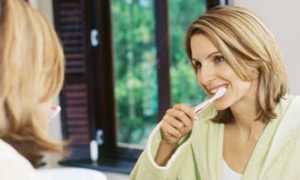 Indian Express, Agencies : Washington, Though most people brush their teeth regularly, only one in ten does it in a way that effectively prevents tooth decay, according to a study in Sweden. Researchers at the Sahlgrenska Academy, University of Gothenburg say almost all Swedes regularly brush their teeth with fluoride toothpaste, yet only a few know the best brushing technique, how the toothpaste should be used and how fluoride prevents tooth decay. In two separate studies, Pia Gabre and her colleagues at the Sahlgrenska Academy, University of Gothenburg, studied the toothbrushing habits of 2,013 Swedes aged 15-16, 31-35, 60-65 and 76-80 – how often and for how long, how often fluoride toothpaste is used, how much toothpaste is put on the toothbrush and how much water is used during and after the toothbrushing. The results showed that only ten percent of the population use toothpaste in the most effective way. "Swedes generally do brush their teeth, but mostly because of social norms and to feel fresh rather than to prevent tooth decay," said Gabre. Swedes could improve their oral health considerably by learning how to maximise the effect of fluoride toothpaste, she asserted. However, the study found that 80 per cent are generally happy with how they take care of their teeth."Most of the interviewed subjects learned to brush their teeth as children, by their parents. Even if they have been informed about more effective techniques later in life, they continue to brush their teeth like they always have," stated Gabre. The researchers concluded that Swedes’ knowledge about toothbrushing must be improved and that the provided advice must be made simpler, clearer and more easy to use.Source: Indian Express
The Workplace Benefits of Being Out of Touch
 MOST people I know feel too connected — not to family or friends, but to electronic devices like smartphones and computers. They feel a need to check e-mails, texts and social networks almost constantly on the off chance that an emergency has popped up in the last five minutes that they absolutely, positively have to address. Most people I know also would like to feel less connected to those devices. They realize that they could go an hour or a day — or (gasp!) even longer — without going online, but two things prevent it: constantly checking our texts and e-mails has become like a tic, or a hard habit to break; and most of us feel that if everyone else is available 24 hours, then we have to be, too. “Some industries are so highly volatile that people need to be connected all the time, but most of us overexaggerate our own importance,” said Dalton Conley, dean for the social services at New York University and author of “Elsewhere” (Pantheon, 2009). “Then it becomes a self-fulfilling prophecy — if we’re always available, then we’re expected to always be available.” But, as Professor Conley added, companies are increasingly realizing that employees need to be disconnected from time to time and that “giving workers time to chill helps ultimate long-term productivity.” But the question arises: Is this something we can do unilaterally as individuals or do we need some sort of corporate shift that acknowledges and addresses the burnout of always being on call? “It’s very hard to turn off by yourself,” said Leslie A. Perlow, a professor of leadership at Harvard Business School and author of “Sleeping With Your Smartphone” (Harvard Business Review Press, 2012). Professor Perlow did a survey of 1,600 managers and professionals and found that only 2 percent turned off their devices, even while on vacation. But Professor Perlow discovered during her research that organizational change, even on a relatively small scale, could make a huge difference. She did an experiment with a six-person team at the Boston Consulting Group. Each team member would have a night off a week, starting about 6 p.m., when they would be unreachable electronically. There also was a weekly team discussion about how the process was working. Not everyone was happy to participate. Although the workers could each choose their night off, many of them — at least at first — didn’t want to take it. “Some said they didn’t know what they would do with a night off,” she said. There was a safety net. The team member covering for the out-of-pocket employee would receive any e-mails and assess whether they were urgent. If it was a rare, real emergency and no other team member could handle it, then the worker taking the night off would be called. When everyone was on board, the process worked far better and with more positive results than Professor Perlow expected. Team members felt empowered and expressed increased satisfaction with work and their work-life balance. They started scrutinizing operations, like whether their travel schedules might be shifted to make their lives more relaxed and productive. “We were surprised — we didn’t go in expecting to get that result,” she said. “People were more engaged, were prioritizing and talking more.”Professor Perlow replicated the pilot program several times at the Boston Consulting Group and has now expanded it to 14 countries with more than 1,000 teams. She stressed, however, that it was not enough to take the time off. Employees also need the element of group discussion to “collectively rethink how to do work.” Other companies have tackled the problem as well. At the beginning of 2012, Volkswagen reached an agreement with a small portion of its work force to stop the e-mail server for employees who used BlackBerrys 30 minutes after their shift ended and restore it half an hour before work began the next day.Source: Sam Daily Times
Working women in urban India put career ahead of motherhood
 New Delhi, Working women in urban areas give precedence to their career and professional ambitions over plans to start a family, a study said today. The survey was conducted on about 1,200 married, young working women and home makers in cities like Ahmedabad, Delhi, Bangalore, Chennai, Hyderabad, Kolkata and Pune. Over half of married women in the aforesaid centres said they have shelved plans to start a family as career advancement and higher-education is their priority and cannot sacrifice the same to raise kids. About 200 respondents from the working women category said they have put off their plans to have a baby as it would disfigure their physical appearance. "Ambitious working women in India are not willing to give up their career for the sake of family as they are apprehensive about dealing with stress," said Secretary General D S Rawat while releasing the study. Nearly 65 out of total 150 working women interviewed in Delhi said they are deliberately avoiding to begin a family. Though, 100 out of 150 working women in Mumbai and 80 in Bangalore said they are averse to having a baby for the time being as their respective career is primary for them. Off the 800 stay-at-home moms interviewed, about 25 per cent said they regret not being able to work as they are less educated. Of these about 80 said they regret motherhood as they have lost their social identity. Source: Indian Express
Scientists find key to happiness

Image Link Flickr
Indian Express, Agencies : Washington, Happiness can be fleeting, but by hanging on to those good times and not comparing your personal experiences to those of others can help you remain happy for longer, a new study has suggested. Researchers in the US carried out a happiness survey on a group of 481 participants who had identified a recent positive change in their lives that had made them happier. Six weeks after that, the psychologists evaluated whether the original happiness boost had lasted. For some it had, but for most it had not, the researchers found. “The majority got used to the change that had made them happy in the first place,” said Kennon Sheldon, a professor of psychological sciences in the College of Arts and Sciences of the University of Missouri. “They stopped being happy because they kept wanting more and raising their standards, or because they stopped having fresh positive experiences of the change, for example they stopped doing fun things with their new boyfriend and started wishing he was better looking,” Sheldon said. “A few were able to appreciate what they had and to keep having new experiences. In the long term, those people tended to maintain their boost, rather than falling back where they started,” he noted. The researchers, who detailed their work in the journal Personality and Social Psychology Bulletin, said due to genetics and other factors, people have a certain “set-point” of happiness they normally feel, and it can vary from somber to bubbly. According to Sheldon, people can train themselves to stay at the top of their possible range of happiness. “A therapist can help a person get from miserable to OK; our study shows how people can take themselves from good to great,” he said. Sheldon also noted that the best life changes don't necessarily equate to new purchases. Though a new possession can boost happiness, that purchase has to be experienced a new every day and appreciated for what it brings to have any lasting effect on happiness. “The problem with many purchases is that they tend to just sit there. They don't keep on providing varied positive experiences. Also, relying on material purchases to make us happy can lead to a rise in aspirations like an addiction.“Our model suggests ways to reduce the 'let down' from those purchases,” he suggested. Source: Indian Express
Women 'check their appearance eight times a day'

PTI, London: Women never change. They check their appearance in the mirror eight times a day - using shop windows, car wing mirrors and even other people's sunglasses, says a new study. In the study, based on a survey in Britain, one in 10 woman have admitted that they cannot walk past a car without bending to check their hair and make-up. And, one in three women believe they look their best in their own bathroom mirror while one in 20 said they looked their worst in the mirror in the loo at work, according to the poll of 2,000 women by 'Simple' skincare. What's more interesting is that four in 10 even have favourite mirrors they feel they look better in than others, the Daily Express reported. Dr Christine Bundy of Manchester University said: "Many women have busy lives where they are constantly on the go and want to look their best. " "So giving themselves a quick glimpse when they get the chance is only natural. It's important to check your appearance to boost your confidence."Source: Deccan Chronicle, Image: flickr.com
Naturopathic

Tips For More Healthy: Some see the ancient Greek "Father of Medicine", Hippocrates, first as a defender of naturopathic medicine, before the term existed. Modern practice of naturopathy is rooted in Nature Cure movement of Europe during the 19th century. In Scotland, Thomas Allinson started advocating his "Hygienic Medicine" in the 1880s, promoting a natural diet and exercise to avoid tobacco and overwork. Sanipractor This term is sometimes used to refer to naturopaths, particularly in the Pacific Northwest United States. Naturopathic Medicine or Naturopathy is a form of alternative medicine based on trust vitalism, which states that a special energy called a vital energy or vital force guides the body such as metabolism, reproduction, growth, and adaptation. Naturopathic philosophy favors a holistic approach, and, like conventional medicine seeks to find a minimally invasive measures are necessary for symptomatic improvement or resolution, thereby encouraging the use of minimal surgery and drugs are not necessary. According to the Association of Accredited Naturopathic Medical Colleges, "Naturopathic medicine is defined by principles rather than by the methods or modalities. Above all, respect the body's innate wisdom to heal." According to the American Cancer Society, "Available scientific evidence does not support the claim that naturopathic medicine can cure cancer or other diseases, because almost no studies on naturopathy as a whole has been published." The "naturopathy" to translate the term comes from Greek and Latin, and literally as "nature disease." Modern naturopathy grew out of the Nature Cure movement in Europe. The term was coined in 1895 by John Scheel, and popularized by Benedict Lust, "Father of U.S. naturopathy". Beginning in the 1970s, there is resurgence of interest in the United States and Canada in conjunction with holistic health movement. Naturopathic practitioners are divided into two groups, traditional naturopaths and naturopathic physicians. Naturopathic doctors use the principles of naturopathy in the context of conventional medical practice. Naturopathy consists of different treatment modalities of various levels of acceptance by the conventional medical community; these treatments range from the standard of evidence-based care, for homeopathy and other practices are sometimes characterized as pseudoscience. Naturopathy is practiced in many countries, especially the United States and Canada, and subject to different regulatory standards and levels of acceptance. The scope of practice varies widely between jurisdictions, and naturopaths in unregulated jurisdictions may use designation of Naturopathic Doctor or other title without the level of education. Philosophical foundations and methodological naturopathic sometimes at odds with the paradigm of evidence-based medicine (EBM). Many naturopaths oppose vaccination in part based on the philosophy that forms the beginning of the profession. The term naturopathy was coined in 1895 by John Scheel, and purchased by Benedict Lust, "Father of U.S. naturopathy". Lust has been educated in hydrotherapy and natural health practices in Germany by Father Sebastian Kneipp; Kneipp Lust shipped to the United States to deploy its drugless methods. Lust naturopathy is defined as a broad discipline rather than a specific method, and includes techniques such as hydrotherapy, herbal medicine, and homeopathy, as well as eliminating overeating,

tea, coffee, and alcohol. He described the body as a spiritual and vitalistic with "absolute dependence on the cosmic forces of human nature." In 1901, Lust founded the American School of Naturopathy in New York. In 1902, the original North American Society Kneipp discontinued and renamed "naturopathic community". In September 1919 Naturopathic Society of America was dissolved, and Dr. Benedict Lust founded the "American Association of Naturopathic" to replace it. Naturopaths to be licensed naturopathic or drugless practitioner of law in 25 states in the first three decades of the twentieth century. Naturopathy adopted by many chiropractors, and some schools offered both (DC) Doctor of Naturopathy (ND) and Doctor of Chiropractic degree. Estimated number of active naturopathic schools in the United States during this period varies from about one to two dozen. After a period of rapid growth, naturopathy went into decline for several decades after the 1930's. In 1910, Carnegie Foundation for the Advancement of Teaching published the Flexner Report, which criticized many aspects of medical education, particularly quality and lack of scientific rigor. The advent of penicillin and other "miracle cures" and popularity due to modern medicine also contributed to the decline of naturopathy's. In the 1940s and 1950s, expanding the legal scope of chiropractic practice led many schools to drop their ND degree, although many chiropractors continue to practice naturopathy. From 1940 to 1963, the American Medical Association campaigned against heterodox medical system. In 1958, the practice of naturopathy is licensed only five countries. In 1968, the United States Department of Health, Education, and Welfare issued a report on naturopathy concludes that naturopathy is not based on science of naturopathic medicine and that education is not enough to prepare graduates to make the right diagnosis and provide treatment; a report recommending against the expansion of Medicare coverage for include naturopathic medicine. In 1977, an Australian inquiry committee reached the same conclusion, but does not recommend licensing for naturopaths. In 2009, fifteen fifty U.S. states, Puerto Rico, U.S. Virgin Islands and the District of Columbia licensed naturopathic physician, and two states (WA, VT) requires insurers to provide reimbursement for services provided by naturopathic physicians. Naturopathy never really ceased to exist. Beginning in the 1970s, the wax flowers in the United States and Canada in conjunction with holistic health movement. Today, there are nine schools that offer certificates or Traditional naturopathy degree programs accredited by the American Board of Naturopathic Medical Accredation National Board of Naturopathic Examiners of ANA currently recognizes two schools that offer programs Naturopathy Doctorate Degree Represented by six naturopathic medical schools accredited naturopathic medicine and a candidate for accreditation in North America. In 1956, Charles Stone, Frank Spaulding, and W. Martin Bleything founded the National College of Natural (NCNM) in Portland, Oregon in response to plans by the Western States Chiropractic College to drop the course ND. In 1978, Sheila Quinn, Joseph Pizzorno, William Mitchell, and Les Griffith founded John Bastyr College of Naturopathic Medicine (now Bastyr University) in Seattle, Washington. In the same year, the Canadian College Naturopathic Medicine was founded in Toronto, Canada. Recently founded the school, including Southwest College Naturopathic Medicine, established in 1992, and the Boucher Institute of Naturopathic Medicine, also founded in 1992. The University of Bridgeport in Connecticut, ND grant degrees through the College of Naturopathic Medicine, and National University of Health Sciences in Illinois recently developed naturopathic programs

and is currently a candidate for accreditation.Naturopathic ideology focuses on substances that occur naturally, minimally invasive method, and the encouragement of natural healing. Naturopaths generally supports an intuitive and vitalistic concept of the body, and a complete rejection of modern biomedical science and the public. Stress reduction and prevention through a healthy diet and lifestyle are very stressed, and pharmaceutical drugs, ionizing radiation, and surgery is generally minimized. The philosophy of naturopathic practice is self-described by six core values. Several versions exist in the form of the naturopathic doctor's oath, the various missions issued by the school or professional association, ethical behavior and guidelines issued by regulatory agencies: * First, do no harm, providing the most effective health care is available with minimal risk to patients at all times (non nocere quaeritur).* Recognizing, respecting and promoting self-healing power of nature inherent in every human individual. (Vis Naturae medicatrix, a form of vitalism). * Identify and remove the causes of disease, rather than eliminate or suppress symptoms (Tolle Causum). * Educate, inspire rational hope and encourage self-responsibility for health (doctor as teacher). * Treat each person by considering all individual health factors and influences. (Treat the Whole Person). * Emphasize health condition to improve the well-being and prevent illness for the individual, every society and our world. (Health Promotion, the Best Prevention) * Naturopaths use a variety of treatment modalities, with a focus on natural healing itself rather than any specific method. Some methods depend on the material "vital energy field", the existence of which has not been proven, and there are concerns that naturopathy as the field tends toward isolation from the general scholarly discourse. The effectiveness of naturopathy as a whole system has not been systematically evaluated, and the efficacy of individual methods used vary. A consultation usually begins with a lengthy interview patients to focus on lifestyle, medical history, emotional tone, and physical characteristics, and physical examination. The traditional naturopath focuses on lifestyle changes and approaches that support the body's innate healing potential. Traditional naturopaths do not attempt to diagnose or treat illness but to concentrate on the health of the entire body and facilitate the body's own healing. Traditional Naturopaths do not prescribe or attempt to engage in the use of drugs, serum, potion, surgery or treatment of certain diseases or the practice of conventional medicine. Naturopathic medicine practitioners resist the urge to become a major service provider and in addition to various natural approaches attempt to prescribe legend drugs, perform minor operations and implement other approaches to conventional medical practice them. Naturopaths do not always recommend the vaccine and antibiotics, and can provide alternative solutions that are not appropriate even in cases in which evidence-based medicine has been proven effective. All forms of naturopathic education includes the concept does not correspond to basic science, and not have to prepare the practitioner to make a correct diagnosis or referral. Source: Tips For More Healthy: Naturopathic
Subscribe to:Posts (Atom)
